



TRPC3
TRPC3 (Transient Receptor Potential Canonical 3) is a member of the canonical TRP channel family that mediates Ca2+ and other cation influx downstream of phospholipase C (PLC)-coupled receptor activation, thereby regulating intracellular calcium signaling and diverse cellular responses[1]. TRPC3 functions as a diacylglycerol-sensitive cation channel and is closely linked to PLC-dependent signaling pathways that control neuronal activity, cellular growth, and stress-responsive signaling networks[2][3]. Mechanistically, TRPC3-mediated Ca2+ entry promotes activation of the calcineurin/NFAT pathway, a key signaling axis involved in transcriptional regulation and cellular remodeling[3][1]. In disease-related models, increased TRPC3 expression or gain-of-function activity has been associated with cardiac hypertrophy, heart failure, myocardial fibrosis, and pathological remodeling, highlighting its importance in calcium-dependent disease mechanisms[3][1]. In the nervous system, TRPC3 acts downstream of metabotropic glutamate receptor 1 (mGluR1), contributes to Purkinje neuron function, and regulates signaling processes essential for neuronal viability and motor coordination[2][4]. Compared with closely related TRPC6 and TRPC7 isoforms, TRPC3 possesses distinct pharmacological properties that enable selective experimental targeting[1][5]. For research applications, the pyrazole-derived compound Pyr3 directly and selectively inhibits TRPC3 channels, suppresses TRPC3-dependent calcium influx and downstream signaling, and has become a widely used tool for dissecting TRPC3-specific biological functions in cellular and animal models[1][5][6].
References:
- [1]. Kiyonaka S, et al. Selective and direct inhibition of TRPC3 channels underlies biological activities of a pyrazole compound. Proc Natl Acad Sci U S A. 2009 Mar 31;106(13):5400-5. [Content Brief]
- [2]. Aslam N, et al. TRPC3 Channel Activity and Viability of Purkinje Neurons can be Regulated by a Local Signalosome. Front Mol Biosci. 2022 Feb 21;9:818682. [Content Brief]
- [3]. Tiapko O, et al. TRPC3 as a Target of Novel Therapeutic Interventions. Cells. 2018 Jul 22;7(7):83. [Content Brief]
- [4]. Lee MJ, et al. Time to HIV rebound after infusion of long-acting broadly neutralising antibodies 3BNC117-LS and 10-1074-LS and analytical treatment interruption (the RIO trial): a double-blind, randomised, placebo-controlled trial. Lancet HIV. 2026 May 27:S2352-3018(26)00059-7. [Content Brief]
- [5]. Zhang S, et al. Discovery of a Highly Selective and Potent TRPC3 Inhibitor with High Metabolic Stability and Low Toxicity. ACS Med Chem Lett. 2021 Mar 5;12(4):572-578. [Content Brief]
- [6]. Munakata M, et al. Transient receptor potential canonical 3 inhibitor Pyr3 improves outcomes and attenuates astrogliosis after intracerebral hemorrhage in mice. Stroke. 2013 Jul;44(7):1981-7. [Content Brief]
-
TRPC3 관련 제품 (11)
관련 제품 (11)

- 1
-
Pyr10
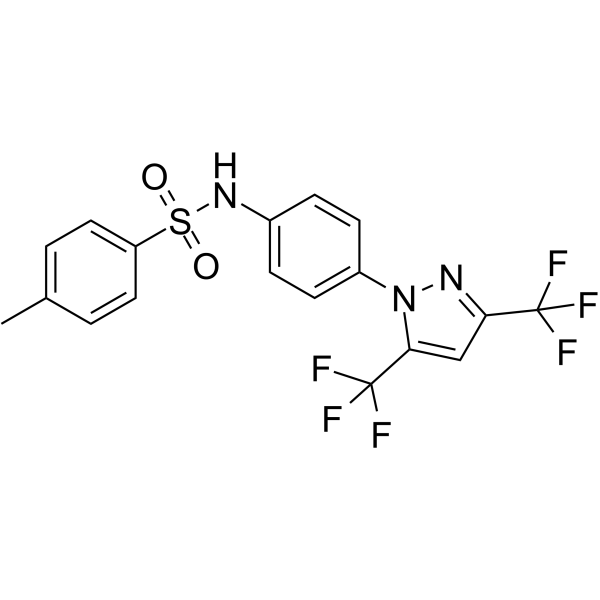 0 ImagesPyr10 is a pyrazole derivative and a selective TRP cation 3 (TRPC3) inhibitor. Pyr10 inhibits Ca2+ influx in carbachol-stimulated TRPC3-transfected HEK293 cells with an IC50 of 0.72 μM (IC50 of 13.08 μM for store operated Ca2+ entry in BRL-2H3 cells). Pyr10 has the ability to distinguish between receptor-operated TRPC3 and native stromal interaction molecule 1 (STIM1)/Orai1 channels.
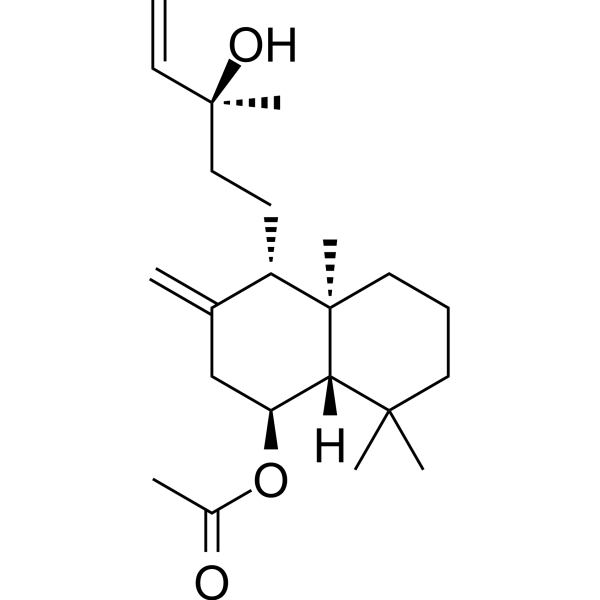
-
GFB-8438
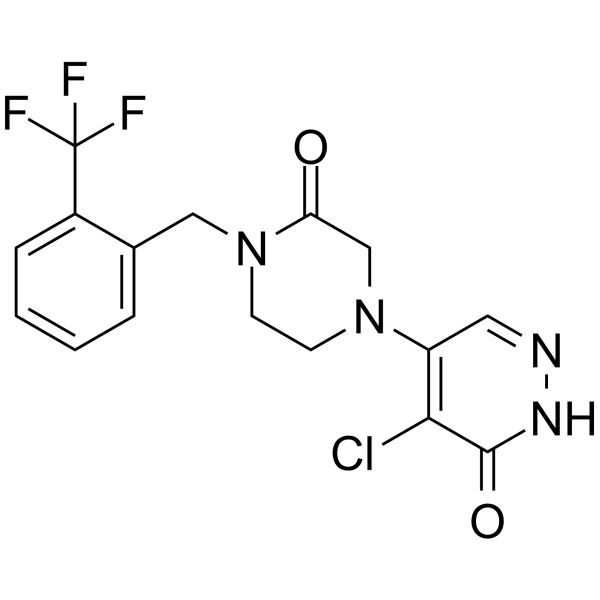 0 ImagesGFB-8438 is a potent and subtype selective TRPC5 inhibitor, with IC50s of 0.18 and 0.29 μM of hTRPC5 and hTRPC4, respectively. GFB-8438 shows excellent selectivity against TRPC6, other TRP family members, NaV 1.5, as well as limited activity against the hERG channel. GFB-8438 protects mouse podocytes from injury induced by protamine sulfate model.
-
Phenamil methanesulfonate
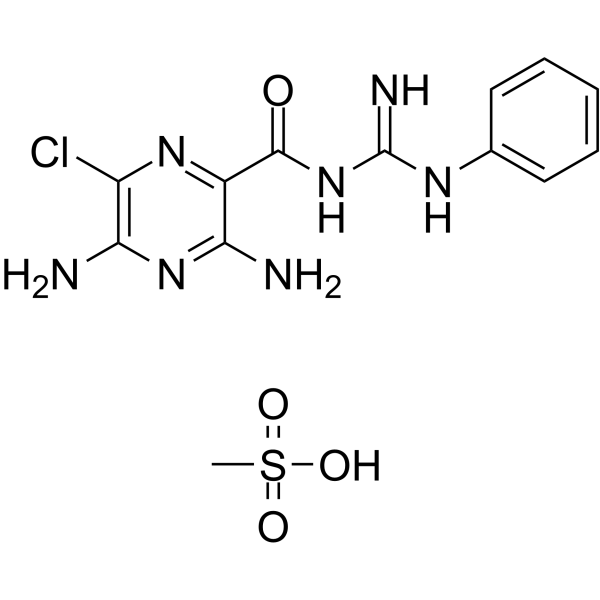 0 ImagesPhenamil methanesulfonate, an analog of Amiloride (HY-B0285), is a more potent and less reversible epithelial sodium channel (ENaC) blocker with an IC50 of 400 nM. Phenamil methanesulfonate is also a competive inhibitor of TRPP3 and inhibits TRPP3-mediated Ca2+ transport with an IC50 of 140 nM in a Ca2+ uptake assay. Phenamil methanesulfonate is an intriguing small molecule to promote bone repair by strongly activating BMP signaling pathway. Phenamil methanesulfonate is used for the research of cystic fibrosis lung disease.
-
JW-65
 0 ImagesJW-65 is a selective TRPC3 channel inhibitor with favorable blood-brain barrier penetration. JW-65 directly binds to human TRPC3 protein and modulates calcium signaling to reduce seizure susceptibility. JW-65 reduces seizure incidence, severity, and duration while prolonging seizure latency in multiple seizure models. JW-65 alleviates Aβ‑induced neuronal damage. JW-65 serves as a valuable tool for research on epilepsy, seizure disorders, and Alzheimer’s disease.
-
L687
 0 ImagesL687 is an activator of TRPC3, TRPC6, and TRPC7 cation channels and induces calcium influx. L687 induces macropinocytosis and endocytosis. L687 enhances cellular uptake and knockdown activity of antisense oligonucleotides. L687 alone does not alter SRRM4 expression. L687 can be used for research on small cell lung cancer.
-
TRPC5-IN-7
 0 ImagesCat. No.: HY-189736TRPC5-IN-7 is an orally active TRPC5 inhibitor (hTRPC5: IC50 = 0.77 μM). TRPC5-IN-7 inhibits the TRPC5 cation channel and TRPC5-mediated calcium influx by binding to the VSLD allosteric pocket, with selectivity for TRPC5 over TRPC3 and TRPC6. TRPC5-IN-7 exerts anxiolytic effects in mice and can be used for anxiety research.
-
TRPC3/6-IN-1
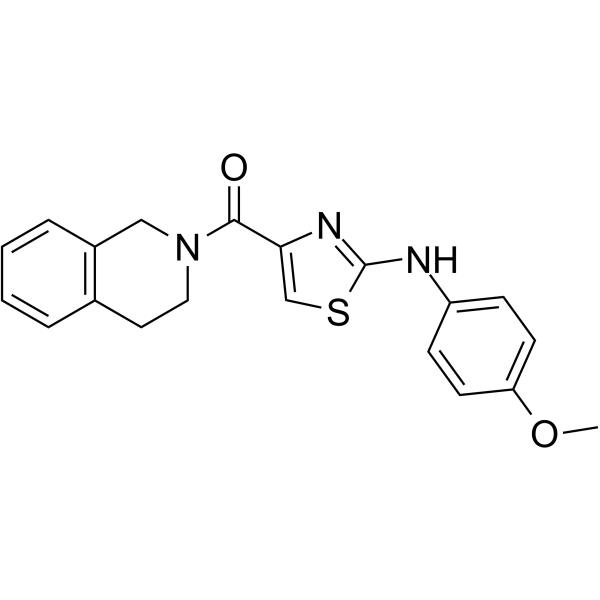 0 ImagesTRPC3/6-IN-1 is a potent selectivity blocker of the canonical transient receptor channels (TRPC3/6), has block potency for hTRPC3 and hTRPC6 with IC50 values of 1260 nM and 500 nM, respectively. TRPC3/6-IN-1 can be used for the research of chronic models of heart failure.

-
TRPC antagonist 1
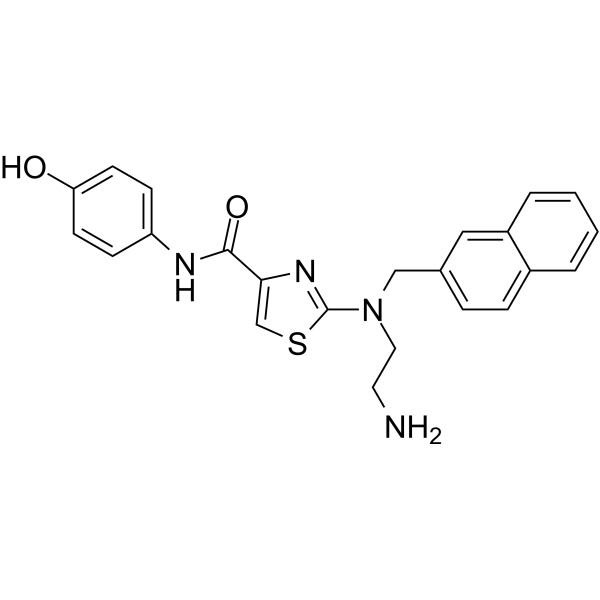 0 ImagesCat. No.: HY-162090CAS No.: 3027139-12-1TRPC antagonist 1 (compound 15g) is a potent TRP channel (TRPC) antagonist with IC50s of 2.4 μM, 12.2 μM, 7.6 μM, 2.9 μM, and 3.4 μM for TRPC3, TRPC4, TRPC5, TPRC6, and TRPC7, respectively. TRPC antagonist 1 displays noteworthy anti-glioblastoma efficacy in vitro against U87 cell lines.
-
1-Oleoyl-2-acetylglycerol
 0 ImagesCat. No.: HY-W724097CAS No.: 84746-00-91-Oleoyl-2-acetylglycerol is a membrane-permeable diacylglycerol analog and PKC activator. 1-Oleoyl-2-acetylglycerol activates TRPC3 channels. 1-Oleoyl-2-acetylglycerol attenuates D609 (HY-70072)-induced Apoptosis. 1-Oleoyl-2-acetylglycerol effectively stimulates insulin secretion. 1-Oleoyl-2-acetylglycerol can be used in research on monocytic leukemia.
- 1



