1. Search Result
Search Result
Results for "

menin/MLL protein/protein interaction

" in MedChemExpress (MCE) Product Catalog:
Cat. No. Product Name Target Research Areas Chemical Structure
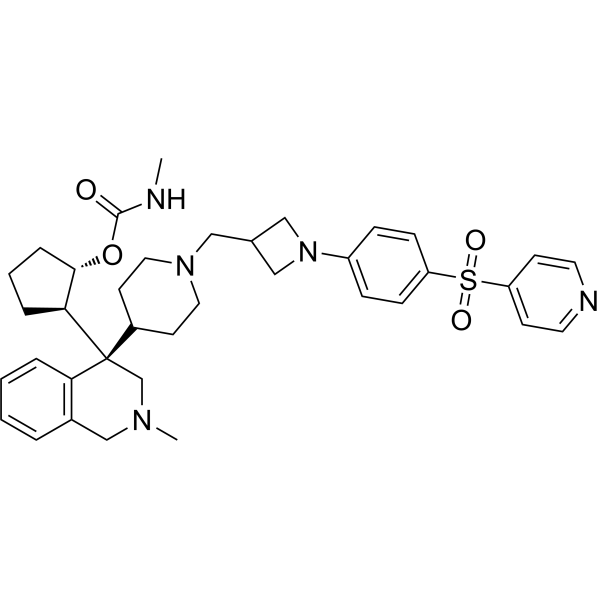
  • HY-153714

    BN-104; BNM-1192; menin-MLL inhibitor 27

    Epigenetic Reader Domain Potassium Channel Cancer
    Zefamenib (BN-104) is an effective selective brain membrane protein inhibitor with oral activity, and it's also a Menin inhibitor, it can block the Menin-MLL interaction and leads to the degradation of Menin protein. Zefamenib is a weak hERG inhibitor, with an IC50 greater than 100 μM. Zefamenib has anti-tumor activity and can be used in cancer research, such as for acute myeloid leukemia .
    Zefamenib
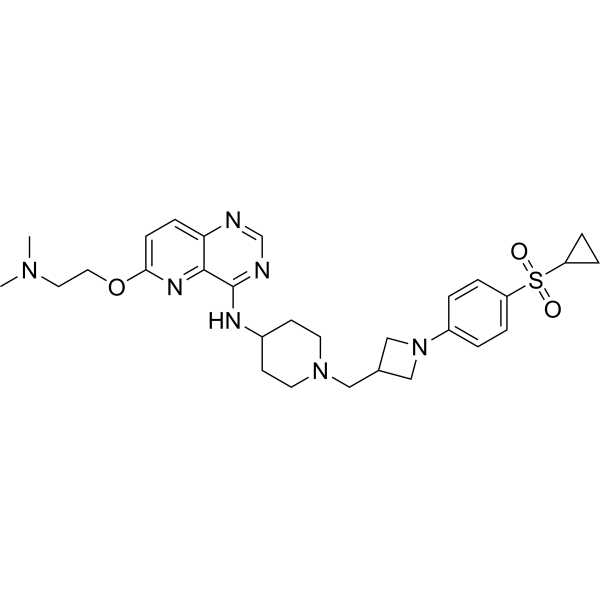
  • HY-156794

    DSP-5336

    Epigenetic Reader Domain FLT3 Cancer
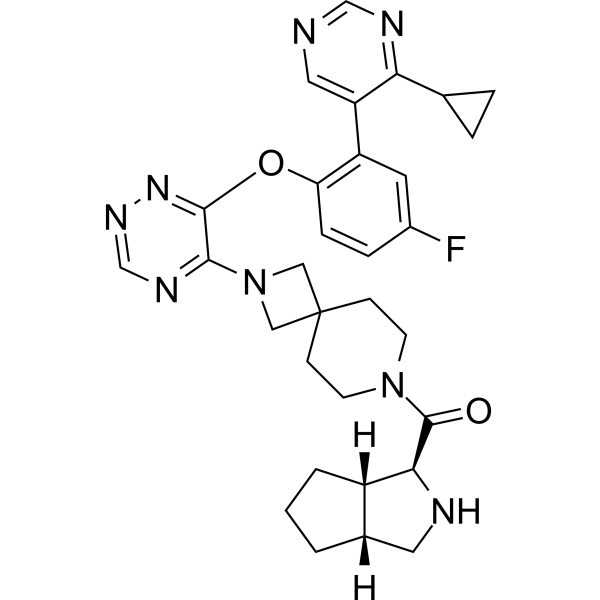
    Enzomenib (DSP-5336) is an orally active Menin inhibitor (IC50=1.4 nM, Kd=6.0 nM). Enzomenib disrupts the interaction between Menin and KMT2A/MLL fusion proteins, specifically inhibits the expression of leukemia driver genes such as HOX/MEIS1, and upregulates ITGAM. Enzomenib effectively induces cell differentiation, inhibits tumor cell proliferation, and suppresses primitive cell colony formation. Enzomenib reduces disease burden and prolongs survival, but causes adverse reactions including differentiation syndrome and QTc interval prolongation. Enzomenib is used for research on relapsed/refractory acute myeloid leukemia, acute lymphoblastic leukemia, and other hematologic malignancies with mixed lineage leukemia (MLL) rearrangements or NPM1 mutations .
    Enzomenib
  • HY-108350
    MI-2-2
    1 Publications Verification

    Epigenetic Reader Domain Cancer
    MI-2-2 is a potent menin-MLL inhibitor. MI-2-2 binds to menin with low nanomolar affinity (Kd=22nM) and very effectively disrupts the bivalent protein-protein interaction between menin and MLL. MI-2-2 has specific and very pronounced activity in MLL leukemia cells, including inhibition of cell proliferation, down-regulation of Hoxa9 expression, and differentiation .
    MI-2-2
  • HY-19810
    MI-538
    4 Publications Verification

    Epigenetic Reader Domain Cancer
    MI-538 is an inhibitor of the interaction between menin and MLL fusion proteins with an IC50 of 21 nM.
    MI-538
  • HY-128347

    Epigenetic Reader Domain Inflammation/Immunology Cancer
    M-89 is a highly potent and specific menin inhibitor, with a Kd of 1.4 nM for binding to menin. M-89 inhibits the menin-mixed lineage leukemia (Menin-MLL) protein-protein interaction and has potential to study MLL leukemia. M-89 inhibits the cell growth in leukemia cell lines carrying MLL fusion .
    M‑89
  • HY-19319
    MI-136
    1 Publications Verification

    Epigenetic Reader Domain Androgen Receptor Apoptosis Cancer
    MI-136 is an inhibitor of the menin-MLL protein-protein interaction (PPI), with an IC50 of 31 nM and a Kd of 23.6 nM. MI-136 shows to block AR signaling and has the potential for the study in castration-resistant tumors .
    MI-136
  • HY-117948

    Epigenetic Reader Domain Cancer
    ML399 is a Menin-Mixed Lineage Leukemia (MLL) protein-protein interaction inhibitor.
    ML399
  • HY-151595

    Epigenetic Reader Domain Cancer
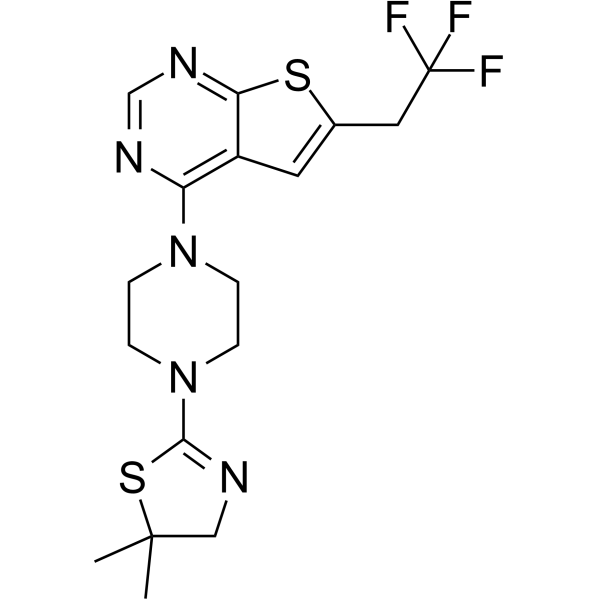
    Menin-MLL inhibitor-22 (compound C20) is an orally active inhibitor of the interaction between menin and mixed lineage leukemia (MLL) (IC50=7 nM). Menin-MLL inhibitor-22 binds menin protein and inhibits cancer cell growth (MV4 cells, IC50=0.3 μM). Menin is a putative tumor suppressor associated with multiple endocrine neoplasia type 1 (MEN-1 syndrome) .
    Menin-MLL inhibitor-22
  • HY-124069

    Epigenetic Reader Domain Cancer
    M-525 is a first-in-class, highly potent, irreversible and covalent menin-MLL protein-protein interaction inhibitor. M-525 binds to menin with an IC50 of 3 nM and achieves low nanomolar potencies in cell growth inhibition and in suppression of MLL regulated gene expression in MLL leukemia cells. Anti-leukemia activity .
    M-525
  • HY-176732

    Epigenetic Reader Domain Cancer
    MJ-26 is an inhibitor targeting Menin. MJ-26 has high binding affinity (Ki: 0.56 μM) and significant antiproliferative activity. MJ-26 works by inhibiting Menin-MLL interaction and inducing Menin protein degradation. MJ-26 has significant antitumor effects on acute myeloid leukemia (AML). MJ-26 can be used in AML research .
    MJ-26
  • HY-129167

    Epigenetic Reader Domain Cancer
    Menin-MLL inhibitor 4 is an inhibitor of Menin- MLL (mixed-lineage leukemia protein) interaction extracted from patent WO2017214367, compound example 1. Menin-MLL inhibitor 4 has antitumor activity .
    Menin-MLL inhibitor 4
  • HY-134921

    Epigenetic Reader Domain Cancer
    MI-nc dihydrochloride is a weak inhibitor of the Menin-MLL fusion protein interaction with an IC50 of 193 μM. MI-nc dihydrochloride can be used as a negative control compound of MI-2 .
    MI-nc dihydrochloride
  • HY-181690

    Epigenetic Reader Domain Cancer
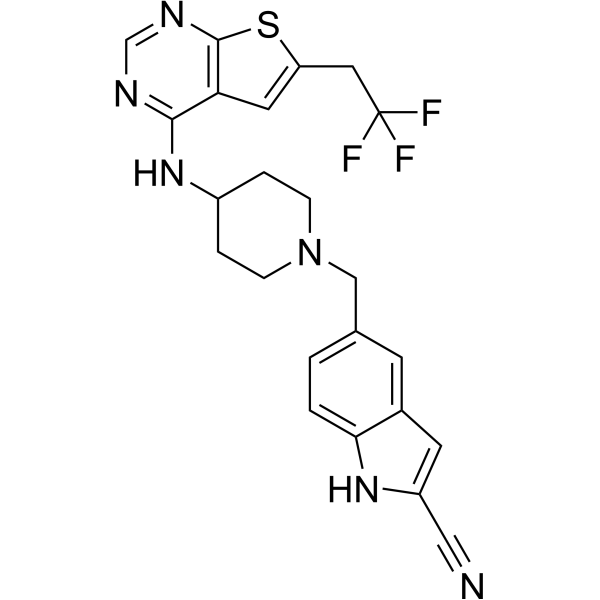
    Menin-MLL-IN-37 is an orally active Menin-MLL protein complex inhibitor with an IC50 of 820.50 nM. Menin-MLL-IN-37 disrupts the interaction between menin and MLL proteins. Menin-MLL-IN-37 induces differentiation of acute myeloid leukemia cells and selectively inhibits the proliferation of MLL-rearranged and DNMT3A/NPM1-mutant leukemia cells. Menin-MLL-IN-37 can be used for the research of acute myeloid leukemia (AML) .
    Menin-MLL-IN-37
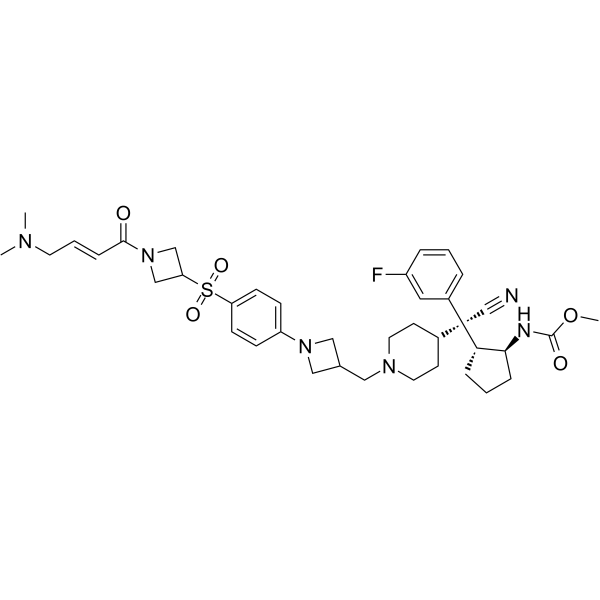
  • HY-186043

    Epigenetic Reader Domain Metabolic Disease Cancer
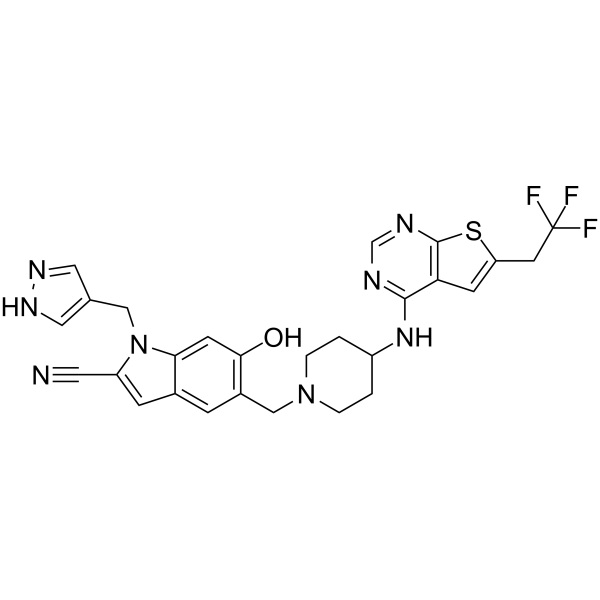
    Menin-MLL-IN-35 (compound 286) is an inhibitor of menin/MLL protein/protein interaction with an IC50 value of 0.096 μM in MEIS1 mRNA expression. Menin-MLL-IN-35 can be used in the research of cancer, myelodysplastic syndrome (MDS), myeloproliferative neoplasms (MPN), and diabetes .
    Menin-MLL-IN-35
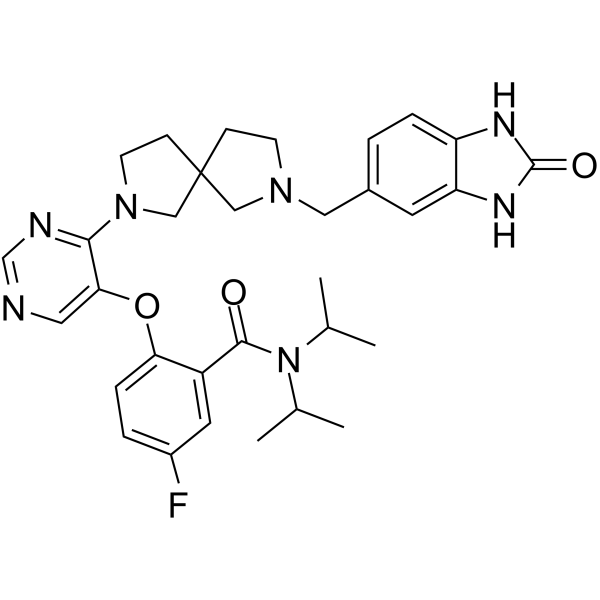
  • HY-186044

    Epigenetic Reader Domain Metabolic Disease Cancer
    Menin-MLL-IN-36 (compound 398) is an inhibitor of menin/MLL protein/protein interaction with an IC50 value of 0.043 μM in MEIS1 mRNA expression. Menin-MLL-IN-36 can be used in the research of cancer, myelodysplastic syndrome (MDS), myeloproliferative neoplasms (MPN), and diabetes .
    Menin-MLL-IN-36
  • HY-108350R

    Reference Standards Epigenetic Reader Domain Cancer
    MI-2-2 (Standard) is the analytical standard of MI-2-2 (HY-108350). This product is intended for research and analytical applications. MI-2-2 is a potent menin-MLL inhibitor. MI-2-2 binds to menin with low nanomolar affinity (Kd=22nM) and very effectively disrupts the bivalent protein-protein interaction between menin and MLL. MI-2-2 has specific and very pronounced activity in MLL leukemia cells, including inhibition of cell proliferation, down-regulation of Hoxa9 expression, and differentiation .
    MI-2-2 (Standard)
  • HY-156794A

    DSP-5336 enantiomer

    Drug Isomer FLT3 Epigenetic Reader Domain Cardiovascular Disease Cancer
    Enzomenib enantiomer (DSP-5336 enantiomer) is an enantiomer of Enzomenib (HY-156794). Enzomenib (DSP-5336) is an orally active Menin inhibitor (IC50=1.4 nM, Kd=6.0 nM). Enzomenib disrupts the interaction between Menin and KMT2A/MLL fusion proteins, specifically inhibits the expression of leukemia driver genes such as HOX/MEIS1, and upregulates ITGAM. Enzomenib effectively induces cell differentiation, inhibits tumor cell proliferation, and suppresses primitive cell colony formation. Enzomenib reduces disease burden and prolongs survival, but causes adverse reactions including differentiation syndrome and QTc interval prolongation. Enzomenib is used for research on relapsed/refractory acute myeloid leukemia, acute lymphoblastic leukemia, and other hematologic malignancies with mixed lineage leukemia (MLL) rearrangements or NPM1 mutations .
    Enzomenib enantiomer

Inquiry Online

Your information is safe with us. * Required Fields.

Salutation


Country or Region *

Applicant Name *


Organization Name *

Department *


Email Address *


Product Name *

Cat. No.


Requested quantity *

Phone Number *


Remarks

Inquiry Online

Inquiry Information

Product Name:
Cat. No.:
Quantity:
MCE Japan Authorized Agent:

