1. Search Result
Search Result
Results for "

severe hypertension

" in MedChemExpress (MCE) Product Catalog:

12

Inhibitors & Agonists

2

Natural
Products

1

Isotope-Labeled Compounds

Cat. No. Product Name Target Research Areas Chemical Structure
  • HY-17436

    Calcium Channel Cardiovascular Disease Cancer
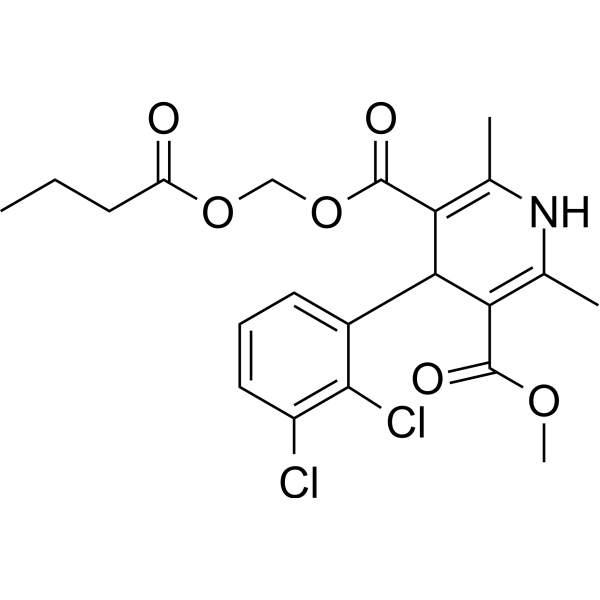
    Clevidipine is a selective, short-acting L-type calcium channel antagonist with an IC50 of 7.1 nM. Clevidipine can competitively bind to calcium channels and exert rapid vasoselective vasodilation by blocking the influx of extracellular calcium ions, thereby reducing peripheral vascular resistance and effectively controlling acute severe hypertension. Clevidipine can also protect the myocardium from reperfusion injury by promoting the release of nitric oxide (NO). Clevidipine can be used in the research of acute hypertension, perioperative blood pressure management, and myocardial ischemia-reperfusion injury .
    Clevidipine
  • HY-W008646
    7,8-Dihydro-L-biopterin
    1 Publications Verification

    SOD Apoptosis NO Synthase Cardiovascular Disease Neurological Disease
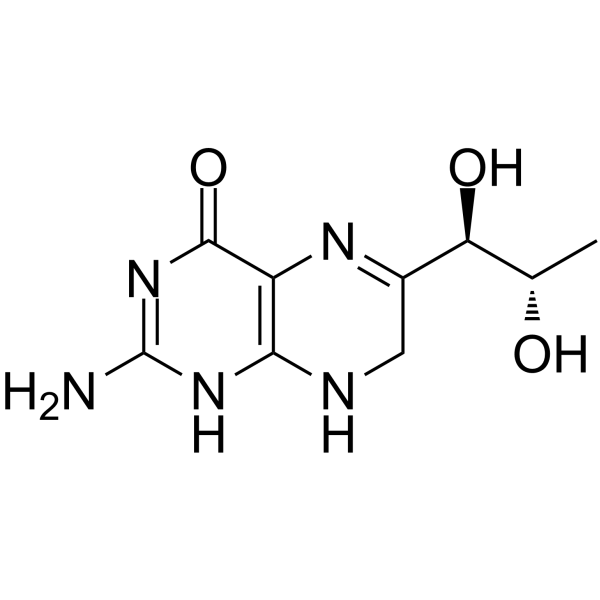
    7,8-Dihydro-L-biopterin is a NOS uncoupling inducer with blood-brain barrier permeability, and it is a reduced non-conjugated pteridine. 7,8-Dihydro-L-biopterin is the main metabolite of 4-amino-tetrahydro-L-biopterin, and it undergoes photooxidation to form biopterin. 7,8-Dihydro-L-biopterin promotes the conversion of nitric oxide synthase to a superoxide-producing form, thereby increasing oxidative stress levels in the renal outer medulla and inducing apoptosis. 7,8-Dihydro-L-biopterin is sensitive to the inhibitory effect of SOD, and it can be applied to research related to salt-sensitive hypertension, moderate to severe traumatic brain injury, and neurodegenerative diseases .
    7,8-Dihydro-L-biopterin
  • HY-B1696

    Adrenergic Receptor Cardiovascular Disease
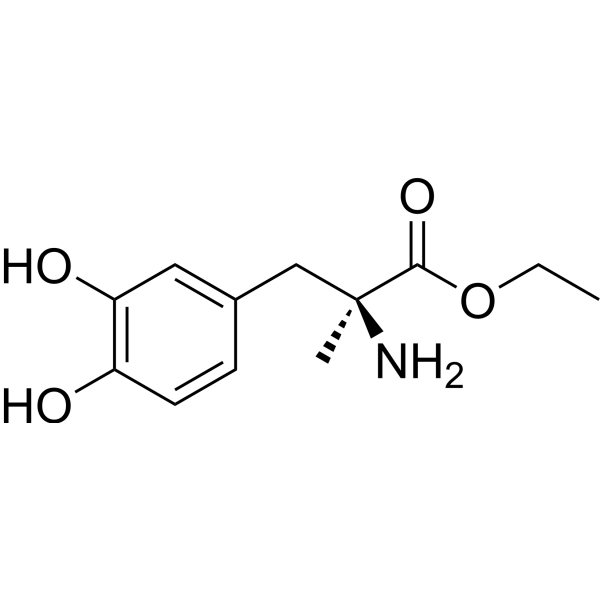
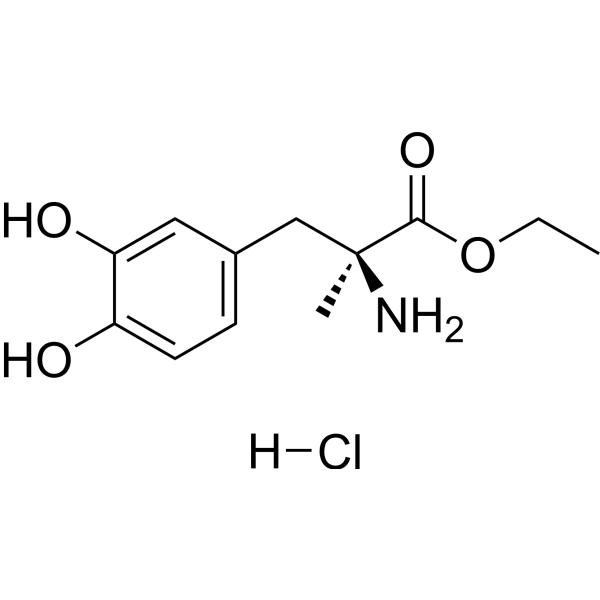
    Methyldopate is an ethyl ester proagent of α-Methyldopa (α-MD; HY-B0225). Methyldopa (L-(-)-α-Methyldopa) is an α-adrenergic agonist (selective for α2-adrenergic receptors). Methyldopate has the potential for severe hypertension research .
    Methyldopate
  • HY-B1219

    nAChR Neurological Disease
    Pentolinium tartrate is a ganglionic blocking agent. Pentolinium tartrate lowers blood pressure and permits regression of the signs and symptoms associated with severe hypertension .
    Pentolinium tartrate
  • HY-W008646R

    Reference Standards SOD Apoptosis NO Synthase Others
    NADH (disodium salt) (Standard) is the analytical standard of NADH (disodium salt). This product is intended for research and analytical applications. 7,8-Dihydro-L-biopterin is a NOS uncoupling inducer with blood-brain barrier permeability, and it is a reduced non-conjugated pteridine. 7,8-Dihydro-L-biopterin is the main metabolite of 4-amino-tetrahydro-L-biopterin, and it undergoes photooxidation to form biopterin. 7,8-Dihydro-L-biopterin promotes the conversion of nitric oxide synthase to a superoxide-producing form, thereby increasing oxidative stress levels in the renal outer medulla and inducing apoptosis. 7,8-Dihydro-L-biopterin is sensitive to the inhibitory effect of SOD, and it can be applied to research related to salt-sensitive hypertension, moderate to severe traumatic brain injury, and neurodegenerative diseases .
    7,8-Dihydro-L-biopterin (Standard)
  • HY-B1696A

    Adrenergic Receptor Cardiovascular Disease
    Methyldopate hydrochloride is an ethyl ester hydrochloride proagent of α-Methyldopa (α-MD; HY-B0225). Methyldopa (L-(-)-α-Methyldopa) is an α-adrenergic agonist (selective for α2-adrenergic receptors). Methyldopate hydrochloride has the potential for severe hypertension research .
    Methyldopate hydrochloride
  • HY-18610A

    Ro 8-4650

    Dopamine Transporter Adrenergic Receptor 5-HT Receptor Neurological Disease
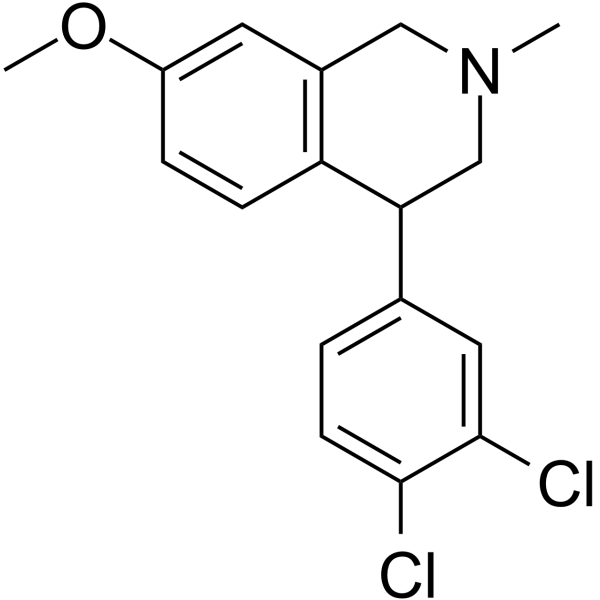
    Diclofensine (Ro 8-46500) is an orally active neuronal monoamine uptake inhibitor. Diclofensine blocks the uptake of dopamine, noradrenaline, and serotonin by rat brain synaptosomes with IC50 values of 0.74, 2.3 and 3.7 nM, respectively. Diclofensine potentiates norepinephrine-induced hypertension and attenuates Tyramine (HY-W007606)-induced hypertension. Diclofensine produces psychostimulant and mood-elevating effects without causing sudden disappearance or withdrawal reactions. Diclofensine can be used in the research of moderate to severe depression .
    Diclofensine
  • HY-18610

    Ro 8-4650 hydrochloride

    Dopamine Transporter Adrenergic Receptor 5-HT Receptor Neurological Disease
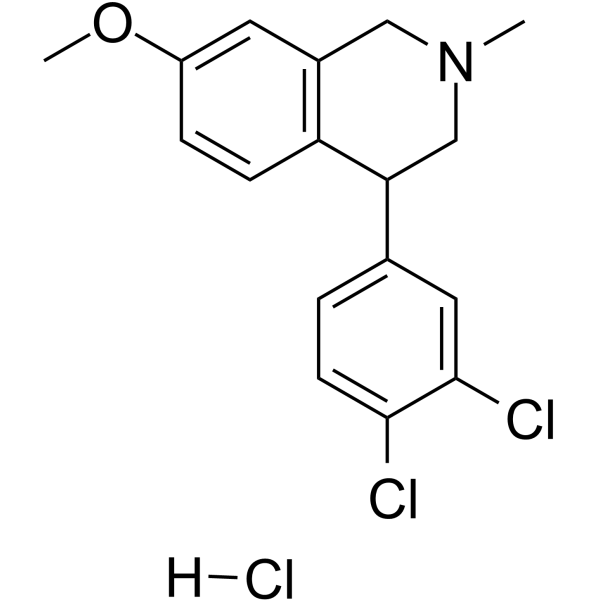
    Diclofensine (Ro 8-46500) hydrochloride is an orally active neuronal monoamine uptake inhibitor. Diclofensine hydrochloride blocks the uptake of dopamine, noradrenaline, and serotonin by rat brain synaptosomes with IC50 values of 0.74, 2.3 and 3.7 nM, respectively. Diclofensine hydrochloride potentiates norepinephrine-induced hypertension and attenuates Tyramine (HY-W007606)-induced hypertension. Diclofensine hydrochloride produces psychostimulant and mood-elevating effects without causing sudden disappearance or withdrawal reactions. Diclofensine hydrochloride can be used in the research of moderate to severe depression .
    Diclofensine hydrochloride
  • HY-18610R

    Ro 8-4650 hydrochloride (Standard)

    Reference Standards Dopamine Transporter Adrenergic Receptor 5-HT Receptor Neurological Disease
    Diclofensine (Ro 8-4650) hydrochloride (Standard) is the analytical standard of Diclofensine hydrochloride. This product is intended for research and analytical applications. Diclofensine hydrochloride is an orally active neuronal monoamine uptake inhibitor. Diclofensine hydrochloride blocks the uptake of dopamine, noradrenaline, and serotonin by rat brain synaptosomes with IC50 values of 0.74, 2.3 and 3.7 nM, respectively. Diclofensine hydrochloride potentiates norepinephrine-induced hypertension and attenuates Tyramine (HY-W007606)-induced hypertension. Diclofensine hydrochloride produces psychostimulant and mood-elevating effects without causing sudden disappearance or withdrawal reactions. Diclofensine hydrochloride can be used in the research of moderate to severe depression.
    Diclofensine hydrochloride (Standard)
  • HY-18610S

    Isotope-Labeled Compounds Dopamine Transporter Adrenergic Receptor 5-HT Receptor Neurological Disease
    Diclofensine-d3 (Ro-8-4650-d3) hydrochloride is the deuterium labeled Diclofensine hydrochloride. Diclofensine hydrochloride is an orally active neuronal monoamine uptake inhibitor. Diclofensine hydrochloride blocks the uptake of dopamine, noradrenaline, and serotonin by rat brain synaptosomes with IC50 values of 0.74, 2.3 and 3.7 nM, respectively. Diclofensine hydrochloride potentiates norepinephrine-induced hypertension and attenuates Tyramine (HY-W007606)-induced hypertension. Diclofensine hydrochloride produces psychostimulant and mood-elevating effects without causing sudden disappearance or withdrawal reactions. Diclofensine hydrochloride can be used in the research of moderate to severe depression.
    Diclofensine-d3 hydrochloride
  • HY-118264

    Angiotensin-converting Enzyme (ACE) Neprilysin Cardiovascular Disease
    MDL-100240 is a dual-acting angiotensin-converting enzyme (ACE) and neutral endopeptidase (NEP) inhibitor. MDL-100240 can significantly lower blood pressure, reverse left ventricular hypertrophy, and effectively prevent hypertrophy and dilatation of the aorta and resistance arteries, with an effect comparable to that of ramipril (HY-B0279). In addition, MDL-100240 can also reduce aldosterone levels, but has no significant effect on atrial natriuretic peptide and cGMP. In 3-month-old transgenic rats, MDL-100240 can reduce adrenomedullin concentrations, prevent and reverse severe hypertension and cardiovascular damage, and enhance bradykinin effects.
    MDL-100240
  • HY-167681

    Ro 12-4713

    Endogenous Metabolite Cardiovascular Disease
    Carprazidil (Ro 12-4713) is a potent vasodilator with activity in suppressing severe hypertension and mild heart failure. The use of carprazidil may lead to sodium retention and increased heart rate, requiring increased doses of diuretics or beta-blockers in some cases. Carprazidil and mecycline may both cause hirsutism, limiting their long-term use in women. Carprazidil did not cause adverse side effects on hematological parameters, liver, or kidney function .
    Carprazidil

Inquiry Online

Your information is safe with us. * Required Fields.

Salutation


Country or Region *

Applicant Name *


Organization Name *

Department *


Email Address *


Product Name *

Cat. No.


Requested quantity *

Phone Number *


Remarks

Inquiry Online

Inquiry Information

Product Name:
Cat. No.:
Quantity:
MCE Japan Authorized Agent:

