



Zinc oxide, <100 nm particle size

Based on 1 Customer Validation
Zinc oxide, <100 nm particle size is a nitrate reductase modulator and growth promoter with plant stress resistance activity and oral toxicity. Zinc oxide, <100 nm particle size acts as a nutrient source for maize plants. By enhancing nitrate reductase activity and reducing free proline levels, it significantly improves plant height, root length and dry matter weight of maize, and its growth-promoting effect is comparable to that of traditional zinc sulfate fertilizer. Zinc oxide, <100 nm particle size induces anemia-related and persistent tissue inflammatory damage, leading to obvious histopathological adverse reactions in the stomach, pancreas, eyes and prostate of rats. Zinc oxide, <100 nm particle size acts as a non-toxic antibacterial agent and selective cytotoxin against multiple bacteria, fungi and spores.
For research use only. We do not sell to patients.
- Assay : 99.28%
- CAS No.: 1314-13-2
- Formula: ZnO
- Molecular Weight:81.38
-
Storage:
Store at room temperature, keep dry and cool.
In solvent -80°C, 1 year , -20°C, 6 months


To place orders, for customer services and technical support, please contact: MedChemExpress USA
Tel: 609-228-6898 E-mail: [email protected] [email protected]


-
 Biological Activity
-
Chemical Information
- Protocols
- Purity & Documentation
- References
-
 Help & FAQs


-

HY-W116336B
Zinc oxide, 99.99% metals basisBiochemical Assay Reagents -
HY-W051271
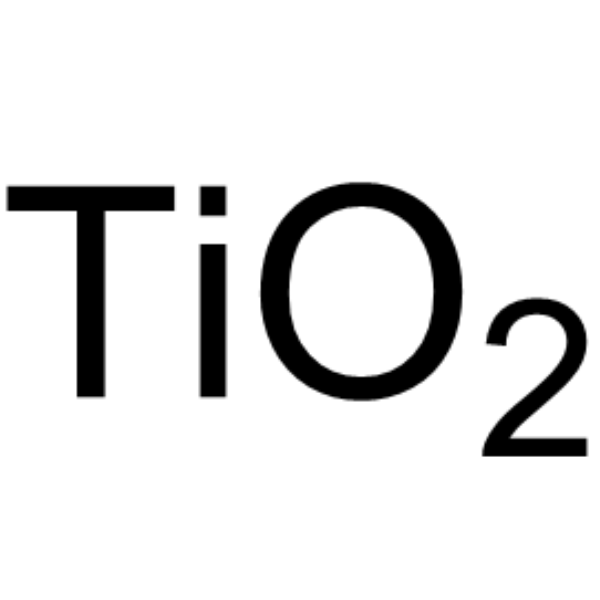
Titanium(IV) oxidePhotocatalyst -
HY-N3025
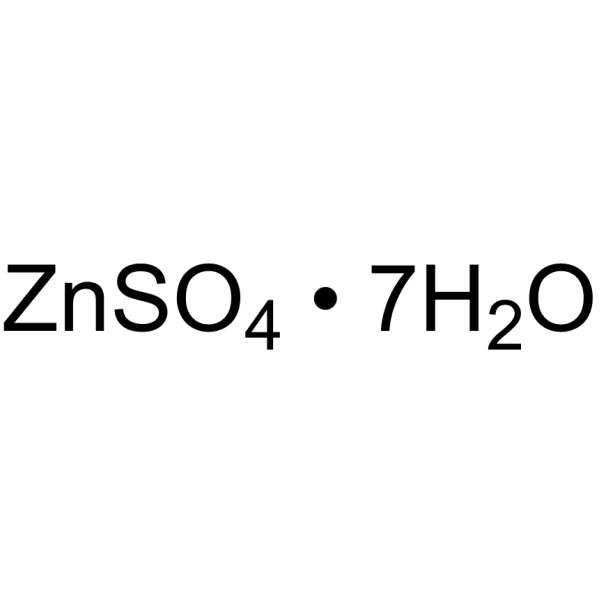
Zinc sulfate heptahydrateDietary Supplement -
HY-Y1267D
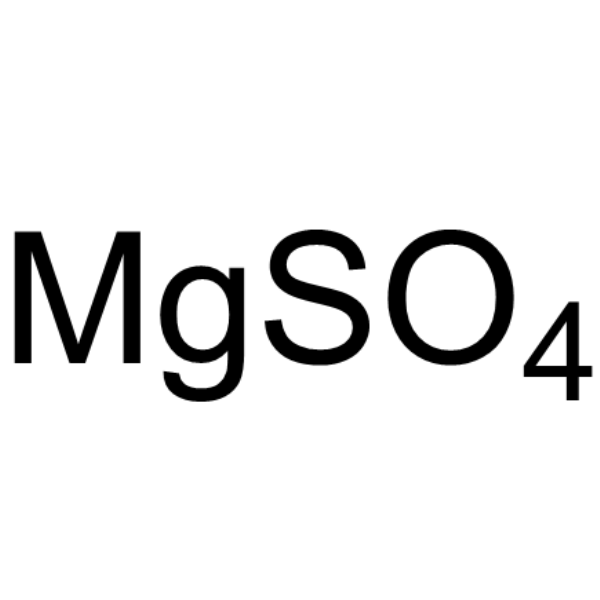
Magnesium sulfate, for cell cultureAnti-Inflammatory Agent -
HY-Y1267
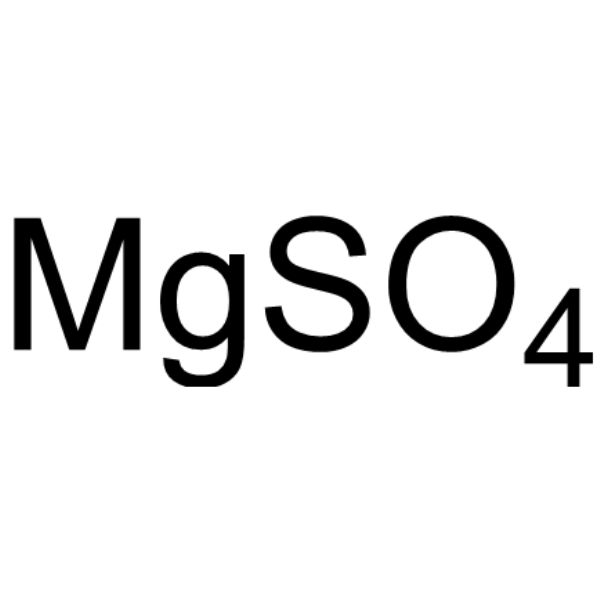
Magnesium sulfateAnti-Inflammatory Agent -

HY-W111403
Calcium oxideHeterogeneous Base Catalyst -

HY-Y0344D
Sodium chloride, for cell cultureBiochemical Assay Reagent -
HY-W094581
Gold(III) chloride trihydrateReducing Agent


Biological Activity
Description
In Vitro
Zinc oxide, <100 nm particle size (30 min dispersion; measured at 23°C for particle size, 25°C for zeta potential) has a zeta potential of -26.99 mV, agglomerates readily after dispersion, and maintains a <100 nm size as visualized via TEM[1].
MedChemExpress (MCE) has not independently confirmed the accuracy of these methods. They are for reference only. Further protocols information, click here.
In Vivo
Repeated oral administration of <100 nm zinc oxide nanoparticles (both negatively and positively charged) (31.25-500 mg/kg; p.o.; daily/once daily, 7 days/week; 14-90 days) at doses ≥125 mg/kg for 90 days induces significant toxic effects in Sprague Dawley rats, with target organs including the stomach, pancreas, eye, and prostate gland, and a no observed adverse effect level (NOAEL) of 31.25 mg/kg for both sexes[2].
MedChemExpress (MCE) has not independently confirmed the accuracy of these methods. They are for reference only.
-
Animal Model:Crl:CD(SD) rats (6-week-old, both sexes, 145.8-196.1 g, specific pathogen-free)[2]
-
Dosage:For 90-day DRF study:
500 mg/kg, 1000 mg/kg, 2000 mg/kg
For 14-day DRF study:
31.25 mg/kg, 125 mg/kg, 500 mg/kg -
Administration:I:p.o.; daily; 14 days
II: p.o.; once daily, 7 days/week; 90 days -
Result:Reported one death in the positively charged 1000 mg/kg group in the 14-day DRF study.
Observed white feces, body weight loss, and corneal opacity across all doses in the 14-day DRF study.
Noted histopathological lesions in the stomach and spleen in the 14-day DRF study.
Recorded no mortality at any dose in the 90-day study.
Observed sporadic salivation, white feces (consistent in 500 mg/kg groups), fur loss, and scarring across all doses in the 90-day study.
Detected statistically significant, non-toxic feed and water consumption changes across doses in the 90-day study due to lack of dose dependency.
Measured decreased hemoglobin, mean cell volume (MCV), mean cell hemoglobin (MCH), mean cell hemoglobin concentration (MCHC), hematocrit, and increased eosinophil counts in 500 mg/kg groups (both charges) in the 90-day study.
Recorded decreased total erythrocyte count and prothrombin time in male 500 mg/kg groups, and increased total white blood cell and platelet counts in female 500 mg/kg groups in the 90-day study.
Measured decreased total protein, albumin, and glucose; increased alkaline phosphatase, chloride, and inorganic phosphorus (males only) in 500 mg/kg groups (both charges) in the 90-day study.
Recorded decreased total cholesterol and calcium, and increased creatine kinase in female 500 mg/kg groups in the 90-day study.
Observed dose-dependent histopathological lesions at 500 mg/kg (some present at lower doses) including squamous cell hyperplasia/vacuolation (nonglandular stomach), intracytoplasmic hyaline droplets, submucosal edema/inflammation, eosinophilic chief cell/mucous cell hyperplasia (glandular stomach), acinar cell apoptosis/chronic inflammation (pancreas), retinal atrophy (eye), and suppurative inflammation (prostate gland, males) in the 90-day study.
Measured increased submandibular gland weight (female 500 mg/kg negatively charged group), increased liver weight (female 500 mg/kg positively charged group), and increased relative adrenal gland weight/decreased absolute spleen weight (male 500 mg/kg positively charged recovery group) in the 90-day study.


Chemical Information
-
CAS No. 1314-13-2
-
Appearance Solid
-
Molecular Weight 81.38
-
Formula ZnO
-
Color White to off-white
-
SMILES
[Zn]=O
-
Shipping
Room temperature in continental US; may vary elsewhere.
-
Storage
Store at room temperature, keep dry and cool
In solvent -80°C 1 year -20°C 6 months

Protocols
-
Research Protocol for Infectious Diseases
Infectious-disease experiments test how pathogens interact with host barriers, innate immune receptors, inflammatory signaling, pathogen replication, and tissue injury; pattern-recognition receptors such as TLRs, RIG-I-like receptors, NOD-like receptors, and inflammasomes detect microbial molecules and activate NF-κB, interferon, and cytokine responses. The central hypothesis is that infection severity reflects the balance between pathogen burden and host response: protective inflammation restricts pathogen growth, whereas excessive or mislocalized inflammation contributes to tissue damage and disease phenotype. Unresolved questions include which host pathways are protective versus pathogenic, why some infection models fail to translate to human disease, and which combined readouts best predict clinically relevant infection outcomes.
-
Repeated-Dose Oral Toxicity Study
A repeated-dose oral toxicity study evaluates systemic toxic effects after daily oral exposure to a test substance for a defined period, commonly 28 days, 6 weeks, 90 days, or 13 weeks in rodent studies. The readout is generated by integrating mortality, clinical signs, body-weight change, food and water intake, functional or behavioral observations, hematology, serum biochemistry, urinalysis, organ weights, necropsy, and histopathology to identify dose-related adverse effects, target organs, and the no-observed-adverse-effect level (NOAEL).


Purity & Documentation
-
Data Sheet (278 KB)
-
SDS (458 KB)
- English - EN (458 KB)
- Français - FR (458 KB)
- Deutsch - DE (458 KB)
- Norwegian - NO (458 KB)
- Español - ES (458 KB)
- Swedish - SV (458 KB)
- Italian - IT (458 KB)
- Korean - KR (458 KB)
- Portuguese - PT (458 KB)
-
Handling Instructions (2659 KB)
References
[2]. Kim YR, et al. Toxicity of 100 nm zinc oxide nanoparticles: a report of 90-day repeated oral administration in Sprague Dawley rats. Int J Nanomedicine. 2014;9 Suppl 2(Suppl 2):109-126. Published 2014 Dec 15. [Content Brief]
[3]. Shamhari MN, et al. Synthesis and Characterization of Zinc Oxide Nanoparticles with Small Particle Size Distribution. Acta Chim Slov. 2018;65(3):578-585. [Content Brief]

Calculators
Concentration (start) × Volume (start) = Concentration (final) × Volume (final)


Zinc oxide, <100 nm particle size Related Classifications
HY-W116336D Related Classifications
 Powered by Bioz