



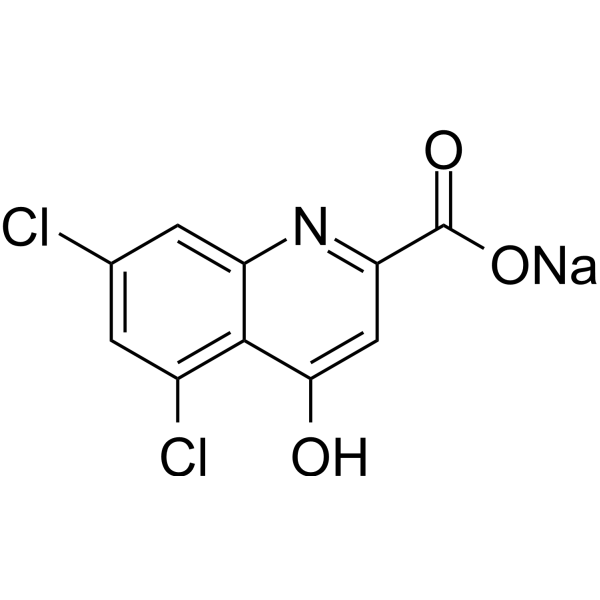
5,7-Dichlorokynurenic acid sodium
Based on 1 publication(s) in Google Scholar
5,7-Dichlorokynurenic acid (5,7-DCKA) sodium is a selective and competitive antagonist of the glycine site on NMDA receptor with a KB of 65 nM. 5,7-Dichlorokynurenic acid sodium reduces NMDA-induced neuron injury. 5,7-Dichlorokynurenic acid sodium increases social interaction time, increases open arm exploration time, disinhibits suppressed conflict responding in rodent models. 5,7-Dichlorokynurenic acid sodium exhibits anxiolytic-like activity in rodent models and supports exploration of glycine’s role in NMDA receptor-mediated synaptic transmission.
For research use only. We do not sell to patients.
- CAS No.: 1184986-70-6
- Formula: C10H4Cl2NNaO3
- Molecular Weight:280.04
-
Storage:
Please store the product under the recommended conditions in the Certificate of Analysis.

To place orders, for customer services and technical support, please contact: MedChemExpress USA
Tel: 609-228-6898 E-mail: [email protected] [email protected]


-
 Biological Activity
-
Chemical Information
- Protocols
- Purity & Documentation
- References
-
 Help & FAQs


-
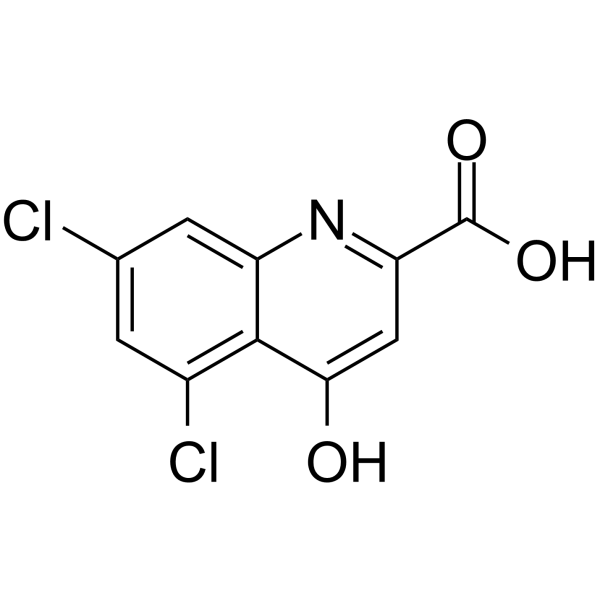
HY-100834
5,7-Dichlorokynurenic acidNMDA Receptor Antagonist -
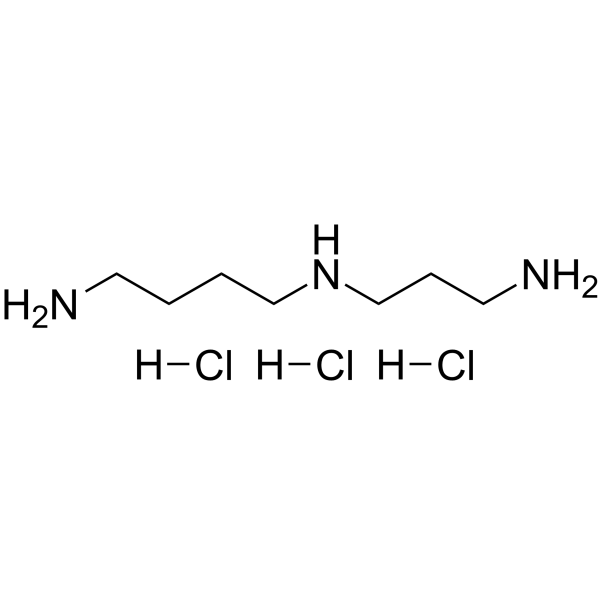
HY-B1776A
Spermidine hydrochlorideAntioxidant Agent -
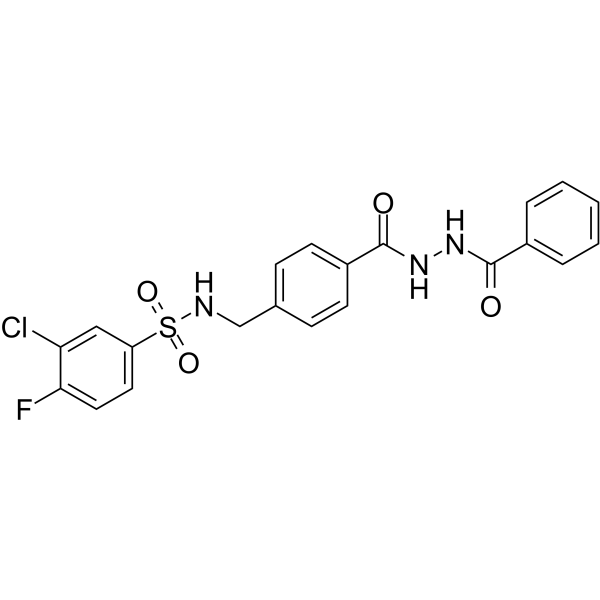
HY-13457
TCN 201NMDA Receptor Antagonist -

HY-100834R
5,7-Dichlorokynurenic acid (Standard)Analytical Standard -
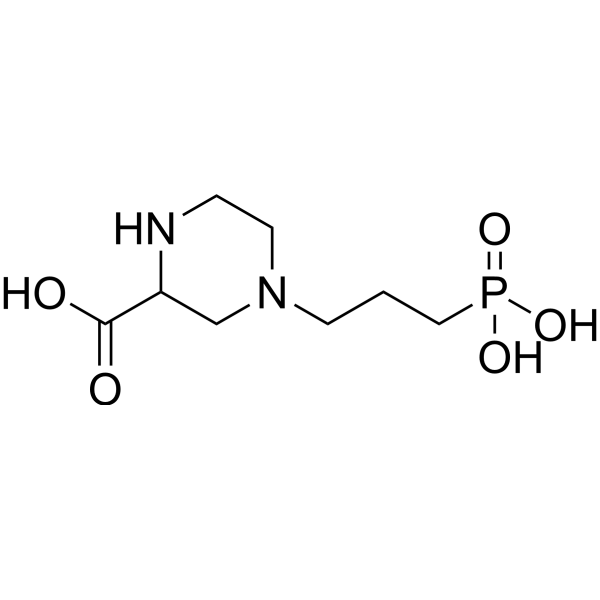
HY-100797
(RS)-CPPNMDA Antagonist -

HY-B1776AR
Spermidine hydrochloride (Standard)Antioxidant Agent -
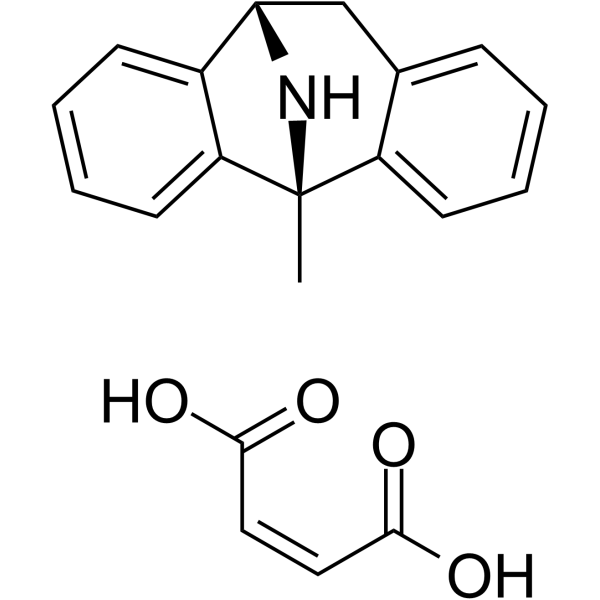
HY-15084A
(-)-Dizocilpine maleateNMDA Receptor Antagonist -
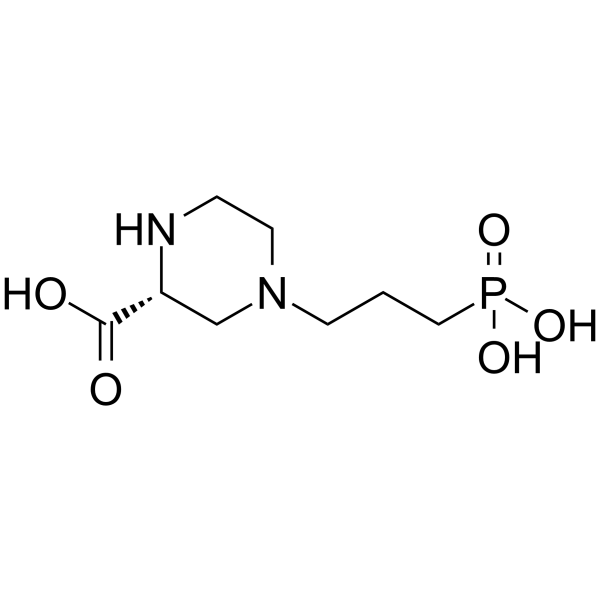
HY-100814
(R)-CPPNMDA Receptor Inhibitor -
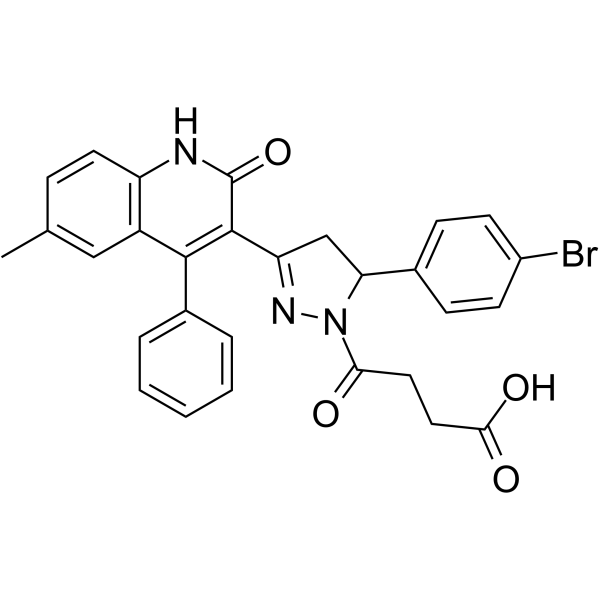
HY-107711
DQP-1105GluN1/GluN2C Antagonist -
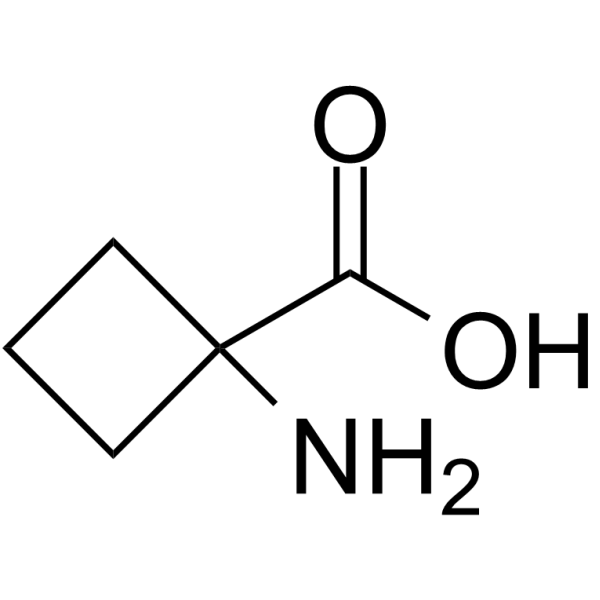
HY-30006
1-Aminocyclobutanecarboxylic acidCyclobutane-type Amino Acid -
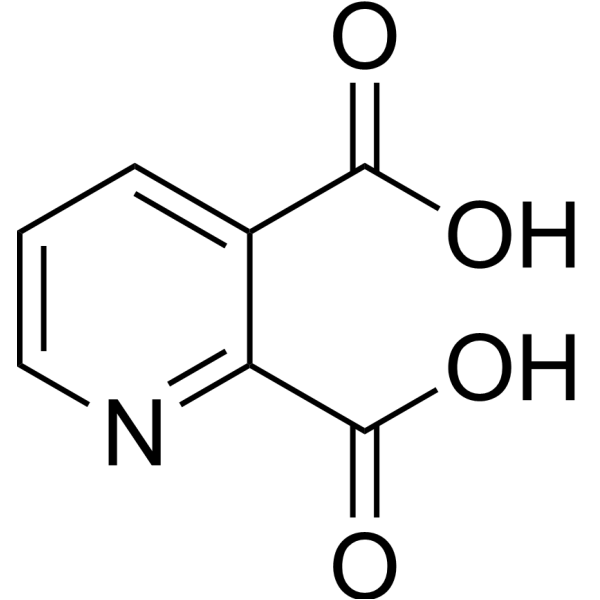
HY-100807
Quinolinic acidNMDA Receptor Agonist -

HY-15086
SelfotelNMDA Antagonist
Publications Citing Use of MedChemExpress (MCE) 5,7-Dichlorokynurenic acid sodium
MoreAll iGluR Isoforms
More

Biological Activity
Description
In Vitro
5,7-dichlorokynurenic acid (0.2-400 μM) sodium is a potent, competitive antagonist of the glycine site on NMDA receptors expressed in rat brain mRNA-injected Xenopus oocytes, with a KB of 65 nM, and is 509-fold more selective for this site than for kainate receptors[1].
5,7-dichlorokynurenic acid (40 nM-10 μM; 60 min on ice) sodium potently displaces [3H]glycine from strychnine-insensitive glycine sites on rat brain cortex membranes with a Ki of 40 nM, and does not bind to the NMDA recognition site at 10 μM[1].
5,7-dichlorokynurenic acid (1-10 μM) sodium reduces NMDA-induced neuronal injury in primary rat cortical cell cultures, with 1 μM yielding 55-79% protection and 10 μM yielding 62-90% protection[1].
MedChemExpress (MCE) has not independently confirmed the accuracy of these methods. They are for reference only. Further protocols information, click here.
In Vivo
5,7-Dichlorokynurenic acid (100.0 mg/kg; i.p.; single dose) sodium produces anxiolytic-like effects in the elevated plus maze model, increasing open arm exploration time by +41% at 100.0 mg/kg, with reduced motor activity[2].
5,7-Dichlorokynurenic acid (100.0-173.0 mg/kg; i.p.; single dose) sodium disinhibits suppressed conflict responding in the Cook and Davidson conditioned anxiety model at 100.0 mg/kg and 173.0 mg/kg without altering non-punished responding[2].
5,7-Dichlorokynurenic acid (10.0-100.0 mg/kg; i.p.; single dose) sodium does not generalize to the MK-801 discriminative cue at 10.0 mg/kg, and shows minimal partial generalization in 1 of 4 rats at 100.0 mg/kg[2].
MedChemExpress (MCE) has not independently confirmed the accuracy of these methods. They are for reference only.
-
Animal Model:Wistar rats (male, 200-300 g)[2]
-
Dosage:30.0 mg/kg; 100.0 mg/kg
-
Administration:i.p.; single dose
-
Result:Increased social interaction time significantly by +37% with no significant change in motor activity at 30.0 mg/kg.
Increased social interaction time significantly by +32%, and decreased motor activity significantly by -34% at 100.0 mg/kg.


Chemical Information
-
CAS No. 1184986-70-6
-
Molecular Weight 280.04
-
Formula C10H4Cl2NNaO3
-
SMILES
O=C(C1=NC2=CC(Cl)=CC(Cl)=C2C(O)=C1)O[Na]
-
Synonyms
5,7-DCKA sodium
-
Shipping
Room temperature in continental US; may vary elsewhere.
-
Storage
Please store the product under the recommended conditions in the Certificate of Analysis.


Publications (1)
-
Journal Impact Factor
-
Most Recent
-
Anal Chem
Exposome-Scale Investigation of Cl-/Br-Containing Chemicals Using High-Resolution Mass Spectrometry, Multistage Machine Learning, and Cloud Computing. [Abstract]2025 Jun 3;97(21):11099-11109. PMID: 40401576

Protocols
-
Protocol for Elevated Plus Maze Test
The Elevated Plus Maze is a rodent anxiety-like behavior assay based on the conflict between spontaneous exploration and avoidance of open, elevated, exposed spaces. The apparatus contains two open arms and two closed arms arranged in a plus shape, and rodents normally spend more time in closed arms than open arms. The assay readout is generated by recording arm entries, time spent in open and closed arms, and related exploratory behaviors. Increased open-arm time or open-arm entries is commonly interpreted as reduced anxiety-like behavior, whereas reduced open-arm exploration is interpreted as increased anxiety-like behavior.
-
Synaptic current patch-clamp recording in brain slices
Whole-cell patch-clamp recording in acute brain slices measures membrane current from visually identified neurons while preserving part of the local synaptic circuit; in voltage clamp, postsynaptic currents are generated by synaptic receptor-channel activation and are recorded as inward or outward currents at a defined holding potential. Miniature synaptic currents are recorded during action-potential blockade with tetrodotoxin, whereas evoked synaptic currents are generated by pathway stimulation and isolated pharmacologically as EPSCs or IPSCs.
-
Directly Induced Neuron Culture
Directly induced neuron culture converts somatic cells, most commonly fibroblasts, into induced neurons without passing through a pluripotent or neural progenitor stage; classic evidence shows that mouse fibroblasts can be converted by Ascl1, Brn2/Pou3f2, and Myt1l, human fibroblasts can be converted by defined neuronal transcription factors, and human fibroblasts can also be converted by miR-9/9-124 with neurogenic or subtype-specifying transcription factors. The readout is acquisition of neuronal identity and function, assessed by neuronal morphology, neuronal markers such as Tuj1/βIII-tubulin, MAP2, synapsin, and subtype markers when relevant, together with functional assays such as action-potential firing, synaptic activity, and electrophysiology.


Purity & Documentation
References
[1]. D McNamara, et al. 5,7-Dichlorokynurenic acid, a potent and selective competitive antagonist of the glycine site on NMDA receptors. Neurosci Lett. 1990 Nov 27;120(1):17-20. [Content Brief]
[2]. Corbett R, et al. Effects of 5,7 dichlorokynurenic acid on conflict, social interaction and plus maze behaviors. Neuropharmacology. 1993;32(5):461-466. [Content Brief]

Calculators
Concentration (start) × Volume (start) = Concentration (final) × Volume (final)


5,7-Dichlorokynurenic acid sodium Related Classifications
HY-100834A Related Classifications
 Powered by Bioz