



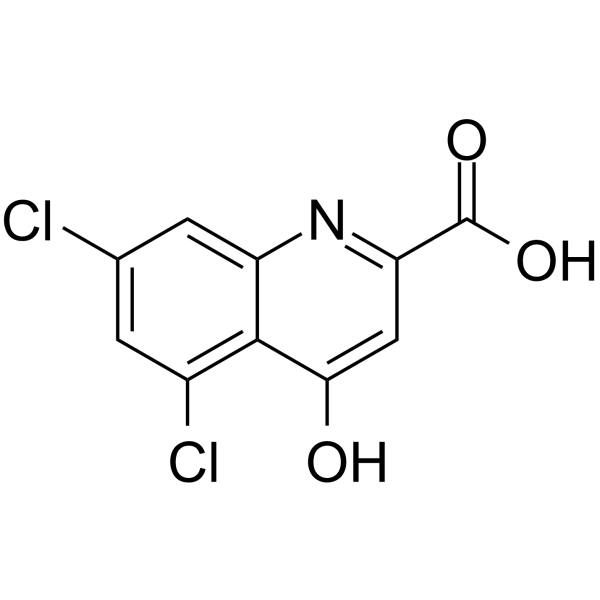
5,7-Dichlorokynurenic acid
Based on 1 publication(s) in Google Scholar
5,7-Dichlorokynurenic acid (5,7-DCKA) is a selective and competitive antagonist of the glycine site on NMDA receptor with a KB of 65 nM. 5,7-Dichlorokynurenic acid reduces NMDA-induced neuron injury. 5,7-Dichlorokynurenic acid increases social interaction time, increases open arm exploration time, disinhibits suppressed conflict responding in rodent models. 5,7-Dichlorokynurenic acid exhibits anxiolytic-like activity in rodent models and supports exploration of glycine’s role in NMDA receptor-mediated synaptic transmission.
For research use only. We do not sell to patients.
- Purity: 99.98%
- CAS No.: 131123-76-7
- Formula: C10H5Cl2NO3
- Molecular Weight:258.06
-
Storage:
4°C, sealed storage, away from moisture
* In solvent : -80°C, 6 months; -20°C, 1 month (sealed storage, away from moisture)

To place orders, for customer services and technical support, please contact: MedChemExpress USA
Tel: 609-228-6898 E-mail: [email protected] [email protected]


-
 Biological Activity
-
Chemical Information
-
Solvent & Solubility
- Purity & Documentation
- References
-
 Help & FAQs


-
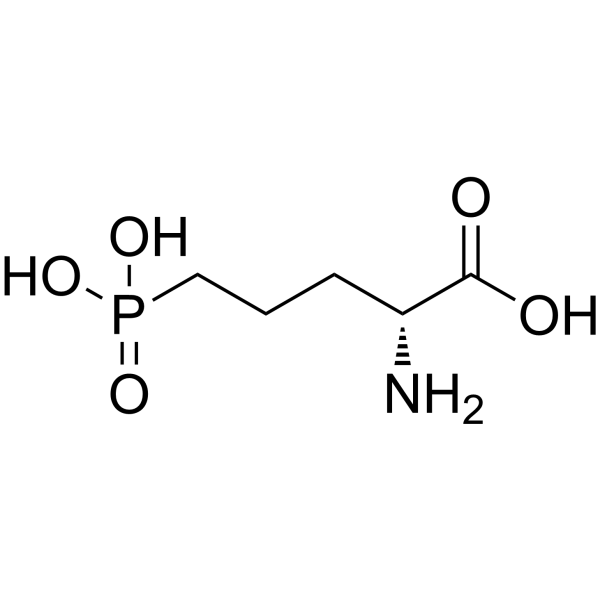
HY-100714A
D-AP5 -
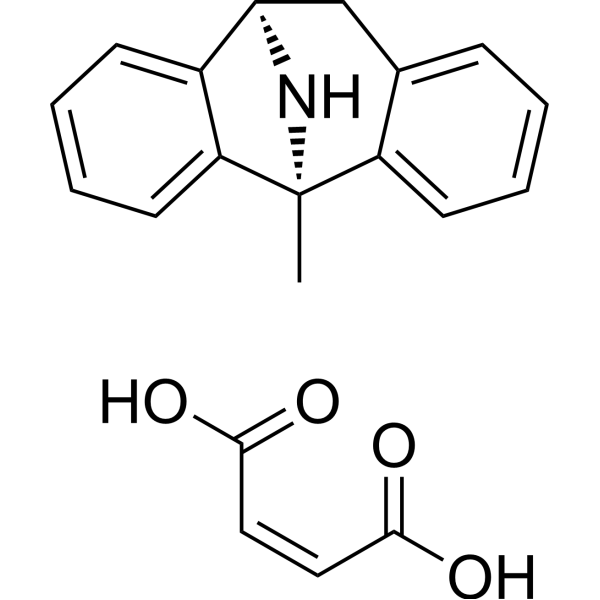
HY-15084
Dizocilpine maleate -

HY-100834R
5,7-Dichlorokynurenic acid (Standard) -
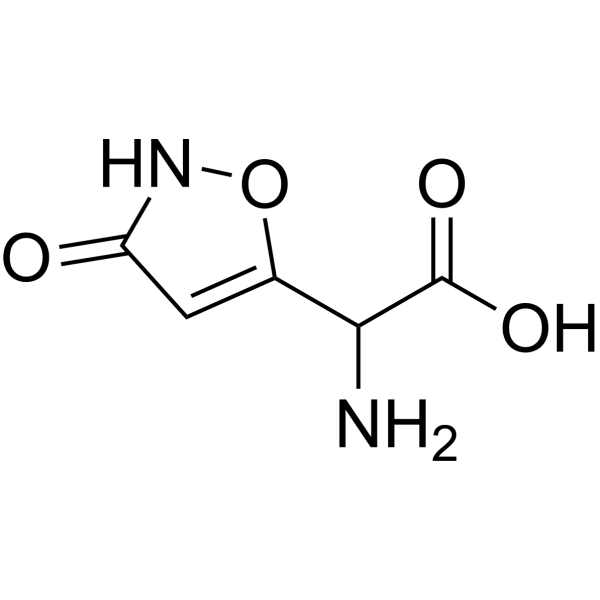
HY-N2311
Ibotenic acid -
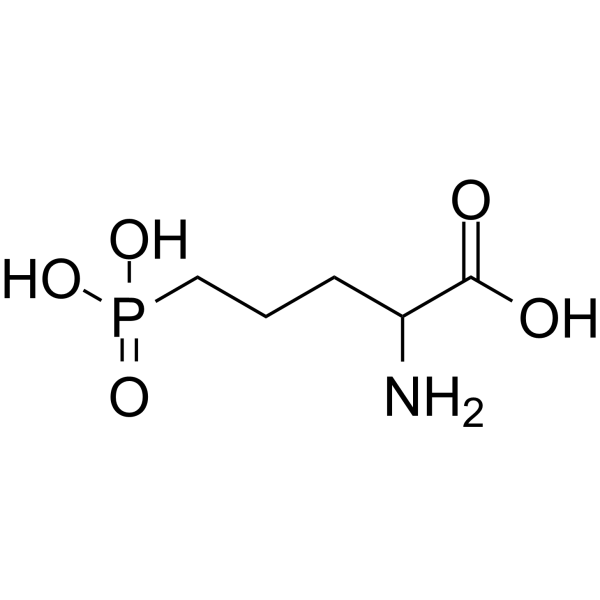
HY-100714
DL-AP5 -
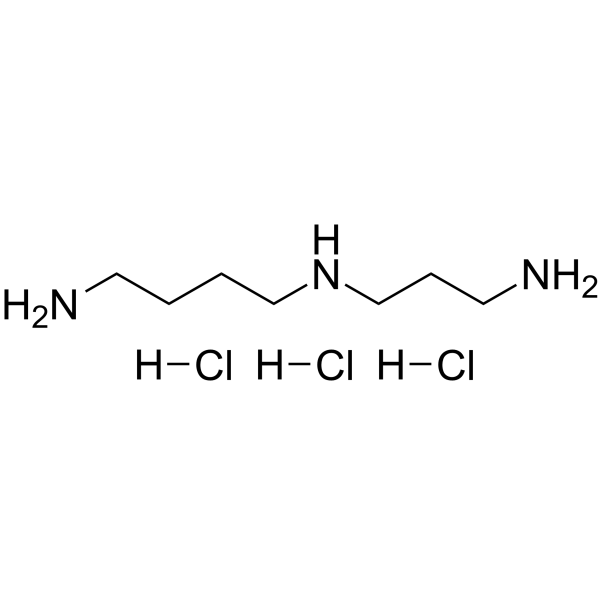
HY-B1776A
Spermidine hydrochloride -

HY-N2311R
Ibotenic acid (Standard) -
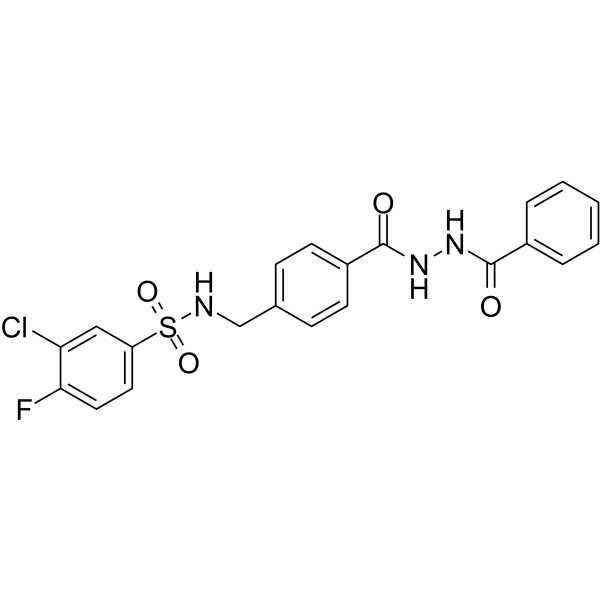
HY-13457
TCN 201 -
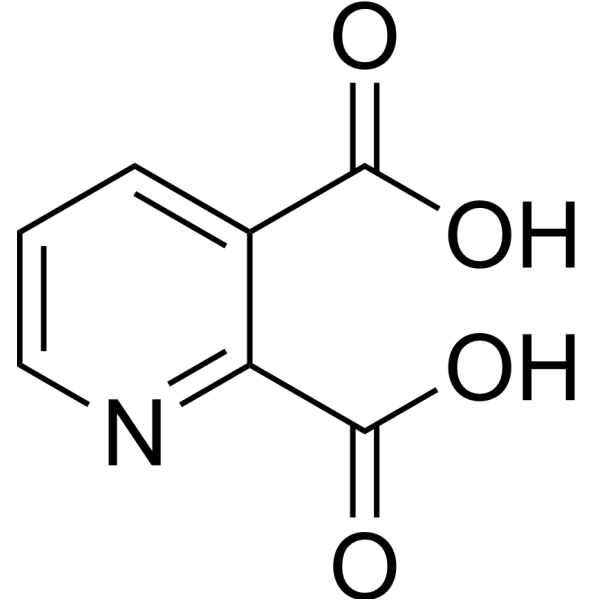
HY-100807
Quinolinic acid -
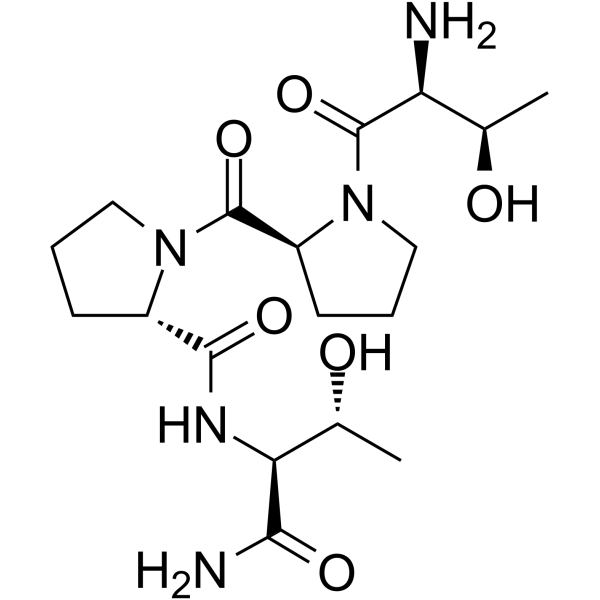
HY-16728
Rapastinel -
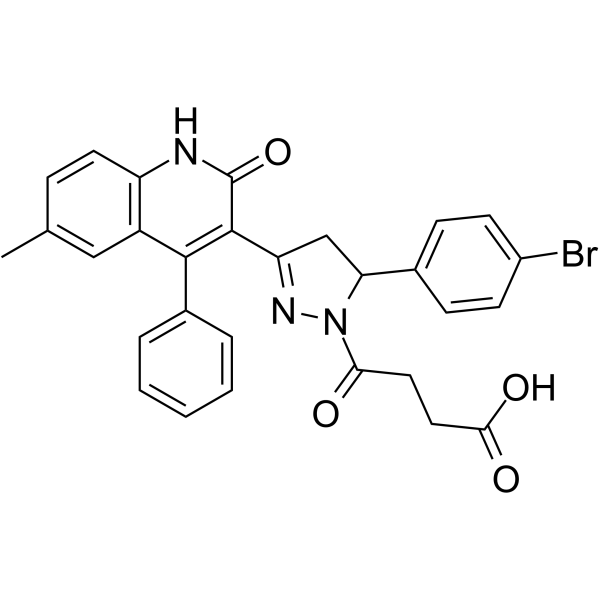
HY-107711
DQP-1105 -
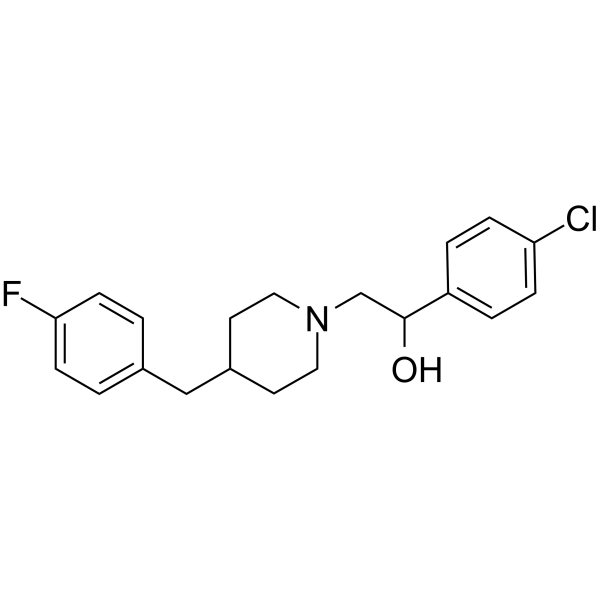
HY-12881
Eliprodil
Publications Citing Use of MedChemExpress (MCE) 5,7-Dichlorokynurenic acid
MoreAll iGluR Isoforms
More

Biological Activity
Description
IC50 & Target
|
NMDA Receptor |
In Vitro
5,7-dichlorokynurenic acid (0.2-400 μM) is a potent, competitive antagonist of the glycine site on NMDA receptors expressed in rat brain mRNA-injected Xenopus oocytes, with a KB of 65 nM, and is 509-fold more selective for this site than for kainate receptors[1].
5,7-dichlorokynurenic acid (40 nM-10 μM; 60 min on ice) potently displaces [3H]glycine from strychnine-insensitive glycine sites on rat brain cortex membranes with a Ki of 40 nM, and does not bind to the NMDA recognition site at 10 μM[1].
5,7-dichlorokynurenic acid (1-10 μM) reduces NMDA-induced neuronal injury in primary rat cortical cell cultures, with 1 μM yielding 55-79% protection and 10 μM yielding 62-90% protection[1].
MedChemExpress (MCE) has not independently confirmed the accuracy of these methods. They are for reference only.
In Vivo
5,7-Dichlorokynurenic acid (100.0 mg/kg; i.p.; single dose) produces anxiolytic-like effects in the elevated plus maze model, increasing open arm exploration time by +41% at 100.0 mg/kg, with reduced motor activity[2].
5,7-Dichlorokynurenic acid (100.0-173.0 mg/kg; i.p.; single dose) disinhibits suppressed conflict responding in the Cook and Davidson conditioned anxiety model at 100.0 mg/kg and 173.0 mg/kg without altering non-punished responding[2].
5,7-Dichlorokynurenic acid (10.0-100.0 mg/kg; i.p.; single dose) does not generalize to the MK-801 discriminative cue at 10.0 mg/kg, and shows minimal partial generalization in 1 of 4 rats at 100.0 mg/kg[2].
MedChemExpress (MCE) has not independently confirmed the accuracy of these methods. They are for reference only.
-
Animal Model:Wistar rats (male, 200-300 g)[2]
-
Dosage:30.0 mg/kg; 100.0 mg/kg
-
Administration:i.p.; single dose
-
Result:Increased social interaction time significantly by +37% with no significant change in motor activity at 30.0 mg/kg.
Increased social interaction time significantly by +32%, and decreased motor activity significantly by -34% at 100.0 mg/kg.


Chemical Information
-
CAS No. 131123-76-7
-
Appearance Solid
-
Molecular Weight 258.06
-
Formula C10H5Cl2NO3
-
Color Off-white to light yellow
-
SMILES
O=C(C1=NC2=CC(Cl)=CC(Cl)=C2C(O)=C1)O
-
Synonyms
5,7-DCKA
-
Shipping
Room temperature in continental US; may vary elsewhere.
-
Storage
4°C, sealed storage, away from moisture
* In solvent : -80°C, 6 months; -20°C, 1 month (sealed storage, away from moisture)


Publications (1)
-
Journal Impact Factor
-
Most Recent
-
Anal Chem
Exposome-Scale Investigation of Cl-/Br-Containing Chemicals Using High-Resolution Mass Spectrometry, Multistage Machine Learning, and Cloud Computing. [Abstract]2025 Jun 3;97(21):11099-11109. PMID: 40401576


Solvent & Solubility
In Vitro:
DMSO : 25 mg/mL (96.88 mM; Need ultrasonic; Hygroscopic DMSO has a significant impact on the solubility of product, please use newly opened DMSO)
Please refer to the solubility information to select the appropriate solvent. Once prepared, please aliquot and store the solution to prevent product inactivation from repeated freeze-thaw cycles.
Storage method and period of stock solution: -80°C, 6 months; -20°C, 1 month (sealed storage, away from moisture). When stored at -80°C, please use it within 6 months. When stored at -20°C, please use it within 1 month.
Please refer to the solubility information to select the appropriate solvent. Once prepared, please aliquot and store the solution to prevent product inactivation from repeated freeze-thaw cycles.
Storage method and period of stock solution: -80°C, 6 months; -20°C, 1 month (sealed storage, away from moisture). When stored at -80°C, please use it within 6 months. When stored at -20°C, please use it within 1 month.
Concentration (start) × Volume (start) = Concentration (final) × Volume (final)
In Vivo:
Select the appropriate dissolution method based on your experimental animal and administration route.
- For the following dissolution methods, please ensure to first prepare a clear stock solution using an In Vitro approach and then sequentially add co-solvents:
- To ensure reliable experimental results, the clarified stock solution can be appropriately stored based on storage conditions. As for the working solution for In Vivo experiments, it is recommended to prepare freshly and use it on the same day.
- The percentages shown for the solvents indicate their volumetric ratio in the final prepared solution. If precipitation or phase separation occurs during preparation, heat and/or sonication can be used to aid dissolution.
Add each solvent one by one: 10% DMSO 40% PEG300 5% Tween-80 45% Saline
Solubility: ≥ 2.5 mg/mL (9.69 mM); Clear solution
This protocol yields a clear solution of ≥ 2.5 mg/mL (saturation unknown).
Taking 1 mL working solution as an example, add 100 μL DMSO stock solution (25.0 mg/mL) to 400 μL PEG300, and mix evenly; then add 50 μL Tween-80 and mix evenly; then add 450 μL Saline to adjust the volume to 1 mL.
Preparation of Saline: Dissolve 0.9 g sodium chloride in ddH₂O and dilute to 100 mL to obtain a clear Saline solution.
In Vivo Dissolution Calculator
Please enter the basic information of animal experiments:
-
-
-
-
Recommended: Prepare an additional quantity of animals to account for potential losses during experiments.
Please enter your animal formula composition:
-
%DMSO +
Recommended: Keep the proportion of DMSO in working solution below 2% if your animal is weak.
-
%+
-
+%Tween-80 + +
-
%Saline +
The co-solvents required include: DMSO, . All of co-solvents are available by MedChemExpress (MCE). , Tween 80. All of co-solvents are available by MedChemExpress (MCE).
Working solution concentration: 0.22 mg/mL
Method for preparing stock solution: mg drug dissolved in μL DMSO. Stock solution concentration: mg/mL. * In solvent : -80°C, 6 months; -20°C, 1 month (sealed storage, away from moisture)
1. Take μL DMSO stock solution;
2. Add μL .
μL , mix evenly;
3. Then add μL Tween 80, mix evenly;
4. Then add μL
Please ensure that the stock solution in the first step is dissolved to a clear state, and add co-solvents in sequence. You can use ultrasonic heating (ultrasonic cleaner, recommended frequency 20-40 kHz), vortexing, etc. to assist dissolution.


Purity & Documentation
-
Data Sheet (276 KB)
-
SDS (393 KB)
- English - EN (393 KB)
- Français - FR (393 KB)
- Deutsch - DE (393 KB)
- Norwegian - NO (393 KB)
- Español - ES (393 KB)
- Swedish - SV (393 KB)
- Italian - IT (393 KB)
- Korean - KR (393 KB)
- Portuguese - PT (393 KB)
-
Handling Instructions (2659 KB)
References
[1]. McNamara D, et al. 5,7-Dichlorokynurenic acid, a potent and selective competitive antagonist of the glycine site on NMDA receptors. Neurosci Lett. 1990;120(1):17-20. [Content Brief]
[2]. Corbett R, et al. Effects of 5,7 dichlorokynurenic acid on conflict, social interaction and plus maze behaviors. Neuropharmacology. 1993;32(5):461-466. [Content Brief]


Complete Stock Solution Preparation Table
Please refer to the solubility information to select the appropriate solvent. Once prepared, please aliquot and store the solution to prevent product inactivation from repeated freeze-thaw cycles.
Storage method and period of stock solution: -80°C, 6 months; -20°C, 1 month (sealed storage, away from moisture). When stored at -80°C, please use it within 6 months. When stored at -20°C, please use it within 1 month.
| Optional Solvent | Concentration Solvent Mass | 1 mg | 5 mg | 10 mg | 25 mg |
|---|---|---|---|---|---|
| DMSO | 1 mM | 3.8751 mL | 19.3753 mL | 38.7507 mL | 96.8767 mL |
| 5 mM | 0.7750 mL | 3.8751 mL | 7.7501 mL | 19.3753 mL | |
| 10 mM | 0.3875 mL | 1.9375 mL | 3.8751 mL | 9.6877 mL | |
| 15 mM | 0.2583 mL | 1.2917 mL | 2.5834 mL | 6.4584 mL | |
| 20 mM | 0.1938 mL | 0.9688 mL | 1.9375 mL | 4.8438 mL | |
| 25 mM | 0.1550 mL | 0.7750 mL | 1.5500 mL | 3.8751 mL | |
| 30 mM | 0.1292 mL | 0.6458 mL | 1.2917 mL | 3.2292 mL | |
| 40 mM | 0.0969 mL | 0.4844 mL | 0.9688 mL | 2.4219 mL | |
| 50 mM | 0.0775 mL | 0.3875 mL | 0.7750 mL | 1.9375 mL | |
| 60 mM | 0.0646 mL | 0.3229 mL | 0.6458 mL | 1.6146 mL | |
| 80 mM | 0.0484 mL | 0.2422 mL | 0.4844 mL | 1.2110 mL |


5,7-Dichlorokynurenic acid Related Classifications
HY-100834 Related Classifications
 Powered by Bioz