1. GPCR/G Protein
  2. Angiotensin Receptor
  3. AVE 0991

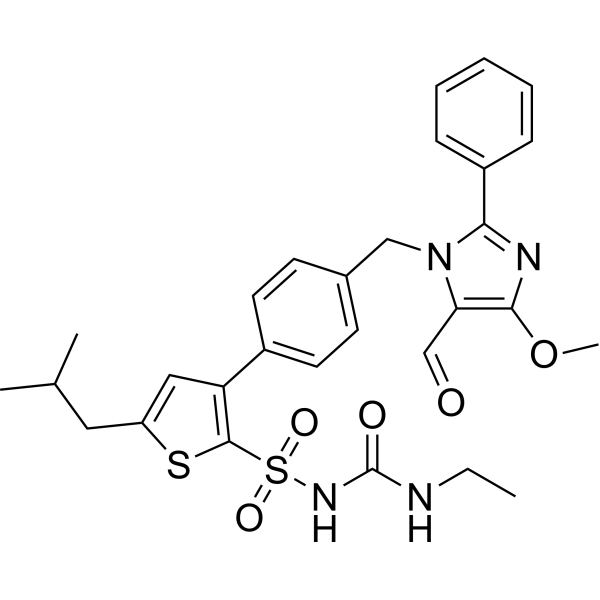
AVE 0991 is a nonpeptide and orally active angiotensin-(1-7) receptor agonist with an IC50 of 21 nM.

商品は「研究用試薬」です。人や動物の医療用・臨床診断用・食品用の製品ではありません。
研究用途以外に使用した場合、当社は一切の責任を負いかねます。

CAS 番号 : 304462-19-9

容量 価格(税別) 在庫状況 数量
Solid + Solvent (Highly Recommended)
10 mM * 1 mL in DMSO
ready for reconstitution
USD 230 在庫あり
Solution
10 mM * 1 mL in DMSO USD 230 在庫あり
Solid
5 mg $180 在庫あり
10 mg $290 在庫あり
25 mg $580 在庫あり
50 mg $870 在庫あり
100 mg $1390 在庫あり
200 mg   お問い合わせ  
500 mg   お問い合わせ  

* アイテムを追加する前、数量をご選択ください

This product is a controlled substance and not for sale in your territory.

カスタマーレビュー

Based on 15 publication(s) in Google Scholar

Other Forms of AVE 0991:

Top Publications Citing Use of Products

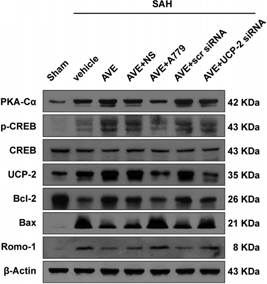
    AVE 0991 purchased from MedChemExpress. Usage Cited in: Redox Biol. 2019 Jan;20:75-86.  [Abstract]

    AVE 0991 (AVE) treatment increases the expression of PKA-Cα, p-CREB, UCP-2, and Bcl-2, but the expression of Bax and Romo-1 are decreased in SAH+AVE group when compared with SAH+vehicle group.

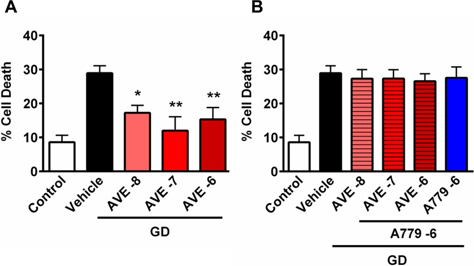
    AVE 0991 purchased from MedChemExpress. Usage Cited in: PLoS One. 2015 Nov 5;10(11):e0142087.  [Abstract]

    The effect of AVE0991 on neuronal cell death following glucose deprivation. Data are shown for cells exposed to normal conditions (control) or glucose deprivation (vehicle) for 24 h or with (A) AVE0991 or (B) AVE0991+A779.

    Angiotensin Receptor アイソフォーム固有の製品をすべて表示:

    • 生物活性

    • プロトコル

    • 純度とドキュメンテーション

    • 参考文献

    • カスタマーレビュー

    製品説明

    AVE 0991 is a nonpeptide and orally active angiotensin-(1-7) receptor agonist with an IC50 of 21 nM[1].

    IC50 & Target

    IC50: 21±35 nM (Ang-(1-7) receptor)[1]

    体外実験

    AVE 0991 is a nonpeptide compound that evokes effects similar to Ang-(1-7) on the endothelium. AVE 0991 and unlabeled Ang-(1-7) compete for high-affinity binding of [125I]-Ang-(1-7) to bovine aortic endothelial cell membranes with IC50s of 21±35 and 220±280 nM, respectively. Peak concentrations of NO and O2- release by AVE 0991 sodium salt and Ang-(1-7) (both 10 μM) are not significantly different (NO: 295±20 and 270±25 nM; O2-: 18±2 and 20±4 nM). However, the released amount of bioactive NO is ≈5 times higher for AVE 0991 in comparison to Ang-(1-7)[1].

    MedChemExpress (MCE) has not independently confirmed the accuracy of these methods. They are for reference only.

    体内実験

    AVE 0991 (0.58 nmol/g) produces a significant decrease of water diuresis in WT mice compared with vehicle-treated animals (0.06±0.03 mL versus 0.27±0.05; n=9 for each group; P<0.01). The antidiuretic effect of AVE 0991 (AVE) is associated with an increase in urine osmolality (1669±231.0 mOsm/KgH2O versus 681.1±165.8 mOsm/KgH2O in vehicle-treated mice; P<0.01). The genetic deletion of Mas abolishes the antidiuretic effect of AVE 0991 during water loading (0.37±0.10 mL [n=9] versus 0.27±0.03 mL [n=11] in AVE 0991-treated mice). As observed with C57BL/6 mice, administration of AVE 0991 (0.58 nmol/g) in water-loaded Swiss mice also produces a significant decrease of the urinary volume compared with vehicle-treated animals (0.13±0.05 mL [n=16] versus 0.51±0.04 mL [n=40]; P<0.01)[2]. One week of treatment with AVE-0991 produces a significant decrease in perfusion pressure (56.55±0.86 vs. 68.73±0.69 mmHg in vehicle-treated rats) and an increase in systolic tension (11.40±0.05 vs. 9.84±0.15 g in vehicle-treated rats), rate of tension rise (+dT/dt; 184.30±0.50 vs. 155.20±1.97 g/s in vehicle-treated rats), rate of tension fall ( dT/dt; 179.60±1.39 vs. 150.80±2.42 g/s in vehicle-treated rats). A slight increase in heart rate (HR) is also observed (220.40±0.71 vs. 214.20±0.74 beats/min in vehicle-treated rats[3].

    MedChemExpress (MCE) has not independently confirmed the accuracy of these methods. They are for reference only.

    分子量

    580.72

    分子式

    C29H32N4O5S2

    CAS 番号
    Appearance

    Solid

    Color

    White to yellow

    SMILES

    O=S(C1=C(C2=CC=C(CN3C(C=O)=C(OC)N=C3C4=CC=CC=C4)C=C2)C=C(CC(C)C)S1)(NC(NCC)=O)=O

    輸送条件

    Room temperature in continental US; may vary elsewhere.

    保管条件
    Powder -20°C 3 years
      4°C 2 years
    In solvent -80°C 6 months
      -20°C 1 month
    溶剤 & 溶解度
    体外: 

    DMSO : 41.67 mg/mL (71.76 mM; Need ultrasonic; Hygroscopic DMSO has a significant impact on the solubility of product, please use newly opened DMSO)

    Preparing
    Stock Solutions
    Concentration Solvent Mass 1 mg 5 mg 10 mg
    1 mM 1.7220 mL 8.6100 mL 17.2200 mL
    5 mM 0.3444 mL 1.7220 mL 3.4440 mL
    10 mM 0.1722 mL 0.8610 mL 1.7220 mL
    View the Complete Stock Solution Preparation Table

    * Please refer to the solubility information to select the appropriate solvent. Once prepared, please aliquot and store the solution to prevent product inactivation from repeated freeze-thaw cycles.
    Storage method and period of stock solution: -80°C, 2 years; -20°C, 1 year. When stored at -80°C, please use it within 2 years. When stored at -20°C, please use it within 1 year.

    • Molarity Calculator

    • Dilution Calculator

    Mass (g) = Concentration (mol/L) × Volume (L) × Molecular Weight (g/mol)

    Mass
    =
    Concentration
    ×
    Volume
    ×
    Molecular Weight *

    Concentration (start) × Volume (start) = Concentration (final) × Volume (final)

    一般には略語で表示されます:C1V1 = C2V2

    濃度 (開始)

    C1

    ×
    体積 (開始)

    V1

    =
    濃度 (終了)

    C2

    ×
    体積 (終了)

    V2

    体内:

    Select the appropriate dissolution method based on your experimental animal and administration route.

    For the following dissolution methods, please ensure to first prepare a clear stock solution using an In Vitro approach and then sequentially add co-solvents:
    To ensure reliable experimental results, the clarified stock solution can be appropriately stored based on storage conditions. As for the working solution for in vivo experiments, it is recommended to prepare freshly and use it on the same day.
    The percentages shown for the solvents indicate their volumetric ratio in the final prepared solution. If precipitation or phase separation occurs during preparation, heat and/or sonication can be used to aid dissolution.

    • Protocol 1

      Add each solvent one by one:  10% DMSO    40% PEG300    5% Tween-80    45% Saline

      Solubility: ≥ 2.5 mg/mL (4.31 mM); Clear solution

      This protocol yields a clear solution of ≥ 2.5 mg/mL (saturation unknown).

      Taking 1 mL working solution as an example, add 100 μL DMSO stock solution (25.0 mg/mL) to 400 μL PEG300, and mix evenly; then add 50 μL Tween-80 and mix evenly; then add 450 μL Saline to adjust the volume to 1 mL.

      Preparation of Saline: Dissolve 0.9 g sodium chloride in ddH₂O and dilute to 100 mL to obtain a clear Saline solution.
    • Protocol 2

      Add each solvent one by one:  10% DMSO    90% (20% SBE-β-CD in Saline)

      Solubility: 2.5 mg/mL (4.31 mM); Suspended solution; Need ultrasonic

      This protocol yields a suspended solution of 2.5 mg/mL. Suspended solution can be used for oral and intraperitoneal injection.

      Taking 1 mL working solution as an example, add 100 μL DMSO stock solution (25.0 mg/mL) to 900 μL 20% SBE-β-CD in Saline, and mix evenly.

      Preparation of 20% SBE-β-CD in Saline (4°C, storage for one week): 2 g SBE-β-CD powder is dissolved in 10 mL Saline, completely dissolve until clear.
    In Vivo Dissolution Calculator
    Please enter the basic information of animal experiments:

    Dosage

    mg/kg

    Animal weight
    (per animal)

    g

    Dosing volume
    (per animal)

    μL

    Number of animals

    Recommended: Prepare an additional quantity of animals to account for potential losses during experiments.
    Please enter your animal formula composition:
    %
    DMSO +
    +
    %
    Tween-80 +
    %
    Saline
    Recommended: Keep the proportion of DMSO in working solution below 2% if your animal is weak.
    The co-solvents required include: DMSO, . All of co-solvents are available by MedChemExpress (MCE). , Tween 80. All of co-solvents are available by MedChemExpress (MCE).
    Calculation results:
    Working solution concentration: mg/mL
    Method for preparing stock solution: mg drug dissolved in μL  DMSO (Stock solution concentration: mg/mL).
    The concentration of the stock solution you require exceeds the measured solubility. The following solution is for reference only. If necessary, please contact MedChemExpress (MCE).
    Method for preparing in vivo working solution for animal experiments: Take μL DMSO stock solution, add μL . μL , mix evenly, next add μL Tween 80, mix evenly, then add μL Saline.
     If the continuous dosing period exceeds half a month, please choose this protocol carefully.
    Please ensure that the stock solution in the first step is dissolved to a clear state, and add co-solvents in sequence. You can use ultrasonic heating (ultrasonic cleaner, recommended frequency 20-40 kHz), vortexing, etc. to assist dissolution.
    純度とドキュメンテーション

    純度: 99.91% ee.: 99.44%

    参考文献
    細胞実験
    [1]

    Monkey kidney (COS) cells and Chinese hamster ovary (CHO) cells are stably transfected with rat Mas cDNA driven by a cytomegalovirus promoter and selected by neomycin. 125I-Ang-(1-7) (0.5×10⁻⁹ mol/L) is incubated in 24-well plates for 60 minutes at 4°C in 0.3 mL of serum-free medium (DMEM) supplemented with 0.2% BSA, 0.005% bacitracin, 0.1 mol/L PMSF, and 0.5 mol/L orthophenanthroline with Mas-transfected COS cells in the presence or absence of AVE 0991 (AVE, 10-10 to -5 mol/L). After 2 ishes with ice-cold serum-free DMEM, cells are disrupted with 0.1% Triton X-100. Bound radioactivity is measured in a gamma counter. Binding of rhodamine-Ang-(1-7) in Mas-transfected CHO cells is performed under similar conditions using 2×10⁻⁹ mol/L rhodamine-labeled-Ang-(1-7) in the presence or absence of AVE (10-6 mol/L), CV11974 (10-6 mol/L), or PD123319 (10-6 mol/L). NSB is determined in the presence of 10-6 mol/L Ang-(1-7)[1].

    MedChemExpress (MCE) はこれらの方法の精度を確認していません。 こちらは参照専用です。

    動物実験
    [2][3]

    Mice[2]
    Swiss male mice, Mas-KO (Mas-/-) male mice on the pure genetic background C57BL/6, and WT C57BL/6 control mice (Mas+/+) are used. Water diuresis is induced by intraperitoneal water injection (0.05 mL/g of body weight [BW]) in conscious mice. Drugs are administered in the same injection with water load at prefixed volumes (0.01 mL/g BW). In the first set of experiments, WT mice (C57BL/6, control group) or Mas-KO mice are treated with: (1) 0.58 nmol/g AVE 0991 (n=9, control; n=11, Mas-KO mice); or (2) vehicle for AVE 0991 (10 μM KOH, 0.01 mL/g; n=9, control; n=9, Mas-KO). In the second set, Swiss mice are treated with: (1) vehicle (n=36); (2) 0.58 nmol/g AVE 0991 (n=16); (3) 46 pmol/g Ang-(1-7) antagonist A-779 (n=4); (4) 2 nmol/g DuP-753 or CGP 48933 (n=5); (5) 2 nmol/g AT2 receptor antagonists PD123319 or PD123177 (n=9); (6) AVE 0991 combined with A-779; (7) AVE 0991 combined with DuP-753 or CGP 48933 (n=4 for each); (8) or AVE 0991combined with PD123319 (n=5) or PD123177 (n=4). The urinary volume is measured for 60 minutes after water loading, and urine samples are obtained to determine the osmolality. The dose of AVE 0991is based in preliminary experiments performed in Swiss mice.
    Rats[3]
    Male Wistar rats weighting 250-300 g are used. Rats are treated either with AVE-0991 (1 mg/kg, n=9) or vehicle (0.9% NaCl, n=11) administered orally by gavage.

    MedChemExpress (MCE) はこれらの方法の精度を確認していません。 こちらは参照専用です。

    参考文献

    Complete Stock Solution Preparation Table

    * Please refer to the solubility information to select the appropriate solvent. Once prepared, please aliquot and store the solution to prevent product inactivation from repeated freeze-thaw cycles.
    Storage method and period of stock solution: -80°C, 2 years; -20°C, 1 year. When stored at -80°C, please use it within 2 years. When stored at -20°C, please use it within 1 year.

    Optional Solvent Concentration Solvent Mass 1 mg 5 mg 10 mg 25 mg
    DMSO 1 mM 1.7220 mL 8.6100 mL 17.2200 mL 43.0500 mL
    5 mM 0.3444 mL 1.7220 mL 3.4440 mL 8.6100 mL
    10 mM 0.1722 mL 0.8610 mL 1.7220 mL 4.3050 mL
    15 mM 0.1148 mL 0.5740 mL 1.1480 mL 2.8700 mL
    20 mM 0.0861 mL 0.4305 mL 0.8610 mL 2.1525 mL
    25 mM 0.0689 mL 0.3444 mL 0.6888 mL 1.7220 mL
    30 mM 0.0574 mL 0.2870 mL 0.5740 mL 1.4350 mL
    40 mM 0.0431 mL 0.2153 mL 0.4305 mL 1.0763 mL
    50 mM 0.0344 mL 0.1722 mL 0.3444 mL 0.8610 mL
    60 mM 0.0287 mL 0.1435 mL 0.2870 mL 0.7175 mL
    • No file chosen (Maximum size is: 1024 Kb)
    • If you have published this work, please enter the PubMed ID.
    • Your name will appear on the site.
    • Molarity Calculator

    • Dilution Calculator

    The molarity calculator equation

    Mass (g) = Concentration (mol/L) × Volume (L) × Molecular Weight (g/mol)

    質量   濃度   体積   分子量 *
    = × ×

    The dilution calculator equation

    Concentration (start) × Volume (start) = Concentration (final) × Volume (final)

    一般には略語で表示されます:C1V1 = C2V2

    濃度 (開始) × 体積 (開始) = 濃度 (終了) × 体積 (終了)
    × = ×
    C1   V1   C2   V2
    Help & FAQs
    • Do most proteins show cross-species activity?

      Species cross-reactivity must be investigated individually for each product. Many human cytokines will produce a nice response in mouse cell lines, and many mouse proteins will show activity on human cells. Other proteins may have a lower specific activity when used in the opposite species.

    最近チェックした製品:

    オンラインお問い合わせ

    Your information is safe with us. * Required Fields.

    製品名


    カスタマ需要量 *

    お名前 *


    タイトル

    メールアドレス *


    電話番号 *

    デパートメント


    組纖名 *

    市区町村

    都道府県

    国或いは地域 *


    必ず会社名を記載ください。個人への返信は行いません。

    備考

    バルクお問い合わせ

    Inquiry Information

    製品名:
    AVE 0991
    製品番号:
    HY-15778
    数量:
    MCE 日本正規代理店: