



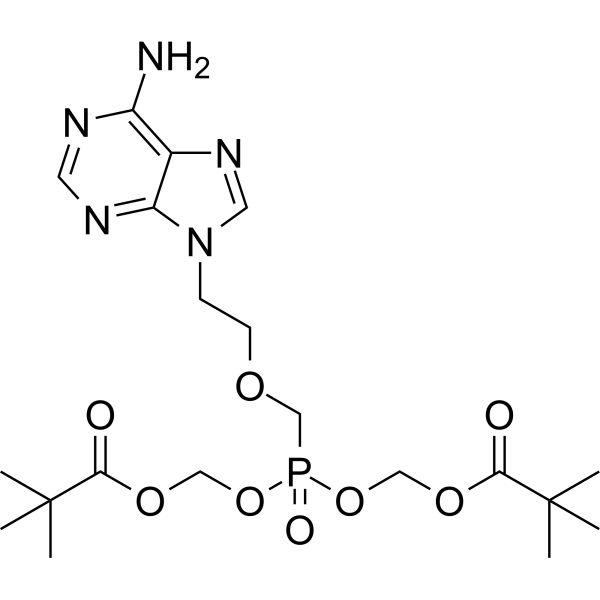
Adefovir dipivoxil
Based on 2 publication(s) in Google Scholar
Adefovir dipivoxil is an orally active adenosine analog and Adefovir prodrug. Adefovir dipivoxil inhibits DNA synthesis, activates the ATR signaling pathway, and disrupts the KCTD12-CDK1 interaction. Adefovir dipivoxil has antiviral activity against PRV, HBV, and orthopoxviruses. Adefovir dipivoxil has inhibitory effects on both lamivudine-resistant and wild-type strains. Adefovir dipivoxil has antitumor activity against lung and colon cancer.
For research use only. We do not sell to patients.
- Purity : 99.03%
- CAS No.: 142340-99-6
- Formula: C20H32N5O8P
- Molecular Weight:501.47
-
Storage:Powder -20°C, 3 years , 4°C, 2 years ; In solvent -80°C, 2 years , -20°C, 1 year

To place orders, for customer services and technical support, please contact: MedChemExpress USA
Tel: 609-228-6898 E-mail: [email protected] [email protected]


-
 Biological Activity
-
Chemical Information
-
Solvent & Solubility
- Protocols
- Purity & Documentation
- References
-
 Help & FAQs


-
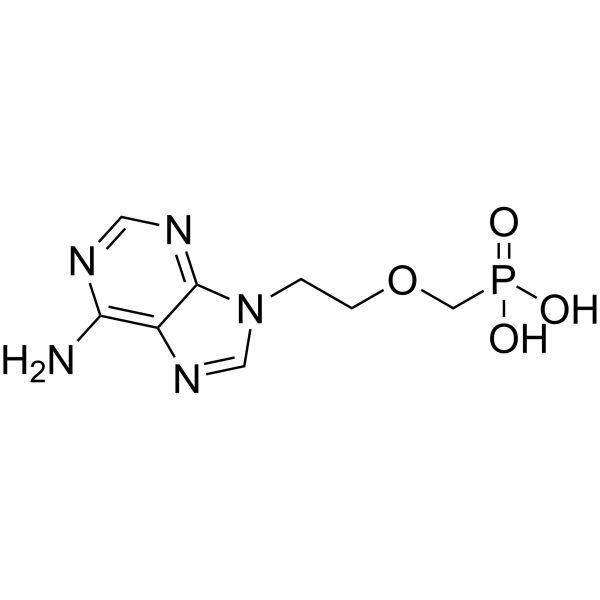
HY-B1826
AdefovirHBV Inhibitor -
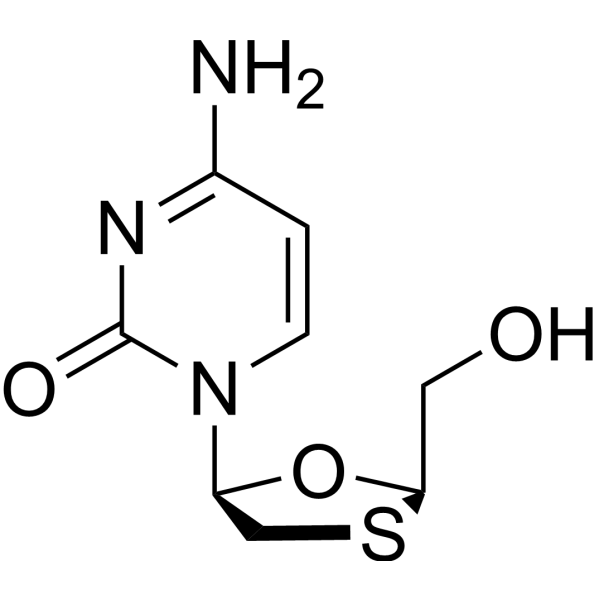
HY-B0250
LamivudineReverse Transcriptase Inhibitor -
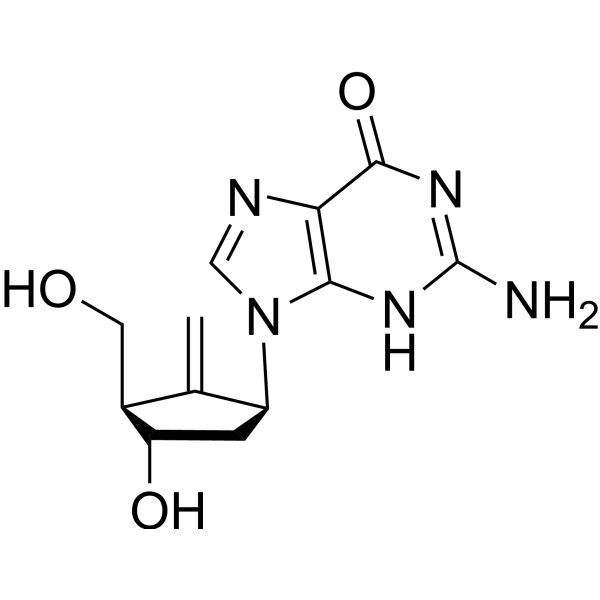
HY-13623
EntecavirHBV Inhibitor -
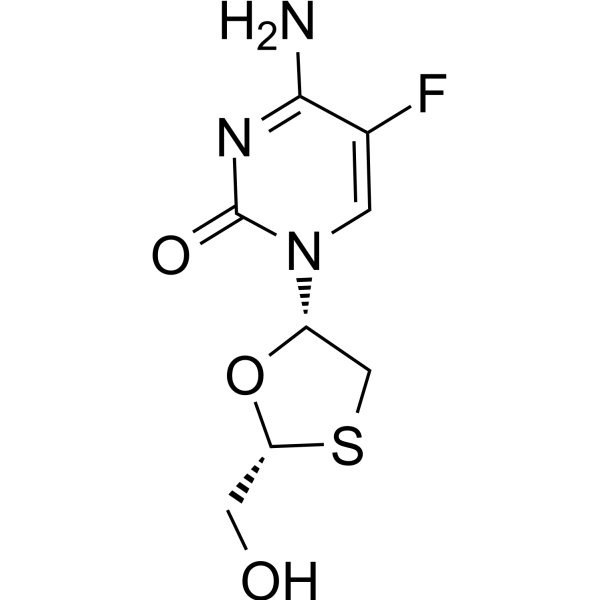
HY-17427
EmtricitabineNRT Inhibitor -
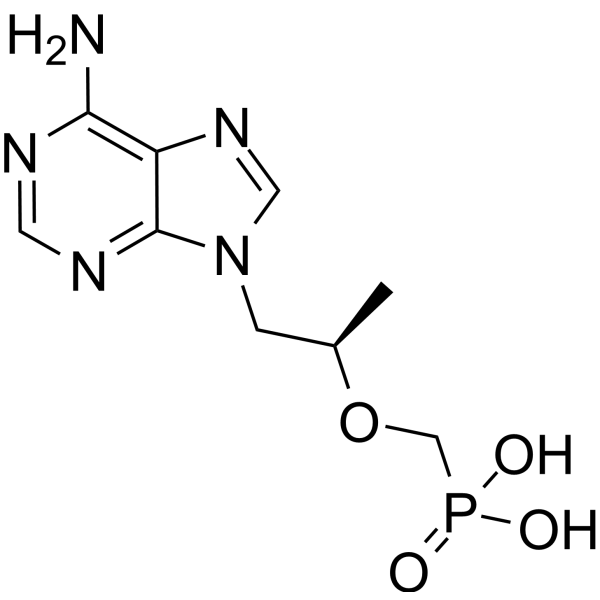
HY-13910
TenofovirNucleotide Reverse Transcriptase Inhibitor -
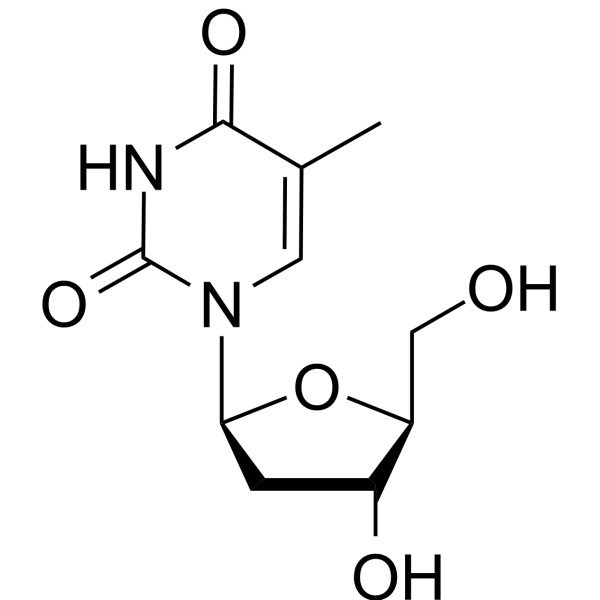
HY-B0017
TelbivudineHBV Replication Inhibitor -
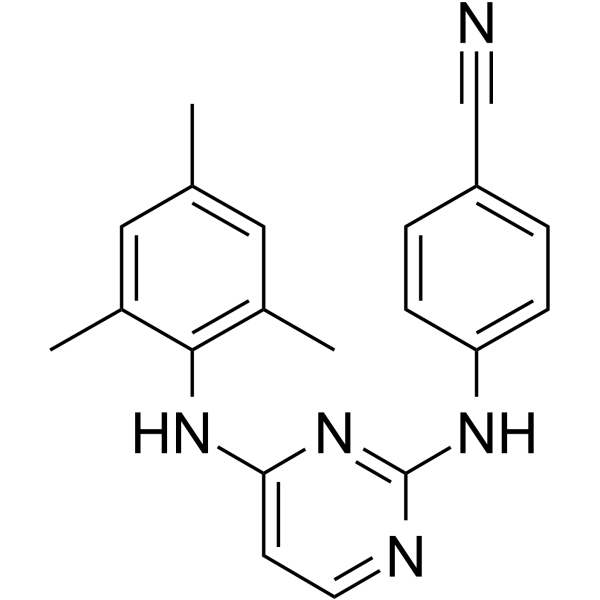
HY-14266
DapivirineNRTI -
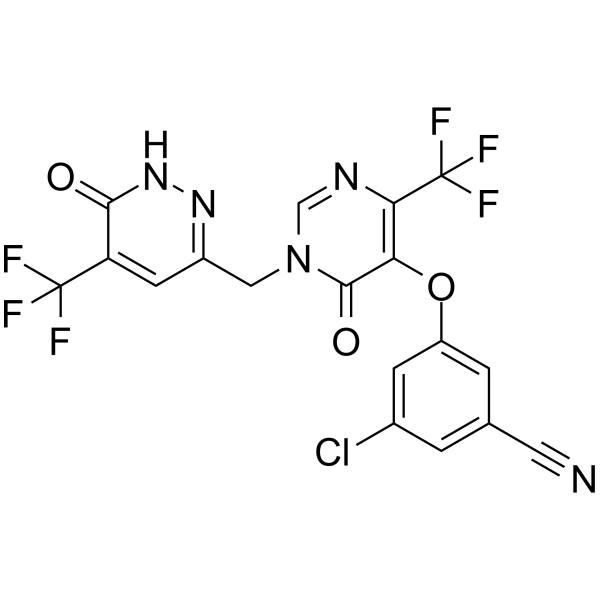
HY-147411
UlonivirineHIV-1 reverse transcriptase Inhibitor -

HY-B0255R
Adefovir dipivoxil (Standard)Nucleoside Reverse Transcriptase Inhibitor -
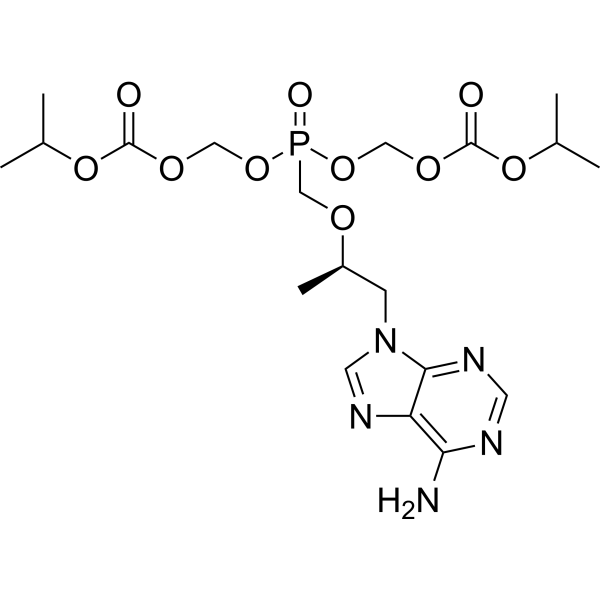
HY-13782A
Tenofovir DisoproxilReverse Transcriptase Inhibitor -
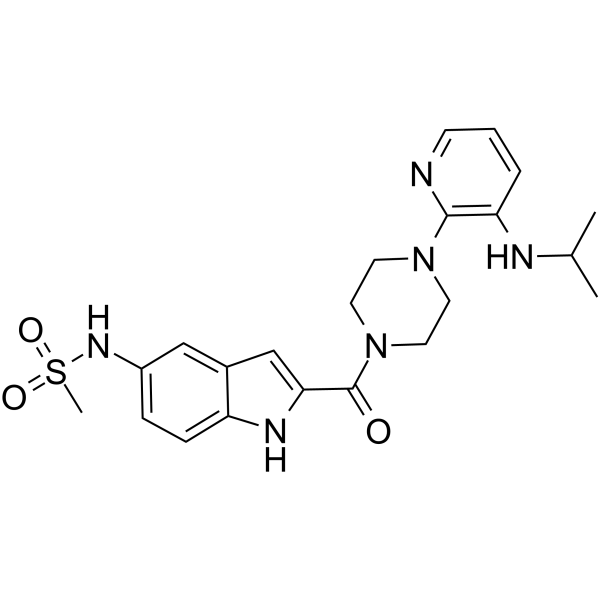
HY-10571
DelavirdineNNRTI -
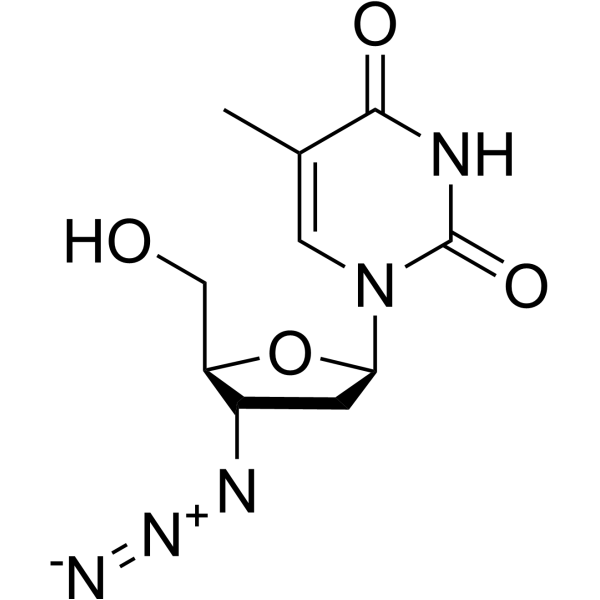
HY-17413
ZidovudineNucleoside Reverse Transcriptase Inhibitor
Publications Citing Use of MedChemExpress (MCE) Adefovir dipivoxil
MoreAll DNA/RNA Synthesis Isoforms
More

Biological Activity
Description
Cellular Effect
|
Cell Line

|
Type | Value | Description | References |
|---|---|---|---|---|
| CCRF-CEM | CC50 |
0.74 μM
Compound: 15, Bis(POM)-PMEA
|
Cytotoxicity against CEM/O cells
Cytotoxicity against CEM/O cells
|
[PMID: 16335932] |
| CCRF-CEM | CC50 |
1.6 μM
Compound: 11, Bis-POM-PMEA
|
Cytotoxicity against mock-infected human CEM cells assessed as growth inhibition
Cytotoxicity against mock-infected human CEM cells assessed as growth inhibition
|
[PMID: 23603046] |
| CCRF-CEM | EC50 |
0.045 μM
Compound: 11, Bis-POM-PMEA
|
Antiviral activity against wild type HIV-1 3B infected in human CEM cells assessed as inhibition of syncytia formation after 4 days by microscopic analysis
Antiviral activity against wild type HIV-1 3B infected in human CEM cells assessed as inhibition of syncytia formation after 4 days by microscopic analysis
|
[PMID: 23603046] |
| CCRF-CEM | EC50 |
0.062 μM
Compound: 11, Bis-POM-PMEA
|
Antiviral activity against wild type HIV-2 ROD infected in human CEM cells assessed as inhibition of syncytia formation after 4 days by microscopic analysis
Antiviral activity against wild type HIV-2 ROD infected in human CEM cells assessed as inhibition of syncytia formation after 4 days by microscopic analysis
|
[PMID: 23603046] |
| CEM-SS | CC50 |
4.4 μM
Compound: 3
|
Compound was tested for antiviral activity against the CEM-SS cell lines infected with HIV-1.
Compound was tested for antiviral activity against the CEM-SS cell lines infected with HIV-1.
|
[PMID: 8960556] |
| CEM-SS | EC50 |
0.04 μM
Compound: 3
|
Compound was tested for antiviral activity against the CEM-SS cell lines infected with HIV-1.
Compound was tested for antiviral activity against the CEM-SS cell lines infected with HIV-1.
|
[PMID: 8960556] |
| HEK293 | IC50 |
13.5 μM
Compound: ADV
|
Inhibition of human OAT1 expressed in HEK293 cells assessed as P-amino hippuric acid uptake inhibition incubated for 10 mins by UPLC-MS/MS method
Inhibition of human OAT1 expressed in HEK293 cells assessed as P-amino hippuric acid uptake inhibition incubated for 10 mins by UPLC-MS/MS method
|
[PMID: 31301948] |
| HEL | EC50 |
0.2 μM
Compound: 11, Bis-POM-PMEA
|
Antiviral activity against Human simplex virus 1 KOS infected in human HEL cells assessed as reduction of virus-induced cytopathicity measured at day 3 by microscopic analysis
Antiviral activity against Human simplex virus 1 KOS infected in human HEL cells assessed as reduction of virus-induced cytopathicity measured at day 3 by microscopic analysis
|
[PMID: 23603046] |
| HEL | EC50 |
0.2 μM
Compound: 11, Bis-POM-PMEA
|
Antiviral activity against Human simplex virus 2 G infected in human HEL cells assessed as reduction of virus-induced cytopathicity measured at day 3 by microscopic analysis
Antiviral activity against Human simplex virus 2 G infected in human HEL cells assessed as reduction of virus-induced cytopathicity measured at day 3 by microscopic analysis
|
[PMID: 23603046] |
| HEL | EC50 |
0.2 μM
Compound: 11, Bis-POM-PMEA
|
Antiviral activity against thymidine kinase-deficient Human simplex virus 1 KOS infected in human HEL cells assessed as reduction of virus-induced cytopathicity measured at day 3 by microscopic analysis
Antiviral activity against thymidine kinase-deficient Human simplex virus 1 KOS infected in human HEL cells assessed as reduction of virus-induced cytopathicity measured at day 3 by microscopic analysis
|
[PMID: 23603046] |
| HEL | EC50 |
4 μM
Compound: 11, Bis-POM-PMEA
|
Antiviral activity against Vaccinia virus infected in human HEL cells assessed as reduction of virus-induced cytopathicity measured at day 3 by microscopic analysis
Antiviral activity against Vaccinia virus infected in human HEL cells assessed as reduction of virus-induced cytopathicity measured at day 3 by microscopic analysis
|
[PMID: 23603046] |
| HepG2 2.2.15 | CC50 |
555 μM
Compound: 2
|
Cytotoxicity against human HepG2(2.2.15) cells
Cytotoxicity against human HepG2(2.2.15) cells
|
[PMID: 19889538] |
| HepG2 2.2.15 | IC50 |
0.33 μM
Compound: 2
|
Antiviral activity against Hepatitis B virus infected HepG2(2.2.15) cells assessed as inhibition of viral cytoplasmic DNA synthesis by real-time PCR
Antiviral activity against Hepatitis B virus infected HepG2(2.2.15) cells assessed as inhibition of viral cytoplasmic DNA synthesis by real-time PCR
|
[PMID: 19889538] |
| HepG2 2.2.15 | EC50 |
1.5 μM
Compound: ADV
|
Antiviral activity against wild type HBV infected in HepG2.2.15 cells assessed as nucleic acid and protein levels dosed daily for 9 days and measured 24 hrs after last treatment by Southern blot hybridization
Antiviral activity against wild type HBV infected in HepG2.2.15 cells assessed as nucleic acid and protein levels dosed daily for 9 days and measured 24 hrs after last treatment by Southern blot hybridization
|
[PMID: 20117930] |
| HepG2 2.2.15 | EC50 |
1.8 μM
Compound: ADV
|
Antiviral activity against 3TC-resistant HBV with polymerase M204V mutation infected in HepG2.2.15 cells assessed as nucleic acid and protein levels dosed daily for 9 days and measured 24 hrs after last treatment by Southern blot hybridization
Antiviral activity against 3TC-resistant HBV with polymerase M204V mutation infected in HepG2.2.15 cells assessed as nucleic acid and protein levels dosed daily for 9 days and measured 24 hrs after last treatment by Southern blot hybridization
|
[PMID: 20117930] |
| HepG2 2.2.15 | EC50 |
2 μM
Compound: ADV
|
Antiviral activity against 3TC-resistant HBV with polymerase M204I mutation infected in HepG2.2.15 cells assessed as nucleic acid and protein levels dosed daily for 9 days and measured 24 hrs after last treatment by Southern blot hybridization
Antiviral activity against 3TC-resistant HBV with polymerase M204I mutation infected in HepG2.2.15 cells assessed as nucleic acid and protein levels dosed daily for 9 days and measured 24 hrs after last treatment by Southern blot hybridization
|
[PMID: 20117930] |
| HepG2 2.2.15 | EC50 |
2.1 μM
Compound: ADV
|
Antiviral activity against 3TC-resistant HBV with polymerase L180M mutation infected in HepG2.2.15 cells assessed as nucleic acid and protein levels dosed daily for 9 days and measured 24 hrs after last treatment by Southern blot hybridization
Antiviral activity against 3TC-resistant HBV with polymerase L180M mutation infected in HepG2.2.15 cells assessed as nucleic acid and protein levels dosed daily for 9 days and measured 24 hrs after last treatment by Southern blot hybridization
|
[PMID: 20117930] |
| HepG2 2.2.15 | EC50 |
2.2 μM
Compound: ADV
|
Antiviral activity against 3TC-resistant HBV with polymerase LMMV mutation infected in HepG2.2.15 cells assessed as nucleic acid and protein levels dosed daily for 9 days and measured 24 hrs after last treatment by Southern blot hybridization
Antiviral activity against 3TC-resistant HBV with polymerase LMMV mutation infected in HepG2.2.15 cells assessed as nucleic acid and protein levels dosed daily for 9 days and measured 24 hrs after last treatment by Southern blot hybridization
|
[PMID: 20117930] |
| HepG2 2.2.15 | EC50 |
7.5 μM
Compound: ADV
|
Antiviral activity against ADV-resistant HBV N236T mutation infected in HepG2.2.15 cells assessed as nucleic acid and protein levels dosed daily for 9 days and measured 24 hrs after last treatment by Southern blot hybridization
Antiviral activity against ADV-resistant HBV N236T mutation infected in HepG2.2.15 cells assessed as nucleic acid and protein levels dosed daily for 9 days and measured 24 hrs after last treatment by Southern blot hybridization
|
[PMID: 20117930] |
| HepG2 2.2.15 | CC50 |
471.1 μM
Compound: 1
|
Cytotoxicity against human HepG2(2.2.15) cells infected with HBV DNA
Cytotoxicity against human HepG2(2.2.15) cells infected with HBV DNA
|
[PMID: 22305613] |
| HepG2 2.2.15 | EC50 |
0.96 μM
Compound: 1
|
Antiviral activity against Hepatitis B virus infected in human HepG2(2.2.15) cells assessed as inhibition of viral replication incubated for 2 days followed by wash out measured after 10 days by RT-PCR analysis
Antiviral activity against Hepatitis B virus infected in human HepG2(2.2.15) cells assessed as inhibition of viral replication incubated for 2 days followed by wash out measured after 10 days by RT-PCR analysis
|
[PMID: 22305613] |
| HepG2 2.2.15 | CC50 |
>400 μM
Compound: ADV
|
Toxicity against human HepG2.2.15 cells infected with HBV after 72 hrs by MTT assay
Toxicity against human HepG2.2.15 cells infected with HBV after 72 hrs by MTT assay
|
[PMID: 27458783] |
| HepG2 2.2.15 | CC50 |
438.92 μM
Compound: ADV
|
Cytotoxicity against human HepG2.2.15 cells assessed as reduction in cell viability incubated for 12 hrs followed by replacement of fresh medium containing compound and measured after 2 days by CCK-8 assay
Cytotoxicity against human HepG2.2.15 cells assessed as reduction in cell viability incubated for 12 hrs followed by replacement of fresh medium containing compound and measured after 2 days by CCK-8 assay
|
[PMID: 31301948] |
| HepG2 2.2.15 | IC50 |
0.48 μM
Compound: ADV
|
Antiviral activity against Hepatitis B virus infected human HepG2(2.2.15) cells assessed as viral DNA level after 9 days by southern blot analysis
Antiviral activity against Hepatitis B virus infected human HepG2(2.2.15) cells assessed as viral DNA level after 9 days by southern blot analysis
|
10.1007/s00044-011-9616-2 |
| HepG2 2.2.15 | IC50 |
0.48 μmol
Compound: ADV
|
Antiviral activity against Hepatitis B virus infected human HepG2(2.2.15) cells assessed as viral DNA level after 9 days by southern blot analysis
Antiviral activity against Hepatitis B virus infected human HepG2(2.2.15) cells assessed as viral DNA level after 9 days by southern blot analysis
|
10.1007/s00044-011-9616-2 |
| HepG2 2.2.15 | IC50 |
0.58 μM
Compound: ADV
|
Antiviral activity against Hepatitis B virus infected human HepG2(2.2.15) cells assessed as inhibition of viral DNA replication after 9 days by RT-PCR analysis
Antiviral activity against Hepatitis B virus infected human HepG2(2.2.15) cells assessed as inhibition of viral DNA replication after 9 days by RT-PCR analysis
|
10.1007/s00044-011-9616-2 |
| HepG2 2.2.15 | IC50 |
0.58 μmol
Compound: ADV
|
Antiviral activity against Hepatitis B virus infected human HepG2(2.2.15) cells assessed as inhibition of viral DNA replication after 9 days by RT-PCR analysis
Antiviral activity against Hepatitis B virus infected human HepG2(2.2.15) cells assessed as inhibition of viral DNA replication after 9 days by RT-PCR analysis
|
10.1007/s00044-011-9616-2 |
| HK-2 | CC50 |
488.05 μM
Compound: 1
|
Cytotoxicity against human HK2 cells by MTT assay
Cytotoxicity against human HK2 cells by MTT assay
|
[PMID: 22305613] |
| Huh-7 | CC50 |
365 μM
Compound: adefovir, adefovir dipivoxil, ADV
|
Effect on cell viability in human Huh7 cells
Effect on cell viability in human Huh7 cells
|
[PMID: 17371827] |
| Huh-7 | EC50 |
13 μM
Compound: adefovir, adefovir dipivoxil, ADV
|
Inhibition of wild type HBV replication in Huh7 cells
Inhibition of wild type HBV replication in Huh7 cells
|
[PMID: 17371827] |
| Huh-7 | EC50 |
1.5 μM
Compound: Adefovir dipivoxil
|
Antiviral activity against HBV harboring RNA polymerase M204V mutant gene infected in human HuH7 cells assessed as decrease in viral transient transfection after 24 hrs
Antiviral activity against HBV harboring RNA polymerase M204V mutant gene infected in human HuH7 cells assessed as decrease in viral transient transfection after 24 hrs
|
[PMID: 19398648] |
| Huh-7 | EC50 |
14 μM
Compound: Adefovir dipivoxil
|
Antiviral activity against HBV harboring RNA polymerase N236T mutant gene infected in human HuH7 cells assessed as decrease in viral transient transfection after 24 hrs
Antiviral activity against HBV harboring RNA polymerase N236T mutant gene infected in human HuH7 cells assessed as decrease in viral transient transfection after 24 hrs
|
[PMID: 19398648] |
| Huh-7 | EC50 |
2 μM
Compound: Adefovir dipivoxil
|
Antiviral activity against wild type HBV infected in human HuH7 cells assessed as decrease in viral transient transfection after 24 hrs
Antiviral activity against wild type HBV infected in human HuH7 cells assessed as decrease in viral transient transfection after 24 hrs
|
[PMID: 19398648] |
| Huh-7 | EC50 |
2.4 μM
Compound: Adefovir dipivoxil
|
Antiviral activity against HBV harboring RNA polymerase M204I mutant gene infected in human HuH7 cells assessed as decrease in viral transient transfection after 24 hrs
Antiviral activity against HBV harboring RNA polymerase M204I mutant gene infected in human HuH7 cells assessed as decrease in viral transient transfection after 24 hrs
|
[PMID: 19398648] |
| Huh-7 | EC50 |
2.5 μM
Compound: Adefovir dipivoxil
|
Antiviral activity against HBV harboring RNA polymerase L180M/M204V mutant gene infected in human HuH7 cells assessed as decrease in viral transient transfection after 24 hrs
Antiviral activity against HBV harboring RNA polymerase L180M/M204V mutant gene infected in human HuH7 cells assessed as decrease in viral transient transfection after 24 hrs
|
[PMID: 19398648] |
| Huh-7 | EC50 |
2.6 μM
Compound: Adefovir dipivoxil
|
Antiviral activity against HBV harboring RNA polymerase L180M mutant gene infected in human HuH7 cells assessed as decrease in viral transient transfection after 24 hrs
Antiviral activity against HBV harboring RNA polymerase L180M mutant gene infected in human HuH7 cells assessed as decrease in viral transient transfection after 24 hrs
|
[PMID: 19398648] |
| Huh-7 | CC50 |
>25 μM
Compound: 11, Bis-POM-PMEA
|
Cytotoxicity against human HuH7 cells assessed as reduction of cell density
Cytotoxicity against human HuH7 cells assessed as reduction of cell density
|
[PMID: 23603046] |
| Huh-7 | EC50 |
0.83 μM
Compound: 11, Bis-POM-PMEA
|
Antiviral activity against wild type HBV transfected in human HuH7 cells assessed as reduction of viral DNA level after 7 days by qPCR analysis
Antiviral activity against wild type HBV transfected in human HuH7 cells assessed as reduction of viral DNA level after 7 days by qPCR analysis
|
[PMID: 23603046] |
| MRC5 | CC50 |
15.7 μM
Compound: 3
|
Compound was tested for antiviral activity against the MRC-5 cells infected with HSV-1.
Compound was tested for antiviral activity against the MRC-5 cells infected with HSV-1.
|
[PMID: 8960556] |
| MRC5 | EC50 |
0.91 μM
Compound: 3
|
Compound was tested for antiviral activity against the MRC-5 cells infected with HSV-2.
Compound was tested for antiviral activity against the MRC-5 cells infected with HSV-2.
|
[PMID: 8960556] |
| MRC5 | EC50 |
1.23 μM
Compound: 3
|
Compound was tested for antiviral activity against the MRC-5 cells infected with HSV-1.
Compound was tested for antiviral activity against the MRC-5 cells infected with HSV-1.
|
[PMID: 8960556] |
| MT4 | CC50 |
0.74 μM
Compound: 3
|
Compound was tested for antiviral activity against the MT-4 cell lines infected with HIV-1.
Compound was tested for antiviral activity against the MT-4 cell lines infected with HIV-1.
|
[PMID: 8960556] |
| MT4 | EC50 |
0.08 μM
Compound: 3
|
Compound was tested for antiviral activity against the MT-4 cell lines infected with HIV-1.
Compound was tested for antiviral activity against the MT-4 cell lines infected with HIV-1.
|
[PMID: 8960556] |
| Vero | IC50 |
0.6 μM
Compound: 10a
|
Concentration that reduced plaque formation by 50% was measured in HSV-2 infected vero cells in vitro
Concentration that reduced plaque formation by 50% was measured in HSV-2 infected vero cells in vitro
|
[PMID: 8021925] |
| Vero | CC50 |
22.56 μM
Compound: 3
|
Compound was tested for antiviral activity against the Vero cells infected with HSV-1.
Compound was tested for antiviral activity against the Vero cells infected with HSV-1.
|
[PMID: 8960556] |
| Vero | EC50 |
0.87 μM
Compound: 3
|
Compound was tested for antiviral activity against the Vero cells infected with HSV-1.
Compound was tested for antiviral activity against the Vero cells infected with HSV-1.
|
[PMID: 8960556] |
| Vero | EC50 |
1.15 μM
Compound: 3
|
Compound was tested for antiviral activity against the Vero cells infected with HSV-2
Compound was tested for antiviral activity against the Vero cells infected with HSV-2
|
[PMID: 8960556] |
| WI-38 | CC50 |
3.1 μM
Compound: PMEA dipivoxil
|
Cytotoxicity against human WI38 cells by neutral red assay
Cytotoxicity against human WI38 cells by neutral red assay
|
[PMID: 18285481] |
| WI-38 | EC50 |
0.7 μM
Compound: PMEA dipivoxil
|
Antimicrobial activity against BK polyomavirus ATCC VR837 infected in human WI38 cells assessed as reduction in viral titer after 7 days by PCR analysis
Antimicrobial activity against BK polyomavirus ATCC VR837 infected in human WI38 cells assessed as reduction in viral titer after 7 days by PCR analysis
|
[PMID: 18285481] |
In Vitro
Adefovir dipivoxil (0.03-30 μM; 6 days) significantly inhibits the proliferation of H1975, A549 and PC9 cells, with more pronounced inhibition when co-treated with VE822[1].
Adefovir dipivoxil (1 μM; 3 days) exhibits increased basolateral-to-apical transport and an elevated efflux ratio in Caco-2 cells treated with 1,25(OH)2D3[2].
Adefovir dipivoxil (24 h) can effectively inhibit PRV proliferation in PK-15 cells, with an IC50 of 92.39 nM[4].
Adefovir dipivoxil (1-10 μM) sensitizes colon cancer cells (HCT116-CDK1 and HT29-CDK1 cells) to Vemurafenib (HY-12057) by disrupting KCTD12-CDK1 interaction[5].
MedChemExpress (MCE) has not independently confirmed the accuracy of these methods. They are for reference only.
-
Cell Line:H1975
-
Concentration:0.1, 1, 3, 10, 30 μM
-
Incubation Time:24 h
-
Result:Activated the ATR signaling pathway.
Resulted in changes in the levels of cell cycle protein F, phosphorylated CDK2, RRM2, phosphorylated RPA, γH2AX, and other related proteins as a result of co-treatment with VE822.
In Vivo
Adefovir dipivoxil (10-50 mg/kg; p.o.; every other day) inhibits the growth of colon cancer cell-derived tumor xenografts in BALB/c nude mice[5].
Adefovir dipivoxil (100 mg/kg/day; p.o.; twice daily; 10 days) reduces viral load in the liver and serum in transgenic mice expressing hepatitis B virus (HBV)[6].
Adefovir dipivoxil (250 mg prodrug per dog for suspension; p.o.; single dose) shows oral bioavailability of 35.0% (suspension) in beagle dogs[7].
Adefovir dipivoxil (30 mg/kg; every other day; 21 days) causes a marked reduction of duck HBV (DHBV) DNA in serum in congenitally HBV-infected ducklings[8].
MedChemExpress (MCE) has not independently confirmed the accuracy of these methods. They are for reference only.
-
Animal Model:Transgenic mice expressing HBV[6]
-
Dosage:100 mg/kg/day
-
Administration:Oral gavage, twice daily for 10 days; once daily for 10-21 days
-
Result:Reduced liver HBV DNA to near the levels of detection (0.02 pg viral DNA/g cellular DNA) at 100 mg/kg/day twice daily.
Had significant antiviral effects on serum HBV DNA on days 4, 7, 10, and 21 when administered once daily at a dose of 100 mg/kg/day.
Was effective in significantly reducing liver HBV DNA with once-daily treatment at doses as low as 1.0 mg/kg/day.
Had no significant effect on core antigen (HBcAg) in the liver or pre-core antigen (HBeAg) in the serum, and did not significantly reduce liver HBV RNA.
Clinical Trial
| NCT Number | Sponsor | Condition | Start Date |
Phase
|
|---|---|---|---|---|
| NCT01329991 | Plexxikon| | 2011-05 | PHASE1 |


Chemical Information
-
CAS No. 142340-99-6
-
Appearance Solid
-
Molecular Weight 501.47
-
Formula C20H32N5O8P
-
Color White to off-white
-
SMILES
NC1=C2N=CN(CCOCP(OCOC(C(C)(C)C)=O)(OCOC(C(C)(C)C)=O)=O)C2=NC=N1
-
Synonyms
GS 0840
-
Shipping
Room temperature in continental US; may vary elsewhere.
-
Storage
Powder -20°C 3 years 4°C 2 years In solvent -80°C 2 years -20°C 1 year


Publications (2)
-
Journal Impact Factor
-
Most Recent
-
Int J Mol Med
2019 Jun;43(6):2491-2498. PMID: 31017265 -
PLoS Pathog
Anti-orthopoxvirus drugs inhibit lumpy skin disease virus replication by targeting viral DNA polymerase. [Abstract]2026 Jan 26;22(1):e1013903. PMID: 41587213


Solvent & Solubility
In Vitro:
DMSO : ≥ 100 mg/mL (199.41 mM; Hygroscopic DMSO has a significant impact on the solubility of product, please use newly opened DMSO)
H2O : 0.67 mg/mL (1.34 mM; Need ultrasonic)
* "≥" means soluble, but saturation unknown.
Please refer to the solubility information to select the appropriate solvent. Once prepared, please aliquot and store the solution to prevent product inactivation from repeated freeze-thaw cycles.
Storage method and period of stock solution: -80°C, 2 years; -20°C, 1 year. When stored at -80°C, please use it within 2 years. When stored at -20°C, please use it within 1 year.
* Note: If you choose water as the stock solution, please dilute it to the working solution, then filter and sterilize it with a 0.22 μm filter before use.
Please refer to the solubility information to select the appropriate solvent. Once prepared, please aliquot and store the solution to prevent product inactivation from repeated freeze-thaw cycles.
Storage method and period of stock solution: -80°C, 2 years; -20°C, 1 year. When stored at -80°C, please use it within 2 years. When stored at -20°C, please use it within 1 year.
* Note: If you choose water as the stock solution, please dilute it to the working solution, then filter and sterilize it with a 0.22 μm filter before use.
Concentration (start) × Volume (start) = Concentration (final) × Volume (final)
In Vivo:
Select the appropriate dissolution method based on your experimental animal and administration route.
- For the following dissolution methods, please ensure to first prepare a clear stock solution using an In Vitro approach and then sequentially add co-solvents:
- To ensure reliable experimental results, the clarified stock solution can be appropriately stored based on storage conditions. As for the working solution for In Vivo experiments, it is recommended to prepare freshly and use it on the same day.
- The percentages shown for the solvents indicate their volumetric ratio in the final prepared solution. If precipitation or phase separation occurs during preparation, heat and/or sonication can be used to aid dissolution.
Add each solvent one by one: 10% DMSO 40% PEG300 5% Tween-80 45% Saline
Solubility: ≥ 2.5 mg/mL (4.99 mM); Clear solution
This protocol yields a clear solution of ≥ 2.5 mg/mL (saturation unknown).
Taking 1 mL working solution as an example, add 100 μL DMSO stock solution (25.0 mg/mL) to 400 μL PEG300, and mix evenly; then add 50 μL Tween-80 and mix evenly; then add 450 μL Saline to adjust the volume to 1 mL.
Preparation of Saline: Dissolve 0.9 g sodium chloride in ddH₂O and dilute to 100 mL to obtain a clear Saline solution.
Add each solvent one by one: 10% DMSO 90% (20% SBE-β-CD in Saline)
Solubility: ≥ 2.5 mg/mL (4.99 mM); Clear solution
This protocol yields a clear solution of ≥ 2.5 mg/mL (saturation unknown).
Taking 1 mL working solution as an example, add 100 μL DMSO stock solution (25.0 mg/mL) to 900 μL 20% SBE-β-CD in Saline, and mix evenly.
Preparation of 20% SBE-β-CD in Saline (4°C, storage for one week): 2 g SBE-β-CD powder is dissolved in 10 mL Saline, completely dissolve until clear.
In Vivo Dissolution Calculator
Please enter the basic information of animal experiments:
-
-
-
-
Recommended: Prepare an additional quantity of animals to account for potential losses during experiments.
Please enter your animal formula composition:
-
%DMSO +
Recommended: Keep the proportion of DMSO in working solution below 2% if your animal is weak.
-
%+
-
+%Tween-80 + +
-
%Saline +
The co-solvents required include: DMSO, . All of co-solvents are available by MedChemExpress (MCE). , Tween 80. All of co-solvents are available by MedChemExpress (MCE).
Working solution concentration: 0.22 mg/mL
Method for preparing stock solution: mg drug dissolved in μL DMSO. Stock solution concentration: mg/mL.
1. Take μL DMSO stock solution;
2. Add μL .
μL , mix evenly;
3. Then add μL Tween 80, mix evenly;
4. Then add μL
Please ensure that the stock solution in the first step is dissolved to a clear state, and add co-solvents in sequence. You can use ultrasonic heating (ultrasonic cleaner, recommended frequency 20-40 kHz), vortexing, etc. to assist dissolution.


Purity & Documentation
-
Data Sheet (295 KB)
-
SDS (393 KB)
- English - EN (393 KB)
- Français - FR (393 KB)
- Deutsch - DE (393 KB)
- Norwegian - NO (393 KB)
- Español - ES (393 KB)
- Swedish - SV (393 KB)
- Italian - IT (393 KB)
- Korean - KR (393 KB)
- Portuguese - PT (393 KB)
-
Handling Instructions (2659 KB)
References
[1]. Patel A, et al. Adefovir dipivoxil induces DNA replication stress and augments ATR inhibitor-related cytotoxicity. Int J Cancer. 2020 Sep 1;147(5):1474-1484. [Content Brief]
[2]. Maeng HJ, et al. Effects of 1α,25-dihydroxyvitamin D3 on transport and metabolism of adefovir dipivoxil and its metabolites in Caco-2 cells. Eur J Pharm Sci. 2012 Jun 14;46(3):149-66. [Content Brief]
[3]. Annaert P, et al. In vitro, ex vivo, and in situ intestinal absorption characteristics of the antiviral ester prodrug adefovir dipivoxil. J Pharm Sci. 2000 Aug;89(8):1054-62. [Content Brief]
[4]. Wang G, et al. Adefovir dipivoxil efficiently inhibits the proliferation of pseudorabies virus in vitro and in vivo. Antiviral Res. 2021 Feb;186:105014. [Content Brief]
[5]. Yang J, et al. Adefovir dipivoxil sensitizes colon cancer cells to vemurafenib by disrupting the KCTD12-CDK1 interaction. Cancer Lett. 2019 Jun 1;451:79-91. [Content Brief]
[6]. Julander JG, et al. Characterizing antiviral activity of adefovir dipivoxil in transgenic mice expressing hepatitis B virus. Antiviral Res. 2002 Jul;55(1):27-40. [Content Brief]
[7]. Cundy KC, et al. Oral formulations of adefovir dipivoxil: in vitro dissolution and in vivo bioavailability in dogs. J Pharm Sci. 1997 Dec;86(12):1334-8. [Content Brief]
[8]. Qaqish RB, et al. Adefovir dipivoxil: a new antiviral agent for the treatment of hepatitis B virus infection. Clin Ther. 2003 Dec;25(12):3084-99. [Content Brief]
[9]. Buti M, et al. Adefovir dipivoxil. Drugs Today (Barc). 2003;39(2):127-135. [Content Brief]
[10]. Mark N Prichard, et al. Orthopoxvirus targets for the development of antiviral therapies. Curr Drug Targets Infect Disord. 2005 Mar;5(1):17-28. [Content Brief]
[11]. Noble S, et al. Adefovir dipivoxil. Drugs. 1999;58(3):479-489. [Content Brief]


Complete Stock Solution Preparation Table
Please refer to the solubility information to select the appropriate solvent. Once prepared, please aliquot and store the solution to prevent product inactivation from repeated freeze-thaw cycles.
Storage method and period of stock solution: -80°C, 2 years; -20°C, 1 year. When stored at -80°C, please use it within 2 years. When stored at -20°C, please use it within 1 year.
| Optional Solvent | Concentration Solvent Mass | 1 mg | 5 mg | 10 mg | 25 mg |
|---|---|---|---|---|---|
| H2O / DMSO | 1 mM | 1.9941 mL | 9.9707 mL | 19.9414 mL | 49.8534 mL |
| DMSO | 5 mM | 0.3988 mL | 1.9941 mL | 3.9883 mL | 9.9707 mL |
| 10 mM | 0.1994 mL | 0.9971 mL | 1.9941 mL | 4.9853 mL | |
| 15 mM | 0.1329 mL | 0.6647 mL | 1.3294 mL | 3.3236 mL | |
| 20 mM | 0.0997 mL | 0.4985 mL | 0.9971 mL | 2.4927 mL | |
| 25 mM | 0.0798 mL | 0.3988 mL | 0.7977 mL | 1.9941 mL | |
| 30 mM | 0.0665 mL | 0.3324 mL | 0.6647 mL | 1.6618 mL | |
| 40 mM | 0.0499 mL | 0.2493 mL | 0.4985 mL | 1.2463 mL | |
| 50 mM | 0.0399 mL | 0.1994 mL | 0.3988 mL | 0.9971 mL | |
| 60 mM | 0.0332 mL | 0.1662 mL | 0.3324 mL | 0.8309 mL | |
| 80 mM | 0.0249 mL | 0.1246 mL | 0.2493 mL | 0.6232 mL | |
| 100 mM | 0.0199 mL | 0.0997 mL | 0.1994 mL | 0.4985 mL |
* Note: If you choose water as the stock solution, please dilute it to the working solution, then filter and sterilize it with a 0.22 μm filter before use.


Adefovir dipivoxil Related Classifications
HY-B0255 Related Classifications
 Powered by Bioz