



BAY-85-8501
Based on 3 publication(s) in Google Scholar
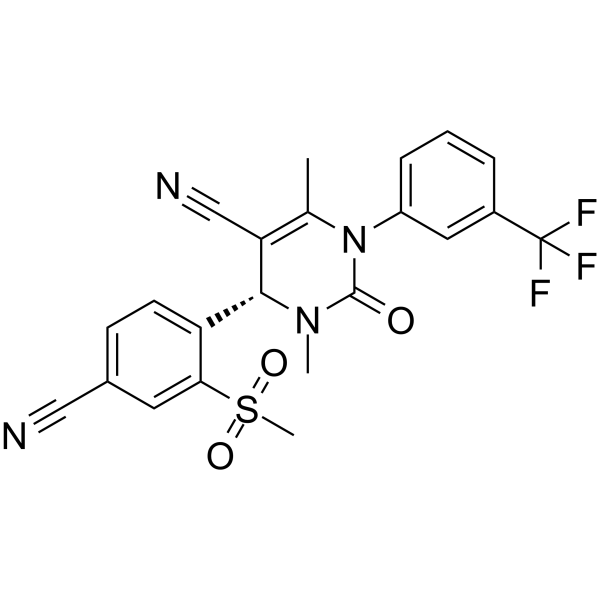
BAY-85-8501 is a selective, reversible and potent inhibitor of Human Neutrophil Elastase (HNE), with an IC50 of 65 pM.
商品は「研究用試薬」です。人や動物の医療用・臨床診断用・食品用の製品ではありません。
研究用途以外に使用した場合、当社は一切の責任を負いかねます。
- 純度 : 99.36%
- CAS 番号: 1161921-82-9
- 分子式: C22H17F3N4O3S
- 分子量:474.46
-
保管条件:Powder -20°C, 3 years , 4°C, 2 years ; In solvent -80°C, 2 years , -20°C, 1 year

To place orders, for customer services and technical support, please contact: MedChemExpress USA
Tel: 609-228-6898 E-mail: [email protected] [email protected]


-
 生物活性
生物活性
-
化学情報
-
溶剤 & 溶解度
- プロトコル
- 純度とドキュメンテーション
- 参考文献
-
 Help & FAQs


-
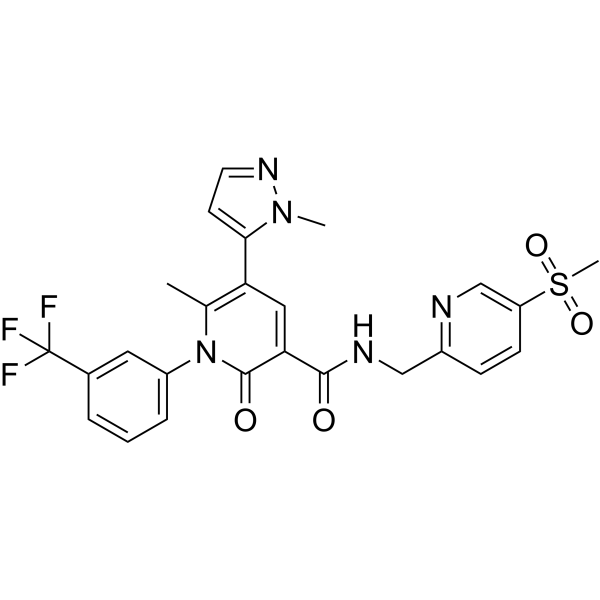
HY-15651
AlvelestatNeutrophil Elastase Inhibitor -
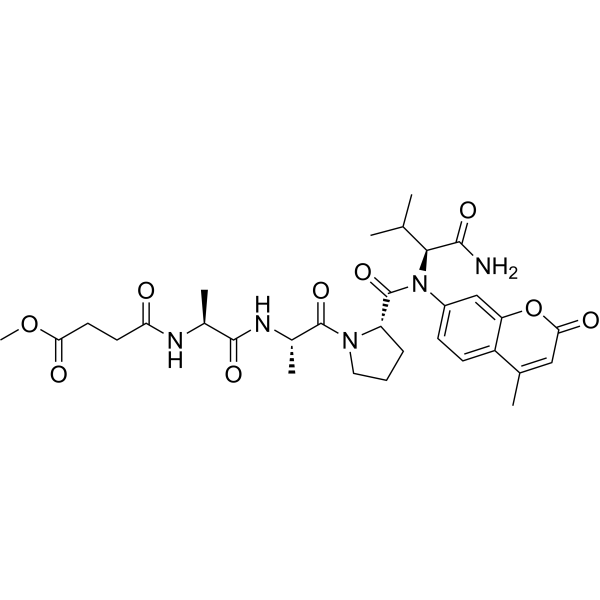
HY-136865
MeOSuc-AAPV-AMCElastase Fluorogenic Substrate -
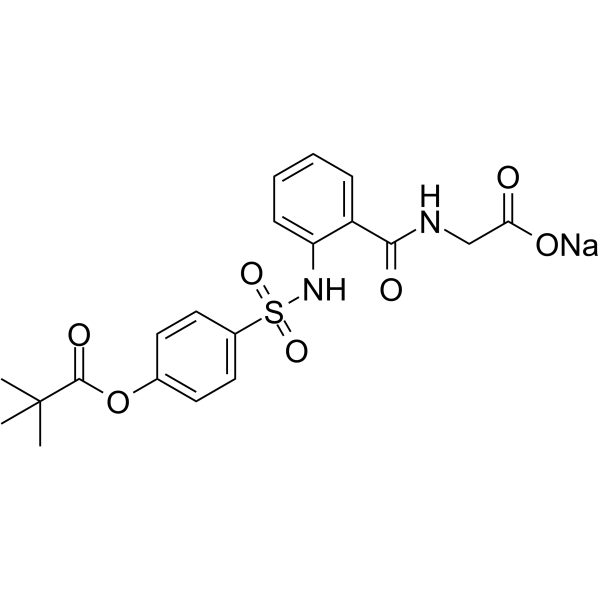
HY-17443A
Sivelestat sodium -
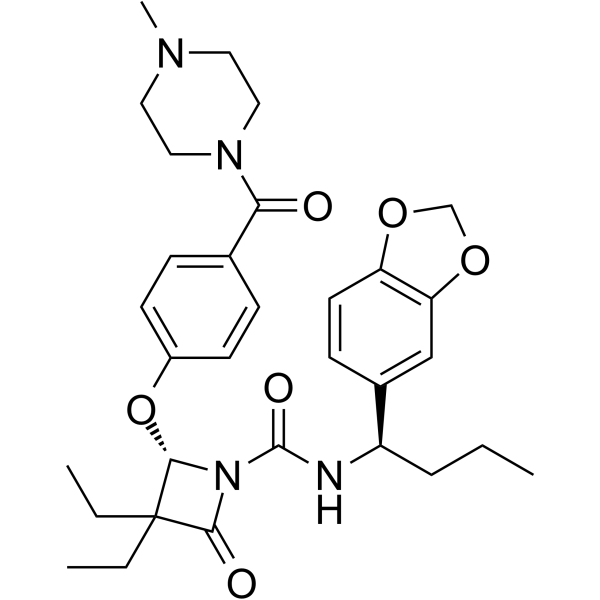
HY-75957
DMP 777Elastase Inhibitor -
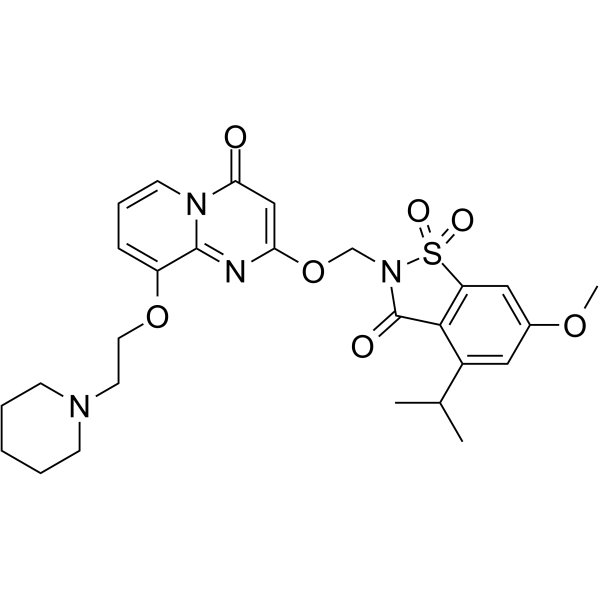
HY-103445
SSR69071Neutrophil Elastase Inhibitor -
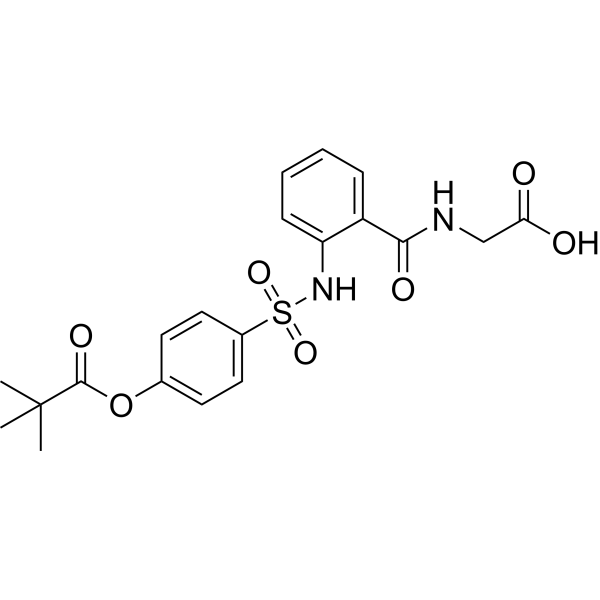
HY-17443
SivelestatElastase Inhibitor -
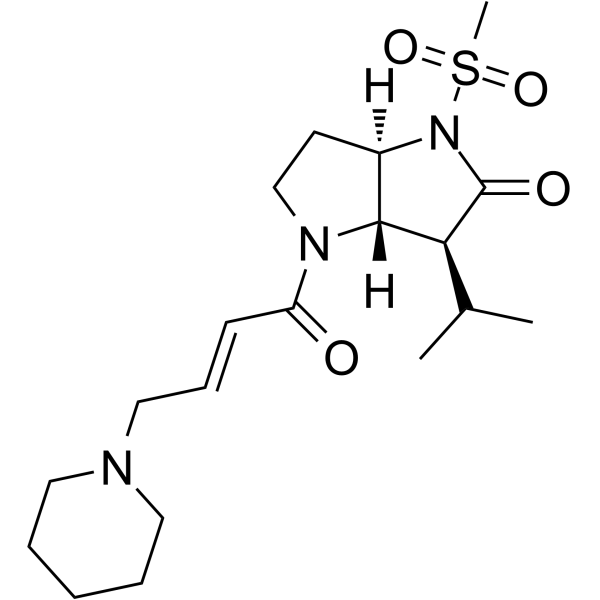
HY-15891
GW311616HNE Inhibitor -
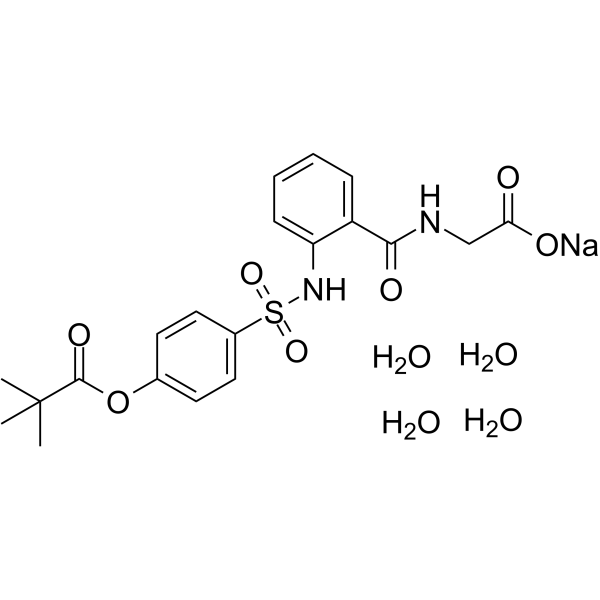
HY-17443B
Sivelestat sodium tetrahydrateNeutrophil Elastase Inhibitor -
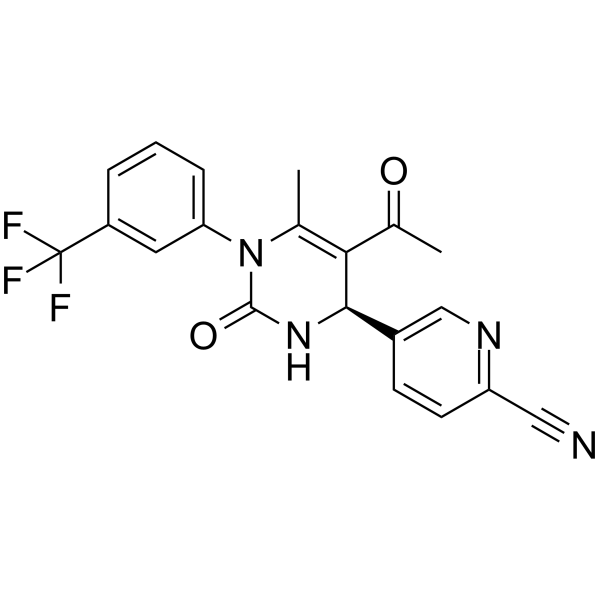
HY-111457A
BAY-678 -
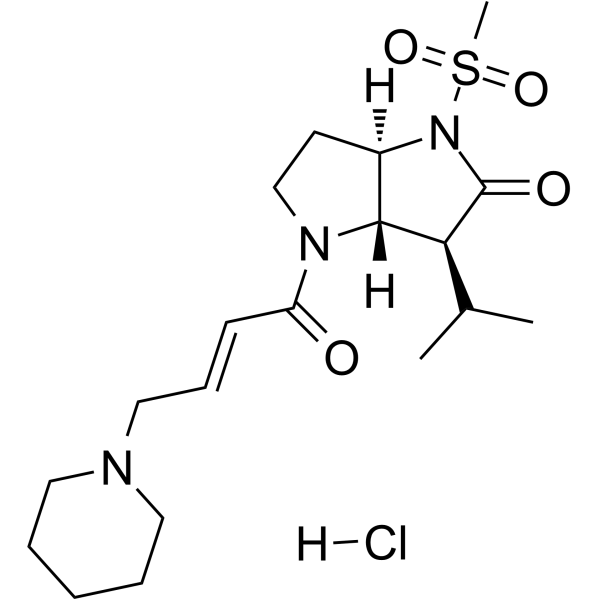
HY-15891A
GW311616 hydrochlorideHNE Inhibitor -
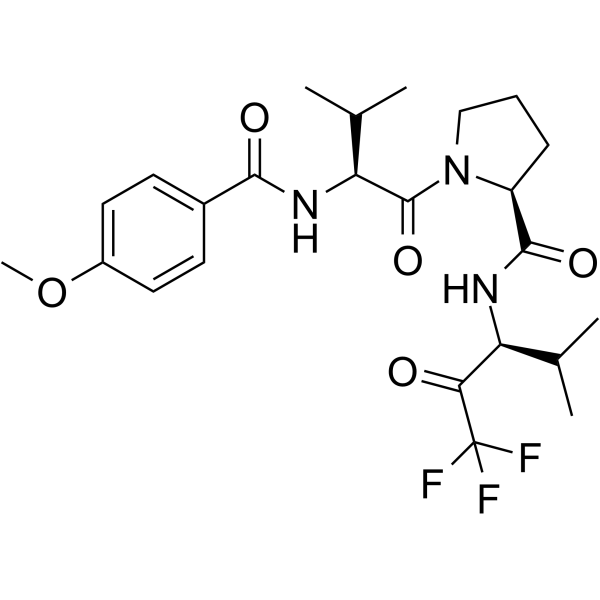
HY-19254
ZD-0892 -
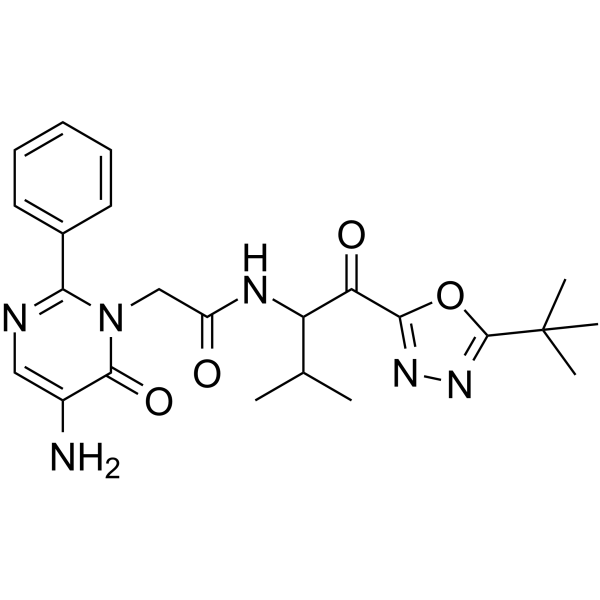
HY-15652
FreselestatNeutrophil Elastase Inhibitor
MedChemExpress(MCE)の使用を引用している文献 BAY-85-8501
More

生物活性
製品説明
IC50 & Target
IC50: 65 pM (HNE)[1].
体内実験
MedChemExpress (MCE) has not independently confirmed the accuracy of these methods. They are for reference only.
臨床実験
| NCT Number | Sponsor | Condition | Start Date |
Phase

|
|---|---|---|---|---|
| NCT01329991 | Plexxikon| | 2011-05 | PHASE1 |


化学情報
-
CAS 番号 1161921-82-9
-
性状 Solid
-
分子量 474.46
-
分子式 C22H17F3N4O3S
-
Color White to off-white
-
SMILES
N#CC1=C(C)N(C2=CC=CC(C(F)(F)F)=C2)C(N(C)[C@@H]1C3=CC=C(C#N)C=C3S(=O)(C)=O)=O
-
輸送条件
Room temperature in continental US; may vary elsewhere.
-
保管条件
Powder -20°C 3 years 4°C 2 years In solvent -80°C 2 years -20°C 1 year


Publications (3)
-
Journal Impact Factor
-
Most Recent
-
Sci Data
High-throughput drug screening identifies novel therapeutics for Low Grade Serous Ovarian Carcinoma. [Abstract]2024 Sep 19;11(1):1024. PMID: 39300112 -
-


溶剤 & 溶解度
体外:
DMSO : 200 mg/mL (421.53 mM; Need ultrasonic; Hygroscopic DMSO has a significant impact on the solubility of product, please use newly opened DMSO)
Please refer to the solubility information to select the appropriate solvent. Once prepared, please aliquot and store the solution to prevent product inactivation from repeated freeze-thaw cycles.
Storage method and period of stock solution: -80°C, 2 years; -20°C, 1 year. When stored at -80°C, please use it within 2 years. When stored at -20°C, please use it within 1 year.
Please refer to the solubility information to select the appropriate solvent. Once prepared, please aliquot and store the solution to prevent product inactivation from repeated freeze-thaw cycles.
Storage method and period of stock solution: -80°C, 2 years; -20°C, 1 year. When stored at -80°C, please use it within 2 years. When stored at -20°C, please use it within 1 year.
濃度 (開始) × 体積 (開始) = 濃度 (終了) × 体積 (終了)
体内:
Select the appropriate dissolution method based on your experimental animal and administration route.
- For the following dissolution methods, please ensure to first prepare a clear stock solution using an In Vitro approach and then sequentially add co-solvents:
- To ensure reliable experimental results, the clarified stock solution can be appropriately stored based on storage conditions. As for the working solution for In Vivo experiments, it is recommended to prepare freshly and use it on the same day.
- The percentages shown for the solvents indicate their volumetric ratio in the final prepared solution. If precipitation or phase separation occurs during preparation, heat and/or sonication can be used to aid dissolution.
Add each solvent one by one: 10% DMSO 40% PEG300 5% Tween-80 45% Saline
Solubility: ≥ 5 mg/mL (10.54 mM); Clear solution
This protocol yields a clear solution of ≥ 5 mg/mL (saturation unknown).
Taking 1 mL working solution as an example, add 100 μL DMSO stock solution (50.0 mg/mL) to 400 μL PEG300, and mix evenly; then add 50 μL Tween-80 and mix evenly; then add 450 μL Saline to adjust the volume to 1 mL.
Preparation of Saline: Dissolve 0.9 g sodium chloride in ddH₂O and dilute to 100 mL to obtain a clear Saline solution.
In Vivo Dissolution Calculator
Please enter the basic information of animal experiments:
-
-
-
-
Recommended: Prepare an additional quantity of animals to account for potential losses during experiments.
Please enter your animal formula composition:
-
%DMSO +
Recommended: Keep the proportion of DMSO in working solution below 2% if your animal is weak.
-
%+
-
+%Tween-80 + +
-
%Saline +
The co-solvents required include: DMSO, . All of co-solvents are available by MedChemExpress (MCE). , Tween 80. All of co-solvents are available by MedChemExpress (MCE).
Working solution concentration: 0.22 mg/mL
Method for preparing stock solution: mg drug dissolved in μL DMSO. Stock solution concentration: mg/mL.
1. Take μL DMSO stock solution;
2. Add μL .
μL , mix evenly;
3. Then add μL Tween 80, mix evenly;
4. Then add μL
Please ensure that the stock solution in the first step is dissolved to a clear state, and add co-solvents in sequence. You can use ultrasonic heating (ultrasonic cleaner, recommended frequency 20-40 kHz), vortexing, etc. to assist dissolution.


純度とドキュメンテーション
-
データシート (277 KB)
-
SDS (251 KB)
- English - EN (251 KB)
- Français - FR (251 KB)
- Deutsch - DE (251 KB)
- Norwegian - NO (251 KB)
- Español - ES (251 KB)
- Swedish - SV (251 KB)
- Italian - IT (251 KB)
- Korean - KR (251 KB)
- Portuguese - PT (251 KB)
-
取扱説明書 (2659 KB)
参考文献


Complete Stock Solution Preparation Table
Please refer to the solubility information to select the appropriate solvent. Once prepared, please aliquot and store the solution to prevent product inactivation from repeated freeze-thaw cycles.
Storage method and period of stock solution: -80°C, 2 years; -20°C, 1 year. When stored at -80°C, please use it within 2 years. When stored at -20°C, please use it within 1 year.
| Optional Solvent | Concentration Solvent Mass | 1 mg | 5 mg | 10 mg | 25 mg |
|---|---|---|---|---|---|
| DMSO | 1 mM | 2.1077 mL | 10.5383 mL | 21.0766 mL | 52.6915 mL |
| 5 mM | 0.4215 mL | 2.1077 mL | 4.2153 mL | 10.5383 mL | |
| 10 mM | 0.2108 mL | 1.0538 mL | 2.1077 mL | 5.2691 mL | |
| 15 mM | 0.1405 mL | 0.7026 mL | 1.4051 mL | 3.5128 mL | |
| 20 mM | 0.1054 mL | 0.5269 mL | 1.0538 mL | 2.6346 mL | |
| 25 mM | 0.0843 mL | 0.4215 mL | 0.8431 mL | 2.1077 mL | |
| 30 mM | 0.0703 mL | 0.3513 mL | 0.7026 mL | 1.7564 mL | |
| 40 mM | 0.0527 mL | 0.2635 mL | 0.5269 mL | 1.3173 mL | |
| 50 mM | 0.0422 mL | 0.2108 mL | 0.4215 mL | 1.0538 mL | |
| 60 mM | 0.0351 mL | 0.1756 mL | 0.3513 mL | 0.8782 mL | |
| 80 mM | 0.0263 mL | 0.1317 mL | 0.2635 mL | 0.6586 mL | |
| 100 mM | 0.0211 mL | 0.1054 mL | 0.2108 mL | 0.5269 mL |


BAY-85-8501 関連分類
HY-19908 関連分類
 Powered by Bioz