



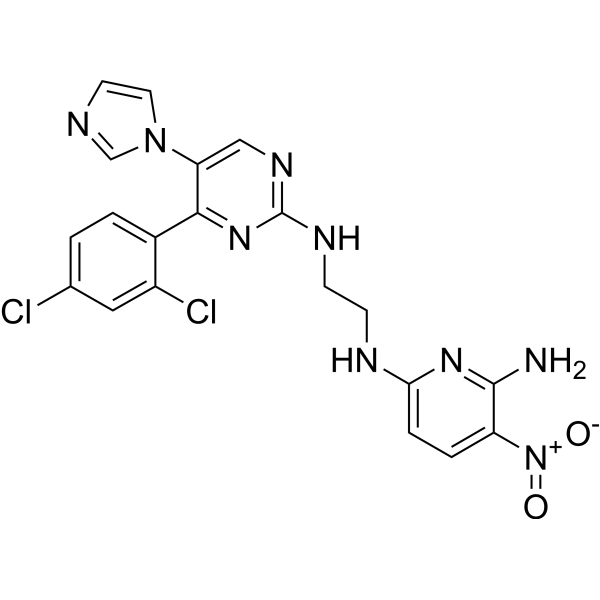
CHIR-98014
Based on 11 publication(s) in Google Scholar
CHIR-98014 is a potent, cell-permeable GSK-3 inhibitor with IC50s of 0.65 and 0.58 nM for GSK-3α and GSK-3β, respectively; it shows less potent activities against cdc2 and erk2.
Nos produits utilisent uniquement pour la recherche. Nous ne vendons pas aux patients.
- Pureté : 98.44%
- CAS No.: 252935-94-7
- Formule: C20H17Cl2N9O2
- Masse moléculaire:486.31
-
Stockage:Powder -20°C, 3 years , 4°C, 2 years ; In solvent -80°C, 2 years , -20°C, 1 year

To place orders, for customer services and technical support, please contact: MedChemExpress USA
Tel: 609-228-6898 E-mail: [email protected] [email protected]


-
 Activité biologique
-
Chemical Information
-
Solvant et solubilité
- Pureté et documentation
- Références
-
 Help & FAQs


-
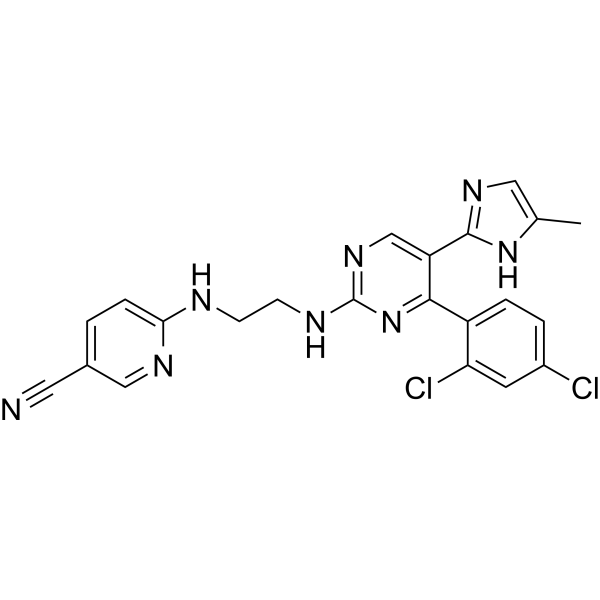
HY-10182
LaduviglusibGSK-3 Inhibitor -
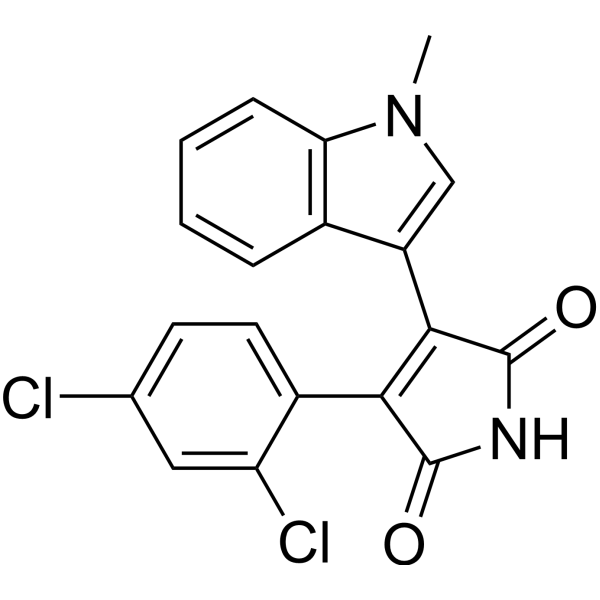
HY-12012
SB 216763Autophagy Inducer -
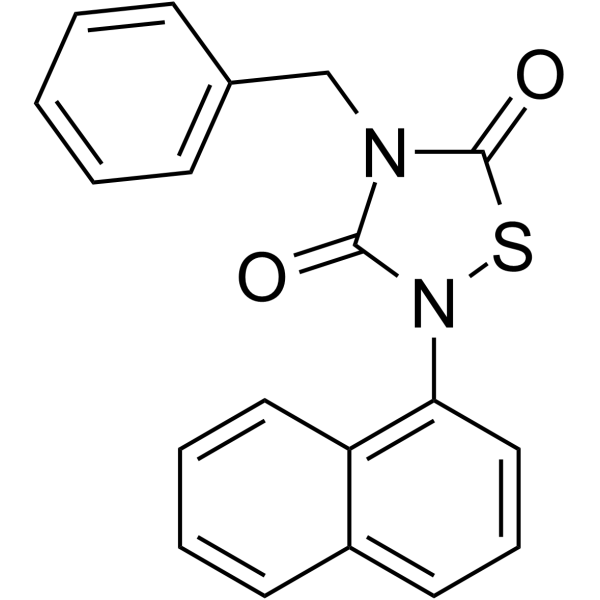
HY-14872
TideglusibGSK-3 Inhibitor -
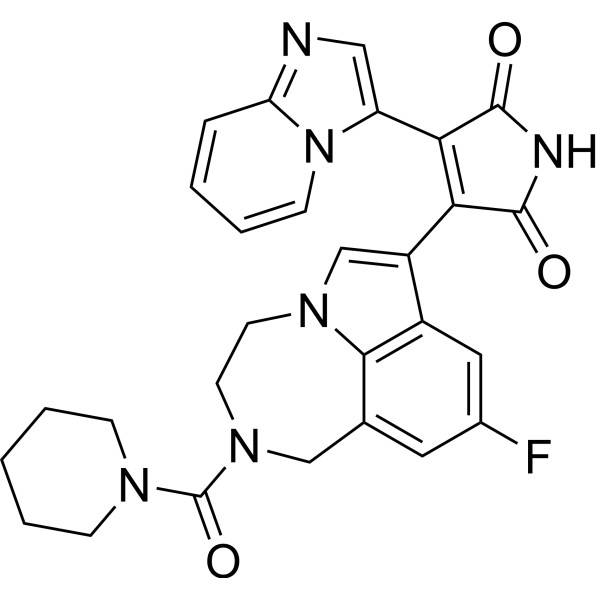
HY-16294
LY2090314GSK-3 Inhibitor -
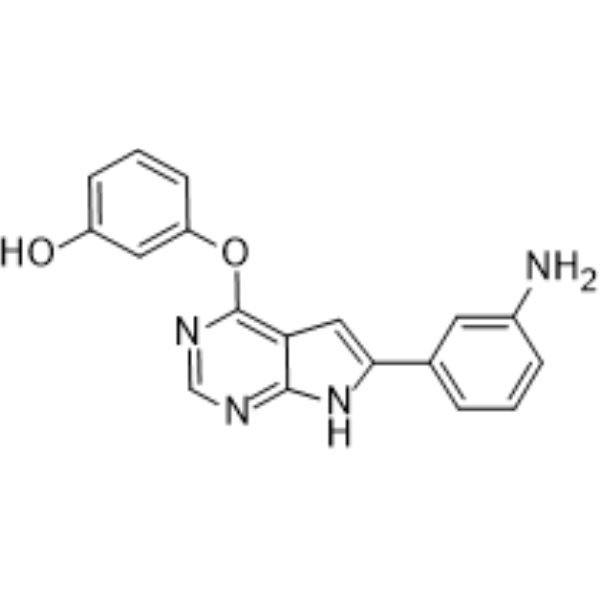
HY-10590
TWS119GSK-3β Inhibitor -
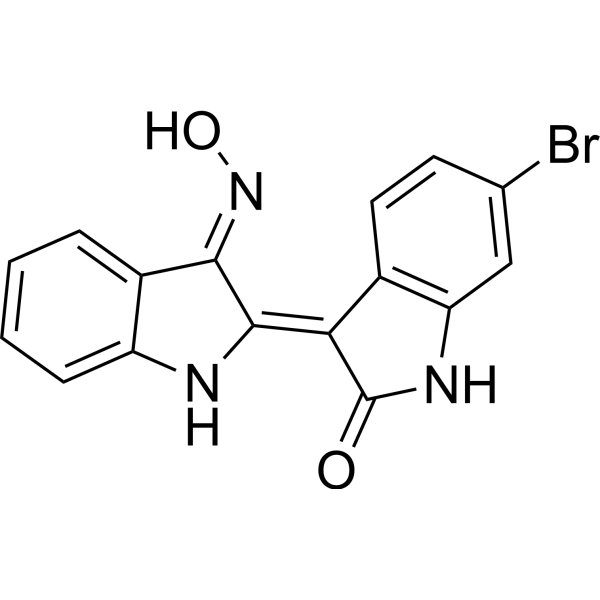
HY-10580
GSK 3 Inhibitor IXATP-Competitive Inhibitor -
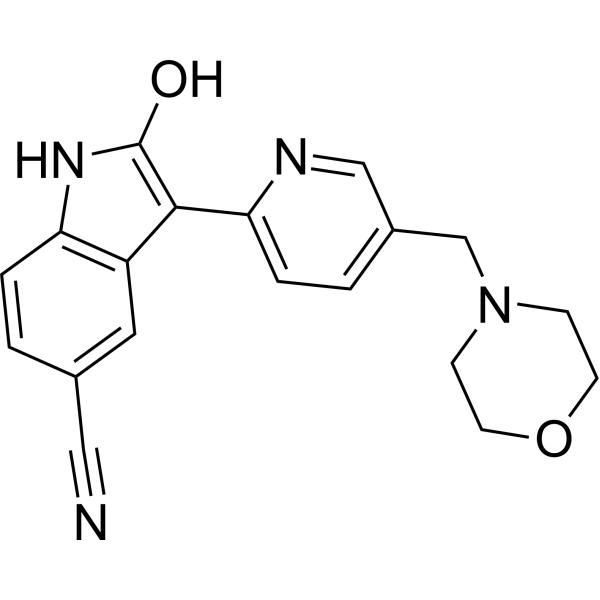
HY-13862
AZD1080GSK-3 Inhibitor -
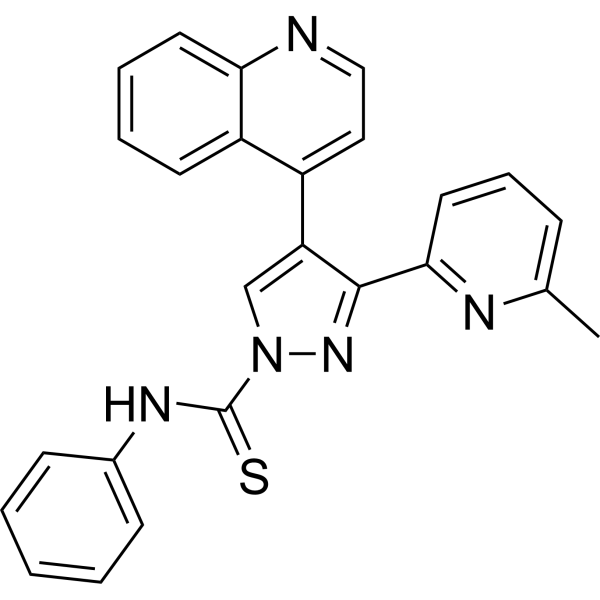
HY-10432
A 83-01ALK4/5/7 Inhibitor -
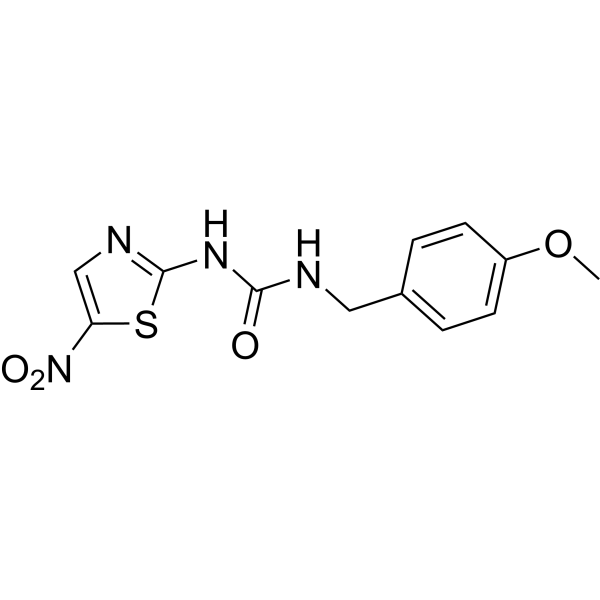
HY-10512
AR-A014418GSK3β Inhibitor -
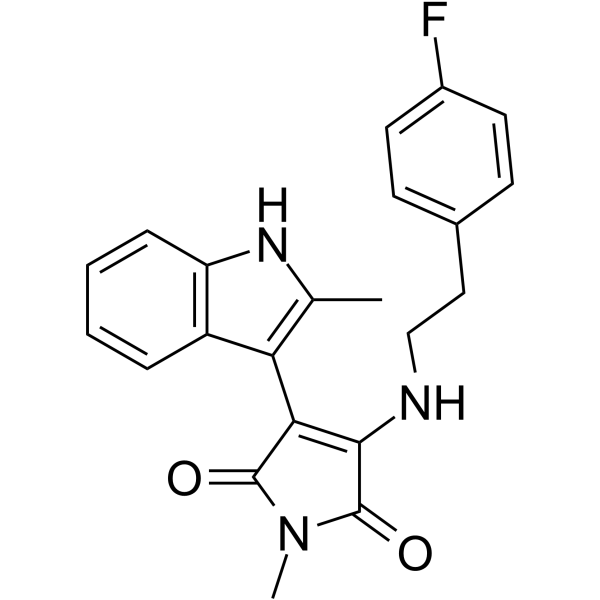
HY-12292
IM-12GSK-3β Inhibitor -
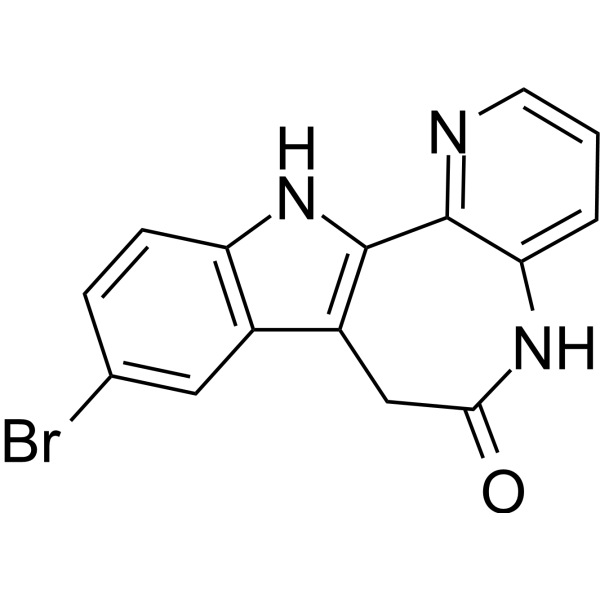
HY-59090
1-AzakenpaulloneGSK-3 Inhibitor -
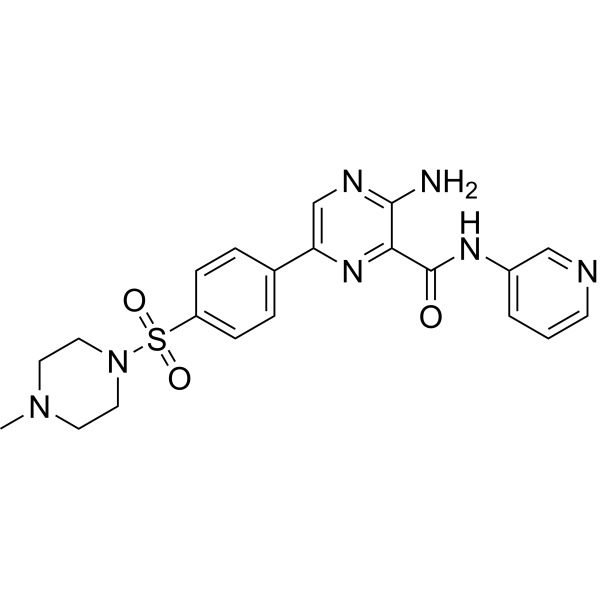
HY-15761
AZD2858GSK-3 Inhibitor
Publications Citing Use of MedChemExpress (MCE) CHIR-98014
More- Cell Res. 2022 Jun;32(6):513-529. [Abstract]
- Cancer Res. 2019 Feb 1;79(3):534-545. [Abstract]
- Adv Sci (Weinh). 2026 Apr;13(23):e11606. [Abstract]
- Sci Adv. 2026 Mar 20;12(12):eadz5906. [Abstract]
- Neuro Oncol. 2026 Jul 23:noag167.
- SLAS Discov. 2024 Nov 5;29(8):100191. [Abstract]
- Food Chem Toxicol. 2025 Oct:204:115628. [Abstract]
- Hum Cell. 2024 Jul;37(4):1156-1169. [Abstract]
- SSRN. 2025 Jul 25.
- bioRxiv. 2024 September 07.
- SSRN. 2023 Jun 20.


Activité biologique
Description
IC50 & Target
[1]|
GSK-3β 0.58 nM (IC50) |
GSK-3α 0.65 nM (IC50) |
cdc2 3700 nM (IC50) |
In Vitro
CHIR 98014 inhibits human GSK-3β with Ki value of 0.87 nM. CHIR 98014 causes GS stimulation in CHO-IR cells and rat hepatocytes, with EC50s of 106 nM and 107 nM, respectively[1]. CHIR-98014 (1 μM) reduces the viability of ES-CCE cells by 52%, with IC50 of 1.1 μM. Moreover, CHIR-98014 in combination with CHIR-99021 results in a significant activation of the Wnt/beta-catenin pathway in ES-D3 cells. In CHIR-98014 treated cells, the T gene expression is induced up to 2,500-fold. CHIR-98014 (1 μM) also yields around 50% Brachyury-positive cells, with EC50 of 0.32 μM[2]. CHIR98014 (10 μM) prevents loss of neurites caused by 20 μM PrP1-30 in cortical and hippocampal neurons, and substantially decreases the amount of dead cells[3].
MedChemExpress (MCE) has not independently confirmed the accuracy of these methods. They are for reference only.
In Vivo
MedChemExpress (MCE) has not independently confirmed the accuracy of these methods. They are for reference only.


Chemical Information
-
CAS No. 252935-94-7
-
Appearance Solid
-
Masse moléculaire 486.31
-
Formule C20H17Cl2N9O2
-
Color Light yellow to yellow
-
SMILES
ClC1=CC(Cl)=CC=C1C2=NC(NCCNC3=CC=C([N+]([O-])=O)C(N)=N3)=NC=C2N4C=CN=C4
-
Livraison
Room temperature in continental US; may vary elsewhere.
-
Stockage
Powder -20°C 3 years 4°C 2 years In solvent -80°C 2 years -20°C 1 year


Publications (11)
-
Journal Impact Factor
-
Most Recent
-
Cell Res
Derivation of totipotent-like stem cells with blastocyst-like structure forming potential. [Abstract]2022 Jun;32(6):513-529. PMID: 35508506 -
Cancer Res
A GYS2/p53 Negative Feedback Loop Restricts Tumor Growth in HBV-Related Hepatocellular Carcinoma. [Abstract]2019 Feb 1;79(3):534-545. PMID: 30584071 -
Adv Sci (Weinh)
PDZK1-ULK1 Axis Triggers Lipophagy to Inhibit Tumor Progression and Sunitinib Resistance in Clear Cell Renal Cell Carcinoma. [Abstract]2026 Apr;13(23):e11606. PMID: 41698049 -
Sci Adv
Caspase-3/7 deficiency results in enhanced intestinal inflammation and reduced tumorigenesis. [Abstract]2026 Mar 20;12(12):eadz5906. PMID: 41861024 -
-
SLAS Discov
Development of a live cell assay for real-time monitoring the interactions between the Hippo pathway components 14-3-3 and TAZ. [Abstract]2024 Nov 5;29(8):100191. PMID: 39510350 -
Food Chem Toxicol
Mechanistic insights into AKT1/GSK3β/CD36 axis regulation in ZLY06-induced hepatic lipid metabolism dysfunction and protective intervention via AKT activation strategies. [Abstract]2025 Oct:204:115628. PMID: 40633829 -
Hum Cell
β-Sitosterol alleviates the malignant phenotype of hepatocellular carcinoma cells via inhibiting GSK3B expression. [Abstract]2024 Jul;37(4):1156-1169. PMID: 38814517 -
-
-


Solvant et solubilité
In Vitro:
DMSO : 12.5 mg/mL (25.70 mM; ultrasonic and warming and heat to 60°C; Hygroscopic DMSO has a significant impact on the solubility of product, please use newly opened DMSO)
Please refer to the solubility information to select the appropriate solvent. Once prepared, please aliquot and store the solution to prevent product inactivation from repeated freeze-thaw cycles.
Storage method and period of stock solution: -80°C, 2 years; -20°C, 1 year. When stored at -80°C, please use it within 2 years. When stored at -20°C, please use it within 1 year.
Please refer to the solubility information to select the appropriate solvent. Once prepared, please aliquot and store the solution to prevent product inactivation from repeated freeze-thaw cycles.
Storage method and period of stock solution: -80°C, 2 years; -20°C, 1 year. When stored at -80°C, please use it within 2 years. When stored at -20°C, please use it within 1 year.
Concentration (start) × Volume (start) = Concentration (final) × Volume (final)


Pureté et documentation
-
Fiche technique (283 KB)
-
SDS (393 KB)
- English - EN (393 KB)
- Français - FR (393 KB)
- Deutsch - DE (393 KB)
- Norwegian - NO (393 KB)
- Español - ES (393 KB)
- Swedish - SV (393 KB)
- Italian - IT (393 KB)
- Korean - KR (393 KB)
- Portuguese - PT (393 KB)
-
Instruction de manipulation (2659 KB)
Références
[1]. Ring DB, et al. Selective glycogen synthase kinase 3 inhibitors potentiate insulin activation of glucose transport and utilization in vitro and in vivo. Diabetes. 2003 Mar;52(3):588-95. [Content Brief]
[2]. Naujok O, et al. Cytotoxicity and activation of the Wnt/beta-catenin pathway in mouse embryonic stem cells treated with four GSK3 inhibitors. BMC Res Notes. 2014 Apr 29;7:273. [Content Brief]
[3]. Zajkowski T, et al. Stabilization of microtubular cytoskeleton protects neurons from toxicity of N-terminal fragment of cytosolic prion protein. Biochim Biophys Acta. 2015 Oct;1853(10 Pt A):2228-39. [Content Brief]


Complete Stock Solution Preparation Table
Please refer to the solubility information to select the appropriate solvent. Once prepared, please aliquot and store the solution to prevent product inactivation from repeated freeze-thaw cycles.
Storage method and period of stock solution: -80°C, 2 years; -20°C, 1 year. When stored at -80°C, please use it within 2 years. When stored at -20°C, please use it within 1 year.
| Optional Solvent | Concentration Solvent Mass | 1 mg | 5 mg | 10 mg | 25 mg |
|---|---|---|---|---|---|
| DMSO | 1 mM | 2.0563 mL | 10.2815 mL | 20.5630 mL | 51.4075 mL |
| 5 mM | 0.4113 mL | 2.0563 mL | 4.1126 mL | 10.2815 mL | |
| 10 mM | 0.2056 mL | 1.0282 mL | 2.0563 mL | 5.1408 mL | |
| 15 mM | 0.1371 mL | 0.6854 mL | 1.3709 mL | 3.4272 mL | |
| 20 mM | 0.1028 mL | 0.5141 mL | 1.0282 mL | 2.5704 mL | |
| 25 mM | 0.0823 mL | 0.4113 mL | 0.8225 mL | 2.0563 mL |


CHIR-98014 Related Classifications
HY-13076 Related Classifications
 Powered by Bioz