



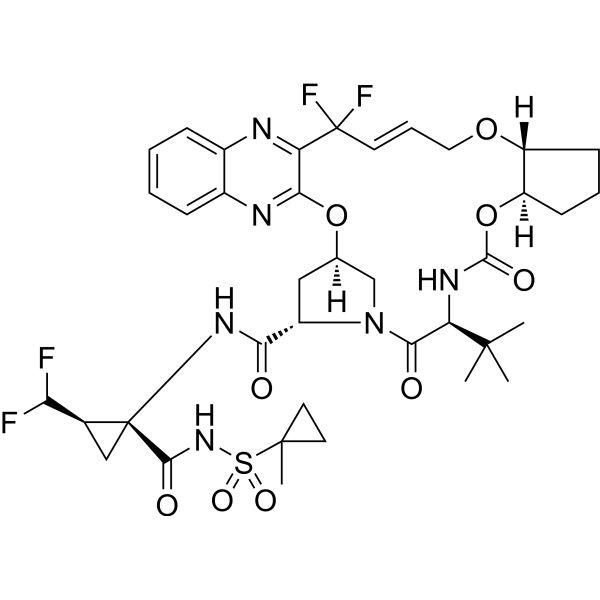
Glecaprevir
Based on 12 publication(s) in Google Scholar
Glecaprevir is a novel HCV NS3/4A protease inhibitor, with IC50 values ranging from 3.5 to 11.3 nM. Glecaprevir is also a SARS-CoV 3CLpro inhibitor with an IC50 of 4.09 μM.
For research use only. We do not sell to patients.
- Purity : 99.92%
- CAS No.: 1365970-03-1
- Formula: C38H46F4N6O9S
- Molecular Weight:838.87
-
Storage:Powder -20°C, 3 years , 4°C, 2 years ; In solvent -80°C, 2 years , -20°C, 1 year

To place orders, for customer services and technical support, please contact: MedChemExpress USA
Tel: 609-228-6898 E-mail: [email protected] [email protected]


-
 Biological Activity
-
Chemical Information
-
Solvent & Solubility
- Protocols
- Purity & Documentation
- References
-
 Help & FAQs


-
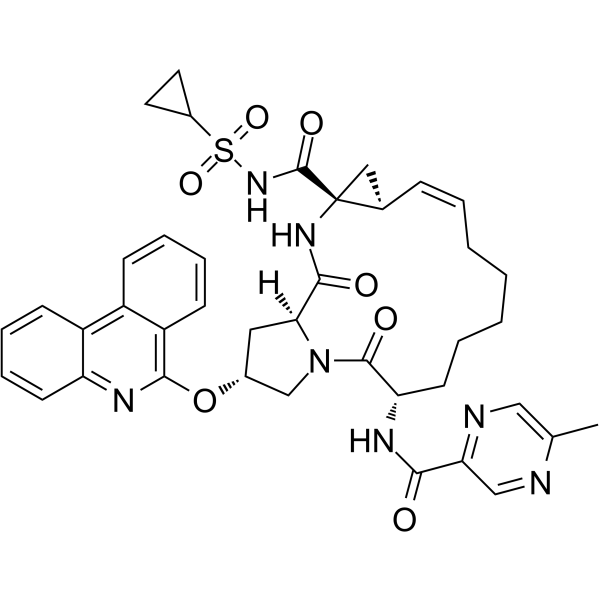
HY-12594
ParitaprevirNS3/4A Protease Inhibitor -
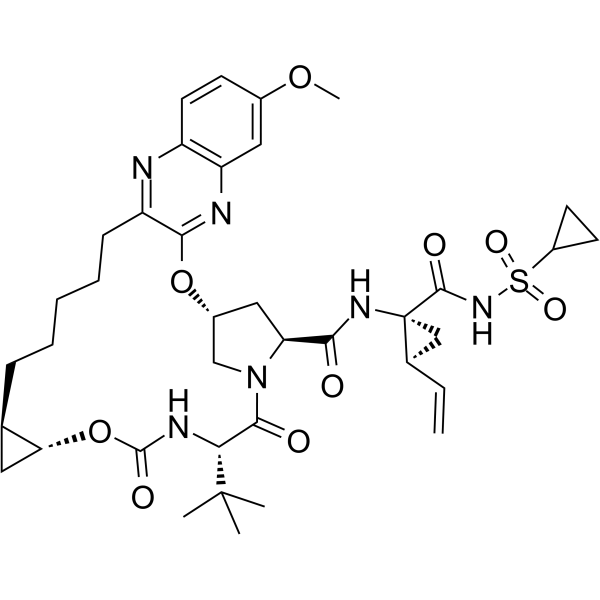
HY-15298
GrazoprevirHCV Protease Inhibitor -
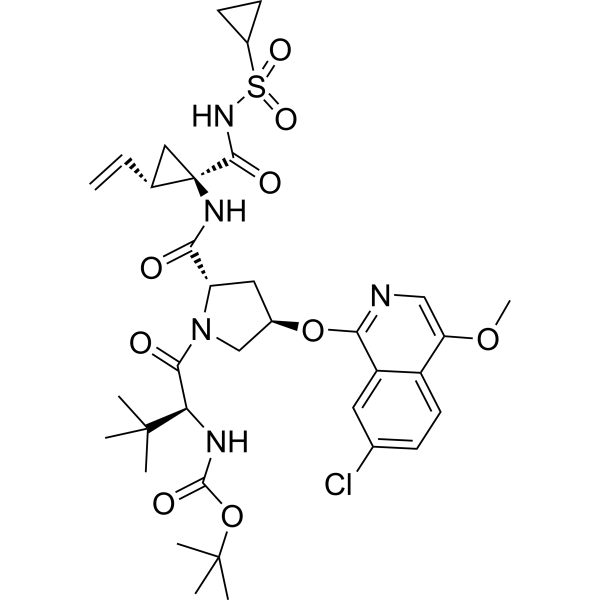
HY-14434
AsunaprevirHCV Protease Inhibitor -
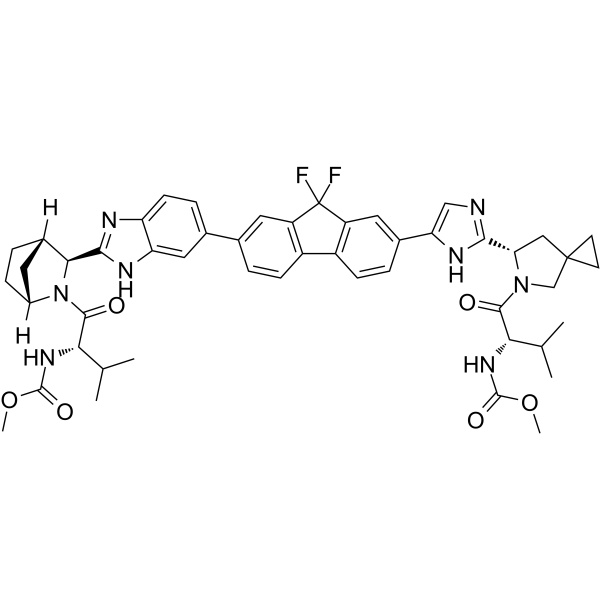
HY-15602
LedipasvirHCV NS5A Inhibitor -
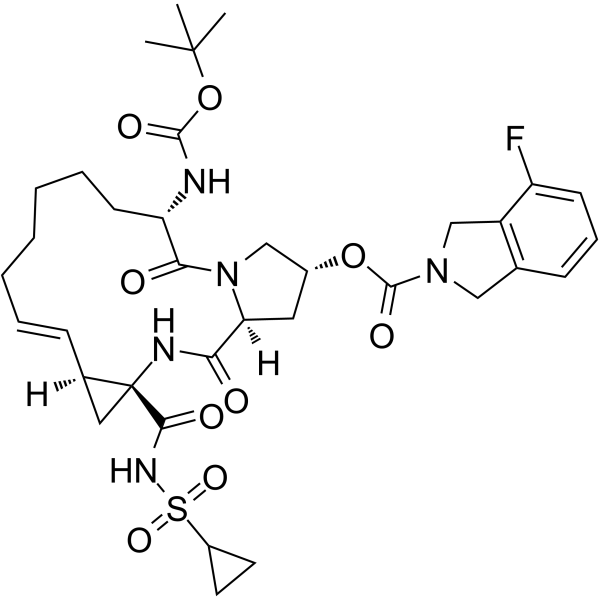
HY-10238
DanoprevirHCV NS3/4A Inhibitor -
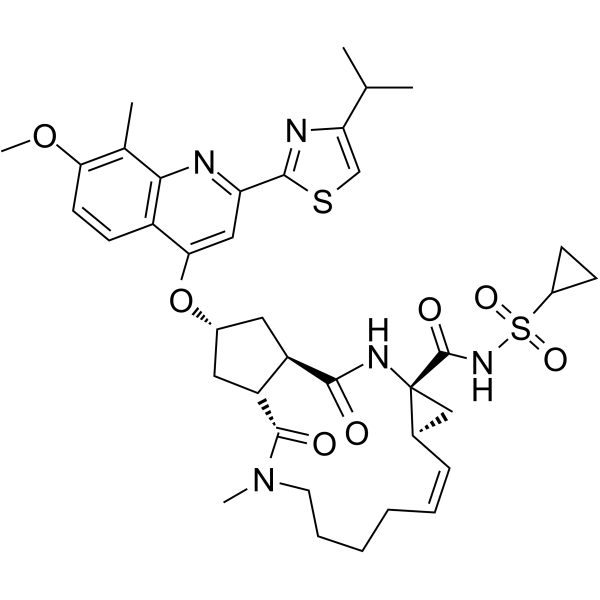
HY-10241
SimeprevirHCV NS3/4A Inhibitor -
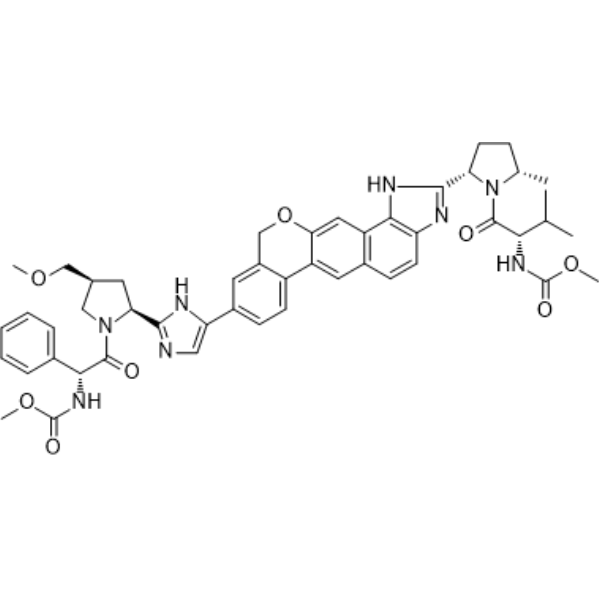
HY-12530
VelpatasvirHCV NS5A Inhibitor -
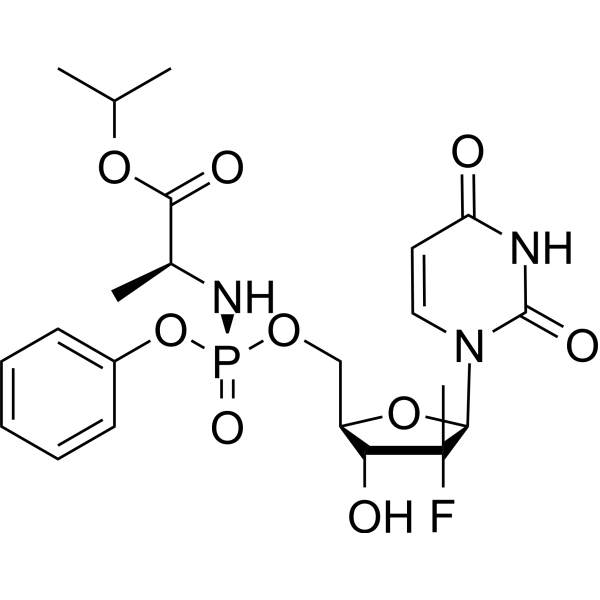
HY-15005
Sofosbuvir -
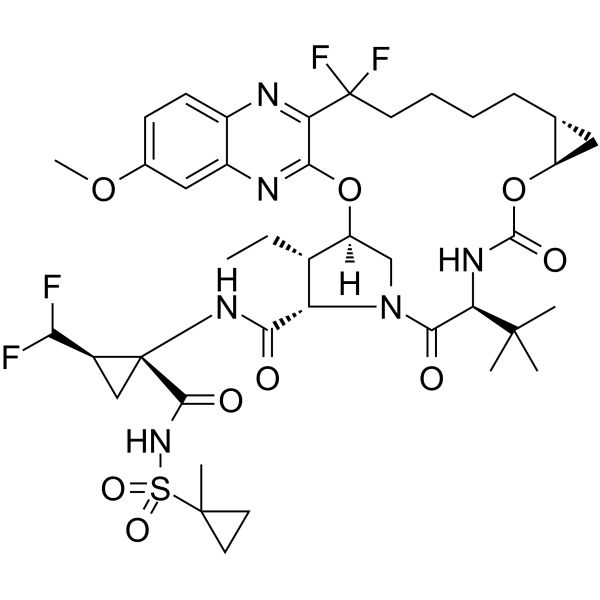
HY-19840
VoxilaprevirHCV NS3/4A Protease Inhibitor -
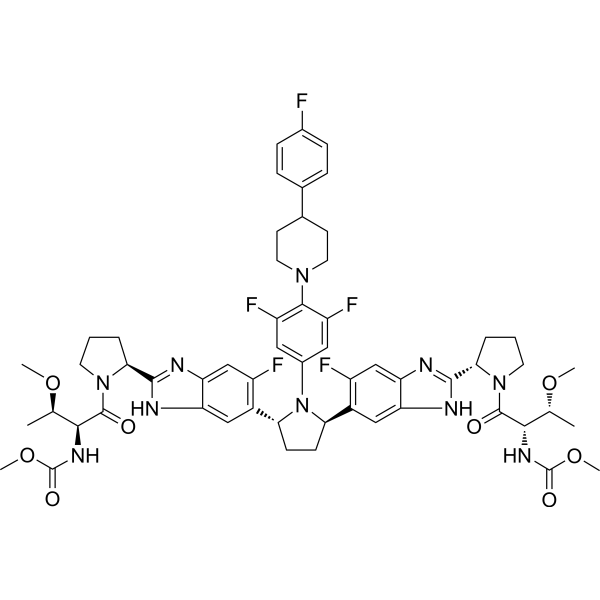
HY-101662
Pibrentasvir -
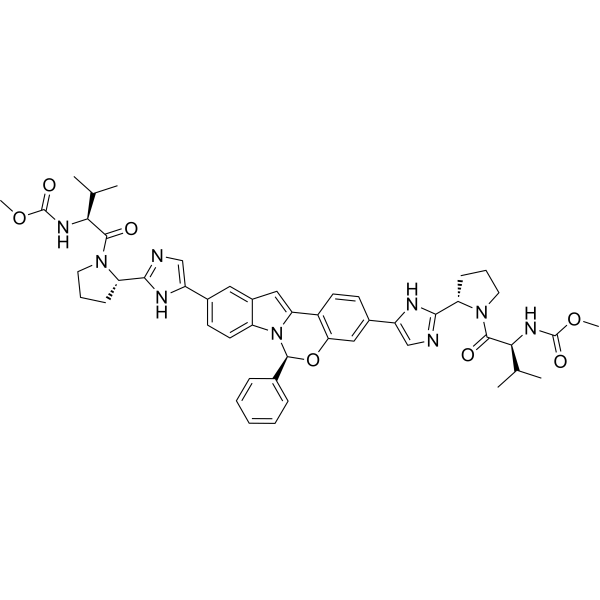
HY-15789
ElbasvirHCV NS5A Inhibitor -
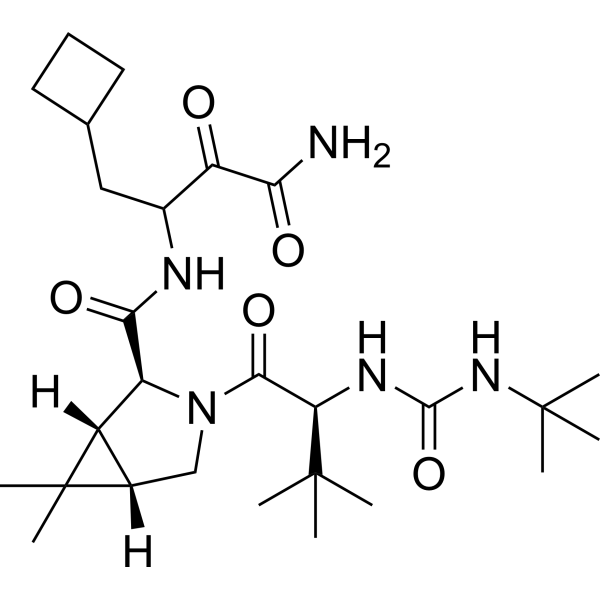
HY-10237
BoceprevirHCV NS3 Protease Inhibitor
Publications Citing Use of MedChemExpress (MCE) Glecaprevir
More- Signal Transduct Target Ther. 2021 May 29;6(1):212. [Abstract]
- Cancer Cell. 2022 Nov 14;40(11):1294-1305.e4. [Abstract]
- Sci Adv. 2026 May 29;12(22):eaef1160. [Abstract]
- J Transl Med. 2025 Jan 22;23(1):103. [Abstract]
- Int J Mol Sci. 2025 Feb 6;26(3):1381. [Abstract]
- Bioorg Chem. 2026 Apr:171:109555. [Abstract]
- Boston University. 2026.
- bioRxiv. 2026 May 7:2026.05.06.723292. [Abstract]
- University of Colorado Denver. 2024.
- bioRxiv. 2023 Feb 27:2023.02.27.530290. [Abstract]
- Chemrxiv. 2021, Jun 10.
- Elife. 2020 Jun 9:9:e56469. [Abstract]
 Customer Validation & Images

-
Microbiological Assay
-
Cell Proliferation/Viability Assay
-
Histological Imaging/Staining
-
WB
-
Cell Proliferation/Viability Assay


Biological Activity
Description
IC50 & Target
IC50: 3.5~11.3 nM (HCV NS3/4A protease)[1]
Cellular Effect
|
Cell Line

|
Type | Value | Description | References |
|---|---|---|---|---|
| Huh-7 | EC50 |
0.2 nM
Compound: GLE; ABT-493
|
Antiviral activity against HCV genotype 1b harboring D168A mutant infected in human Huh7 cells incubated for 96 hrs by luciferase assay
Antiviral activity against HCV genotype 1b harboring D168A mutant infected in human Huh7 cells incubated for 96 hrs by luciferase assay
|
[PMID: 34405680] |
| Huh-7 | EC50 |
0.2 nM
Compound: GLE; ABT-493
|
Antiviral activity against HCV genotype 1b infected in human Huh7 cells incubated for 96 hrs by luciferase assay
Antiviral activity against HCV genotype 1b infected in human Huh7 cells incubated for 96 hrs by luciferase assay
|
[PMID: 34405680] |
| Huh-7 | EC50 |
230 nM
Compound: GLE; ABT-493
|
Antiviral activity against HCV genotype 1b harboring A156T mutant infected in human Huh7 cells incubated for 96 hrs by luciferase assay
Antiviral activity against HCV genotype 1b harboring A156T mutant infected in human Huh7 cells incubated for 96 hrs by luciferase assay
|
[PMID: 34405680] |
In Vitro
Glecaprevir inhibits the enzymatic activity of HCV genotype 1-6 NS3/4A proteases with half maximal inhibitory concentration (IC50) values ranging from 3.5 to 11.3 nM in a biochemical assay. Glecaprevir inhibites HCV subgenomic stable replicons containing proteases from HCV genotypes 1a, 1b, 2a, 2b, 3a, 4a, 5a, 6a and 6e in Huh-7 cells with 50% effective concentration (EC50) values ranging from 0.21 to 4.6 nM. Glecaprevir is active against a replicon containing protease from genotype 3, the most difficult-to-treat HCV genotype, with an EC50 value of 1.9 nM, which is 10- and 44-fold lower than those for paritaprevir and grazoprevir, respectively. The median Glecaprevir EC50 values against replicons containing these genotype 1a, 1b, 2a, 2b, 3a, 4a, 4d, and 5a clinical samples are 0.08, 0.29, 1.6, 2.2, 2.3, 0.41, 0.17, and 0.12 nM, respectively, with an overall median EC50 value of 0.30 nM (range=0.05~3.8 nM)[1].
MedChemExpress (MCE) has not independently confirmed the accuracy of these methods. They are for reference only. Further protocols information, click here.
Clinical Trial
| NCT Number | Sponsor | Condition | Start Date |
Phase
|
|---|---|---|---|---|
| NCT01329991 | Plexxikon| | 2011-05 | PHASE1 |


Chemical Information
-
CAS No. 1365970-03-1
-
Appearance Solid
-
Molecular Weight 838.87
-
Formula C38H46F4N6O9S
-
Color White to off-white
-
SMILES
O=C([C@H]1N(C([C@@H](NC(O[C@@]2([H])[C@@]3([H])CCC2)=O)C(C)(C)C)=O)C[C@@](OC4=NC5=CC=CC=C5N=C4C(F)(/C=C/CO3)F)([H])C1)N[C@]6([C@H](C(F)F)C6)C(NS(=O)(C7(CC7)C)=O)=O
-
Synonyms
ABT-493
-
Shipping
Room temperature in continental US; may vary elsewhere.
-
Storage
Powder -20°C 3 years 4°C 2 years In solvent -80°C 2 years -20°C 1 year


Publications (12)
-
Journal Impact Factor
-
Most Recent
-
Signal Transduct Target Ther
Bardoxolone and bardoxolone methyl, two Nrf2 activators in clinical trials, inhibit SARS-CoV-2 replication and its 3C-like protease. [Abstract]2021 May 29;6(1):212. PMID: 34052830 -
Cancer Cell
2022 Nov 14;40(11):1294-1305.e4. PMID: 36084652
Glecaprevir purchased from MedChemExpress. Usage Cited in: Cancer Cell. 2022 Nov 14;40(11):1294-1305.e4. [Abstract]
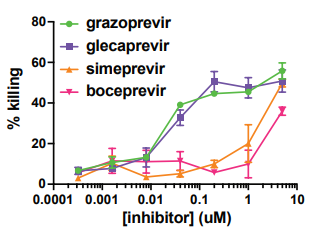
Cytotoxicity of ON VIPER CARexpressing primary T cells in response to different NS3 inhibitors. The results showed that Glecaprevir (0.0001–10 μM) induced cell killing at lower concentrations.
-
Sci Adv
Hepatitis C virus infection dynamics, treatment, and lipid nanoparticle-mediated infection in humanized liver chimeric mouse models. [Abstract]2026 May 29;12(22):eaef1160. PMID: 42213828 -
J Transl Med
Single-cell profiling of SLC family transporters: uncovering the role of SLC7A1 in osteosarcoma. [Abstract]2025 Jan 22;23(1):103. PMID: 39844299 -
Int J Mol Sci
Discovery of TRPV4-Targeting Small Molecules with Anti-Influenza Effects Through Machine Learning and Experimental Validation. [Abstract]2025 Feb 6;26(3):1381. PMID: 39941149
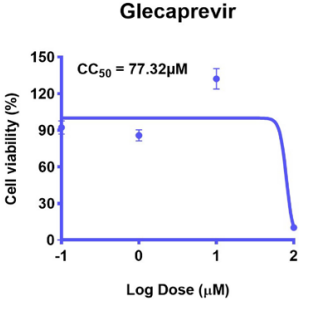
Glecaprevir purchased from MedChemExpress. Usage Cited in: Int J Mol Sci. 2025 Feb 6;26(3):1381. [Abstract]
Glecaprevir (48 h) showed significantly reduced MDCK cell activity at a maximum concentration of 100 μM, with median maximum cytotoxic concentrations (CC50) of 77.32 μM.
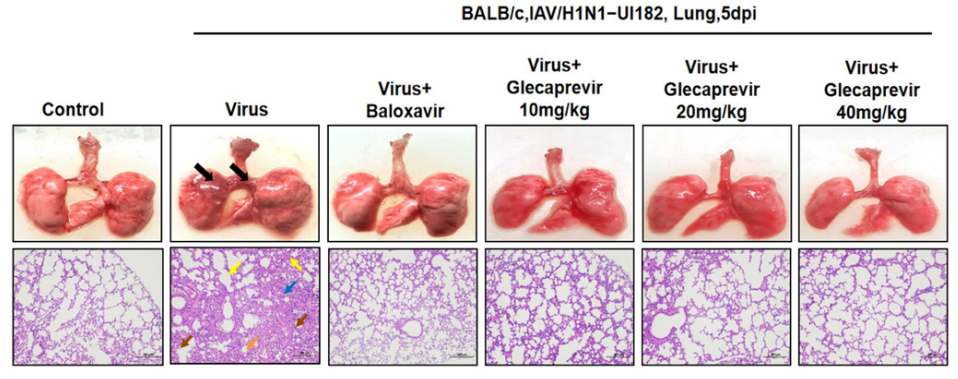
Glecaprevir purchased from MedChemExpress. Usage Cited in: Int J Mol Sci. 2025 Feb 6;26(3):1381. [Abstract]
Five mice in Glecaprevir (10-40 mg/kg; p.o.) groups were randomly selected 5 days after infection, and their lungs were dissected after euthanasia for examination by H&E staining analysis (n = 5). The yellow arrow represents granulocytes, the gray arrow represents the alveolar wall, the purple arrow represents alveolar dilation, the red arrow represents bleeding around the alveoli and blood vessels, the brown arrow represents epithelial cells, and the blue arrow represents macrophages.
Glecaprevir purchased from MedChemExpress. Usage Cited in: Int J Mol Sci. 2025 Feb 6;26(3):1381. [Abstract]
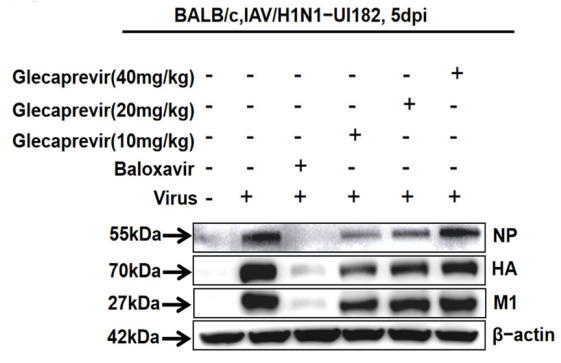
Western blot images showed in Glecaprevir (10-40 mg/kg; p.o.) groups the expression of viral nucleoprotein (NP), hemagglutinin (HA) and structural protein (M1) in mouse lungs.
-
Bioorg Chem
Antiviral constituents of the Korean endemic plant Irisodaesanensis inhibit hepatitis C virus through multiple targets. [Abstract]2026 Apr:171:109555. PMID: 41621177
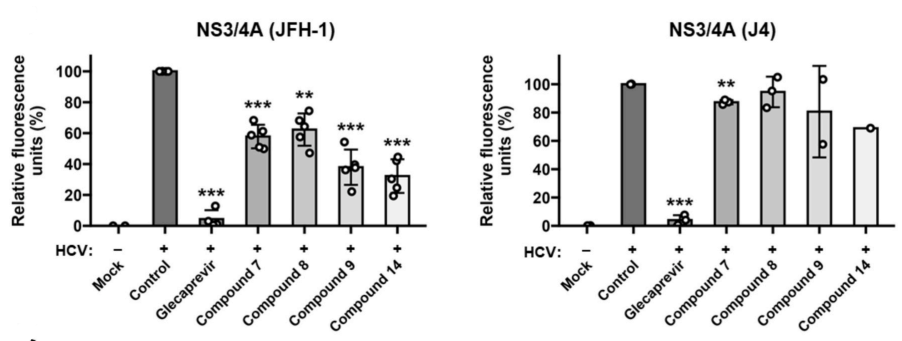
Glecaprevir purchased from MedChemExpress. Usage Cited in: Bioorg Chem. 2026 Apr:171:109555. [Abstract]
Inhibition of HCV NS3/4A protease activity and molecular docking analysis. Recombinant His/MBP-tagged NS3/4A protein from JFH-1 and J4 strains was treated with test compounds (20 μM), using DMSO as the vehicle control and Glecaprevir (10 nM; 1 h) as the positive control. Relative protease activity at endpoint measurement. The results showed that for the JFH-1 strain, Glecaprevir exhibited rapid-onset inhibition, consistent with its established mechanism as a competitive inhibitor.
-
-
bioRxiv
2026 May 7:2026.05.06.723292. PMID: 42146543 -
-
bioRxiv
Controlled protein activities with viral proteases, antiviral peptides, and antiviral drugs. [Abstract]2023 Feb 27:2023.02.27.530290. PMID: 36909459 -
-
Elife
Acute disruption of the synaptic vesicle membrane protein synaptotagmin 1 using knockoff in mouse hippocampal neurons. [Abstract]2020 Jun 9:9:e56469. PMID: 32515733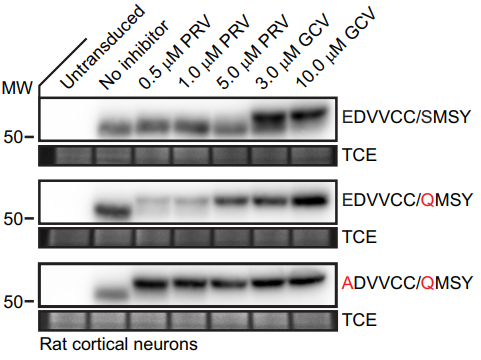
Glecaprevir purchased from MedChemExpress. Usage Cited in: Elife. 2020 Jun 9:9:e56469. [Abstract]
Knockoff in neurons required further attenuation of the cleavage site. Representative anti-GFP immunoblots from rat cortical neurons expressing substrates bearing the natural NS5A/5B cleavage sequence (EDVVCC/SMSY), modified sequence (EDVVCC/QMSY), and further attenuated sequence (ADVVCC/QMSY) in the presence of inhibitors. Glecaprevir (GCV, 10 μM) was the most effective inhibitor of substrate cleavage.


Solvent & Solubility
In Vitro:
DMSO : ≥ 83.3 mg/mL (99.30 mM; Hygroscopic DMSO has a significant impact on the solubility of product, please use newly opened DMSO)
* "≥" means soluble, but saturation unknown.
Please refer to the solubility information to select the appropriate solvent. Once prepared, please aliquot and store the solution to prevent product inactivation from repeated freeze-thaw cycles.
Storage method and period of stock solution: -80°C, 2 years; -20°C, 1 year. When stored at -80°C, please use it within 2 years. When stored at -20°C, please use it within 1 year.
Please refer to the solubility information to select the appropriate solvent. Once prepared, please aliquot and store the solution to prevent product inactivation from repeated freeze-thaw cycles.
Storage method and period of stock solution: -80°C, 2 years; -20°C, 1 year. When stored at -80°C, please use it within 2 years. When stored at -20°C, please use it within 1 year.
Concentration (start) × Volume (start) = Concentration (final) × Volume (final)
In Vivo:
Select the appropriate dissolution method based on your experimental animal and administration route.
- For the following dissolution methods, please ensure to first prepare a clear stock solution using an In Vitro approach and then sequentially add co-solvents:
- To ensure reliable experimental results, the clarified stock solution can be appropriately stored based on storage conditions. As for the working solution for In Vivo experiments, it is recommended to prepare freshly and use it on the same day.
- The percentages shown for the solvents indicate their volumetric ratio in the final prepared solution. If precipitation or phase separation occurs during preparation, heat and/or sonication can be used to aid dissolution.
Add each solvent one by one: 10% DMSO 40% PEG300 5% Tween-80 45% Saline
Solubility: ≥ 2.08 mg/mL (2.48 mM); Clear solution
This protocol yields a clear solution of ≥ 2.08 mg/mL (saturation unknown).
Taking 1 mL working solution as an example, add 100 μL DMSO stock solution (20.8 mg/mL) to 400 μL PEG300, and mix evenly; then add 50 μL Tween-80 and mix evenly; then add 450 μL Saline to adjust the volume to 1 mL.
Preparation of Saline: Dissolve 0.9 g sodium chloride in ddH₂O and dilute to 100 mL to obtain a clear Saline solution.
In Vivo Dissolution Calculator
Please enter the basic information of animal experiments:
-
-
-
-
Recommended: Prepare an additional quantity of animals to account for potential losses during experiments.
Please enter your animal formula composition:
-
%DMSO +
Recommended: Keep the proportion of DMSO in working solution below 2% if your animal is weak.
-
%+
-
+%Tween-80 + +
-
%Saline +
The co-solvents required include: DMSO, . All of co-solvents are available by MedChemExpress (MCE). , Tween 80. All of co-solvents are available by MedChemExpress (MCE).
Working solution concentration: 0.22 mg/mL
Method for preparing stock solution: mg drug dissolved in μL DMSO. Stock solution concentration: mg/mL.
1. Take μL DMSO stock solution;
2. Add μL .
μL , mix evenly;
3. Then add μL Tween 80, mix evenly;
4. Then add μL
Please ensure that the stock solution in the first step is dissolved to a clear state, and add co-solvents in sequence. You can use ultrasonic heating (ultrasonic cleaner, recommended frequency 20-40 kHz), vortexing, etc. to assist dissolution.

Protocols
-
Cell Cytotoxicity Assay
Cytotoxicity assays are usually based on the assessment of cell membrane damage, which can also be indirectly detected by measuring cell viability. Detection methods include MTT assay, CKK-8 assay, LDH assay and ATP assay, etc.


Purity & Documentation
-
Data Sheet (281 KB)
-
SDS (393 KB)
- English - EN (393 KB)
- Français - FR (393 KB)
- Deutsch - DE (393 KB)
- Norwegian - NO (393 KB)
- Español - ES (393 KB)
- Swedish - SV (393 KB)
- Italian - IT (393 KB)
- Korean - KR (393 KB)
- Portuguese - PT (393 KB)
-
Handling Instructions (2659 KB)
References
[1]. Ng TI, et al. In Vitro Antiviral Activity and Resistance Profile of the Next-Generation Hepatitis C Virus NS3/4A Protease Inhibitor Glecaprevir. Antimicrob Agents Chemother. 2017 Oct 30. pii: AAC.01620-17. [Content Brief]
[2]. Qi Sun, et al. Bardoxolone and bardoxolone methyl, two Nrf2 activators in clinical trials, inhibit SARS-CoV-2 replication and its 3C-like protease. Signal Transduct Target Ther. 2021 May 29;6(1):212. [Content Brief]


Complete Stock Solution Preparation Table
Please refer to the solubility information to select the appropriate solvent. Once prepared, please aliquot and store the solution to prevent product inactivation from repeated freeze-thaw cycles.
Storage method and period of stock solution: -80°C, 2 years; -20°C, 1 year. When stored at -80°C, please use it within 2 years. When stored at -20°C, please use it within 1 year.
| Optional Solvent | Concentration Solvent Mass | 1 mg | 5 mg | 10 mg | 25 mg |
|---|---|---|---|---|---|
| DMSO | 1 mM | 1.1921 mL | 5.9604 mL | 11.9208 mL | 29.8020 mL |
| 5 mM | 0.2384 mL | 1.1921 mL | 2.3842 mL | 5.9604 mL | |
| 10 mM | 0.1192 mL | 0.5960 mL | 1.1921 mL | 2.9802 mL | |
| 15 mM | 0.0795 mL | 0.3974 mL | 0.7947 mL | 1.9868 mL | |
| 20 mM | 0.0596 mL | 0.2980 mL | 0.5960 mL | 1.4901 mL | |
| 25 mM | 0.0477 mL | 0.2384 mL | 0.4768 mL | 1.1921 mL | |
| 30 mM | 0.0397 mL | 0.1987 mL | 0.3974 mL | 0.9934 mL | |
| 40 mM | 0.0298 mL | 0.1490 mL | 0.2980 mL | 0.7450 mL | |
| 50 mM | 0.0238 mL | 0.1192 mL | 0.2384 mL | 0.5960 mL | |
| 60 mM | 0.0199 mL | 0.0993 mL | 0.1987 mL | 0.4967 mL | |
| 80 mM | 0.0149 mL | 0.0745 mL | 0.1490 mL | 0.3725 mL |


Glecaprevir Related Classifications
HY-17634 Related Classifications
 Powered by Bioz