



Glucagon (19-29), human

Based on 1 Customer Validation
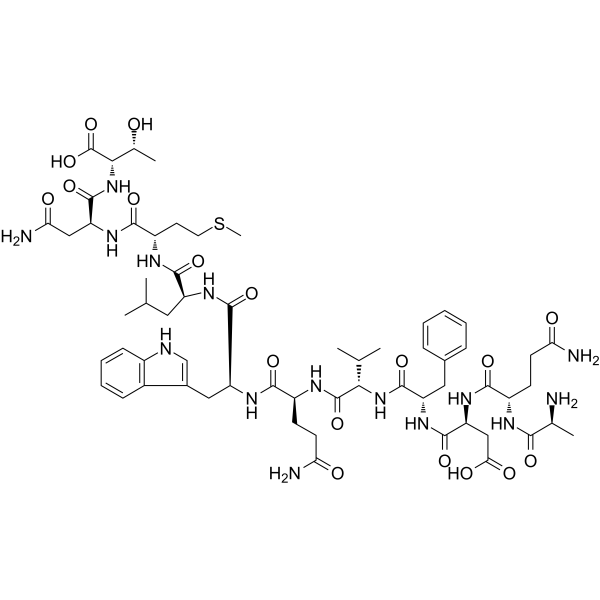
Glucagon (19-29), human is a potent and efficient inhibitor of insulin secretion.
Para uso exclusivo en investigación. No vendemos a pacientes.
- Pureza : 99.11%
- No. CAS: 64790-15-4
- Fòrmula: C61H89N15O18S
- Peso molecular:1352.53
-
Almacenamiento:
Sealed storage, away from moisture.
Powder -80°C, 2 years , -20°C, 1 year* In solvent : -80°C, 6 months; -20°C, 1 month (sealed storage, away from moisture)

To place orders, for customer services and technical support, please contact: MedChemExpress USA
Tel: 609-228-6898 E-mail: [email protected] [email protected]


-
 Actividad biológica
-
Chemical Information
-
Solvente y solubilidad
- Protocolo
- Pureza y Documentación
- Referencias
-
 Help & FAQs


-
HY-P0082
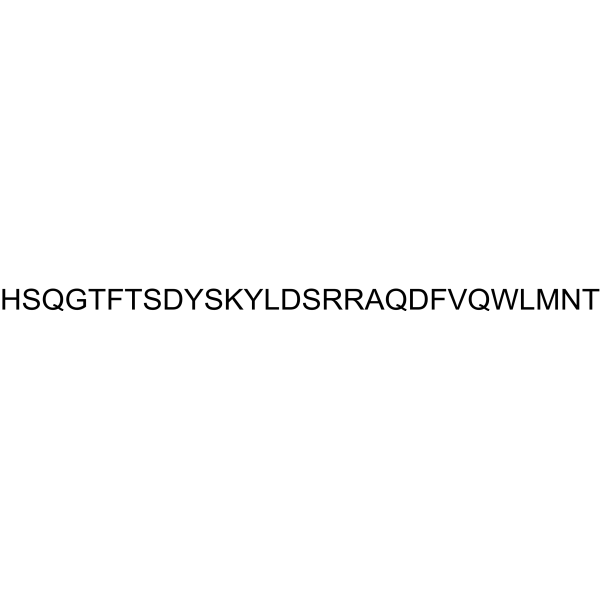
Glucagon (1-29), bovine, human -
HY-P1027
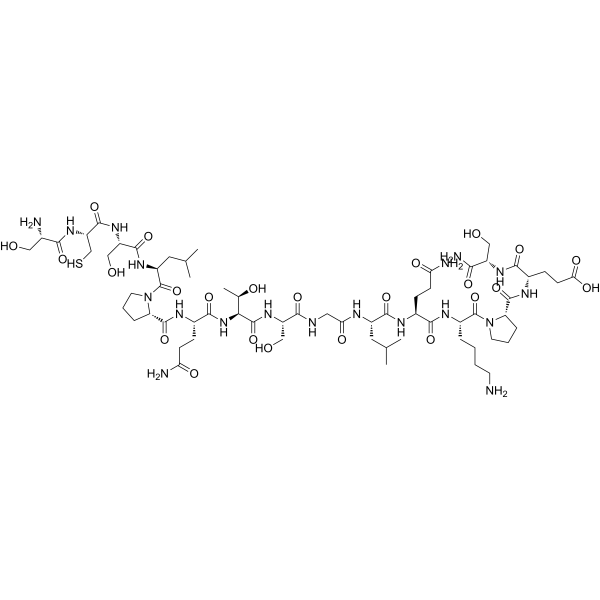
LEP(116-130)(mouse) -
HY-13948
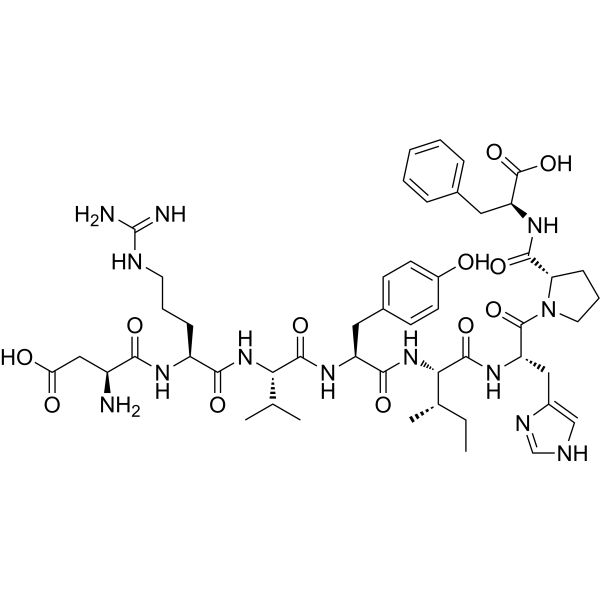
Angiotensin II human -
HY-P0054A
GLP-1(7-36), amide -

HY-P0059
Teriparatide -
HY-P1032
Angiotensin I (human, mouse, rat) -
HY-P0185
Endomorphin 1 -
HY-12403
Talfirastide -
HY-P0139
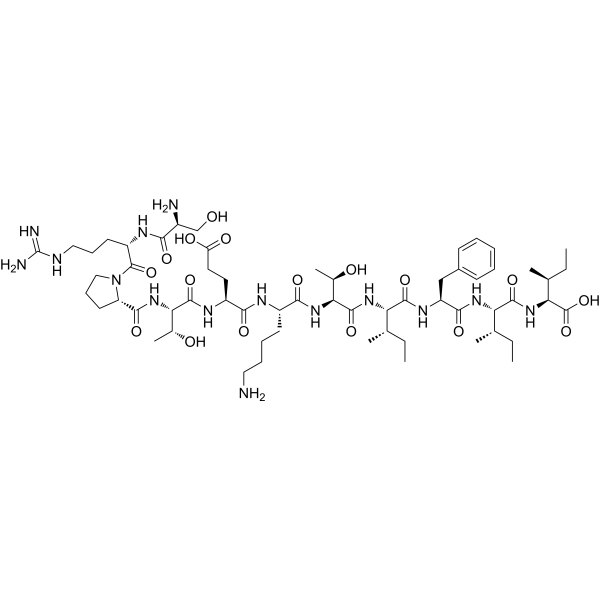
Gap 27 -

HY-P1082
Gap 26 -
HY-P0082A
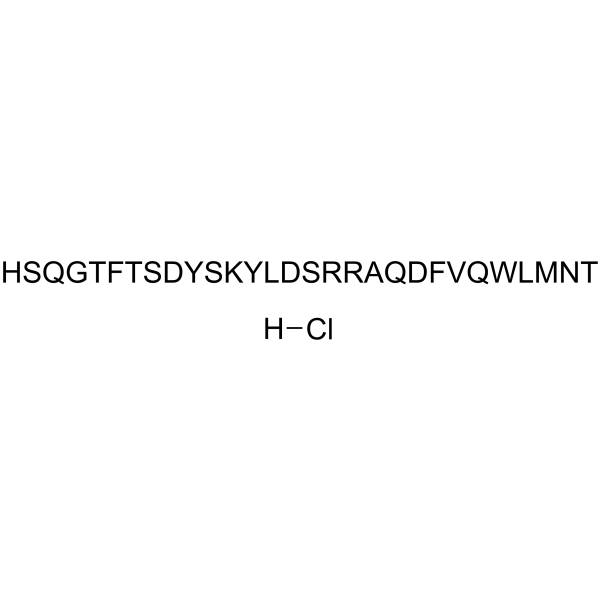
Glucagon (1-29), bovine, human hydrochloride -
HY-19904
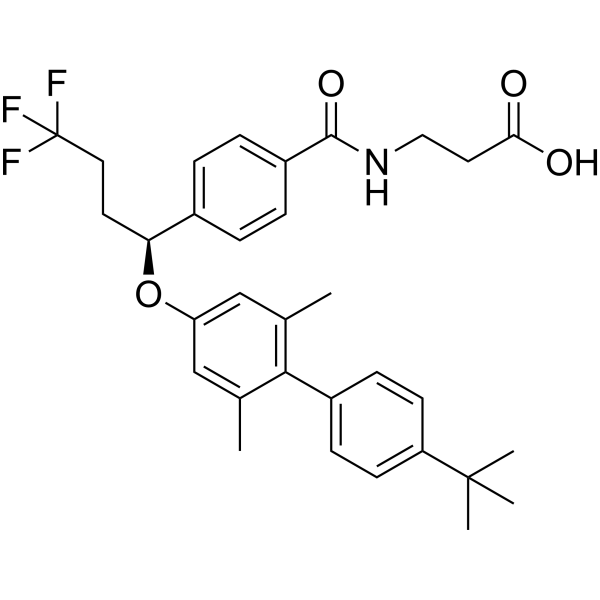
Adomeglivant


Actividad biológica
Descripciòn
IC50 & Target
Insulin secretion[1]
In Vitro
Glucagon (19-29), from 0.1 pM to 1 nM, exerts a potent negative inotropic action. The most striking observation is a 45% increase in the amplitude of cell contractility elicited by the combination of 30 nM glucagon with 1 nM Glucagon (19-29)[3].
MedChemExpress (MCE) has not independently confirmed the accuracy of these methods. They are for reference only.
In Vivo
MedChemExpress (MCE) has not independently confirmed the accuracy of these methods. They are for reference only.


Chemical Information
-
No. CAS 64790-15-4
-
Appearance Solid
-
Peso molecular 1352.53
-
Fòrmula C61H89N15O18S
-
Color White to off-white
-
Sequence
Ala-Gln-Asp-Phe-Val-Gln-Trp-Leu-Met-Asn-Thr
-
Sequence Shortening
AQDFVQWLMNT
-
Envío
Room temperature in continental US; may vary elsewhere.
-
Almacenamiento
Sealed storage, away from moisture
Powder -80°C 2 years -20°C 1 year * In solvent : -80°C, 6 months; -20°C, 1 month (sealed storage, away from moisture)


Solvente y solubilidad
In Vitro:
DMSO : ≥ 25 mg/mL (18.48 mM; Hygroscopic DMSO has a significant impact on the solubility of product, please use newly opened DMSO)
H2O : 1.25 mg/mL (0.92 mM; ultrasonic and adjust pH to 9 with NH3·H2O)
* "≥" means soluble, but saturation unknown.
Please refer to the solubility information to select the appropriate solvent. Once prepared, please aliquot and store the solution to prevent product inactivation from repeated freeze-thaw cycles.
Storage method and period of stock solution: -80°C, 6 months; -20°C, 1 month (sealed storage, away from moisture). When stored at -80°C, please use it within 6 months. When stored at -20°C, please use it within 1 month.
* Note: If you choose water as the stock solution, please dilute it to the working solution, then filter and sterilize it with a 0.22 μm filter before use.
Please refer to the solubility information to select the appropriate solvent. Once prepared, please aliquot and store the solution to prevent product inactivation from repeated freeze-thaw cycles.
Storage method and period of stock solution: -80°C, 6 months; -20°C, 1 month (sealed storage, away from moisture). When stored at -80°C, please use it within 6 months. When stored at -20°C, please use it within 1 month.
* Note: If you choose water as the stock solution, please dilute it to the working solution, then filter and sterilize it with a 0.22 μm filter before use.
Concentration (start) × Volume (start) = Concentration (final) × Volume (final)
In Vivo:
Select the appropriate dissolution method based on your experimental animal and administration route.
- For the following dissolution methods, please ensure to first prepare a clear stock solution using an In Vitro approach and then sequentially add co-solvents:
- To ensure reliable experimental results, the clarified stock solution can be appropriately stored based on storage conditions. As for the working solution for In Vivo experiments, it is recommended to prepare freshly and use it on the same day.
- The percentages shown for the solvents indicate their volumetric ratio in the final prepared solution. If precipitation or phase separation occurs during preparation, heat and/or sonication can be used to aid dissolution.
Add each solvent one by one: 10% DMSO 40% PEG300 5% Tween-80 45% Saline
Solubility: ≥ 2.5 mg/mL (1.85 mM); Clear solution
This protocol yields a clear solution of ≥ 2.5 mg/mL (saturation unknown).
Taking 1 mL working solution as an example, add 100 μL DMSO stock solution (25.0 mg/mL) to 400 μL PEG300, and mix evenly; then add 50 μL Tween-80 and mix evenly; then add 450 μL Saline to adjust the volume to 1 mL.
Preparation of Saline: Dissolve 0.9 g sodium chloride in ddH₂O and dilute to 100 mL to obtain a clear Saline solution.
Add each solvent one by one: 10% DMSO 90% (20% SBE-β-CD in Saline)
Solubility: ≥ 2.5 mg/mL (1.85 mM); Clear solution
This protocol yields a clear solution of ≥ 2.5 mg/mL (saturation unknown).
Taking 1 mL working solution as an example, add 100 μL DMSO stock solution (25.0 mg/mL) to 900 μL 20% SBE-β-CD in Saline, and mix evenly.
Preparation of 20% SBE-β-CD in Saline (4°C, storage for one week): 2 g SBE-β-CD powder is dissolved in 10 mL Saline, completely dissolve until clear.
In Vivo Dissolution Calculator
Please enter the basic information of animal experiments:
-
-
-
-
Recommended: Prepare an additional quantity of animals to account for potential losses during experiments.
Please enter your animal formula composition:
-
%DMSO +
Recommended: Keep the proportion of DMSO in working solution below 2% if your animal is weak.
-
%+
-
+%Tween-80 + +
-
%Saline +
The co-solvents required include: DMSO, . All of co-solvents are available by MedChemExpress (MCE). , Tween 80. All of co-solvents are available by MedChemExpress (MCE).
Working solution concentration: 0.22 mg/mL
Method for preparing stock solution: mg drug dissolved in μL DMSO. Stock solution concentration: mg/mL. * In solvent : -80°C, 6 months; -20°C, 1 month (sealed storage, away from moisture)
1. Take μL DMSO stock solution;
2. Add μL .
μL , mix evenly;
3. Then add μL Tween 80, mix evenly;
4. Then add μL
Please ensure that the stock solution in the first step is dissolved to a clear state, and add co-solvents in sequence. You can use ultrasonic heating (ultrasonic cleaner, recommended frequency 20-40 kHz), vortexing, etc. to assist dissolution.

Protocolo
Animal Administration[1]
Rats[1]
To test the effect of miniglucagon (Glucagon (19-29)) on stimulated insulin secretion, 8.3 mM glucose is perfused during the experiments, including a 45-min equilibration period, followed by miniglucagon (1, 10, 100, and 1,000 pM) perfused with or without 1 nM tGLP-1. To study the glucagon and miniglucagon secretion, the glucose concentration is switched from 11 to 3 mM after a 45-min stabilization period, and the peptides secreted are measured by radioimmunoassay[1].
MedChemExpress (MCE) has not independently confirmed the accuracy of these methods. They are for reference only.


Pureza y Documentación
-
Ficha de datos (279 KB)
-
SDS (252 KB)
- English - EN (252 KB)
- Français - FR (252 KB)
- Deutsch - DE (252 KB)
- Norwegian - NO (252 KB)
- Español - ES (252 KB)
- Swedish - SV (252 KB)
- Italian - IT (252 KB)
- Korean - KR (252 KB)
- Portuguese - PT (252 KB)
-
Instrucciones de manejo (2659 KB)
Referencias
[1]. Dalle S, et al. Miniglucagon (glucagon 19-29), a potent and efficient inhibitor of secretagogue-induced insulin release through a Ca2+ pathway. J Biol Chem. 1999 Apr 16;274(16):10869-76. [Content Brief]
[2]. Dalle S, et al. Miniglucagon (glucagon 19-29): a novel regulator of the pancreatic islet physiology. Diabetes. 2002 Feb;51(2):406-12. [Content Brief]
[3]. Pavoine C, et al. Miniglucagon [glucagon-(19-29)] is a component of the positive inotropic effect of glucagon. Am J Physiol. 1991 May;260(5 Pt 1):C993-9. [Content Brief]


Complete Stock Solution Preparation Table
Please refer to the solubility information to select the appropriate solvent. Once prepared, please aliquot and store the solution to prevent product inactivation from repeated freeze-thaw cycles.
Storage method and period of stock solution: -80°C, 6 months; -20°C, 1 month (sealed storage, away from moisture). When stored at -80°C, please use it within 6 months. When stored at -20°C, please use it within 1 month.
| Optional Solvent | Concentration Solvent Mass | 1 mg | 5 mg | 10 mg | 25 mg |
|---|---|---|---|---|---|
| DMSO | 1 mM | 0.7394 mL | 3.6968 mL | 7.3936 mL | 18.4839 mL |
| 5 mM | 0.1479 mL | 0.7394 mL | 1.4787 mL | 3.6968 mL | |
| 10 mM | 0.0739 mL | 0.3697 mL | 0.7394 mL | 1.8484 mL | |
| 15 mM | 0.0493 mL | 0.2465 mL | 0.4929 mL | 1.2323 mL |
* Note: If you choose water as the stock solution, please dilute it to the working solution, then filter and sterilize it with a 0.22 μm filter before use.


Glucagon (19-29), human Related Classifications
HY-P0150 Related Classifications
 Powered by Bioz