



Kira8
Based on 15 publication(s) in Google Scholar
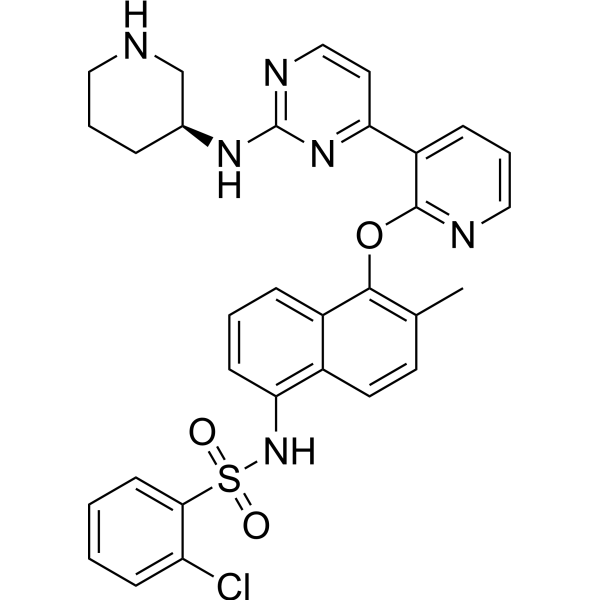
Kira8 (AMG-18) is a mono-selective IRE1α inhibitor that allosterically attenuates IRE1α RNase activity with an IC50 of 5.9 nM.
For research use only. We do not sell to patients.
- Purity : 98.90%
- CAS No.: 1630086-20-2
- Formula: C31H29ClN6O3S
- Molecular Weight:601.12
-
Storage:Powder -20°C, 3 years , 4°C, 2 years ; In solvent -80°C, 1 year , -20°C, 6 months

To place orders, for customer services and technical support, please contact: MedChemExpress USA
Tel: 609-228-6898 E-mail: [email protected] [email protected]


-
 Biological Activity
-
Chemical Information
-
Solvent & Solubility
- Purity & Documentation
- References
-
 Help & FAQs


-
HY-19707
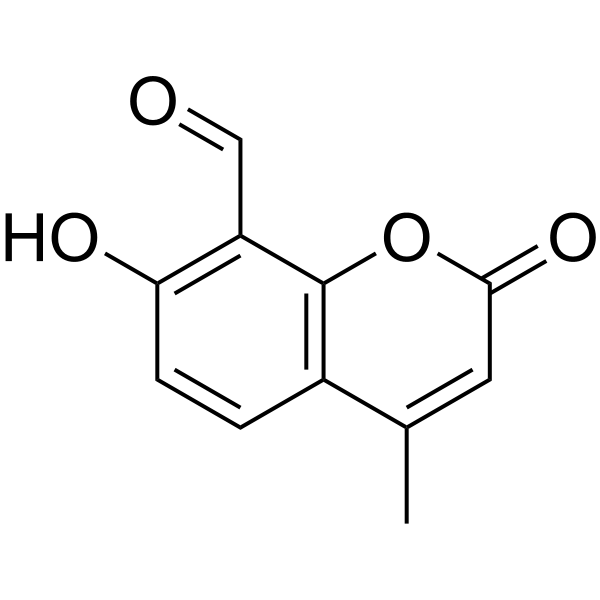
4μ8CIRE1 Inhibitor -
HY-15845
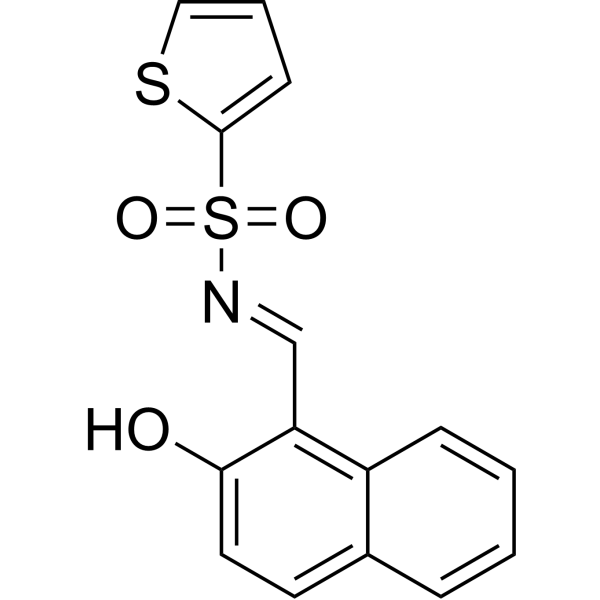
STF-083010IRE1 Inhibitor -
HY-104040
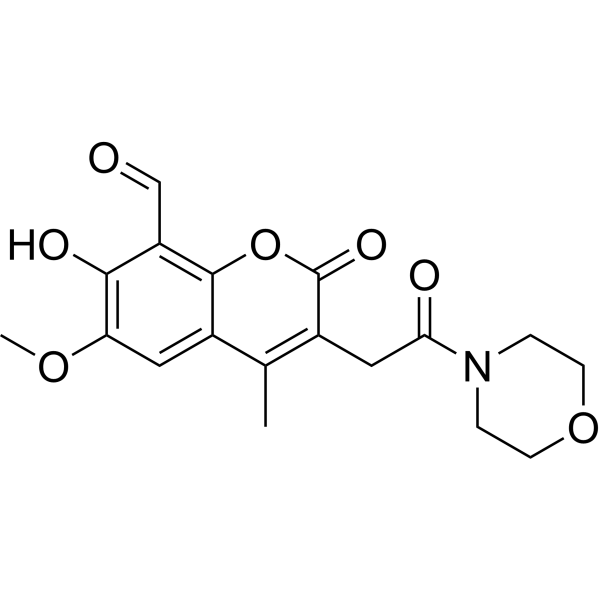
MKC8866IRE1α RNase Inhibitor -
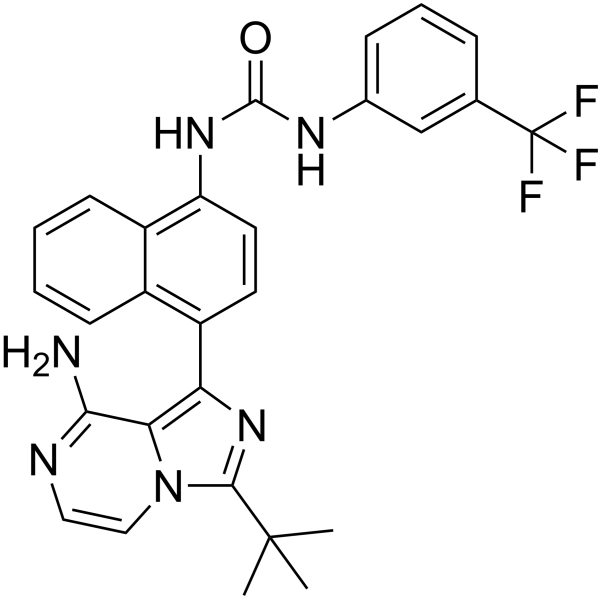
HY-19708
KIRA6IRE1α RNase Inhibitor -
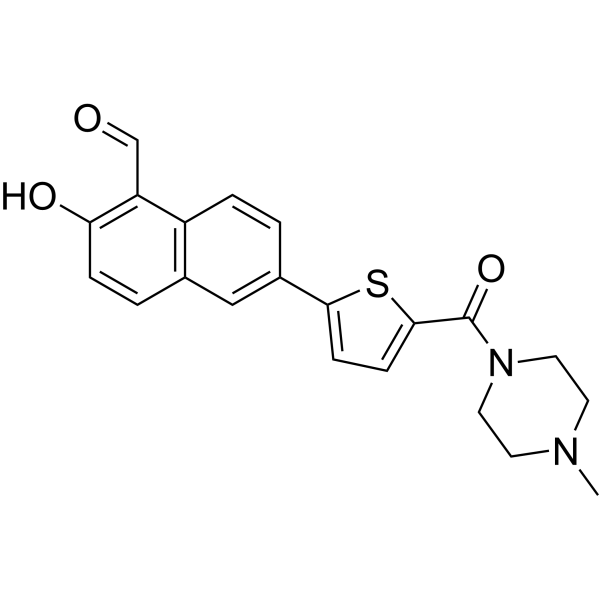
HY-19710
MKC3946IRE1 Inhibitor -
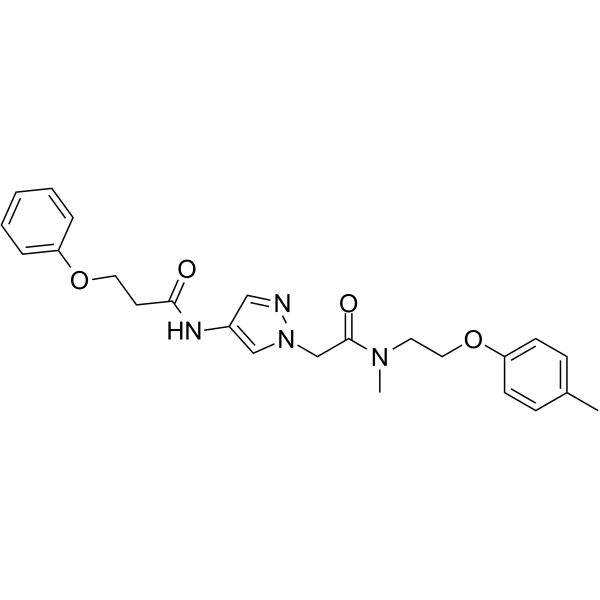
HY-139214
IXA4IRE1/XBP1s Activator -
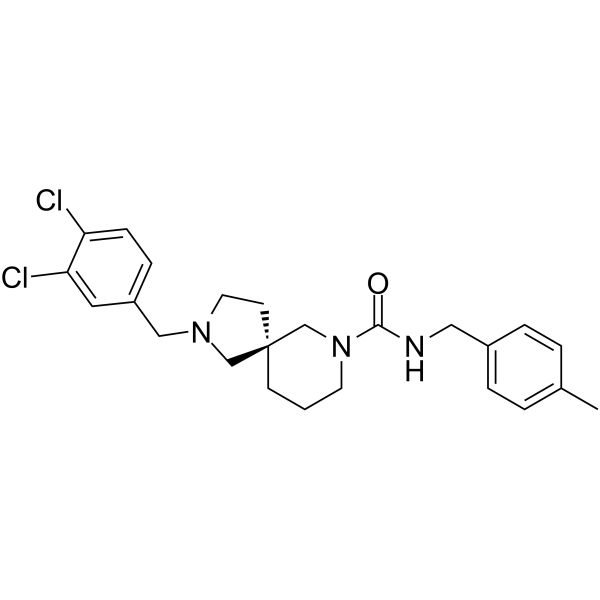
HY-U00459
GSK2850163IRE1α Inhibitor -
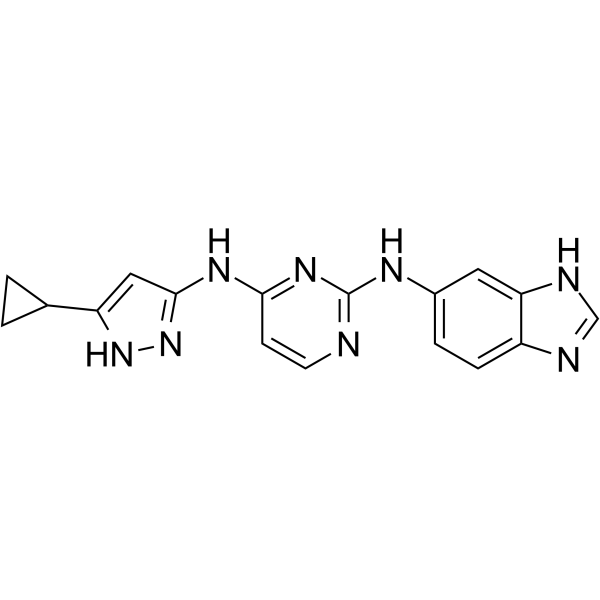
HY-17537
APY29IRE1 Inhibitor -
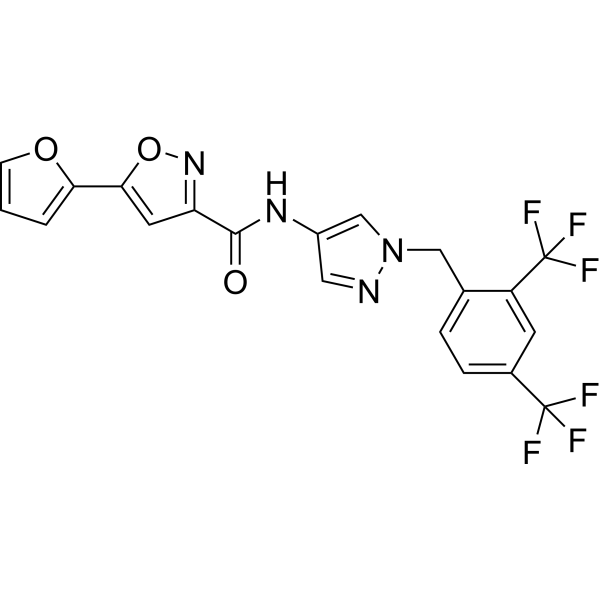
HY-108434
Ceapin-A7ATF6α Signaling Blocker -
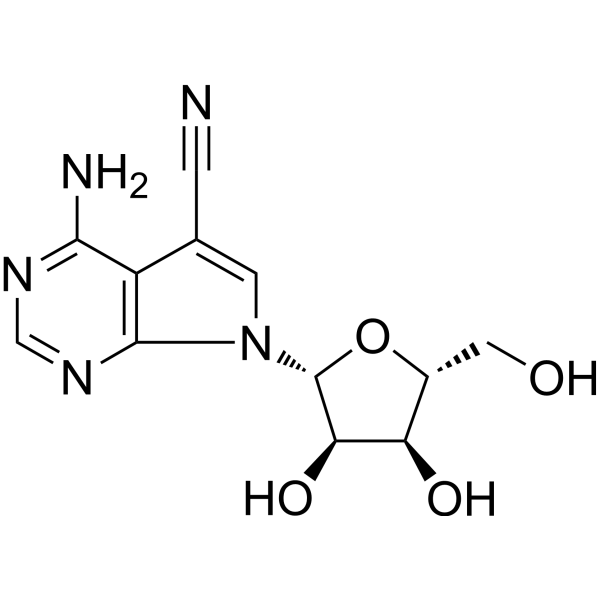
HY-103248
ToyocamycinIRE1/CDK Inhibitor -
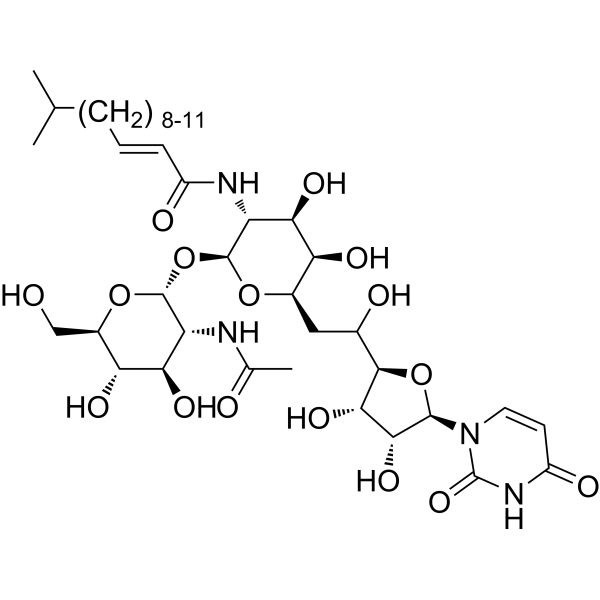
HY-A0098
TunicamycinER Stress Inducer -
HY-107400
B I09IRE-1 Inhibitor
Publications Citing Use of MedChemExpress (MCE) Kira8
More- Nucleic Acids Res. 2023 May 8;51(8):3650-3670. [Abstract]
- Cell Mol Biol Lett. 2026 Feb 14. [Abstract]
- NPJ Parkinsons Dis. 2023 Mar 7;9(1):35. [Abstract]
- Life Sci. 2026 Jan 1:384:124091. [Abstract]
- Biomed J. 2025 Aug;48(4):100875. [Abstract]
- Radiother Oncol. 2024 Feb:191:110059. [Abstract]
- Int J Mol Sci. 2022 Aug 12;23(16):9000. [Abstract]
- Viruses. 2026 Sep 10;18(9):996.
- Am J Physiol Lung Cell Mol Physiol. 2021 Sep 1;321(3):L576-L594. [Abstract]
- Arch Biochem Biophys. 2023 Mar 15:737:109552. [Abstract]
- Biochem Biophys Res Commun. 2022 Sep 29;632:158-164. [Abstract]
- bioRxiv. 2026 Jan 13.
- bioRxiv. 2024 Aug 8:2024.08.08.607189. [Abstract]
- University of Oklahoma. 2024.
- bioRxiv. 2020 Apr.
 Customer Validation & Images

-
WB
-
Bio/Physico-chemical Assay
-
Cell Imaging/Staining
-
Bio/Physico-chemical Assay
-
Bio/Physico-chemical Assay


Biological Activity
Description
IC50 & Target
Cellular Effect
|
Cell Line

|
Type | Value | Description | References |
|---|---|---|---|---|
| HT-1080 | IC50 |
0.099 μM
Compound: 18
|
Inhibition of human XBP1 splicing in human HT1080-CMV-XBP1-Luciferase cells assessed as luciferase signal by Promega Bright-Glo luciferase assay
Inhibition of human XBP1 splicing in human HT1080-CMV-XBP1-Luciferase cells assessed as luciferase signal by Promega Bright-Glo luciferase assay
|
[PMID: 25589933] |
In Vitro
Kira8 blocks IRE1α oligomerization, and potently inhibits IRE1α RNase activity against XBP1 and Ins2 RNAs. Kira8 more potently reduces IRE1α-driven apoptosis in INS-1 cells than KIRA6 and also reverses XBP1 splicing promoted by GNF-2[1].
MedChemExpress (MCE) has not independently confirmed the accuracy of these methods. They are for reference only.
In Vivo
One week treatment of pre-diabetic NODs mice with Kira8 (50 mg/kg; i.p.; once a day) leads to significant reductions in islet XBP1 splicing and TXNIP mRNAs, and preserves Ins1/Ins2, BiP and MANF mRNAs[1].
MedChemExpress (MCE) has not independently confirmed the accuracy of these methods. They are for reference only.
-
Animal Model:Male Ins2+/Akita mice[1]
-
Dosage:50 mg/kg
-
Administration:Injected i.p.; daily; for 35 days
-
Result:Significant reduction of hyperglycemia became apparent over several weeks.


Chemical Information
-
CAS No. 1630086-20-2
-
Appearance Solid
-
Molecular Weight 601.12
-
Formula C31H29ClN6O3S
-
Color Off-white to yellow
-
SMILES
O=S(C1=CC=CC=C1Cl)(NC2=C3C=CC(C)=C(OC4=NC=CC=C4C5=NC(N[C@@H]6CNCCC6)=NC=C5)C3=CC=C2)=O
-
Synonyms
AMG-18
-
Shipping
Room temperature in continental US; may vary elsewhere.
-
Storage
Powder -20°C 3 years 4°C 2 years In solvent -80°C 1 year -20°C 6 months


Publications (15)
-
Journal Impact Factor
-
Most Recent
-
Nucleic Acids Res
Genomic targets of the IRE1-XBP1s pathway in mediating metabolic adaptation in epithelial plasticity. [Abstract]2023 May 8;51(8):3650-3670. PMID: 36772828
Kira8 purchased from MedChemExpress. Usage Cited in: Nucleic Acids Res. 2023 May 8;51(8):3650-3670. [Abstract]
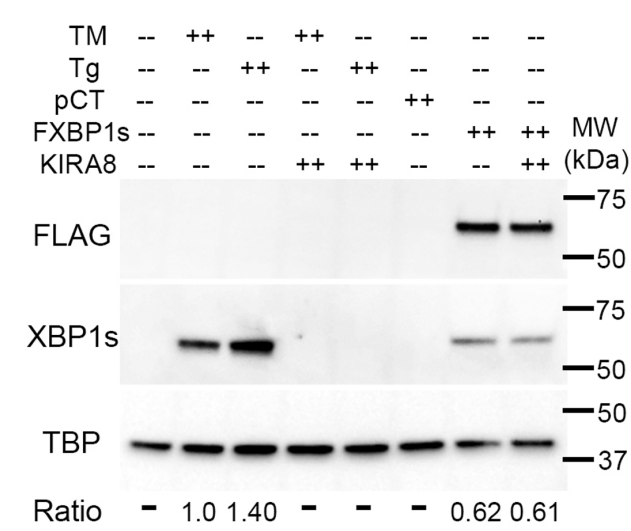
FXBP1s expression. Western immunoblot of hSAECs transduced with empty (pCT) or FXBP1s-expressing lentiviral vector at an MOI of 2.0 for 48 h, or mock-treated or treated with tunicamycin (TM, 0.5 μg/ml for 8 h) or thapsigargin (Tg, 50 nM for 6 h) in the absence or presence of KIRA8 (10 μM). Nuclear extracts were prepared and stained with anti-FLAG M2 or anti-XBP1s antibodies. TBP was used as loading control.
Kira8 purchased from MedChemExpress. Usage Cited in: Nucleic Acids Res. 2023 May 8;51(8):3650-3670. [Abstract]
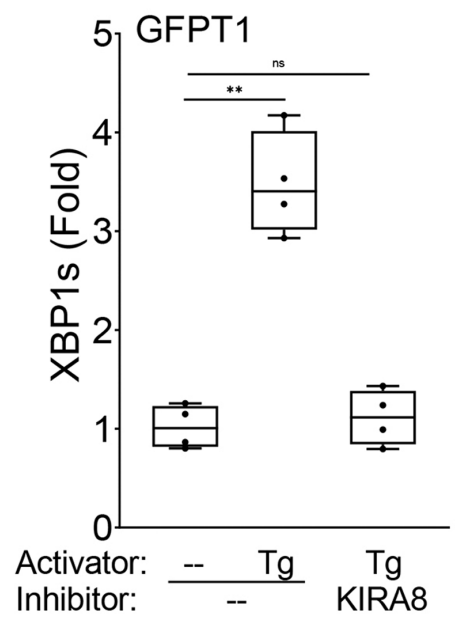
We observed that Tg induced a 3.5 ± 0.5-fold increase in endogenous XBP1s binding to the GFPT1 promoter. This induction was completely inhibited by the treatment with KIRA8 (10 μM).
-
Cell Mol Biol Lett
2026 Feb 14. PMID: 41691145 -
NPJ Parkinsons Dis
Deficiency of Perry syndrome-associated p150Glued in midbrain dopaminergic neurons leads to progressive neurodegeneration and endoplasmic reticulum abnormalities. [Abstract]2023 Mar 7;9(1):35. PMID: 36879021 -
Life Sci
Inhibition of IRE1α by KIRA8 restores spingosine-1-phosphate lyase activity and improves insulin sensitivity in muscle cells. [Abstract]2026 Jan 1:384:124091. PMID: 41253238 -
Biomed J
IRE1-Mediated Endoplasmic Reticulum Stress Response Regulates Oxidative Damage in CYP4V2 Deficient Human Retinal Pigment Epithelial Cells. [Abstract]2025 Aug;48(4):100875. PMID: 40466971 -
Radiother Oncol
Identification of the unfolded protein response pathway as target for radiosensitization in pancreatic cancer. [Abstract]2024 Feb:191:110059. PMID: 38135186 -
Int J Mol Sci
The IRE1α-XBP1s Arm of the Unfolded Protein Response Activates N-Glycosylation to Remodel the Subepithelial Basement Membrane in Paramyxovirus Infection. [Abstract]2022 Aug 12;23(16):9000. PMID: 36012265
Kira8 purchased from MedChemExpress. Usage Cited in: Int J Mol Sci. 2022 Aug 12;23(16):9000. [Abstract]
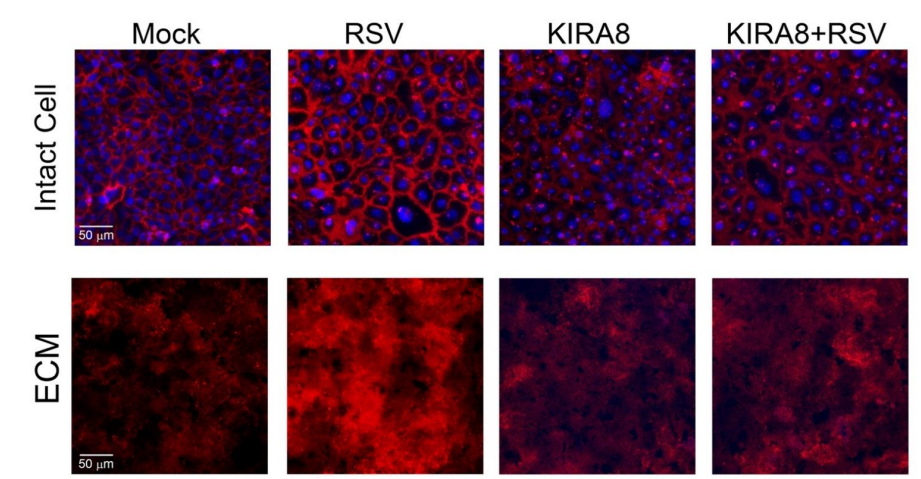
In a manner similar to our observations on the RSV induction of cell-associated FN1, we found that FN1 deposition into the ECM was also blocked by KIRA8 (10 μM, pre-treated for two hours).
Kira8 purchased from MedChemExpress. Usage Cited in: Int J Mol Sci. 2022 Aug 12;23(16):9000. [Abstract]
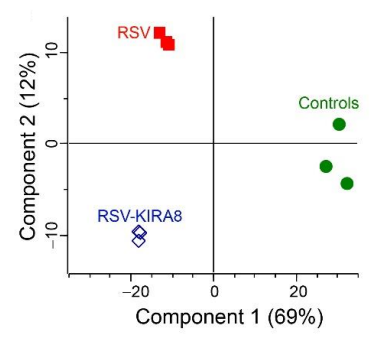
Principal component analysis of significant proteins (ANOVA with permutation-based FDR < 0.01). Green circle, controls; red square, RSV infection; blue diamond, RSV infection + KIRA8 treatment.
Kira8 purchased from MedChemExpress. Usage Cited in: Int J Mol Sci. 2022 Aug 12;23(16):9000. [Abstract]
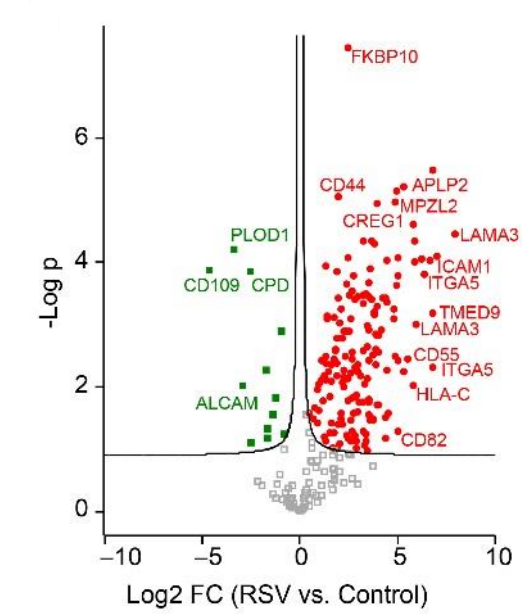
Proteomics analysis of N-glycosylation in hSAECs infected with RSV in the presence or absence of KIRA8. hSAECs were infected with RSV at 1.0 MOI for 24 h in the presence or absence of KIRA8 (10 µM). The N-glycosylated peptides were enriched with lectins and then analyzed with label-free LC-MS/MS. Volcano plot of N-glycosylated peptides (RSV vs. Control). Red circle, N-glycoproteins upregulated by RSV; green square, N-glycoproteins downregulated by RSV infection.
-
-
Am J Physiol Lung Cell Mol Physiol
Paramyxovirus replication induces the hexosamine biosynthetic pathway and mesenchymal transition via the IRE1α-XBP1s arm of the unfolded protein response. [Abstract]2021 Sep 1;321(3):L576-L594. PMID: 34318710 -
Arch Biochem Biophys
XBP1s acts as a transcription factor of IRE1α and promotes proliferation of colon cancer cells. [Abstract]2023 Mar 15:737:109552. PMID: 36828260 -
Biochem Biophys Res Commun
KIRA8 attenuates non-alcoholic steatohepatitis through inhibition of the IRE1α/XBP1 signalling pathway. [Abstract]2022 Sep 29;632:158-164. PMID: 36209584 -
-
bioRxiv
The mammalian Ire1 inhibitor, 4μ8C, exhibits broad anti- Aspergillus activity in vitro and in a treatment model of fungal keratitis. [Abstract]2024 Aug 8:2024.08.08.607189. PMID: 39149375 -
-


Solvent & Solubility
In Vitro:
Ethanol : 76.92 mg/mL (127.96 mM; ultrasonic and adjust pH to 5 with HCl)
DMSO : 65 mg/mL (108.13 mM; Need ultrasonic; Hygroscopic DMSO has a significant impact on the solubility of product, please use newly opened DMSO)
H2O : 30 mg/mL (49.91 mM; ultrasonic and warming and adjust pH to 2 with HCl and heat to 60°C)
Please refer to the solubility information to select the appropriate solvent. Once prepared, please aliquot and store the solution to prevent product inactivation from repeated freeze-thaw cycles.
Storage method and period of stock solution: -80°C, 1 year; -20°C, 6 months. When stored at -80°C, please use it within 1 year. When stored at -20°C, please use it within 6 months.
* Note: If you choose water as the stock solution, please dilute it to the working solution, then filter and sterilize it with a 0.22 μm filter before use.
Please refer to the solubility information to select the appropriate solvent. Once prepared, please aliquot and store the solution to prevent product inactivation from repeated freeze-thaw cycles.
Storage method and period of stock solution: -80°C, 1 year; -20°C, 6 months. When stored at -80°C, please use it within 1 year. When stored at -20°C, please use it within 6 months.
* Note: If you choose water as the stock solution, please dilute it to the working solution, then filter and sterilize it with a 0.22 μm filter before use.
Concentration (start) × Volume (start) = Concentration (final) × Volume (final)
In Vivo:
Select the appropriate dissolution method based on your experimental animal and administration route.
- For the following dissolution methods, please ensure to first prepare a clear stock solution using an In Vitro approach and then sequentially add co-solvents:
- To ensure reliable experimental results, the clarified stock solution can be appropriately stored based on storage conditions. As for the working solution for In Vivo experiments, it is recommended to prepare freshly and use it on the same day.
- The percentages shown for the solvents indicate their volumetric ratio in the final prepared solution. If precipitation or phase separation occurs during preparation, heat and/or sonication can be used to aid dissolution.
Add each solvent one by one: 10% DMSO 90% (20% SBE-β-CD in Saline)
Solubility: 4 mg/mL (6.65 mM); Suspended solution; Need ultrasonic
This protocol yields a suspended solution of 4 mg/mL. Suspended solution can be used for oral and intraperitoneal injection.
Taking 1 mL working solution as an example, add 100 μL DMSO stock solution (40.0 mg/mL) to 900 μL 20% SBE-β-CD in Saline, and mix evenly.
Preparation of 20% SBE-β-CD in Saline (4°C, storage for one week): 2 g SBE-β-CD powder is dissolved in 10 mL Saline, completely dissolve until clear.
Add each solvent one by one: 3% Ethanol 7% Tween-80 90% Saline
Solubility: ≥ 2.31 mg/mL (3.84 mM); Clear solution
Add each solvent one by one: 10% DMSO 40% PEG300 5% Tween-80 45% Saline
Solubility: ≥ 2.17 mg/mL (3.61 mM); Clear solution
This protocol yields a clear solution of ≥ 2.17 mg/mL (saturation unknown).
Taking 1 mL working solution as an example, add 100 μL DMSO stock solution (21.7 mg/mL) to 400 μL PEG300, and mix evenly; then add 50 μL Tween-80 and mix evenly; then add 450 μL Saline to adjust the volume to 1 mL.
Preparation of Saline: Dissolve 0.9 g sodium chloride in ddH₂O and dilute to 100 mL to obtain a clear Saline solution.
For the following dissolution methods, please prepare the working solution directly:
It is recommended to prepare fresh solutions and use them promptly within a short period of time.
The percentages shown for the solvents indicate their volumetric ratio in the final prepared solution. If precipitation or phase separation occurs during preparation, heat and/or sonication can be used to aid dissolution.
Add each solvent one by one: 50% PEG300 50% Saline
Solubility: 5 mg/mL (8.32 mM); Suspended solution; Need ultrasonic
In Vivo Dissolution Calculator
Please enter the basic information of animal experiments:
-
-
-
-
Recommended: Prepare an additional quantity of animals to account for potential losses during experiments.
Working solution concentration: 0.22 mg/mL
This product has good water solubility, please refer to the measured solubility data in water/PBS/Saline for details.


Purity & Documentation
-
Data Sheet (280 KB)
-
SDS (393 KB)
- English - EN (393 KB)
- Français - FR (393 KB)
- Deutsch - DE (393 KB)
- Norwegian - NO (393 KB)
- Español - ES (393 KB)
- Swedish - SV (393 KB)
- Italian - IT (393 KB)
- Korean - KR (393 KB)
- Portuguese - PT (393 KB)
-
Handling Instructions (2659 KB)
References


Complete Stock Solution Preparation Table
Please refer to the solubility information to select the appropriate solvent. Once prepared, please aliquot and store the solution to prevent product inactivation from repeated freeze-thaw cycles.
Storage method and period of stock solution: -80°C, 1 year; -20°C, 6 months. When stored at -80°C, please use it within 1 year. When stored at -20°C, please use it within 6 months.
| Optional Solvent | Concentration Solvent Mass | 1 mg | 5 mg | 10 mg | 25 mg |
|---|---|---|---|---|---|
| H2O / DMSO / Ethanol | 1 mM | 1.6636 mL | 8.3178 mL | 16.6356 mL | 41.5890 mL |
| 5 mM | 0.3327 mL | 1.6636 mL | 3.3271 mL | 8.3178 mL | |
| 10 mM | 0.1664 mL | 0.8318 mL | 1.6636 mL | 4.1589 mL | |
| 15 mM | 0.1109 mL | 0.5545 mL | 1.1090 mL | 2.7726 mL | |
| 20 mM | 0.0832 mL | 0.4159 mL | 0.8318 mL | 2.0795 mL | |
| 25 mM | 0.0665 mL | 0.3327 mL | 0.6654 mL | 1.6636 mL | |
| 30 mM | 0.0555 mL | 0.2773 mL | 0.5545 mL | 1.3863 mL | |
| 40 mM | 0.0416 mL | 0.2079 mL | 0.4159 mL | 1.0397 mL | |
| DMSO / Ethanol | 50 mM | 0.0333 mL | 0.1664 mL | 0.3327 mL | 0.8318 mL |
| 60 mM | 0.0277 mL | 0.1386 mL | 0.2773 mL | 0.6932 mL | |
| 80 mM | 0.0208 mL | 0.1040 mL | 0.2079 mL | 0.5199 mL | |
| 100 mM | 0.0166 mL | 0.0832 mL | 0.1664 mL | 0.4159 mL |
* Note: If you choose water as the stock solution, please dilute it to the working solution, then filter and sterilize it with a 0.22 μm filter before use.


Kira8 Related Classifications
HY-114368 Related Classifications
 Powered by Bioz