



LM22A-4

Based on 1 Customer Validation
LM22A-4 is a specific agonist of tyrosine kinase receptor B, used for neurological disease research.
Nur für Forschungszwecke. Wir verkaufen nicht an Patienten.
- Reinheit : 99.95%
- CAS. Nr.: 37988-18-4
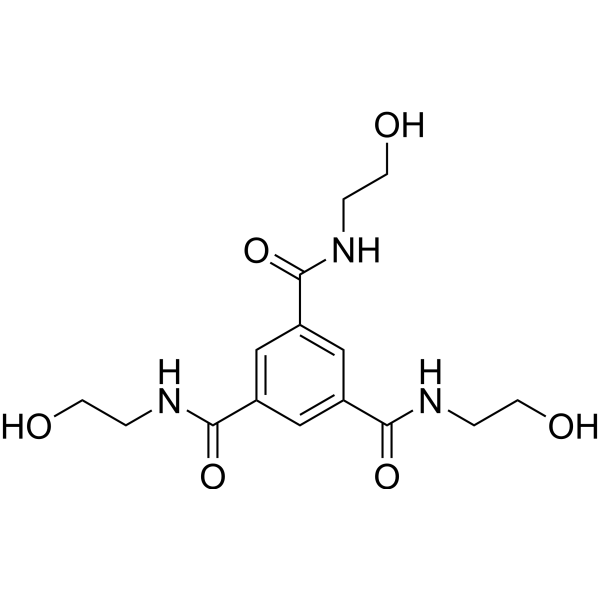
- Formel: C15H21N3O6
- Molecular Weight:339.34
-
Speicherung:Powder -20°C, 3 years , 4°C, 2 years ; In solvent -80°C, 2 years , -20°C, 1 year

To place orders, for customer services and technical support, please contact: MedChemExpress USA
Tel: 609-228-6898 E-mail: [email protected] [email protected]


-
 Biologische Aktivität
-
Chemical Information
-
Lösungsmittel & Löslichkeit
- Protokoll
- Reinheit & Dokumentation
- Verweise
-
 Help & FAQs


-
HY-W013372
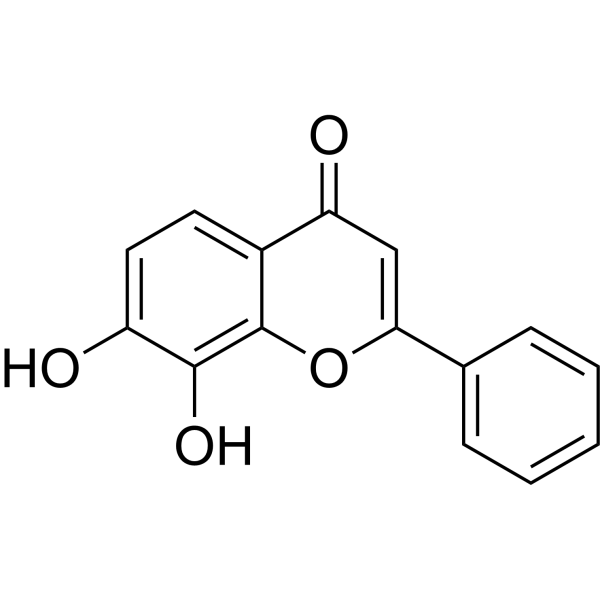
7,8-Dihydroxyflavone -
HY-12497
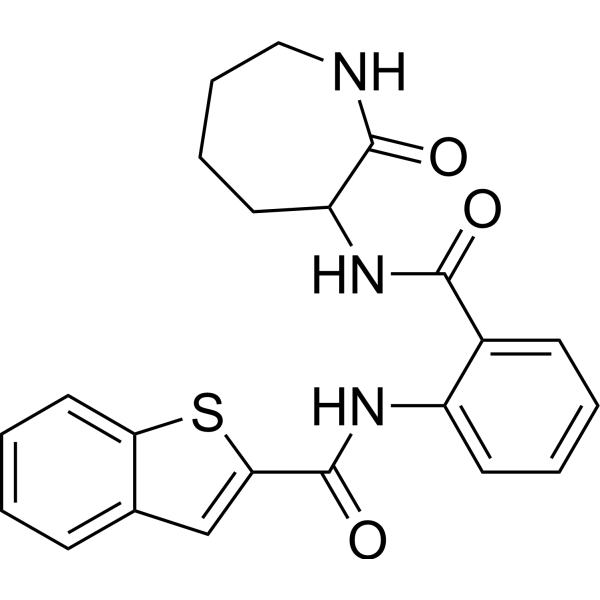
ANA-12TrkB Antagonist -
HY-104047
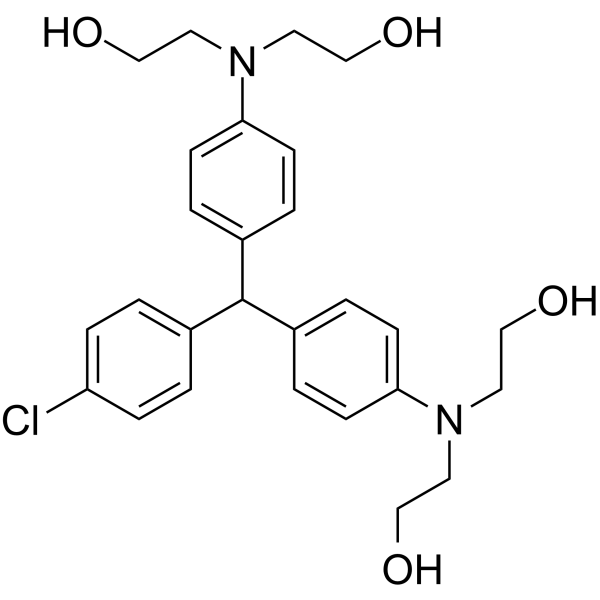
LM22B-10TrkB/TrkC Activator -
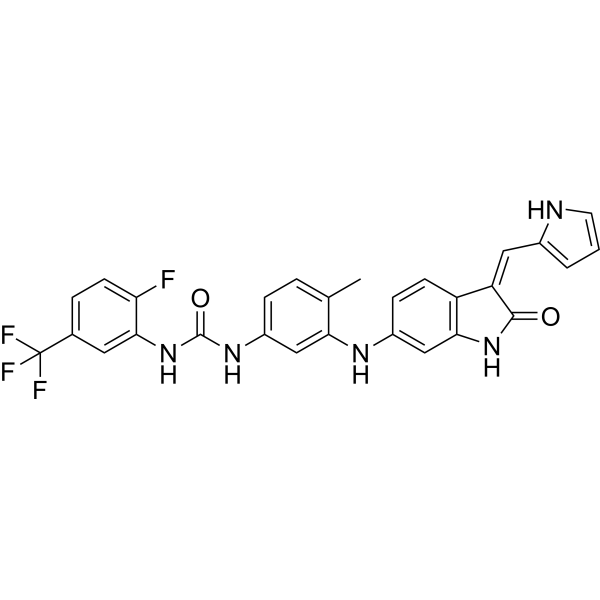
HY-13491
GNF-5837Trk Receptor Inhibitor -
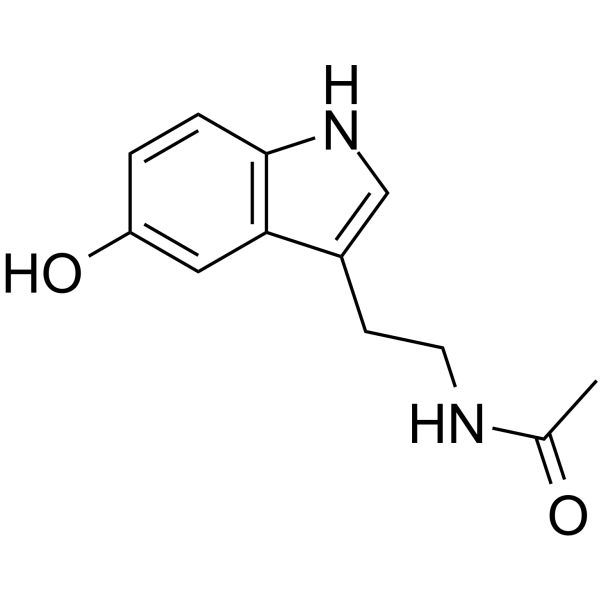
HY-107854
N-Acetyl-5-hydroxytryptamineMelatonin Precursor -
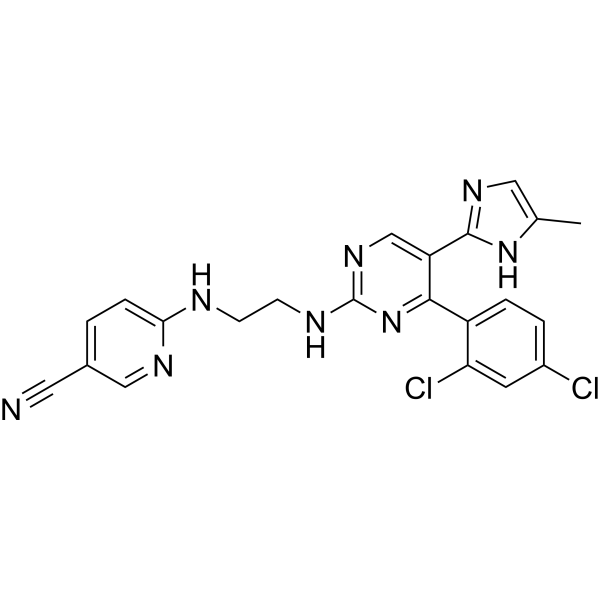
HY-10182
LaduviglusibGSK-3 Inhibitor -
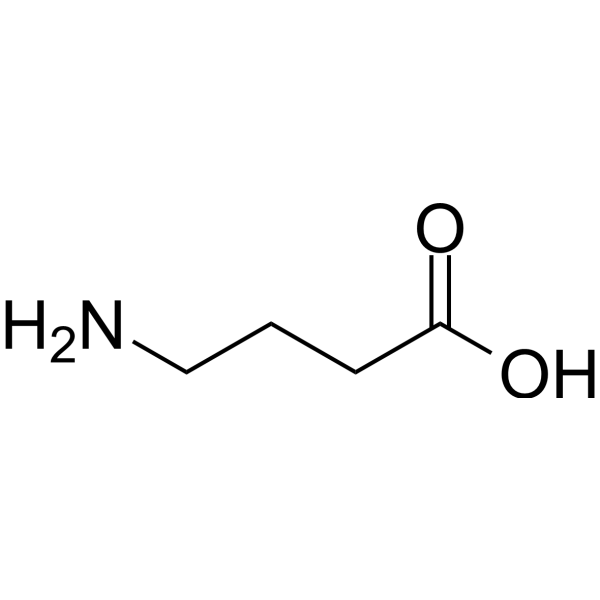
HY-N0067
γ-Aminobutyric acidNeurotransmitter -
HY-18314
GW 441756TrkA Inhibitor -
HY-B0015
PaclitaxelAntitumor Agent -
HY-10181
DasatinibSrc/Bcr-Abl Inhibitor -
HY-15531
VenetoclaxBCL-2 Inhibitor -
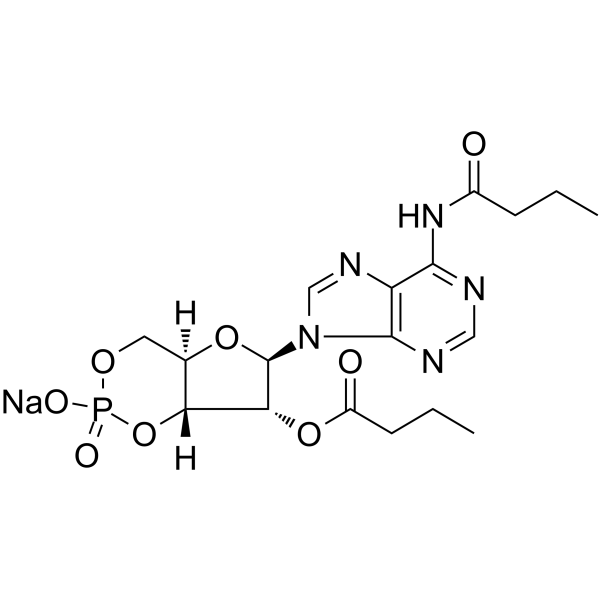
HY-B0764
Bucladesine sodiumcAMP Analog


Biologische Aktivität
Beschreibung
In Vitro
LM22A-4 significantly up-regulates OPN and ALPase mRNA expression in a dose-dependent manner and OC mRNA level is significantly increased by 5 μM of LM22A-4. LM22A-4 significantly increases OPN, ALPase and OC mRNA expression in a time-dependent manner. LM22A-4 stimulated OPN and OC mRNA expression in HCEM cells cultured with mineralizing media[2].
MedChemExpress (MCE) has not independently confirmed the accuracy of these methods. They are for reference only. Further protocols information, click here.
In Vivo
MedChemExpress (MCE) has not independently confirmed the accuracy of these methods. They are for reference only.


Chemical Information
-
CAS. Nr. 37988-18-4
-
Appearance Solid
-
Molecular Weight 339.34
-
Formel C15H21N3O6
-
Color White to off-white
-
SMILES
O=C(C1=CC(C(NCCO)=O)=CC(C(NCCO)=O)=C1)NCCO
-
Versand
Room temperature in continental US; may vary elsewhere.
-
Speicherung
Powder -20°C 3 years 4°C 2 years In solvent -80°C 2 years -20°C 1 year


Lösungsmittel & Löslichkeit
In Vitro:
DMSO : 125 mg/mL (368.36 mM; Need ultrasonic; Hygroscopic DMSO has a significant impact on the solubility of product, please use newly opened DMSO)
H2O : ≥ 50 mg/mL (147.34 mM)
* "≥" means soluble, but saturation unknown.
Please refer to the solubility information to select the appropriate solvent. Once prepared, please aliquot and store the solution to prevent product inactivation from repeated freeze-thaw cycles.
Storage method and period of stock solution: -80°C, 2 years; -20°C, 1 year. When stored at -80°C, please use it within 2 years. When stored at -20°C, please use it within 1 year.
* Note: If you choose water as the stock solution, please dilute it to the working solution, then filter and sterilize it with a 0.22 μm filter before use.
Please refer to the solubility information to select the appropriate solvent. Once prepared, please aliquot and store the solution to prevent product inactivation from repeated freeze-thaw cycles.
Storage method and period of stock solution: -80°C, 2 years; -20°C, 1 year. When stored at -80°C, please use it within 2 years. When stored at -20°C, please use it within 1 year.
* Note: If you choose water as the stock solution, please dilute it to the working solution, then filter and sterilize it with a 0.22 μm filter before use.
Konzentration (Stammlösung) × Volumen (Stammlösung) = Konzentration (Ziellösung) × Volumen (Ziellösung)
In Vivo:
Select the appropriate dissolution method based on your experimental animal and administration route.
- For the following dissolution methods, please ensure to first prepare a clear stock solution using an In Vitro approach and then sequentially add co-solvents:
- To ensure reliable experimental results, the clarified stock solution can be appropriately stored based on storage conditions. As for the working solution for In Vivo experiments, it is recommended to prepare freshly and use it on the same day.
- The percentages shown for the solvents indicate their volumetric ratio in the final prepared solution. If precipitation or phase separation occurs during preparation, heat and/or sonication can be used to aid dissolution.
Add each solvent one by one: 10% DMSO 40% PEG300 5% Tween-80 45% Saline
Solubility: ≥ 2.5 mg/mL (7.37 mM); Clear solution
This protocol yields a clear solution of ≥ 2.5 mg/mL (saturation unknown).
Taking 1 mL working solution as an example, add 100 μL DMSO stock solution (25.0 mg/mL) to 400 μL PEG300, and mix evenly; then add 50 μL Tween-80 and mix evenly; then add 450 μL Saline to adjust the volume to 1 mL.
Preparation of Saline: Dissolve 0.9 g sodium chloride in ddH₂O and dilute to 100 mL to obtain a clear Saline solution.
Add each solvent one by one: 10% DMSO 90% (20% SBE-β-CD in Saline)
Solubility: ≥ 2.5 mg/mL (7.37 mM); Clear solution
This protocol yields a clear solution of ≥ 2.5 mg/mL (saturation unknown).
Taking 1 mL working solution as an example, add 100 μL DMSO stock solution (25.0 mg/mL) to 900 μL 20% SBE-β-CD in Saline, and mix evenly.
Preparation of 20% SBE-β-CD in Saline (4°C, storage for one week): 2 g SBE-β-CD powder is dissolved in 10 mL Saline, completely dissolve until clear.
For the following dissolution methods, please prepare the working solution directly:
It is recommended to prepare fresh solutions and use them promptly within a short period of time.
The percentages shown for the solvents indicate their volumetric ratio in the final prepared solution. If precipitation or phase separation occurs during preparation, heat and/or sonication can be used to aid dissolution.
Add each solvent one by one: PBS
Solubility: 120 mg/mL (353.63 mM); Clear solution; Need ultrasonic
In Vivo Dissolution Calculator
Please enter the basic information of animal experiments:
-
-
-
-
Recommended: Prepare an additional quantity of animals to account for potential losses during experiments.
Working solution concentration: 0.22 mg/mL
This product has good water solubility, please refer to the measured solubility data in water/PBS/Saline for details.

Protokoll
-
Research Protocol for Neurological Diseases
PINK1/Parkin-mediated mitophagy pathway is a mitochondrial quality-control signaling axis in which mitochondrial depolarization stabilizes PINK1 on damaged mitochondria, activates Parkin recruitment and E3 ubiquitin ligase activity, promotes ubiquitination of outer mitochondrial membrane proteins, recruits selective autophagy adaptors, and drives lysosomal degradation of damaged mitochondria. In neurological disease research, this pathway is experimentally important because neurons, especially dopaminergic neurons, are highly dependent on mitochondrial integrity, and defective mitochondrial turnover can lead to mitochondrial dysfunction, oxidative stress, impaired neuronal survival, α-synuclein accumulation, and neuroinflammatory damage-associated signals. The genetic disease link is strongest in Parkinson’s disease because mutations in PRKN/parkin cause autosomal recessive juvenile parkinsonism, mutations in PINK1 cause hereditary early-onset Parkinson’s disease, and Drosophila studie


Reinheit & Dokumentation
-
Data Sheet (273 KB)
-
SDS (396 KB)
- English - EN (396 KB)
- Français - FR (396 KB)
- Deutsch - DE (396 KB)
- Norwegian - NO (396 KB)
- Español - ES (396 KB)
- Swedish - SV (396 KB)
- Italian - IT (396 KB)
- Korean - KR (396 KB)
- Portuguese - PT (396 KB)
-
Handling Instructions (2659 KB)
Verweise
[1]. Yu G, et al. Protective effects of LM22A-4 on injured spinal cord nerves. Int J Clin Exp Pathol. 2015 Jun 1;8(6):6526-32. eCollection 2015. [Content Brief]
[2]. Kajiya M, et al. BDNF mimetic compound LM22A-4 regulates cementoblast differentiation via the TrkB-ERK/Akt signaling cascade. Int Immunopharmacol. 2014 Apr;19(2):245-52 [Content Brief]


Complete Stock Solution Preparation Table
Please refer to the solubility information to select the appropriate solvent. Once prepared, please aliquot and store the solution to prevent product inactivation from repeated freeze-thaw cycles.
Storage method and period of stock solution: -80°C, 2 years; -20°C, 1 year. When stored at -80°C, please use it within 2 years. When stored at -20°C, please use it within 1 year.
| Optional Solvent | Concentration Solvent Mass | 1 mg | 5 mg | 10 mg | 25 mg |
|---|---|---|---|---|---|
| H2O / DMSO | 1 mM | 2.9469 mL | 14.7345 mL | 29.4690 mL | 73.6724 mL |
| 5 mM | 0.5894 mL | 2.9469 mL | 5.8938 mL | 14.7345 mL | |
| 10 mM | 0.2947 mL | 1.4734 mL | 2.9469 mL | 7.3672 mL | |
| 15 mM | 0.1965 mL | 0.9823 mL | 1.9646 mL | 4.9115 mL | |
| 20 mM | 0.1473 mL | 0.7367 mL | 1.4734 mL | 3.6836 mL | |
| 25 mM | 0.1179 mL | 0.5894 mL | 1.1788 mL | 2.9469 mL | |
| 30 mM | 0.0982 mL | 0.4911 mL | 0.9823 mL | 2.4557 mL | |
| 40 mM | 0.0737 mL | 0.3684 mL | 0.7367 mL | 1.8418 mL | |
| 50 mM | 0.0589 mL | 0.2947 mL | 0.5894 mL | 1.4734 mL | |
| 60 mM | 0.0491 mL | 0.2456 mL | 0.4911 mL | 1.2279 mL | |
| 80 mM | 0.0368 mL | 0.1842 mL | 0.3684 mL | 0.9209 mL | |
| 100 mM | 0.0295 mL | 0.1473 mL | 0.2947 mL | 0.7367 mL |
* Note: If you choose water as the stock solution, please dilute it to the working solution, then filter and sterilize it with a 0.22 μm filter before use.


LM22A-4 Related Classifications
HY-100673 Related Classifications
 Powered by Bioz