Infection
-
Infection Related Products (18904)
Related Products (18904)

-
Antibodies (22)
-
N-Acetyl-L-leucyl-L-leucyl-L-methional
 0 ImagesCat. No.: HY-103321CAS No.: 145757-50-2
N-Acetyl-L-leucyl-L-leucyl-L-methional is a Calpain II inhibitor with an IC50 of 0.24 μM against porcine Calpain II. N-Acetyl-L-leucyl-L-leucyl-L-methional forms a stable tetrahedral adduct with the thiol group at the active site of Calpain II, thereby inhibiting proteolytic activity. N-Acetyl-L-leucyl-L-leucyl-L-methionally inhibits cathepsins in a non-selective manner. N-Acetyl-L-leucyl-L-leucyl-L-methional reduces SARS-CoV-2 infection levels in human coronary artery endothelial cells in vitro. N-Acetyl-L-leucyl-L-leucyl-L-methional can be used in research related to cataracts and coronavirus infections.
-
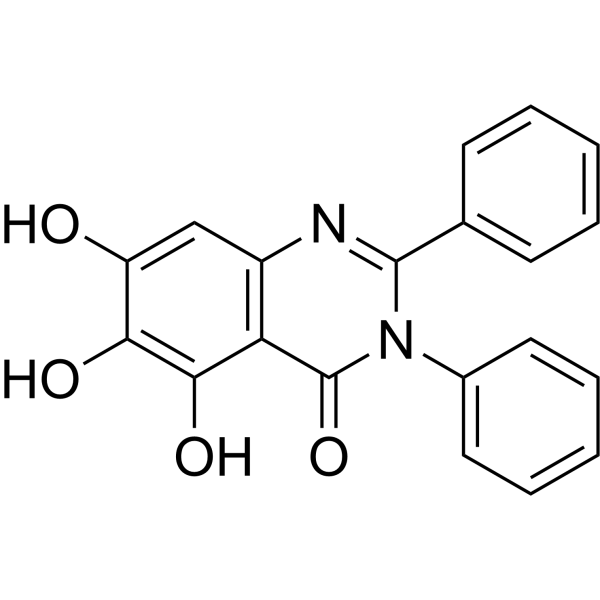
SARS-CoV-2 Mpro-IN-9
 0 Images
SARS-CoV-2 Mpro-IN-9 (compound c7) is a nonpeptidic, noncovalent SARS-CoV-2 Mpro inhibitor (IC50=0.085 μM), with improved physicochemical and drug metabolism and pharmacokinetics (DMPK) properties. SARS-CoV-2 Mpro-IN-9 inhibits viral replication (EC50=1.10 μM) in SARS-CoV-2-infected Vero E6 cells, while exhibits low cytotoxic effects (CC50>50 μM).
-
Levofloxacin N-oxide (Standard)
 0 Images
Levofloxacin N-oxide (Standard) is the analytical standard of Levofloxacin N-oxide. This product is intended for research and analytical applications. Levofloxacin N-oxide is a minor metabolite of Levofloxacin (HY-B0330). Levofloxacin N-oxide does not exhibit significantly genotoxic risks. Levofloxacin is an orally active antibiotic and is active against both Gram-positive and Gram-negative bacteria.

-
Maculosin (Standard)
 0 Images
Complanatuside (Standard) is the analytical standard of Complanatuside. This product is intended for research and analytical applications. Complanatuside is a flavonoid found in the traditional Chinese medicine Semen Astragali Complanati.
-
LSD1-IN-35
 0 ImagesCat. No.: HY-168086CAS No.: 2992690-04-5
LSD1-IN-35 (Compound Z-1) is a selective LSD1 Inhibitor (IC50: 108 nM). LSD1-IN-35 inhibits the demethylation on H3K4me1/2. LSD1-IN-35 is an immunomodulator. LSD1-IN-35 promotes response of gastric cancer cells to T-cell killing effect by decreasing PD-L1 expression and further attenuates the PD-1/PD-L1 interaction.
-
1,5-Hexadien-3-ol
 0 ImagesCat. No.: HY-W169645CAS No.: 924-41-4Synonyms: NSC 102761
1,5-Hexadien-3-ol is a green leaf volatile (GLV) alcohol that can be found in tomato plants. 1,5-Hexadien-3-ol contributes to protection against Botrytis cinerea. 1,5-Hexadien-3-ol can be used for the research of grey mould disease.
-
Anticancer agent 119
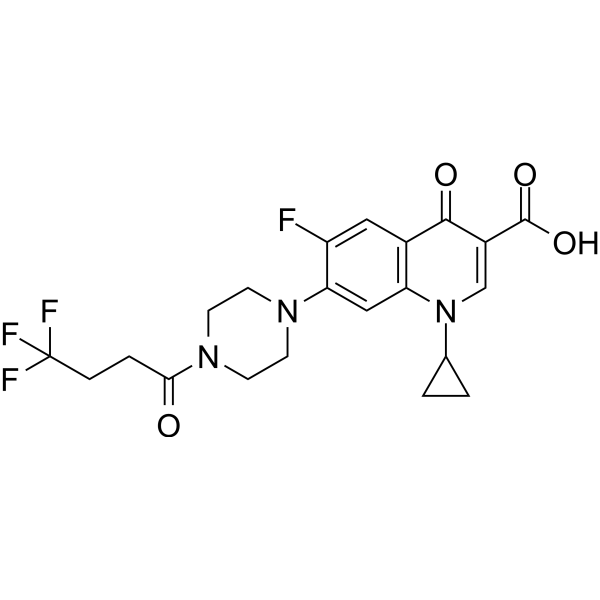 0 ImagesCat. No.: HY-154862CAS No.: 2928614-16-6
Anticancer agent 119 (compound 15) is an N-acylated ciprofloxacin derivative, which has certain antibacterial activity and induces ROS production to promote cancer cell apoptosis.
-
Cletoquine-d4-1
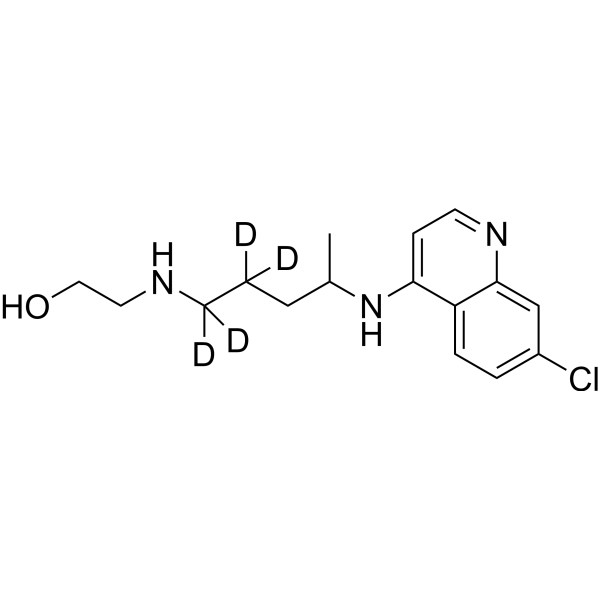 0 ImagesCat. No.: HY-135810S1CAS No.: 1216461-56-1Synonyms: Desethylhydroxychloroquine-d4-1
Cletoquine-d4-1 is the deuterium labeled Cletoquine. Cletoquine (Desethylhydroxychloroquine) is a major active metabolite of Hydroxychloroquine. Cletoquine is produced in the liver by CYP2D6, CYP3A4, CYP3A5, and CYP2C8 isoenzymes. Cletoquine is also a Chloroquine derivative and has the ability to against the chikungunya virus (CHIKV). Cletoquine has antimalarial effects and has the potential for autoimmune diseases treatment.
-
SDH-IN-4
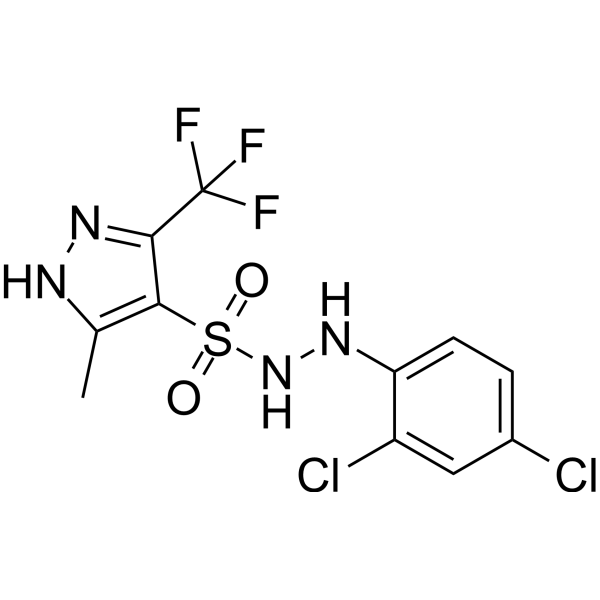 0 ImagesCat. No.: HY-149323CAS No.: 2982993-88-2
SDH-IN-4 (compound B6) is a selective inhibitor against succinate dehydrogenase (SDH) with an IC50 value of 0.28 μg/mL. SDH-IN-4 has highly efficient and broad-spectrum antifungal activity, against R. solani with an EC50 value of 0.23 μg/mL.
-
β-Calacorene
 0 ImagesCat. No.: HY-W727391CAS No.: 50277-34-4
β-calacorene is an essential oil metabolite. β-calacorene shows AMES toxicity or mutagenic potential. β-calacorene can be used in the research of Staphylococcus aureus infections.
-
Callophycin A
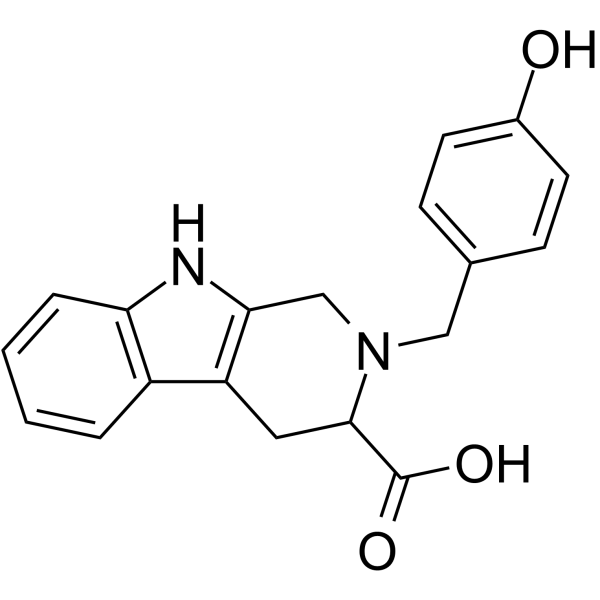 0 ImagesCat. No.: HY-146190CAS No.: 1345674-93-2
Callophycin A, a red seaweed derived metabolite, possessing potent activity against Candida albicans with MIC of 62.5~250 mg/L. Callophycin A significantly reduces fungal burden of vaginal candidiasis induced mice, also decreases inflammatory response and immune molecules.
-
Senna extract
 0 ImagesCat. No.: HY-N18652CAS No.: 85187-05-9
Senna extract contains anthraquinone compounds, such as sennosides A and B, which have laxative properties. Sennosides in senna extract can stimulate colon muscles, promote intestinal peristalsis, and relieve constipation.
-
HBV-IN-15
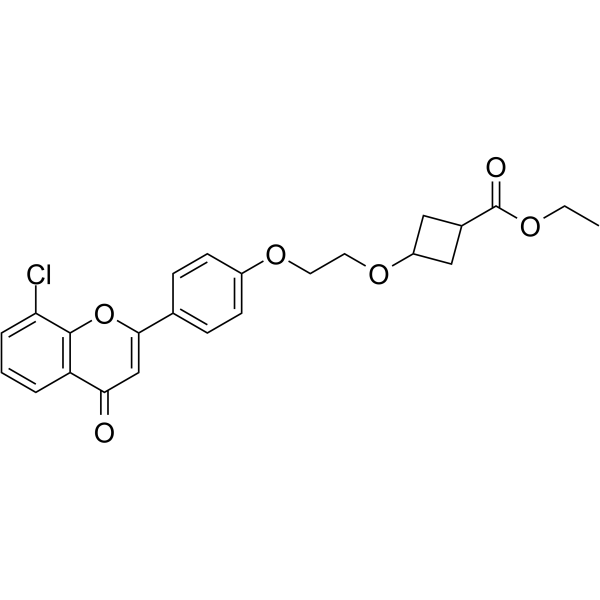 0 ImagesCat. No.: HY-144046CAS No.: 2413192-50-2
HBV-IN-15 is a potent inhibitor of covalently closed circular DNA (cccDNA). cccDNA serves as the template for viral RNA transcription and subsequent viral DNA generation. HBV-IN-15 is a flavone derivative. HBV-IN-16 has the potential for the research of HBV infection (extracted from patent WO2020052774A1, compound 2).
-
GRL-190-21
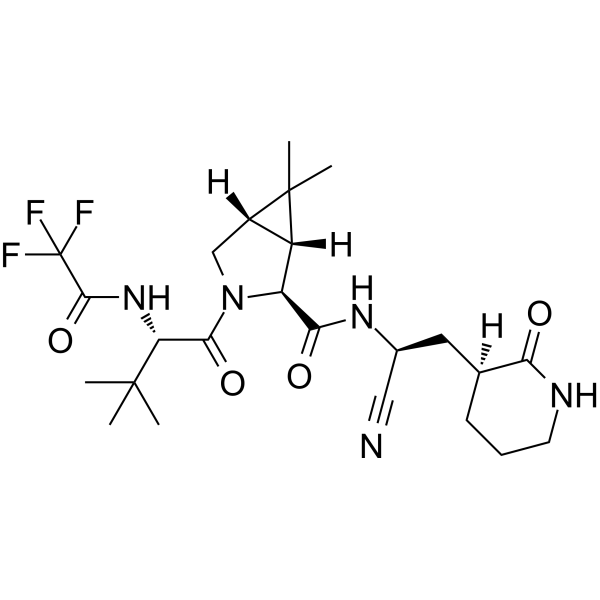 0 ImagesCat. No.: HY-162229CAS No.: 2755957-14-1
GRL-190-21 (compound 5e) is an inhibitor for SARS-Cov-2-Mpro with a Ki of 0.04 nM and exhibits antiviral activity in VeroE6 cells with EC50 of 0.26 μM. GRL-190-21 reduces the infectivity, replication, and cytopathic effect of SARS-CoV-2 without significant toxicity.
-
Aranorosin
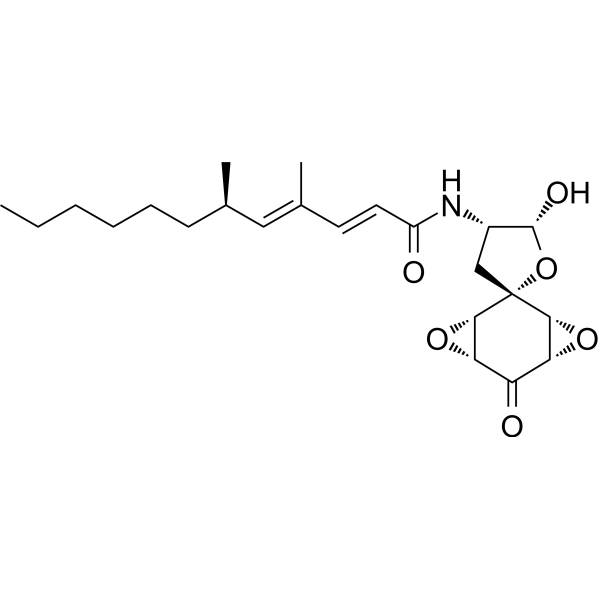 0 ImagesCat. No.: HY-121780CAS No.: 117184-53-9
Aranorosin, a potent antifungal antibiotic, has been isolated from the culture filtrate and mycelium of a strain of Pseudoarachniotus roseus Kuehn.
-
Boc-Ala-Gly-Pro-Arg-AMC
 0 ImagesCat. No.: HY-P11367CAS No.: 118850-78-5
Boc-Ala-Gly-Pro-Arg-AMC is a synthetic fluorescent substrate, widely used for the detection of protease activity. Boc-Ala-Gly-Pro-Arg-AMC can be used to detect the activity of serine proteases and the oligopeptide enzyme B of Trypanosoma brucei.
-
Harzianopyridone
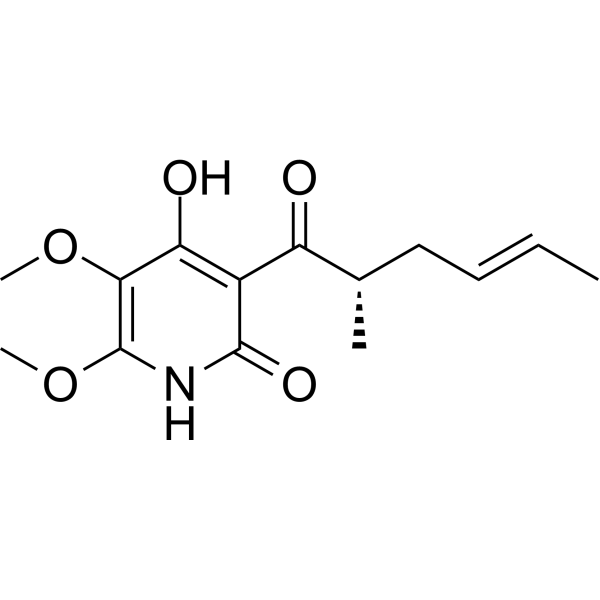 0 ImagesCat. No.: HY-120183CAS No.: 137813-88-8
Harzianopyridone is a compound that can be isolated from Trichoderma harzianum. Harzianopyridone is a succinate dehydrogenase (SDH) inhibitor with an IC50 of 80 nM. Harzianopyridone has antifungal, antibacterial, and herbicidal activities.