Infection
-
Infection Related Products (18904)
Related Products (18904)

-
Antibodies (22)
-
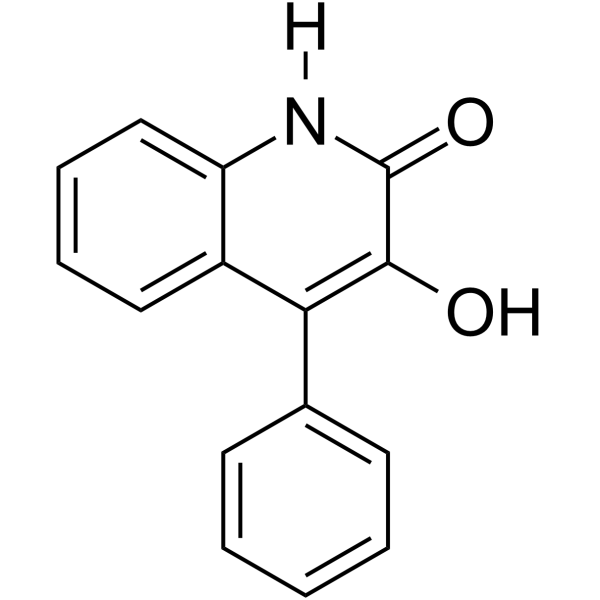
Viridicatin
 0 Images
Viridicatin is a fungal metabolite from Penicillium species. Viridicatin shows slight in vitro antibiotic activity against Mycobacterium tuberculosis.
-
Closantel-13C6
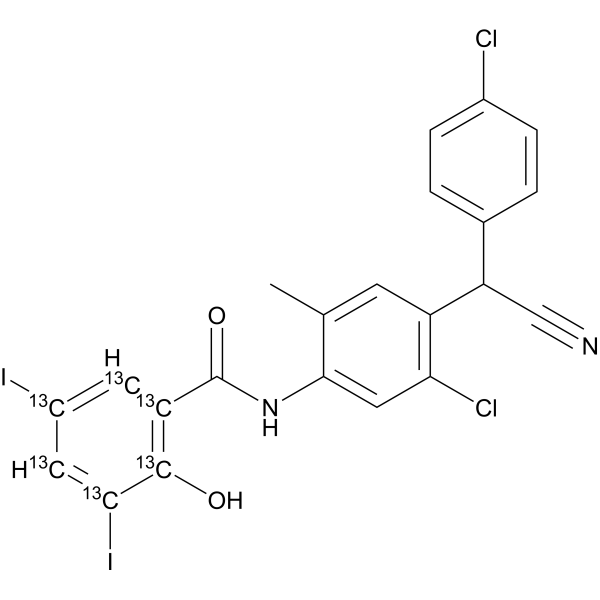 0 ImagesCat. No.: HY-17596SCAS No.: 1325559-20-3
Closantel-13C6 is the 13C6 labeled Closantel. Closantel is a halogenated salicylanilide with a potent anti-parasitic activity. Closantel is a potent and highly specific Onchocerca volvulus chitinase (OvCHT1) inhibitor with an IC50 of 1.6 μM and a Ki of 468 nM. Closantel inhibits the O. volvulus L3 to L4 molt of developing.
-
Neoaspergillic acid
 0 Images
Neoaspergillic acid (NSC 356436) (Compound 2) is a microbial secondary metabolite. Neoaspergillic acid can be isolated from the endophytic fungus Aspergillus sp. SPH2. Neoaspergillic acid has potent antifungal activity against Alternaria alternata, Botrytis cinerea and Fusarium oxysporum. Neoaspergillic acid appears during the exponential phase of fungal growth. Neoaspergillic acid also antitumor and antibacterial effects.
-
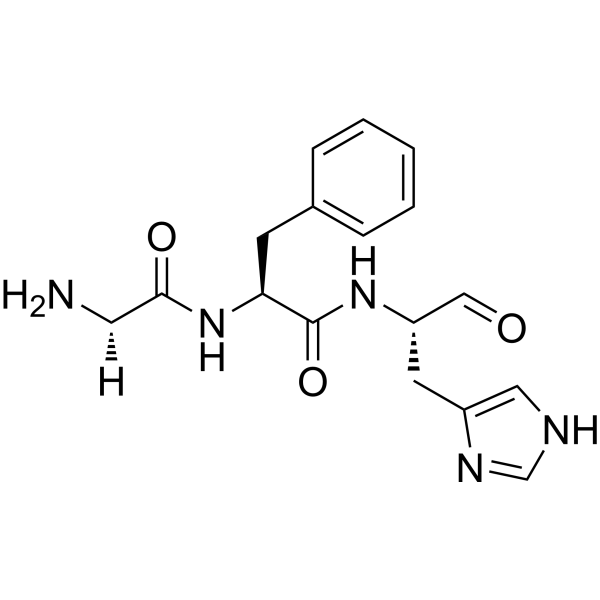
DZ-2640
 0 ImagesCat. No.: HY-19246CAS No.: 184633-88-3
DZ-2640 is an orally active Carbapenem antibiotic, a prodrug of DU-6681 (HY-19247). DU-6681 exhibits antibacterial activity against a broad spectrum of gram-positive and -negative bacteria.
-
Amiprilose
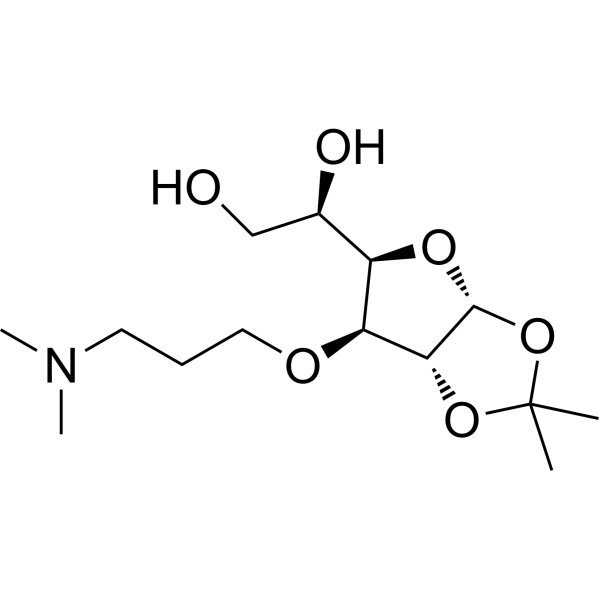 0 ImagesCat. No.: HY-121160CAS No.: 56824-20-5Synonyms: SM1213; Therafectin
Amiprilose (SM1213; Therafectin) is a potent inhibitor against Hepatocellular carcinoma (HCC). Amiprilose induces lymphokine-induced macrophage activation directly to kill Listeria monocytogenes.
-
Sulbactam-d2 sodium
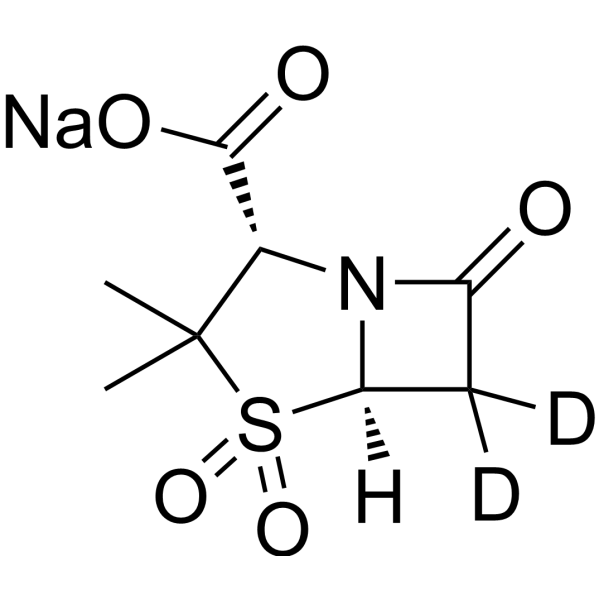 0 ImagesCat. No.: HY-B0334AS1CAS No.: 948027-82-5Synonyms: CP45899-d2 sodium
Sulbactam-d2 (sodium) is the deuterium labeled Sulbactam sodium. Sulbactam (CP45899) sodium is a competitive, irreversible beta-lactamase inhibitor. Sulbactam sodium shows antimicrobial activity against multidrug-resistant (MDR) acinetobacter calcoaceticus--Acinetobacter baumannii (Acb) complex.
-
ZIKV-IN-4
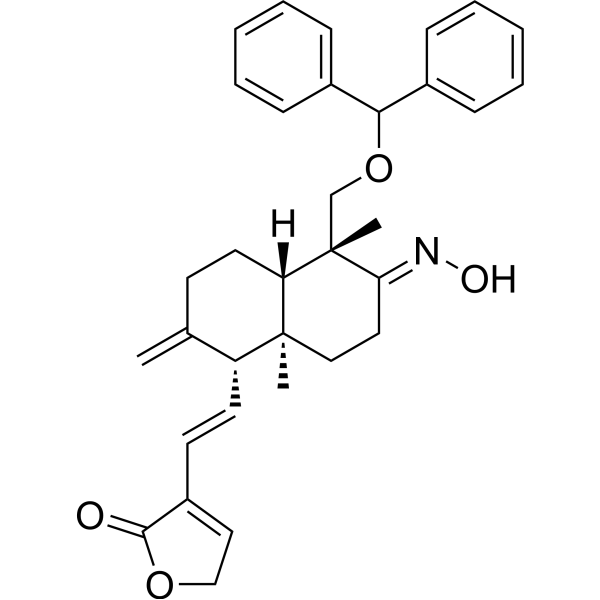 0 ImagesCat. No.: HY-151447CAS No.: 3033697-91-2
ZIKV-IN-4 (compound 5b) is a low-cytotoxicity and acid-stable anti-ZIKV agent (EC50=3.49 μM). ZIKV-IN-4 effectively inhibits the activity of ZIKV NS5 MTase.
-
Saquinavir mesylate (Standard)
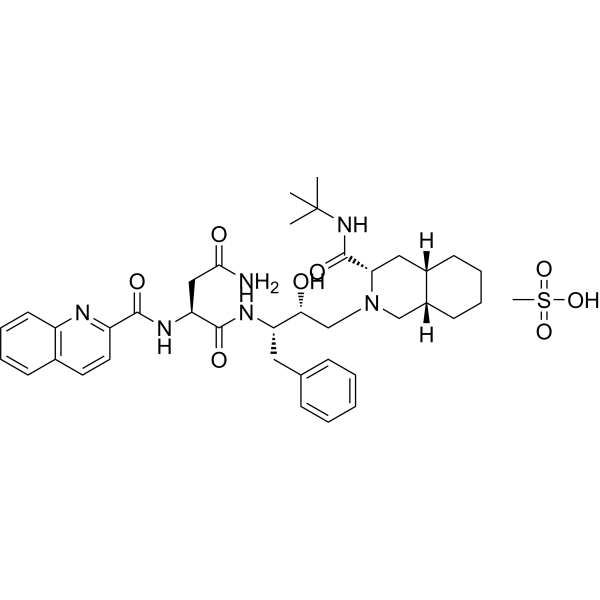 0 ImagesSynonyms: Ro 31-8959/003 (Standard)
Saquinavir mesylate (Standard) (Ro 31-8959/003 (Standard)) is the analytical standard of Saquinavir mesylate (HY-17003). This product is intended for research and analytical applications. Saquinavir (Ro 31-8959) mesylate is an orally active HIV protease inhibitor that can be used in the research of AIDS. Saquinavir mesylate also has anti-inflammatory activity and can induce apoptosis of human red blood cells.
-
Penicillinase (from calf stomach)
 0 Images
Penicillinase (from calf stomach) is an enzyme that degrades penicillin by hydrolyzing the cyclic amide bonds in the lactam ring of penicillin, which can inactivate penicillin. Penicillinase (from calf stomach) can be isolated from penicillin resistant strains. Penicillinase (from calf stomach) has potential application as a marker for steroid hormone enzyme linked immunosorbent assay.
-
Valproic acid sodium (2:1)
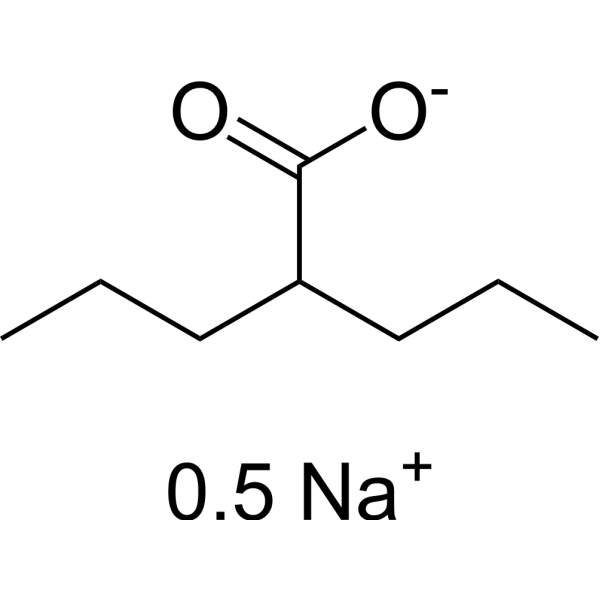 0 ImagesCat. No.: HY-10585BCAS No.: 76584-70-8Synonyms: Sodium Valproate (2:1); VPA sodium (2:1); 2-Propylpentanoic acid sodium (2:1)
Valproic acid (VPA) sodium (2:1) is an orally active HDAC inhibitor, with IC50 in the range of 0.5 and 2 mM, also inhibits HDAC1 (IC50, 400 μM), and induces proteasomal degradation of HDAC2. Valproic acid sodium (2:1) activates Notch1 signaling and inhibits proliferation in small cell lung cancer (SCLC) cells. Valproic acid sodium (2:1) is used in the treatment of epilepsy, bipolar disorder, metabolic disease, HIV infection and prevention of migraine headaches.
-
Veratraldehyde-13C
 0 ImagesCat. No.: HY-W738270CAS No.: 1173022-44-0Synonyms: 3,4-Dimethoxy[7-13C]-benzaldehyde
Veratraldehyde-13C (3,4-Dimethoxy[7-13C]-benzaldehyde) is the 13C-labeled Veratraldehyde (HY-N1096). Veratraldehyde is an orally active aromatic compound and antibacterial agent. Veratraldehyde can be isolated from essential oils of plants such as peppermint and ginger. Veratraldehyde targets the PilY1 protein. Veratraldehyde has antibacterial activity against Pseudomonas aeruginosa. Veratraldehyde has a repellent effect against mosquitoes and ticks. Veratraldehyde can be used as a flavoring agent.
-
Kijimicin
 0 ImagesCat. No.: HY-123444CAS No.: 129297-22-9
Kijimicin is a polyether ionophore antibiotic originally discovered in Actinomadura sp. MI215-NF3. inhibits HIV-1 replication and reduces the infectivity of progeny viral particles. Kijimicin exhibits inhibitory activity against intracellular T. gondii (IC50 = 45.6 nM), extracellular parasites (IC50 = 216.6 pM) and C. parvum (IC50 = 7.7 nM), and controls acute T. gondii infection in mice. Kijimicin can be used for research on HIV, toxoplasmosis, cryptosporidiosis, and bacterial infections.
-
SARS-CoV-2-IN-23 disodium
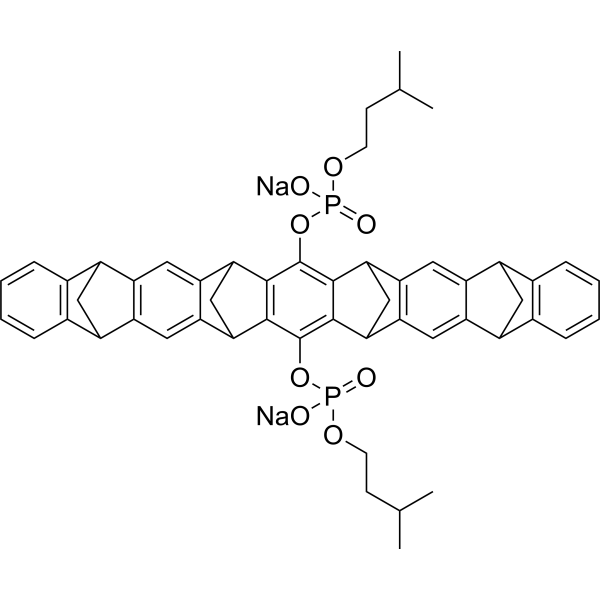 0 ImagesCat. No.: HY-151269A
SARS-CoV-2-IN-23 disodium is a two-armed diphosphate ester and medium length molecular tweezers. SARS-CoV-2-IN-23 disodium exhibits antiviral activity with IC50s of 8.2 μM and 2.6 μM against SARS-CoV-2 activity and the spike pseudoparticle transduction, respectively. SARS-CoV-2-IN-23 disodium induces liposomal membrane disruption with an EC50 value of 4.4 μM.
-
HIV-1 inhibitor-28
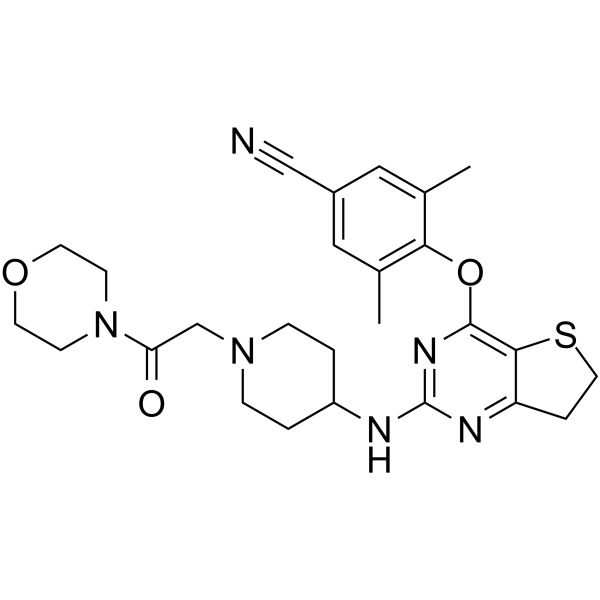 0 ImagesCat. No.: HY-146352CAS No.: 2642218-07-1
HIV-1 inhibitor-28 (compound 14j2) is a highly potent and selective HIV-1 inhibitor with an EC50 of 58 nM for WT HIV-1 strain and an IC50 of 3.37 μM for HIV-1 WT reverse transcription (RT). HIV-1 inhibitor-28 exhibits relatively low cytotoxicity in MT-4 cells (CC50 = 38.6 μM). HIV-1 inhibitor-28 can be used for researching AIDS.
-
Famotidine-13C3
 0 ImagesCat. No.: HY-W777002CAS No.: 1185241-48-8Synonyms: MK-208-13C3
Famotidine-13C3 (MK-208-13C3) is the 13C3-labeled Famotidine (HY-B0377). Famotidine (MK-208) is an orally active and highly selective histamine H2 receptor antagonist. It inhibits gastric acid secretion by blocking the Gs signaling pathway, and regulates intracellular cAMP and ERK pathways. Famotidine inhibits TLR3-mediated inflammatory pathways, and reduces the expression of various inflammatory mediators and interferon-related genes. Famotidine scavenges DPPH and nitric oxide free radicals, alleviates oxidative stress damage in gastric tissue, inhibits proMMP-9, improves vascular endothelial permeability, and restores the normal physiological functions of neutrophils and eosinophils. Famotidine crosses intestinal epithelial cells via facilitated diffusion and passive diffusion, blocks paracellular cation transport, and increases intestinal transepithelial electrical resistance. Famotidine reduces serum levels of transaminases and alkaline phosphatase, exerts analgesic effects and gastric protective effects simultaneously. Famotidine can be used in studies related to COVID-19, liver injury and acute gastric ulcer.
-
A76889
 0 ImagesCat. No.: HY-116537CAS No.: 134805-77-9
A76889 is an HIV-1 protease inhibitor.
-
(threo)-Indinavir
 0 ImagesCat. No.: HY-B0689CCAS No.: 360558-79-8Synonyms: (threo)-MK-639; (threo)-L735524
(Threo)-Indinavir is a protease inhibitor that plays an important role in HIV/AIDS suppression. (Threo)-Indinavir is used as a component of highly active antiretroviral suppression. By inhibiting the viral protease, (threo)-Indinavir ((threo)-MK-639) is able to effectively block the replication of the HIV virus.
-
Coptisine chloride (Standard)
 0 Images
Coptisine (chloride) (Standard) is the analytical standard of Coptisine (chloride). This product is intended for research and analytical applications. Coptisine chloride is an alkaloid from Chinese goldthread, and acts as an efficient uncompetitive IDO inhibitor with a Ki value of 5.8 μM and an IC50 value of 6.3 μM. Coptisine chloride is a potent H1N1 neuraminidase (NA-1) inhibitor with an IC50 of 104.6 μg/mL and can be used for influenza A (H1N1) infection.