Neurological Disease
-
Neurological Disease Related Products (19217)
Related Products (19217)

-
Antibodies (42)
-
Related Compound Screening Libraries (7)
-
Desmethylmirtazapine (Standard)
 0 ImagesCat. No.: HY-119223RCAS No.: 61337-68-6Synonyms: Normirtazapine (Standard)
Desmethylmirtazapine (Standard) is the analytical standard of Desmethylmirtazapine. This product is intended for research and analytical applications. Desmethylmirtazapine is an active metabolite of Mirtazapine that has antidepressant effects.
-
CHMA1004
 0 ImagesCat. No.: HY-W125425CAS No.: 2758-98-7Synonyms: Methyl piperazine-2-carboxylate; METTL3 activator-1 free base
CHMA1004 (Methyl piperazine-2-carboxylate; METTL3 activator-1 free base) is a METTL3/METTL14/WTAP methyltransferase complex activator. CHMA1004 exhibits neuroprotective and anxiolytic potential by enhancing m6A methylation modification of RNA. CHMA1004 promotes HIV replication in an infection context. CHMA1004 can be used in studies related to anxiety disorders and HIV-1 infection.
-
PROTAC mHTT Degrader-1
 0 ImagesCat. No.: HY-181879CAS No.: 2919475-43-5
PROTAC mHTT Degrader-1 is a blood-brain barrier-penetrant mutant huntingtin (mHTT) PROTAC degrader. PROTAC mHTT Degrader-1 specifically recognizes pathogenic mHTT aggregates and recruits Cereblon (CRBN), thereby inducing ubiquitination and proteasomal degradation of mHTT. PROTAC mHTT Degrader-1 alleviates mHTT-induced cytotoxicity and neuroinflammation. In the R6/2 Huntington's disease mouse model, PROTAC mHTT Degrader-1 reduces cerebral protein aggregation levels and improves body weight, motor coordination and survival rate of animals. PROTAC mHTT Degrader-1 can be used for research on PROTAC therapies for Huntington's disease and other neurodegenerative diseases.

-
Parawixin10
 0 ImagesCat. No.: HY-182941
Parawixin10 (Compound 2) is an N-acylpolyamine. Parawixin10 fails to enhance glutamate uptake in radioligand uptake assays of EAAT1, EAAT2 or EAAT3. Parawixin10 exhibits no positive allosteric modulatory activity in radioligand uptake assays of EAAT1−EAAT3, nor can it improve neuronal survival rates in mice in a dose-dependent and statistically significant manner. Parawixin10 has no neuroprotective activity.
-
O-2093
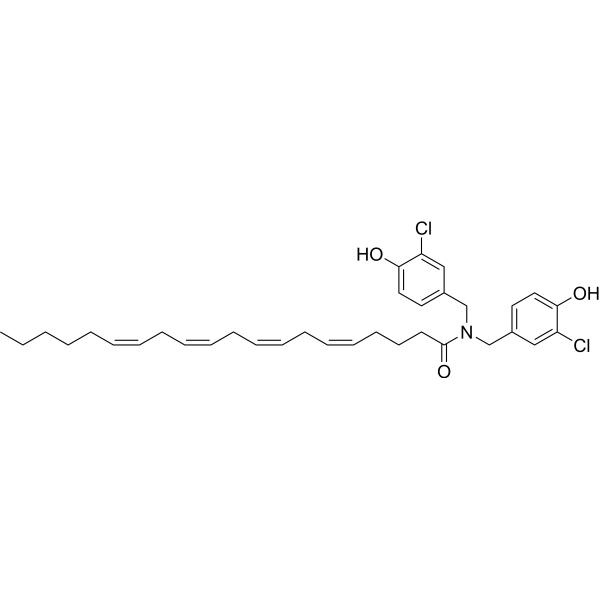 0 ImagesCat. No.: HY-103340CAS No.: 439080-01-0
O-2093 is a selective endocannabinoid anandamide (AEA) reuptake inhibitor with IC50 of 17.3 μM.
-
mTOR inhibitor-18
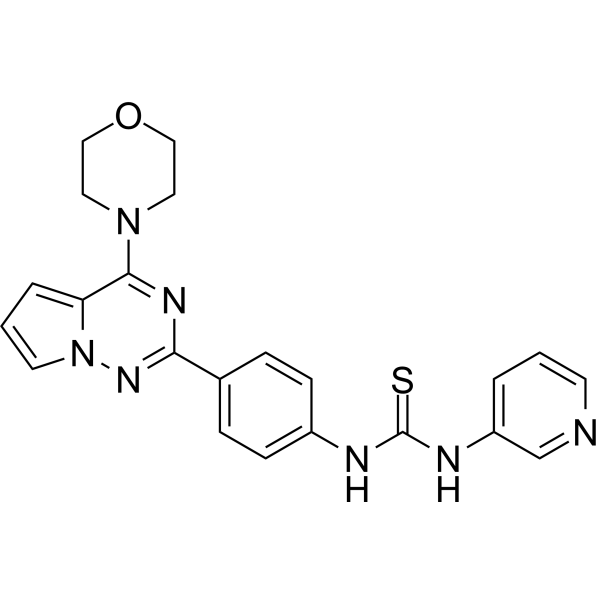 0 ImagesCat. No.: HY-160548CAS No.: 2170358-67-3
-
Neuronotoxicity-IN-1
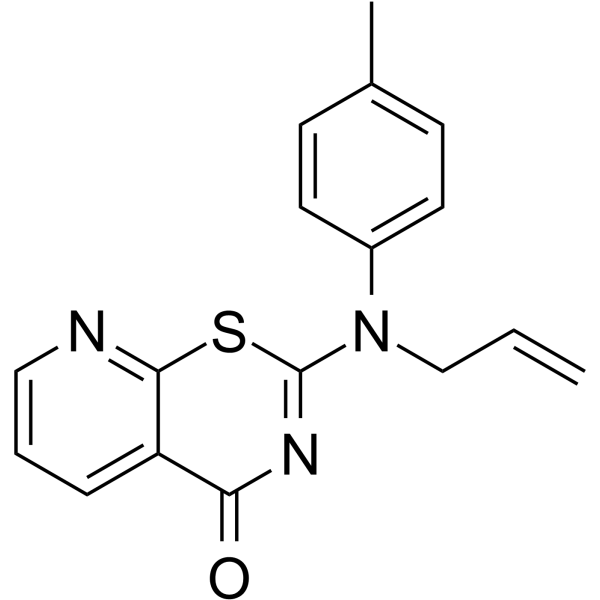 0 ImagesCat. No.: HY-147382CAS No.: 190843-45-9
Neuronotoxicity-IN-1, a pyridothiazine derivative, is a kainic acid neurotoxicity inhibitor. Neuronotoxicity-IN-1 is a neuroprotective agent.
-
HDAC6-IN-37
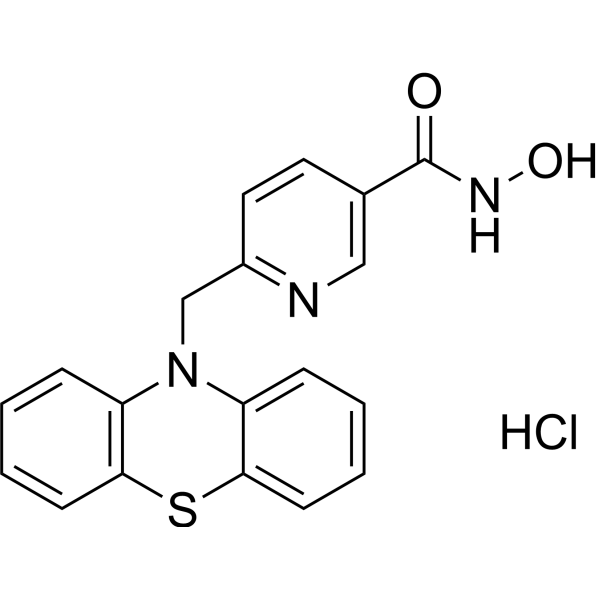 0 ImagesCat. No.: HY-158030CAS No.: 2986486-82-0
HDAC6-IN-37 (compound W5) is an inhibitor of HDAC6 and has neuroprotective effects. HDAC6-IN-37 can restore the morphology of hippocampal neurons, reduce the expression of Aβ, Tau, and p-Tau proteins in the hippocampus of AD rats, and inhibit the formation of senile plaques and neurofibrillary tangles. Thus, HDAC6-IN-37 improves the Aβ/Cu2+-induced AD model in rats, regulates oxidative stress status, and balances neurotransmitter disorders in brain tissue.
-
GABAA receptor agent 8
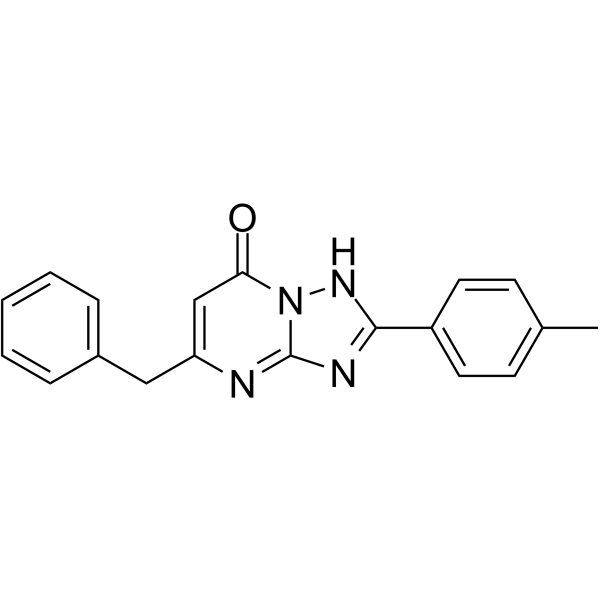 0 ImagesCat. No.: HY-146100CAS No.: 2376841-54-0
GABAA receptor agent 8 (compoud 5e) is a potent GABAA receptor positive modulator. GABAA receptor agent 8 shows anticonvulsant activity in vitro and in vivo with low neurotoxicity. GABAA receptor agent 8 has the potential for the research of epilepsy.
-
5-HT6 inverse agonist 1
 0 ImagesCat. No.: HY-168333CAS No.: 2727088-38-0
5-HT6 inverse agonist 1 (Compound 33) is an antagonist for 5-HT6 receptor with a Ki of 23 nM and a Kb of 6.62 nM. 5-HT6 inverse agonist 1 inhibits the 5-HT6R mediated Cdk5 and mTOR signaling pathway. 5-HT6 inverse agonist 1 reduces tactile hypersensitivity in spinal nerve ligation (SNL)-induced rat model.
-
Neuroprotective agent 15
 0 ImagesCat. No.: HY-178943CAS No.: 2476614-40-9
Neuroprotective agent 15 (Compound 3e) is a neuroprotective agent. Neuroprotective agent 15 is a selective butyrylcholinesterase (BChE) inhibitor, with IC50 values of 2.6 and 114.3 μM for BChE and AChE respectively. Neuroprotective agent 15 has cannabinoid CB2 receptor (CB2 receptor) agonistic activity. Neuroprotective agent 15 can reduce cell death, LDH release and Caspase-3/7 activity, and inhibit apoptosis. Neuroprotective agent 15 can reduce the formation of superoxide free radicals, maintain cell morphology, and significantly lower oxidative stress levels. Neuroprotective agent 15 can be used in the research of neurodegenerative diseases, such as Alzheimer's disease and Parkinson's disease.
-
1-Octanol (Standard)
 0 ImagesCat. No.: HY-W032013RCAS No.: 111-87-5Synonyms: Octanol (Standard)
1-Octanol (Standard) is the analytical standard of 1-Octanol. This product is intended for research and analytical applications. 1-Octanol (Octanol), a saturated fatty alcohol, is a T-type calcium channels (T-channels) inhibitor with an IC50 of 4 μM for native T-currents. 1-Octanol is a highly attractive biofuel with diesel-like properties.
-
Ciclazindol
 0 ImagesCat. No.: HY-105975CAS No.: 37751-39-6Synonyms: WY-23409
Ciclazindol (WY-23409) is an orally active antidepressant. Ciclazindol can inhibit the reuptake of norepinephrine. Ciclazindol also exhibits effects of lowering blood glucose, suppressing appetite and reducing weight. Ciclazindol can be used in the research of diseases such as depression and obesity.
-
Dirucotide
 0 ImagesCat. No.: HY-P3541CAS No.: 152074-97-0Synonyms: MBP8298
Dirucotide (MBP8298) is a synthetic peptide that consists of 17 amino acids linked in a sequence identical to that of a portion of human myelin basic protein. Dirucotide can be used for the research in autoimmune disorder of the central nervous system, such as Multiple sclerosis (MS).
-
5-HT2CR agonist 2
 0 ImagesCat. No.: HY-179008CAS No.: 2841457-05-2
5-HT2CR agonist 2 (Compound 16k) is a selective, blood-brain barrier-penetrating and Gq-biased 5-HT2CR agonist, with an EC50 of 36 nM. 5-HT2CR agonist 2 attenuates MK801 (HY-15084B)-induced hyperlocomotion and reverses Phencyclidine-induced hyperlocomotor activity.
-
Cymserine
 0 ImagesCat. No.: HY-182615CAS No.: 145209-39-8
Cymserine is a blood-brain barrier-permeable butyrylcholinesterase (BuChE) inhibitor with an IC50 value of 56.43 nM and a Ki of 38 nM. Cymserine binds to the catalytic domain of BuChE in a concentration-dependent manner to form a stable carbamylated enzyme complex, and exhibits BuChE selectivity over acetylcholinesterase due to its structural compatibility with the larger acyl-binding pocket of BuChE. Cymserine can be used in the research of Alzheimer's disease.
-
BL-1021
 0 ImagesCat. No.: HY-115359CAS No.: 1002331-76-1
BL-1021 is an orally active ion channel blocker. BL-1021 significantly reduces symptoms of neuropathic pain without noticeable sedation or cardiac arrhythmias. BL-1021 can be used in the research of acute and chronic pain.
-
Sinapine hydroxide
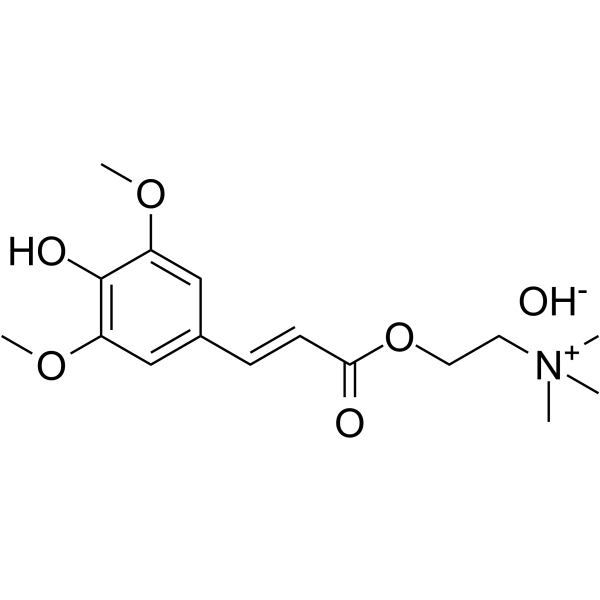 0 Images
Sinapine hydroxide is an alkaloid isolated from seeds of the cruciferous species. Sinapine hydroxide exhibits anti-inflammatory, anti-oxidant, anti-tumor, anti-angiogenic and radio-protective effects. Sinapine hydroxide is also an acetylcholinesterase (AChE) inhibitor and can be used for the research of Alzheimer’s disease, ataxia, myasthenia gravis, and Parkinson’s disease.
-
BChE/HDAC6-IN-2
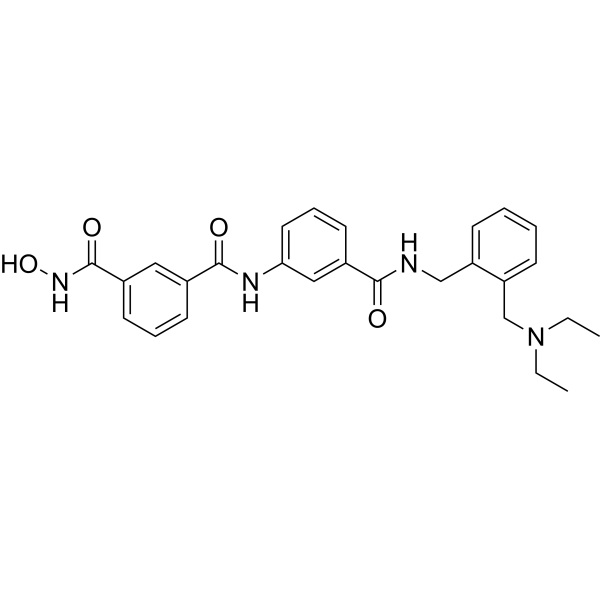 0 ImagesCat. No.: HY-149418CAS No.: 2925457-33-4
BChE/HDAC6-IN-2 (compound 29a) is a dual inhibitor of BChE and HDAC6 with IC50s of 1.8 nM and 71.0 nM, respectively. BChE/HDAC6-IN-2 has prominently neuroprotective effects and reactive oxygen species (ROS) scavenging activity. BChE/HDAC6-IN-2 is also an effective chelator of metal ion (Fe2+ and Cu2+). BChE/HDAC6-IN-2 inhibits phosphorylation of tau, and exhibits moderate immunomodulatory effect.