



Others
-
Others Related Products (76350)
Related Products (76350)


-
(S)-Thioctic acid
 0 ImagesSynonyms: (S)-lipoic acid; (S)-5-(1,2-Dithiolan-3-yl)pentanoic acid
(S)-Thioctic acid ((S)-lipoic acid; (S)-5-(1,2-Dithiolan-3-yl)pentanoic acid) is a biochemical reagent that can be used as a biological material or organic compound for life science related research.
-
Fmoc-3-Ala(3-thienyl)-OH
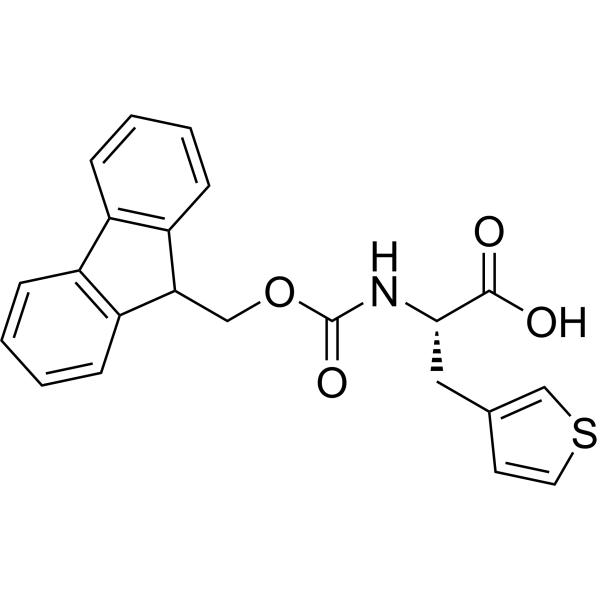 0 Images
Fmoc-3-Ala(3-thienyl)-OH is an alanine derivative.
-
3-Iodooxetane
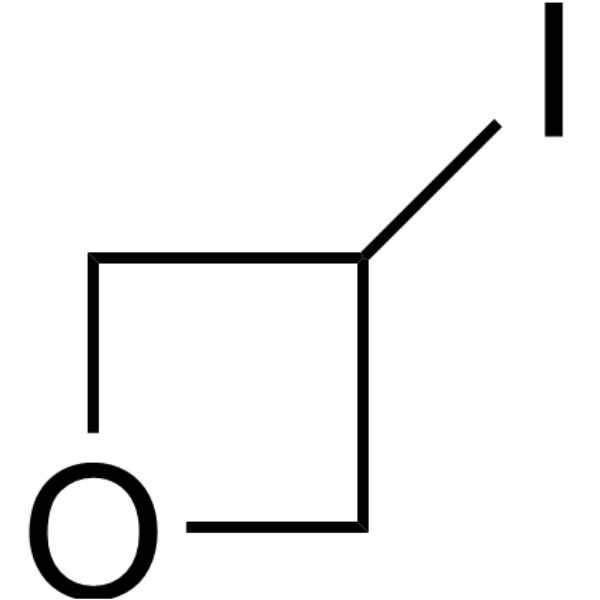 0 Images
3-Iodooxetane is a biochemical reagent that can be used as a biological material or organic compound for life science related research.
-
Chelidamic acid
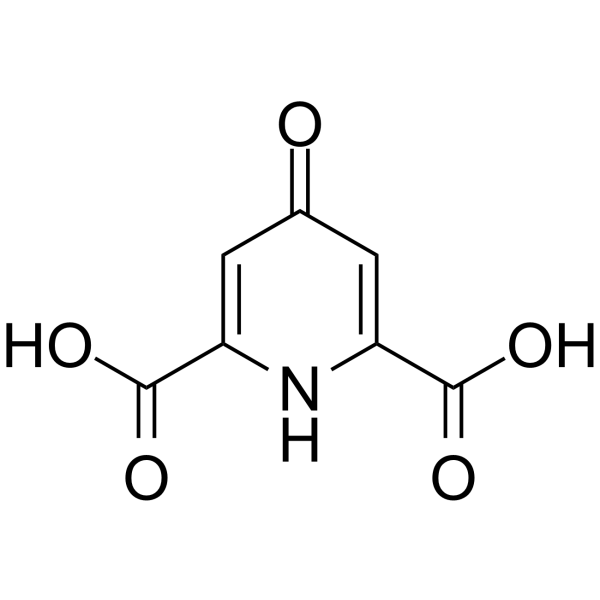 0 Images
Chelidamic acid is a heterocyclic organic acid with a pyran skeleton. Chelidamic acid has good coordination ability with noble metal ions. Chelidamic acid is also one of the most potent inhibitors of glutamate decarboxylase, with a Ki of 33 μM.
-
D-Glucamine, 98%
 0 ImagesSynonyms: 1-Amino-1-deoxy-D-glucitol, 98%
D-Glucamine, 98% (1-Amino-1-deoxy-D-glucitol, 98%) is an amino sugar derivative that serves as an excipient in pharmaceutical formulations. D-Glucamine, 98% also acts as a substrate for studies investigating sugar transporter pathways
-
Glycyl-L-valine
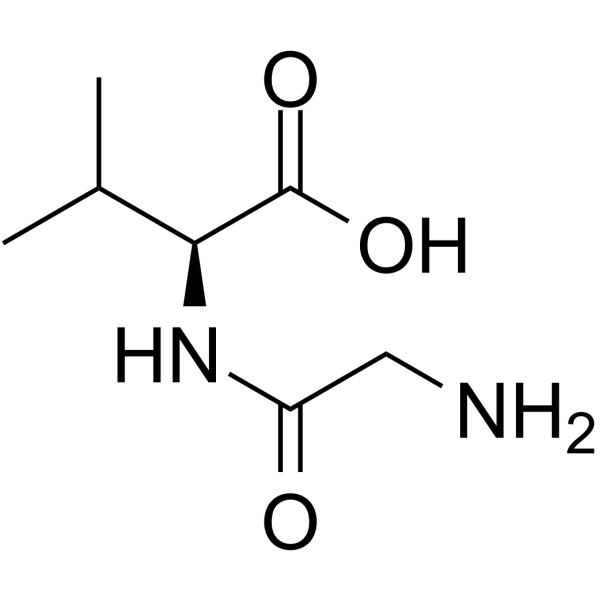 0 Images
Glycyl-L-valine is an organic dipeptide composed of glycine and L-valine.
-
1,4-Cyclohexanedicarboxylic acid
 0 ImagesSynonyms: cyclohexane-1,4-dicarboxylic acid; 1,4-Cyclohexanedicarboxylic acid
-
Mesitaldehyde
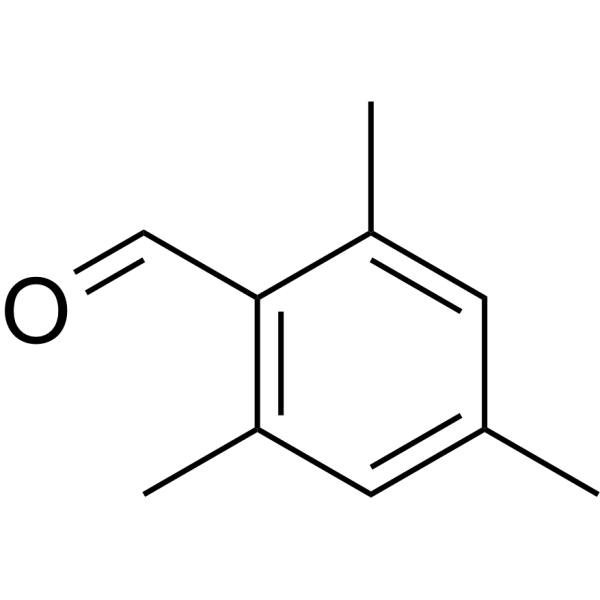 0 ImagesSynonyms: 2,4,6-Trimethylbenzaldehyde
Mesitaldehyde (2,4,6-Trimethylbenzaldehyde) is an ortho-alkyl benzaldehyde and a substrate for photocyclization. When excited by light in the solid state, mesitaldehyde undergoes γ-hydrogen abstraction, which generates a triplet-excited 1,4-diradical or enol intermediate and forms benzocyclobutenol. Mesitaldehyde produces benzocyclobutenol as the sole product with high selectivity via photolysis of its solid-state inclusion complex; in contrast, its photolysis in solution yields a mixture of cyclobutenol and trimesic acid.
-
Acrylodan
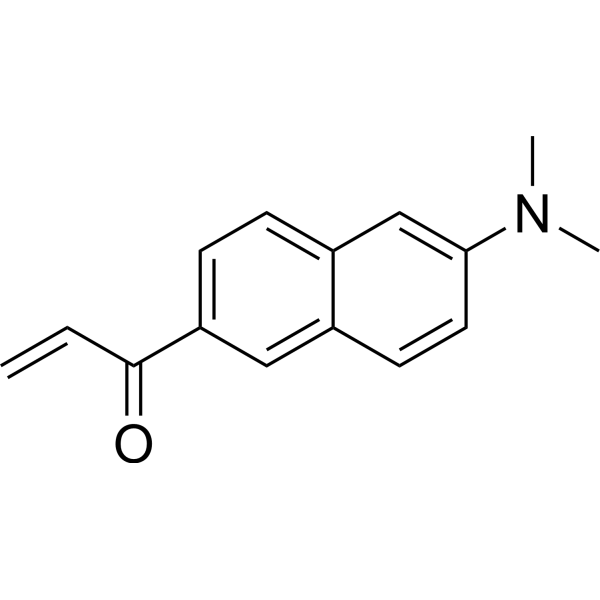 0 ImagesCat. No.: HY-W040230CAS No.: 86636-92-2
Acrylodan, reacted with thiols, is sensitive to the local environmental dipolarity and dynamics within the binding pocket surrounding Cys34.
-
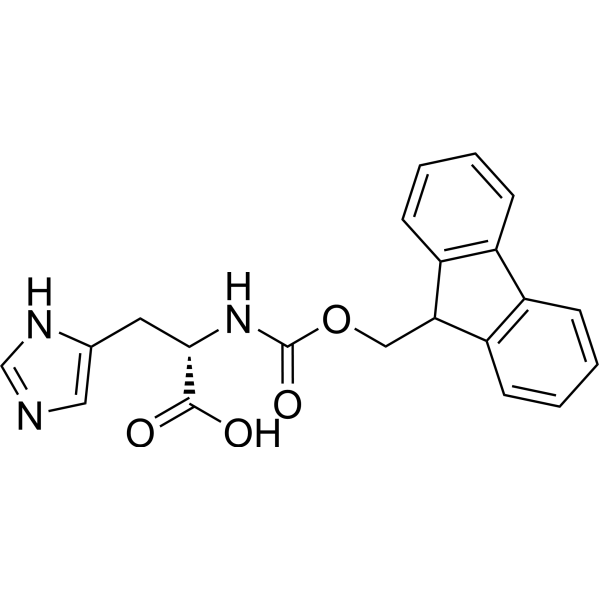
(((9H-Fluoren-9-yl)methoxy)carbonyl)-L-histidine
 0 Images
(((9H-Fluoren-9-yl)methoxy)carbonyl)-L-histidine is a histidine derivative.
-
Ribonucleic acid (yeast)
 0 ImagesCat. No.: HY-W250124CAS No.: 63231-63-0Synonyms: RNA (yeast)
Ribonucleic acid (RNA) (yeast) is a ribonucleic acid isolated from yeast, characterized as a polynucleotide containing primary and secondary phosphate groups, amino groups, and purine-pyrimidine hydroxyl groups per 4 corrected phosphorus atoms. Ribonucleic acid (yeast) is widely used in scientific research as a substrate for nuclease detection, a carrier in ethanol precipitation processes, and a standard control for molecular biology techniques.
-
C6 NBD Glucosylceramide
 0 Images
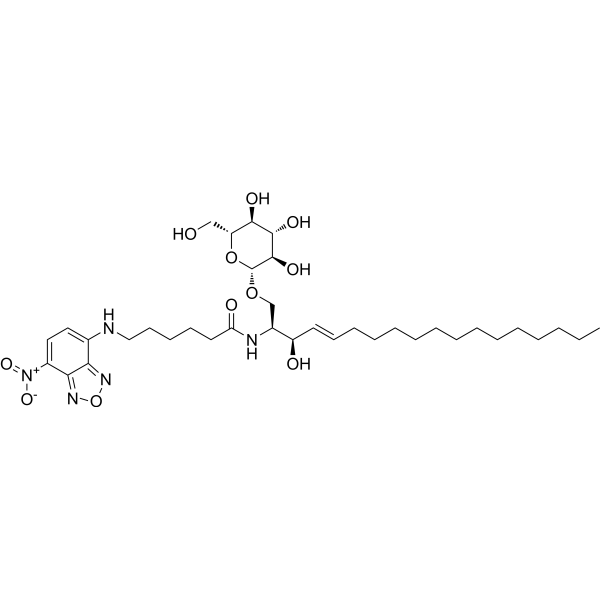
C6 NBD Glucosylceramide is a glucosylceramide fluorescent derivative (Ex=466 nm, Em=535 nm). C6 NBD Glucosylceramide can be used to study the metabolism and internalization of glucosylceramide and also for the determination of glucosyl ceramide synthase activity.
-
m-PEG1000-thiol
 0 ImagesSynonyms: mPEG1000-SH
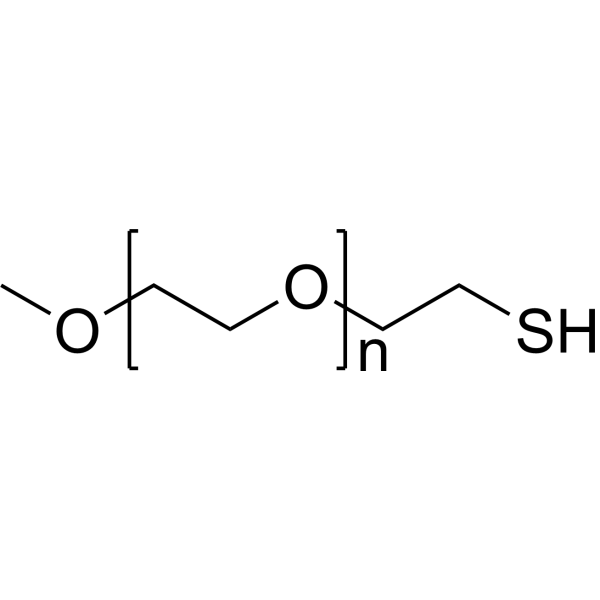
m-PEG1000-thiol (mPEG1000-SH) is a surface modifier that can modify DNA thiolation and is used in the synthesis of gold nanorods (AuNR). m-PEG1000-thiol can load thiolated DNA onto AuNR, form a covalent bond with the surface of gold nanoparticles through the thiol group, and stabilize the nanoparticles by the steric hindrance effect of the polyethylene glycol chain, preventing aggregation and enhancing its biocompatibility. m-PEG1000-thiol can also provide a platform for the subsequent coupling of biomolecules (such as DNA, antibodies) by replacing surfactants (such as CTAB) on the surface of nanoparticles, thereby exerting its activity in promoting the functionalization of nanomaterials[2].
-
Sulfobetaine-12
 0 Images
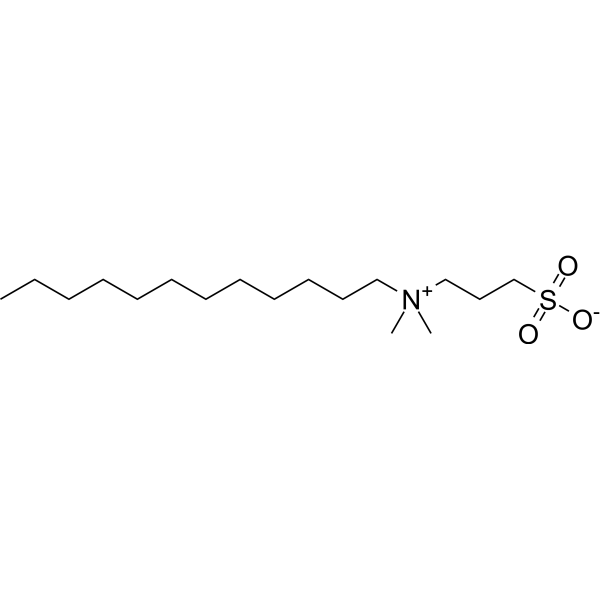
Sulfobetaine-12is a zwitterionic surfactant, which means it has both positive and negative charges in its molecules. It is used as a detergent in various industries, including pharmaceuticals, cosmetics, and personal care products. Sulfobetaine-12Often used as a mild surfactant due to its non-irritating properties and ability to stabilize emulsions. Plus, it has antistatic properties that can be used to clean electronics and other static-prone surfaces.
-
3-(Trimethoxysilyl)propyl methacrylate
 0 ImagesSynonyms: [3-(Methacryloyloxy)propyl]trimethoxysilane
3-(Trimethoxysilyl)propyl methacrylate ([3-(Methacryloyloxy)propyl]trimethoxysilane) is a reactive monomer and silane coupling agent with C=C and O-C=O functional groups, acting as a surface modifier and anti-agglomeration agent. 3-(Trimethoxysilyl)propyl methacrylate can be used to prepare nanoparticles.
-
DTME
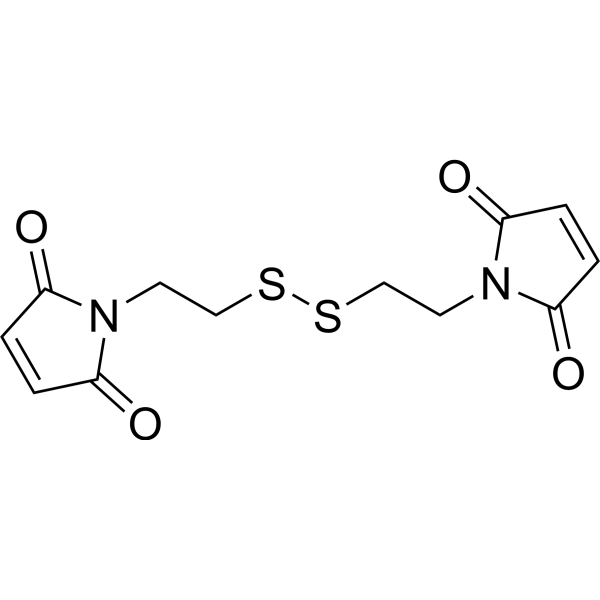 0 ImagesSynonyms: Dithio-bis-maleimidoethane
DTME (dithio-bis-maleimidoethane) is a homobifunctional, maleimide crosslinker specifically designed for conjugation between sulfhydryl groups (-SH). DTME, whose molecular structure consists of two maleimide groups connected by an ethylene disulfide bridge, can specifically react with thiol - containing molecules (such as cysteine residues) to form stable covalent bonds. DTME allows crosslinks that can be cleaved with reducing agents such as DTT (HY-15917). DTME is commonly utilized to explore and characterize protein structure, particularly oligomerization, or protein interactions.
-
(3S)-Fmoc-1-pyrrolidine-3-carboxylic acid
 0 Images
(3S)-Fmoc-1-pyrrolidine-3-carboxylic acid is a drug intermediate for synthesis of various active compounds.
-
2-(4-Fluorobenzylamino)ethanol
 0 Images
2-(4-Fluorobenzylamino)ethanol is a drug intermediate for synthesis of various active compounds.
-
(4-Cyclopropyl-6-methoxypyrimidin-5-yl)boronic acid
 0 Images
(4-Cyclopropyl-6-methoxypyrimidin-5-yl)boronic acid is a drug intermediate for synthesis of various active compounds.



