Others
-
Others Related Products (76571)
Related Products (76571)

-
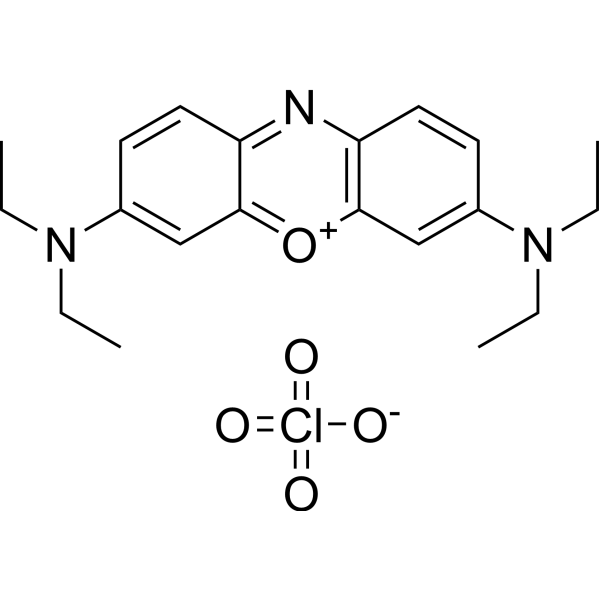
Oxazine 1 perchlorate
 0 Images
Oxazine 1 perchlorate is a symmetric cationic dye (λex=653 nm, λem=666 nm).
-
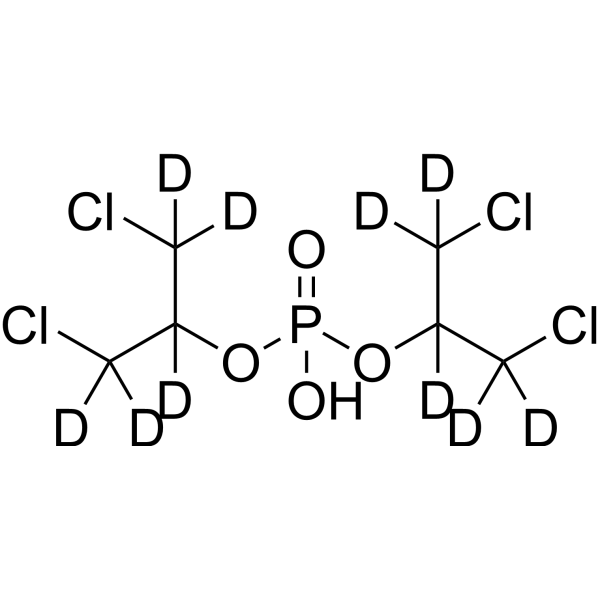
Bis(1,3-dichloro-2-propyl) phosphate-d10
 0 Images
Bis(1,3-dichloro-2-propyl) phosphate-d10 is the deuterium labeled Bis(1,3-dichloro-2-propyl) phosphate.
-
5-BrdUTP sodium salt
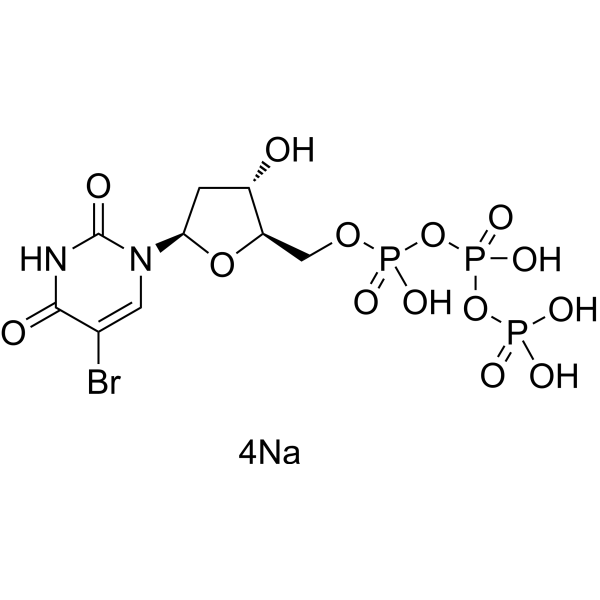 0 ImagesCat. No.: HY-D1023CAS No.: 102212-99-7Synonyms: 5-Bromo-2'-deoxyuridine 5'-triphosphate sodium salt
5-BrdUTP sodium salt is a TdT substrate which can be used to label the DNA double-strand breaks.
-
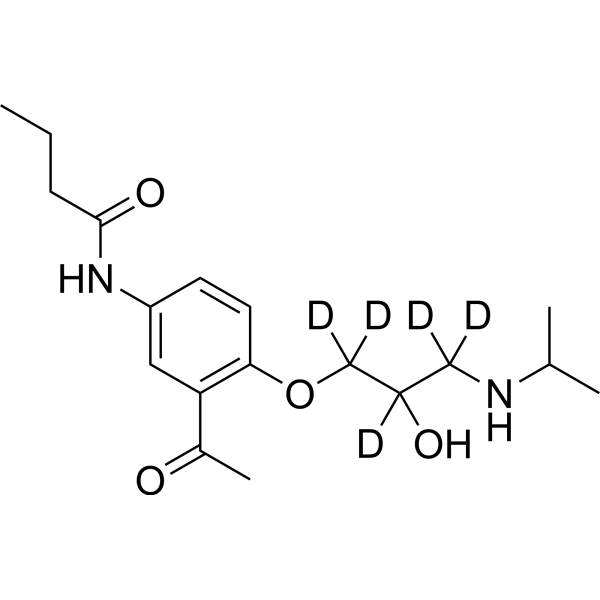
Acebutolol-d5
 0 Images
Acebutolol-d5 is the deuterium labeled Acebutolol.
-
(R)-GSK 2830371
 0 Images
(R)-GSK 2830371 is the R-enantiomer of GSK 2830371 (HY-15832). GSK 2830371 is a highly selective Wip1 phosphatase inhibitor with IC50 of 6 nM.
-
15(S)-Hete-biotin
 0 ImagesCat. No.: HY-158843CAS No.: 1217461-45-4Synonyms: 15(S)-Hydroxyeicosatetraenoic acid-biotin
15(S)-Hete-biotin (15(S)-Hydroxyeicosatetraenoic acid-biotin) can be used to detect 15(S)-HETE binding proteins and/or receptors. 15(S)-HETE is an arachidonic acid metabolite produced by the 15-lipoxygenase pathway.

-
Fmoc-Thr(OtBu)-OtBu
 0 ImagesCat. No.: HY-159135CAS No.: 129460-13-5
Fmoc-Thr(OtBu)-OtBu is a Fmoc-protected threonine derivative.
-
Lipid 50
 0 ImagesCat. No.: HY-159716CAS No.: 2440135-57-7
Lipid 50 (compound 50) is an ionizable lipid that can be used for the generation of lipid nanoparticles (LNPs). Lipid 50 is a carrier for both siRNA and mRNA.
-
Sodium phosphate buffer 0.1M, pH 7.2
 0 ImagesCat. No.: HY-160113C
Sodium phosphate buffer 0.1M, pH 7.2 is mainly composed of two phosphates, Na2HPO4 and NaH2PO4, with a total phosphate concentration of 0.1 M, which mainly acts as a buffer in the reaction.
-
SPB-PEG4-AAD
 0 ImagesCat. No.: HY-160839CAS No.: 3027246-94-9
SPB-PEG4-AAD (compound 6) is a BFPX probe. SPB-PEG4-AAD shows significant crosslinking of the Nkx2.5/DNA complex or p53/DNA complex while displaying little effect on the DNA alone.
-
SPB-AAD
 0 ImagesCat. No.: HY-160840CAS No.: 3027246-93-8
SPB-AAD is a BFPX probe. SPB-AAD has covalent capture of in vitro assembled MEF2/DNA and NFAT1/DNA complexes.
-
Methoxy-PEG2000-C3-amide-C2-Mal
 0 Images
Methoxy-PEG2000-C3-amide-C2-Mal can bind to hemoglobin through the 93Cys residue to produce di-PEGylated hemoglobin.
-
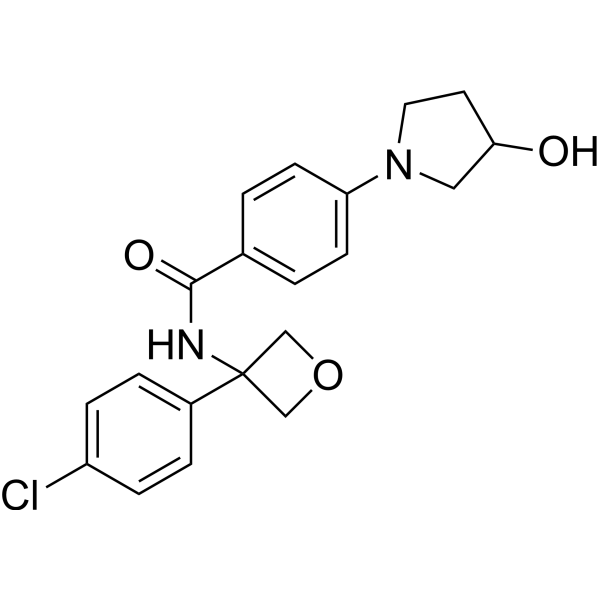
WDR91-IN-1
 0 Images
WDR91-IN-1 (Compd 1) is a first-in-class small-molecule ligand for WDR91, with a KD of 6 μM.
-
iGePhos1
 0 ImagesCat. No.: HY-161408APurity: 98.54%
iGePhos1 is an inactive GePhos1 (HY-161408) epimer used as a nonbinding negative control. iGephos1 lacks the phosphatase recruiting possibility.
-
TX-2552
 0 Images
TX-2552 is an orally active tyrosine DNA phosphodiesterase 1 (TDP1) inhibitor with an IC50 value of 0.62 μM. TX-2552 can enhance the clastogenic activity of Topotecan (HY-13768) in mouse bone marrow cells, as well as the anti-tumor effect of Topotecan (HY-13768) in Krebs-2 ascites tumor mice.
-
SGC-CDKL2/AAK1/BMP2K-1
 0 Images
SGC-CDKL2/AAK1/BMP2K-1 (Compound 9) is a potent and selective CDKL2 (Cyclin-dependent kinase-like 2) inhibitor with an IC50 value of 460 nM. CDKL2 is involved in various biological processes such as tumorigenesis, development, and viral infections. SGC-CDKL2/AAK1/BMP2K-1 serves as a powerful tool for studying the biological functions of CDKL2 and holds promise for research in fields related to cancer, infections, and other diseases.
-
CFTR corrector 15
 0 Images
CFTR corrector 15 (Compound 4172) is a corrector for cystic fibrosis transmembrane conductance regulator (CFTR), that repairs the F508del-CFTR folding defect when used with VX-809 (HY-13262). CFTR corrector 15 can be used in research of cystic fibrosis disease.
-
Fmoc-Sar-Sar-Sar-OH
 0 Images
Fmoc-Sar-Sar-Sar-OH is a small molecule polypeptide composed of sarcosine residues, in which the N-terminus of the peptide chain is protected by Fmoc. Fmoc-Sar-Sar-Sar-OH can be used for peptide synthesis or synthesis of agent-peptide ligand conjugates.