



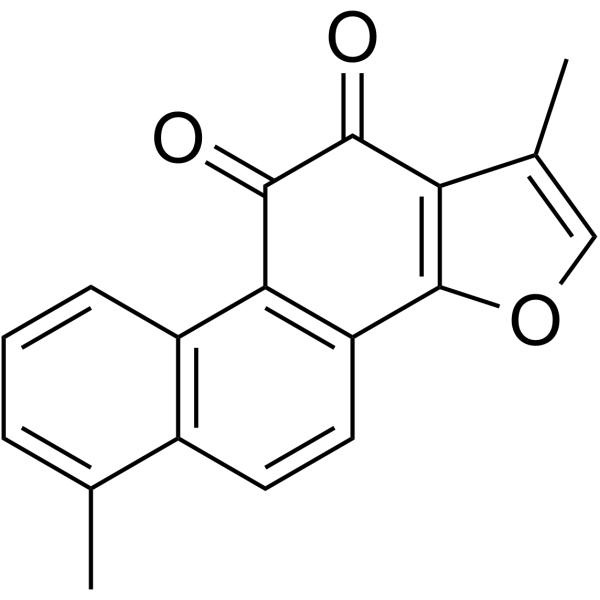
Tanshinone I
Based on 6 publication(s) in Google Scholar
Tanshinone I is an inhibitor of type IIA human recombinant sPLA2 (IC50=11 μM) and rabbit recombinant cPLA2 (IC50=82 μM).
For research use only. We do not sell to patients.
- Purity : 98.83%
- CAS No.: 568-73-0
- Formula: C18H12O3
- Molecular Weight:276.29
-
Storage:Powder -20°C, 3 years , 4°C, 2 years ; In solvent -80°C, 2 years , -20°C, 1 year

To place orders, for customer services and technical support, please contact: MedChemExpress USA
Tel: 609-228-6898 E-mail: [email protected] [email protected]


-
 Biological Activity
-
Chemical Information
-
Solvent & Solubility
- Purity & Documentation
- References
-
 Help & FAQs


-
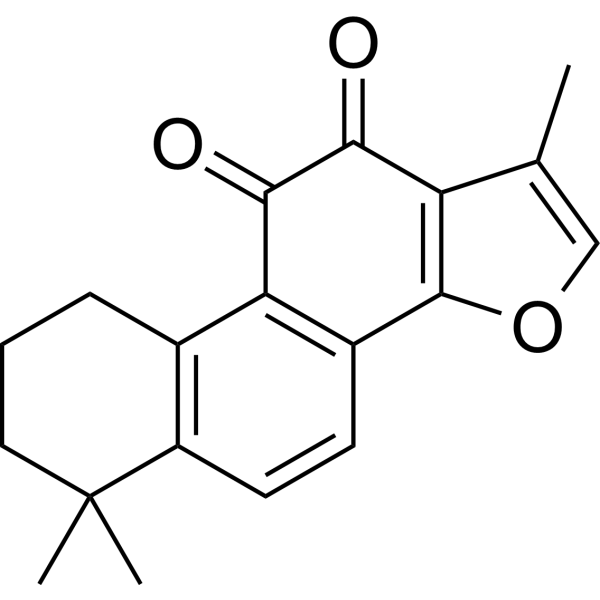
HY-N0135
Tanshinone IIAVEGFR Inhibitor -
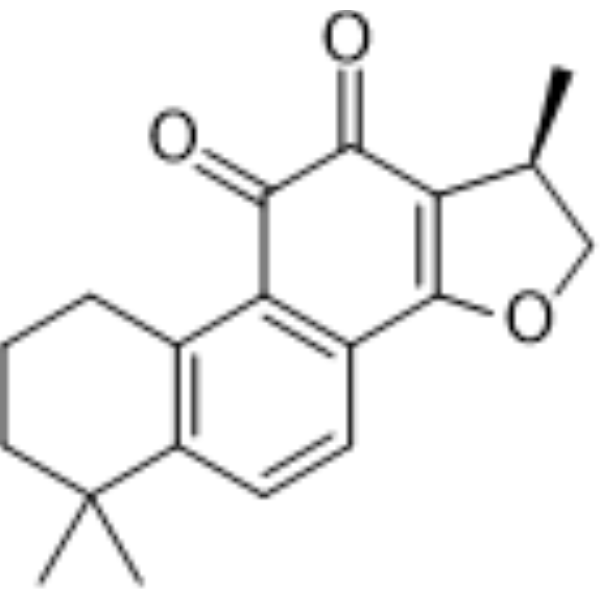
HY-N0174
CryptotanshinoneAutophagy Inducer -
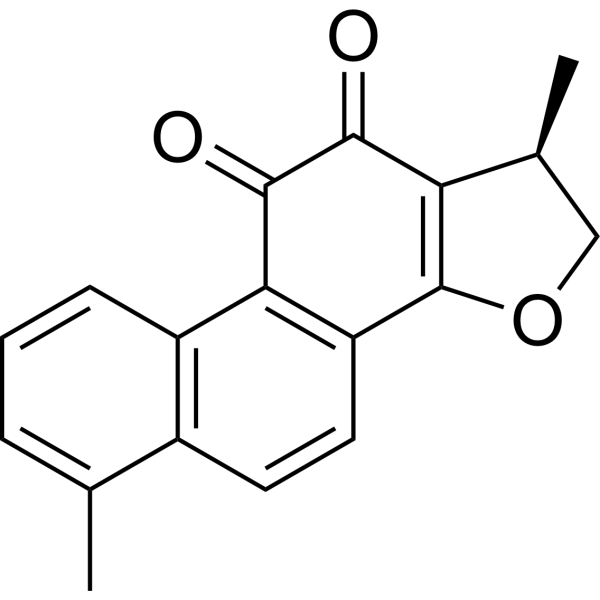
HY-N0360
Dihydrotanshinone ISARS-CoV Inhibitor -
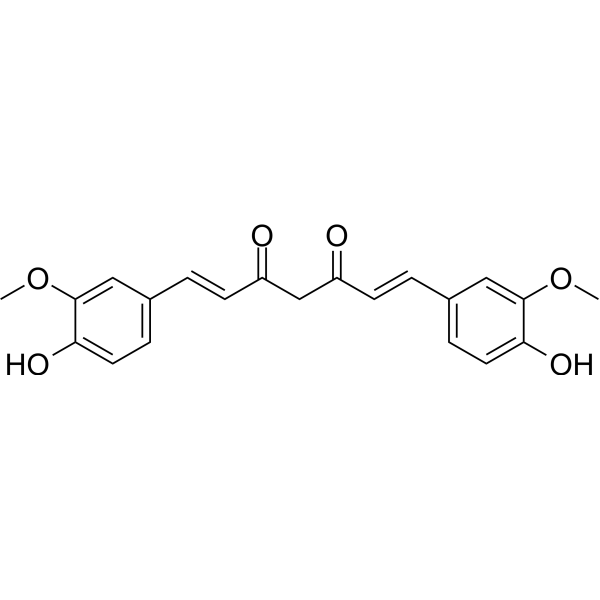
HY-N0005
Curcuminp300 Histone Acetylatransferase Inhibitor -
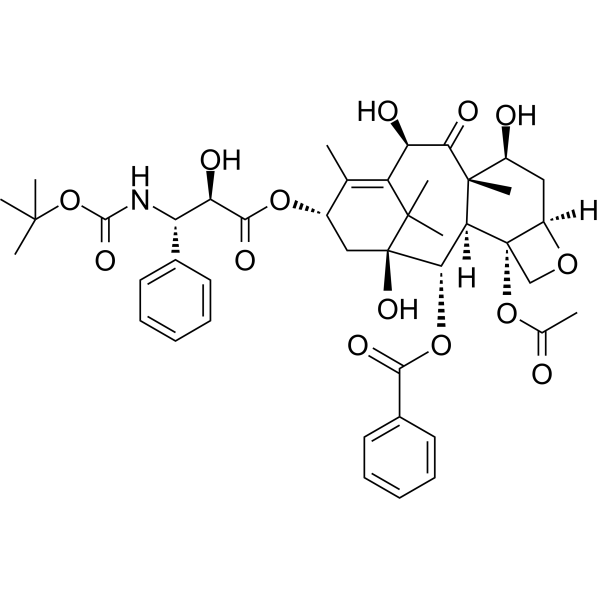
HY-B0011
DocetaxelTubulin Stabilizer -

HY-N0134R
Tanshinone I (Standard)Phospholipase Inhibitor -
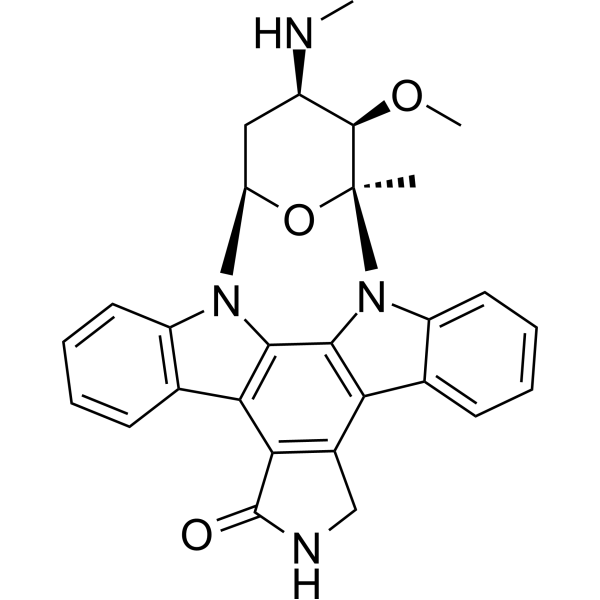
HY-15141
StaurosporinePKC/PKA Inhibitor -
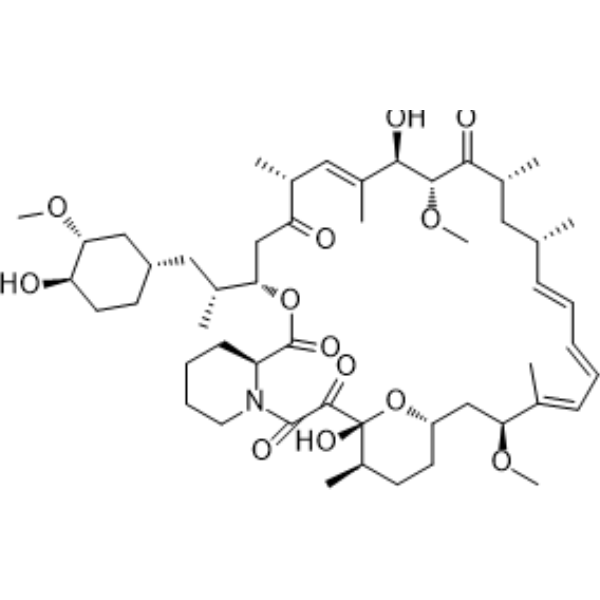
HY-10219
RapamycinmTOR Inhibitor -
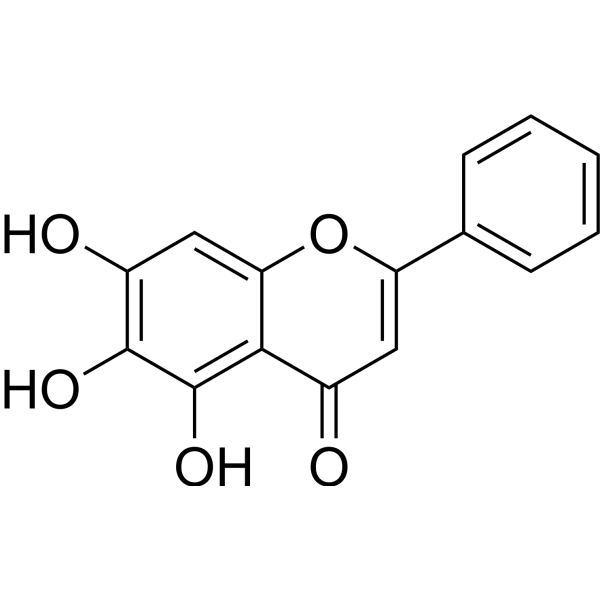
HY-N0196
BaicaleinXanthine Oxidase Inhibitor -
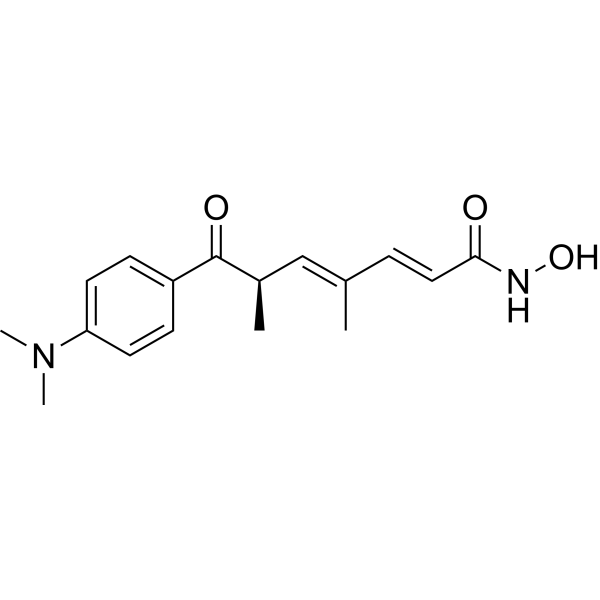
HY-15144
Trichostatin AHDAC Class I/II Inhibitor -
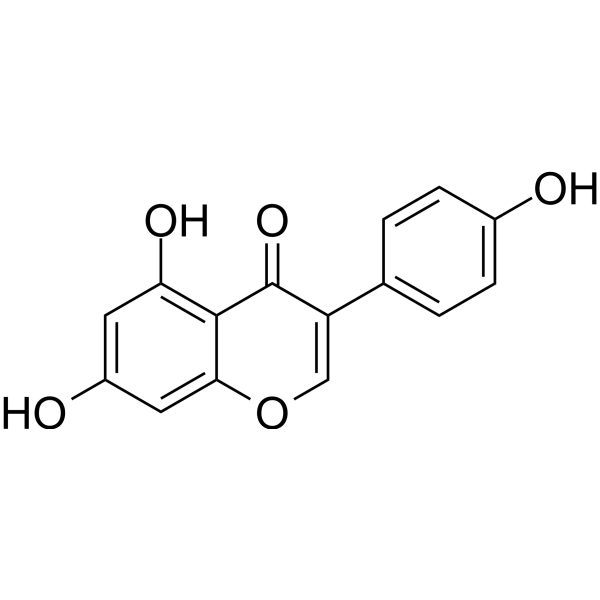
HY-14596
GenisteinAutophagy Inducer -
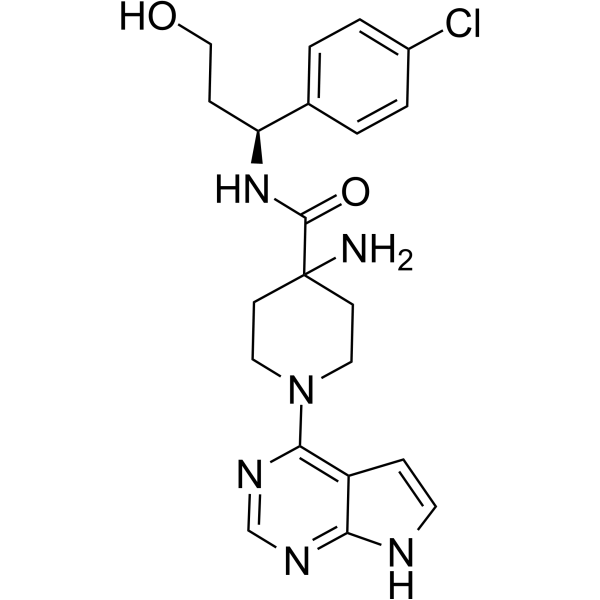
HY-15431
CapivasertibAkt Inhibitor
Publications Citing Use of MedChemExpress (MCE) Tanshinone I
More Customer Validation & Images

-
Cell Proliferation/Viability Assay
-
Flow Cytometry
-
RT-PCR
-
WB
-
Cell Imaging/Staining
All Phospholipase Isoforms
More

Biological Activity
Description
IC50 & Target
IC50: 11 μM (sPLA2), 82 μM (cPLA2)[1].
Cellular Effect
|
Cell Line

|
Type | Value | Description | References |
|---|---|---|---|---|
| AGS | IC50 |
>50 μM
Compound: 6, tanshinone i
|
Viability of human AGS cells under normoxic conditions after 24 hrs by MTT assay
Viability of human AGS cells under normoxic conditions after 24 hrs by MTT assay
|
[PMID: 17583950] |
| AGS | IC50 |
12.5 μM
Compound: 6, tanshinone i
|
Inhibition of HIF1 activation in human AGS cells assessed as inhibition of hypoxia-induced luciferase expression after 16 hrs by reporter assay
Inhibition of HIF1 activation in human AGS cells assessed as inhibition of hypoxia-induced luciferase expression after 16 hrs by reporter assay
|
[PMID: 17583950] |
| Hep 3B2 | EC50 |
>10 μM
Compound: 3
|
Cytotoxicity against human Hep3B cells deficient in p53 gene by MTT assay
Cytotoxicity against human Hep3B cells deficient in p53 gene by MTT assay
|
[PMID: 20455578] |
| Hep 3B2 | IC50 |
>50 μM
Compound: 6, tanshinone i
|
Viability of human Hep3B cells under normoxic conditions after 24 hrs by MTT assay
Viability of human Hep3B cells under normoxic conditions after 24 hrs by MTT assay
|
[PMID: 17583950] |
| Hep 3B2 | IC50 |
8.51 μM
Compound: 6, tanshinone i
|
Inhibition of HIF1 activation in human Hep3B cells assessed as inhibition of hypoxia-induced luciferase expression after 16 hrs by reporter assay
Inhibition of HIF1 activation in human Hep3B cells assessed as inhibition of hypoxia-induced luciferase expression after 16 hrs by reporter assay
|
[PMID: 17583950] |
| HepG2 | EC50 |
>10 μM
Compound: 3
|
Cytotoxicity against doxorubicin resistant human HepG2 cells expressing wild type p53 gene by MTT assay
Cytotoxicity against doxorubicin resistant human HepG2 cells expressing wild type p53 gene by MTT assay
|
[PMID: 20455578] |
| HepG2 | EC50 |
6.3 μM
Compound: 3
|
Cytotoxicity against human HepG2 cells expressing wild type p53 gene by MTT assay
Cytotoxicity against human HepG2 cells expressing wild type p53 gene by MTT assay
|
[PMID: 20455578] |
| KB | IC50 |
5.87 μM
Compound: 1
|
Antiproliferative activity against human KB cells after 72 hrs by sulforhodamine B assay
Antiproliferative activity against human KB cells after 72 hrs by sulforhodamine B assay
|
[PMID: 29294282] |
| MCF7 | ED50 |
0.82 μg/mL
Compound: Tanshinone I
|
Dose required for reduction in cell growth of human breast cancer MCF-7 cell line
Dose required for reduction in cell growth of human breast cancer MCF-7 cell line
|
[PMID: 15509181] |
| MCF7 | IC50 |
7.927 μM
Compound: 1
|
Cytotoxicity against human MCF7 cells assessed as reduction in cell viability after 24 hrs by MTT assay
Cytotoxicity against human MCF7 cells assessed as reduction in cell viability after 24 hrs by MTT assay
|
[PMID: 33751939] |
| MDA-MB-231 | ED50 |
0.75 μg/mL
Compound: Tanshinone I
|
Dose required for reduction in cell growth of human breast cancer MDA-MB-231 cell line
Dose required for reduction in cell growth of human breast cancer MDA-MB-231 cell line
|
[PMID: 15509181] |
| MDA-MB-231 | IC50 |
7.962 μM
Compound: 1
|
Cytotoxicity against human MDA-MB-231 cells assessed as reduction in cell viability after 24 hrs by MTT assay
Cytotoxicity against human MDA-MB-231 cells assessed as reduction in cell viability after 24 hrs by MTT assay
|
[PMID: 33751939] |
| MIA PaCa-2 | IC50 |
10.5 μM
Compound: 15
|
Cytotoxicity against human MIAPaCa2 cells after 24 hrs by MTT assay
Cytotoxicity against human MIAPaCa2 cells after 24 hrs by MTT assay
|
[PMID: 21775156] |
| PLC-PRF-5 | EC50 |
>10 μM
Compound: 3
|
Cytotoxicity against human PLC/PRF/5 cells expressing mutant p53 gene (codon 249) by MTT assay
Cytotoxicity against human PLC/PRF/5 cells expressing mutant p53 gene (codon 249) by MTT assay
|
[PMID: 20455578] |
| Vero C1008 | CC50 |
>200 μM
Compound: 29
|
Cytotoxicity against African green monkey Vero E6 cells assessed as cell viability treated for 24 hrs by CCK8 assay
Cytotoxicity against African green monkey Vero E6 cells assessed as cell viability treated for 24 hrs by CCK8 assay
|
[PMID: 35620927] |
In Vitro
Tanshinone I inhibits PGE2 formation from LPS-induced RAW macrophages (IC50=38 μM). When Tanshinone I is added simultaneously with LPS, this compound clearly inhibits PGE2 production (IC50=38 μM) at 10-100 μM. Tanshinone I also reduces PGE2 production (IC50=46 μM) when added after COX-2 is fully induced. The fact that Tanshinone I inhibits PGE2 production by pre-induced COX-2 strongly suggests that this compound may directly inhibit COX-2 activity and/or affect PLA2 activity. When Tanshinone I is incubated with two different forms of phospholipase A2 (PLA2), it clearly inhibits sPLA2 (IC50=11 μM) in a concentration-dependent manner. Although being less potent, Tanshinone I also inhibits cPLA2 (IC50=82 μM)[1].
MedChemExpress (MCE) has not independently confirmed the accuracy of these methods. They are for reference only. .
In Vivo
MedChemExpress (MCE) has not independently confirmed the accuracy of these methods. They are for reference only.


Chemical Information
-
CAS No. 568-73-0
-
Appearance Solid
-
Molecular Weight 276.29
-
Formula C18H12O3
-
Color Light brown to black
-
SMILES
O=C(C1=C2C=CC3=C1C=CC=C3C)C(C4=C2OC=C4C)=O
-
Synonyms
Tanshinone A
-
Structure Classification
-
Shipping
Room temperature in continental US; may vary elsewhere.
-
Storage
Powder -20°C 3 years 4°C 2 years In solvent -80°C 2 years -20°C 1 year


Publications (6)
-
Journal Impact Factor
-
Most Recent
-
-
Int J Mol Sci
PLA2G2A Phospholipase Promotes Fatty Acid Synthesis and Energy Metabolism in Pancreatic Cancer Cells with K-ras Mutation. [Abstract]2022 Oct 3;23(19):11721. PMID: 36233022
Tanshinone I purchased from MedChemExpress. Usage Cited in: Int J Mol Sci. 2022 Oct 3;23(19):11721. [Abstract]
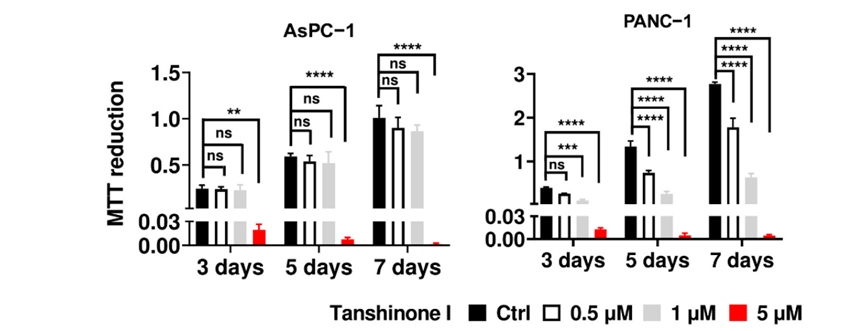
PANC-1 and AsPC-1 cells were treated with various concentrations (0.5–5 µM) of Tanshinone I for various time periods, as indicated. Cell proliferation was analyzed by MTT assay.
Tanshinone I purchased from MedChemExpress. Usage Cited in: Int J Mol Sci. 2022 Oct 3;23(19):11721. [Abstract]
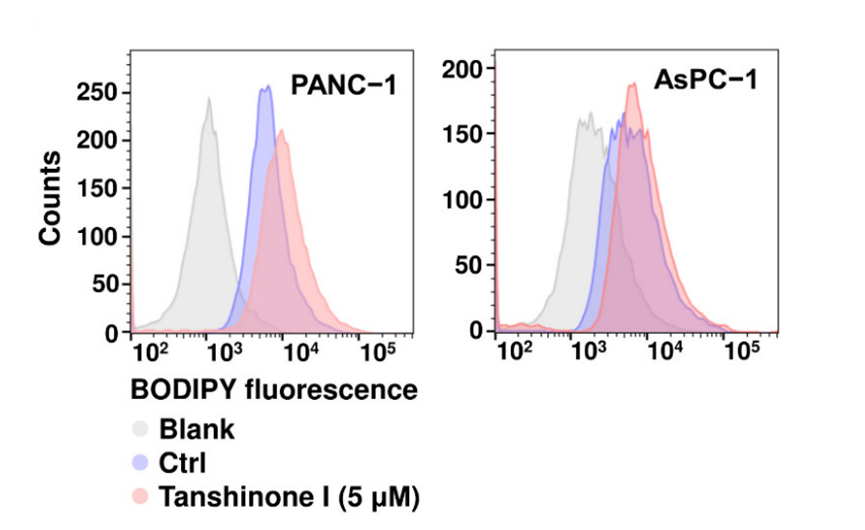
PANC-1 and AsPC-1 cells were incubated with 5 µM Tanshinone I for 72 h; lipid peroxidation was analyzed by flow cytometry.
Tanshinone I purchased from MedChemExpress. Usage Cited in: Int J Mol Sci. 2022 Oct 3;23(19):11721. [Abstract]
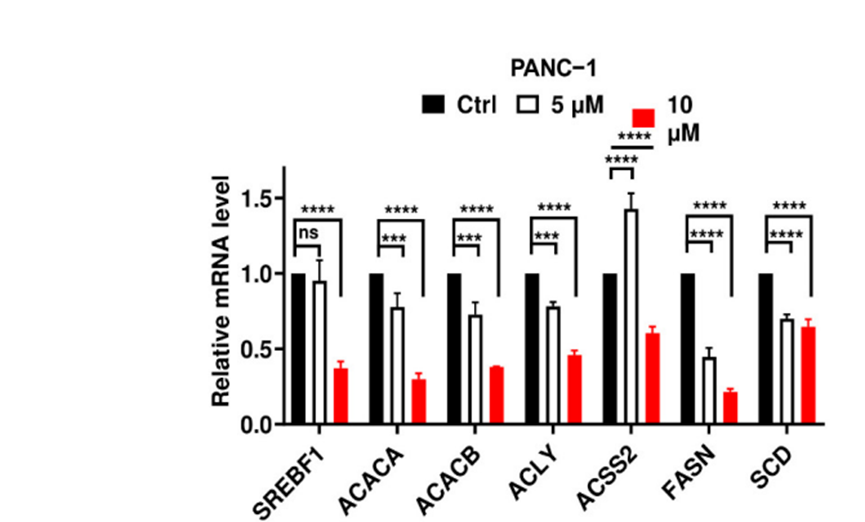
PANC-1 cells were incubated with Tanshinone I (5–10 µM) for 72 h. The mRNA levels of fatty acid synthesis-related genes were quantified by qRT-PCR.
Tanshinone I purchased from MedChemExpress. Usage Cited in: Int J Mol Sci. 2022 Oct 3;23(19):11721. [Abstract]
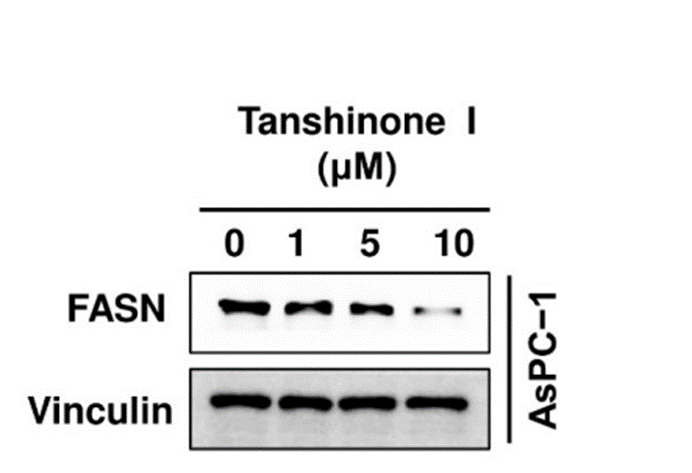
AsPC-1 cells were incubated with Tanshinone I (1–10 µM) for 72 h. FASN protein level was analyzed by western blot analysis.
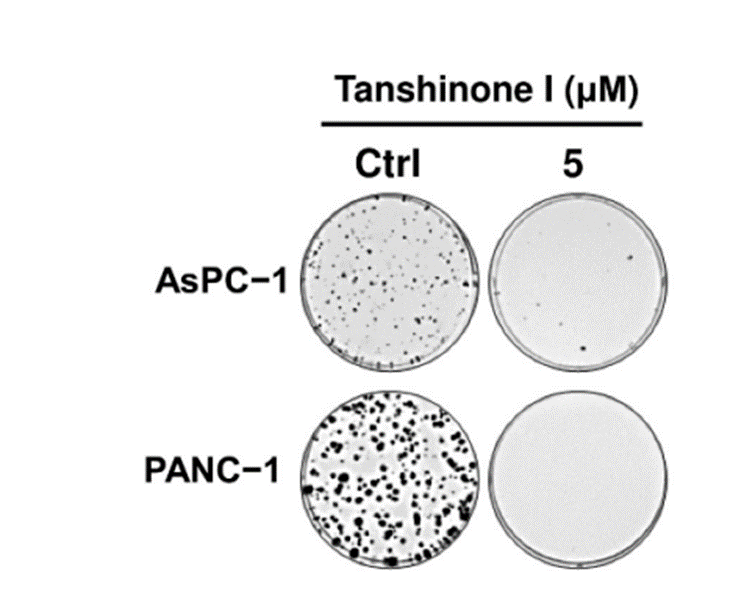
Tanshinone I purchased from MedChemExpress. Usage Cited in: Int J Mol Sci. 2022 Oct 3;23(19):11721. [Abstract]
PANC-1 and AsPC-1 cells were treated with 5 µM Tanshinone I and incubated for two weeks to form colonies.
-
Fish Shellfish Immunol
Emodin enhances host antiviral immunity against Micropterus salmoides rhabdovirus by activating RLR signaling in largemouth bass. [Abstract]2025 Nov:166:110633. PMID: 40769268 -
Mol Immunol
Tanshinone I limits inflammasome activation of macrophage via docking into Syk to alleviate DSS-induced colitis in mice. [Abstract]2024 Jul 31:173:88-98. PMID: 39088935 -
Life Sci Alliance
Tanshinone functions as a coenzyme that confers gain of function of NQO1 to suppress ferroptosis. [Abstract]2022 Nov 1;6(1):e202201667. PMID: 36319062 -


Solvent & Solubility
In Vitro:
DMSO : 2 mg/mL (7.24 mM; Need ultrasonic; Hygroscopic DMSO has a significant impact on the solubility of product, please use newly opened DMSO)
Please refer to the solubility information to select the appropriate solvent. Once prepared, please aliquot and store the solution to prevent product inactivation from repeated freeze-thaw cycles.
Storage method and period of stock solution: -80°C, 2 years; -20°C, 1 year. When stored at -80°C, please use it within 2 years. When stored at -20°C, please use it within 1 year.
Please refer to the solubility information to select the appropriate solvent. Once prepared, please aliquot and store the solution to prevent product inactivation from repeated freeze-thaw cycles.
Storage method and period of stock solution: -80°C, 2 years; -20°C, 1 year. When stored at -80°C, please use it within 2 years. When stored at -20°C, please use it within 1 year.
Concentration (start) × Volume (start) = Concentration (final) × Volume (final)


Purity & Documentation
-
Data Sheet (285 KB)
-
SDS (396 KB)
- English - EN (396 KB)
- Français - FR (396 KB)
- Deutsch - DE (396 KB)
- Norwegian - NO (396 KB)
- Español - ES (396 KB)
- Swedish - SV (396 KB)
- Italian - IT (396 KB)
- Korean - KR (396 KB)
- Portuguese - PT (396 KB)
-
Handling Instructions (2659 KB)
References


Complete Stock Solution Preparation Table
Please refer to the solubility information to select the appropriate solvent. Once prepared, please aliquot and store the solution to prevent product inactivation from repeated freeze-thaw cycles.
Storage method and period of stock solution: -80°C, 2 years; -20°C, 1 year. When stored at -80°C, please use it within 2 years. When stored at -20°C, please use it within 1 year.
| Optional Solvent | Concentration Solvent Mass | 1 mg | 5 mg | 10 mg | 25 mg |
|---|---|---|---|---|---|
| DMSO | 1 mM | 3.6194 mL | 18.0969 mL | 36.1939 mL | 90.4846 mL |
| 5 mM | 0.7239 mL | 3.6194 mL | 7.2388 mL | 18.0969 mL |


Tanshinone I Related Classifications
HY-N0134 Related Classifications
 Powered by Bioz