



Cholinesterase (ChE)
Cholinesterase (ChE) is a family of enzymes present in the central nervous system, particularly in nervous tissue, muscle and red cells, which catalyze the hydrolysis of the neurotransmitter acetylcholine into choline and acetic acid, a reaction necessary to allow a cholinergic neuron to return to its resting state after activation. It is one of many important enzymes needed for the proper functioning of the nervous systems of humans.
There are two types: acetylcholinesterase (AChE, acetylcholine hydrolase) and butyrylcholinesterase (BChE, acylcholine acylhydrolase), also known as nonspecific cholinesterase or pseudocholinesterase. AChE is primarily found in the blood on red blood cell membranes, in neuromuscular junctions, and in neural synapses, while BChE is produced in the liver and found primarily in plasma. The difference between the two types of cholinesterase is their relative preferences for substrates: AChE hydrolyzes acetylcholine faster while BChE hydrolyzes butyrylcholine faster.
Cholinesterase (ChE) Isoform Specific Products
All Product Categories
-
Cholinesterase (ChE) Inhibitors
(910)
View all products
-
Cholinesterase (ChE) Agonists
(5)
View all products
-
Cholinesterase (ChE) Antagonists
(10)
View all products
-
Cholinesterase (ChE) Activators
(32)
View all products
-
Cholinesterase (ChE) Modulators
(10)
View all products
-
Cholinesterase (ChE) Chemical
(1)
View all products
-
Cholinesterase (ChE) Inducer
(1)
View all products
-
Cholinesterase (ChE) Controls
(6)
View all products
-
Cholinesterase (ChE) Substrates
(2)
View all products
-
Cholinesterase (ChE) Related Products (1058)
Related Products (1058)

-
Antibodies (2)
-
Cholinesterase (ChE) Isoform Comparison
-
S21-1011
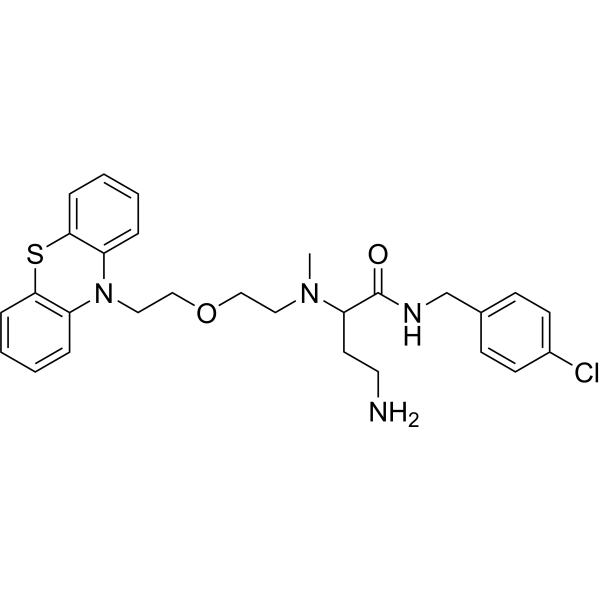
 0 ImagesCat. No.: HY-161643CAS No.: 2671859-87-1S21-1011 is a selective inhibitor for butyrylcholinesterase (BChE), with IC50 of 0.059 and 0.162 μM, for eqBChE and hBChE, respectively. S21-1011 exhibits good blood-brain barrier (BBB) permeability and good pharmacokinetic characters. S21-1011 exhibits anti-inflammatory activity through activation of keap1-Nrf2-ARE pathway (EC50 is 23.48 μM for antioxidant element ARE activation), ameliorates cognitive impairment in murine Alzheimer’s disease model.
-
Trimethylammonium chloride-d10
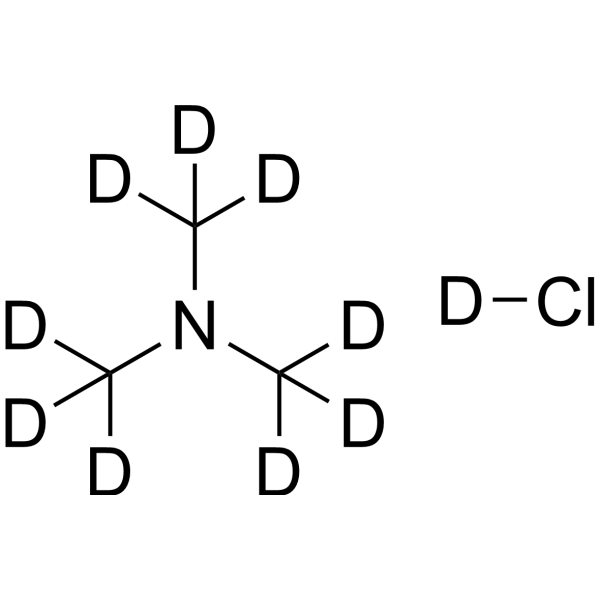 0 ImagesCat. No.: HY-Y0504S1CAS No.: 107766-37-0Synonyms: Hegzadesil-d10; Trimethylamine hydrochloric acid-d10; Trimethylamine monohydrochloride-d10Trimethylammonium chloride-d10 (Hegzadesil-d10) is the d10-labeled Trimethylammonium chloride (HY-Y0504). Trimethylammonium chloride (Hegzadesil) is a non-competitive Acetylcholinesterase inhibitor. Trimethylammonium chloride reversibly blocks the deacetylation of acetylcholinesterase.
-
AChE-IN-17
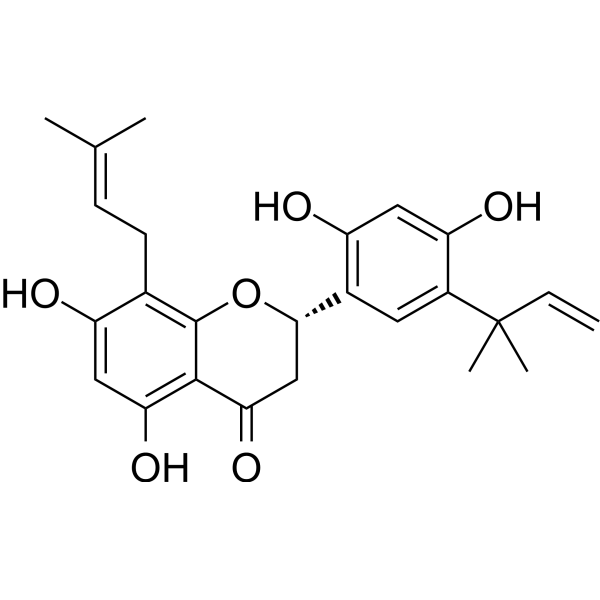 0 ImagesCat. No.: HY-N10384CAS No.: 460345-17-9AChE-IN-17 (compound 1) is a potent AChE inhibitor with an IC50 value of 28.98 μM. AChE-IN-17 can significantly prevent H2O2-induced PC12 cell death, exhibiting excellent neuroprotective effect. AChE-IN-17 can be used for researching neurodegenerative diseases (NDs).
-
AChE/BuChE-IN-8
 0 ImagesCat. No.: HY-181503AChE/BuChE-IN-8 is a dual AChE and BuChE inhibitor, with an AChE IC50 of 1.18 μM, a human AChE Ki of 1.2 μM, and a BuChE IC50 of 2.34 μM. AChE/BuChE-IN-8 acts as an antiproliferative agent and antioxidant, exerts antiproliferative effects on colon cancer cells, scavenges free radicals, and exhibits reducing power. AChE/BuChE-IN-8 can be used in the research of Alzheimer's disease and colorectal adenocarcinoma.
-
Phenserine tartrate
 0 ImagesCat. No.: HY-103374ACAS No.: 156910-61-1Synonyms: (-)-Eseroline phenylcarbamate tartrate; (-)-Phenserine (+)-tartratePhenserine tartrate ((-)-Eseroline phenylcarbamate) is a derivative of Physostigmine (HY-N6608) and is a potent, noncompetitive, long-acting and selective AChE inhibitor. Phenserine tartrate reduces β-amyloid precursor protein (APP) and β-amyloid peptide (Aβ) formation. Phenserine tartrate improves cognitive performance and attenuates the progression of Alzheimer's disease.
-
AChE/Nrf2 modulator 1
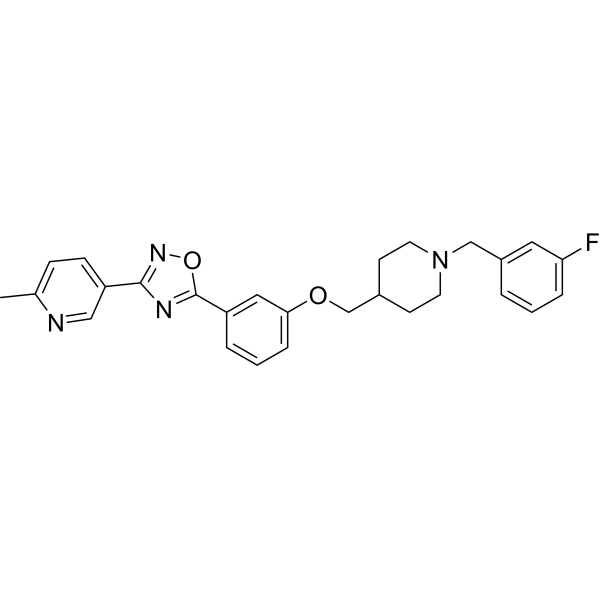 0 ImagesCat. No.: HY-152037CAS No.: 2417117-84-9AChE/Nrf2 modulator 1 is an orally active acetylcholinesterase (AChE)/nuclear factor erythroid 2-related factor 2 (Nrf2) modulator. AChE/Nrf2 modulator 1 has Nrf2 inductive activity and AChE inhibitory activity for eeAChE and hAChE with IC50 values of 0.07 μM and 0.38 μM, respectively. AChE/Nrf2 modulator 1 can be used for the research of Alzheimer's disease.
-
(S)-Rivastigmine-d6 tartrate
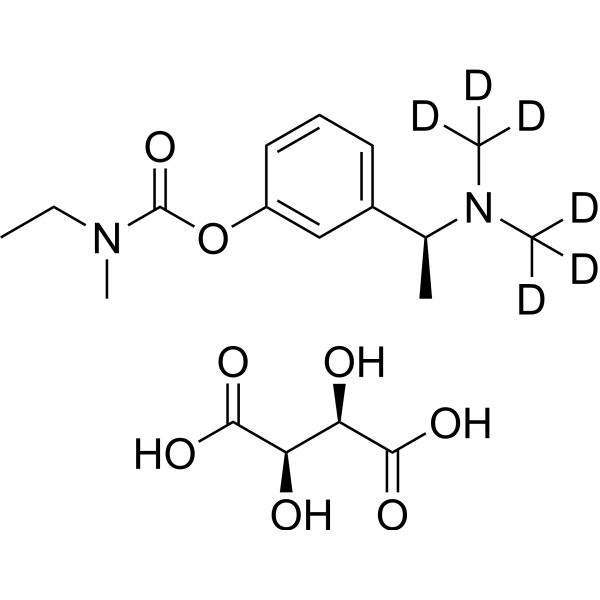 0 Images(S)-Rivastigmine-d6 (tartrate) is the deuterium labeled (S)-Rivastigmine, which is an cholinesterase inhibitor.
-
Edrophonium-d5 chloride
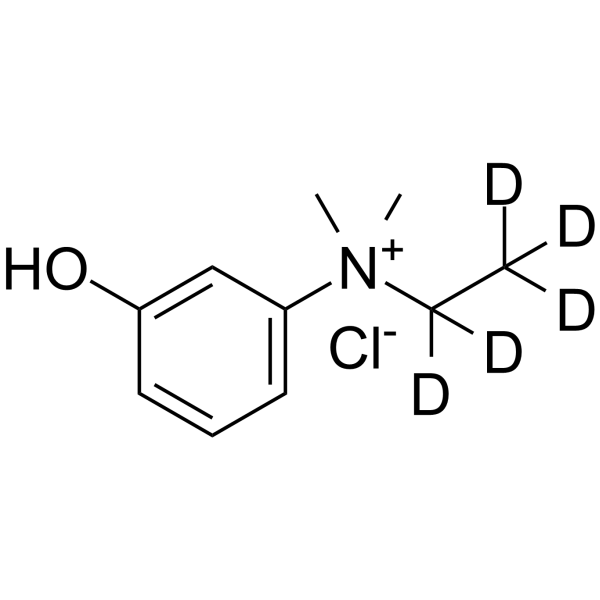 0 ImagesCat. No.: HY-B0882SEdrophonium-d5 chloride is the deuterium labeled Edrophonium chloride (HY-B0882). Edrophonium chloride is a short-acting acetylcholinesterase (AChE) inhibitor. Edrophonium chloride has Ki values of 0.2, 0.2, and 0.4 μM and IC50 values of 0.2, 0.05, and 0.5 μM for AChE in human erythrocytes, purified calf forebrain, and purified octopus brain, respectively. Edrophonium chloride can be used to detect early digitalis toxicity and in the study of myasthenia gravis.
-
CEase-IN-1
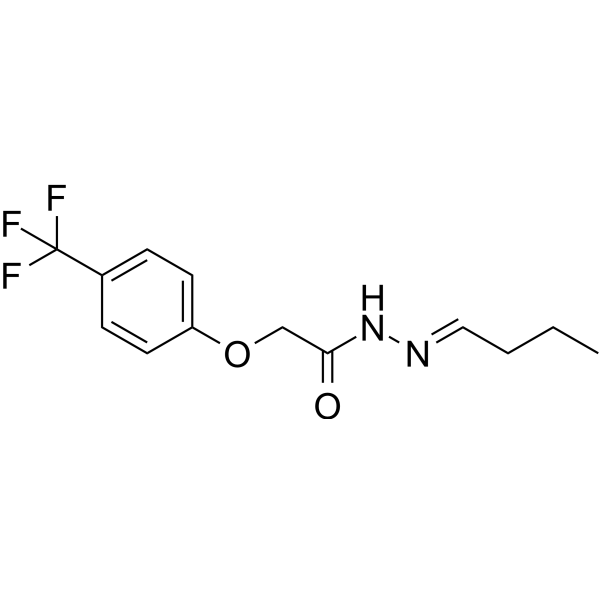 0 ImagesCat. No.: HY-143252CAS No.: 2985688-68-2CEase-IN-1 (Compound A1H3) is a potent and selective cholesterol esterase (CEase) inhibitor with an IC50 of 0.36 μM. CEase-IN-1 can be used for the research of hypercholesterolemia.
-
AChE-IN-93
 0 ImagesCat. No.: HY-175474AChE-IN-93 (compound 4m) is a potent AchE inhibitor with an IC50 of 29 nM. AChE-IN-93 can be used in Alzheimer's disease research.
-
Trimethylammonium chloride-15N
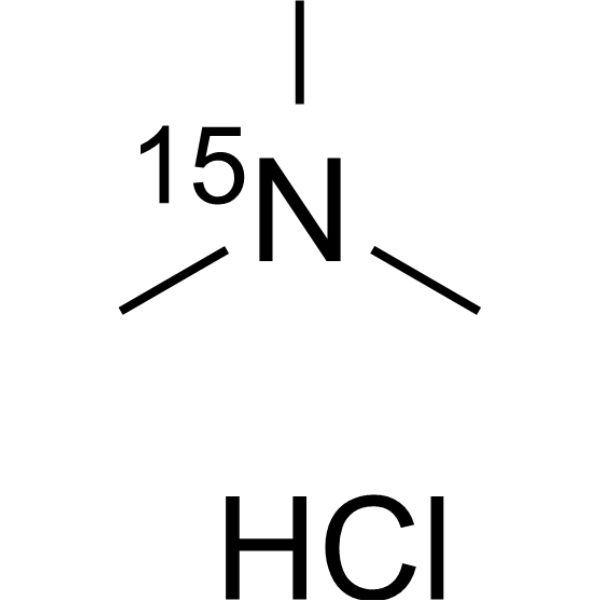 0 ImagesCat. No.: HY-Y0504S2CAS No.: 108451-51-0Synonyms: Hegzadesil-15N; Trimethylamine hydrochloric acid-15N; Trimethylamine monohydrochloride-15NTrimethylammonium chloride-15N (Hegzadesil-15N) is the 15N-labeled Trimethylammonium chloride (HY-Y0504). Trimethylammonium chloride (Hegzadesil) is a non-competitive Acetylcholinesterase inhibitor. Trimethylammonium chloride reversibly blocks the deacetylation of acetylcholinesterase.
-
AChE-IN-5
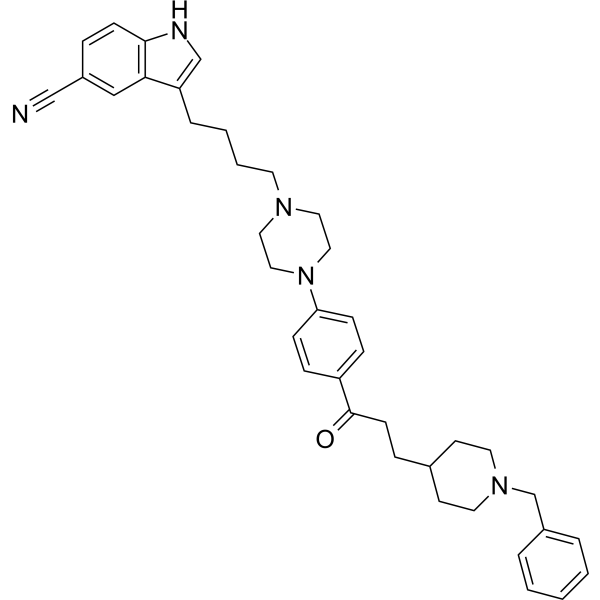 0 ImagesCat. No.: HY-144272CAS No.: 3037236-13-5AChE-IN-5 (compound 5) exhibits strong in vitro bioactivity against AChE/5-HT1A/SERT and exhibits good BBB permeability. AChE-IN-5 shows IC50 value 2.29 nM against AChE, EC50 value 58.6 nM against 5-HT1A and IC50 value against SERT. Orally active.
-
ChE/Aβ1-42-IN-1
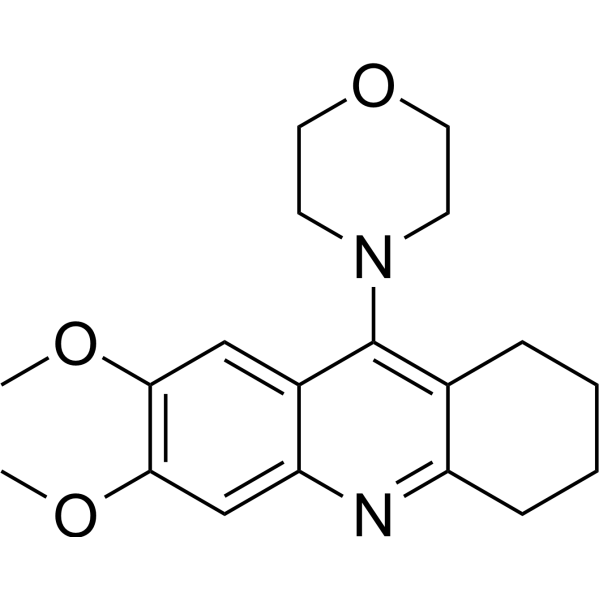 0 ImagesCat. No.: HY-144388CAS No.: 2761149-22-6ChE/Aβ1-42-IN-1 (compound 28) is a potent ChE and Aβ1-42 aggregation inhibitor with IC50s of 0.062, 0.767 and 1.227 µM for AChE, BuChE and Aβ1-42 aggregation, respectively. ChE/β1-42-IN-1 shows excellent BBB penetration. ChE/Aβ1-42-IN-1 is a potent multi-targeted anti-Alzheimer's agent.
-
NSS-18
 0 ImagesCat. No.: HY-180114NSS-18 is a potent and reversible inhibitor of AChE and MAO-B, with IC50 values of 1.53 and 1.51 μM respectively. NSS-18 can inhibit the self-aggregation of Aβ. NSS-18 inhibits the intracellular generation of ROS induced by Aβ. NSS-18 shows a moderate neuroprotective effect against 6-OHDA (HY-B1081)-induced neurotoxicity. NSS-18 can form chelates with metal ions such as Cu²⁺, Fe³⁺, and Zn²⁺, with the strongest chelation being with Cu²⁺. NSS-18 can be used for the study of Alzheimer's disease.
-
Contilisant
 0 ImagesCat. No.: HY-123928CAS No.: 2135615-68-6Contilisant is a permeable antioxidant and neuroprotectant agent. Contilisant exhibits high nM affinity at H3R. Contilisant inhibits monoamine oxidases and cholinesterases. Contilisant has a binding affinity of 65.23 nM towards hS1R. Contilisant can significantly restore cognitive deficit induced by Aβ1-42 in the radial maze assay of Alzheimer’s animal model.
-
AChE-IN-6
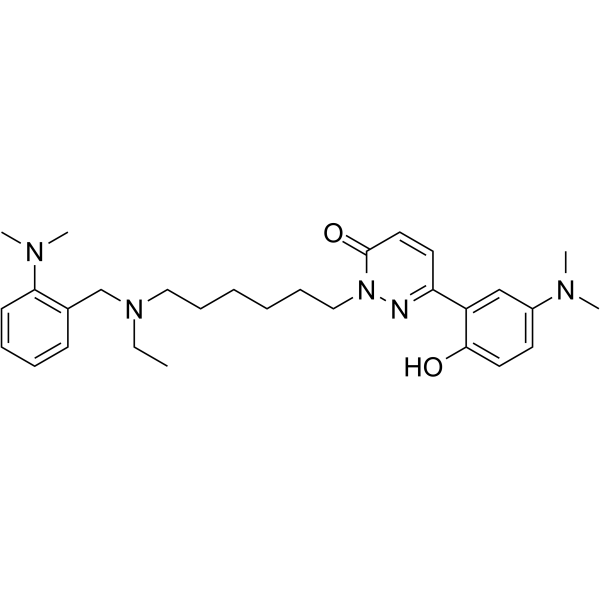 0 ImagesCat. No.: HY-144324CAS No.: 2758788-95-1AChE-IN-6 (Compound 12a) is an optimal multifunctional ligand with significant inhibition of AChE (EeAChE, IC50 = 0.20 μM; HuAChE, IC50 = 37.02 nM) and anti-Aβ activity (IC50 = 1.92 μM for self-induced Aβ1-42 aggregation; IC50 = 1.80 μM for disaggregation of Aβ1-42 fibrils; IC50 = 2.18 μM for Cu2+-induced Aβ1-42 aggregation; IC50 = 1.17 μM for disaggregation of Cu2+-induced Aβ1-42 fibrils). AChE-IN-6 has the potential for the research of Alzheimer's disease.
-
BChE-IN-45
 0 ImagesCat. No.: HY-179122CAS No.: 425611-45-6BChE-IN-45 (compound 4p) is a competitive (cholinesterase) dual acting inhibitor (Ki = 11.13 μM). BChE-IN-45 has an IC50 of 13.8 μM for BChE and 35.63 μM for AChE. BChE-IN-45 can be used for research on Alzheimer's disease.
-
AChE/BChE-IN-11
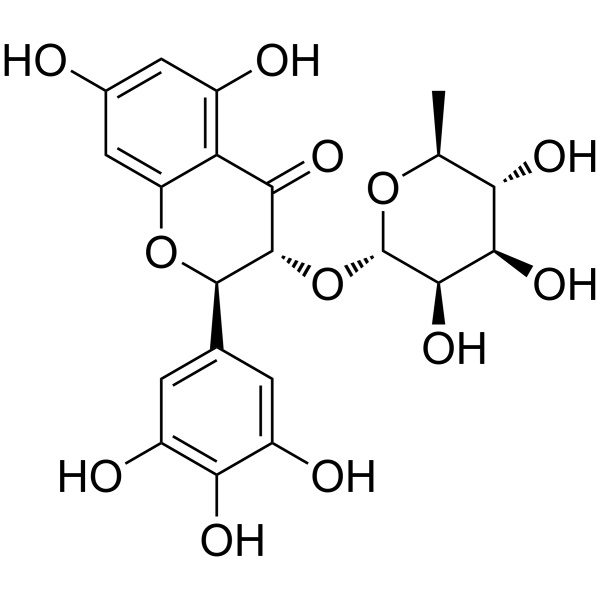 0 ImagesCat. No.: HY-N10701CAS No.: 80443-12-5AChE/BChE-IN-11 (compound 1) is a potent is a dual AChE and BChE inhibitor with IC50 values of 70 and 71 μM for AChE and BChE, respectively. AChE/BChE-IN-11 is a natural product that could be isolated from the leaf of artichoke . AChE/BChE-IN-11 can be used in research of Alzheimer’s disease (AD) research.




