



Cholinesterase (ChE)
Cholinesterase (ChE) is a family of enzymes present in the central nervous system, particularly in nervous tissue, muscle and red cells, which catalyze the hydrolysis of the neurotransmitter acetylcholine into choline and acetic acid, a reaction necessary to allow a cholinergic neuron to return to its resting state after activation. It is one of many important enzymes needed for the proper functioning of the nervous systems of humans.
There are two types: acetylcholinesterase (AChE, acetylcholine hydrolase) and butyrylcholinesterase (BChE, acylcholine acylhydrolase), also known as nonspecific cholinesterase or pseudocholinesterase. AChE is primarily found in the blood on red blood cell membranes, in neuromuscular junctions, and in neural synapses, while BChE is produced in the liver and found primarily in plasma. The difference between the two types of cholinesterase is their relative preferences for substrates: AChE hydrolyzes acetylcholine faster while BChE hydrolyzes butyrylcholine faster.
Cholinesterase (ChE) Isoform Specific Products
All Product Categories
-
Cholinesterase (ChE) Inhibitors
(924)
View all products
-
Cholinesterase (ChE) Agonists
(5)
View all products
-
Cholinesterase (ChE) Antagonists
(10)
View all products
-
Cholinesterase (ChE) Activators
(33)
View all products
-
Cholinesterase (ChE) Modulators
(11)
View all products
-
Cholinesterase (ChE) Chemical
(1)
View all products
-
Cholinesterase (ChE) Inducer
(1)
View all products
-
Cholinesterase (ChE) Controls
(6)
View all products
-
Cholinesterase (ChE) Substrates
(3)
View all products
-
Cholinesterase (ChE) Related Products (1072)
Related Products (1072)

-
Antibodies (2)
-
Cholinesterase (ChE) Isoform Comparison
-
(-)-Huperzine A-d4 hydrochloride
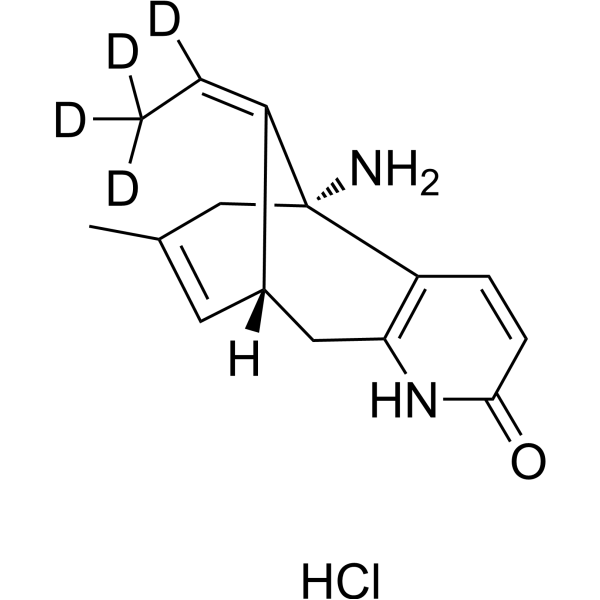 0 ImagesCat. No.: HY-17387S1Synonyms: Huperzine A-d4(-)-Huperzine A-d4 hydrochloride is deuterated labeled (-)-Huperzine A (HY-17387). (-)-Huperzine A (Huperzine A) is an alkaloid isolated from Huperzia serrata, with neuroprotective activity. (-)-Huperzine A is a potent, highly specific, reversible and blood-brain barrier penetrant inhibitor of acetylcholinesterase (AChE), with an IC50 of 82 nM. (-)-Huperzine A also is non-competitive antagonist of N-methyl-D-aspartate glutamate (NMDA) receptor. (-)-Huperzine A is developed for the research of neurodegenerative diseases, including Alzheimer’s disease.
-
AChE-IN-36
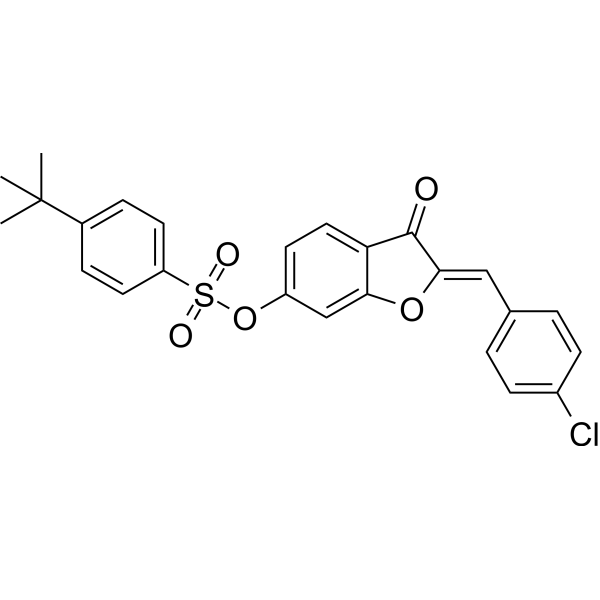 0 ImagesCat. No.: HY-155749CAS No.: 2978753-66-9AChE-IN-36 (compound A4) is anacetylcholinesterase inhibitorswith an IC50 of 0.04 μM. AChE-IN-36 effects ROS levels and gene expression of NRF2.

-
Isatin-O
 0 ImagesIsatin-O (Isatin β-oxime; Isatin 3-oxime) is an acetylcholinesterase (AChE) reactivator capable of crossing the blood-brain barrier. Isatin-O reactivates paraoxon-inhibited acetylcholinesterase in the central and peripheral nervous systems. As a glycosylation substrate, Isatin-O undergoes complete glycosylation in a Rauvolfia serpentina cell suspension culture system to form isatin-3-oxime-glucoside. Isatin-O can be used in studies related to organophosphate poisoning.

-
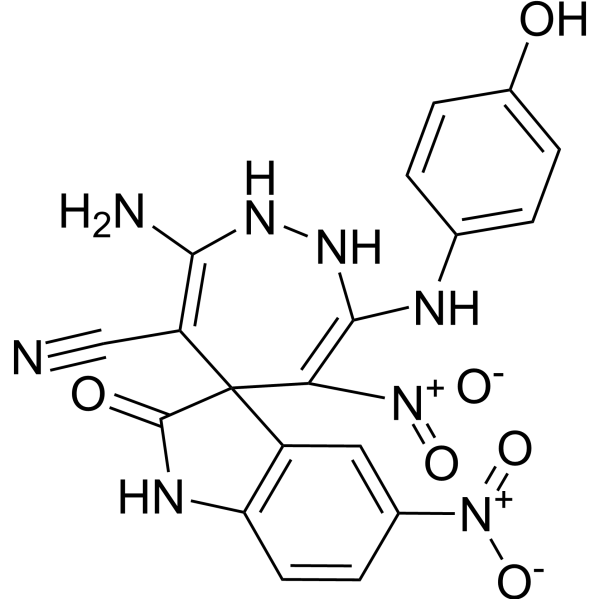
AChE-IN-20
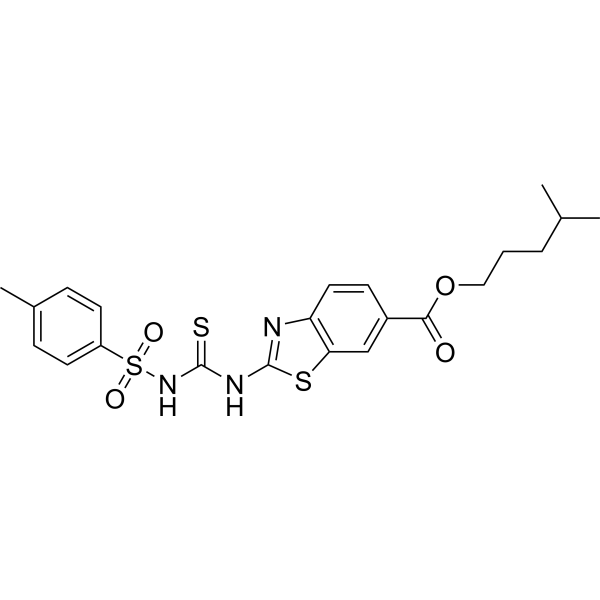
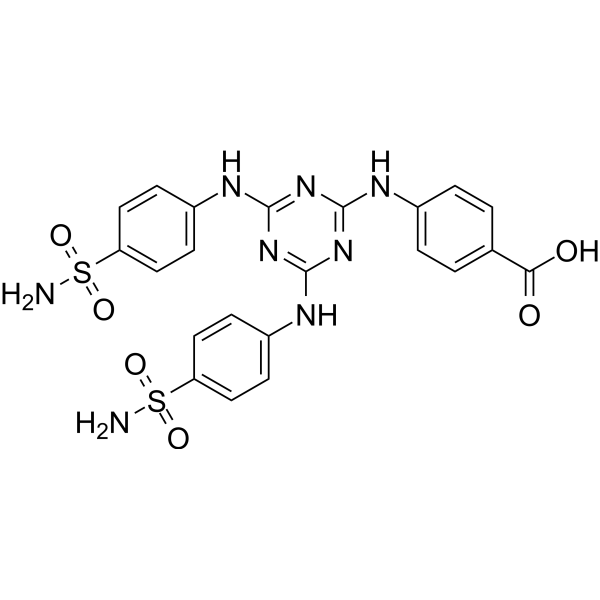 0 ImagesCat. No.: HY-147952CAS No.: 2428389-65-3AChE-IN-20 (compound M26) is a potent AChE inhibitor with IC50 value of 397.32 nM and with Ki value of 335.76 nM. AChE-IN-20 shows inhibition potency against hCA I , hCA II and α-GLY with IC50 values of 84.14, 69.24 and 52.08 nM and with Ki values of 97.86, 76.23 and 57.93 nM, respectively.
-
AChE/BChE-IN-28
 0 ImagesCat. No.: HY-174464AChE/BChE-IN-28 (Compound 5q) is a BChE inhibitor with an IC50 of 13.49 μM. AChE/BChE-IN-28 also exerts moderate inhibitory effect on AChE, with an IC50 of 35.23 μM. AChE/BChE-IN-28 can be used in the research of Alzheimer's disease.
-
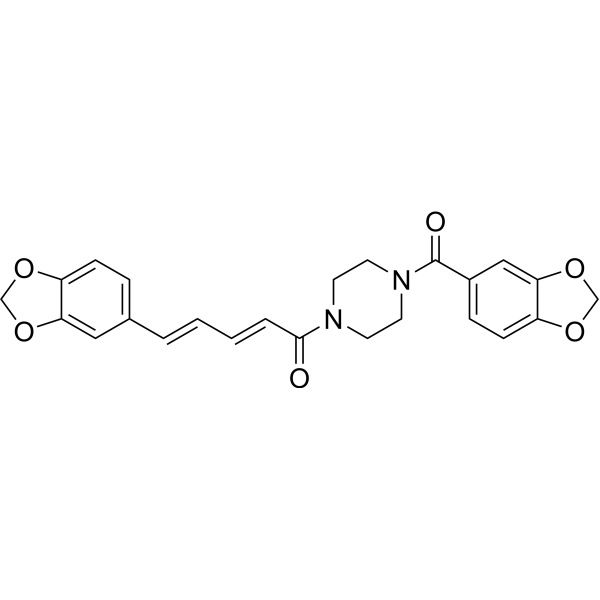
(-)-Carvone-d4
 0 ImagesCat. No.: HY-W750404(-)-Carvone-d4 is the deuterium labeled (-)-Carvone (HY-W017423). (-)-Carvone is an insect neurotoxin and a irreversible acetylcholinesterase (AChE) inhibitor. (-)-Carvone can be used as a bird repellent, inhibits larval growth, decreases pupatation rate, and increases mortality of larvae.
-
Propoxur (Standard)
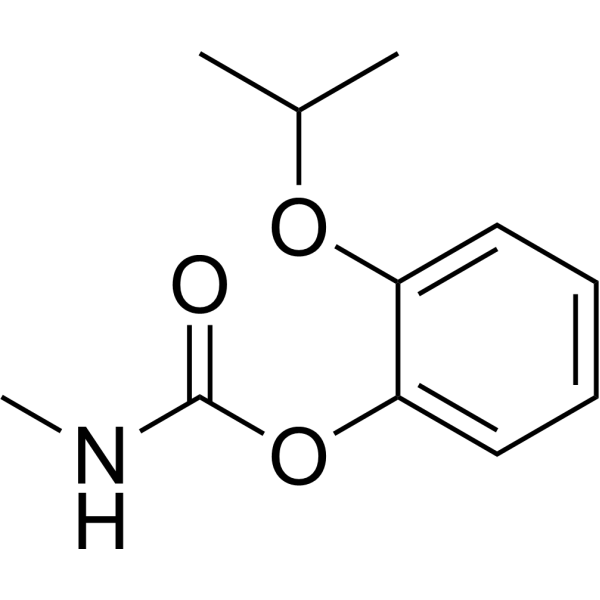 0 ImagesPropoxue (Standard) is the analytical standard of Propoxue (HY-B0916). This product is intended for research and analytical applications. Propoxur is a reversible, competitive, orally active AChE inhibitor that can cross the blood-brain barrier. Propoxur inhibits AChE activity to induce neurotoxicity, while promoting MMP-2 expression and enhancing tumor cell migration and invasion by inducing intracellular ROS generation and activating the ERK/Nrf2 signaling pathway. On the one hand, Propoxur inhibits AChE, leading to acetylcholine accumulation and causing neurological dysfunction; on the other hand, it promotes Nrf2 nuclear translocation through ROS-dependent ERK1/2 phosphorylation, and upregulates MMP-2 and other invasion-related proteins. Propoxur is also a carbamate insecticide used to combat turf, forestry, and household pests.
-
sEH/AChE-IN-5
 0 ImagesCat. No.: HY-183341sEH/AChE-IN-5 is a selective, orally active and brain-penetrant acetylcholinesterase (AChE) and soluble epoxide hydrolase (sEH) dual inhibitor with IC50 values of 1.7 nM and 0.7 nM. sEH/AChE-IN-5 mediates neuroprotection and anti-inflammation via reduced TNF-α, IL-1β, IL-6, iNOS. sEH/AChE-IN-5 improves Scopolamine (HY-N0296)-induced learning and memory deficits mice. sEH/AChE-IN-5 can be used for the research of Alzheimer's disease.
-
2,3,9,10-Tetrahydroxyberberine bromide
 0 ImagesCat. No.: HY-N11962ACAS No.: 2847856-62-42,3,9,10-Tetrahydroxyberberine bromide is an acetylcholinesterase AChE inhibitor (IC50=7.8 μM). 2,3,9,10-Tetrahydroxyberberine bromide exhibits DPPH free radical scavenging activity (IC50=43 μM) and is applicable to research related to Alzheimer's disease.
-
Kaempferol-3-O-glu-rha-glu
 0 ImagesCat. No.: HY-N18024CAS No.: 210751-64-7Kaempferol-3-O-glu-rha-glu is an insecticide. Kaempferol-3-O-glu-rha-glu inhibits activities of the enzymes CarE, GSTs, MFO, and AChE. Kaempferol-3-O-glu-rha-glu exhibits cytotoxicity and disrupts mitochondrial membrane potential and increases ROS production. Kaempferol-3-O-glu-rha-glu can be used for the infection.
-
NSC 620023 TFA
 0 ImagesCat. No.: HY-181445NSC 620023 TFA is a highly selective butyrylcholinesterase (BChE) inhibitor with an IC50 of 32 nM. NSC 620023 TFA acts via π-stacking interactions with dual benzimidazole moieties and hydrophobic interactions within the BChE binding site. NSC 620023 TFA can be used for the research of alzheimer’s disease.

-
Dual AChE-MAO B-IN-4
 0 ImagesCat. No.: HY-158695Dual AChE-MAO B-IN-4 (compound 7) is a dual AChE/MAO-B inhibitor, with IC50 values of 261 nM and 15 nM, respectively. Dual AChE-MAO B-IN-4 protects against oxidative damage induced by H2O2 and 6-OHDA in SH-SY5Y cells. Dual AChE-MAO B-IN-4 can penetrate the central nervous system in a cell model that mimics the blood-brain barrier. Dual AChE-MAO B-IN-4 can be used in the study of neurological diseases such as Alzheimer's disease (AD).
-
AChE/BChE-IN-32
 0 ImagesCat. No.: HY-179711AChE/BChE-IN-32 (Compound 4a) is an AChE and BChE inhibitor, with Ki values of 2.48 and 0.696 μM respectively. AChE/BChE-IN-32 inhibits Aβ aggregation and exhibits a strong ABTS•+ scavenging ability (TEAC = 2.40). AChE/BChE-IN-32 shows significant neuroprotective activity in glutamate and hydrogen peroxide-induced oxidative stress models. AChE/BChE-IN-32 can be used for the study of Alzheimer's disease.
-
Manumycin B
 0 ImagesCat. No.: HY-123887CAS No.: 139023-58-8Manumycin B is an antibiobic, and exhibits antitumor activity. Manumycin B is an inhibitor for acetylcholinesterase (AChE) with an IC50 of 15 mM.




