



Amyloid-β
β-amyloid peptide; Aβ; Abeta
Amyloid-β (Aβ) denotes peptides of 36–43 amino acids that are crucially involved in Alzheimer's disease as the main component of theamyloid plaques found in the brains of Alzheimer patients. The peptides result from the amyloid precursor protein (APP), which is being cut by certain enzymes to yield Aβ. Amyloid-β molecules can aggregate to form flexible soluble oligomers which may exist in several forms. Amyloid-β peptide is due to overproduction of Aβ and/or the failure of clearance mechanisms. Amyloid-β self-aggregates into oligomers, which can be of various sizes, and forms diffuse and neuritic plaques in the parenchyma and blood vessels. Amyloid-β oligomers and plaques are potent synaptotoxins, block proteasome function, inhibit mitochondrial activity, alter intracellular Ca2+levels and stimulate inflammatory processes. Loss of the normal physiological functions of Aβ is also thought to contribute to neuronal dysfunction.
All Product Categories
-
Amyloid-β Inhibitors
(489)
View all products
-
Amyloid-β Agonists
(2)
View all products
-
Amyloid-β Antagonists
(5)
View all products
-
Amyloid-β Activators
(5)
View all products
-
Amyloid-β Modulators
(4)
View all products
-
Amyloid-β Chemicals
(7)
View all products
-
Amyloid-β Inducers
(5)
View all products
-
Amyloid-β Degraders
(6)
View all products
-
Amyloid-β Controls
(3)
View all products
-
Amyloid-β Substrate
(1)
View all products
-
Amyloid-β Ligands
(11)
View all products
-
Amyloid-β Related Products (767)
Related Products (767)

-
Antibodies (9)
-
Rolipram (Standard)
 0 ImagesSynonyms: (R,S)-Rolipram (Standard); (±)-Rolipram (Standard); ZK 62711 (Standard)Rolipram (Standard) is the analytical standard of Rolipram (HY-16900). This product is intended for research and analytical applications. Rolipram is a PDE4 inhibitor, with blood-brain barrier permeability, that reverses β-amyloid-induced learning and memory impairment in rats. Rolipram elevates intracellular cAMP and clevels and regulates the cAMP/CREB signaling pathway, thereby alleviating neuroinflammation and apoptotic responses. Rolipram promotes neuronal differentiation of human bone marrow mesenchymal stem cells and inhibits Methamphetamine- and morphine-induced hyperlocomotion in mice. Rolipram also reduces the viability of glioblastoma stem-like cells and enhances Bevacizumab (HY-P9906)-induced cell death. Rolipram inhibits the expression of proinflammatory cytokines and enhances central noradrenergic transmission. Rolipram is mainly used in studies related to various central nervous system diseases including Alzheimer's disease, major depressive disorder, glioblastoma multiforme, and multiple sclerosis.
-
2-Hexynyl-5′-N-ethylcarboxamidoadenosine
 0 ImagesSynonyms: HENECA; 2-Hexynyl-NECA2-Hexynyl-5′-N-ethylcarboxamidoadenosine (HENECA) is a selective A2A adenosine receptor agonist. 2-Hexynyl-5′-N-ethylcarboxamidoadenosine increases intracellular cAMP level, and inhibits TNFα-evoked MMP-3 release. 2-Hexynyl-5′-N-ethylcarboxamidoadenosine induces Aβ42 production in SH-SY5Y cells.
-
Anatabine dicitrate
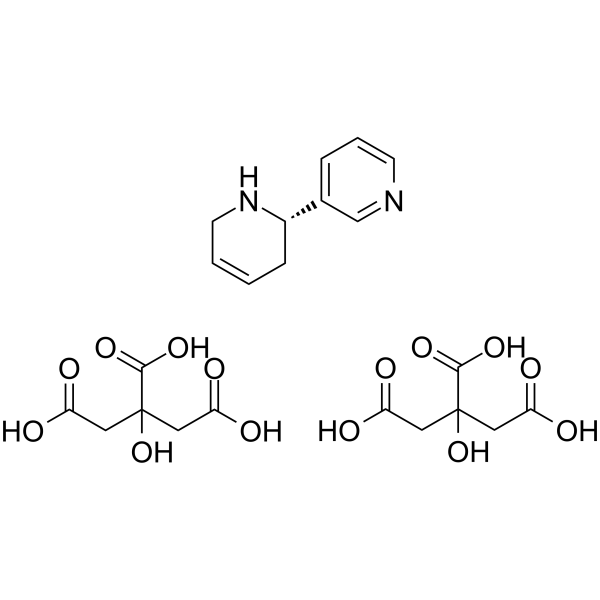 0 ImagesCat. No.: HY-19918APurity: 99.03%Anatabine dicitrate is a tobacco alkaloid that can cross the blood-brain barrier. Anatabine dicitrate is a potent α4β2 nAChR agonist. Anatabine dicitrate inhibits NF-κB activation lower amyloid-β (Aβ) production by preventing the β-cleavage of amyloid precursor protein (APP). Anatabine dicitrate has anti-inflammatory effects and has the potential for neurodegenerative disorders treatment.
-
Tolcapone-d4
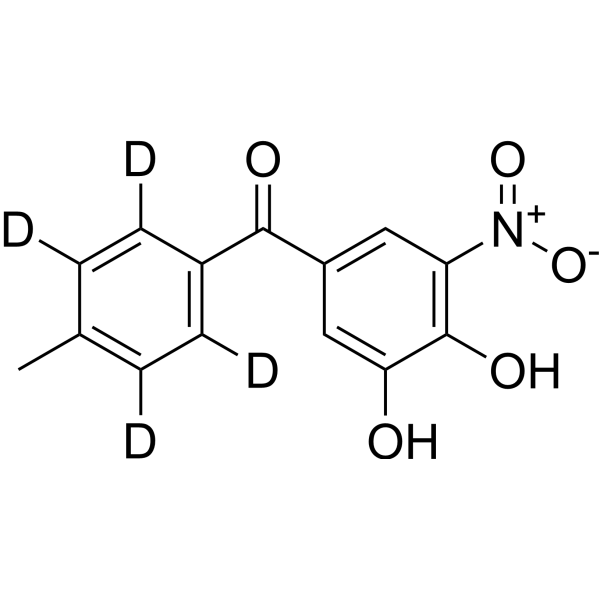 0 ImagesSynonyms: Ro 40-7592-d4Tolcapone-d4 (Ro 40-7592-d4) is the deuterium labeled Tolcapone (HY-17406). Tolcapone (Ro 40-7592) is a selective, potent and orally active COMT inhibitor with an IC50of 773 nM. Tolcapone can inhibits α-syn and Aβ42 oligomerization and fibrillogenesis. Tolcapone can cause oxidative stress and induce cancer cells apoptosis and ROS production. Tolcapone can be used for the researches of cancer and neurological disease, such as Parkinson disease and neuroblastoma.
-
q-FTAA
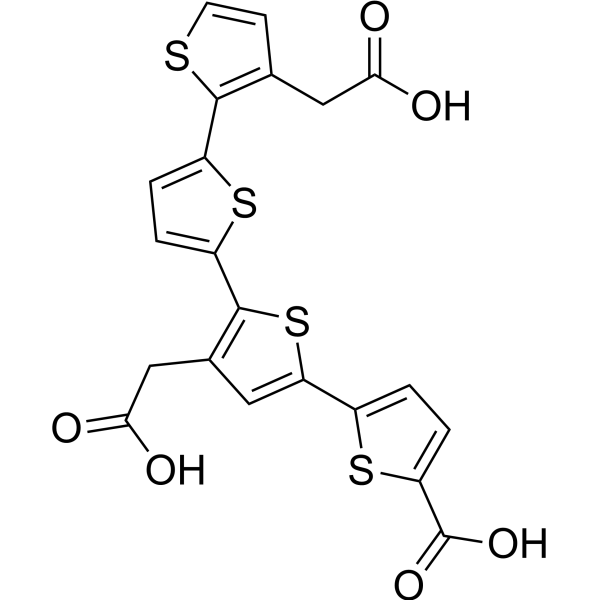 0 ImagesCat. No.: HY-148547CAS No.: 1352477-22-5q-FTAA is an oligothiophene. q-FTAA competes for binding to the X-34 binding site on Aβ fibrils. q-FTAA is applicable to research related to Alzheimer's disease.
-
Mivelsiran sodium
 0 ImagesCat. No.: HY-177646ASynonyms: ALN-APP sodiumMivelsiran (ALN-APP) sodium is an siRNA targeting the β-amyloid precursor protein (APP). Mivelsiran sodium induces sequence-specific degradation of APP mRNA via RNA interference, thereby reducing the levels of APP protein and downstream amyloid cleavage products. Mivelsiran sodium reduces β-amyloid protein levels in the brain, alleviates neuroinflammation, and attenuates microglial proliferation. Mivelsiran sodium can be used for research on early-onset Alzheimer's disease.
-
Buntanetap L-Tartrate
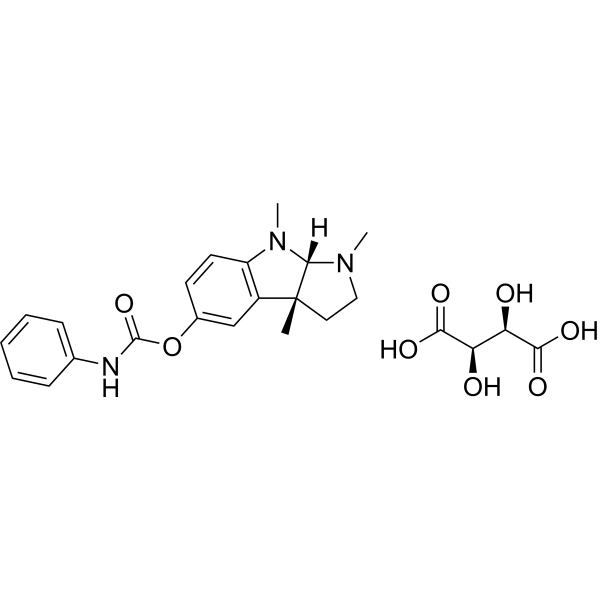 0 ImagesSynonyms: (+)-Phenserine L-Tartrate; ANVS401 L-TartrateBuntanetap L-Tartrate (Phenserine L-Tartrate) is a selective AChE inhibitor (IC50 = 22.2 nM). Buntanetap is a multiple neurotoxic protein translation inhibitor with oral activity, including amyloid precursor protein (APP), α-synuclein (αSYN) and huntingtin protein (HTT). Buntanetap reduces the production of β-amyloid precursor protein by blocking its mRNA translation. Buntanetap has anti-inflammatory effects and can be used in the study of Alzheimer's disease and Parkinson's disease.
-
β-Amyloid (22-35)
 0 ImagesCat. No.: HY-P1474CAS No.: 144189-71-9Synonyms: Amyloid β-Protein (22-35)β-Amyloid 22-35 (Amyloid β-Protein 22-35), the residues 22-35 fragment ofβ-amyloid protein, has a cytotoxic effect on cultured neurons from the rat hippocampus in serum-free medium. β-Amyloid 22-35 forms aggregates and typical amyloid fibrils resembling those of the β-amyloid protein in neutral buffer solution).
-
Aβ42 agonist-2
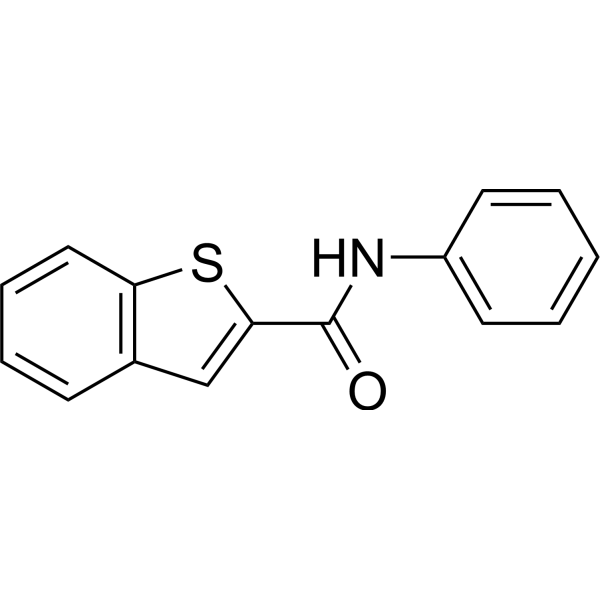 0 ImagesAβ42 agonist-2 (compound 7b) is a small molecule compound that can promote Aβ42 aggregation. Aβ42 agonist-2 can interact with Aβ42 oligomers and pentamers to promote nontoxic aggregate self-assembly and rapid fibril formation. Aβ42 agonist-2 prevents Aβ42-induced cytotoxicity in HT22 hippocampal neuronal cells.
-
K 01-162
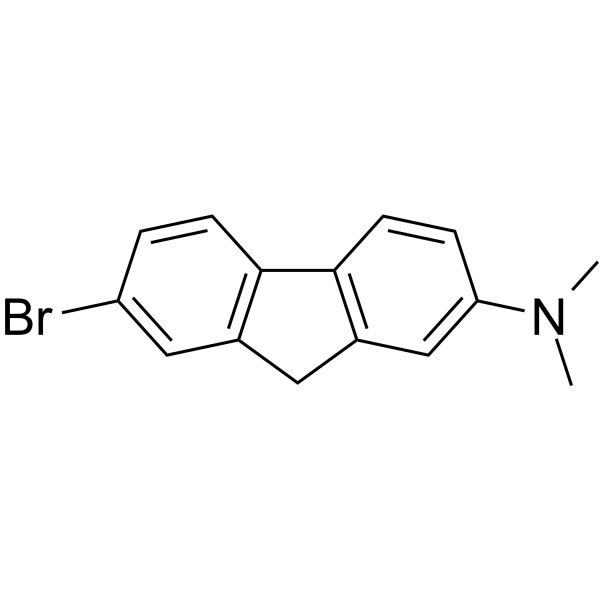 0 ImagesSynonyms: K162K 01-162 (K162) inhibits the fibril formation of Aβ peptides and eliminates their neurotoxicity. K 01-162 binds with Aβ42 peptide with an EC50 value of 80 nM. K 01-162 binds directly to AβO with a KD value of 19 μM. K 01-162 is capable of penetrating the brain and can be used for the research of Alzheimer’s disease.
-
Cromolyn (Standard)
 0 ImagesSynonyms: Cromoglycate (Standard); Cromoglicic acid (Standard); FPL-670 free acid (Standard)Cromolyn (Standard) is the analytical standard of Cromolyn. This product is intended for research and analytical applications. Cromolyn (Cromoglycate) is an orally active GSK-3β inhibitor with an IC50 of 2.0 μM. Cromolyn is also a mast cell stabilizer that can inhibit the release of mediators from mast cells, regulate reflex bronchoconstriction, and reduce non-specific bronchial hyperreactivity, and Cromolyn can be used in the research of bronchial asthma. In addition, Cromolyn has multiple activities such as anti-inflammatory, anti-allergic, anti-histamine, anti-cancer, and neuroprotective effects.
-
AAKLVFF
 0 ImagesAAKLVFF is an oligopeptide capable of self-assembling into nanotubes. AAKLVFF can be derived from the core section of β-amyloid. AAKLVFF becomes the first methanol compatible LC alignment medium for residual dipolar coupling measurement.
-
BF-168
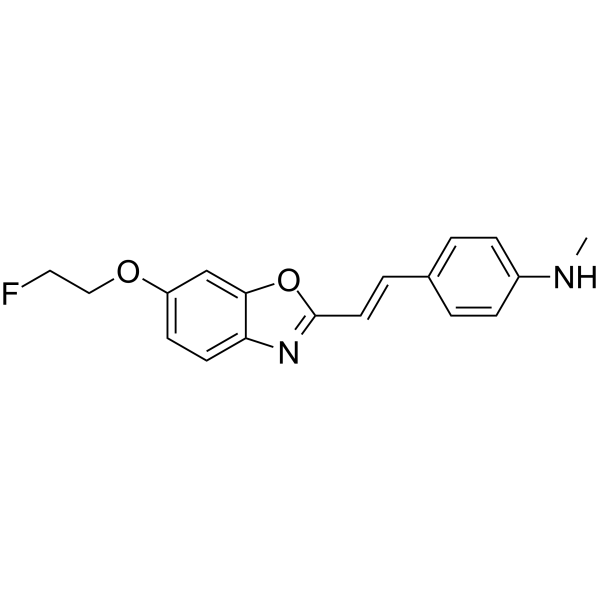 0 ImagesBF-168, a candidate probe for PET, is found to specifically recognize both neuritic and diffuse plaques, with a Ki of 6.4 nM for Aβ1-42.
-
CNB-001
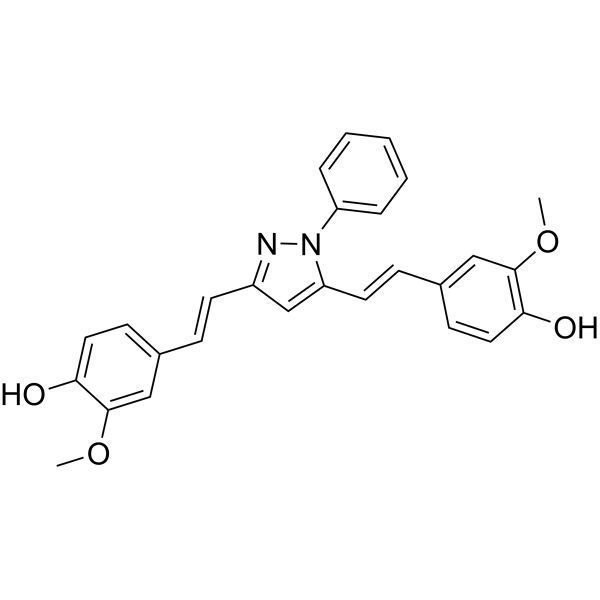 0 ImagesCat. No.: HY-158204CAS No.: 1019110-87-2CNB-001 is a potent and orally active 5-lipoxygenase (5-LOX) inhibitor. CNB-001 can decreases 5-LOX expression and increase proteasome activity. CNB-001 can inhibit accumulation of soluble Amyloid-β and ubiquitinated aggregated proteins. CNB-001 can inhibit apoptosis, ROS production and stabilize mitochondrial membrane potential. CNB-001 can reduce insulin resistance and increase glucose uptake. CNB-001 also exhibits anti-ischemic, anti-inflammatory effects. CNB-001 can be used for the researches of inflammation, neurological and metabolic disease, such as Alzheimer's disease, stroke and diabetes.
-
Dalidnetug
 0 ImagesCat. No.: HY-P991130CAS No.: 2991369-43-6Dalidnetug is a humanized monoclonal antibody targeting human amyloid-beta precursor protein (APP). Dalidnetug specifically binds to APP to reduce the production of amyloid-beta (Aβ), thus exerting the activity of clearing amyloid-beta. Dalidnetug is promising for research of Alzheimer's disease.
-
AT-051/43421517
 0 ImagesAT-051/43421517 is a PGK1 activator with a Kd of 2.45 μM. AT-051/43421517 induces enhanced glycolytic metabolism and maintains TCA cycle activity, while inhibiting ROS production and Apoptosis. AT-051/43421517 reduces Aβ deposition and Tau hyperphosphorylation. AT-051/43421517 alleviates neuropathological damage in the brains of 3×Tg-AD mice. AT-051/43421517 improves cognitive impairment. AT-051/43421517 can be used for research on Alzheimer's disease and Parkinson's disease.
-
β-Amyloid (1-20)
 0 Imagesβ-Amyloid (1-20) consists of amino acids 1 to 20 of beta amyloid protein.
-
Amyloid β-Protein (3-42)
 0 ImagesCat. No.: HY-P4886CAS No.: 157884-74-7Amyloid β-Protein (3-42) is the precursor of Pyr peptide. Pyroglutamate-modified Aβ (pEAβ) (3-42) is the core of the amyloid template block in Alzheimer's disease. pEAβ(3-42) accelerated the aggregation of Aβ(1-42), while Aβ(1-42) significantly slowed the primary and secondary nucleation of pEAβ(3-42).
-
Merinetug
 0 ImagesCat. No.: HY-P991702CAS No.: 3024381-10-7
-
MG-H1
 0 ImagesCat. No.: HY-156049CAS No.: 149204-50-2MG-H1 is a RAGE ligand, advanced glycation end product cross-link, and pathogenic mediator with relevance to diabetic vasculopathy. MG-H1 binds to RAGE and competes with CM1 for RAGE binding on endothelial cells. MG-H1 is implicated in diabetic vasculopathy pathogenesis. MG-H1 can be used for the research of diabetic vasculopathy.




