



Amyloid-β
β-amyloid peptide; Aβ; Abeta
Amyloid-β (Aβ) denotes peptides of 36–43 amino acids that are crucially involved in Alzheimer's disease as the main component of theamyloid plaques found in the brains of Alzheimer patients. The peptides result from the amyloid precursor protein (APP), which is being cut by certain enzymes to yield Aβ. Amyloid-β molecules can aggregate to form flexible soluble oligomers which may exist in several forms. Amyloid-β peptide is due to overproduction of Aβ and/or the failure of clearance mechanisms. Amyloid-β self-aggregates into oligomers, which can be of various sizes, and forms diffuse and neuritic plaques in the parenchyma and blood vessels. Amyloid-β oligomers and plaques are potent synaptotoxins, block proteasome function, inhibit mitochondrial activity, alter intracellular Ca2+levels and stimulate inflammatory processes. Loss of the normal physiological functions of Aβ is also thought to contribute to neuronal dysfunction.
All Product Categories
-
Amyloid-β Inhibitors
(469)
View all products
-
Amyloid-β Agonists
(2)
View all products
-
Amyloid-β Antagonists
(5)
View all products
-
Amyloid-β Activators
(5)
View all products
-
Amyloid-β Modulators
(4)
View all products
-
Amyloid-β Chemicals
(7)
View all products
-
Amyloid-β Inducers
(5)
View all products
-
Amyloid-β Degraders
(6)
View all products
-
Amyloid-β Controls
(3)
View all products
-
Amyloid-β Substrate
(1)
View all products
-
Amyloid-β Ligands
(11)
View all products
-
Amyloid-β Related Products (745)
Related Products (745)

-
Antibodies (9)
-
Zamubafusp alfa
 0 ImagesCat. No.: HY-P991039CAS No.: 2937458-25-6Synonyms: AT-02Zamubafusp alfa (AT-02) is an immunoglobulin-peptide fusion protein consisting of a humanized IgG1 and the pan-amyloid reactive peptide p5R. Zamubafusp alfa binds to two ubiquitous components of all amyloids, namely amyloid fibrils and highly sulfated heparan sulfate glycans. Zamubafusp alfa enhances macrophage phagocytosis for amyloid clearance and can be used in research related to systemic amyloidosis.
-
Alborixin
 0 ImagesCat. No.: HY-167843CAS No.: 57760-36-8Alborixin is a polycyclic polyether ionophore Antibiotic. Alborixin is isolated from cultures of Streptomyces albus. Alborixin induces Autophagy via PTEN-mediated inhibition of the AKT pathway, thereby clearing Amyloid-β. Alborixin exhibits activity against Gram-positive bacteria and fungi. Alborixin can be used in the research of Alzheimer's disease.
-
LSD1-IN-43
 0 ImagesCat. No.: HY-176254LSD1-IN-43 is a highly selective, reversible, orally active and brain-penetrant LSD1 inhibitor with an IC50 value of 0.8 μM. LSD1-IN-43 has low inhibitory activity against MAO-A and MAO-B, two homologs of LSD1. LSD1-IN-43 significantly inhibits Aβ aggregation and enhances Aβ-induced neuronal cell viability. LSD1-IN-43 can be used for the study of Alzheimer’s disease (AD).
-
BChE-IN-41
 0 ImagesCat. No.: HY-174381BChE-IN-41 is a highly selective Butyrylcholinesterase (BChE) inhibitor (IC50 =12 nM, Ki = 6.6 nM). BChE-IN-41 has high brain penetration with a brain-to-plasma ratio of 9.0. BChE-IN-41 has pro-cognitive effects on mice with AD-like symptoms induced by Scopolamine (HY-N0296) and Aβ1-42.
-
Antioxidant agent-8
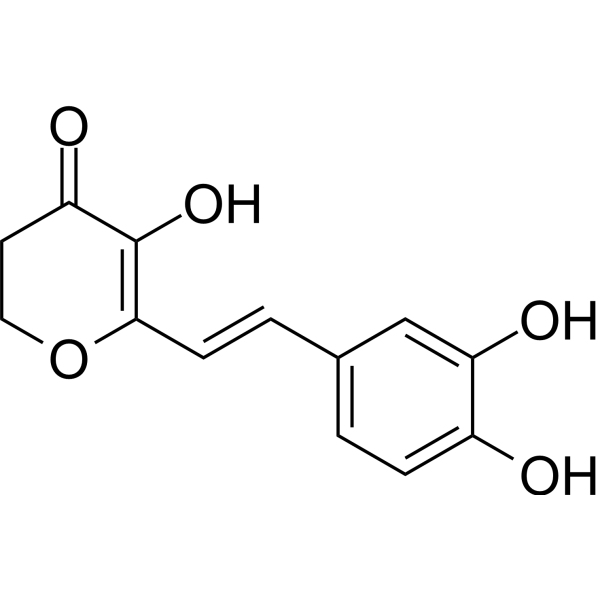 0 ImagesCat. No.: HY-152506Antioxidant agent-8 is an orally active inhibitor of Aβ1-42 deposition. Antioxidant agent-8 inhibits fibril aggregation (IC50=11.15 µM) and promotes fibril disaggregation (IC50=6.87 µM). Antioxidant agent-8 also inhibits Cu2+-induced Aβ1-42 fibril aggregation (IC50=3.69 µM) and promotes Cu2+-induced Aβ1-42 fibril disaggregation (IC50=3.35 µM). Antioxidant agent-8 has antioxidant activity, anti-inflammatory activity, biosafety, blood-brain barrier permeability and neuroprotective effect.
-
Junicedric acid
 0 ImagesCat. No.: HY-W720917CAS No.: 41787-69-3Junicedric acid is a diterpenoid compound that can be isolated from the resin of the Araucaria araucana tree. Junicedric acid exerts neuroprotective activity by increasing intracellular calcium levels in hippocampal neurons, activating PKC and calcium/calmodulin-dependent protein kinase (CaMKII), and preventing Amyloid-β oligomer-induced synaptic protein loss, apoptosis, and long-term potentiation (LTP) inhibition. Junicedric acid can be used in the study of the pathological mechanisms of neurodegenerative diseases such as Alzheimer's disease.
-
Dyclonine
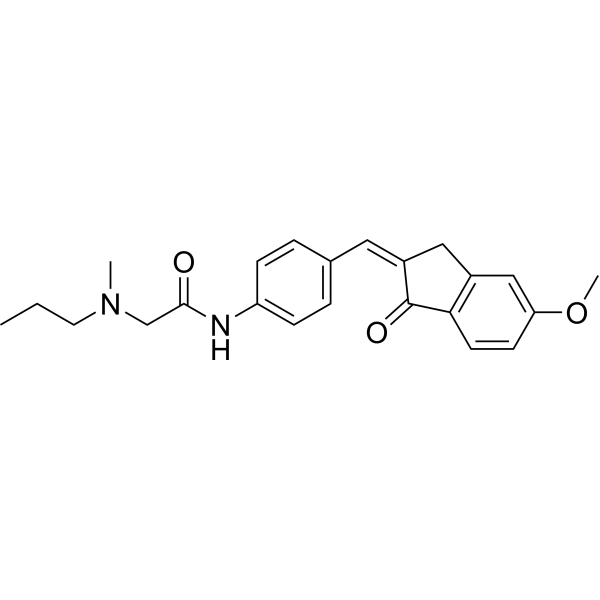
 0 ImagesDyclonine (Dyclocaine) is an orally active, blood-brain barrier-permeable piperidine phenylacetone small molecule commonly used as a local anesthetic. Dyclonine acts as a highly selective allosteric antagonist of TRPV3; it also reversibly inhibits G9a, ALDH2 and ALDH3A1, non-competitively blocks AChE. Dyclonine activates the Nrf2/ARE pathway, relieves the epigenetic silencing of FXN, blocks Aβ42 aggregation, and promotes remyelination and reparative polarization of microglia. Dyclonine alleviates pruritus via TRPV3 inhibition; it is used in studies of neurodegenerative disease models based on its AChE inhibitory, antioxidant and remyelinating effects; it sensitizes drug-resistant tumors through ALDH inhibition, and combined use with protease inhibitors induces more tumor cell apoptosis; it inhibits Candida albicans in vitro. Dyclonine can be used for research on multiple diseases including neurodegenerative diseases, cancer and pruritic dermatitis.
-
AChE-IN-94
 0 ImagesCat. No.: HY-175758AChE-IN-94 is an orally active and blood-brain barrier penetrable AChE inhibitor with an IC50 of 0.40 μM and Ki of 0.28 μM. AChE-IN-94 prevents self-induced and AChE-mediated Aβ1-42 aggregation. AChE-IN-94 alleviates cognitive/memory deficits in Scopolamine (HY-N0296)-induced amnesic model. AChE-IN-94 can be used for the study of Alzheimer's disease (AD).
-
AChE/Aβ-IN-1
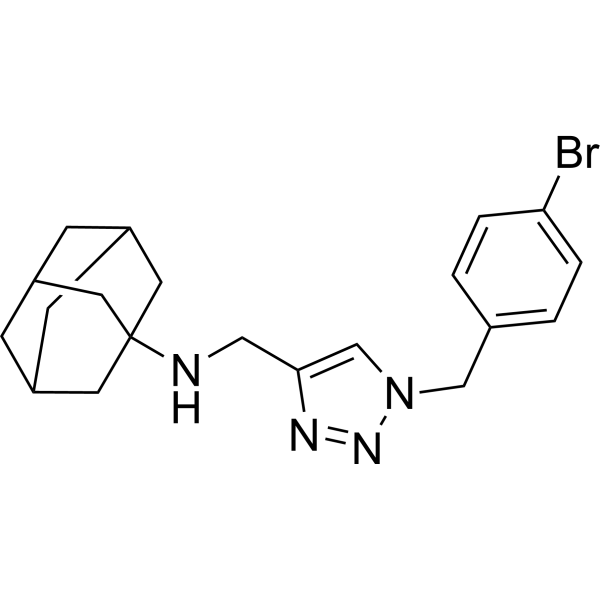 0 ImagesCat. No.: HY-155733AChE/Aβ-IN-1 (compound 32) is a potent and orally active inhibitor of acetylcholinesterase (AChE) with an IC50 of 86 nM, as well as an antagonist of NMDA receptor (GluN1-1b/GluN2B subunit combination) with IC50 of 3.876 μM. AChE/Aβ-IN-1 also inhibits Aβ aggregation and shows good blood-brain barrier permeability and neuroprotection. AChE/Aβ-IN-1 improves cognitive and spatial memory impairment in rats model.
-
2,2′,4,4′-Tetrahydroxychalcone
 0 ImagesCat. No.: HY-N13064CAS No.: 123702-96-52,2′,4,4′-Tetrahydroxychalcone (Compound 18) is a selective and potent BACE1 inhibitor with an IC50 of 0.62 μM. 2,2′,4,4′-Tetrahydroxychalcone is a derivative of Isoliquiritigenin (HY-N0102) found in Glycyrrhiza uralensis. 2,2′,4,4′-Tetrahydroxychalcone can block the β-cutting step of amyloid precursor protein (APP), thereby reducing the production of β-amyloid (Aβ) peptide. 2,2′,4,4′-Tetrahydroxychalcone can be used for research of Alzheimer’s disease.
-
Crocetin monomethyl ester (Standard)
 0 ImagesCat. No.: HY-N6904RCAS No.: 25368-09-6Crocetin monomethyl ester (Standard) is the analytical standard of Crocetin monomethyl ester. This product is intended for research and analytical applications. Crocetin monomethyl ester, isolated from Crocus sativus, possesses anti-inflammatory, neuroprotective and antioxidant activity. Crocetin monomethyl ester promotes clearance of amyloid-β by inducing autophagy via the STK11/LKB1-mediated AMPK pathway.
-
hAChE/Aβ1-42-IN-1
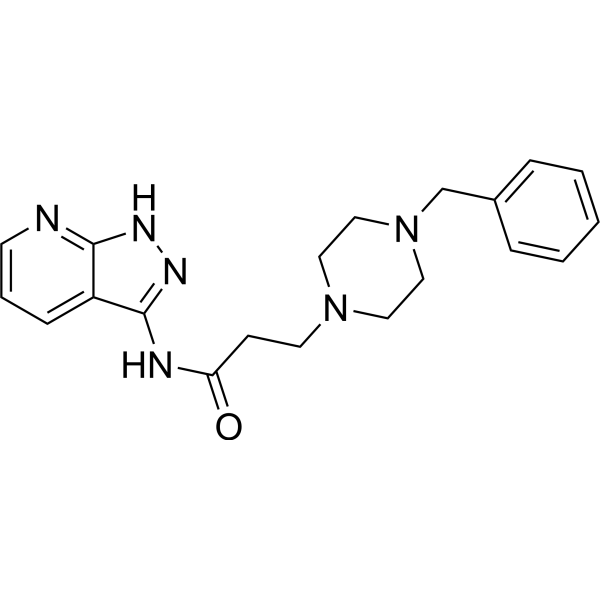 0 ImagesCat. No.: HY-144389CAS No.: 2761149-17-9hAChE/Aβ1-42-IN-1 (Compound 16) is a potent inhibitor of hAChE and Aβ1-42 aggregation. hAChE/Aβ1-42-IN-1 shows acceptable relative safety upon hepG2 cell line and excellent BBB penetration with wide safety margin. hAChE/Aβ1-42-IN-1 has the potential for the research of Alzheimer disease (AD).
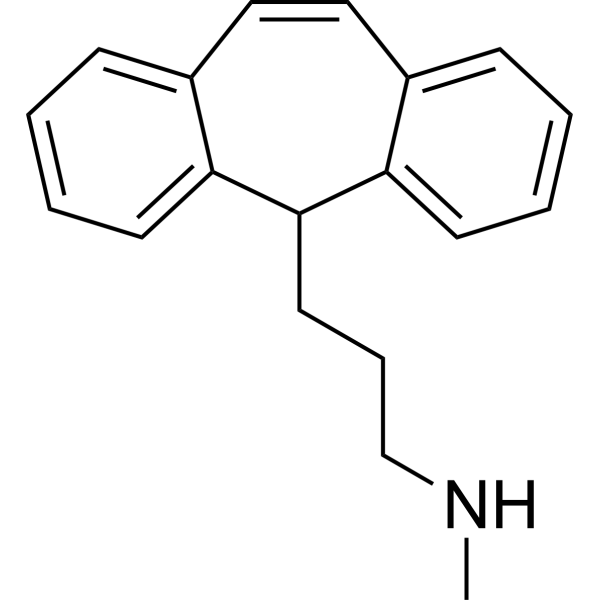
-
Amyloid β-Protein (4-42)
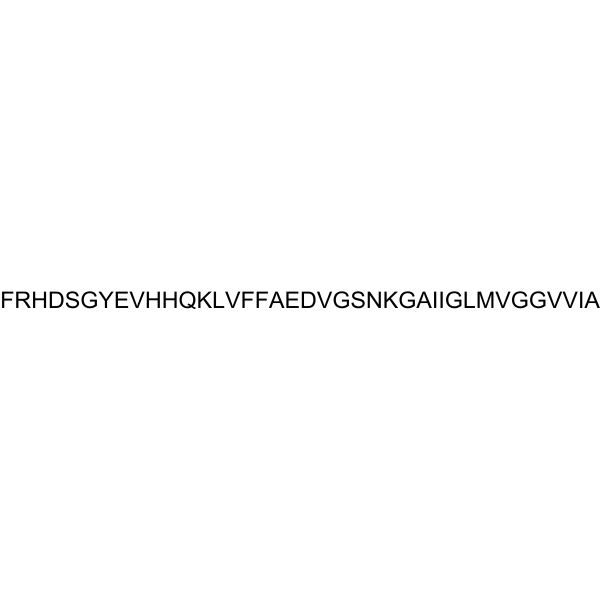 0 ImagesCat. No.: HY-P4892CAS No.: 157884-72-5Amyloid β-Protein (4-42) is aAβ Fragment.
-
MeS-IMPY
 0 ImagesCat. No.: HY-167898CAS No.: 955376-42-8MeS-IMPY is a ligand of β-amyloid plaques. MeS-IMPY shows a high binding affinity to β-amyloid plaques extracted from Alzheimer's disease (AD) human brains or AD brain homogenates compared to IMPY (Ki=7.93 and 8.95 nM, respectively). [11C]MeS-IMPY is a potential radioligand for imaging β-amyloid plaques with positron emission tomography (PET).
-
AChE/Aβ-IN-3
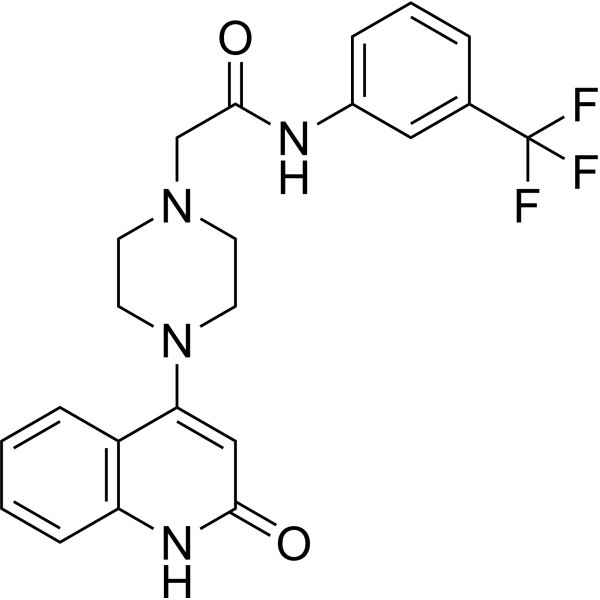 0 ImagesCat. No.: HY-157440AChE/Aβ-IN-3 (compound AM5) is a dual inhibitor of AChE and Amyloid-β aggregation with IC50<.sub> values of 1.29 and 4.93 μM, respectively. AChE/Aβ-IN-3 has antioxidant properties that scavenge ROS and restore their normal levels. AChE/Aβ-IN-3 can be used in the study of neurological diseases, such as Alzheimer's disease.
-
N-Caffeoyldopamine
 0 ImagesCat. No.: HY-161658N-Caffeoyldopamine (Compound 6i) is an amyloid-beta aggregation inhibitor. N-Caffeoyldopamine can inhibit Aβ aggregation to form nano-rod-like structures, thereby preventing β-sheet formation. N-Caffeoyldopamine can be used for Alzheimer's disease research.
-
MAO-B-IN-54
 0 ImagesCat. No.: HY-131660CAS No.: 52688-60-5MAO-B-IN-54 is a selective, reversible and competitiv monoamine oxidase B (MAOB) inhibitor with a human IC50 of 0.052 μM and a Ki of 0.028 μM. MAO-B-IN-54 shows weak activity MAOA. MAO-B-IN-54 occupies both the entrance and substrate cavity of MAOB, forming hydrophobic and hydrogen bonding interactions. MAO-B-IN-54 inhibits Aβ aggregation and ROS production. MAO-B-IN-54 can be used for the research of Alzheimer’s disease.
-
Cannflavin A (Standard)
 0 ImagesCat. No.: HY-W748591RCAS No.: 76735-57-4Cannflavin A (Standard) is the analytical standard of Cannflavin A. This product is intended for research and analytical applications. Cannflavin A can be isolated from Cannabis sativa L.. Cannflavin A has anti-cancer, neuroprotective and anti-inflammatory activity. Cannflavin A inhibits Aβ1-42 aggregation. Cannflavin A also inhibits kynurenine-3-monooxygenase (KMO) (IC50 = 29.4 μM). Cannflavin A activates apoptosis via caspase-3 cleavage. Cannflavin A exerts anti-inflammatory effects by inhibiting pro-inflammatory enzymes, including prostaglandin E2 and cytochrome c oxidases I and II in PC12 cell line.




