



Autophagy
Autophagy is a conserved cellular degradation and recycling process in the lysosome. In mammalian cells, there are three primary types of autophagy: microautophagy, macroautophagy, and chaperone-mediated autophagy (CMA). Microphagy captures cargoes by means of invaginations or protrusions of the lysosomal membrane directly, CMA uses chaperones to identify cargo proteins and then unfolds and transfers them into the lysosomal, while macroautophagy sequesters cargo by autophagosomes-de novo synthesized of double-membrane vesicles-and subsequently transport it to the lysosome.
Macroautophagy is the best studied and it occurs at a low level constitutively and can also be further induced under stress conditions, such as nutrient or energy starvation with a salient feature of autophagy protein degradation. Stress-induced macrophagy plays an important role in protein catabolism with another key protein degradation pathway, the ubiquitin–proteasome system (UPS).
As the study progressed, autophagy gains its importance under basal, nutrient-rich conditions, and is now recognized as a critical housekeeping pathway in catabolism of diverse cellular constituents, such as protein aggregates (aggrephagy), lipid droplets (lipophagy), iron complex (Ferritinophagy) and carbohydrate. Except for macromolecules, autophagy can also target several organelles and structures, such as mitochondria (mitophagy), peroxisome (pexophagy), endoplasmic reticulum (reticulophagy or ER-phagy), ribosome (ribophagy), spermatozoon-inherited organelles following fertilization (allophagy), secretory granules within pancreatic cells (zymophagy) and intracellular pathogens (xenophagy).
Autophagy and its dysfunction are associated with a variety of human pathologies, including ageing, cancer, neurodegenerative disease, heart disease and metabolic diseases, such as diabetes. Plenty of drugs and natural products are involved in autophagy modulation through multiple signaling pathways. Small molecules that can regulate autophagy seem to have great potential to intervene such diseases in animal models or clinical courses.
All Product Categories
-
Autophagy Inhibitors
(470)
View all products
-
Autophagy Agonists
(6)
View all products
-
Autophagy Activators
(119)
View all products
-
Autophagy Modulators
(59)
View all products
-
Autophagy Chemicals
(2)
View all products
-
Autophagy Inducers
(2166)
View all products
-
Autophagy Controls
(5)
View all products
-
Autophagy Ligand
(1)
View all products
-
Autophagy Related Products (3359)
Related Products (3359)

-
Antibodies (31)
-
Autophagy Signaling Pathway
-
PARP/EZH2-IN-1
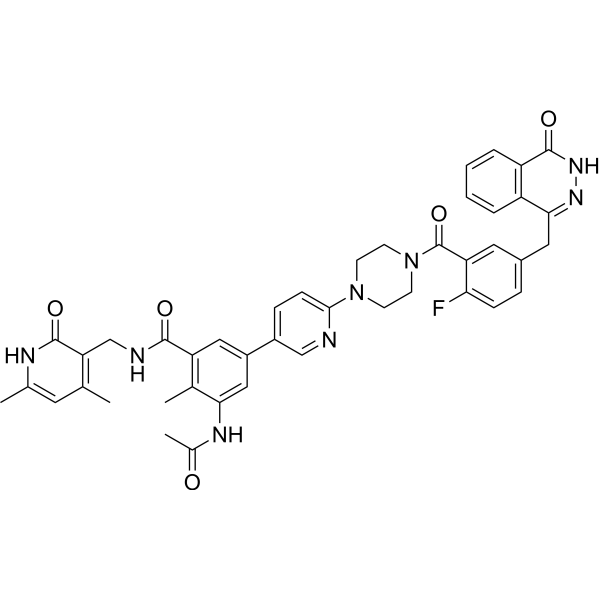 0 ImagesCat. No.: HY-132885CAS No.: 2687273-52-3
-
Autophagy/REV-ERB-IN-1
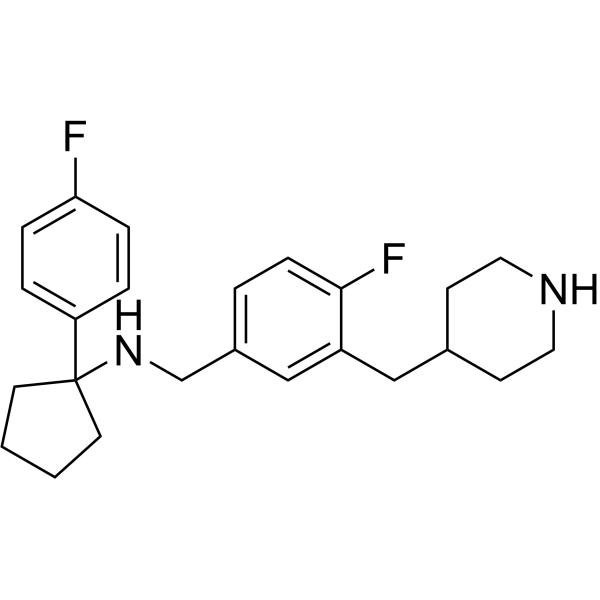 0 ImagesCat. No.: HY-163136CAS No.: 3037523-29-5
-
MAO-B-IN-26
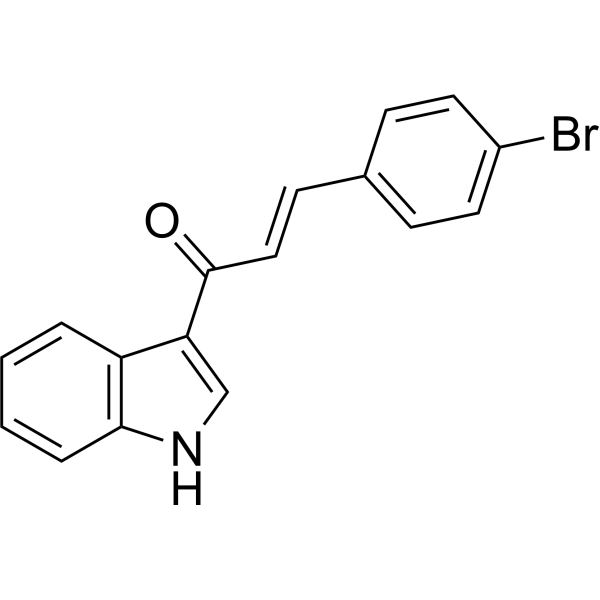 0 ImagesCat. No.: HY-156348CAS No.: 38470-71-2MAO-B-IN-26 (Compound IC9) is a MAO-B and acetylcholinesterase inhibitor. MAO-B-IN-26 protects SH?SY5Y cells against Aβ induced cytotoxicity, morphological changes, ROS generation and membrane damage. MAO-B-IN-26 also inhibits Aβ induced autophagy and apoptosis. MAO-B-IN-26 can be used as a neuroprotective agent against Alzheimer’s disease.

-
Atg4B-IN-3
 0 ImagesCat. No.: HY-184717Atg4B-IN-3 (compound a25) is a ATG4B inhibitor with a Kd value of 18.01 nM against the human target. Atg4B-IN-3 stably regulates the closed conformation of the loop, prevents substrates from accessing the catalytic site Cys74, and thereby inhibits the proteolytic activity of ATG4B. Atg4B-IN-3 blocks autophagic flux, reduces LC3-II levels, promotes p62 accumulation, disrupts autophagy homeostasis and enhances cell death. Atg4B-IN-3 inhibits cell proliferation, migration and clonogenic survival capacity. Atg4B-IN-3 can be used in studies related to esophageal squamous cell carcinoma.
-
ATG5 PPI-IN-6
 0 ImagesCat. No.: HY-183867CAS No.: 2841473-87-6
-
T1742
 0 ImagesCat. No.: HY-183807CAS No.: 2841473-81-0T1742 is an autophagy inhibitor targeting ATG5. T1742 blocks and disrupts protein-protein interactions between ATG5 and ATG16L1, and between ATG5 and TECAIR.T 1742 inhibits autophagy in living cells via reduced autophagosome formation and downregulated ATG8-PE conjugation. T1742 can be used to study autophagy mechanisms.
-
Lycorine hydrochloride (Standard)
 0 ImagesLycorine (hydrochloride) (Standard) is the analytical standard of Lycorine (hydrochloride). This product is intended for research and analytical applications. Lycorine hydrochloride is the main active ingredient of the herbal medicine derived from Lycoris radiata (L’Her.) Herb. and is also a melanoma vasculogenic inhibitor and has anti-tumor activity. Lycorine hydrochloride effectively inhibits mitotic proliferation of Hey1B cells (IC50 of 1.2 μM).
-
Autophagy-IN-11
 0 ImagesCat. No.: HY-183838CAS No.: 2841473-96-7Autophagy-IN-11 is an ATG5-targeting autophage inhibitor. Autophagy-IN-11 disrupts protein-protein interactions between ATG5 and ATG16L1, and between ATG5 and TECAIR. Autophagy-IN-11 can be used for cancer research.
-
Methylprednisolone-d4
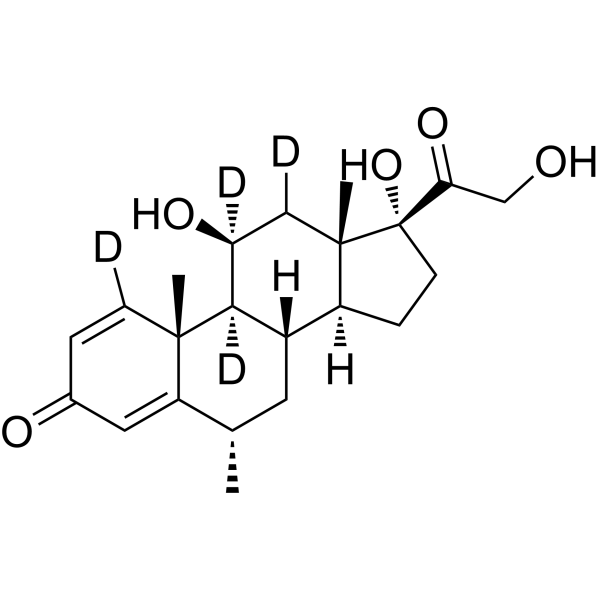 0 ImagesCat. No.: HY-B0260S2Synonyms: U 7532-d4Methylprednisolone-d4 is deuterium labeled Methylprednisolone. Methylprednisolone is a synthetic corticosteroid with anti-inflammatory and immunomodulating properties. Methylprednisolone improve severe or critical COVID-19 by activating ACE2 and reducing IL-6 levels.
-
STL427944
 0 ImagesCat. No.: HY-112509CAS No.: 292028-62-7STL427944 is a potent and selective FOXM1 inhibitor. STL427944 has the potential for the research of overcoming tumor chemoresistance.
-
Capivasertib-d4
 0 ImagesCat. No.: HY-15431SSynonyms: AZD5363-d4Capivasertib-d4 (AZd5363-d4) is the deuterium labeled Capivasertib (HY-15431). Capivasertib (AZD5363) is an orally active and potent pan-AKT kinase inhibitor with IC50 of 3, 7 and 7 nM for Akt1,Akt2 and Akt3, respectively.
-
ATG5/TECAIR-IN-1
 0 ImagesCat. No.: HY-183737CAS No.: 2841473-83-2ATG5/TECAIR-IN-1 is a ATG5-TECAIR interaction inhibitor with an IC50 of 20.79 μM. ATG5/TECAIR-IN-1 inhibits autophagy. TG5/TECAIR-IN-1 is applicable to research on modulating protein-protein interactions to intervene in autophagy-related diseases, such as infectious diseases and cancers.
-
Leonurine hydrochloride (Standard)
 0 ImagesSynonyms: SCM-198 hydrochloride (Standard)Leonurine (hydrochloride) (Standard) is the analytical standard of Leonurine (hydrochloride). This product is intended for research and analytical applications. Leonurine hydrochloride is an alkaloid isolated from Leonurus artemisia, with anti-oxidative and anti-inflammatory.
-
Pantoprazole sodium (Standard)
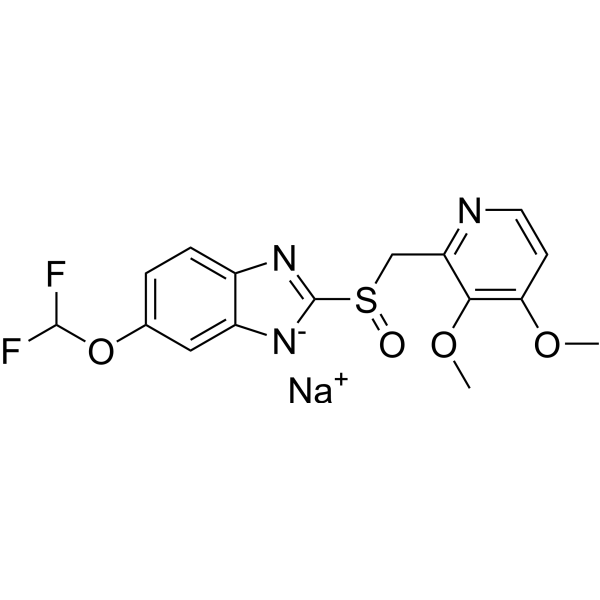 0 ImagesCat. No.: HY-17507ARCAS No.: 138786-67-1Synonyms: BY1023 sodium (Standard); SKF96022 sodium (Standard)Pantoprazole (sodium) (Standard) is the analytical standard of Pantoprazole (sodium). This product is intended for research and analytical applications. Pantoprazole sodium (BY10232 sodium) is an orally active and potent proton pump inhibitor (PPI). Pantoprazole sodium, a substituted benzimidazole, is a potent H+/K+-ATPase inhibitor with an IC50 of 6.8 μM. Pantoprazole sodium improves pH stability and has anti-secretory, anti-ulcer activities. Pantoprazole sodium significantly increased tumor growth delay combined with Doxorubicin (HY-15142).
-
Nortriptyline (Standard)
 0 ImagesSynonyms: Desmethylamitriptyline (Standard); Desitriptilina (Standard)Nortriptyline (Standard) is the analytical standard of Nortriptyline. This product is intended for research and analytical applications. Nortriptyline (Desmethylamitriptyline), the main active metabolite of Amitriptyline, is a tricyclic antidepressant. Nortriptyline is a potent autophagy inhibitor and has anticancer effects. N
-
ML-20
 0 ImagesCat. No.: HY-176481ML-20, Malabaricone C (HY-N8518) analogue, is a autophagy inhibitor and radiosensitizer. ML-20 inhibits cell growth, induces cell apoptosis . ML-20 induces DNA double-strand breaks, loss of mitochondrial membrane potential (MMP), and lysosomal membrane permeabilization (LMP). ML-20 induces endoplasmic reticulum stress and concurrent inhibition of autophagy flux due to LMP .
-
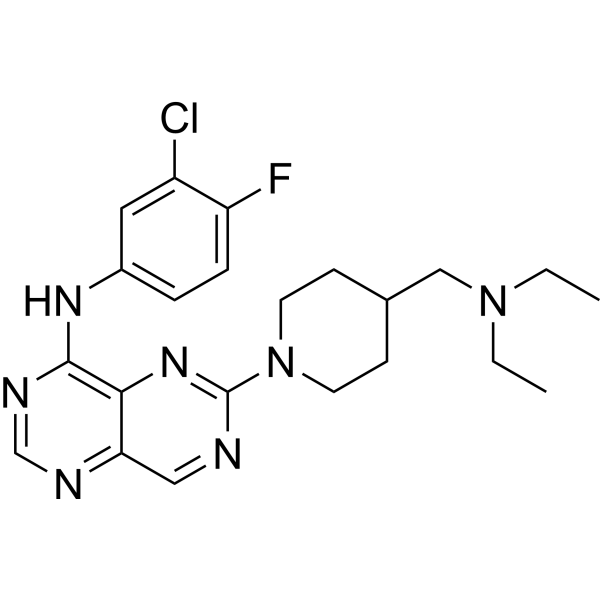
GN-604
 0 ImagesCat. No.: HY-183351GN-604 is a targeted drug conjugate (Targeted Drug Conjugate, TDC) formed by conjugation of GNS561 (HY-137978) with DN604, a Pt (II) complex. GN-604 selectively inhibits PPT1, induces lysosomal dysfunction, suppresses autophagy and triggers apoptosis. GN-604 promotes the targeted sequestration of Pt (II) inside cells, induces DNA damage and inhibits the proliferation of malignant cells. GN-604 is applicable to research related to triple-negative breast cancer.
-
Acesulfame potassium (Standard)
 0 ImagesAcesulfame potassium (Standard) is the analytical standard of Acesulfame potassium (HY-D0195). This product is intended for research and analytical applications. Acesulfame potassium is a synthetic sweetener. Long-term use of Acesulfame potassium can affect cognitive function, possibly by altering the neurometabolic functions in mice. Acesulfame potassium can suppress autophagic degradation of PD-L1 in RIL-175 and SK-Hep1 cells through the ERK1/2-mTORC1-ULK1 pathway, which may be related to immune evasion in cancer cells. Acesulfame potassium can be used in research on neurological diseases, metabolic disorders, cancer, and immune evasion.




