JNK3
c-Jun N-terminal kinase 3 (JNK3) is a stress-activated protein kinase predominantly expressed in neurons, pancreatic β-cells, and cardiac tissue[1][2]. Mechanistically, JNK3 modulates transcriptional programs by phosphorylating c-Jun and regulating downstream factors such as Forkhead BoxO3A (FoxO3A) and Insulin Receptor Substrate 2 (IRS2), thereby maintaining cell survival under stress conditions[3][2]. In neuronal models, JNK3 contributes to axonal injury signaling and apoptosis, with combined JNK2/3 deficiency markedly reducing retinal ganglion cell death, highlighting its role in neurodegenerative processes[4][5]. Compared with ubiquitously expressed JNK1 and JNK2, JNK3 demonstrates nuclear localization in β-cells and isoform-specific protective effects against cytokine-induced apoptosis[2][3]. In the hypothalamus, JNK3 influences energy homeostasis by counteracting JNK1-mediated feeding and weight gain, illustrating its unique physiological role among isoforms[6][7]. JNK3 activation is scaffold-dependent, particularly via arrestin-3, enabling specific phosphorylation by upstream MKK4/7 kinases and contributing to selective signal propagation[8]. Structurally selective inhibitors targeting JNK2/3 demonstrate that hydrophobic pocket residues, including L144 in JNK3, determine isoform-specific binding, providing tools for experimental modulation of neuroprotection and β-cell survival[9][10]. Overall, JNK3 serves as a critical mediator of stress responses, with distinct subcellular localization and signaling effects compared with JNK1/2, making it a valuable target for studying neurodegeneration and metabolic regulation.
References:
- [1]. Nogueiras R, et al. Brain JNK and metabolic disease. Diabetologia. 2021 Feb;64(2):265-274. [Content Brief]
- [2]. Abdelli S, et al. JNK3 is abundant in insulin-secreting cells and protects against cytokine-induced apoptosis. Diabetologia. 2009 Sep;52(9):1871-80. [Content Brief]
- [3]. Nakano R, et al. Biological Properties of JNK3 and Its Function in Neurons, Astrocytes, Pancreatic β-Cells and Cardiovascular Cells. Cells. 2020 Jul 29;9(8):1802. [Content Brief]
- [4]. Abdelli S, et al. JNK3 maintains expression of the insulin receptor substrate 2 (IRS2) in insulin-secreting cells: functional consequences for insulin signaling. PLoS One. 2012;7(5):e35997. [Content Brief]
- [5]. Zhan X, et al. Arrestin-dependent activation of JNK family kinases. Handb Exp Pharmacol. 2014;219:259-80. [Content Brief]
- [6]. Fernandes KA, et al. JNK2 and JNK3 are major regulators of axonal injury-induced retinal ganglion cell death. Neurobiol Dis. 2012 May;46(2):393-401. [Content Brief]
- [7]. Ries V, et al. JNK2 and JNK3 combined are essential for apoptosis in dopamine neurons of the substantia nigra, but are not required for axon degeneration. J Neurochem. 2008 Dec;107(6):1578-88. [Content Brief]
- [8]. Park H, et al. Structural basis and biological consequences for JNK2/3 isoform selective aminopyrazoles. Sci Rep. 2015 Jan 27;5:8047. [Content Brief]
- [9]. Solinas G, et al. JNK at the crossroad of obesity, insulin resistance, and cell stress response. Mol Metab. 2016 Dec 8;6(2):174-184. [Content Brief]
- [10]. Wydra VR, et al. A \"Ligand First\" Approach toward Selective, Covalent JNK2/3 Inhibitors. J Med Chem. 2025 Jun 12;68(11):12004-12028. [Content Brief]
All Product Categories
-
JNK3 Related Products (51)
Related Products (51)

-
SP600125
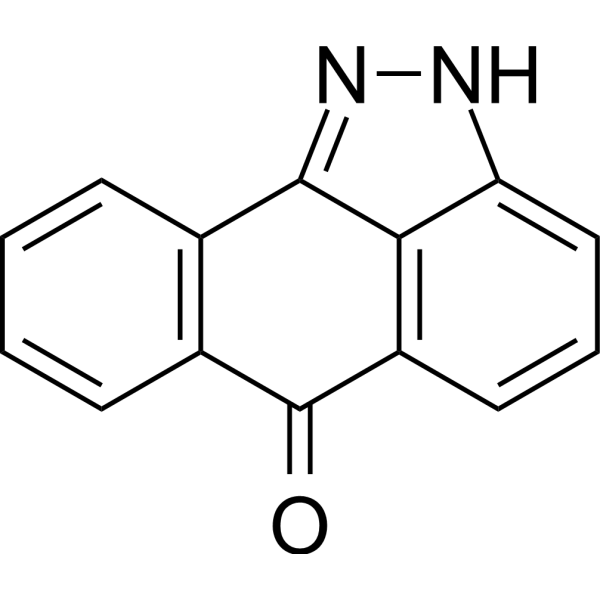 0 ImagesSP600125 is an orally active, reversible, and ATP-competitive JNK inhibitor with IC50s of 40, 40 and 90 nM for JNK1, JNK2 and JNK3, respectively. SP600125 is a potent ferroptosis inhibitor. SP600125 induces the transformation of bladder cancer cells from autophagy to apoptosis.
-
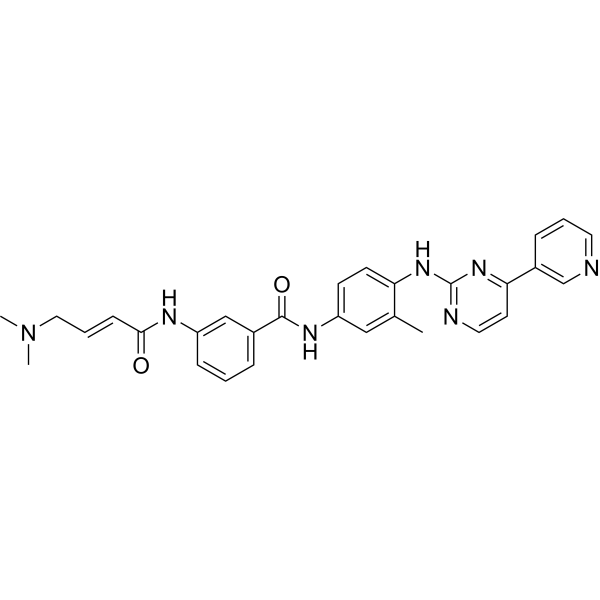
JNK Inhibitor VIII
 0 ImagesSynonyms: TCS JNK 6oJNK Inhibitor VIII (TCS JNK 6o) is a c-Jun N-terminal kinases (JNK-1, -2, and -3) inhibitor with Ki values of 2 nM, 4 nM, 52 nM, respectively, and has IC50 values of 45 nM and 160 nM for JNK-1 and -2, respectively.
-
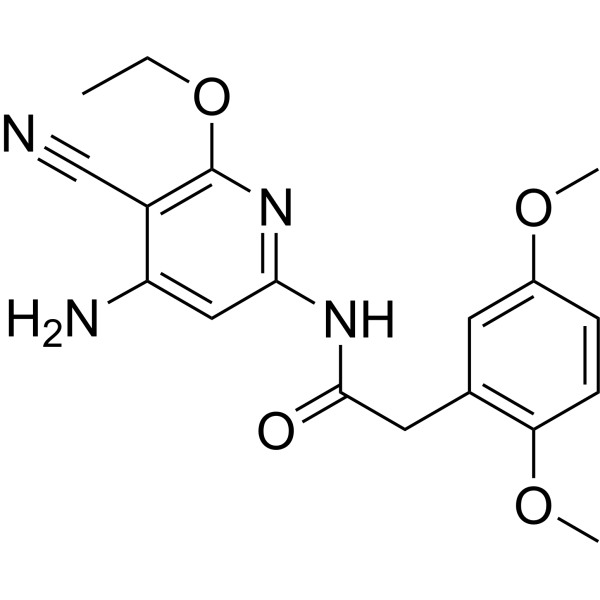
Tanzisertib
 0 ImagesSynonyms: CC-930Tanzisertib (CC-930) is a potent JNK1/2/3 inhibitor with IC50s of 61/7/6 nM, respectively.
-
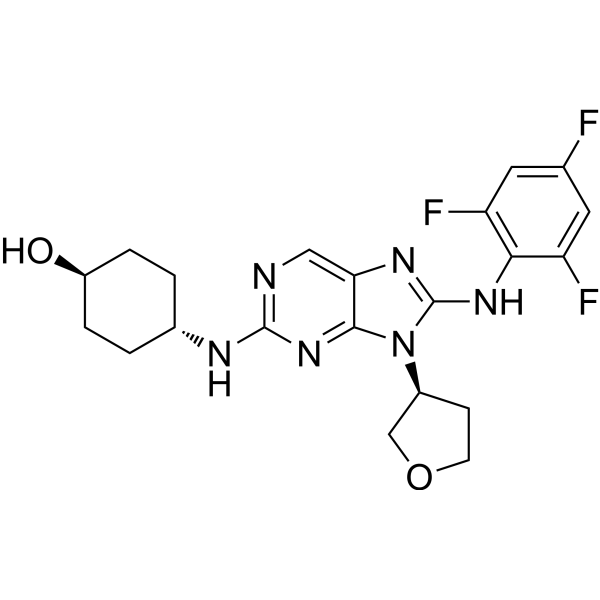
LRRK2/JNK3-IN-1
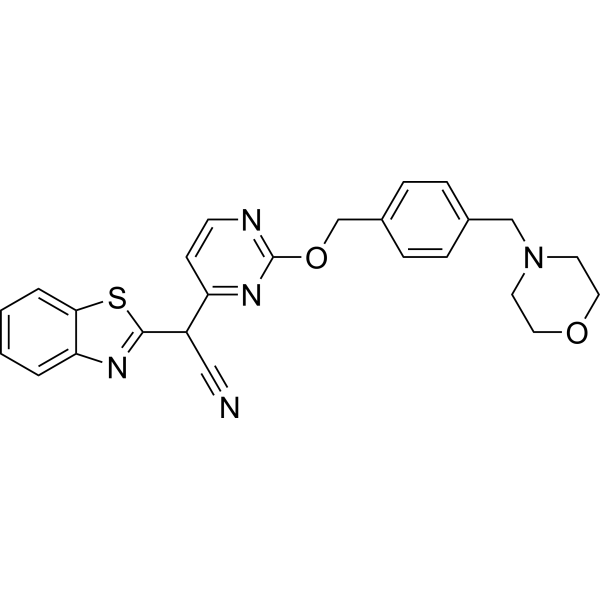
 0 ImagesCat. No.: HY-184652LRRK2/JNK3-IN-1 is a brain-penetrant multi-target inhibitor of LRRK2 (including G2019S mutant and wild-type) and JNK3, with enzymatic IC50 values of 3.90 nM against LRRK2G2019S, 3.24 nM against wild-type LRRK2, and 22.1 nM against JNK3. LRRK2/JNK3-IN-1 displays favorable selectivity in a 97-kinase profiling screen, and also shows inhibitory activity against JNK1, JNK2, and MKNK2. LRRK2/JNK3-IN-1 can be used for the research of Parkinson's disease.
-
Oxonantenine
 0 ImagesCat. No.: HY-N19654CAS No.: 15358-38-0Oxonantenine is an isoquinoline alkaloid isolated from the seeds of Nandina domestica that exhibits cytotoxicity against cancer cells. Oxonantenine binds to proteins associated with the MAPK and NF-κB signaling pathways, including JUN, MAPK1, p38, MAPK3, ERK, JNK3, and p65. Oxonantenine is one of the main components of Fangji Huangqi Tang. Oxonantenine can be used in studies related to non-small cell lung cancer and rheumatoid arthritis.
-
Iso-AS601245 TFA
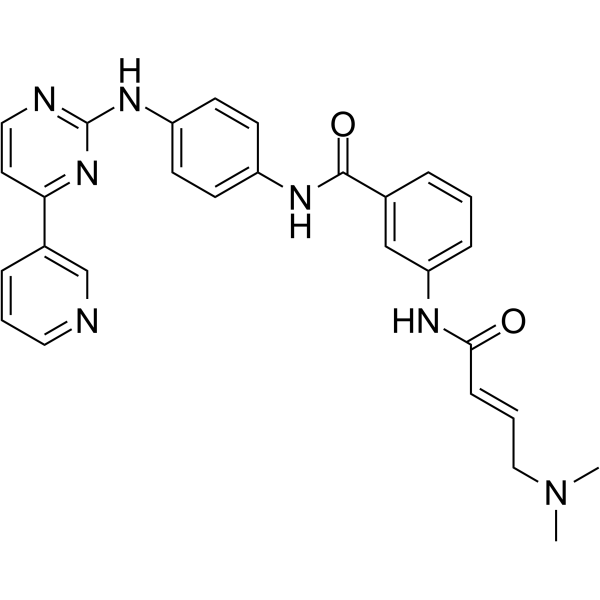
 0 ImagesCat. No.: HY-10612ACAS No.: 1644386-60-6Iso-AS601245 TFA is an orally active JNK inhibitor, with IC50 values of 0.15 μM, 0.22 μM and 0.07 μM against JNK1, JNK2 and JNK3, respectively. Iso-AS601245 TFA reduces plasma TNF-α levels in mice and inhibits IL-2 secretion in activated T cells. Iso-AS601245 TFA alleviates adjuvant-induced rheumatoid arthritis in mice. Iso-AS601245 TFA can be used in studies related to rheumatoid arthritis.
-
AS601245
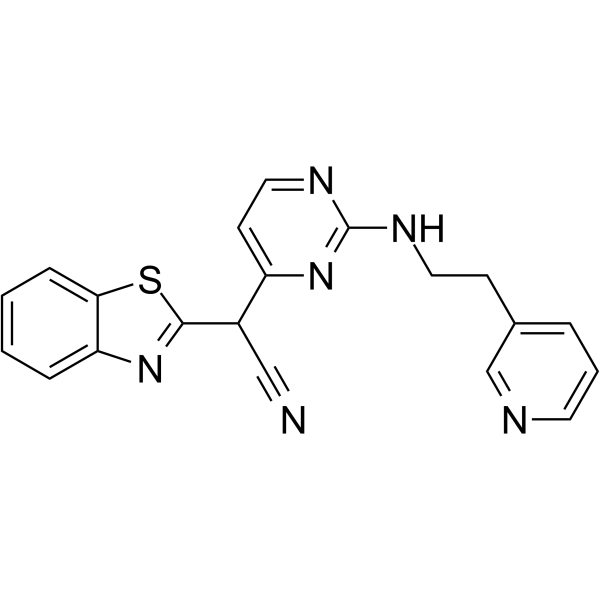 0 ImagesAS601245 is an orally active, selective, ATP competitive JNK (c-Jun NH2-terminal protein kinase) inhibitor with IC50s of 150, 220, and 70 nM for three JNK human isoforms (hJNK1, hJNK2, and hJNK3), respectively. AS601245 exhibits 10- to 20-fold selectivity over c-src, CDK2, and c-Raf and more than 50- to 100-fold selectivity over a range of Ser/Thr- and Tyr-protein kinases. Neuroprotective properties.
-
Geranial
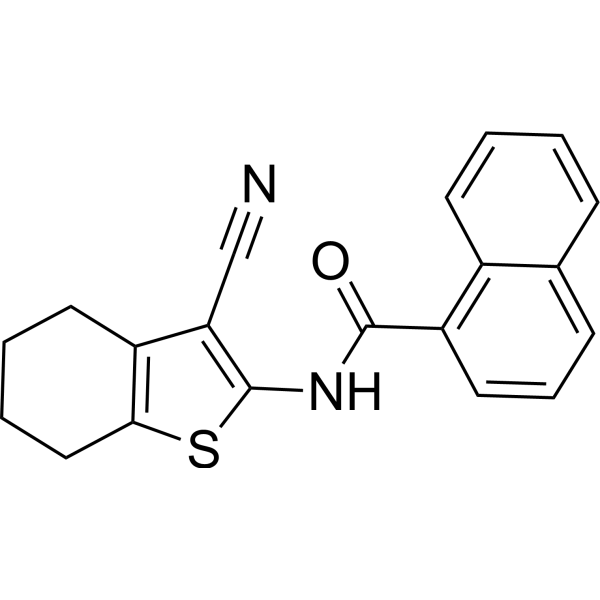
 0 ImagesSynonyms: (E)-3,7-Dimethylocta-2,6-dienalGeranial is an aromatic compound. It can be isolated from the fruits of Litsea cubeba Lour and the rhizomes of ginger (Zingiber officinale). Geranial inhibits LPS-induced phosphorylation of ERK1/2, JNK1/3 and IκB in macrophages. It suppresses the secretion of IL-1β, TNF-α and IL-6, as well as the expression of pro-IL-1β, iNOS and COX-2. Geranial increases ROS. It can be used in the research of inflammatory diseases.
-
Indirubin-3′-oxime
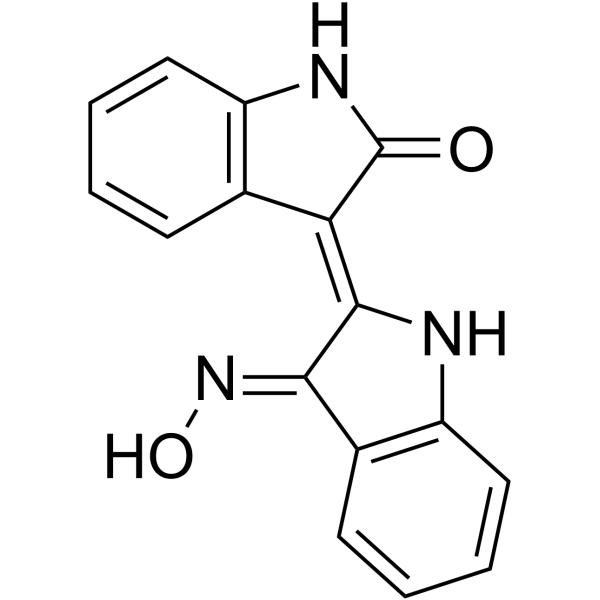 0 ImagesSynonyms: IDR3O; I3OIndirubin-3′-oxime (IDR3O), a synthetic derivative of indirubin, is a potent inhibitor of cyclin-dependent kinases (CDKs) and glycogen synthase kinase 3β (GSK3β). Indirubin-3′-oxime directly inhibits the activity of all three isoforms of JNK (JNK1, JNK2, and JNK3), with IC50s of 0.8 μM, 1.4 μM, and 1.0 μM, respectively. Indirubin-3′-oxime can enhance height growth via activation of Wnt/β-catenin signaling in chondrocytes.
-
PT109
 0 ImagesPT109 is an orally active, blood-brain barrier permeable multi-kinase inhibitor. By inhibiting PTBP1, PT109 promotes the switch of pyruvate kinase isoform from PKM2 to PKM1, thereby effectively inhibiting the proliferation and migration of glioblastoma multiforme and inducing its reprogramming into oligodendrocytes. PT109 also targets and regulates key signaling molecules such as JNK, SGK1, GSK3β to exert neuroprotective effects including promoting neurogenesis, inducing synapse formation and alleviating neuroinflammation. In Alzheimer's disease models, PT109 exhibits significant efficacy in improving spatial learning ability, along with excellent in vivo pharmacokinetic properties. PT109 can be used to investigate metabolic reprogramming of glioblastoma multiforme and neuroprotective mechanisms of Alzheimer's disease.
-
Quin-C7
 0 ImagesQuin-C7 is an orally active FPR2/ALX antagonist. Quin-C7 binds to the orthosteric ligand-binding pocket of FPR2/ALX, modulates receptor activation, and inhibits pro-inflammatory ERK signaling mediated by serum amyloid A (SAA). Quin-C7 reduces pro-inflammatory mediators TNF-α levels, increases anti-inflammatory IL-10, decreases inflammatory neutrophils and pro-inflammatory M1 macrophages, downregulates ERK1/2 phosphorylation, and upregulates JNK1/2/3 phosphorylation. Quin-C7 blocks FPR2/mFpr2 signaling, reduces brain lesion volume. Quin-C7 can be used for the research of inflammatory bowel disease and neuromyelitis optica spectrum disorder.
-
JNK3 inhibitor-4
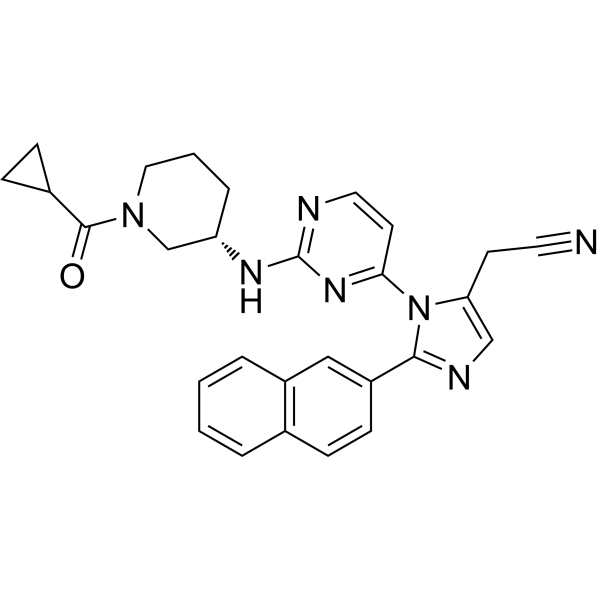 0 ImagesJNK3 inhibitor-4 is a potent and BBB-permeable inhibitor of JNK3 (IC50=1.0 nM) based on 2-aryl-1-pyrimidinyl-1H-imidazole-5-yl acetonitrile. JNK3 inhibitor-4 shows excellent selectivity over other protein kinases including isoforms JNK1 (IC50=143.9 nM) and JNK2 (IC50=298.2 nM). JNK3 inhibitor-4 has neuroprotective effect and predicated blood-brain barrier permeability.