



SGK1
SGK1 is a serum- and glucocorticoid-regulated AGC serine/threonine kinase that regulates membrane sodium channel expression and hormonal control of renal Na+ retention[1][2]. Mechanistically, SGK1 acts downstream of PI3K, PDK1, and mTORC2, while also functioning as an AKT-parallel PI3K effector with distinct SGK1-dependent pathways[3][4]. In immune models, mTORC2-activated SGK1 promotes TH2 differentiation through NEDD4-2-JunB regulation and represses IFN-γ through TCF-1, linking SGK1 signaling to asthma, viral infection, and tumor rejection models[1]. In cancer models, SGK1 sustains AKT-independent mTORC1 activation through TSC2 phosphorylation and supports PI3K-driven tumor development, proliferation, and survival[5][4]. Compared with related isoforms, SGK family kinases share PI3K regulation, but SGK3 contains a PX domain, whereas SGK1 lacks this lipid-binding module[6]. For experimental applications, SGK1 inhibition with GSK650394 reduced mantle cell lymphoma proliferation, invasion, migration, and xenograft growth, supporting SGK1 inhibitors as tools for pathway and disease-model studies[7].
References:
- [1]. Heikamp EB, et al. The AGC kinase SGK1 regulates TH1 and TH2 differentiation downstream of the mTORC2 complex. Nat Immunol. 2014 May;15(5):457-64. [Content Brief]
- [2]. Mansley MK, et al. Dexamethasone and insulin activate serum and glucocorticoid-inducible kinase 1 (SGK1) via different molecular mechanisms in cortical collecting duct cells. Physiol Rep. 2016 May;4(10):e12792. [Content Brief]
- [3]. Di Cristofano A. SGK1: The Dark Side of PI3K Signaling. Curr Top Dev Biol. 2017;123:49-71. doi: 10.1016/bs.ctdb.2016.11.006. Epub 2016 Dec 15. PMID: 28236975; PMCID: PMC5658788. et al. SGK1: The Dark Side of PI3K Signaling. Curr Top Dev Biol. 2017;123:49-71. [Content Brief]
- [4]. Castel P, et al. PDK1-SGK1 Signaling Sustains AKT-Independent mTORC1 Activation and Confers Resistance to PI3Kα Inhibition. Cancer Cell. 2016 Aug 8;30(2):229-242. [Content Brief]
- [5]. Orlacchio A, et al. SGK1 Is a Critical Component of an AKT-Independent Pathway Essential for PI3K-Mediated Tumor Development and Maintenance. Cancer Res. 2017 Dec 15;77(24):6914-6926. [Content Brief]
- [6]. Tessier M, et al. Serum and glucocorticoid-regulated protein kinases: variations on a theme. J Cell Biochem. 2006 Aug 15;98(6):1391-407. [Content Brief]
- [7]. Li J, et al. The Serum- and Glucocorticoid-Inducible Kinase 1 (SGK1) as a Novel Therapeutic Target in Mantle Cell Lymphoma. Cancer Control. 2022 Jan-Dec;29:10732748221143881. [Content Brief]
All Product Categories
-
SGK1 Related Products (15)
Related Products (15)

- 1
-
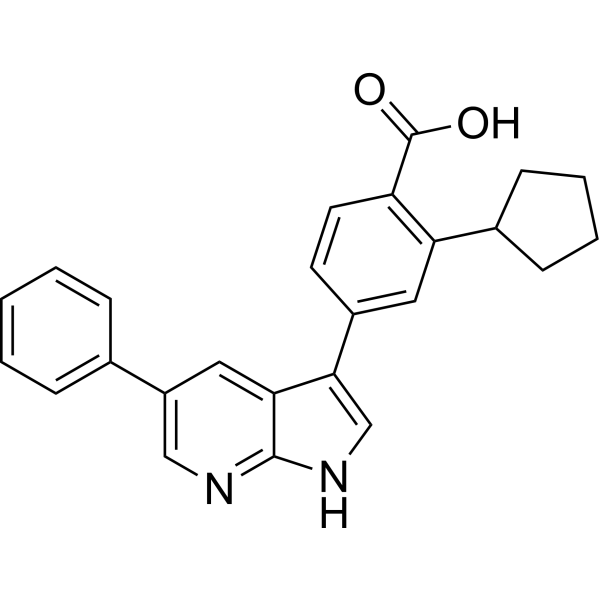
EMD638683
 0 ImagesEMD638683 is an orally active SGK1 inhibitor with an IC50 of 3 μM. EMD638683 exhibits strong inhibition against SGK1, moderate inhibition against SGK2 and SGK3, and shows excellent selectivity for other AGC kinase family members. EMD638683 has antihypertensive activity by inhibiting SGK1, and independently of the blood pressure-lowering effect, it effectively prevents heart inflammation and fibrosis caused by hypertension by inhibiting the cardiac NLRP3 inflammation body/ IL-1β axis. EMD638683 promotes apoptosis of colon cancer cells and sensitizes radiotherapy. EMD638683 (S-Form) can be used in research related to hypertension, hypertensive heart damage, and colon cancer.
-
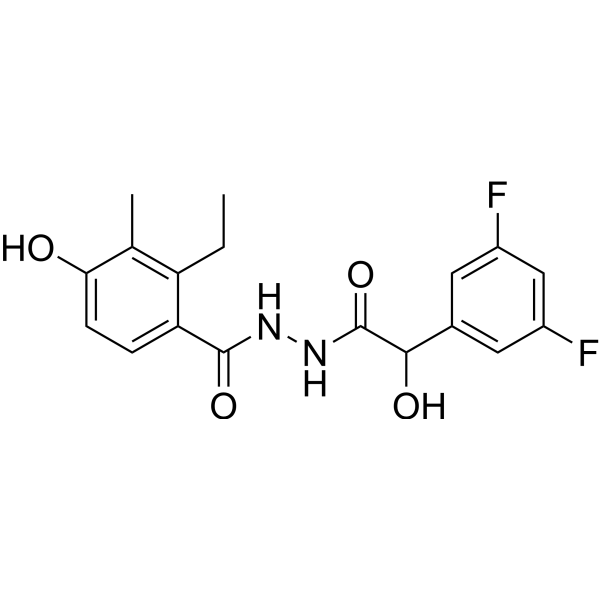
SGK1-IN-1
 0 ImagesSGK1-IN-1 is a highly active and selective inhibitor of SGK-1, with an IC50 of 1 nM.
-
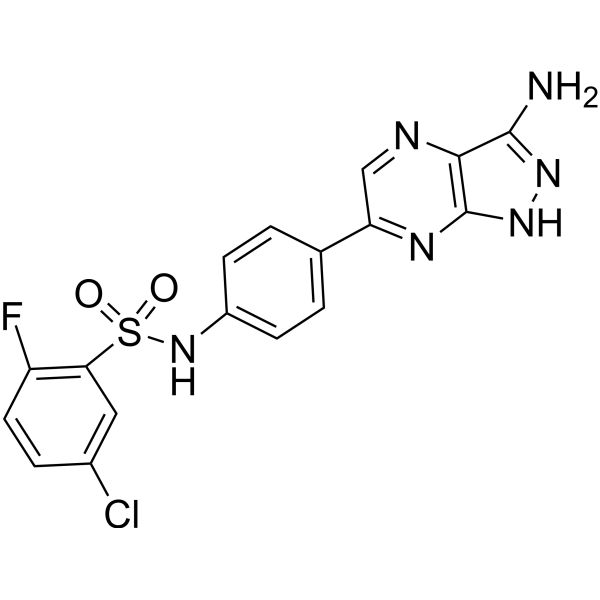
PT109
 0 ImagesPT109 is an orally active, blood-brain barrier permeable multi-kinase inhibitor. By inhibiting PTBP1, PT109 promotes the switch of pyruvate kinase isoform from PKM2 to PKM1, thereby effectively inhibiting the proliferation and migration of glioblastoma multiforme and inducing its reprogramming into oligodendrocytes. PT109 also targets and regulates key signaling molecules such as JNK, SGK1, GSK3β to exert neuroprotective effects including promoting neurogenesis, inducing synapse formation and alleviating neuroinflammation. In Alzheimer's disease models, PT109 exhibits significant efficacy in improving spatial learning ability, along with excellent in vivo pharmacokinetic properties. PT109 can be used to investigate metabolic reprogramming of glioblastoma multiforme and neuroprotective mechanisms of Alzheimer's disease.
-
SGK1-IN-2
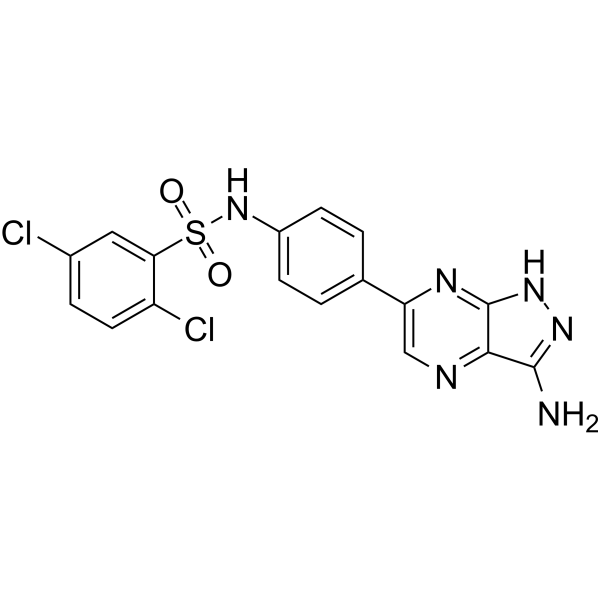 0 ImagesSGK1-IN-2 (Compound 14h) is a selective, ATP-competitive SGK1 inhibitor, with an IC50 of 0.005 μM at 10 μM ATP and an IC50 of 0.025 μM at 500 μM ATP. SGK1-IN-2 can be used in studies of cancer, hypertension and diabetes.
-
SGK1-IN-9
 0 ImagesCat. No.: HY-185412CAS No.: 2803840-82-4
-
308-R
 0 ImagesCat. No.: HY-151009CAS No.: 2376724-98-8308-R is a SGK3/SGK1/S6K1 inhibitor. 308-R exhibits an IC50 of 5 nM against human SGK3, an IC50 of 10 nM against human SGK1, and an IC50 of 1 nM against human S6K1. 308-R can be used in breast cancer research. It is also applicable to studies related to PROTAC synthesis, such as serving as the target protein ligand for PROTAC SGK3 degrader-2 (HY-176823).
-
SGK1-IN-10
 0 ImagesCat. No.: HY-184333SGK1-IN-10 is an ATP-competitive SGK1 inhibitor with an IC50 of 2.53 μM against human SGK1, and it exhibits blood-brain barrier permeability. SGK1-IN-10 downregulates the phosphorylation levels of MDM2 and GSK-3β, induces apoptosis and inhibits cell migration. SGK1-IN-10 can be used in the research of prostate cancer.
-
SGK1-IN-3 hydrochloride
 0 ImagesCat. No.: HY-142686APurity: 98.99%SGK1-IN-3 hydrochloride (Compound 3a) is an ATP-competitive SGK1 inhibitor with an IC50 of <1 nM against hSGK1. SGK1-IN-3 hydrochloride blocks the activity of CDK family members. SGK1-IN-3 hydrochloride serves as a P-glycoprotein substrate. SGK1-IN-3 can be used for the research of osteoarthritis.
-
EMD638683 (S-Form)
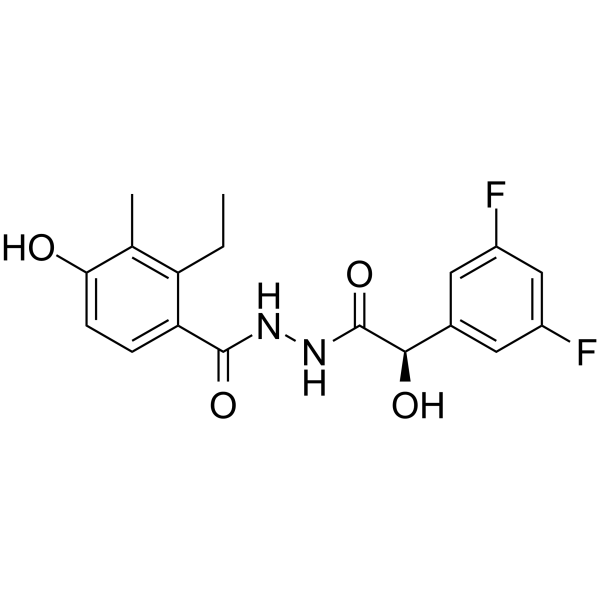
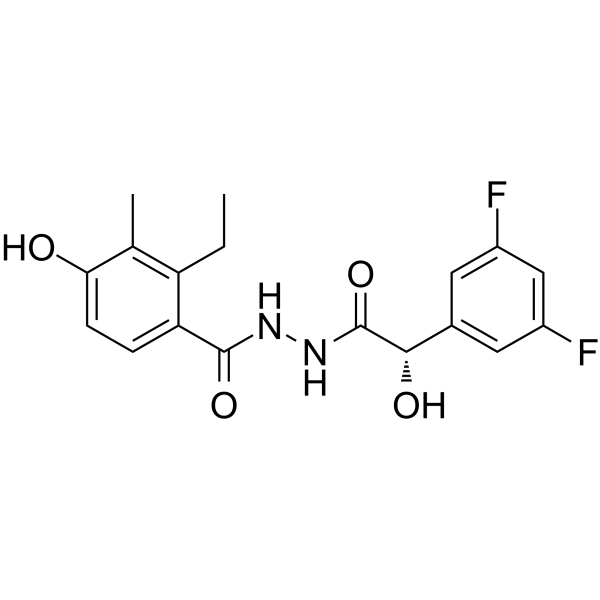 0 ImagesEMD638683 (S-Form) (Compound 1a), the S-enantiomer of EMD638683 (HY-15193), is a SGK1 inhibitor with an IC50 value > 300 nM. EMD638683 is an orally active SGK1 inhibitor with an IC50 of 3 μM. EMD638683 exhibits strong inhibition against SGK1, moderate inhibition against SGK2 and SGK3, and shows excellent selectivity for other AGC kinase family members. EMD638683 has antihypertensive activity by inhibiting SGK1, and independently of the blood pressure-lowering effect, it effectively prevents heart inflammation and fibrosis caused by hypertension by inhibiting the cardiac NLRP3 inflammation body/ IL-1β axis. EMD638683 promotes apoptosis of colon cancer cells and sensitizes radiotherapy. EMD638683 (S-Form) can be used in research related to hypertension, hypertensive heart damage, and colon cancer.
-
SGK1-IN-3
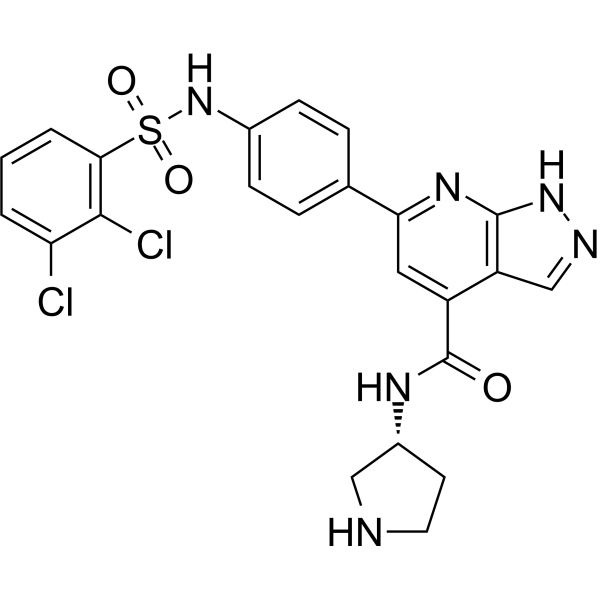 0 ImagesCat. No.: HY-142686CAS No.: 2891696-18-5SGK1-IN-3 (Compound 3a) is an ATP-competitive SGK1 inhibitor with an IC50 of <1 nM against hSGK1. SGK1-IN-3 blocks the activity of CDK family members. SGK1-IN-3 is a P-glycoprotein substrate. SGK1-IN-3 can be used for research on osteoarthritis.
-
SGK1-IN-5
 0 ImagesSGK1-IN-5 is a SGK1 inhibitor with an IC50 of 0.003 μM. SGK1-IN-5 can be used for the research of osteoarthritis, rheumatism.
-
SGK1-IN-6
 0 ImagesCat. No.: HY-170933CAS No.: 3046378-98-4SGK1-IN-6 is a selective SGK1 inhibitor with an IC50 of 0.39 μM, showing selectivity over SGK2/3. SGK1-IN-6 inhibits cancer cell migration and invasion, improves SGK1 protein thermal stability. SGK1-IN-6 decreases SGK1 protein levels in tumor tissues, suppresses tumor growth in mouse xenograft models. SGK1-IN-6 can be used for the research of prostate cancer.
-
PROTAC SGK3 degrader-2
 0 ImagesCat. No.: HY-176823CAS No.: 2381196-78-5PROTAC SGK3 degrader-2 is the cis epimer of PROTAC SGK3 degrader-1 (SGK3-PROTAC1) (HY-125878). PROTAC SGK3 degrader-2 exhibits inhibitory activity against SGK3, SGK1 and S6K1, with IC50 values of 0.6 μM, 1.4 μM and 1.7 μM, respectively, but fails to degrade SGK3. PROTAC SGK3 degrader-2 can serve as a control compound to investigate the specific effects of SGK3 degradation mediated by SGK3-PROTAC1.
- 1



