



Autophagy
Autophagy is a conserved cellular degradation and recycling process in the lysosome. In mammalian cells, there are three primary types of autophagy: microautophagy, macroautophagy, and chaperone-mediated autophagy (CMA). Microphagy captures cargoes by means of invaginations or protrusions of the lysosomal membrane directly, CMA uses chaperones to identify cargo proteins and then unfolds and transfers them into the lysosomal, while macroautophagy sequesters cargo by autophagosomes-de novo synthesized of double-membrane vesicles-and subsequently transport it to the lysosome.
Macroautophagy is the best studied and it occurs at a low level constitutively and can also be further induced under stress conditions, such as nutrient or energy starvation with a salient feature of autophagy protein degradation. Stress-induced macrophagy plays an important role in protein catabolism with another key protein degradation pathway, the ubiquitin–proteasome system (UPS).
As the study progressed, autophagy gains its importance under basal, nutrient-rich conditions, and is now recognized as a critical housekeeping pathway in catabolism of diverse cellular constituents, such as protein aggregates (aggrephagy), lipid droplets (lipophagy), iron complex (Ferritinophagy) and carbohydrate. Except for macromolecules, autophagy can also target several organelles and structures, such as mitochondria (mitophagy), peroxisome (pexophagy), endoplasmic reticulum (reticulophagy or ER-phagy), ribosome (ribophagy), spermatozoon-inherited organelles following fertilization (allophagy), secretory granules within pancreatic cells (zymophagy) and intracellular pathogens (xenophagy).
Autophagy and its dysfunction are associated with a variety of human pathologies, including ageing, cancer, neurodegenerative disease, heart disease and metabolic diseases, such as diabetes. Plenty of drugs and natural products are involved in autophagy modulation through multiple signaling pathways. Small molecules that can regulate autophagy seem to have great potential to intervene such diseases in animal models or clinical courses.
All Product Categories
-
Autophagy Inhibitors
(468)
View all products
-
Autophagy Agonists
(6)
View all products
-
Autophagy Activators
(125)
View all products
-
Autophagy Modulators
(59)
View all products
-
Autophagy Chemicals
(2)
View all products
-
Autophagy Inducers
(2173)
View all products
-
Autophagy Controls
(5)
View all products
-
Autophagy Ligand
(1)
View all products
-
Autophagy Related Products (3368)
Related Products (3368)

-
Antibodies (31)
-
Autophagy Signaling Pathway
-
Dantrolene (Standard)
 0 ImagesDantrolene (Standard) is the analytical standard of Dantrolene. This product is intended for research and analytical applications. Dantrolene is an orally active, non-competitive glutathione reductase inhibitor with a Ki of 111.6 μM and an IC50 of 52.3 μM. Dantrolene is a ryanodine receptor (RyR) antagonist and Ca2+ signaling stabilizer. Dantrolene is a direct-acting skeletal muscle relaxant. Dantrolene can be used for the research of muscle spasticity, malignant hyperthermia, Huntington's disease and other neuroleptic malignant syndrome.
-
Triptonide (Standard)
 0 ImagesCat. No.: HY-32736RCAS No.: 38647-11-9Synonyms: NSC 165677 (Standard); PG 492 (Standard)Triptonide (Standard) is the analytical standard of Triptonide. This product is intended for research and analytical applications. Triptonide (NSC 165677) is a natural product identified in Tripterygium wilfordii Hook F.. Triptonide is a Wnt signaling inhibitor with an IC50 of appropriately 0.3 nM. Triptonide has immunosuppression, anti-inflammatory, anti-fertility, neuroprotective and anti-lymphoma effects.
-
Atg4B activator-1
 0 ImagesCat. No.: HY-181936CAS No.: 3126601-01-9Atg4B activator-1 (Compound 16a) is an allosteric, selective, and orally active ATG4B activator with a Kd of 0.2199 μM. Atg4B activator-1 binds to the allosteric pocket of ATG4B and induces conformational changes. Atg4B activator-1 induces Autophagy. Atg4B activator-1 inhibits the proliferation and migration of triple-negative breast cancer cells. Atg4B activator-1 can be used in studies related to triple-negative breast cancer.
-
Thalidomide-4-O-C5-NH2
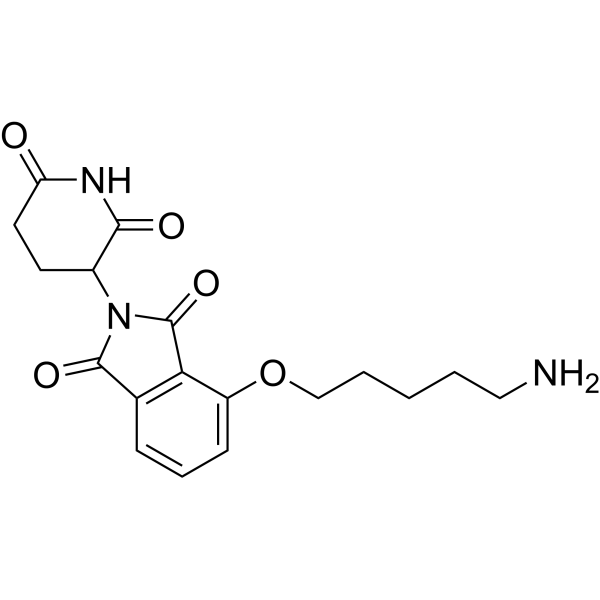 0 ImagesCat. No.: HY-138848CAS No.: 2307477-23-0Thalidomide-4-O-C5-NH2 is a synthesized E3 ligase ligand-linker conjugate that incorporates the Thalidomide based cereblon ligand and a linker used in PROTAC technology.
-
Cucurbitacin E (Standard)
 0 ImagesCat. No.: HY-N0417RCAS No.: 18444-66-1Synonyms: α-Elaterin (Standard); α-Elaterine (Standard)Cucurbitacin E (Standard) is the analytical standard of Cucurbitacin E. This product is intended for research and analytical applications. Cucurbitacin E is a natural compound which from Cucurbitaceae plants. Cucurbitacin E significantly suppresses the activity of the cyclin B1/CDC2 complex.
-
Thalidomide-benzo
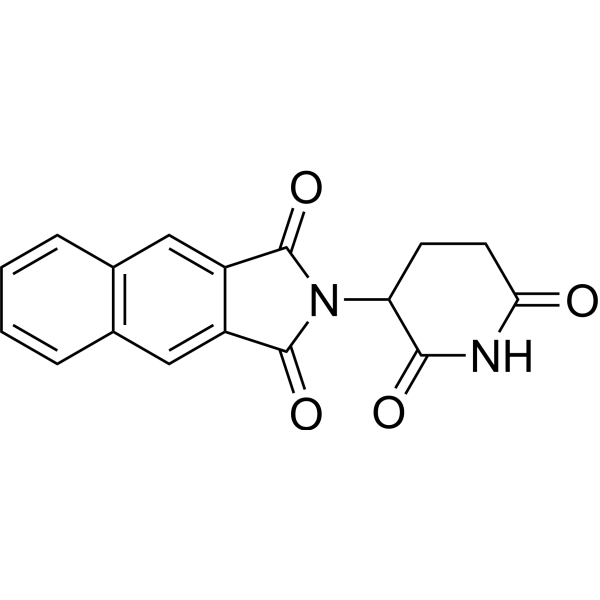 0 ImagesCat. No.: HY-139549CAS No.: 458151-34-3Thalidomide-benzo hydrochloride is the Thalidomide-based cereblon ligand used in the recruitment of CRBN protein. Thalidomide-benzo can be connected to the ligand for protein by a linker to form PROTACs.

-
Fenofibrate (GMP)
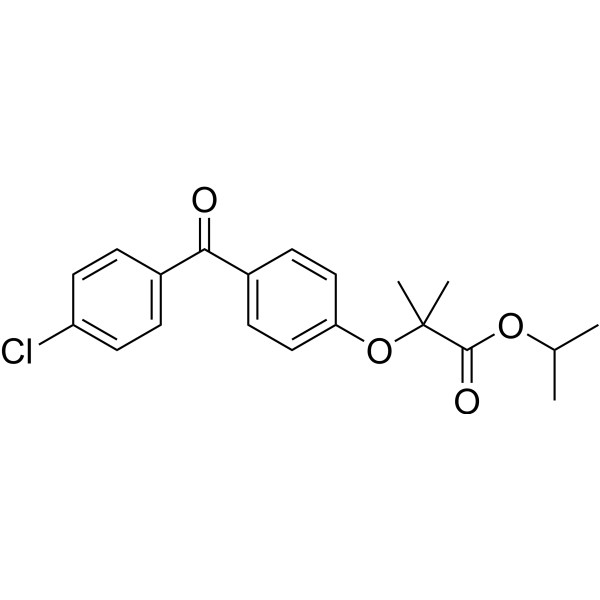 0 ImagesCat. No.: HY-17356GCAS No.: 49562-28-9Fenofibrate (GMP) is Fenofibrate (HY-17356) produced by using GMP guidelines. GMP small molecules work appropriately as an auxiliary reagent for cell therapy manufacture. Fenofibrate is a selective PPARα agonist with an EC50 of 30 μM. Fenofibrate also inhibits human cytochrome P450 isoforms, with IC50s of 0.2, 0.7, 9.7, 4.8 and 142.1 μM for CYP2C19, CYP2B6, CYP2C9, CYP2C8, and CYP3A4, respectively.
-
Nifedipine-d4
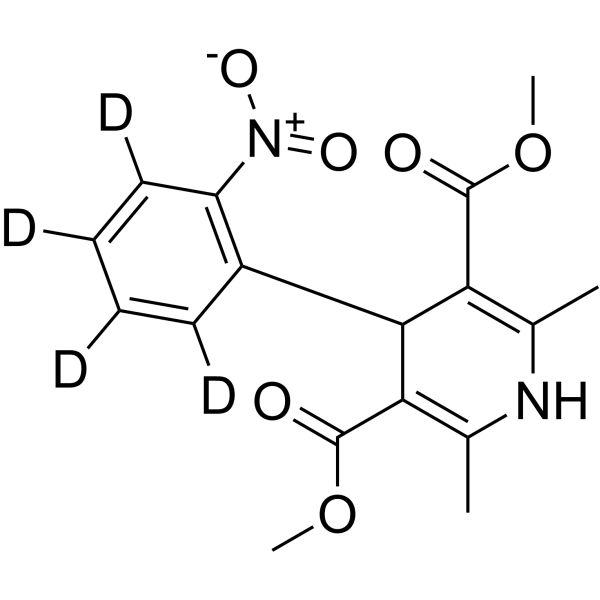 0 ImagesCat. No.: HY-B0284S1CAS No.: 1219798-99-8Synonyms: BAY-a-1040-d4Nifedipine-d4 is the deuterium labeled Nifedipine. Nifedipine (BAY-a-1040) is a potent calcium channel blocker and agent of choice for cardiac insufficiencies.
-
Lamotrigine-13C2,15N
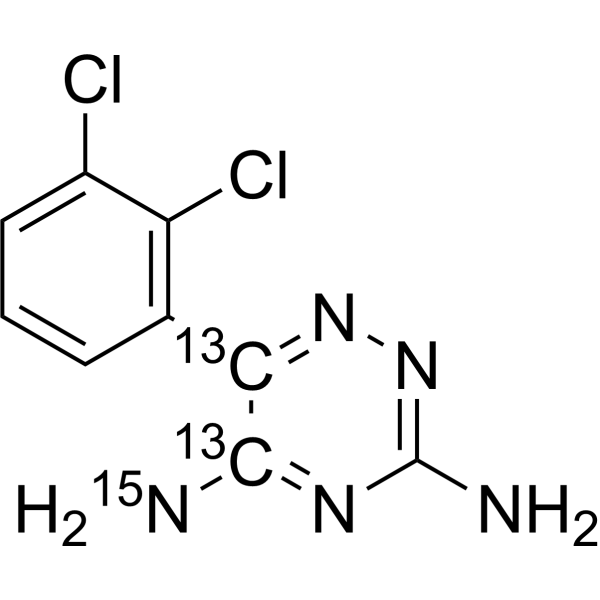 0 ImagesCat. No.: HY-B0495S3CAS No.: 2483830-10-8Lamotrigine-13C2,15N is the 13C and 15N labeled Lamotrigine. Lamotrigine (BW430C) is a potent and orally active anticonvulsant or antiepileptic agent. Lamotrigine selectively blocks voltage-gated Na+ channels, stabilizing presynaptic neuronal membranes and inhibiting glutamate release. Lamotrigine can be used for the research of epilepsy, focal seizure, et al.
-
Rhoifolin (Standard)
 0 ImagesRhoifolin (Standard) is the analytical standard of Rhoifolin. This product is intended for research and analytical applications. Rhoifolin is a flavone glycoside can be isolated from Rhus succedanea. Rhoifolin has anti-diabetic effect acting through enhanced adiponectin secretion, tyrosine phosphorylation of insulin receptor-β and glucose transporter 4 (GLUT 4) translocation. Rhoifolin has an anti-inflammatory action via multi-level regulation of inflammatory mediators. Rhoifolin ameliorates titanium particle-stimulated osteolysis and attenuates osteoclastogenesis via RANKL-induced NF-κB and MAPK pathways. Rhoifolin also has cytotoxic activity against different cancer cell lines.
-
Zoledronic acid monohydrate (Standard)
 0 ImagesCat. No.: HY-13777ARCAS No.: 165800-06-6Synonyms: Zoledronate monohydrate (Standard); CGP 42446 monohydrate (Standard); CGP42446A monohydrate (Standard); ZOL 446 monohydrate (Standard)Zoledronic acid (monohydrate) (Standard) is the analytical standard of Zoledronic acid (monohydrate). This product is intended for research and analytical applications. Zoledronic acid monohydrate (Zoledronate monohydrate) is a third-generation bisphosphonate (BP), with potent anti-resorptive activity. Zoledronic acid monohydrate inhibits the differentiation and apoptosis of osteoclasts. Zoledronic acid monohydrate also has anti-cancer effects.
-
Thalidomide-2,6-diazaspiro[3.4]octane-C-piperidine-C2-O-C2-OH
![Thalidomide-2,6-diazaspiro[3.4]octane-C-piperidine-C2-O-C2-OH](https://file.medchemexpress.com/product_pic/hy-161197.gif "Click to View Thalidomide-2,6-diazaspiro[3.4]octane-C-piperidine-C2-O-C2-OH Product Detail") 0 ImagesCat. No.: HY-161197Thalidomide-2,6-diazaspiro[3.4]octane-C-piperidine-C2-O-C2-OH is a conjugate of E3 ligase ligand and linker, consisting of Thalidomide (HY-14658) and the corresponding Linker. Thalidomide-2,6-diazaspiro[3.4]octane-C-piperidine-C2-O-C2-OH can serve as a Cereblon ligand to recruit CRBN protein and serve as a key intermediate for the synthesis of complete PROTAC molecules.
0 ImagesCat. No.: HY-161197Thalidomide-2,6-diazaspiro[3.4]octane-C-piperidine-C2-O-C2-OH is a conjugate of E3 ligase ligand and linker, consisting of Thalidomide (HY-14658) and the corresponding Linker. Thalidomide-2,6-diazaspiro[3.4]octane-C-piperidine-C2-O-C2-OH can serve as a Cereblon ligand to recruit CRBN protein and serve as a key intermediate for the synthesis of complete PROTAC molecules.
-
Autophagy-IN-3
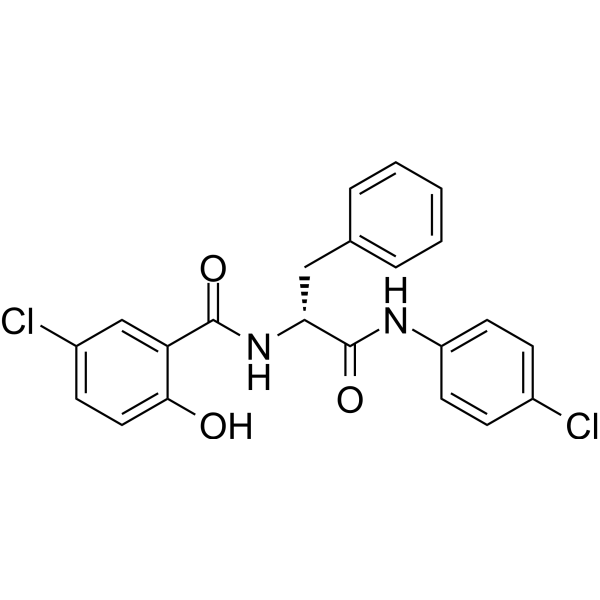 0 ImagesCat. No.: HY-116071CAS No.: 1227476-98-3Autophagy-IN-3 (Compound 6k) is an autophagy inhibitor. Autophagy-IN-3 promotes metabolic stress in the tumor microenvironment and enhances the effects of cytostatics in combined treatments.
-
Nicardipine-d4 hydrochloride
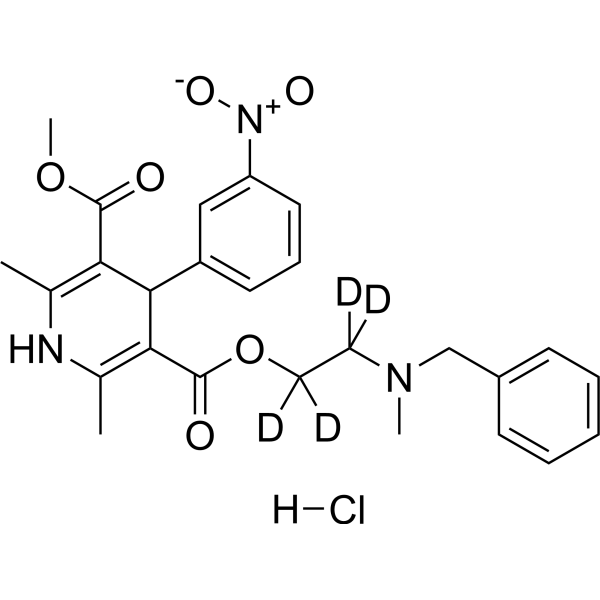 0 ImagesCat. No.: HY-12515AS2Synonyms: YC-93-d4Nicardipine-d4 hydrochloride is deuterated labeled Nicardipine hydrochloride (HY-12515A). Nicardipine hydrochloride (YC-93) is a calcium channel blocker with an IC50 of 1 μM for blocking cardiac calcium channels. Nicardipine hydrochloride acts as an agent for chronic stable angina and for controlling blood pressure.
-
Ambroxol acefylline
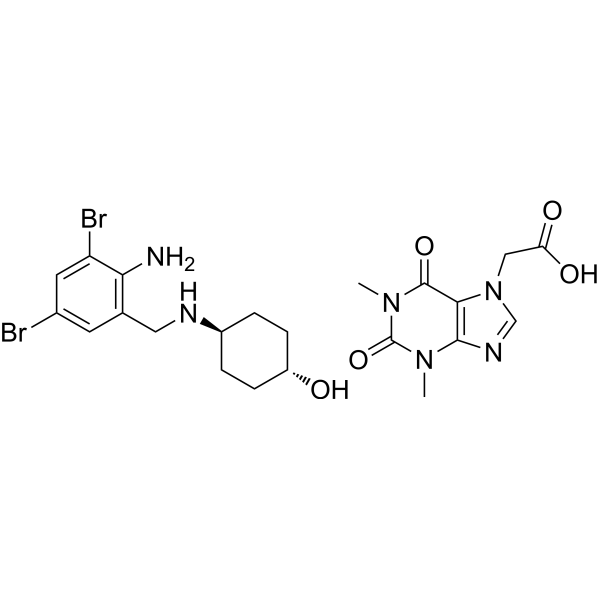 0 ImagesCat. No.: HY-B1039CCAS No.: 96989-76-3Synonyms: NA-872 acefylline; AcebrophyllineAmbroxol (NA-872) acefylline, an active metabolite of the proagent Bromhexine, has potent expectorant effects. Ambroxol acefylline is a glucocerebrosidase (GCase) chaperone and increases glucocerebrosidase activity. Ambroxol acefylline induces lung autophagy and has the potential for Parkinson disease and neuronopathic Gaucher disease research.
-
NP7r
 0 ImagesCat. No.: HY-184558CAS No.: 2641092-28-4NP7r is an antioxidant and neuroprotective agent. NP7r regulates oxidative stress, upregulates downstream antioxidant genes, reduces mitochondrial ROS, initiates Autophagy and clears α-synuclein aggregates. NP7r alleviates dopaminergic neuron degeneration, restores fat content, reduces lipid peroxidation, and improves motor impairment and abnormal food perception. NP7r is applicable to the research of Parkinson's disease.
-
10-Hydroxydecanoic acid (Standard)
 0 ImagesSynonyms: NSC 15139 (Standard); 10-HDAA (Standard)10-Hydroxydecanoic acid (Standard) is the analytical standard of 10-Hydroxydecanoic acid. This product is intended for research and analytical applications. 10-Hydroxydecanoic acid (10-HDAA) is a saturated fatty acid derived from 10-hydroxy-trans-2-decenoic acid, which can be isolated from royal jelly. 10-Hydroxydecanoic acid exhibits various biological activities, including anti-inflammatory, insecticidal, anti-malarial, and anti-Leishmania properties, as well as enhancing antigen-specific immune responses. The anti-inflammatory effects of 10-Hydroxydecanoic acid are primarily mediated by inhibiting the activation of NF-κB and the translation of interferon regulatory factor 1 (IRF-1), which reduces the production of interleukin 6 (IL-6) and nitric oxide (NO) in inflammatory cells. Additionally, 10-Hydroxydecanoic acid alleviates neuroinflammatory responses through the p53-autophagy pathway and the p53-NLRP3 pathway. Finally, 10-Hydroxydecanoic acid enhances antigen-specific immune responses by promoting the effective uptake of antigens by microfold cells[1][2][3][4][5].
-
Thalidomide-NH-amido-C3-NH2 hydrochloride
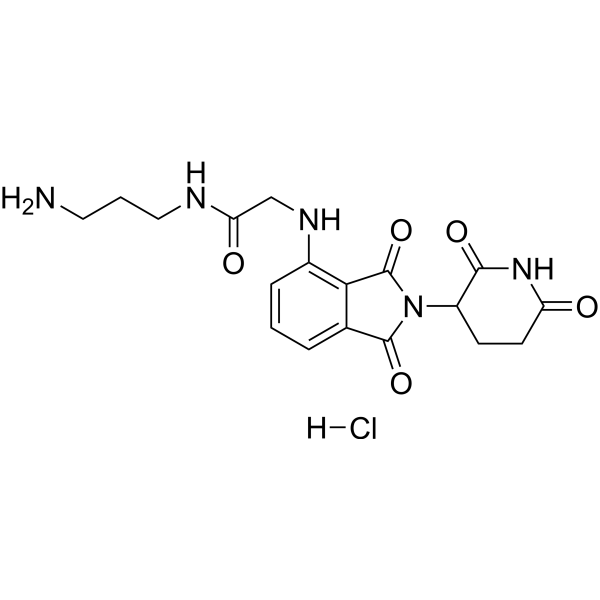 0 ImagesCat. No.: HY-138850AThalidomide-NH-amido-C3-NH2 hydrochloride is a synthesized E3 ligase ligand-linker conjugate that incorporates the Thalidomide based cereblon ligand and a linker used in PROTAC technology.
-
Sildenafil-d3 citrate
 0 ImagesCat. No.: HY-W751650Synonyms: UK-92480-d3 citrateSildenafil-d3 citrate (UK-92480-d3 citrate) is the deuterium labeled Sildenafil citrate (HY-15025A). Sildenafil citrate is a potent phosphodiesterase type 5 (PDE5) inhibitor with IC50 of 5.22 nM.




