



Bacterial
Anything that destroys bacteria or suppresses their growth or their ability to reproduce. Heat, chemicals such as chlorine, and antibiotic drugs all have antibacterial properties. Many antibacterial products for cleaning and handwashing are sold today. Such products do not reduce the risk for symptoms of viral infectious diseases in otherwise healthy persons. This does not preclude the potential contribution of antibacterial products to reducing symptoms of bacterial diseases in the home.
All Product Categories
-
Bacterial Inhibitors
(7553)
View all products
-
Bacterial Agonists
(3)
View all products
-
Bacterial Antagonists
(9)
View all products
-
Bacterial Activators
(25)
View all products
-
Bacterial Modulators
(27)
View all products
-
Bacterial Chemicals
(2)
View all products
-
Bacterial Inducers
(6)
View all products
-
Bacterial Controls
(14)
View all products
-
Bacterial Substrates
(2)
View all products
-
Bacterial Ligand
(1)
View all products
-
Bacterial Related Products (8893)
Related Products (8893)

-
Antibodies (14)
-
Related Compound Screening Libraries (1)
-
Antibiotic SF-2132
 0 ImagesCat. No.: HY-165272CAS No.: 87003-23-4Antibiotic SF-2132 is a peptide antibiotic identified in Nocardiopsis sp., which exhibits inhibitory activity against β-lactam antibiotic-resistant strains, such as Pseudomonas and Escherichia.
-
MtTMPK-IN-5
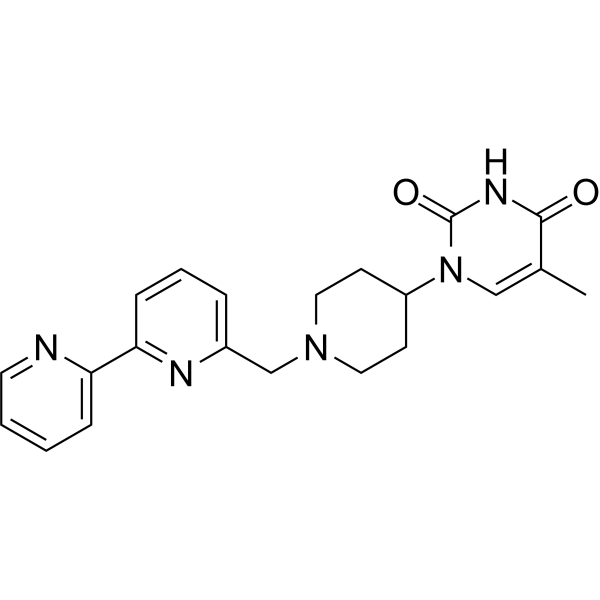 0 ImagesCat. No.: HY-146699CAS No.: 2987763-18-6MtTMPK-IN-5 (compound 17) is a potent M. tuberculosis thymidylate kinase (MtbTMPK) inhibitor with an IC50 value of 34 μM. MtTMPK-IN-5 combines favorable enzyme inhibitory activity with significant activity against M. tuberculosis (MIC = 12.5 μM). MtTMPK-IN-5 can be used for researching tuberculosis.
-
Cephabacin M4
 0 ImagesCat. No.: HY-P2011CAS No.: 99313-74-3Cephabacin M4 is a cephalosporin component, a 7-methoxydesacetylcephalosporin. Cephabacin M4 can be isolated from the culture filtrate of Xanthomonas lactamica.
-
T504
 0 ImagesCat. No.: HY-180810T504 is an oxazolidinone antibiotic. T504 exhibits significant growth inhibitory effects on Mycobacterium tuberculosis H37Rv, Mycobacterium bovis BCG, and Mycobacterium abscessus, and the MIC value for the reference strain Mycobacterium tuberculosis H37Rv is 0.5-1.0 μg/mL. T504 effectively inhibits the growth of Mycobacterium tuberculosis within macrophages and does not show obvious cytotoxicity. T504 can be used in the research of mycobacterial infections.
-
Tuberculosis inhibitor 4
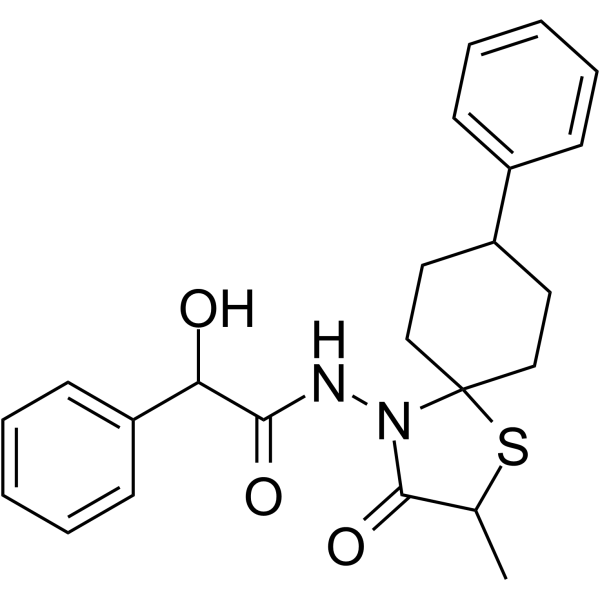 0 ImagesCat. No.: HY-115900Tuberculosis inhibitor 4 (compound 16), a mandelic acid-based spirothiazolidinone, has potent antimycobacterial activity against Mycobacterium tuberculosis strain H37Rv with the high inhibition value 98% at lower than 6.25 µg/mL concentration.

-
3,3'-Diethylthiacyanine iodide
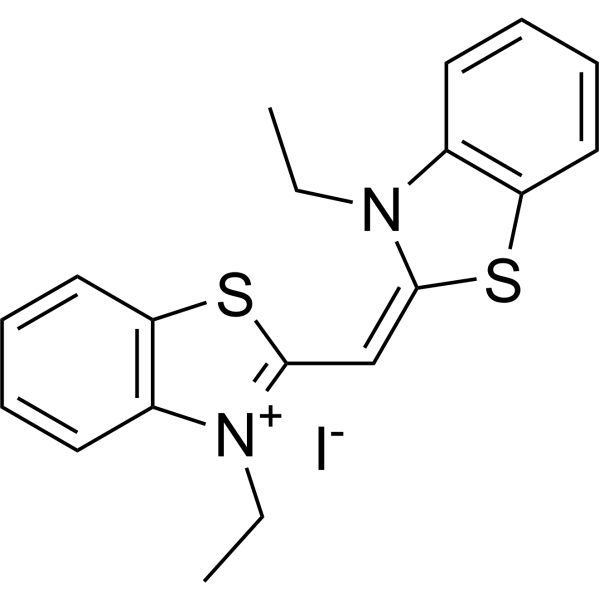 0 Images3,3'-Diethylthiacyanine iodide is a cyanine fluorescent dye. 3,3'-Diethylthiacyanine iodide manifestes a pronounced affinity for bacterial cells.
-
Apidaecin IA
 0 ImagesCat. No.: HY-P5721CAS No.: 123081-48-1Apidaecin IA is a basic peptide. Apidaecin IA inhibits the enzymatic activity of DnaK. Apidaecin IA induces bacterial cell death. Apidaecin IA can be used in research related to peritonitis and bacterial infections.
-
LBP-14
 0 ImagesCat. No.: HY-P11772CAS No.: 324030-22-0LBP-14, a peptide, is a synthetic fragment of the LPS (HY-D1056) binding protein (LBP) and is a LPS antagonist. LBP-14 interacts with LPS via electrostatic contacts between arginine/lysine residues and LPS phosphate groups, and hydrophobic contacts between aromatic/aliphatic residues and LPS acyl chains, blocking LPS binding to LBP. LBP-14 moderately inhibits LPS-induced TNF-α formation. LBP-14 can be used for the research of gram-negative sepsis.
-
Anti-MRSA agent 1
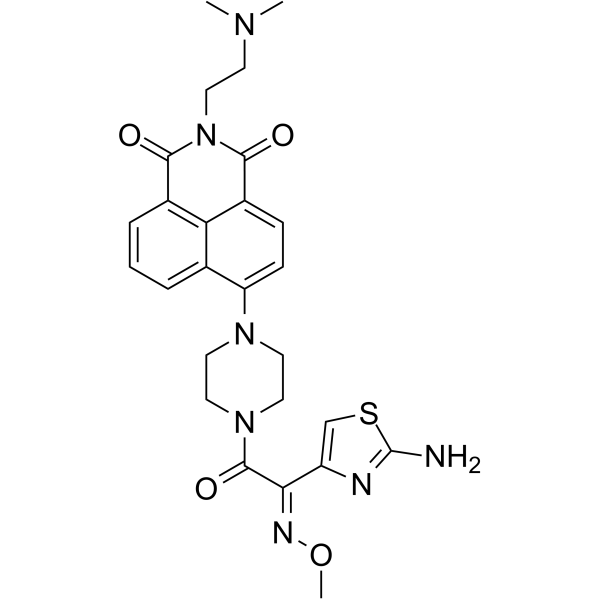 0 ImagesCat. No.: HY-144278CAS No.: 2627336-02-9Anti-MRSA agent 1 (Compound 13d) is a wonderful MRSA (MIC = 0.5 μg/mL) inhibitor. Anti-MRSA agent 1 (Compound 13d) could effectually relieve the development of MRSA resistance.
-
C7BzO
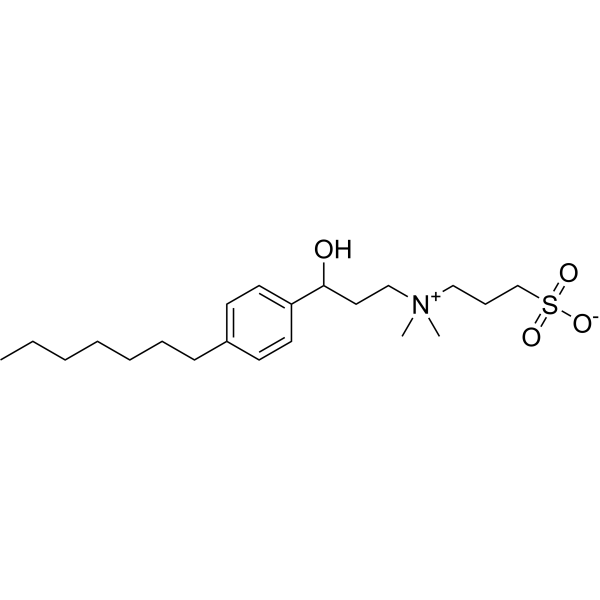 0 ImagesCat. No.: HY-157883CAS No.: 565454-39-9Synonyms: Dimethyl-2-hydroxyethylampropanepropanesulfonateC7BzO (Dimethyl-2-hydroxyethylampropanepropanesulfonate) is a potent solubilizing detergent that can be used for samples such as bacteria, mammals, and plants. C7BzO can be used for the extraction of proteins and the preparation of two-dimensional gel electrophoresis samples.
-
Sampsone B
 0 ImagesCat. No.: HY-N9833CAS No.: 1309125-17-4Sampsone B is a dihydrodibenzodioxinone-type antibacterial agent with a minimum inhibitory concentration (MIC) of ≥128 μg/mL against methicillin-resistant Staphylococcus aureus (MRSA). Sampsone B can be naturally extracted from the aerial parts (stems and leaves) of Hypericum sampsonii.
-
Aurodox
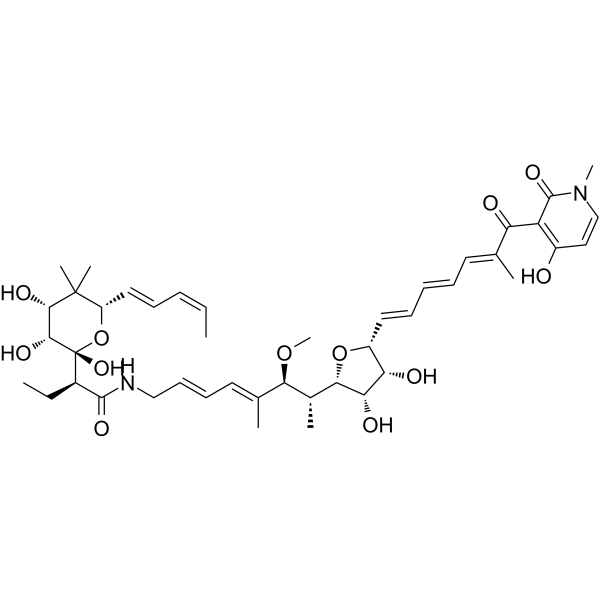 0 ImagesCat. No.: HY-118992CAS No.: 12704-90-4Synonyms: X 5108; GoldinomycinAurodox (X 5108) is an antibiotic obtained from a streptomyces variant, Aurodox can against a number of gram-positive bacteria. Aurodox shows a very low toxicity in mice and promoted poultry growth.
-
S-6123
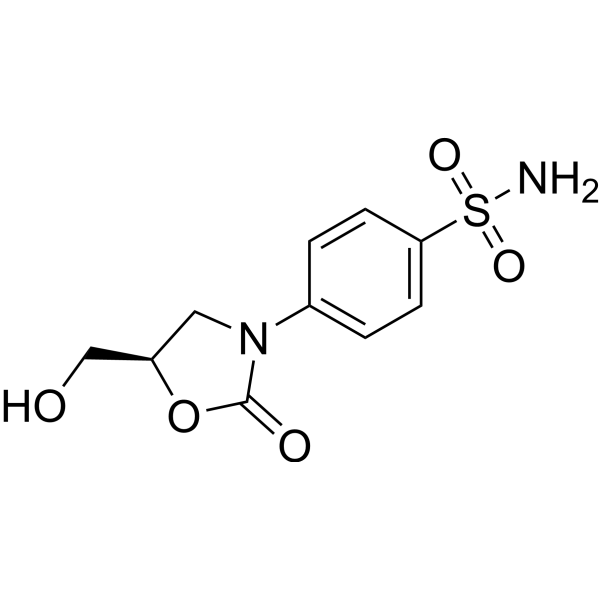 0 ImagesCat. No.: HY-122123CAS No.: 87508-45-0S-6123 is a potent antimicrobial compound of the oxazolidinone series. S-6123 inhibits ribosomal protein synthesis without inhibiting DNA or RNA synthesis.
-
L-Valine-15N,d8
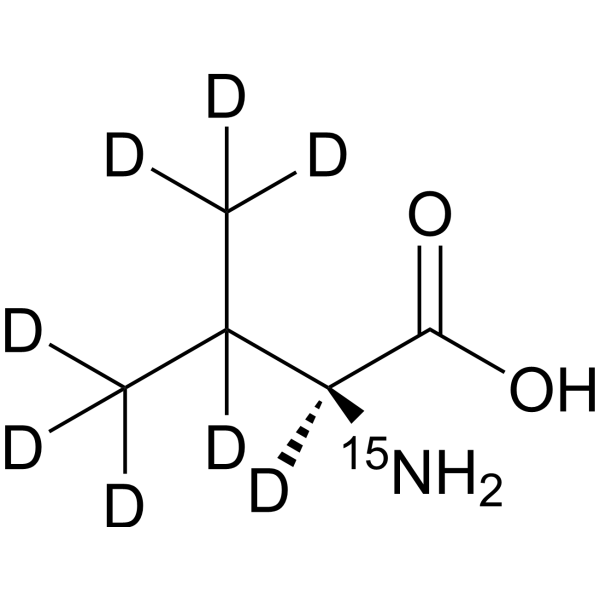 0 ImagesCat. No.: HY-N0717S9Synonyms: (S)-Valine-15N,d8L-Valine-15N,d8 ((S)-Valine-15N,d8) is the deuterium and 15N labeled L-Valine (HY-N0717). L-Valine ((S)-Valine) is a nonlinear semiorganic material. L-Valine causes lipid peroxidation and accumulation of malondialdehyde (MDA), exhibits inhibitory activity against cyanobacteria. L-Valine inhibits multidrug-resistant bacteria through activation of PI3K/Akt signaling pathway and inhibition of arginase.
-
Antibacterial agent 226
 0 ImagesCat. No.: HY-163762CAS No.: 2801577-35-3Antibacterial agent 226 (Compound 7f) is an antibacterial agent, that inhibits Staphylococcus aureus strains and methicillin-resistant S. aureus strain with MIC of 2 μg/mL. Antibacterial agent 226 exhibits cytotoxicity to HEK293 with IC50 of 1.9 μM.
-
(5E)-7-Oxozeaenol
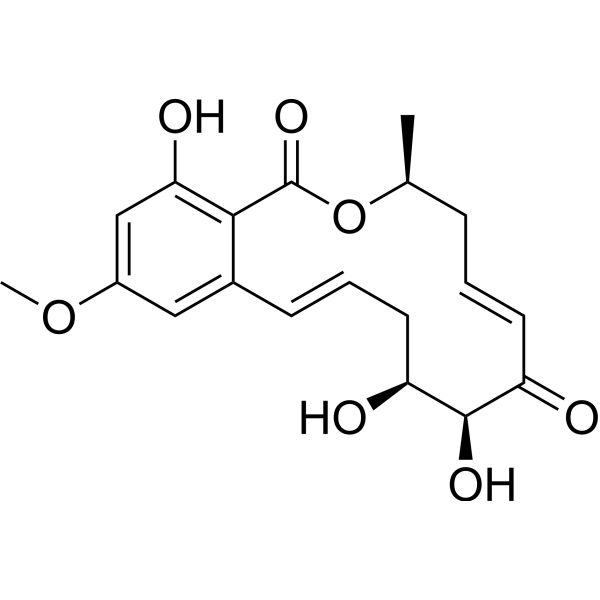 0 ImagesCat. No.: HY-N8551CAS No.: 1198574-97-8(5E)-7-Oxozeaenol is an active fungal extract that is cytotoxic. (5E)-7-Oxozeaenol exhibits antibacterial, mitochondrial transmembrane potential, and NF-κB effects.
-
Antibacterial agent 253
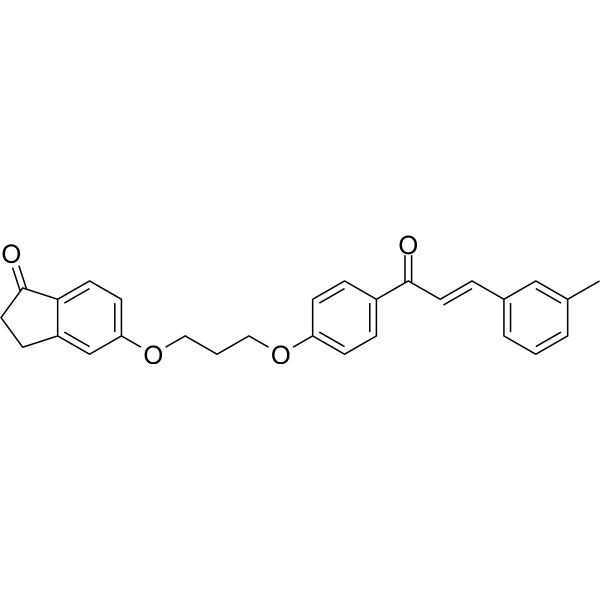
 0 ImagesCat. No.: HY-169338Antibacterial agent 253 (compound 7a) is a potent inhibitor of bacterial, with the MIC of 1.562 μg/mL for P. aeruginosa, S. aureus, L. monocytogenes, B. cereus, and S. typhi.
-
7-Oxo-ganoderic acid Z
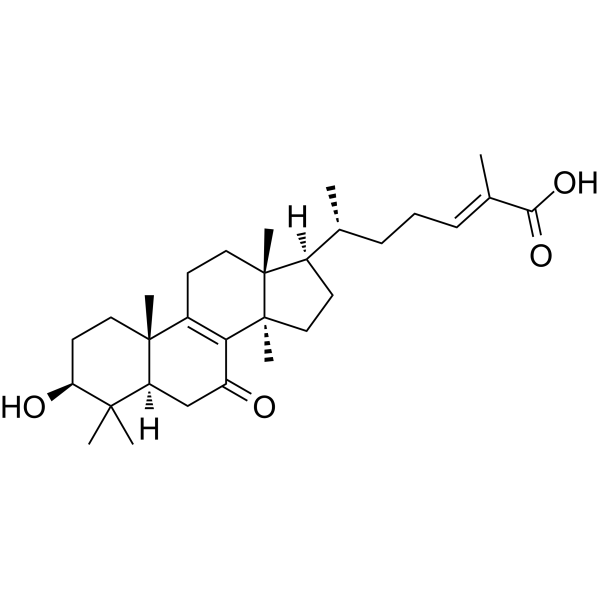 0 ImagesCat. No.: HY-N10930CAS No.: 929248-72-67-Oxo-ganoderic acid Z, a terpenoid, is a nature product that could be isolated from Resina Commiphora. 7-Oxo-ganoderic acid Z has Anti-Mycobacterium tuberculosis activity.




