



Bacterial
Anything that destroys bacteria or suppresses their growth or their ability to reproduce. Heat, chemicals such as chlorine, and antibiotic drugs all have antibacterial properties. Many antibacterial products for cleaning and handwashing are sold today. Such products do not reduce the risk for symptoms of viral infectious diseases in otherwise healthy persons. This does not preclude the potential contribution of antibacterial products to reducing symptoms of bacterial diseases in the home.
All Product Categories
-
Bacterial Inhibitors
(7553)
View all products
-
Bacterial Agonists
(3)
View all products
-
Bacterial Antagonists
(9)
View all products
-
Bacterial Activators
(25)
View all products
-
Bacterial Modulators
(27)
View all products
-
Bacterial Chemicals
(2)
View all products
-
Bacterial Inducers
(6)
View all products
-
Bacterial Controls
(14)
View all products
-
Bacterial Substrates
(2)
View all products
-
Bacterial Ligand
(1)
View all products
-
Bacterial Related Products (8893)
Related Products (8893)

-
Antibodies (14)
-
Related Compound Screening Libraries (1)
-
Ravidomycin
 0 ImagesCat. No.: HY-123724CAS No.: 74622-75-6Ravidomycin is a compound with antibacterial and cytotoxic activities. New analogs have been isolated from microorganisms. These analogs differ in antibacterial selectivity compared with known compounds.
-
Xibornol
 0 ImagesCat. No.: HY-106526CAS No.: 13741-18-9Synonyms: Bactacine; NanbacineXibornol (Bactacine) has strong antibacterial action against Streptococcus pneumoniae, Streptococcus pyogenes, and Staphyloccus aureus, as well as against Actinomyces israelii and Corynebacterium ulcerans. Xibornol has the potential for using for the antisepsis of the oral cavity and as adjuvant in pharyngeal infections caused by Gram-positive microorganisms.
-
GVLSNVIGYLKKLGTGALNAVLKQ
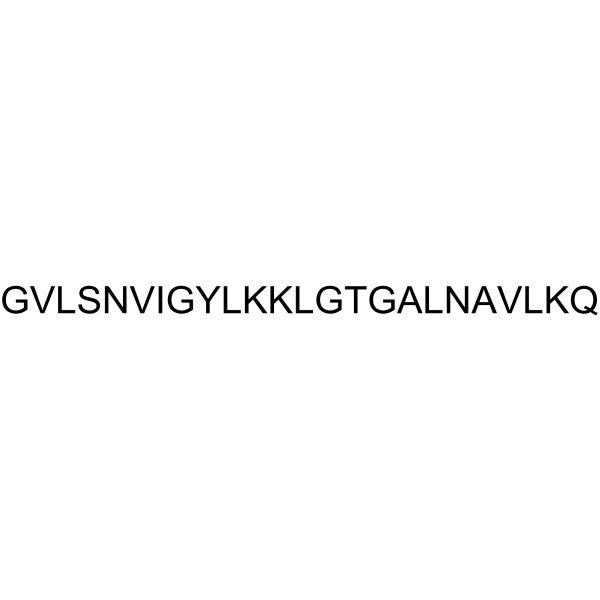 0 ImagesCat. No.: HY-P3916CAS No.: 136831-50-0GVLSNVIGYLKKLGTGALNAVLKQ is an antimicrobial peptide with 24-amino acid. GVLSNVIGYLKKLGTGALNAVLKQ can potentially form α-helix. GVLSNVIGYLKKLGTGALNAVLKQ (PGQ) has activity against Gram-negative, Gram-positive bacteria and the yeast Candida albicans.
-
Bombinin-like peptide 2
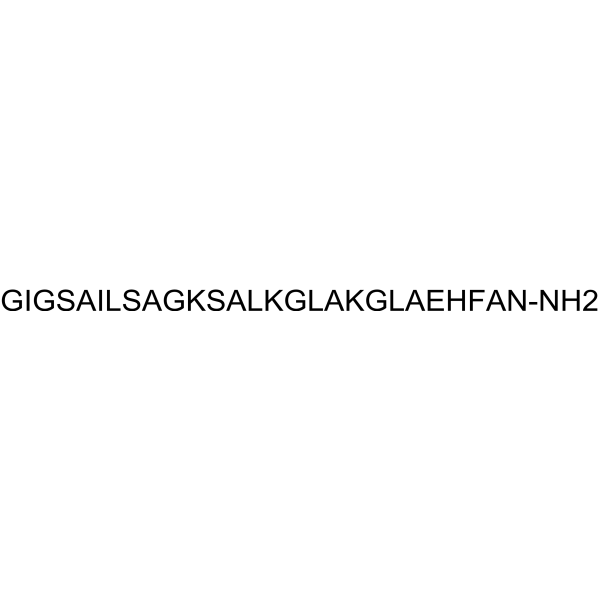 0 ImagesCat. No.: HY-P5633CAS No.: 138220-01-6Synonyms: BLP-2Bombinin-like peptide 2 is an antimicrobial peptide derived from skin secretions of asian toad Bombina orientalis.
-
Antibacterial agent 206
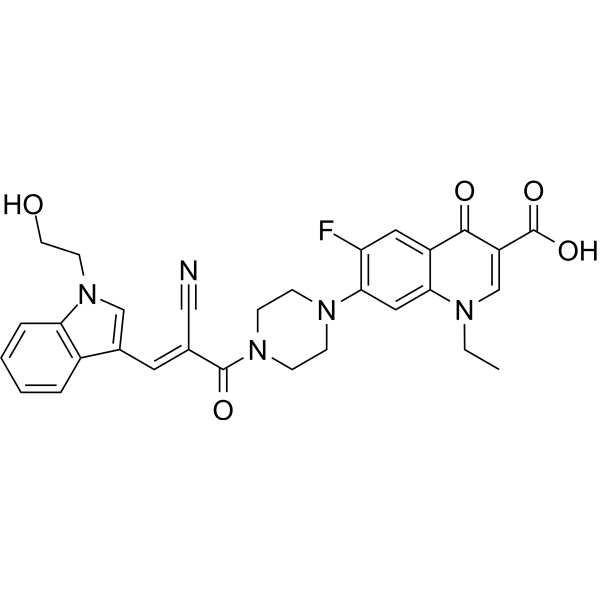 0 ImagesCat. No.: HY-162430Antibacterial agent 206 (Compound 10e) is a indolylacryloyl-derived oxacins, which exhibits broad antibacterial spectrum with MIC of 0.25-1 μg/mL. Antibacterial agent 206 reduces the exopolysaccharide, eliminates the biofilm, and thus attenuates the drug resistance. Antibacterial agent 206 exhibits antibacterial activity through destory of membrane integrity, accumulation of reactive oxygen species ROS, and inhibition of DNA replication.
-
Maximin 42
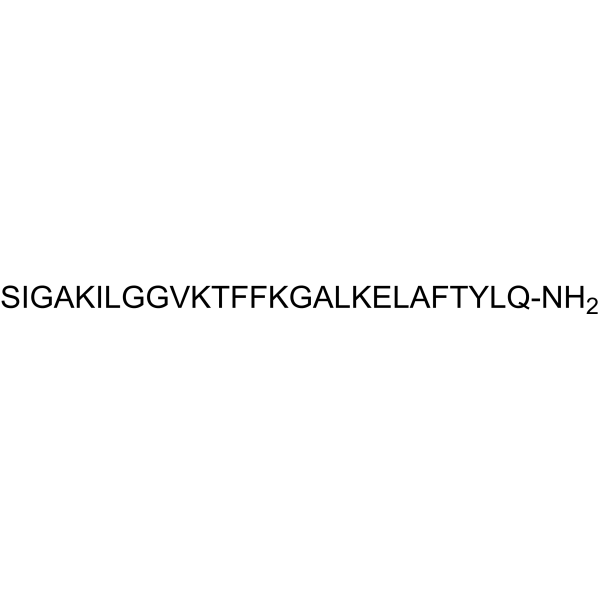 0 ImagesCat. No.: HY-P5689Maximin 42 is an antimicrobial peptide. Maximin 42 has antibacterial activity against S. aureus (MIC: 37.5 μg/mL). Maximin 42 has hemolytic activities against human red cells.
-
Ranitidine bismuth citrate
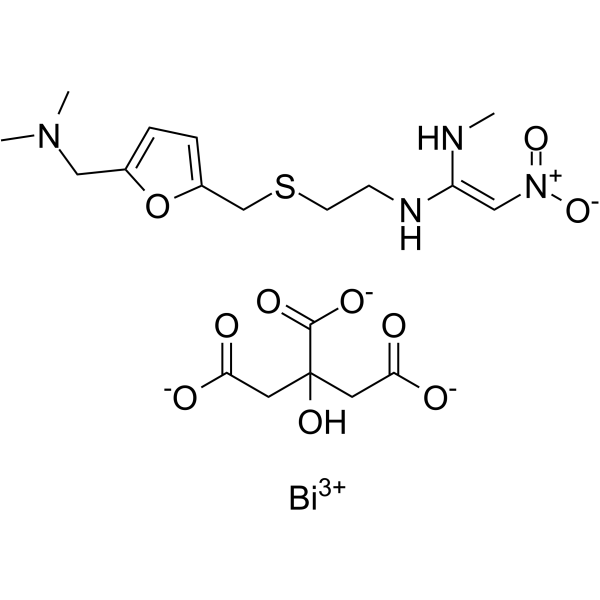 0 ImagesCat. No.: HY-B0693ACAS No.: 128345-62-0Ranitidine bismuth citrate is a potent, selective and orally active histamine H2-receptor antagonist that inhibits gastric secretion. Ranitidine bismuth citrate antagonizes Histamine (HY-B1204)-induced increases of the guinea-pig isolated rat atrium and Histamine-induced relaxations of the rat isolated uterine horn, with pA2 values of 7.2 and 6.95, respectively. Ranitidine bismuth citrate has selectivity for SARS-CoV-2-infected cells. Ranitidine bismuth citrate also has anti-Helicobacter pylori infection. Ranitidine bismuth citrate inhibits breast tumor development and spread in mice.
-
Cyclo(δ-Ala-L-Val)
 0 ImagesCat. No.: HY-P2073CAS No.: 25516-00-1Cyclo(Δ-Ala-L-Val) is a cyclic dipeptide and a putative quinolone signal (QS) molecule produced by Pseudomonas aeruginosa.
-
2,4-Dichlorobenzyl alcohol (Standard)
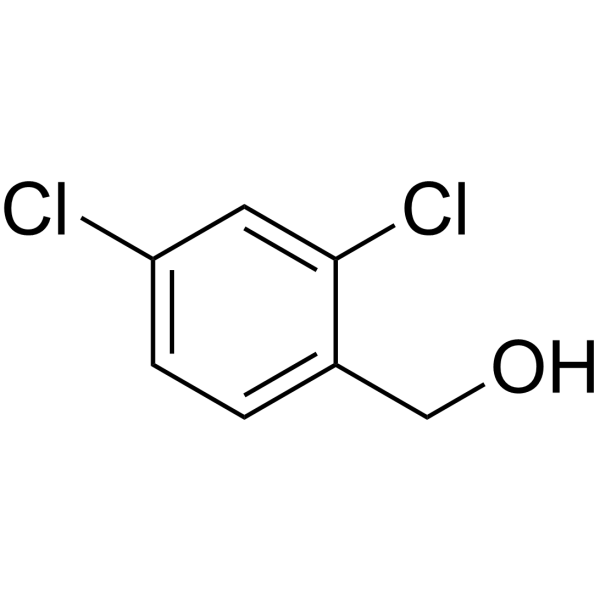 0 Images2,4-Dichlorobenzyl alcohol (Standard) is the analytical standard of 2,4-Dichlorobenzyl alcohol (HY-W039454). This product is intended for research and analytical applications. 2,4-Dichlorobenzyl alcohol is an orally active mild antiseptic, with a broad spectrum for bacterial and virus associated with mouth and throat infections. 2,4-Dichlorobenzyl alcohol exhibits prenatal developmental toxicity.2,4-Dichlorobenzyl alcohol can be used in the study of SARS-CoV.
-
Alalevonadifloxacin mesylate
 0 ImagesCat. No.: HY-17626ACAS No.: 948895-94-1Synonyms: WCK-2349 mesylateAlalevonadifloxacin (WCK-2349) mesylate is an orally active antibiotic targeting Gram-positive and Gram-negative bacteria. Alalevonadifloxacin mesylate is promising for research of acute bacterial skin and skin structure infections and hospital-acquired pneumonia caused by MRSA and other pathogens.
-
Temporin-GHd
 0 ImagesCat. No.: HY-P10362CAS No.: 2755770-50-2Temporin-GHd exhibits antibacterial activity against Streptococcus mutans (MIC=13.1 μM; MBC=26 μM). Temporin-GHd increases the permeability of the bacterial cell membrane, causing membrane damage and leakage of cellular contents. Temporin-GHd disrupts preformed biofilms at high concentrations. Temporin-GHd can bind to bacterial DNA, inhibiting DNA migration.
-
Burnettramic acid A
 0 ImagesCat. No.: HY-N12264CAS No.: 2334483-46-2Burnettramic acid A is an antibiotic, which can be isolated from Aspergillus burnettii. Burnettramic acid A exhibits antibacterial and antifungal activities, with IC50 of 0.2, 0.5, 2.3 and 5.9 μg/mL, for Saccharomyces cerevisiae, Candida albicans, Bacillus subtilis and Staphylococcus aureus, respectively. Burnettramic acid A exhibits cytotoxicity in cancer cell NS-1 with IC50 of 13.8 μg/mL.
-
Debio 1453
 0 ImagesCat. No.: HY-178347CAS No.: 2422053-29-8Debio 1453 is a bactericidal FabI inhibitor potent against N. gonorrhoeae (IC50 = 0.6 nM), including drug-resistant strains. Debio 1453 demonstrates a low propensity for resistance selection and is effective in eradicating both planktonic and intracellular bacteria through a mechanism of concurrently inhibiting FabI and engaging the non-mutable NADH cofactor. Debio 1453 clears antibiotic-resistant N. gonorrhoeae infection in a murine vaginal model. Debio 1453 can be used for gonorrhoea research.
-
Chloramphenicol palmitate (Standard)
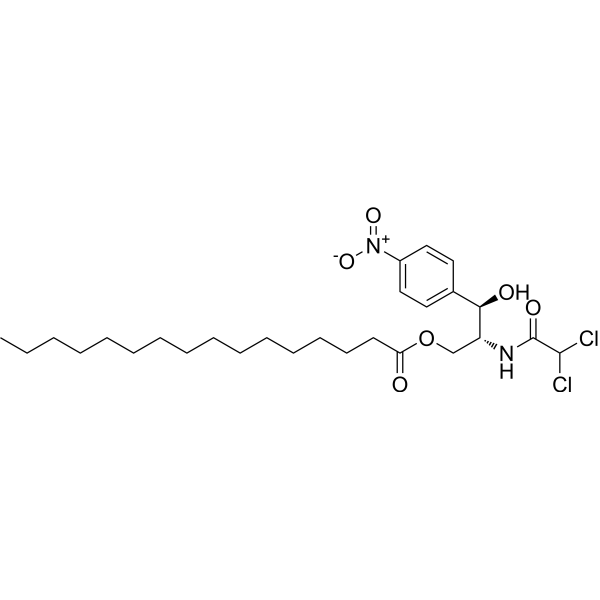 0 ImagesChloramphenicol palmitate (Standard) is the analytical standard of Chloramphenicol palmitate (HY-B1599). This product is intended for research and analytical applications. Chloramphenicol palmitate is an orally active prodrug of Chloramphenicol (HY-B0239), obtained from the esterification reaction between the agent and Palmitic acid (HY-N0830). Chloramphenicol palmitate is rapidly and completely hydrolyzed by intestinal esterase, releasing Chloramphenicol. Chloramphenicol is an orally effective broad-spectrum antibiotic.
-
BDM88855
 0 ImagesCat. No.: HY-162595CAS No.: 2892824-25-6BDM88855 is an allosteric inhibitor for the homolog AcrB protein. BDM88855 can boost the antibacterial effect of a panel of antibiotics (eg: Oxacillin (HY-B0925A), Linezolid (HY-10394), Novobiocin (HY-B0425), etc.) on wild-type E. coli.
-
Cyclo(L-Trp-L-Trp) (Standard)
 0 ImagesCat. No.: HY-P2124RCAS No.: 20829-55-4L-Isoleucine (Standard) is the analytical standard of L-Isoleucine. This product is intended for research and analytical applications. L-Isoleucine is an orally active branched chain amino acid, which is the L-enantiomer of isoleucine. L-Isoleucine has a role as a Saccharomyces cerevisiae metabolite, an Escherichia coli metabolite, a plant metabolite, a human metabolite, an algal metabolite and a mouse metabolite. L-Isoleucine regulates the inflammatory response to protect against pathogens in vivo and in vitro.
-
Pyrazinamide-15N,d3
 0 ImagesCat. No.: HY-B0271S2CAS No.: 1246817-81-1Synonyms: Pyrazinecarboxamide-15N,d3; Pyrazinoic acid amide-15N,d3Pyrazinamide-15N,d3 (Pyrazinecarboxamide-15N,d3) is the deuterated, 15N-labeled Pyrazinamide (HY-B0271). Pyrazinamide (Pyrazinecarboxamide; Pyrazinoic acid amide) is a potent and orally active antitubercular antibiotic. Pyrazinamide is a proagent that is converted to the active form pyrazinoic acid (POA) by PZase/nicotinamidase encoded by the pncA gene in M. tuberculosis.
-
Adlupulone
 0 ImagesCat. No.: HY-Z15599CAS No.: 31769-60-5Synonyms: Phloroglucinol impurity XAdlupulone (Phloroglucinol impurity X) is an antibacterial agent with an MIC of 0.98 μg/mL and an MBC of 3.91 μg/mL against Bacillus subtilis. Adlupulone is found in auxin-induced root cultures of Hypericum perforatum and in female flowers of hops (Humulus lupulus L.). Adlupulone can be used in research related to Bacillus subtilis infection.
-
(E)-Triandrin
 0 ImagesCat. No.: HY-123286CAS No.: 132294-76-9Synonyms: Sachaliside 1(E)-Triandrin (Sachaliside 1) is a phenylpropanol glycoside, can be isolated from the bark of Populus Sakhalinensis. (E)-Triandrin exhibits cytotoxic activity against Artemia and human lung cancer cell line (H1299).
-
(E)-3,4-Dimethoxychalcone
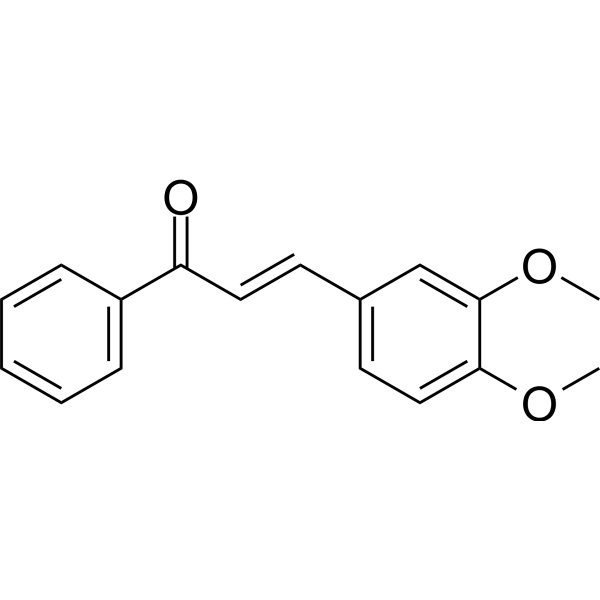 0 ImagesCat. No.: HY-W083373CAS No.: 53744-27-7Synonyms: Antibacterial agent 65(E)-3,4-Dimethoxychalcone is an isoform of 3,4-Dimethoxychalcone (HY-W083373A), a potential antimicrobial and antioxidant agent.




