



Fungal
An antifungal agent is a drug that selectively eliminates fungal pathogens from a host with minimal toxicity to the host.
Classes: 1. Polyene Antifungal Drugs: Amphotericin, nystatin, and pimaricin interact with sterols in the cell membrane (ergosterol in fungi, cholesterol in humans) to form channels through which small molecules leak from the inside of the fungal cell to the outside. 2. Azole Antifungal Drugs: Fluconazole, itraconazole, and ketoconazole inhibit cytochrome P450-dependent enzymes (particularly C14-demethylase) involved in the biosynthesis of ergosterol, which is required for fungal cell membrane structure and function. 3. Allylamine and Morpholine Antifungal Drugs: lylamines (naftifine, terbinafine) inhibit ergosterol biosynthesis at the level of squalene epoxidase. The morpholine drug, amorolfine, inhibits the same pathway at a later step. 4. Antimetabolite Antifungal Drugs: 5-Fluorocytosine acts as an inhibitor of both DNA and RNA synthesis via the intracytoplasmic conversion of 5-fluorocytosine to 5-fluorouracil.
All Product Categories
-
Fungal Related Products (2751)
Related Products (2751)

-
Antibodies (1)
-
Related Compound Screening Libraries (1)
-
WF-3161
 0 ImagesCat. No.: HY-182326CAS No.: 86402-37-1Synonyms: FR900261WF-3161 (FR900261) is a cyclic tetrapeptide antibiotic isolated from the fungus Petriella guttulata with anti-tumor activity. WF-3161 inhibits the growth of Trichophyton asteroides with an MIC of 3 μg/mL. WF-3161 is applicable to research related to P-388 leukemia.
-
Methyl cyclohexanecarboxylate
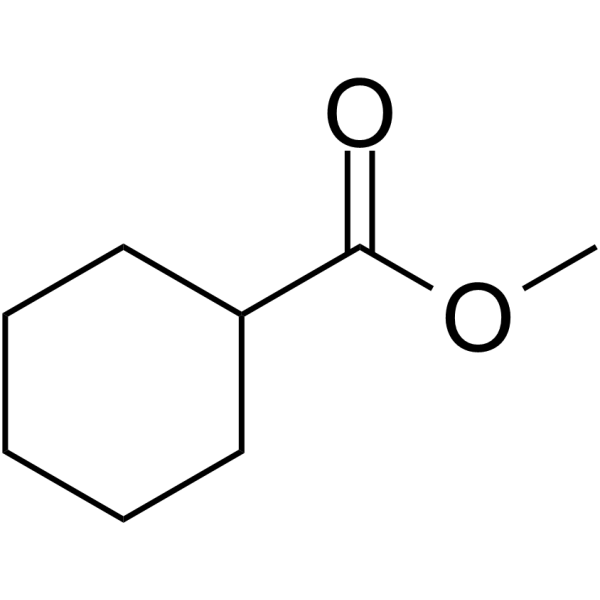 0 ImagesMethyl cyclohexanecarboxylate is a compound related to 2-cyclohexenylcarbonyl CoA. Methyl cyclohexanecarboxylate is produced during the incubation of 2-cyclohexenylcarbonyl CoA with cell-free extracts of Streptomyces collinus.
-
Citrinin (Standard)
 0 ImagesCitrinin (Standard) is the analytical standard of Citrinin. This product is intended for research and analytical applications. Citrinin (NSC 186) is a mycotoxin that causes food contamination and has different toxic effects. Citrinin is an effective oral anticancer agent. Citrinin has various regulatory effects on mouse immune system, including regulating the number of immune cells, inducing apoptosis and autophagy of immune cells, altering toll-like receptor expression and cytokine production. Citrinin can induce oxidative stress and lead to early apoptosis of oocytes. Low doses of Citrinin have neuroprotective effects against glutamate-induced excitotoxicity in rat cortical neurons. In addition, Citrinin also has antibacterial activity.
-
Isohemigossylic acid lactone 2-methyl ether
 0 ImagesCat. No.: HY-N18242CAS No.: 61470-49-3Isohemigossylic acid lactone 2-methyl ether is a sesquiterpene lactone fungal inhibitor. Isohemigossylic acid lactone 2-methyl ether inhibits the conidial growth of Verticillium dahliae with a ED50 of 7.8 μg/mL. Isohemigossylic acid lactone 2-methyl ether is isolated from the roots of Bombax malbaricum(synonym Salmalia malbaricum). Isohemigossylic acid lactone 2-methyl ether is applicable to studies related to Verticillium dahliae infection.
-
(+)-Chromazonarol
 0 ImagesCat. No.: HY-N20664CAS No.: 57457-77-9Synonyms: (+)-ent-Chromazonarol(+)-Chromazonarol ((+)-ent-Chromazonarol) is a marine sesquiterpene hybrid terpene and pimarane-type hybrid terpene Antifungal agent. (+)-Chromazonarol is isolated from the marine sponge Dysidea pallescens. (+)-Chromazonarol inhibits the mycelial growth of Sclerotinia sclerotiorum and Rhizoctonia solani. (+)-Chromazonarol is applicable to research related to Sclerotinia sclerotiorum infection and Rhizoctonia solani infection.
-
Antifungal agent 22
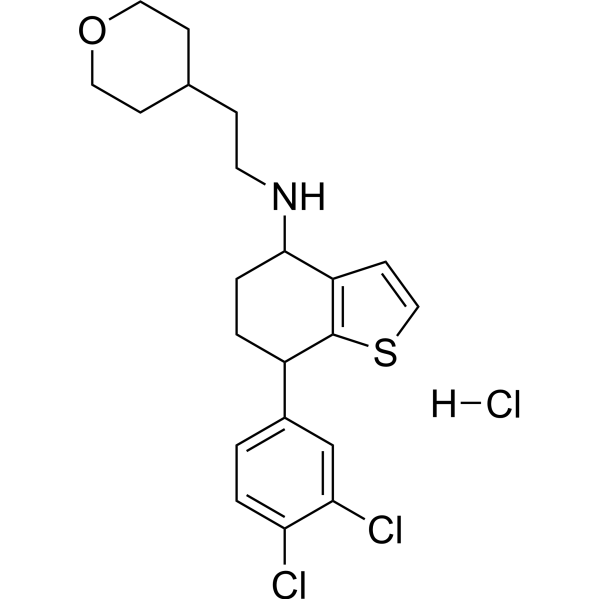 0 ImagesCat. No.: HY-144632CAS No.: 2640054-39-1Antifungal agent 22 (compound D16) is a potential and orally active antifungal agent for CM (cryptococcal meningitis), with an IC50 of 0.5 μg/mL. Antifungal agent 22 can penetrate the blood-brain barrier and kill the C. neoformans H99 cells by destroying the integrity of fungal cell membranes. Antifungal agent 22 shows selective anti-Cryptococcus activity with good metabolic stability and low cytotoxicity.
-
Glyceryl 1-monooctanoate-d5
 0 ImagesCat. No.: HY-W704402CAS No.: 1794835-68-9Glyceryl 1-monooctanoate-d5 is the deuterium labeled Glyceryl 1-monooctanoate (HY-W012444). Glyceryl 1-monooctanoate is a glycerol monolaurate derivative. Glyceryl 1-monooctanoate is a broad-spectrum antimicrobial, suppresses the growth of pathogenic yeast (Candida albicans and Candida parapsilosis), as well as Gram-positive (Staphylococcus aureus) and Gram-negative (Escherichia coli, Klebsiella pneumoniae) bacteria.
-
Tachyplesin-3
 0 ImagesCat. No.: HY-P11399Tachyplesin-3 is a broad-spectrum cationic antimicrobial peptide. Tachyplesin-3 has inhibitory activity against Gram-positive bacteria, Gram-negative bacteria, fungi and enveloped viruses. Tachyplesin-3 binds to bacterial membrane lipopolysaccharides through positive charges, disrupting membrane integrity and causing leakage of cellular contents. Tachyplesin-3 interferes with bacterial adhesion and aggregation, prevents biofilm formation, and has a synergistic effect when used in combination with Piperacillin (HY-B1923) - Tazobactam (HY-B1418) (TZP).
-
12-Deoxyphorbol-13-isobutyrate-20-acetate
 0 ImagesCat. No.: HY-N18070CAS No.: 25090-71-512-Deoxyphorbol-13-isobutyrate-20-acetate is a 12-deoxy-phorbol diterpene ester. 12-Deoxyphorbol-13-isobutyrate-20-acetate is a protein kinase C (PKC) agonist that activates protein kinase C to phosphorylate troponin I and troponin T. 12-Deoxyphorbol-13-isobutyrate-20-acetate induces skin irritation and necrosis in mice without cocarcinogenic activity. 12-Deoxyphorbol-13-isobutyrate-20-acetate inhibits Aspergillus carbonarius growth. 12-Deoxyphorbol-13-isobutyrate-20-acetate supports research on heart failure, cardiomyopathies and fungal infection.
-
Senkyunolide B
 0 ImagesCat. No.: HY-W782599CAS No.: 93236-67-0Senkyunolide B is a phthalide found in Angelica sinensis. Senkyunolide B has broad antifungal activities. Senkyunolide B affects the spore germination and hyphae growth of Aspergillus fumigatus via down-regulating phosphatidylinositol-PKC-calcineurin axis and the expression of ENG genes.
-
Chitin, from crab carapace
 0 ImagesCat. No.: HY-126389CCAS No.: 1398-61-4Chitin, from crab carapace is a long-chain polymer of N-acetylglucosamine with β-(1-4) linkages. Chitin, from crab carapace is found in the exoskeleton of crabs. Chitin, from crab carapace inhibits the activation of NF-κB p65, alters the translocation of NF-κB p65 to the nucleus, and interacts with the cell wall of Candida species. Chitin, from crab carapace exerts antifungal and anti-inflammatory effects. Chitin, from crab carapace can be used in the research of gastric ulcer and candidiasis.
-
SDH-IN-14
 0 ImagesCat. No.: HY-161504Purity: 98.44%SDH-IN-14 (Compound Z2) is an inhibitor of succinate dehydrogenase (SDH). SDH-IN-14 has antifungal activity (EC50=2.7 μg/mL) against B.cinerea. SDH-IN-14 acts by disrupting the integrity of the cell wall and cell membrane.
-
Arborcandin B
 0 ImagesCat. No.: HY-N5161CAS No.: 223465-78-9Arborcandin B is a 1,3-β-glucan synthase inhibitor that serves as an antifungal antibiotic. Arborcandin B exhibits IC50 values of 0.30 μg/mL and 0.025 μg/mL against Candida albicans and Aspergillus fumigatus, respectively. Additionally, Arborcandin B has an MIC of 2-4 μg/mL against the genus Candida.
-
Norbatzelladine L
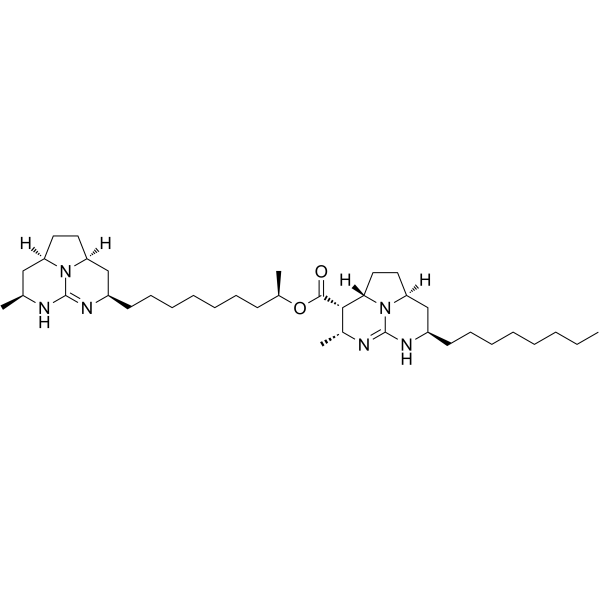 0 ImagesCat. No.: HY-N10402CAS No.: 1187954-93-3Norbatzelladine L (Compound 2) is an inhibitor of the catalytic and functional activity of Pdr5p transporter. Norbatzelladine L inhibits Pdr5p ATPase activity with an IC50 of 3.8 µM. Norbatzelladine L shows antifungal, antiparasitic, antiviral, antibacterial and antitumoral activities.
-
Leucinostatin K
 0 ImagesCat. No.: HY-P2363CAS No.: 109539-57-3Leucinostatin K is a peptide antibiotic with anti-gram-positive bacterial and fungal effects, which is found in Paecilomyces lilacinus.
-
Pentamidine isethionate (Standard)
 0 ImagesSynonyms: MP-601205 isethionate (Standard)Pentamidine (isethionate) (Standard) is the analytical standard of Pentamidine (isethionate). This product is intended for research and analytical applications. Pentamidine isethionate (MP-601205 isethionate) is an antimicrobial agent and interferes with DNA biosynthetics. Pentamidine isethionate inhibits parasite Leishmania infantum with an IC50 of 2.5 μM. Pentamidine isethionate is a potent and selective protein tyrosine phosphatases (PTPases) and phosphatase of regenerating liver (PRL) inhibitor. Pentamidine isethionate has the potential for Gambian trypanosomiasis, antimony-resistant leishmaniasis, and Pneumocystis carinii pneumonia treatment. Antitumor and antibacterial activities.
-
AcrAP2
 0 ImagesCat. No.: HY-P10515AcrAP2 is an antimicrobial peptide present in the venom of the Arabian scorpion (Androctonus crassicauda). AcrAP2 is inhibitory against Gram-positive bacteria and yeast but is essentially inactive against Gram-negative bacteria. A cation-enhanced AcrAP2 analog (AcrAP2a) exhibits significant antiproliferative effects at low concentrations against certain human cancer cell lines. AcrAP2 can be used in antibacterial and anti-tumor research.
-
Urushiol (15:2)
 0 ImagesCat. No.: HY-187152CAS No.: 83258-37-1Urushiol (15:2) is a 3-substituted catechol with a 15-carbon side chain containing 2 double bonds, and it exists in the sap, bark and lacquer fluid of Rhus vernicifera and Toxicodendron vernicifluum. Urushiol (15:2) is used for research on cancer, fungal infections, bacterial infections and allergic contact dermatitis.
-
(3β,16α-Hydroxy)-3-O-(2'acetamido-2'-deoxy-β-D-glucopyranosyl) echinocystic acid
 0 ImagesCat. No.: HY-N19757CAS No.: 112667-17-13-O-(2-Acetamido-2-deoxy-β-D-glucopyranosyl) echinocystic acid is an oleanane-type triterpenoid saponin. 3-O-(2-Acetamido-2-deoxy-β-D-glucopyranosyl) echinocystic acid acts as a dermatophyte growth inhibitor with a MIC range of 6.25-25 μg/mL. 3-O-(2-Acetamido-2-deoxy-β-D-glucopyranosyl) echinocystic acid can be used in the research of dermatophyte infections, bacterial infections and yeast infections.
-
Leotiomycene C
 0 ImagesCat. No.: HY-N17297CAS No.: 2293113-73-0Leotiomycene C is an isoprenylated bisresorcinol natural product present in the freshwater fungus Helotiales sp. Leotiomycene C inhibits the quorum sensing system of methicillin (HY-121544)-resistant Staphylococcus aureus (MRSA), with an IC₅₀ of 6.3-12.5 μM. Leotiomycene C is applicable to research related to MRSA infections.




