



Glycosidase
Glycosidase
Glycosidase are a class of enzymes which catalyze the hydrolysis of glycosidic bonds. In living organisms, Glycosidase are involved in carbohydrate metabolism. They can degrade polysaccharides such as starch and glycogen into monosaccharides, providing energy for cells. Glycosidase also participate in the synthesis and modification of biological macromolecules such as glycoproteins and glycolipids, playing a crucial role in cell recognition and signal transduction. Additionally, in plants and microorganisms, Glycosidase are involved in the metabolism of cell wall polysaccharide components, affecting cell growth, differentiation, and morphogenesis. Gene mutations of Glycosidase can trigger genetic diseases, leading to abnormal metabolism in the body and damage to organ functions. Changes in their activity are associated with various diseases such as diabetes, infectious diseases, and tumors, and can influence the occurrence and development of diseases[1][2].
References:
- [1]. Wang X, et al. Metabolites extracted from microorganisms as potential inhibitors of glycosidases (α-glucosidase and α-amylase): A review. Front Microbiol. 2022 Nov 17;13:1050869.
- [2]. Ohtsubo K, et al. Glycosylation in cellular mechanisms of health and disease. Cell. 2006 Sep 8;126(5):855-67. [Content Brief]
All Product Categories
-
Glycosidase Inhibitors
(456)
View all products
-
Glycosidase Antagonist
(1)
View all products
-
Glycosidase Activators
(20)
View all products
-
Glycosidase Modulators
(8)
View all products
-
Glycosidase Chemical
(1)
View all products
-
Glycosidase Inducers
(2)
View all products
-
Glycosidase Degrader
(1)
View all products
-
Glycosidase Controls
(6)
View all products
-
Glycosidase Substrates
(25)
View all products
-
Glycosidase Ligands
(3)
View all products
-
Glycosidase Related Products (697)
Related Products (697)

-
Antibodies (3)
-
Ambroxol hydrochloride solution
 0 ImagesCat. No.: HY-FLB1039ACAS No.: 23828-92-4Synonyms: NA-872 hydrochloride solutionAmbroxol hydrochloride solution is mainly composed of Ambroxol hydrochloride (HY-B1039A). Ambroxol hydrochloride (NA-872 hydrochloride), an active metabolite of the proagent Bromhexine, has potent expectorant effects. Ambroxol hydrochloride is a glucocerebrosidase (GCase) chaperone and increases glucocerebrosidase activity. Ambroxol hydrochloride induces lung autophagy and has the potential for Parkinson disease and neuronopathic Gaucher disease research.
-
6β-Hydroxyipolamiide
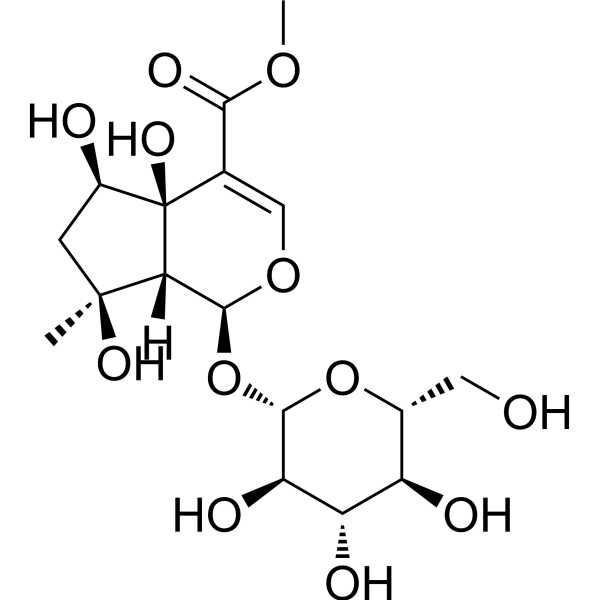 0 ImagesCat. No.: HY-N2703CAS No.: 87797-84-06β-Hydroxyipolamiide can be isolated from the methanolic extract of S. jamaicensis leaves. 6β-Hydroxyipolamiide has α-glucosidase inhibitory activity with an IC50 of 539.17 μg/mL.
-
Chlorophenol red
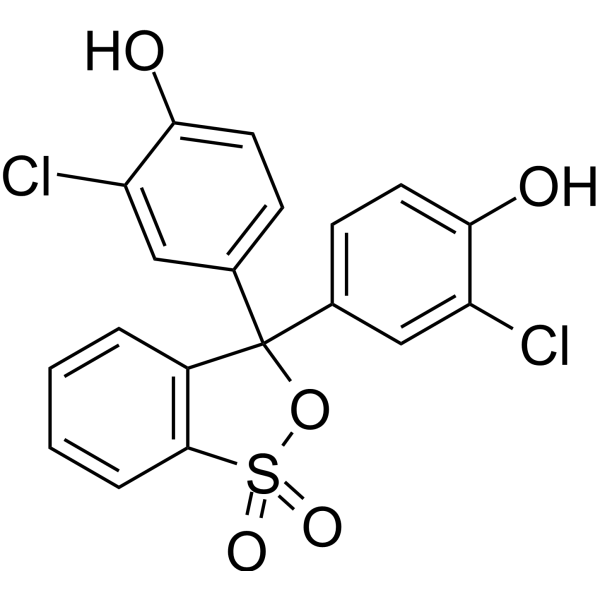 0 ImagesChlorophenol Red is a sulfonephthalein pH indicator dye and chromogenic beta-galactosidase substrate. Chlorophenol Red enables the detection of coliform bacteria through β-galactosidase activity. Chlorophenol Red can be used in research on drinking water quality monitoring.
-
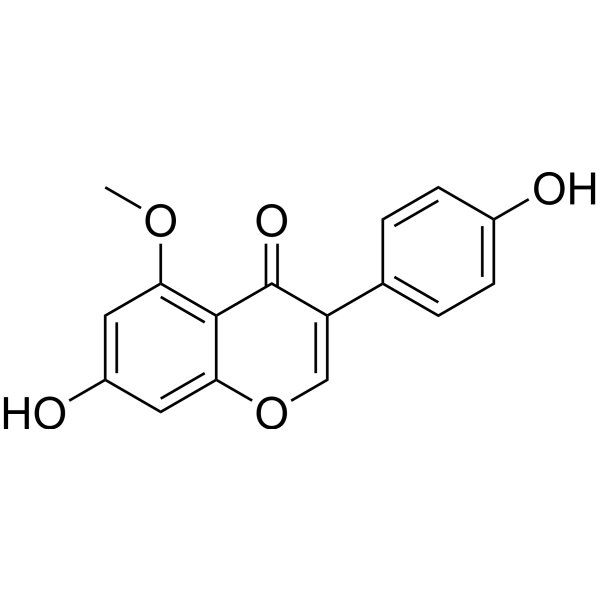
α-Glucosidase-IN-118
 0 ImagesCat. No.: HY-184340α-Glucosidase-IN-118 is a non-competitive inhibitor of α-glucosidase with a IC50 of 2.77 μM, and it shows no inhibitory activity against β-glucosidase. α-Glucosidase-IN-118 binds to the entrance of the α-glucosidase active site to block substrate release. α-Glucosidase-IN-118 can be used in the research of diabetes, obesity and lysosomal storage diseases.
-
ML247
 0 ImagesCat. No.: HY-100127CAS No.: 1222374-44-8ML247 is a non-inhibitory and selective small molecule chaperone of acid alpha glucosidase. ML247 can be used for the research of metabolic disease, such as Pompe disease.
-
α-Glucosidase-IN-68
 0 ImagesCat. No.: HY-162639CAS No.: 1624628-01-8α-Glucosidase-IN-68 (Compound 2) is an inhibitor for α-Glucosidase, AChE, and BChE, with IC50 of 0.251, 0.774 and 0.793 μM, respectively. α-Glucosidase-IN-68 exhibits antioxidant efficacy, with IC50 of 0.69 μM and 0.02 μM, in DPPH and ABTS experiments. α-Glucosidase-IN-68 exhibits antidiabetic effect in Streptozotocin (HY-13753)-induced diabetic rat models.
-
β-Glucosidase 1A, Pyrococcus furiosus
 0 ImagesCat. No.: HY-E71305Eβ-Glucosidase 1A, Pectobacterium carotovorum (EC 3.2.1.21) is a glucosidase enzyme that acts upon β1->4 bonds linking two glucose or glucose-substituted molecules (i.e., the disaccharide cellobiose) . β-Glucosidase is one of the cellulases, enzymes involved in the decomposition of cellulose and related polysaccharides; more specifically, an exocellulase with specificity for a variety of beta-D-glycoside substrates. It catalyzes the hydrolysis of terminal non-reducing residues in beta-D-glucosides with release of glucose.
-
α-Glucosidase-IN-2
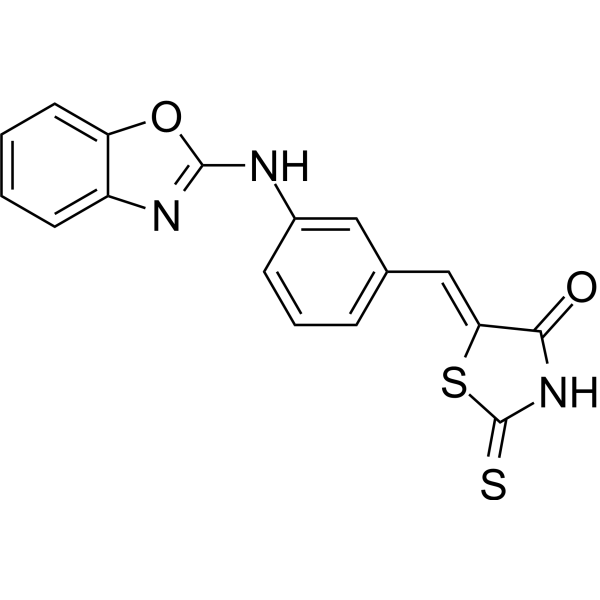 0 ImagesCat. No.: HY-115978CAS No.: 2699784-18-2α-Glucosidase-IN-2 (compound 5d) is a potent α-Glucosidase inhibitor with an IC50 of 9.48 µM. α-Glucosidase-IN-2 is an antidiabetic agent.
-
α-Galactosidase, Cellvibrio mixtus
 0 ImagesCat. No.: HY-P2871Eα-Galactosidase, Cellvibrio mixtus (EC 3.2.1.22) is a glycoside hydrolase enzyme that hydrolyses the terminal alpha-galactosyl moieties from glycolipids and glycoproteins. Two recombinant forms of α-Galactosidase are called agalsidase alfa (INN) and agalsidase beta (INN).
-
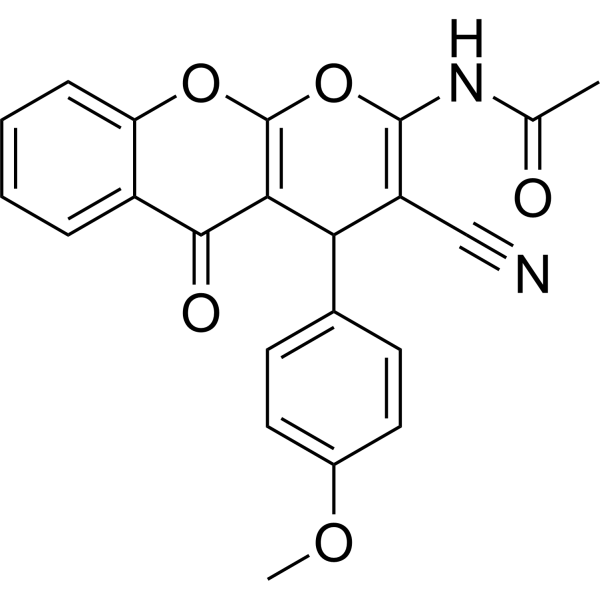
Timosaponin N
 0 ImagesCat. No.: HY-N13137CAS No.: 1010804-67-7Timosaponin N is a natural steroidal saponin that inhibits the activity of α-Glucosidase. Timosaponin N can be used in diabetes-related research.
-
α-Amylase/α-Glucosidase-IN-11
 0 ImagesCat. No.: HY-162390α-Amylase/α-Glucosidase-IN-11 (Compound 5d) is a isoxazolidine-isatin hybrid with significant antidiabetic activity. α-Amylase/α-Glucosidase-IN-11 competitively inhibits α-amylase (IC50 = 30.39 μM) and α-glucosidase (IC50 = 65.1 μM), two key digestive enzymes. α-Amylase/α-Glucosidase-IN-11 does not cross the blood-brain barrier.
-
Phenyl-α-D-mannopyranoside
 0 ImagesCat. No.: HY-N20706CAS No.: 21797-50-2Phenyl-α-D-mannopyranoside is a Concanavalin A inhibitor. Phenyl-α-D-mannopyranoside blocks Histamine (HY-B1204) release induced by Concanavalin A (HY-P2149) . Phenyl-α-D-mannopyranoside acts as a donor in the transfer reaction catalyzed by α-D-mannosidase, forming isomeric mannosides with D-ribose as the acceptor.
-
α-Amylase/α-Glucosidase-IN-2
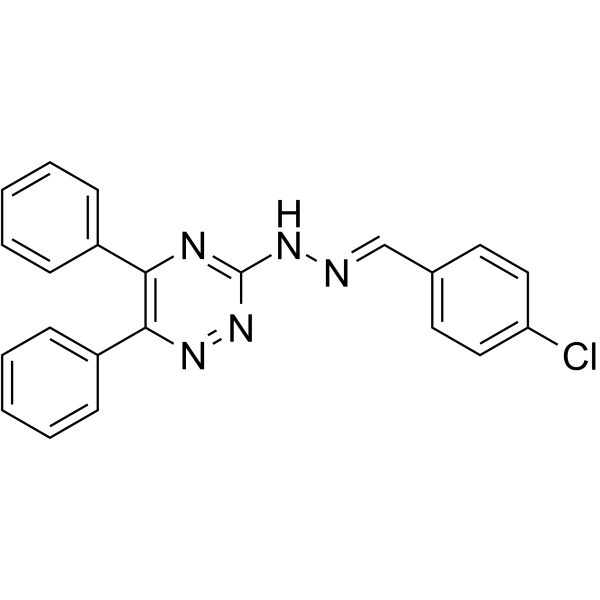 0 ImagesCat. No.: HY-146225CAS No.: 2446063-14-3α-Amylase/α-Glucosidase-IN-2 (compound 5) is a potent α-amylase and α-glucosidase dual inhibitor with IC50 values of 13.02, 13.09 µM for α-amylase and α-glucosidase, respectively. α-Amylase/α-Glucosidase-IN-2 has the potential for the research of diabetic complications.
-
α-Glucosidase-IN-33
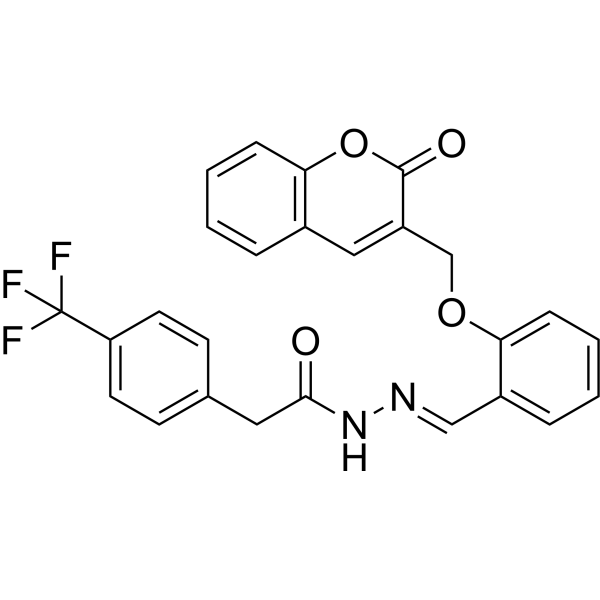 0 ImagesCat. No.: HY-149532α-Glucosidase-IN-33 (compound 7c) is a potent α-glucosidase inhibitor (IC50: 2.39 μM) and can be used in the study of type 2 diabetes and hyperglycemia.
-
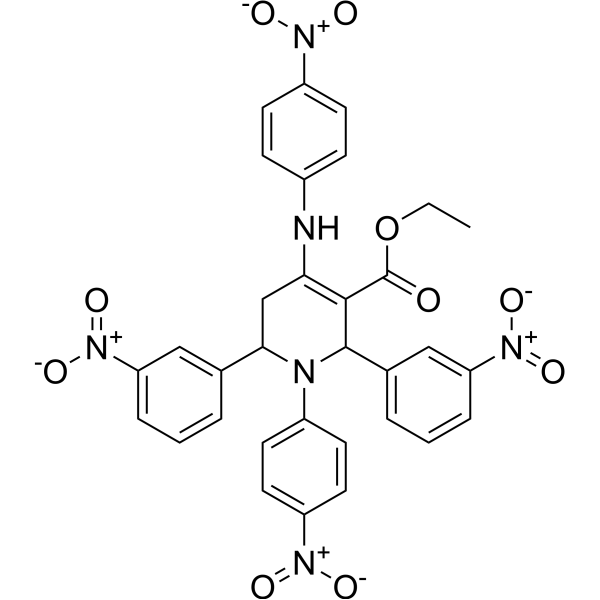
α-Glucosidase-IN-76
 0 ImagesCat. No.: HY-169406α-Glucosidase-IN-76 (Compound 4r) is an inhibitor for α-glucosidase with an IC50 of 5.44 μM. α-Glucosidase-IN-76 scavenges ABTS+ free radicals with a TEAC value of 0.49. α-Glucosidase-IN-76 inhibits the proliferation of T24 bladder cancer cell with IC50 of 1.74 μM.
-
α-Glucosidase-IN-41
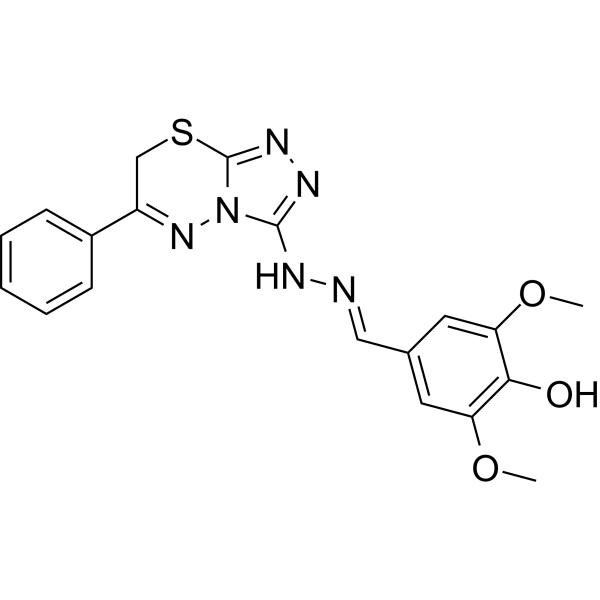 0 ImagesCat. No.: HY-149668CAS No.: 3012673-89-8α-Glucosidase-IN-41 (compound 5o) is a potent α-glucosidase inhibitor. α-Glucosidase-IN-41 can arise the changed secondary structure of α-Glu to hinder enzyme catalytic activity. α-Glucosidase-IN-41 can be used for diabetes mellitus research.
-
(E)-p-Coumaramide
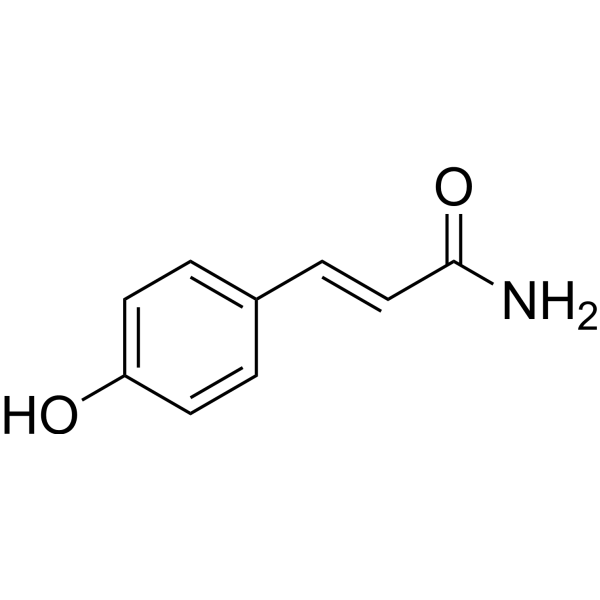 0 ImagesCat. No.: HY-N1901CAS No.: 194940-15-3(E)-p-Coumaramide is an α-Glucosidase inhibitor that can be isolated from Welsh onion.




