



Galectin-3
Galectin-3 is a β-galactoside-binding lectin that regulates cell adhesion, activation, migration, signaling, apoptosis, immune reactions, and neoplastic transformation[1][2]. Mechanistically, its conserved carbohydrate-recognition domain binds β-galactosides, while its intrinsically disordered N-terminal region enables multisite self-association and functional multivalency[1][2]. In inflammation, galectin-3 acts across acute inflammation, chronic inflammation, and tissue fibrogenesis, making it relevant to fibrosis-oriented experimental design[3]. In lung fibrosis models, galectin-3 deficiency or pharmacological inhibition reduced TGF-β1-driven epithelial-mesenchymal transition, myofibroblast activation, and collagen production[4]. More recent human lung fibroblast and IPF lung-slice data show that extracellular galectin-3 promotes integrin-mediated TGF-β1 activation and interacts with αv integrins and TGFβRII in a glycosylation-dependent manner[5]. Compared with related isoforms, galectin-3 is distinguished as the only vertebrate chimera-type galectin, containing one CRD linked to a long proline- and glycine-rich N-terminal domain[1]. For experimental applications, galectin-3 inhibitors that target the carbohydrate-recognition domain blocked integrin colocalization and reduced fibrotic mediators in IPF-derived lung tissue models[5]. In patients with idiopathic pulmonary fibrosis, inhaled TD139 showed target engagement and supported galectin-3 inhibition as a translational research approach[6].- Isoform distinction: galectin-3 differs structurally from prototype and tandem-repeat galectins through its chimera architecture[1]. - Research application: galectin-3 inhibition supports fibrosis studies involving TGF-β1 activation, integrins, and IPF models[4][5][6].
Références:
- [1]. Dumic J, et al. Galectin-3: an open-ended story. Biochim Biophys Acta. 2006 Apr;1760(4):616-35. [Content Brief]
- [2]. Lin YH, et al. The intrinsically disordered N-terminal domain of galectin-3 dynamically mediates multisite self-association of the protein through fuzzy interactions. J Biol Chem. 2017 Oct 27;292(43):17845-17856. [Content Brief]
- [3]. Henderson NC, et al. The regulation of inflammation by galectin-3. Immunol Rev. 2009 Jul;230(1):160-71. [Content Brief]
- [4]. Mackinnon AC, et al. Regulation of transforming growth factor-β1-driven lung fibrosis by galectin-3. Am J Respir Crit Care Med. 2012 Mar 1;185(5):537-46. [Content Brief]
- [5]. Calver JF, et al. Defining the mechanism of galectin-3-mediated TGF-β1 activation and its role in lung fibrosis. J Biol Chem. 2024 Jun;300(6):107300. [Content Brief]
- [6]. Hirani N, et al. Target inhibition of galectin-3 by inhaled TD139 in patients with idiopathic pulmonary fibrosis. Eur Respir J. 2021 May 27;57(5):2002559. [Content Brief]
-
Galectin-3 Produits associés (25)
Produits associés (25)

-
Anticorps (1)
- 1
- 2
-
GB1107
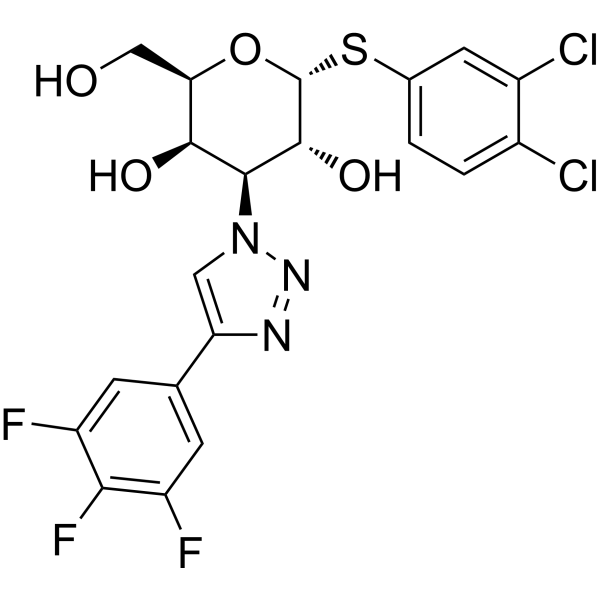 0 ImagesGB1107 is a potent, selective, orally active inhibitor of Galectin-3 (Gal-3) with a Kd of 37 nM for human Galectin-3. GB1107 reduces human and mouse lung adenocarcinoma growth and blocks metastasis in the syngeneic model.
-
Olitigaltin
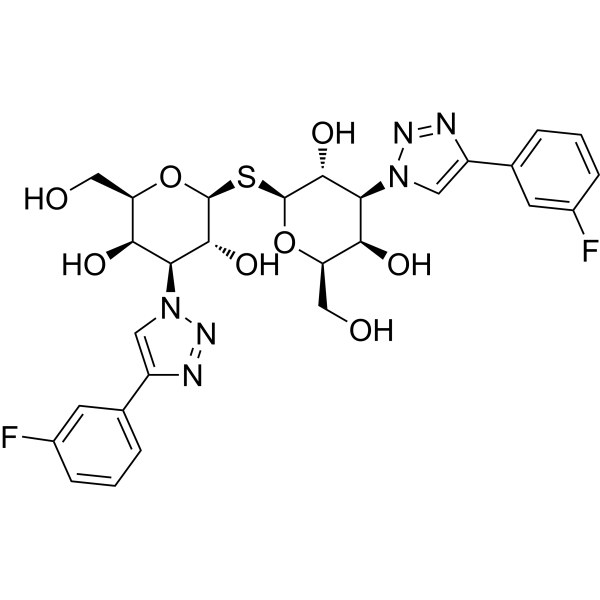 0 ImagesSynonyms: TD139; GB0139Olitigaltin (TD139) is a high-affinity Galectin-3 inhibitor with a Kd value of 14 nM. Olitigaltin inhibits the activity of the AKT/β-catenin pathway, induces Apoptosis, and downregulates SREBP1 expression. Olitigaltin enhances the phosphorylation level of ERK. Olitigaltin alleviates bleomycin (HY-17565A)-induced advanced pulmonary fibrosis in mice. Olitigaltin delays the onset of diabetes, and improves glucose tolerance and serum insulin levels. Olitigaltin alleviates liver injury. Olitigaltin maintains the structure of hippocampal excitatory synapses, restores γ-wave power in the hippocampal CA1 region, inhibits hippocampal neuroinflammation, and improves cognitive function in neuroinflammation models. Olitigaltin can be used in research related to thyroid cancer, idiopathic pulmonary fibrosis, type 1 diabetes, hepatitis, and cognitive dysfunction induced by neuroinflammation.
-
Selvigaltin
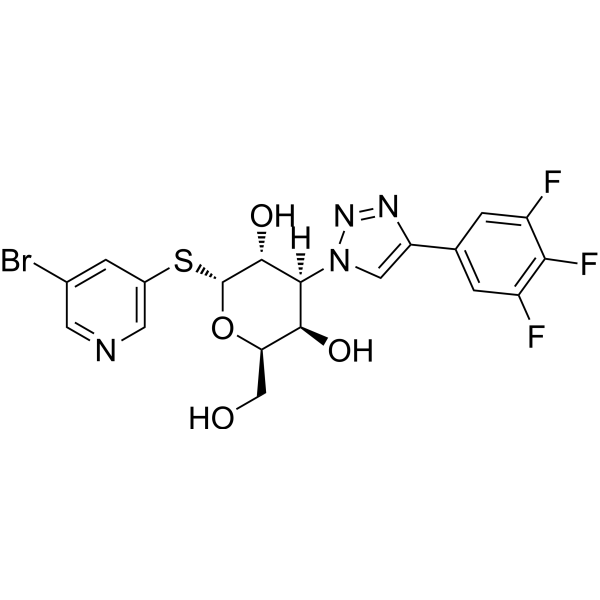 0 ImagesSynonyms: GB1211Selvigaltin (GB1211) is an orally active galectin-3 small molecule inhibitor with an IC50 value of 12 nM in rabbits, showing anti-tumor activity. Selvigaltin decreases galectin-3 levels in the liver and reduces biomarkers of liver function (AST, ALT, bilirubin), inflammation (cells foci) and fibrosis (PSR, SHG), as well as decreasing the mRNA and protein expression of several key inflammation and fibrosis biomarkers (IL6, TGFβ3, SNAI2, collagen). Selvigaltin restores T-cell activity and induces less tumors and metastasis.
-
Belapectin
 0 ImagesSynonyms: GR-MD-02Belapectin (GR-MD-02) is a Galectin-3 (Gal-3) inhibitor. Belapectin drives tumor-induced immunosuppression by inducing T cell Apoptosis. Belapectin promotes tumor regression and improves survival of tumor-bearing mice through a CD8+ T cell-dependent mechanism. Belapectin binds to Gal-3 with affinity Ki of 2.8 μM.
-
N-Acetyllactosamine
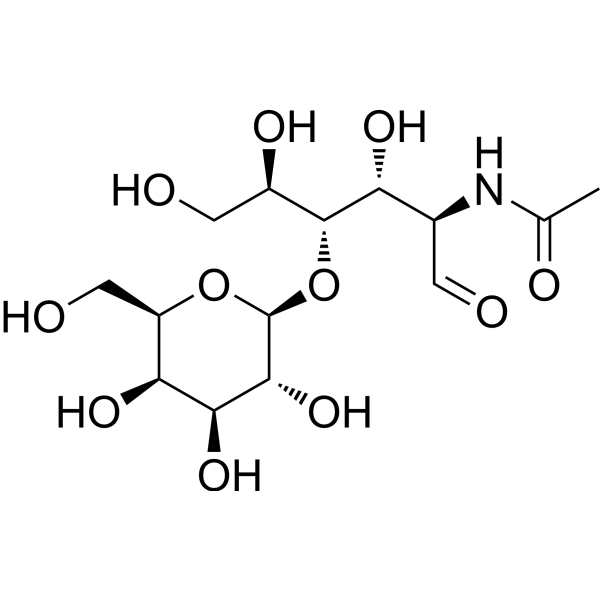 0 ImagesSynonyms: N-Acetyl-D-lactosamineN-Acetyllactosamine (N-Acetyl-D-lactosamine), a nitrogen-containing disaccharide, is a galectin-3 inhibitor, which is an important component of various oligosaccharides such as glycoproteins and sialyl Lewis X. N-Acetyllactosamine can be used as the starting material for the synthesis of various oligosaccharides. N-Acetyllactosamine has prebiotic effects.
-
GB1841
 0 ImagesCat. No.: HY-183582CAS No.: 2573135-33-6GB1841 is an orally active and selective galectin inhibitor with human galectin-1 Kd of 0.027 μM, human galectin-3 Kd of 0.14 μM, mouse galectin-1 Kd of 0.034 μM and mouse galectin-3 Kd of 1.170 μM. GB1841 can be used for the research of lung cancer.
-
GB1908
 0 ImagesGB1908 is a selective and orally active galectin-1 inhibitor with Ki values of 57 nM and 72 nM for human and mouse galectin-1, respectively. GB1908 displays >50-fold selectivity over galectin-3. GB1908 can be used for the study of lung cancer.
-
Galectin-3 antagonist 1
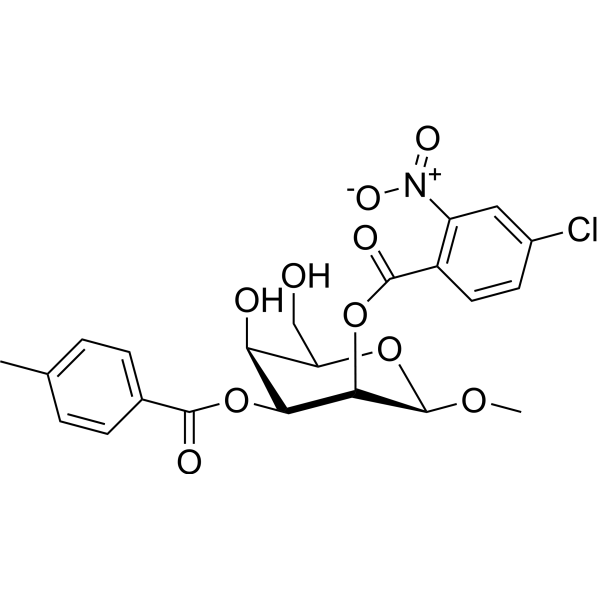 0 ImagesGalectin-3 antagonist 1 (compound 15) is a potent and selective Galectin-3 (Gal-3) antagonist with Kd value of 5.3 μM. Meanwhile, Galectin-3 antagonist 1 binds to various Galectin with Kd values of 250 μM (Gal-4N), 18 μM (Gal-4C), 450 μM (Gal-8C), respectively.
-
G3-C12
 0 ImagesG3-C12 is a galectin-3 binding peptide, with Kd of 88 nM, and shows anticancer activity.
-
Galectin-3/galectin-8-IN-1
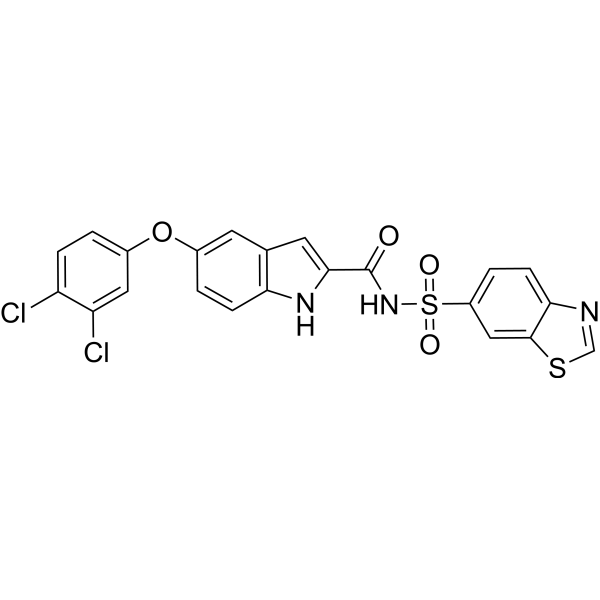 0 ImagesGalectin-3/galectin-8-IN-1 (Compound 53) is a dual Galectin-3 and galectin-8 C-terminal domain inhibitor, with Kd values of 4.12 μM and 6.04 μM respectively. Galectin-3/galectin-8-IN-1 inhibits the MRC-5 lung fibroblast cells migration. Galectin-3/galectin-8-IN-1 can be used for research of cancer and tissue fibrosis.
-
Thiobis-β-Galactose-propyne
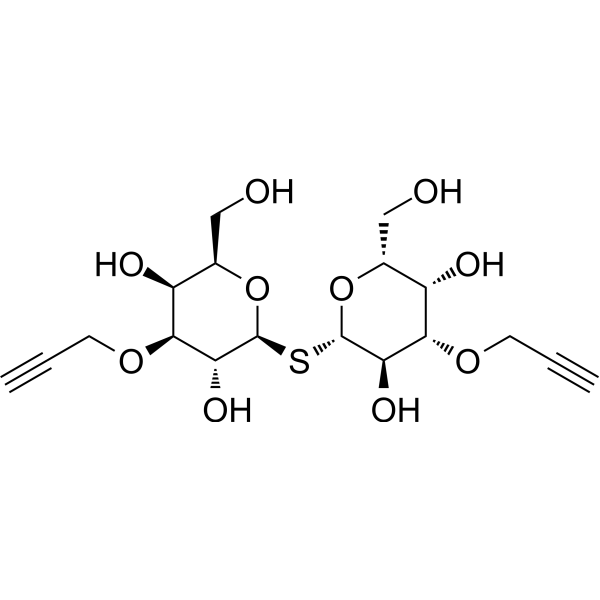 0 ImagesThiobis-β-Galactose-propyne is an effective multivalent galectin-3 (Gal-3) inhibitor. Galectin-3 is involved in many metabolism processes related to cancer. Galectin-3-IN-1 is a click chemistry reagent. It contains an alkyne group that can undergo a copper-catalyzed azide-alkyne cycloaddition (CuAAc) reaction with molecules that have an azide group.
-
PST3.1a
 0 ImagesPST3.1a is an orally active and brain-penetrant N-acetylglucosamine glycosyltransferase (MGAT5) inhibitor with a human IC50 of 2 µM. PST3.1a inhibits TGFβR and FAK signaling pathway activity. PST3.1a alters β1,6-GlcNAc N-glycans and microtubule/microfilament integrity, increases OLIG2 expression, and inhibits proliferation, migration, invasiveness, and clonogenic capacities of glioblastoma initiating cells. PST3.1a reduces invasive and proliferative capacity of glioblastoma initiating cells in orthotopic graft models, increases overall survival of orthotopic graft model mice. PST3.1a blunts MGAT5 overexpression, decreases renal fibrosis via collagen 1, collagen 4, and galectin 3 downregulation in a rat chronic kidney disease model. PST3.1a can be used for the research of glioblastoma multiforme and chronic kidney disease.
-
G3-C12 TFA
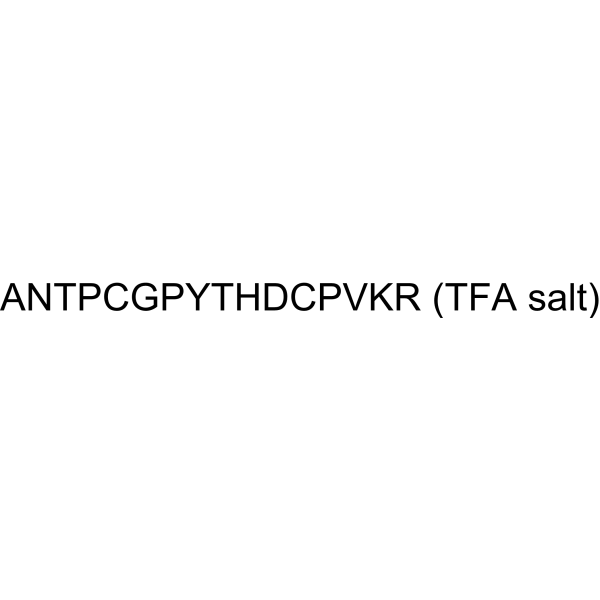 0 ImagesCat. No.: HY-P1592APureté: 99.44%G3-C12 (TFA) is a galectin-3 binding peptide, with Kd of 88 nM, and shows anticancer activity.
-
(2S)-Selvigaltin
 0 ImagesCat. No.: HY-147041APureté: 99.46%Synonyms: (2S)-GB1211(2S)-Selvigaltin is the S-enantiomer of Selvigaltin (HY-147041). Selvigaltin is an orally active galectin-3 (Gal-3) inhibitor.
-
GB1490
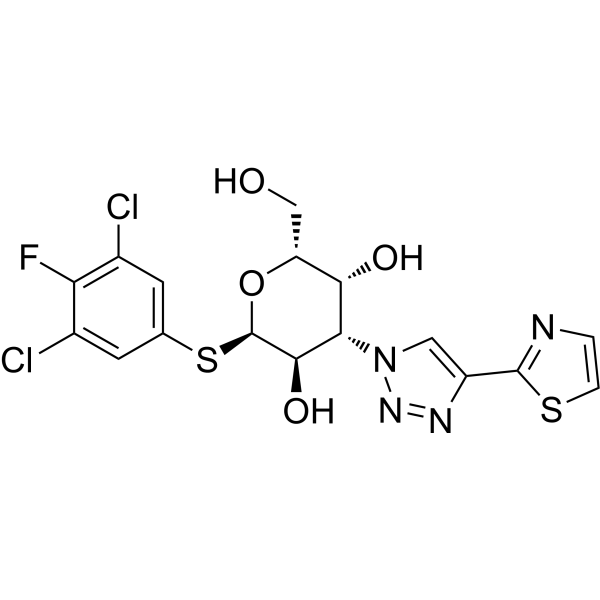 0 ImagesGB1490 is an orally active galectin inhibitor with Kd values of 0.4 μM and 2.7 μM for galectin-1 and galectin-3, respectively.
-
Galectin-4-IN-3
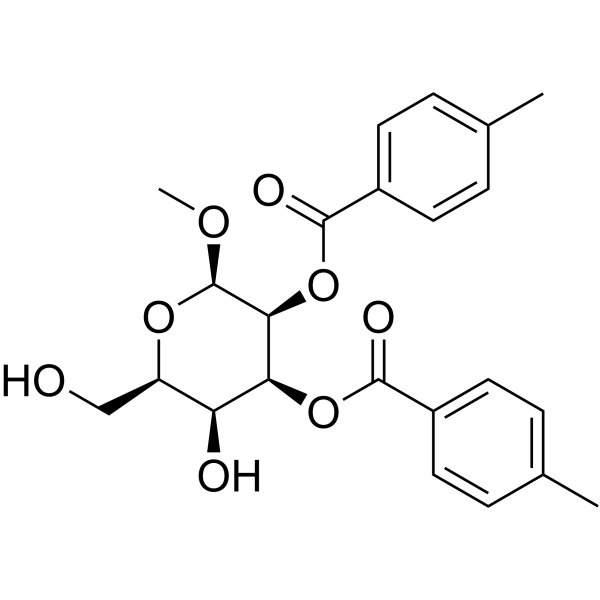 0 ImagesCat. No.: HY-157821CAS No.: 1044566-26-8Galectin-4-IN-3 (Compound 11) is a Galectin 4C inhibitor, with a Kd of 160 μM.
-
Dual Galectin-3/EGFR-IN-1
 0 ImagesCat. No.: HY-170543Dual Galectin-3/EGFR-IN-1 (Compound 29) is the dual inhibitor for Galectin-3 and EGFR with the KD of 52.29 μM and 3.31 μM. Dual Galectin-3/EGFR-IN-1 inhibits TGF-β-induced hepatic stellate cell (HSCs) activation, induces apoptosis in LX-2 cell, and exhibits anti-liver fibrotic efficacy.
-
Galectin-3-IN-7
 0 ImagesCat. No.: HY-179410Galectin-3-IN-7 is a selective Galectin-3 inhibitor with a Kd of 5.7 nM and shows 390-fold selectivity over Gal-1. Galectin-3-IN-7 can downregulate profibrotic signaling such as ACTA2, COL1A2, and FN1 in TGFβ-stimulated LX2 hepatic stellate cells. Galectin-3-IN-7 can be used for the research of fibrosis.
-
Gal-1-IN-1
 0 ImagesCat. No.: HY-181648CAS No.: 3059548-99-8Gal-1-IN-1 is a potent and selective human galectin-1 (hGal-1) inhibitor with a Ki of 0.022 μM. Gal-1-IN-1 blocks hGal-1 binding to tumor cells and suppresses human galectin-1-induced pre-apoptosis state. Gal-1-IN-1 reduces hGal-1-expressing cancer cell viability. Gal-1-IN-1 can be used for the research of breast cancer.
-
Galectin-3-IN-4
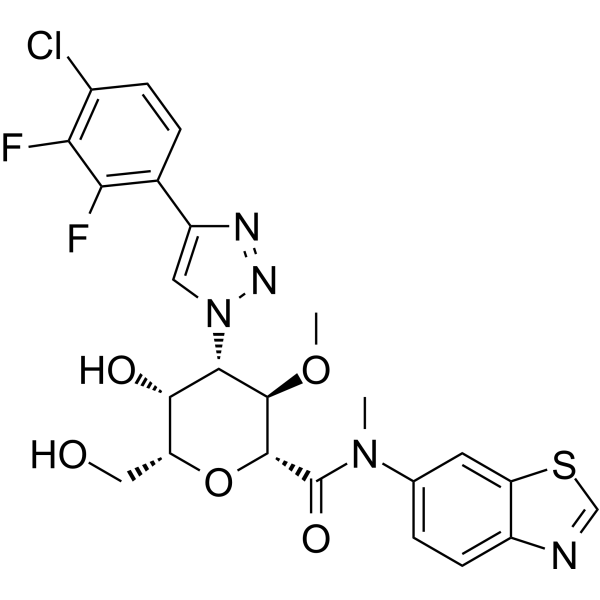 0 ImagesCat. No.: HY-163407CAS No.: 2496515-38-7Galectin-3-IN-4 (compound 5) is a carboxamide analog. Galectin-3-IN-4 is a potent, selective, and orally bioavailable inhibitor of human and mouse galectin-3, with IC50 values of 21 and 167 nM for hGal-3 and mGal-3, respectively. Galectin-3-IN-4 has IC50 values of 1580 and 2750 nM for hGal-1 and hGal-9, respectively.
- 1
- 2




