



Galectin-1
Galectin-1 is a β-galactoside-binding protein with intracellular and extracellular activity, and evidence identifies Galectin-1 and its ligands as regulators of T-cell homeostasis, survival, immune disorders, inflammation, allergies, and host-pathogen interactions[1]. Mechanistically, Galectin-1 regulates immune and inflammatory cells through carbohydrate-dependent binding and cross-linking of cell-surface glycoproteins, including CD2, CD3, CD7, CD43, and CD45 on T cells[1]. In disease models, Galectin-1 inhibited microglial activation and ameliorated neurodegeneration in a Parkinson’s disease model through the MAPK/IκB/NFκB axis and its carbohydrate-recognition domain[2]. In collagen-induced arthritis, absence of endogenous Galectin-1 increased susceptibility and disease severity, supporting its inhibitory role in experimental inflammation[3]. Compared with related isoforms, Galectin-1 and Galectin-3 bind distinct T-cell surface glycoprotein receptors, while Galectin-9 and Galectin-1 require different glycan ligands and glycoprotein receptors to trigger T-cell death[4][5]. For experimental oncology applications, Galectin-1 overexpression was detected in hepatocellular carcinoma, and OTX008 combined with sorafenib significantly reduced tumor growth and size in tumor-cell models[6].
Verweise:
- [1]. Camby I, et al. Galectin-1: a small protein with major functions. Glycobiology. 2006 Nov;16(11):137R-157R. [Content Brief]
- [2]. Li Y, et al. Galectin-1 attenuates neurodegeneration in Parkinson's disease model by modulating microglial MAPK/IκB/NFκB axis through its carbohydrate-recognition domain. Brain Behav Immun. 2020 Jan;83:214-225. [Content Brief]
- [3]. Iqbal AJ, et al. Endogenous galectin-1 exerts tonic inhibition on experimental arthritis. J Immunol. 2013 Jul 1;191(1):171-7. [Content Brief]
- [4]. Stillman BN, et al. Galectin-3 and galectin-1 bind distinct cell surface glycoprotein receptors to induce T cell death. J Immunol. 2006 Jan 15;176(2):778-89. [Content Brief]
- [5]. Bi S, et al. Structural features of galectin-9 and galectin-1 that determine distinct T cell death pathways. J Biol Chem. 2008 May 2;283(18):12248-58. [Content Brief]
- [6]. Leung Z, et al. Galectin-1 promotes hepatocellular carcinoma and the combined therapeutic effect of OTX008 galectin-1 inhibitor and sorafenib in tumor cells. J Exp Clin Cancer Res. 2019 Oct 22;38(1):423. [Content Brief]
All Product Categories
-
Galectin-1 Verwandte Produkte (9)
Verwandte Produkte (9)

-
Antibodies (1)
-
Olitigaltin
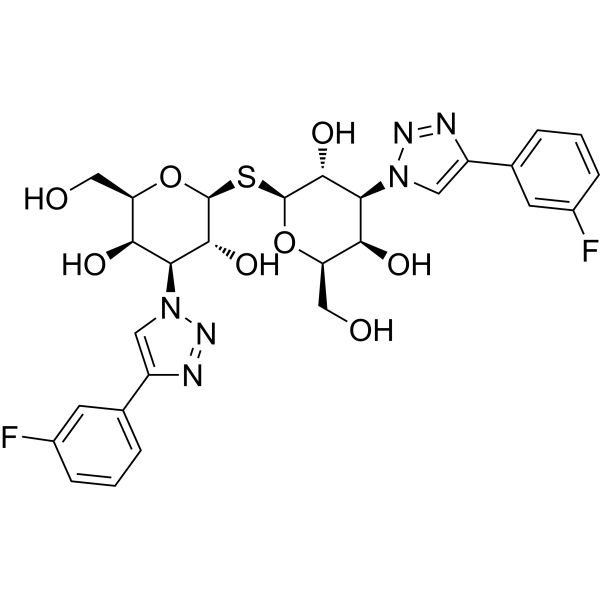 0 ImagesSynonyms: TD139; GB0139Olitigaltin (TD139) is a high-affinity Galectin-3 inhibitor with a Kd value of 14 nM. Olitigaltin inhibits the activity of the AKT/β-catenin pathway, induces Apoptosis, and downregulates SREBP1 expression. Olitigaltin enhances the phosphorylation level of ERK. Olitigaltin alleviates bleomycin (HY-17565A)-induced advanced pulmonary fibrosis in mice. Olitigaltin delays the onset of diabetes, and improves glucose tolerance and serum insulin levels. Olitigaltin alleviates liver injury. Olitigaltin maintains the structure of hippocampal excitatory synapses, restores γ-wave power in the hippocampal CA1 region, inhibits hippocampal neuroinflammation, and improves cognitive function in neuroinflammation models. Olitigaltin can be used in research related to thyroid cancer, idiopathic pulmonary fibrosis, type 1 diabetes, hepatitis, and cognitive dysfunction induced by neuroinflammation.
-
OTX008
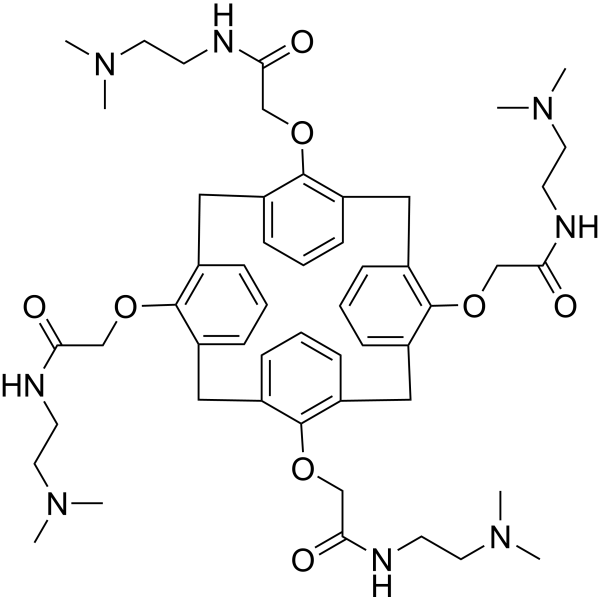 0 ImagesSynonyms: Calixarene 0118; PTX008OTX008 is a selective inhibitor of galectin-1.
-
GB1908
 0 ImagesGB1908 is a selective and orally active galectin-1 inhibitor with Ki values of 57 nM and 72 nM for human and mouse galectin-1, respectively. GB1908 displays >50-fold selectivity over galectin-3. GB1908 can be used for the study of lung cancer.
-
GB1490
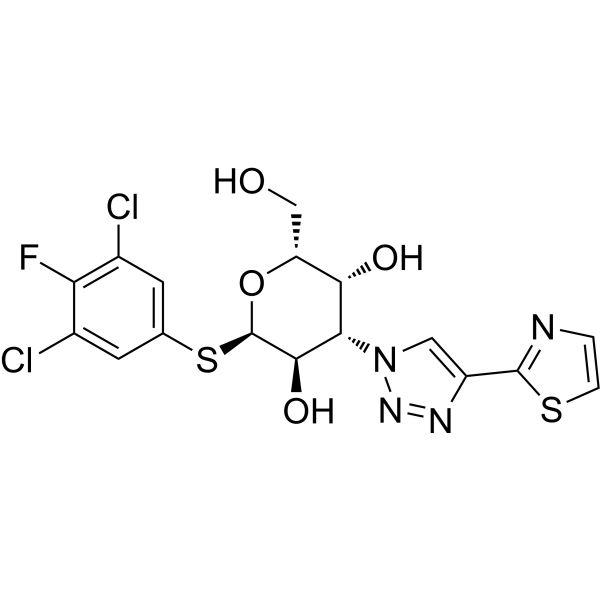 0 ImagesGB1490 is an orally active galectin inhibitor with Kd values of 0.4 μM and 2.7 μM for galectin-1 and galectin-3, respectively.
-
Galectin-4-IN-3
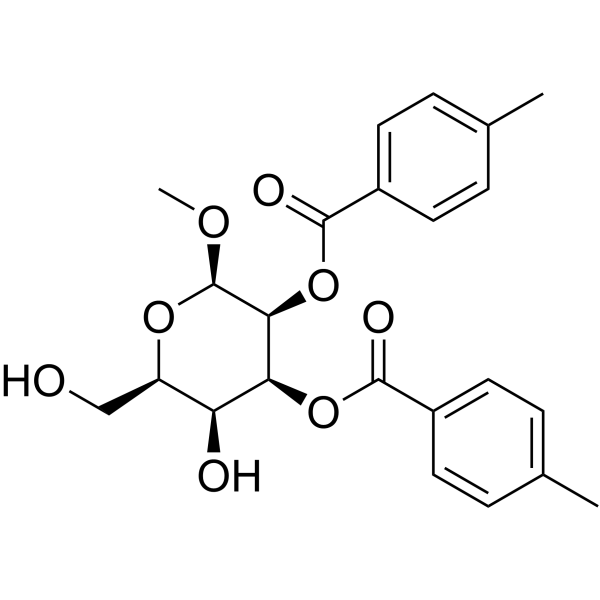 0 ImagesArt. -Nr.: HY-157821CAS. Nr.: 1044566-26-8Galectin-4-IN-3 (Compound 11) is a Galectin 4C inhibitor, with a Kd of 160 μM.
-
GB1841
 0 ImagesArt. -Nr.: HY-183582CAS. Nr.: 2573135-33-6GB1841 is an orally active and selective galectin inhibitor with human galectin-1 Kd of 0.027 μM, human galectin-3 Kd of 0.14 μM, mouse galectin-1 Kd of 0.034 μM and mouse galectin-3 Kd of 1.170 μM. GB1841 can be used for the research of lung cancer.
-
Gal-1-IN-1
 0 ImagesArt. -Nr.: HY-181648CAS. Nr.: 3059548-99-8Gal-1-IN-1 is a potent and selective human galectin-1 (hGal-1) inhibitor with a Ki of 0.022 μM. Gal-1-IN-1 blocks hGal-1 binding to tumor cells and suppresses human galectin-1-induced pre-apoptosis state. Gal-1-IN-1 reduces hGal-1-expressing cancer cell viability. Gal-1-IN-1 can be used for the research of breast cancer.
-
Apoptosis inducer 8
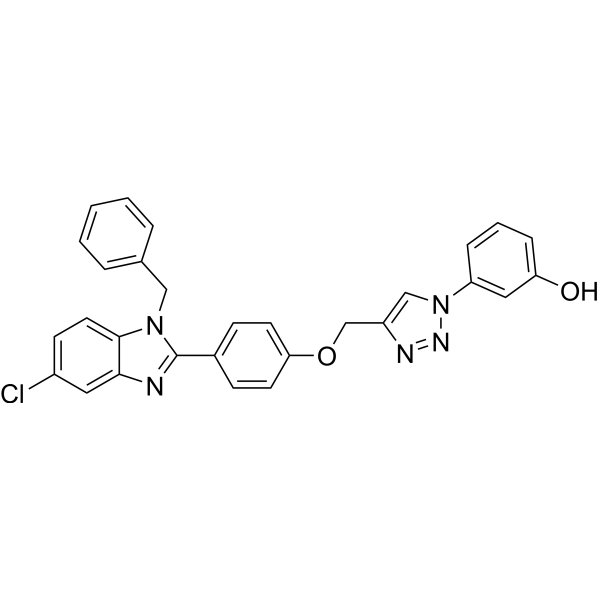 0 ImagesArt. -Nr.: HY-147865CAS. Nr.: 2470024-51-0Apoptosis inducer 8 (Compound 7c) is a galectin-1 (gal-1) mediated apoptosis-inducing agent against global major leading lung cancer burden. Apoptosis inducer 8 significantly reduced the gal-1 protein level. Apoptosis inducer 8 is also a PET imaging agent.
-
Galectin-3-IN-4
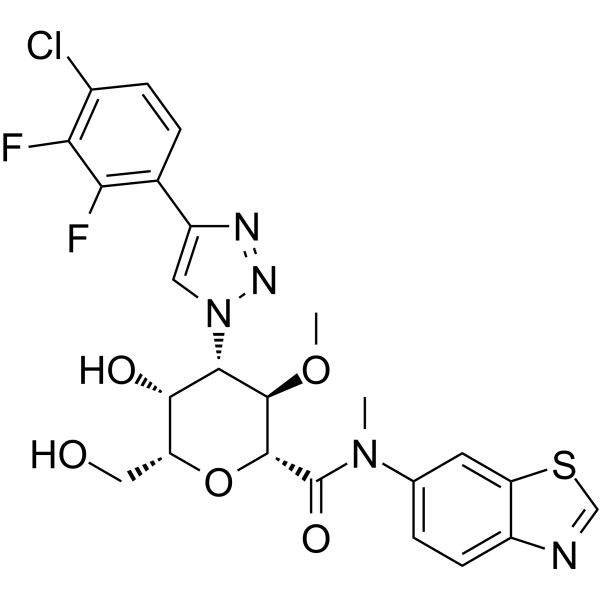 0 ImagesArt. -Nr.: HY-163407CAS. Nr.: 2496515-38-7Galectin-3-IN-4 (compound 5) is a carboxamide analog. Galectin-3-IN-4 is a potent, selective, and orally bioavailable inhibitor of human and mouse galectin-3, with IC50 values of 21 and 167 nM for hGal-3 and mGal-3, respectively. Galectin-3-IN-4 has IC50 values of 1580 and 2750 nM for hGal-1 and hGal-9, respectively.




