



HBV
Hepatitis B virus
HBV (Hepatitis B virus), abbreviated HBV, is a species of the genus Orthohepadnavirus, which is likewise a part of the Hepadnaviridae family of viruses. HBV causes the disease hepatitis B. The hepatitis B virus is classified as the type species of the Orthohepadnavirus, which contains three other species: the Ground squirrel hepatitis virus, Woodchuck hepatitis virus, and theWoolly monkey hepatitis B virus. The genus is classified as part of the Hepadnaviridae family. HBV is divided into four major serotypes (adr, adw, ayr, ayw) based on antigenic epitopes present on its envelope proteins, and into eight genotypes (A–H) according to overall nucleotide sequence variation of the genome. The genotypes have a distinct geographical distribution and are used in tracing the evolution and transmission of the virus. Differences between genotypes affect the disease severity, course and likelihood of complications, and response to treatment and possibly vaccination.
All Product Categories
-
HBV Related Products (384)
Related Products (384)

-
Antibodies (2)

-
HBV/HDV-IN-4 hydrochloride
 0 ImagesCat. No.: HY-163581ACAS No.: 3034059-40-7
-
GLPG3808
 0 ImagesCat. No.: HY-181347CAS No.: 2346450-55-1
-
HBV/HDV-IN-1
 0 ImagesCat. No.: HY-161604CAS No.: 3034161-55-9HBV/HDV-IN-1 (Compd 122) is a HBV, HDV and PD-1/PD-L1 inhibitor, with EC50 values of 8 nM for T cell activation and 35 nM for PD-L1 internalization.
-
Pevifoscorvir
 0 ImagesCat. No.: HY-169993ACAS No.: 2495324-71-3Synonyms: ALG-000184 free acidPevifoscorvir (ALG-000184 (free acid)) is an orally active inhibitor of hepatitis B virus (HBV), and it is also a prodrug of ALG-001075 (HY-177022). Pevifoscorvir can inhibit the production of HBV DNA in liver cells. Pevifoscorvir can be used in the research of chronic hepatitis B.
-
AB-452
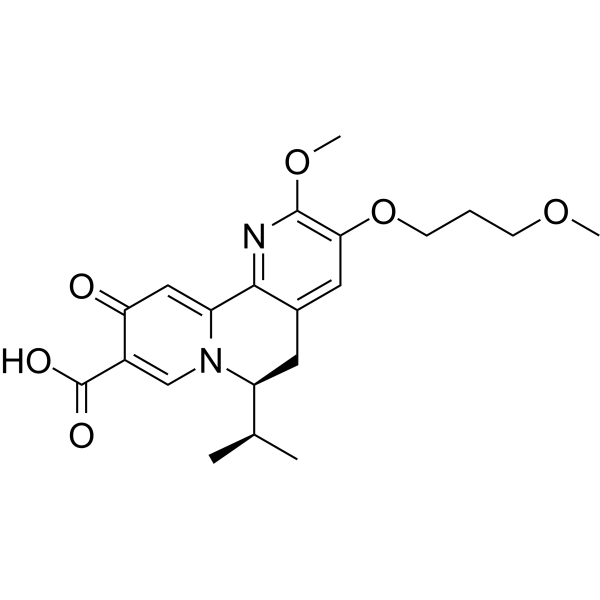 0 ImagesCat. No.: HY-163149CAS No.: 2226178-35-2
-
Daplusiran sodium
 0 ImagesCat. No.: HY-177625A
-
Isochlorogenic acid A (Standard)
 0 ImagesSynonyms: 3,5-Dicaffeoylquinic acid (Standard); 3,5-CQA (Standard)Isochlorogenic acid A (Standard) is the analytical standard of Isochlorogenic acid A. This product is intended for research and analytical applications. Isochlorogenic acid A (3,5-Dicaffeoylquinic acid) is a natural phenolic acid with anti-mutagenicity, anti-HBV, anti-HIV, anti-oxidant, anti-bacterial, and anti-inflammatoryy activities.
-
HBeAg ligand 1
 0 ImagesCat. No.: HY-174857CAS No.: 2361022-13-9
-
Apigenin-4'-α-L-rhamnoside
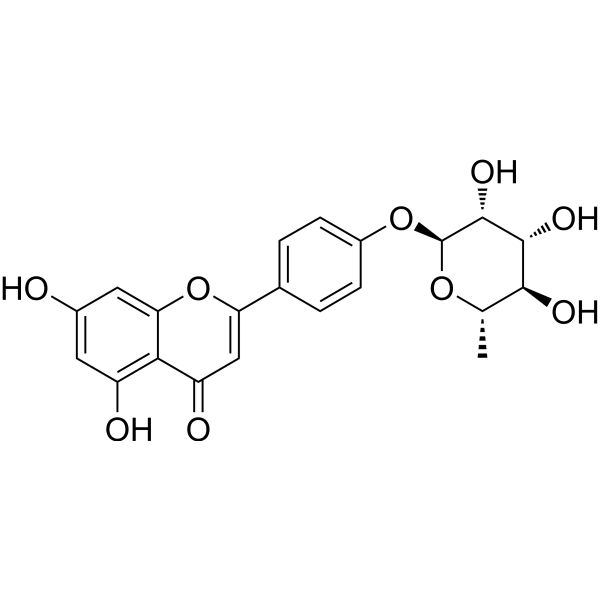 0 ImagesCat. No.: HY-N2882CAS No.: 133538-77-9
-
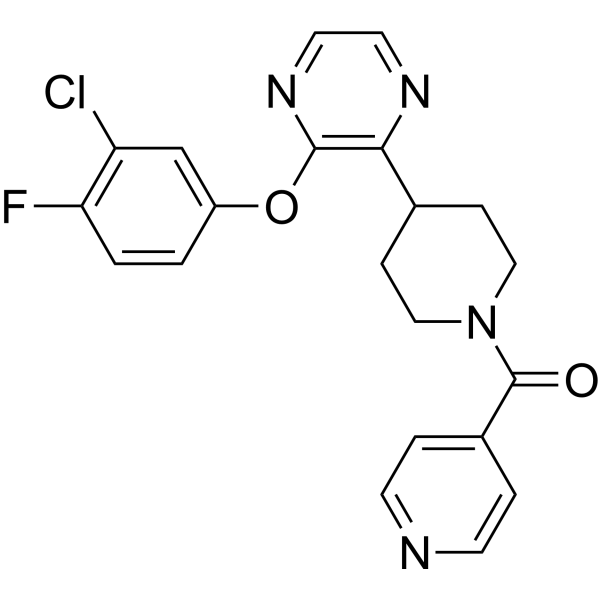
Rapavir
 0 ImagesCat. No.: HY-172835Synonyms: JH-B10Rapavir (JH-B10) is a selective and potent sodium taurocholate cotransporting polypeptide (NTCP) inhibitor with an IC50 value of 1.8 nM for the uptake of taurocholic acid-d4 (TCA-d4). Rapavir exerts antiviral activity by directly binding to NTCP and blocking the entry of the virus into cells during the HBV infection phase. Rapavir is promising for research of HBV infections.
-
HBV-IN-14
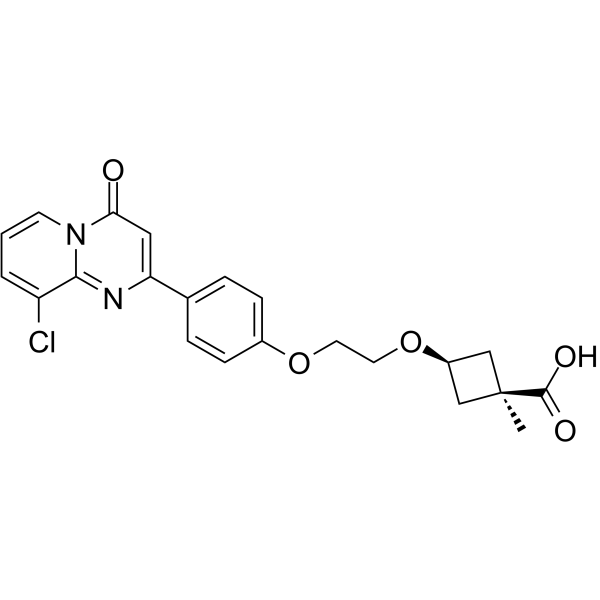 0 ImagesCat. No.: HY-144045CAS No.: 2712529-19-4HBV-IN-14 is a potent inhibitor of covalently closed circular DNA (cccDNA). cccDNA serves as the template for viral RNA transcription and subsequent viral DNA generation. HBV-IN-14 is a pyridinopyrimidinones compound. HBV-IN-14 has the potential for the research of HBV infection (extracted from patent WO2021190502A1, compound 5).
-
(-)-Carbovir
 0 ImagesSynonyms: (-)-NSC 614846(-)-Carbovir is an active compound.
-
Bentysrepinine
 0 ImagesCat. No.: HY-111073CAS No.: 934264-38-7Synonyms: Y101Bentysrepinine (Y101) is an orally active HBV inhibitor with anti-hepatitis B virus infection activity. Bentysrepinine exhibits favorable pharmacokinetic characteristics, with absolute bioavailability of 44.9%, 43.1%, and 19.2% in rats, dogs, and monkeys, respectively, and it does not accumulate in monkeys after 90 days of oral administration. Bentysrepinine is under research in the antiviral and hepatitis fields.
-
HBV-IN-12
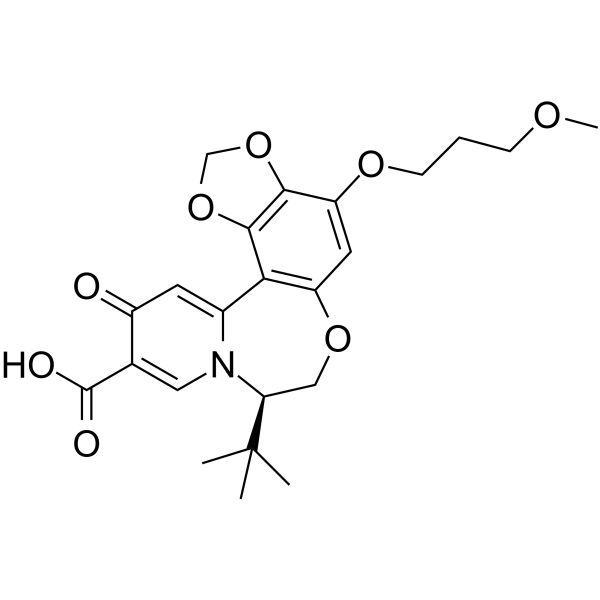 0 ImagesCat. No.: HY-145059CAS No.: 2724229-06-3HBV-IN-12 is a potent hepatitis B surface antigen (HBsAg) inhibitor (0.001 μM< EC50 ≤0.05 μM). HBV-IN-12 shows anti-HBV DNA activity (0.001 μM<EC50 ≤0.02 μM). From patent WO2021204252A1, compound 15.
-
HBV-IN-24
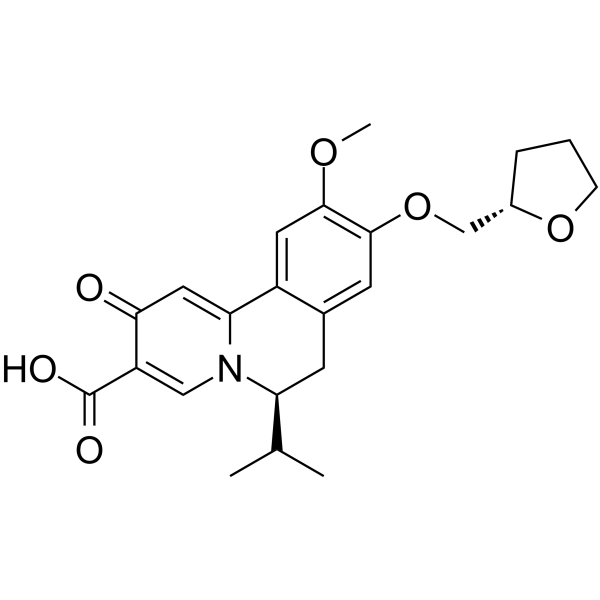 0 ImagesCat. No.: HY-147863CAS No.: 3034440-12-2
-
HBV-IN-22
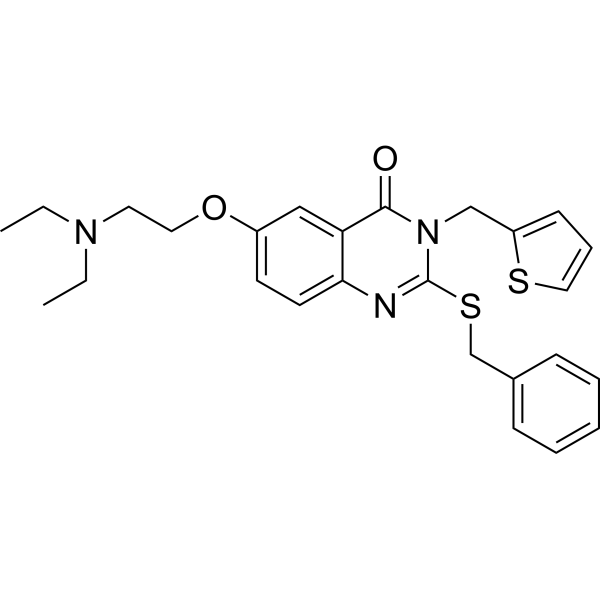 0 ImagesCat. No.: HY-146394CAS No.: 2338573-94-5
-
D-CAM-14
 0 ImagesCat. No.: HY-179265D-CAM-14 is a potent HBV capsid assembly modulator with potent anti-HBV activity (EC50 = 0.1 nM, EC90 = 9 nM in HepAD38 cells). D-CAM-14 suppresses HBeAg, and HBcAg in HBV-infected HepG2-NTCP cells, with EC50 values of 98 and 67 nM, respectively. D-CAM-14 has distinct impacts on capsid radii and the morphology of preassembled capsids. D-CAM-14 can be used for HBV infection disease research.




