



Endogenous Metabolite
Endogenous metabolites refer to the collective set of small-molecule chemical substances present within organelles, cells, organs, biological fluids, or entire organisms; their molecular weights are typically less than 1500 Da. These endogenous metabolites—including lipids, amino acids, short peptides, nucleic acids, carbohydrates, alcohols, and organic acids—not only participate in signal transduction governing genomic function but also receive upstream signals from the environment, thereby bridging the interrelationships among genotype, environment, and phenotype.
Based on their biological functions, microbial endogenous metabolites can be broadly classified into two categories: primary metabolites and secondary metabolites. Primary metabolites are the core molecules essential for supporting microbial growth and proliferation; they serve to provide energy to the microbes or act as precursors and cofactors for the synthesis of biological macromolecules. In contrast, microbial secondary metabolites are a class of low-molecular-weight products that are not strictly essential for microbial growth. Nevertheless, microbial secondary metabolites include numerous substances—such as antibiotics, anti-tumor agents, and cholesterol-lowering agents—that are of critical importance to human health[1][2][3]. Furthermore, the metabolome of a biological organism is influenced by a variety of endogenous factors, including age, sex, body composition, genetic background, and underlying pathological states. The small-molecule metabolites within an organism are diverse and highly distinct; their levels are typically subject to the synergistic regulation of a vast array of enzymes and transport proteins, undergoing processes of synthesis, transformation, degradation, and compartmentalized distribution. Metabolomics research based on endogenous metabolites has been widely applied in the fields of metabolic disorders, neurodegenerative diseases, cancer, cardiovascular diseases, and infectious diseases, where these metabolites hold potential utility as biomarkers or therapeutic targets[1][2][3].
References:
- [1]. Seyedsayamdost MR. Toward a global picture of bacterial secondary metabolism. J Ind Microbiol Biotechnol. 2019 Mar;46(3-4):301-311. [Content Brief]
- [2]. Ruiz B, et al. Production of microbial secondary metabolites: regulation by the carbon source. Crit Rev Microbiol. 2010 May;36(2):146-67. [Content Brief]
- [3]. Wishart DS. Metabolomics for Investigating Physiological and Pathophysiological Processes. Physiol Rev. 2019 Oct 1;99(4):1819-1875. [Content Brief]
Endogenous Metabolite Isoform Specific Products
All Product Categories
-
Endogenous Metabolite Related Products (8420)
Related Products (8420)

-
Antibodies (477)
-
Endogenous Metabolite Isoform Comparison
-
4-Methyl-1-phenyl-2-pentanone (Standard)
 0 ImagesCat. No.: HY-W041470RCAS No.: 5349-62-2Chlorpromazine (hydrochloride) (Standard) is the analytical standard of Chlorpromazine (hydrochloride). This product is intended for research and analytical applications. Chlorpromazine hydrochloride is an orally active, blood-brain barrier-transparent antipsychotic agent that effectively antagonises D2 dopamine receptors and 5-HT2A, which is widely used in schizophrenia and other psychiatric disorders. Chlorpromazine hydrochloride exerts anti-cancer activity through a variety of pathways, including anti-proliferation, induction of autophagy and cycle arrest (G2-M phase), inhibition of cytochrome c oxidase (CcO), inhibition of tumour growth and metastasis, and inhibition of tumour immune escape. Chlorpromazine hydrochloride also blocks hNav1.7 channels (IC50=25.9 μM; concentration-dependent) and HERG potassium channels (IC50=21.6 μM), which has potential for analgesic and cardiac arrhythmic studies. Chlorpromazine hydrochloride also can inhibit clathrin-mediated endocytosis.
-
2-Methoxyestradiol-13C,d3
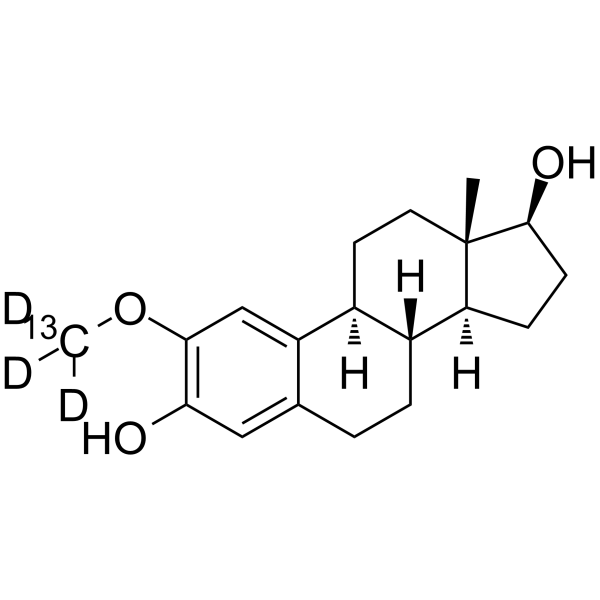 0 ImagesCat. No.: HY-12033SCAS No.: 1217470-09-12-Methoxyestradiol-13C,d3 is the 13C- and deuterium labeled 2-Methoxyestradiol. 2-Methoxyestradiol (2-ME2), an orally active endogenous metabolite of 17β-estradiol (E2), is an apoptosis inducer and an angiogenesis inhibitor with potent antineoplastic activity. 2-Methoxyestradiol also destablize microtubules. 2-Methoxyestradio, also a potent superoxide dismutase (SOD) inhibitor and a ROS-generating agent, induces autophagy in the transformed cell line HEK293 and the cancer cell lines U87 and HeLa.
-
Estetrol-d3
 0 ImagesCat. No.: HY-W744272Estetrol-d3 is the deuterium labeled Estetrol (HY-15731). Estetrol, an orally active estrogen synthesized exclusively during pregnancy by the human fetal liver, is a selective nuclear?estrogen receptor?modulator. Estetrol binds?ERα?as well as?ERβ?(with a fourfold lower affinity). Estetrol increases?eNOS?expression/activity and NO synthesis in endothelial cells. Estetrol exerts estrogenic actions on the endometrium or the central nervous system but presents antagonistic effects on the breast. Estetrol can be used in contraception and menopausal hormone research.
-
D-Fructose-d2
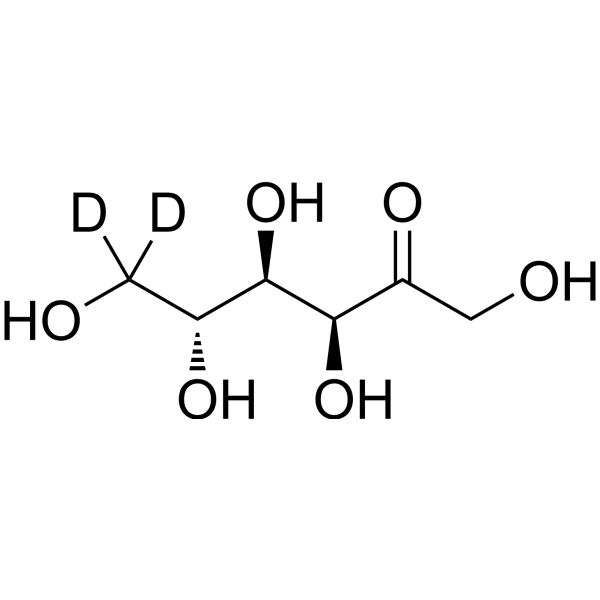 0 ImagesCat. No.: HY-N7092S16CAS No.: 285979-75-1Synonyms: D(-)-Fructose-d2D-Fructose-d2 is the deuterium labeled D-Fructose. D-Fructose (D(-)-Fructose) is a naturally occurring monosaccharide found in many plants.
-
2,6-Diaminoheptanedioic acid-15N2
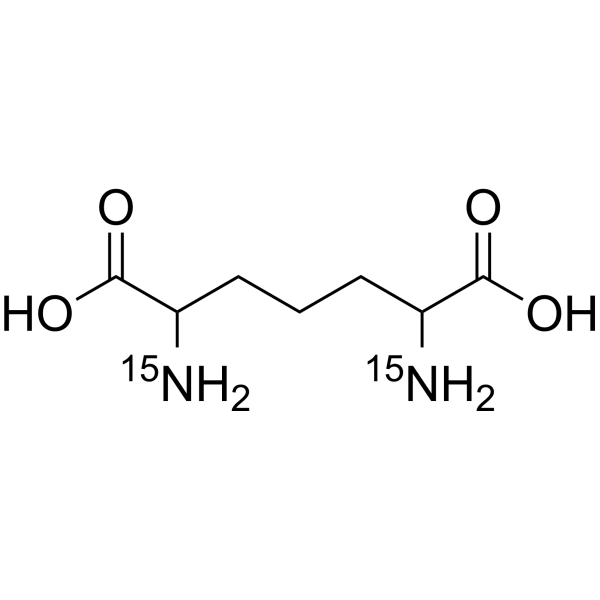 0 ImagesCat. No.: HY-128746S12,6-Diaminoheptanedioic acid-15N2 is 15N labeled 2,6-Diaminoheptanedioic acid (HY-128746). 2,6-Diaminoheptanedioic acid is an endogenous metabolite.
-
α,γ-Homocysteinase, Trichomonas vaginalis
 0 ImagesCat. No.: HY-E70894α,γ-Homocysteinase, Trichomonas vaginalis is a pyridoxal-5’-phosphate dependent enzyme. α,γ-Homocysteinase, Trichomonas vaginalis is a mutant of homocysteinase from Trichomonas vaginalis encoded by mgl1 gene, containing three point mutations, such as; Phe47Leu, Asp172Glu, Ser308Tyr. α,γ-Homocysteinase, Trichomonas vaginalis can metabolize homocysteine into α-keto butyrate, hydrogen sulfide and ammonia.
-
1-Hexadecanol-d31
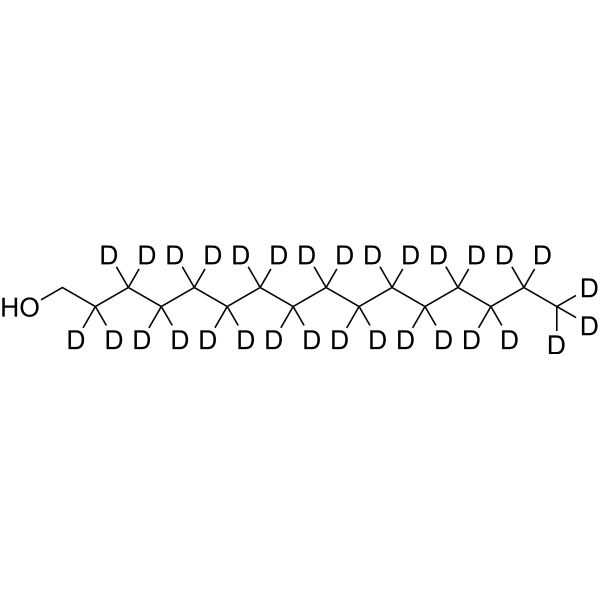 0 ImagesCat. No.: HY-B1465SCAS No.: 203633-15-21-Hexadecanol-d31 is the deuterium labeled 1-Hexadecanol. 1-Hexadecanol is a fatty alcohol, a lipophilic substrate.
-
[(2E,4E)-Octadienoyl]-N-isobutylamide
![[(2E,4E)-Octadienoyl]-N-isobutylamide](https://file.medchemexpress.com/product_pic/hy-n15223.gif "Click to View [(2E,4E)-Octadienoyl]-N-isobutylamide Product Detail") 0 ImagesCat. No.: HY-N15223CAS No.: 23512-47-2[(2E,4E)-Octadienoyl]-N-isobutylamide (compound 2) is an isobutylamide that can be isolated from pepper seeds.
0 ImagesCat. No.: HY-N15223CAS No.: 23512-47-2[(2E,4E)-Octadienoyl]-N-isobutylamide (compound 2) is an isobutylamide that can be isolated from pepper seeds.
-
Synephrine hemitartrate
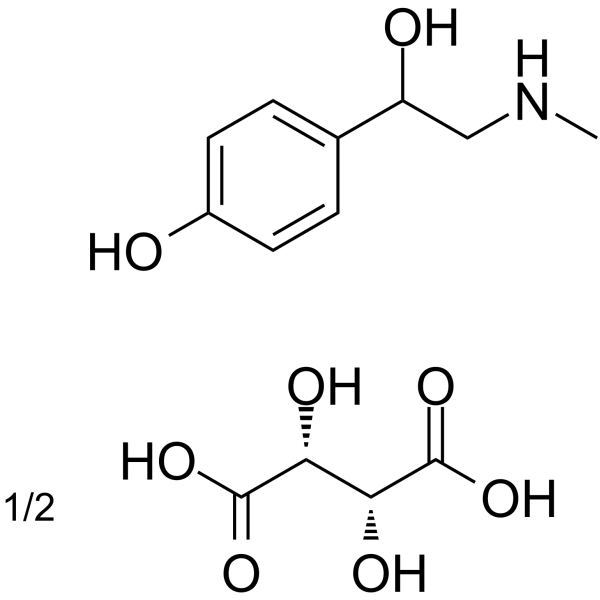 0 ImagesCat. No.: HY-N0132BCAS No.: 16589-24-5Synonyms: Oxedrine hemitartrateSynephrine (Oxedrine) hemitartrate, an alkaloid, is an α-adrenergic and β-adrenergic agonist derived from the Citrus aurantium. Synephrine hemitartrate is a sympathomimetic compound and can be used for weight loss.
-
3-Methyl-2-cyclopenten-1-one (Standard)
 0 ImagesCat. No.: HY-W013014RCAS No.: 2758-18-13-Methyl-2-cyclopenten-1-one Standard is the analytical standard of 3-Methyl-2-cyclopenten-1-one (HY-W013014). This product is intended for research and analytical applications. 3-Methyl-2-cyclopenten-1-one is an α,β-unsaturated carbonyl compound and an endogenous metabolite. 3-Methyl-2-cyclopenten-1-one exhibits weak glutathione (GSH) reactivity and urease (Urease) inhibitory activity. 3-Methyl-2-cyclopenten-1-one can be used in research on peptic ulcers and colorectal cancer.
-
Tartaric acid disodium dihydrate (Standard)
 0 ImagesSynonyms: Sodium tartrate dibasic dihydrate (Standard); Sodium tartrate dihydrate (Standard)Tartaric acid (disodium dihydrate) (Standard) is the analytical standard of Tartaric acid (disodium dihydrate). This product is intended for research and analytical applications. Tartaric acid disodium dehydrate (L-(+) -tartaric acid) is an orally active weak organic acid that can be isolated from grapes. Tartaric acid disodium dehydrate has vasodilatory and antihypertensive effects. Tartaric acid disodium dehydrate can be used as flavorings and antioxidants in a range of foods and beverages. Tartaric acid disodium dehydrate can be used in laser frequency doubling and optical limiting applications[4].
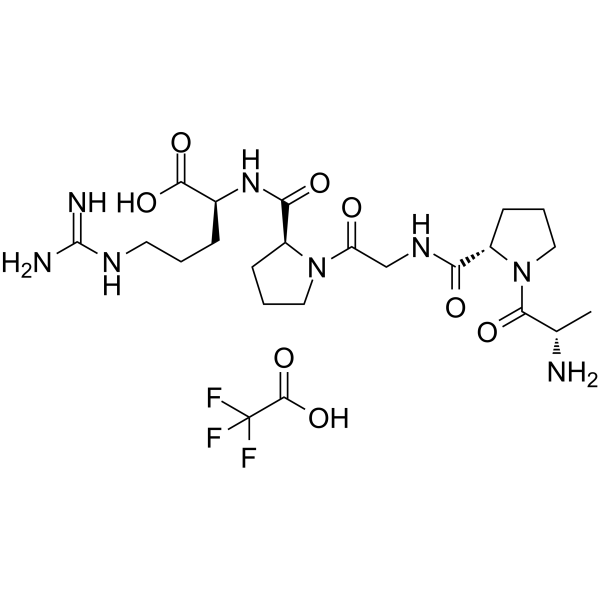
-
TG (16:0_16:0_20:4)
 0 ImagesCat. No.: HY-176989CAS No.: 944336-76-9TG (16:0_16:0_20:4) is a monoarachidic acid triglyceride, belonging to the triacylglycerol lipid class.
-
Metenaticin A
 0 ImagesCat. No.: HY-N16423CAS No.: 866954-29-2Metenaticin A (Compound 8), a polyketide, is a microbial secondary metabolite. Metenaticin A can be isolated from Streptomyces violaceoruber TU22.
-
D-Mannose-13C,d
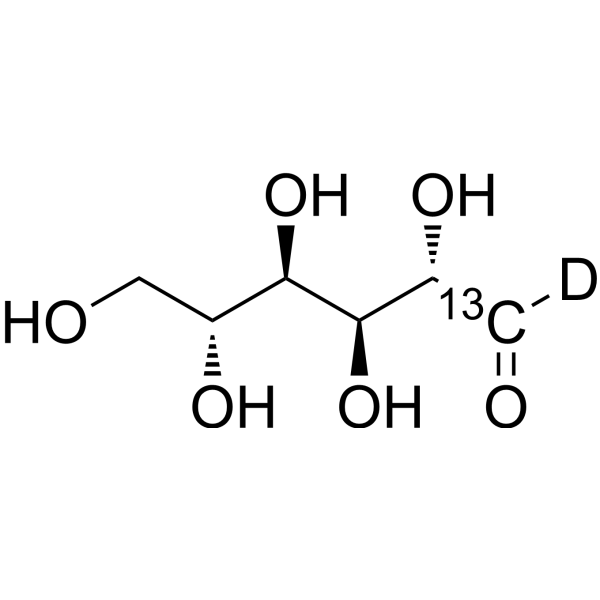 0 ImagesCat. No.: HY-N0379S14CAS No.: 83379-45-7D-Mannose-13C,d is the deuterium and 13C labeled D-Mannose. D-Mannose is a carbohydrate, which plays an important role in human metabolism, especially in the glycosylationof specific prote.
-
4-Hydroxyestrone-13C6
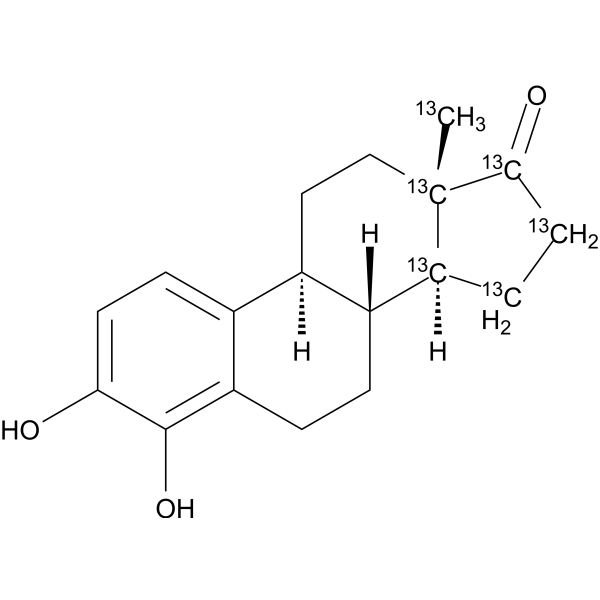 0 ImagesCat. No.: HY-W009300S1Synonyms: 4-OHE1-13C64-Hydroxyestrone (4-OHE1)-13C6 is a 13C-labeled 4-Hydroxyestrone (HY-W009300). 4-Hydroxyestrone is a brain-penetrant estrogen metabolite. 4-Hydroxyestrone shows neuroprotective effects involving increased cytoplasmic localization of p53 resulting from SIRT1-mediated p53 deacetylation. 4-Hydroxyestrone relies on PDI to mediate its protective effect against chemically induced ferroptosis in estrogen receptor-negative cancer cells. 4-Hydroxyestrone inhibits lipid peroxidation and lipid-ROS accumulation. 4-Hydroxyestrone blocks preovulatory luteinizing hormone surges in Rattus norvegicus. 4-Hydroxyestrone can be used for the researches of neurodegeneration, breast cancer and endocrine disease.
-
α-Amylase, Porcine
 0 ImagesCat. No.: HY-B2193Hα-Amylase, Porcine (EC 3.2.1.1) is a protein enzyme that hydrolyses alpha bonds of large, alpha-linked polysaccharides, such as starch and glycogen, yielding glucose and maltose.
-
Sitagliptin hydrochloride
 0 ImagesCat. No.: HY-13749ECAS No.: 486459-71-6Synonyms: MK-0431 hydrochlorideSitagliptin (MK-0431) hydrochloride is an orally active and highly selective DPP4 inhibitor with an IC50 value of 19 nM. Sitagliptin hydrochloride blocks the degradation of glucagon-like peptide-1 (GLP-1) and glucose-dependent insulinotropic peptide (GIP) by competing inhibition mechanism (Kᵢ = 1 nM), thereby increasing the level of active incretin. Sitagliptin hydrochloride can also directly stimulate the secretion of GLP-1 by intestinal L cells by activating the cAMP/PKA and ERK1/2 pathways, and this effect is independent of DPP-4. Sitagliptin hydrochloride shows protective effects on pancreatic islet grafts in 1-type diabetes models. Sitagliptin hydrochloride can be used for the study of 1-type and 2-type diabetes.
-
MBL-1
 0 ImagesCat. No.: HY-N6189CAS No.: 1815632-13-3MBL-1 is an orally active anti-inflammatory agent. MBL-1 can be isolated from the fermentation broth of Aspergillus sp. derived from gorgonians. MBL-1 inhibits the activity of the hCOX-2 protein with an IC50 of 5.77 μM. MBL-1 reduces the production of key pro-inflammatory mediators such as NO, ROS, IL-1β and IL-18 by inhibiting the MAPK/NF-κB and NLRP3 signaling pathways. MBL-1 exerts a protective effect against DSS-induced colitis. MBL-1 can be used for the research of ulcerative colitis.
-
D-Ribose-13C-2
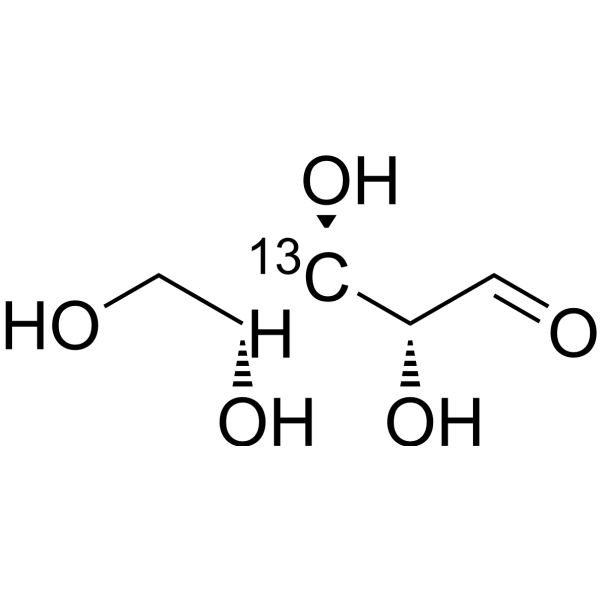 0 ImagesCat. No.: HY-W018772S3CAS No.: 211947-12-5D-Ribose-13C-2 is the 13C labeled D-Ribose. D-Ribose is an energy enhancer, and acts as a sugar moiety of ATP, and widely used as a metabolic therapy supplement for chronic fatigue syndrome or cardiac energy metabolism. D-Ribose is active in protein glyca




