



Endogenous Metabolite
Endogenous metabolites refer to the collective set of small-molecule chemical substances present within organelles, cells, organs, biological fluids, or entire organisms; their molecular weights are typically less than 1500 Da. These endogenous metabolites—including lipids, amino acids, short peptides, nucleic acids, carbohydrates, alcohols, and organic acids—not only participate in signal transduction governing genomic function but also receive upstream signals from the environment, thereby bridging the interrelationships among genotype, environment, and phenotype.
Based on their biological functions, microbial endogenous metabolites can be broadly classified into two categories: primary metabolites and secondary metabolites. Primary metabolites are the core molecules essential for supporting microbial growth and proliferation; they serve to provide energy to the microbes or act as precursors and cofactors for the synthesis of biological macromolecules. In contrast, microbial secondary metabolites are a class of low-molecular-weight products that are not strictly essential for microbial growth. Nevertheless, microbial secondary metabolites include numerous substances—such as antibiotics, anti-tumor agents, and cholesterol-lowering agents—that are of critical importance to human health[1][2][3]. Furthermore, the metabolome of a biological organism is influenced by a variety of endogenous factors, including age, sex, body composition, genetic background, and underlying pathological states. The small-molecule metabolites within an organism are diverse and highly distinct; their levels are typically subject to the synergistic regulation of a vast array of enzymes and transport proteins, undergoing processes of synthesis, transformation, degradation, and compartmentalized distribution. Metabolomics research based on endogenous metabolites has been widely applied in the fields of metabolic disorders, neurodegenerative diseases, cancer, cardiovascular diseases, and infectious diseases, where these metabolites hold potential utility as biomarkers or therapeutic targets[1][2][3].
References:
- [1]. Seyedsayamdost MR. Toward a global picture of bacterial secondary metabolism. J Ind Microbiol Biotechnol. 2019 Mar;46(3-4):301-311. [Content Brief]
- [2]. Ruiz B, et al. Production of microbial secondary metabolites: regulation by the carbon source. Crit Rev Microbiol. 2010 May;36(2):146-67. [Content Brief]
- [3]. Wishart DS. Metabolomics for Investigating Physiological and Pathophysiological Processes. Physiol Rev. 2019 Oct 1;99(4):1819-1875. [Content Brief]
Endogenous Metabolite Isoform Specific Products
All Product Categories
-
Endogenous Metabolite Related Products (8420)
Related Products (8420)

-
Antibodies (477)
-
Endogenous Metabolite Isoform Comparison
-
alpha-D-glucose-13C6,d7
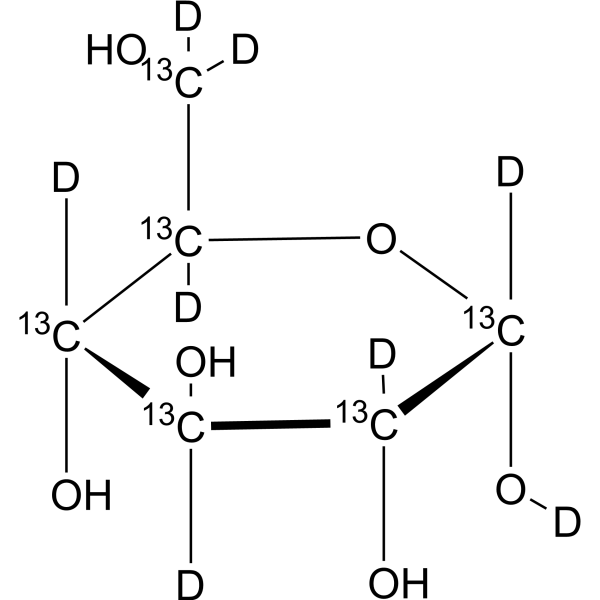 0 ImagesCat. No.: HY-128417S5alpha-D-glucose-13C6,d7 is deuterium and 13C-labeled alpha-D-glucose (HY-128417). alpha-D-glucose is an endogenous metabolite.
-
18:1 (Δ9-Trans) PC
 0 ImagesCat. No.: HY-157687CAS No.: 56782-46-8Synonyms: 1,2-Dielaidoyl-sn-glycero-3-phosphocholine18:1 (Δ9-Trans) PC (1,2-Dielaidoyl-sn-glycero-3-phosphocholine) is a phosphoglyceride with two unsaturated acyl chains. The product line is designed to offer compounds with different physical properties, including short chain (C3-C8, water soluble and hygroscopic), saturated, polyunsaturated and mixed acid PCs.
-
Aspergillomarasmine A
 0 ImagesAspergillomarasmine A is a fungal secondary metabolite derived from natural amino acids, with inhibitory activity against metallo-β-lactamases. Aspergillomarasmine A selectively inhibits the metallo-β-lactamases NDM-1 and VIM-2, but shows weak inhibitory activity against IMP-7. Aspergillomarasmine A exhibits metal ion selectivity, which enables it to capture spontaneously dissociated Zn2+ from NDM-1, inducing the monozincation and inactivation of the enzyme; the inactivated metallo-β-lactamase undergoes protein degradation in the bacterial periplasm, thereby restoring the bacteriostatic efficacy of carbapenem antibiotics. Aspergillomarasmine A can be used in studies related to bacterial infections.
-
L-Lysine acetate (Standard)
 0 ImagesCat. No.: HY-W014606RCAS No.: 57282-49-2L-Lysine (acetate) (Standard) is the analytical standard of L-Lysine (acetate). This product is intended for research and analytical applications. L-Lysine acetate is an essential amino acid. L-Lysine acetate can be research for vascular calcification (VC) and Acute pancreatitis.
-
1-Octanol-d5
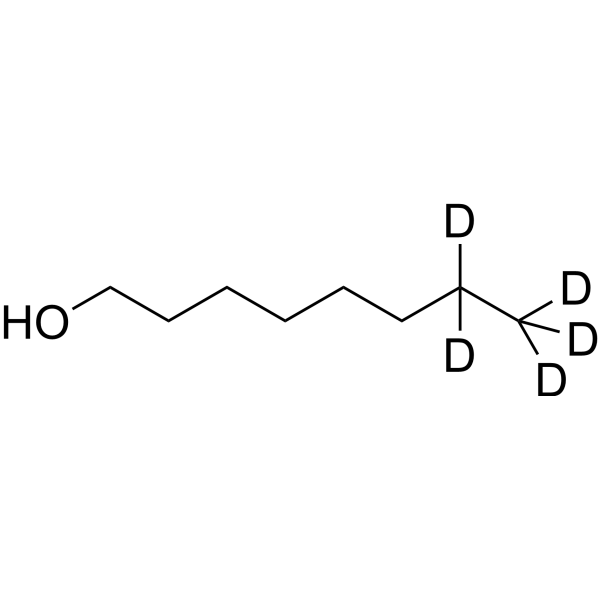 0 ImagesCat. No.: HY-W032013S3CAS No.: 3028869-76-0Synonyms: Octanol-d51-Octanol-d5 is deuterated labeled 1-Octanol (HY-W032013). 1-Octanol (Octanol), a saturated fatty alcohol, is a T-type calcium channels (T-channels) inhibitor with an IC50 of 4 μM for native T-currents. 1-Octanol is a highly attractive biofuel with diesel-like properties.
-
Hypoxanthine-13C2,15N-1
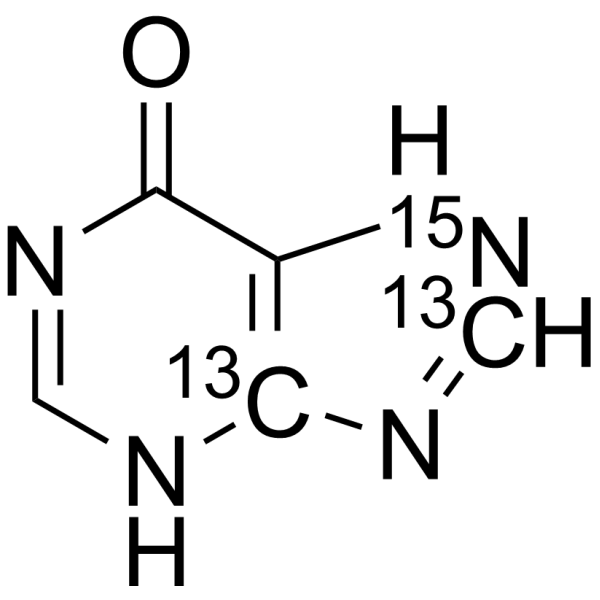 0 ImagesCat. No.: HY-N0091S4CAS No.: 1246820-04-1Synonyms: Purin-6-ol-13C2,15N-1; Sarcine-13C2,15N-1Hypoxanthine-13C2,15N-1 is a 15N-labeled and 13C-labled Hypoxanthine (HY-N0091). Hypoxanthine, a purine derivative, is a potential free radical generator and could be used as an indicator of hypoxia.
-
Bis(1-chloro-2-propyl) phosphate-d12
 0 ImagesCat. No.: HY-W653929CAS No.: 1870073-89-4Synonyms: BCIPP-d12Bis(1-chloro-2-propyl) phosphate-d12 is deuterium labeled Bis(1-chloro-2-propyl) phosphate. Bis(1-chloro-2-propyl) phosphate (BCIPP) is a metabolite of organophosphate flame retardants (OPFR) that may alter energy metabolism by influencing the levels of steroid hormones, such as cortisol and cortisone. Bis(1-chloro-2-propyl) phosphate holds potential for research on metabolism-related diseases caused by environmental exposure.
-
ATP trisodium
 0 ImagesCat. No.: HY-B2176JCAS No.: 20978-32-9Synonyms: Adenosine 5'-triphosphate trisodiumATP (Adenosine 5'-triphosphate) trisodium is a central component of energy storage and metabolism in vivo. ATP trisodium provides the metabolic energy to drive metabolic pumps and serves as a coenzyme in cells. ATP trisodium is an important endogenous signaling molecule in immunity and inflammation. ATP trisodium can activate the NLRP3 inflammasome and induce IL-1β and chemokines secretion. ATP trisodium has anti-bacterial infection effects and can protect mice against bacterial infection in mice.
-
L-Serine-15N,d3
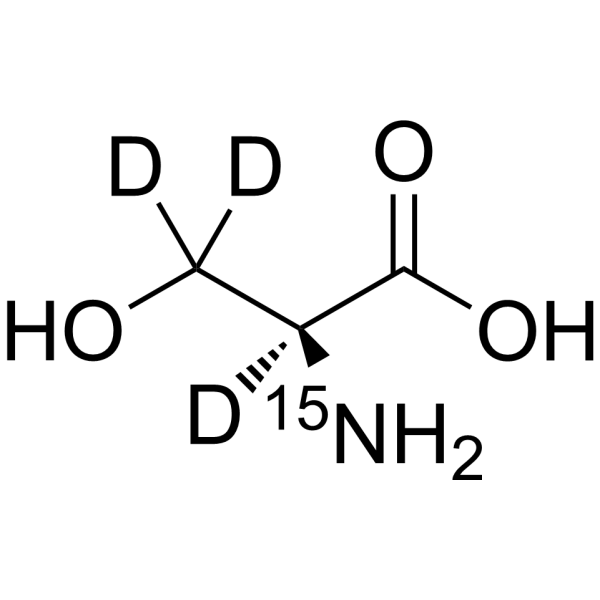 0 ImagesCat. No.: HY-N0650S9Synonyms: (-)-Serine-15N,d3; (S)-Serine-15N,d3L-Serine-15N,d3 is the deuterium and 15N-labeled L-Serine. L-Serine ((-)-Serine; (S)-Serine), one of the so-called non-essential amino acids, plays a central role in cellular proliferation.
-
Tristearin (Standard)
 0 ImagesCat. No.: HY-127035RCAS No.: 555-43-1Synonyms: Glycerol tristearate (Standard)Tristearin (Standard) is the analytical standard of Tristearin. This product is intended for research and analytical applications. Tristearin is a triglyceride derived from three units of stearic acid.
-
Hypusine
 0 ImagesCat. No.: HY-126171CAS No.: 34994-11-1Hypusine is a natural amino acid. The post-translational synthesis of hypusine is mainly catalyzed by deoxyhypusine synthase (DHPS) and deoxyhypusine hydroxylase (DOHH).
-
22:0 PC
 0 ImagesSynonyms: 1,2-Didocosanoyl-sn-glycero-3-phosphocholine; PC(22:0/22:0)22:0 PC (1,2-Didocosanoyl-sn-glycero-3-phosphocholine), a type of phosphatidylcholine, functions as a lung surfactant and is characterized as an amphipathic molecule predominantly found in the outer leaflets of biological membrane bilayers.
-
(S)-Salsolinol (Standard)
 0 ImagesCat. No.: HY-113316BRCAS No.: 27740-96-1Synonyms: (-)-Salsolinol (Standard)(S)-Salsolinol (Standard) is the analytical standard of (S)-Salsolinol. This product is intended for research and analytical applications. (S)-Salsolinol ((-)-Salsolinol) is a dopamine-derived endogenous metabolite.
-
Suberylglycine (Standard)
 0 ImagesCat. No.: HY-113367RCAS No.: 60317-54-6Suberylglycine (Standard) is the analytical standard of Suberylglycine. This product is intended for research and analytical applications. Suberylglycine is an acyl glycine, which is a normally minor metabolite of fatty acid.
-
ADPRT-IN-1
 0 ImagesCat. No.: HY-W209106CAS No.: 109164-47-8ADPRT-IN-1 is an ADP-ribosyltransferase inhibitor (IC50=20 μM).
-
Remisporine B
 0 ImagesCat. No.: HY-130757CAS No.: 571194-06-4Remisporine B is a polyketide, that can be isolated from Penicillium sp. ZJ-SY2. Remisporine B exhibits immunosuppressive efficacy, that inhibits concanavalin A (HY-P2149)-induced T-cell proliferation and LPS (HY-D1056)- induced B-cell proliferations of mouse splenic lymphocytes with IC50 of 30.1 µg/mL and 32.4 µg/mL.
-
GW405833 hydrochloride (Standard)
 0 ImagesCat. No.: HY-110036ARCAS No.: 1202865-22-2Synonyms: L768242 hydrochloride (Standard)GW405833 hydrochloride (Standard) is the analytical standard of GW405833 (hydrochloride) (HY-110036A). This product is intended for research and analytical applications. GW405833 (L768242) hydrochloride is a potent, selective cannabinoid receptor 2 (CB2) agonist. GW405833 has EC50 and Ki values of 0.65 nM and 3.92 nM for CB2, and EC50 and Ki values of 16.1 μM and 4772 nM for CB1. GW405833 hydrochloride also exhibits non-competitive CB1 antagonist, exerting its analgesic effect through a CB1 receptor (rather than CB2) dependent mechanism. GW405833 hydrochloride can significantly inhibit the production of cAMP stimulated by Forskolin (HY-15371). GW405833 hydrochloride inhibits glycolysis by down-regulating HIF-1α, thereby alleviating acute liver failure (ALF).
-
5,6,7,8-Tetramethoxycoumarin
 0 ImagesCat. No.: HY-N2650CAS No.: 56317-15-85,6,7,8-Tetramethoxycoumarin is a simple coumarin with phytotoxicity.
-
D-myo-Inositol-1,3,4-triphosphate sodium
 0 ImagesCat. No.: HY-175387Synonyms: Ins(1,3,4)-P3 sodium; 1,3,4-IP3 sodiumD-myo-Inositol-1,3,4-triphosphate (sodium) is one of the inositol oligophosphate isomers implicated in signal transduction. D-myo-Inositol-1,3,4-triphosphate (sodium) acts through the inhibition of Ins(3,4,5,6)-P4 kinase activity to increase cellular level of Ins(3,4,5,6)-P4, thereby inhibiting calcium-activated chloride channels. D-myo-Inositol-1,3,4-triphosphate (sodium) can be regulated by the levels of cytosolic free calcium.
-
Maltotriose (Standard)
 0 ImagesMaltotriose (Standard) is the analytical standard of Maltotriose (HY-13011). This product is intended for research and analytical applications. Maltotriose is a maltooligosaccharide and a specific inducer of the Escherichia coli maltose operon. The oligosaccharide structure of Maltotriose acts as a highly efficient drug delivery carrier, which significantly enhances the targeting ability and water solubility of photosensitizers in photodynamic therapy for pancreatic cancer.




