



Endogenous Metabolite
Endogenous metabolites refer to the collective set of small-molecule chemical substances present within organelles, cells, organs, biological fluids, or entire organisms; their molecular weights are typically less than 1500 Da. These endogenous metabolites—including lipids, amino acids, short peptides, nucleic acids, carbohydrates, alcohols, and organic acids—not only participate in signal transduction governing genomic function but also receive upstream signals from the environment, thereby bridging the interrelationships among genotype, environment, and phenotype.
Based on their biological functions, microbial endogenous metabolites can be broadly classified into two categories: primary metabolites and secondary metabolites. Primary metabolites are the core molecules essential for supporting microbial growth and proliferation; they serve to provide energy to the microbes or act as precursors and cofactors for the synthesis of biological macromolecules. In contrast, microbial secondary metabolites are a class of low-molecular-weight products that are not strictly essential for microbial growth. Nevertheless, microbial secondary metabolites include numerous substances—such as antibiotics, anti-tumor agents, and cholesterol-lowering agents—that are of critical importance to human health[1][2][3]. Furthermore, the metabolome of a biological organism is influenced by a variety of endogenous factors, including age, sex, body composition, genetic background, and underlying pathological states. The small-molecule metabolites within an organism are diverse and highly distinct; their levels are typically subject to the synergistic regulation of a vast array of enzymes and transport proteins, undergoing processes of synthesis, transformation, degradation, and compartmentalized distribution. Metabolomics research based on endogenous metabolites has been widely applied in the fields of metabolic disorders, neurodegenerative diseases, cancer, cardiovascular diseases, and infectious diseases, where these metabolites hold potential utility as biomarkers or therapeutic targets[1][2][3].
References:
- [1]. Seyedsayamdost MR. Toward a global picture of bacterial secondary metabolism. J Ind Microbiol Biotechnol. 2019 Mar;46(3-4):301-311. [Content Brief]
- [2]. Ruiz B, et al. Production of microbial secondary metabolites: regulation by the carbon source. Crit Rev Microbiol. 2010 May;36(2):146-67. [Content Brief]
- [3]. Wishart DS. Metabolomics for Investigating Physiological and Pathophysiological Processes. Physiol Rev. 2019 Oct 1;99(4):1819-1875. [Content Brief]
Endogenous Metabolite Isoform Specific Products
All Product Categories
-
Endogenous Metabolite Related Products (8420)
Related Products (8420)

-
Antibodies (477)
-
Endogenous Metabolite Isoform Comparison
-
2-Hydroxy-3-(palmitoyloxy)propyl stearate
 0 ImagesCat. No.: HY-W710399CAS No.: 17708-08-6Synonyms: DG(16:0/0:0/18:0); 1-Palmitin-3-Stearin1-Palmitoyl-3-stearoyl-rac-glycerol is a diacylglycerol that contains palmitic acid (HY-N0830) at the sn-1 position and stearic acid (HY-B2219) at the sn-3 position. It has been found in palm-based diacylglycerols produced from palm stearin, palm mid fraction, palm oil, and palm olein, as well as in wheat bran and brewer’s spent grain extracts.
-
Leflunomide-13C6
 0 ImagesCat. No.: HY-B0083S1Synonyms: HWA486-13C6; RS-34821-13C6; SU101-13C6Leflunomide-13C6 (HWA486-13C6) is 13C labeled Leflunomide. Leflunomide is a pyrimidine synthesis inhibitor, inhibiting dihydroorotate dehydrogenase (DHODH), and acts as a disease-modifying antirheumatic agent.
-
Sodium propionate-13C-1
 0 ImagesCat. No.: HY-B1773AS1CAS No.: 83587-76-2Sodium propionate-13C-1 is the 13C-labeled Propionate sodium (HY-B1773A). Sodium propionate is an orally active short-chain fatty acid. Sodium propionate can be produced by intestinal bacteria from the metabolism of dietary fiber. Sodium propionate increases PPAR-γ, inhibits NF-κB activation, and reduces COX-2 expression and NO production. Sodium propionate also induces Apoptosis and Autophagy. Sodium propionate reduces HSV-1-induced keratitis. Sodium propionate has anticancer effects against glioblastoma. Sodium propionate exhibits neuroprotective, antioxidant, and anti-inflammatory activities. Sodium propionate can be used in the research of spinal cord injury and Alzheimer's disease.
-
Acetaminophen-d5
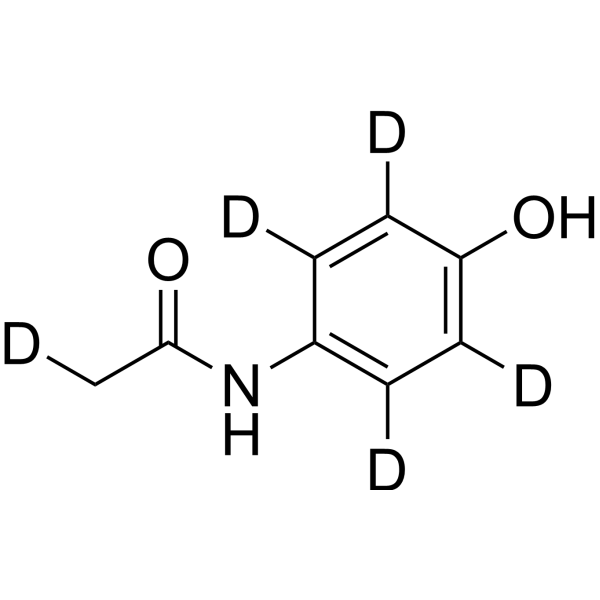 0 ImagesCat. No.: HY-66005S5Synonyms: Paracetamol-d5; 4-Acetamidophenol-d5; 4'-Hydroxyacetanilide-d5Acetaminophen-d5 is deuterated-labeled Acetaminophen (HY-66005). Acetaminophen (Paracetamol) is a selective cyclooxygenase-2 (COX-2) inhibitor with an IC50 of 25.8 μM; is a widely used antipyretic and analgesic agent. Acetaminophen is a potent hepatic N-acetyltransferase 2 (NAT2) inhibitor.
-
(1R)-1,2-Dilauroyl-sn-glycerol
 0 ImagesCat. No.: HY-128465ACAS No.: 61475-84-1(1R)-1,2-Dilauroyl-sn-glycerol is the R isomer of 1,2-Dilauroyl-sn-glycerol (HY-128465). 1,2-Dilauroyl-sn-glycerol is a saturated diacylglycerol and may play a role in second messenger signal transduction.
-
11-Dodecenyl acetate
 0 ImagesCat. No.: HY-W243653CAS No.: 35153-10-711-Dodecenyl acetate is a insect sex pheromone, which is involved in attraction behavior of male moths.
-
Yokonoside
 0 ImagesCat. No.: HY-121592CAS No.: 53823-12-4Yokonoside is a cardiac glycoside, which can be isolated from Aconitum japonicum. Yokonoside exhibits antioxidant efficacy.
-
8-Hydroxy-2'-deoxyguanosine-13C,15N2
 0 ImagesCat. No.: HY-W653916Synonyms: 8-Oxo-2-Deoxyguanosine-13C,15N28-Hydroxy-2'-deoxyguanosine-13C,15N2 is 13C and 15N labeled 8-Hydroxy-2'-deoxyguanosine. 8-Hydroxy-2'-deoxyguanosine is a critical biomarker of oxidative stress and carcinogenesis.
-
L-Alloisoleucine (Standard)
 0 ImagesL-Alloisoleucine (Standard) is the analytical standard of L-Alloisoleucine. This product is intended for research and analytical applications. L-Alloisoleucine is a stereoisomer of L-isoleucine. L-Alloisoleucine can be used in skeletal muscle research.
-
4’-Phosphopantetheine
 0 ImagesCat. No.: HY-W1143867CAS No.: 2226-71-34’-Phosphopantetheine is an orally active coenzyme A (CoA) precursor. 4’-Phosphopantetheine is membrane-permeable and acts as a CoA precursor, a prosthetic group, and a reactive oxygen species (ROS) inhibitor. 4’-Phosphopantetheine binds covalently to rat liver fatty acid synthase, modifies the conserved serine residue in the PKS/NRPS carrier protein domain, and serves as a substrate for CoA synthase and PPAT. 4’-Phosphopantetheine undergoes non-catalytic exchange on rat liver fatty acid synthase, with a faster turnover rate than that of the enzyme complex, and restores intracellular CoA levels in cells with impaired de novo biosynthesis. 4’-Phosphopantetheine rescues phenotypes induced by CoA deficiency, normalizes PKAN-related biomarkers, restores mitochondrial enzyme activity, and alleviates vascular endothelial damage. 4’-Phosphopantetheine shows biological stability in serum, acts as a prosthetic group and degradation product of ACP, and inhibits the formation of atherosclerotic plaques. 4’-Phosphopantetheine can be used in the research of brain iron accumulation neurodegenerative diseases, pantothenate kinase-associated neurodegeneration, CoASY protein-associated neurodegenerative diseases, coronary heart disease, and atherosclerosis.

-
Hydantocidin
 0 ImagesCat. No.: HY-N14757CAS No.: 130607-26-0Hydantocidin is an adenylosuccinate synthetase inhibitor and a spiroribofuranose. Hydantocidin can be produced by Streptomyces hygroscopicus. Hydantocidin has strong herbicidal activity toward annual, biennial and perennial weeds.
-
7-Ketocholesterol (Standard)
 0 Images7-Ketocholesterol (Standard) is the analytical standard of 7-Ketocholesterol. This product is intended for research and analytical applications. 7-Ketocholesterol is an oxidation product of cholesterol, widely present in atherosclerotic plaques, and has a stronger atherogenic effect than cholesterol. 7-Ketocholesterol can inhibit the rate-limiting enzymes involved in bile acid and cholesterol synthesis, such as cholesterol 7α-hydroxylase and HMG-CoA reductase. 7-Ketocholesterol exhibits pro-inflammatory effects both in vivo and in vitro and can induce cell apoptosis (apoptosis).
-
Hercynylcysteine sulfoxide
 0 ImagesCat. No.: HY-189490CAS No.: 1227698-30-7Hercynylcysteine sulfoxide is a synthetic precursor of Ergothioneine (HY-N1914), and it spontaneously converts to Ergothioneine in the presence of pyridoxal phosphate (PLP). Hercynylcysteine sulfoxide is produced via the fusion enzyme complex NcEgt1‑1/CtEgtB-catalyzed conversion of L-histidine and L-cysteine, and serves as an intermediate in the ergothioneine biosynthetic pathway of Schizosaccharomyces pombe and engineered Escherichia coli BL21 (DE3).
-
β-Alanine-13C
 0 ImagesCat. No.: HY-N0230S5CAS No.: 65138-34-3Synonyms: 2-Carboxyethylamine-13C; 3-Aminopropanoic acid-13Cβ-Alanine-13C (2-Carboxyethylamine-13C) is 13C labeled β-Alanine. β-Alanine is a non-essential amino acid that is shown to be metabolized into carnosine, which functions as an intracellular buffer.
-
(3R)-1-Octen-3-ol
 0 ImagesCat. No.: HY-W783575CAS No.: 3687-48-7(3R)-1-Octen-3-ol is an 8-carbon secondary alcohol and an off-flavor compound in soybean products.

-
Decarestrictin B
 0 ImagesCat. No.: HY-W988083CAS No.: 127393-91-3Decarestrictin B is a decanolactone that can be isolated from penicillium strains. Decarestrictin B is an inhibitor of cholesterol biosynthesis.
-
9Z,11E,13Z-Octadecatrienoicacid, methylester
 0 ImagesCat. No.: HY-W347368CAS No.: 95497-55-5Synonyms: Methyl punicate9Z,11E,13Z-Octadecatrienoicacid, methylester (Methyl punicate) is a fatty acid methyl ester, which can be isolated from seeds of Punica granatum L.. 9Z,11E,13Z-Octadecatrienoicacid, methylester exhibits antitumor efficacy, which interferes with tumor cell cycle, drug resistance and angiogenesis. 9Z,11E,13Z-Octadecatrienoicacid, methylester is the derivative of Punicic acid (HY-139066).
-
DL-Tryptophan (Standard)
 0 ImagesSynonyms: (±)-Tryptophan (Standard)DL-Tryptophan (Standard) is an analytical standard of DL-Tryptophan. This product is intended for research and analytical applications. DL-Tryptophan ((±)-Tryptophan) is an orally effective aryl hydrocarbon receptor (AhR) agonist. DL-Tryptophan reduces the expression of pro-inflammatory cytokines IL-6, TNF-α, IL-1β, as well as liver injury markers aspartate aminotransferase and alanine aminotransferase, and alleviates hepatocyte apoptosis (apoptosis) in sepsis induced by cecal ligation and puncture. DL-Tryptophan can be used in the research of sepsis-related acute liver injury.




