



NO Synthase
Nitric oxide synthases; NOS
Nitric oxide synthases (NOSs) are a family of enzymes catalyzing the production of nitric oxide (NO) from L-arginine. NO synthases catalyze the oxidation of L-arginine to NO and L-citrulline. Mammals contain three NOS isoforms: neuronal NOS (nNOS), inducible NOS (iNOS), and endothelial NOS (eNOS). NO produced from these different NOS isoforms is involved in a wide range of physiologic functions in the nervous, immune, and cardiovascular systems. Unregulated NO production can lead to pathologic conditions such as stroke, inflammation, and hypertension. Therefore, the control of NOS activity by isoform selective NOS inhibitors has great potential for therapeutic treatments of NO-related diseases.
NO Synthase Isoform Specific Products
All Product Categories
-
NO Synthase Inhibitors
(759)
View all products
-
NO Synthase Agonists
(5)
View all products
-
NO Synthase Antagonists
(4)
View all products
-
NO Synthase Activators
(111)
View all products
-
NO Synthase Modulators
(14)
View all products
-
NO Synthase MDM2 Inhibitor
(1)
View all products
-
NO Synthase Inducers
(7)
View all products
-
NO Synthase Controls
(6)
View all products
-
NO Synthase Substrates
(2)
View all products
-
NO Synthase Ligand
(1)
View all products
-
NO Synthase Related Products (1014)
Related Products (1014)

-
Antibodies (6)
-
NO Synthase Isoform Comparison
-
Hydralazine-d4 (hydrochloride)
 0 ImagesCat. No.: HY-B0464SCAS No.: 2749234-32-8Hydralazine-d4 hydrochloride is the deuterium labeled Hydralazine hydrochloride. Hydralazine hydrochloride is an orally active, blood-brain barrier-permeable DNA methyltransferase inhibitor with vasodilatory, arterial smooth muscle relaxant and hypotensive activities. Hydralazine hydrochloride reactivates silenced tumor suppressor genes via mediating DNA demethylation, while exerting neuroprotective and anti-inflammatory properties. Hydralazine hydrochloride inhibits NOS-2 (iNOS) and COX-2, and reduces the production of NO and PGEE2; meanwhile, Hydralazine hydrochloride scavenges reactive oxygen species and inhibits macrophage activation. Hydralazine hydrochloride alleviates motor dysfunction, neuropathic inflammatory pain, and formalin-induced somatic and emotional pain responses. In addition, Hydralazine hydrochloride directly induces DNA strand breaks and sister chromatid exchange, exhibiting certain mutagenic characteristics. Hydralazine hydrochloride has been widely used in studies on hypertension, various cancers (such as cervical cancer, leukemia), spinal cord injury and the mechanisms of inflammatory pain.
-
Methotrexate-d3 diammonium
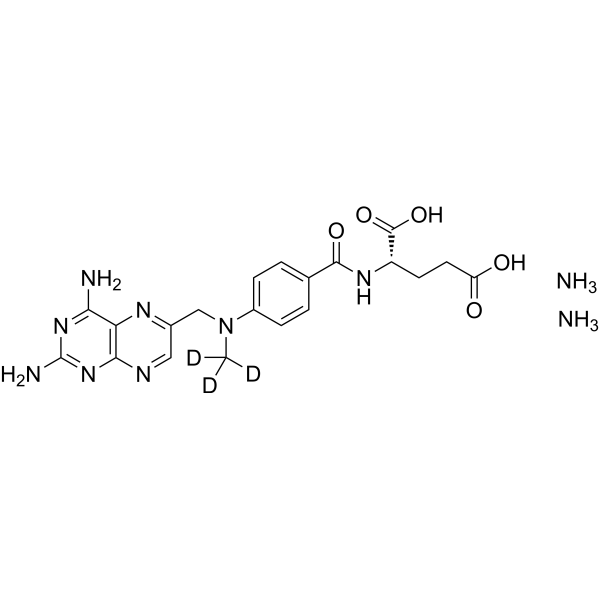 0 ImagesCat. No.: HY-14519S1Purity: 99.69%Methotrexate-d3 diammonium is the deuterated-labeled Methotrexate (HY-14519). Methotrexate (Amethopterin; CL14377; WR19039) is an orally active antifolate (Antifolate). Methotrexate inhibits dihydrofolate reductase (DHFR), blocks tetrahydrofolate production, suppresses purine/pyrimidine synthesis and transmethylation, and causes intracellular accumulation of AICAR. Methotrexate promotes extracellular adenosine release, regulates the cytokine network, and inhibits the alarmin function of HMGB1. Methotrexate induces apoptosis and cytotoxicity, upregulates the expression of iNOS and COX-2, suppresses hippocampal neurogenesis, and induces pulmonary fibrosis. Methotrexate is used in the research of various immune and inflammation-related diseases such as arthritis, psoriasis, systemic lupus erythematosus, as well as pulmonary fibrosis and breast cancer.
-
Isosorbide dinitrate-13C6
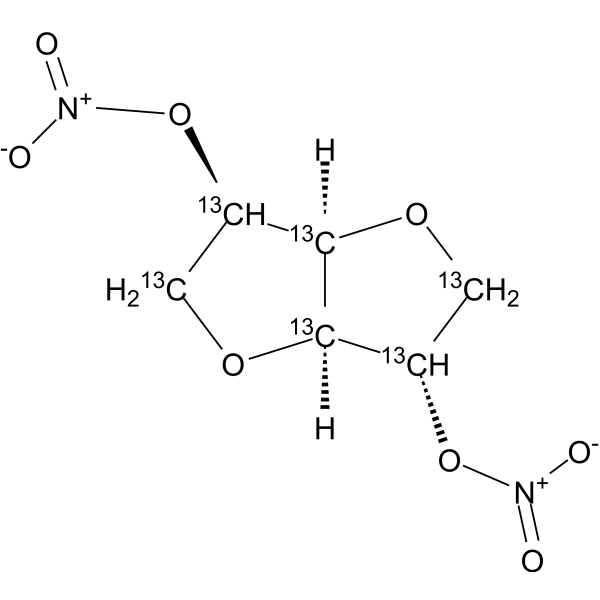 0 ImagesCat. No.: HY-B1409SSynonyms: ISDN-13C6Isosorbide dinitrate-13C6 is the 13C labeled Isosorbide dinitrate. Isosorbide dinitrate (ISDN) is an NO donor that prevents LV remodeling and degradation of cardiac function following myocardial infarction (MI).
-
6-Biopterin (Standard)
 0 ImagesSynonyms: L-Biopterin (Standard)6-Biopterin (Standard) is the analytical standard of 6-Biopterin. This product is intended for research and analytical applications. 6-Biopterin (L-Biopterin), a pterin derivative, is a NO synthase cofactor.
-
L-Arginine-13C6,15N4,d7 hydrochloride
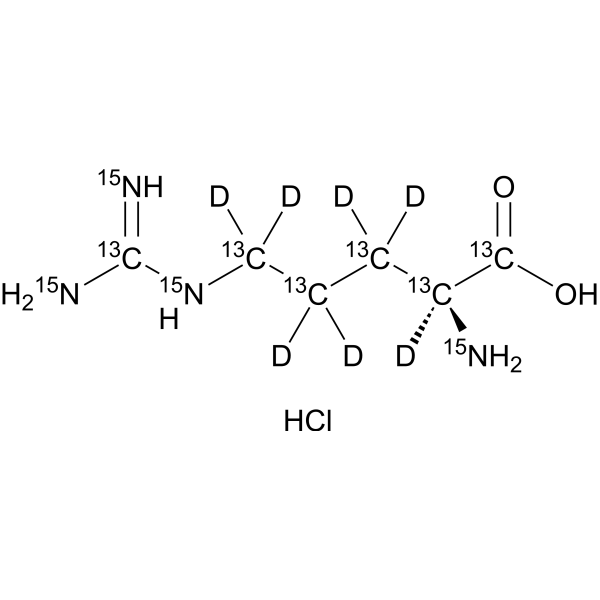 0 ImagesCat. No.: HY-N0455AS4CAS No.: 2483829-29-2Synonyms: (S)-(+)-Arginine-13C6,15N4,d7 hydrochlorideL-Arginine-13C6,15N4,d7 (hydrochloride) is the deuterium, 13C-, and 15-labeled L-Arginine hydrochloride. L-Arginine hydrochloride ((S)-(+)-Arginine hydrochloride) is the nitrogen donor for synthesis of nitric oxide, a potent vasodilator that is deficient during times of sickle cell crisis.
-
Sodium propionate-d3
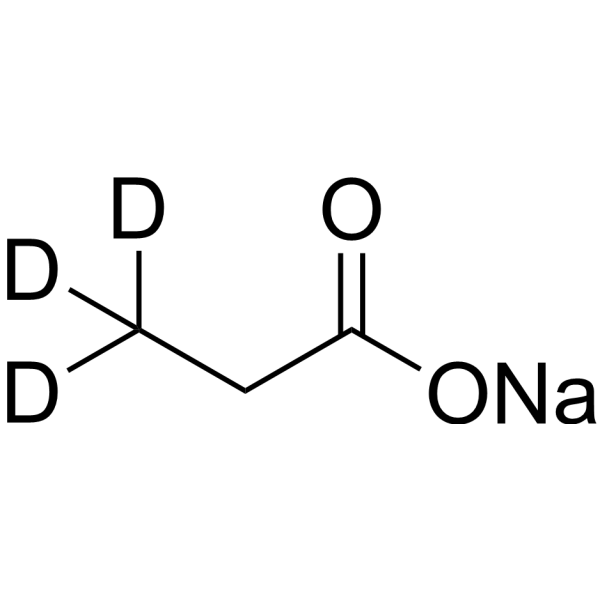 0 ImagesSodium propionate-d3 is the deuterium labeled Propionate sodium (HY-B1773A). Sodium propionate is an orally active short-chain fatty acid. Sodium propionate can be produced by intestinal bacteria from the metabolism of dietary fiber. Sodium propionate increases PPAR-γ, inhibits NF-κB activation, and reduces COX-2 expression and NO production. Sodium propionate also induces Apoptosis and Autophagy. Sodium propionate reduces HSV-1-induced keratitis. Sodium propionate has anticancer effects against glioblastoma. Sodium propionate exhibits neuroprotective, antioxidant, and anti-inflammatory activities. Sodium propionate can be used in the research of spinal cord injury and Alzheimer's disease.
-
Tachioside
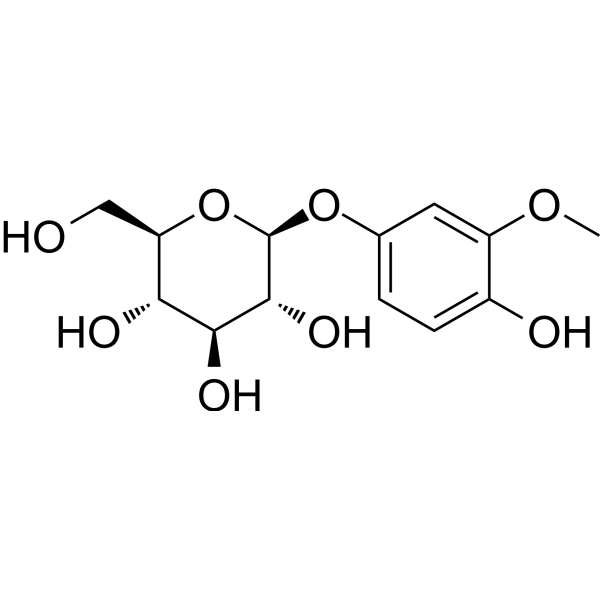 0 ImagesTachioside is a phenolic glycoside natural product. Tachioside inhibits antigen-induced mast cell degranulation and TNF-α expression in RBL-2H3 cells; it exhibits melanin inhibitory effects in B16 melanoma cells. Tachioside possesses anti-obesity, antioxidant, and α-glucosidase inhibitory activities. Tachioside has been predicted as a potential anti-breast cancer candidate compound and shows high correlation coefficients with antioxidant indicators such as ABTS and FRAP. Tachioside can be used in research on allergies and pigmentation-related diseases.
-
Bletilloside A
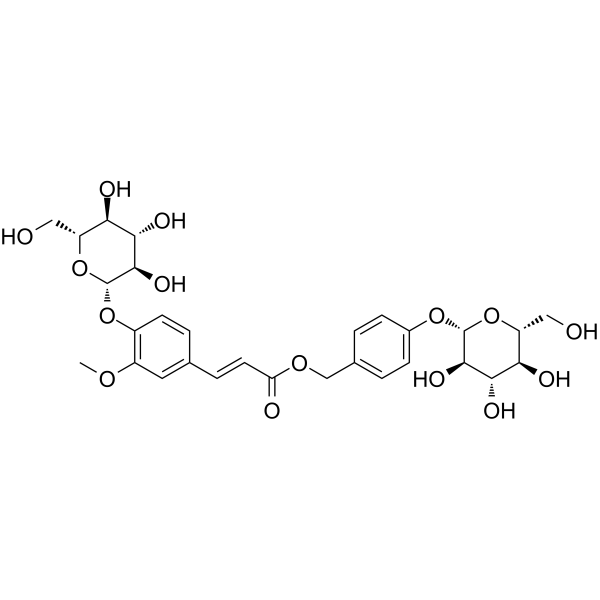 0 ImagesBletilloside A is a glycoside. Bletilloside A can be isolated from the tubers of Bletilla striata. Bletilloside A inhibits the expression of the TCL1A protein. When evaluated for its inhibitory activity against LPS-induced NO, Bletilloside A shows an IC50 of >70 μM. Bletilloside A exhibits anticancer activity against acute myeloid leukemia. Bletilloside A can be used in studies related to acute myeloid leukemia.
-
DMPO (Standard)
 0 ImagesDMPO (Standard) is the analytical standard of DMPO. This product is intended for research and analytical applications. DMPO is a cell permeable hydrophillic spin trap agent for superoxide detection.
-
8-Deoxylactucin
 0 ImagesCat. No.: HY-N12087CAS No.: 65725-10-28-Deoxylactucin is an orally active sesquiterpene lactone. 8-Deoxylactucin inhibits LPS (HY-D1056)-induced NO production in RAW264.7 macrophages with an IC50 value of 4.35 μM. 8-Deoxylactucin exerts anti-inflammatory effects by blocking the NF-κB pathway. 8-Deoxylactucin demonstrates hepatoprotective efficacy in LPS/D-galactosamine-induced acute hepatitis model of mice. 8-Deoxylactucin can be used for the study of inflammatory diseases and inflammatory liver injuries.
-
Futoquinol
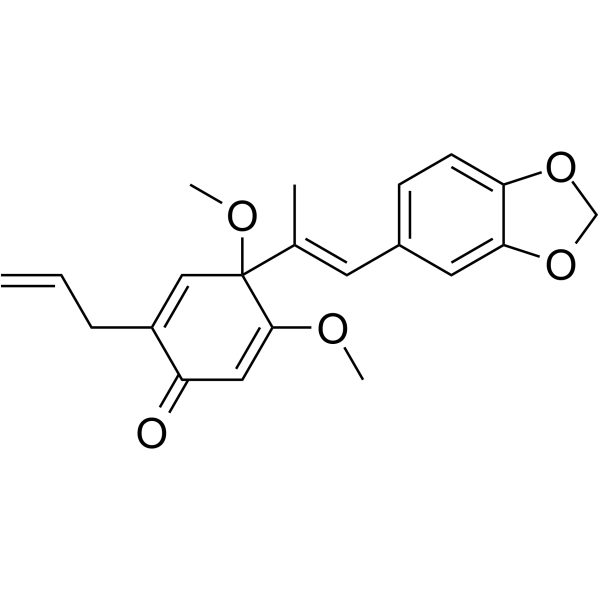 0 ImagesCat. No.: HY-N3915CAS No.: 28178-92-9Futoquinol is a neolignan isolated from the dried aerial parts of Piper kadsura (Piperaceae). Futoquinol potently inhibits NO production in microglia cells. Futoquinol has anti-neuroinflammatory activities.
-
Sodium propionate-d5
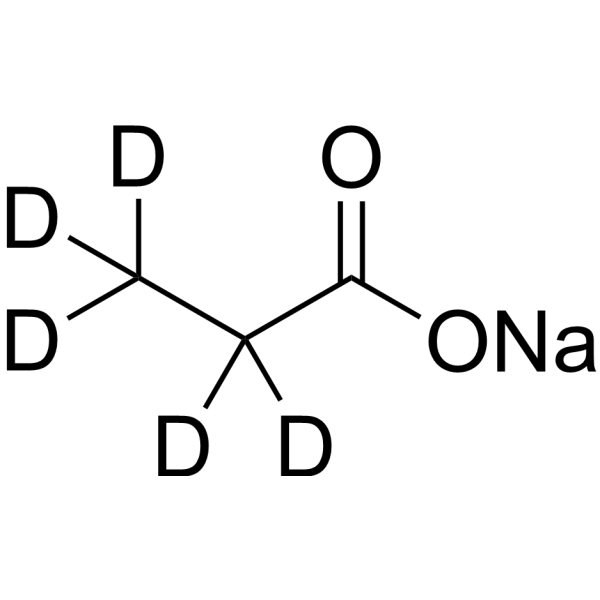 0 ImagesSodium propionate-d5 is the deuterium labeled Propionate sodium (HY-B1773A). Sodium propionate is an orally active short-chain fatty acid. Sodium propionate can be produced by intestinal bacteria from the metabolism of dietary fiber. Sodium propionate increases PPAR-γ, inhibits NF-κB activation, and reduces COX-2 expression and NO production. Sodium propionate also induces Apoptosis and Autophagy. Sodium propionate reduces HSV-1-induced keratitis. Sodium propionate has anticancer effects against glioblastoma. Sodium propionate exhibits neuroprotective, antioxidant, and anti-inflammatory activities. Sodium propionate can be used in the research of spinal cord injury and Alzheimer's disease.
-
Panaxcerol B
 0 ImagesCat. No.: HY-N13175CAS No.: 171520-42-6Panaxcerol B is a monogalactosyl monoacylglyceride, with an IC50 of 59.4 μM for NO production in LPS-stimulated RAW264.7 cells.
-
3-Amino-1,2,4-triazine
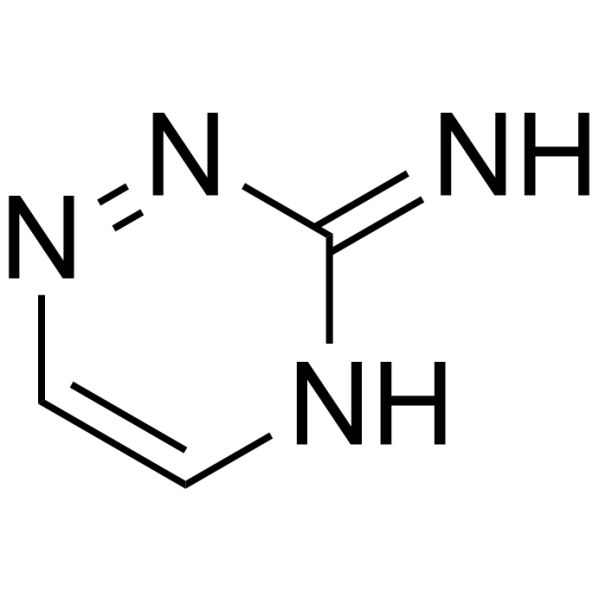 0 Images3-Amino-1,2,4-triazine is an inhibitor of NO synthase, and also inhibits nitrite secretion.
-
(3β,7β,12β,20Z)-3,7,12-Trihydroxy-11,15,23-trioxo-lanost-8,20-dien-26-oic acid
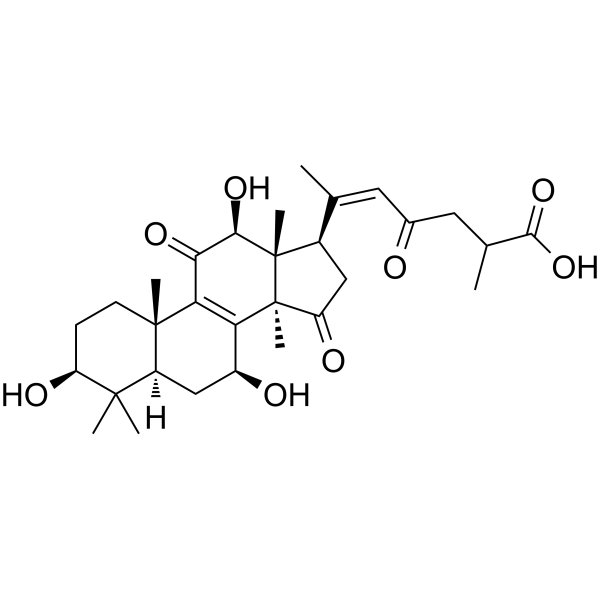 0 ImagesCat. No.: HY-N8090CAS No.: 1961358-02-0(3β,7β,12β,20Z)-3,7,12-Trihydroxy-11,15,23-trioxo-lanost-8,20-dien-26-oic acid, a lanostane triterpenoids, exhibits obvious NO inhibitory activity on n LPS-induced BV-2 microglia cells with an IC50 of 9.55 uM. (3β,7β,12β,20Z)-3,7,12-Trihydroxy-11,15,23-trioxo-lanost-8,20-dien-26-oic acid has anti-inflammatory activities.
-
Leonuriside A
 0 ImagesLeonuriside A is a phenolic compound that can be isolated from Leonurus japonicus. Leonuriside A exhibits anti-inflammatory activity, which inhibits the iNOS-related inflammatory pathway in LPS (HY-D1056)-stimulated macrophages, thereby suppressing the production of nitric oxide (NO) with an IC50 of 15.6 μM. Leonuriside A can be used in studies of anti-inflammatory natural products and the molecular mechanisms of inflammation.
-
AE-ITU dihydrobromide
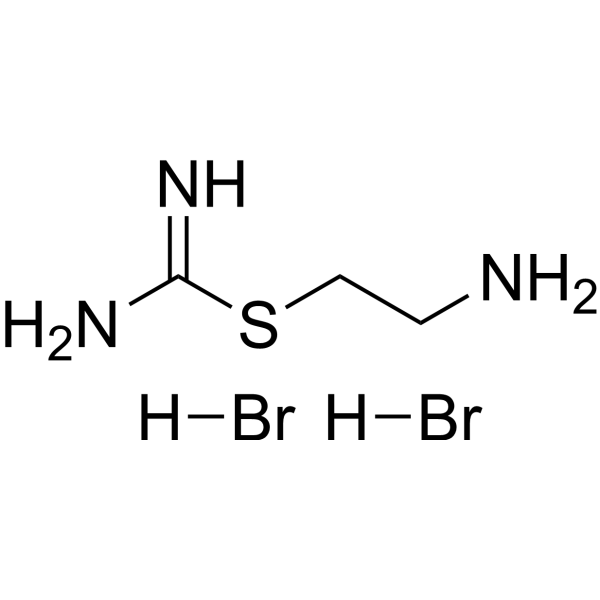 0 ImagesAE-ITU dihydrobromide is the dihydrobromide form of AE-ITU. AE-ITU dihydrobromide is a selective inhibitor for inducible NO synthase (iNOS), and attenuates the liver dysfunction caused by endotoxaemia in rats.
-
MRS2768 tetrasodium salt
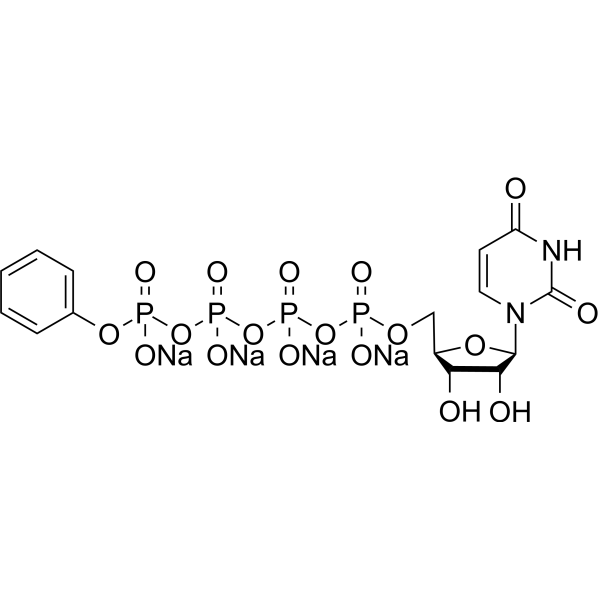 0 ImagesMRS2768 tetrasodium salt is a potent, selective, and metabolically stable P2Y2 receptor agonist with an EC50 of 1.89 μM for the human P2Y2 receptor. MRS2768 tetrasodium salt activates Gq/PLC/PKC signaling, leading to downstream phosphorylation of Akt, eNOS, and ERK, with effects varying by cell type. MRS2768 tetrasodium salt inhibits ENaC via Gq/PKC/Src/Akt to promote natriuresis and lower blood pressure in the kidney. MRS2768 tetrasodium salt activates eNOS to increase NO secretion in endothelial cells. MRS2768 tetrasodium salt drives proliferation via PI3K/Akt in fibroblasts and cancer cells. MRS2768 tetrasodium salt exerts anti-apoptotic effects through PKC/Src/Akt in cardiomyocytes. MRS2768 tetrasodium salt can be applied to investigate P2Y2-dependent pathological processes, including acute kidney injury, chronic kidney disease and renal fibrosis, DOCA-salt induced hypertension, myocardial infarction, pulmonary arterial hypertension, pancreatic cancer, cardiac fibrosis, dry eye disease, as well as shear stress-mediated vascular remodeling and atherosclerosis.




