



Proteasome
Proteasomes are very large protein complexes inside all eukaryotes and archaea, and in some bacteria. In eukaryotes, they are located in the nucleus and the cytoplasm. The main function of the proteasome is to degrade unneeded or damaged proteins by proteolysis, a chemical reaction that breaks peptide bonds. Enzymes that carry out such reactions are called proteases. Proteasomes are part of a major mechanism by which cells regulate the concentration of particular proteins and degrade misfolded proteins. The degradation process yields peptides of about seven to eight amino acids long, which can then be further degraded into amino acids and used in synthesizing new proteins. Proteins are tagged for degradation with a small protein called ubiquitin. The tagging reaction is catalyzed by enzymes called ubiquitin ligases. Once a protein is tagged with a single ubiquitin molecule, this is a signal to other ligases to attach additional ubiquitin molecules. The result is a polyubiquitin chain that is bound by the proteasome, allowing it to degrade the tagged protein.
All Product Categories
-
Proteasome Inhibitors
(224)
View all products
-
Proteasome Activators
(10)
View all products
-
Proteasome Modulator
(1)
View all products
-
Proteasome Degraders
(3)
View all products
-
Proteasome Controls
(3)
View all products
-
Proteasome Substrates
(6)
View all products
-
Proteasome Ligands
(7)
View all products
-
Proteasome Related Products (292)
Related Products (292)

-
Antibodies (22)
-
TIR-199
 0 ImagesCat. No.: HY-170881CAS No.: 1514925-83-7TIR-199 is a novel and highly specific dual proteasome inhibitor that can effectively inhibit the PSMB5 subunit of constitutive proteasome and the PSMB8 subunit of immunoproteasome. TIR-199 can induce the death of various tumor cells. TIR-199 can be used for research on myeloma.
-
PARP-1/Proteasome-IN-1
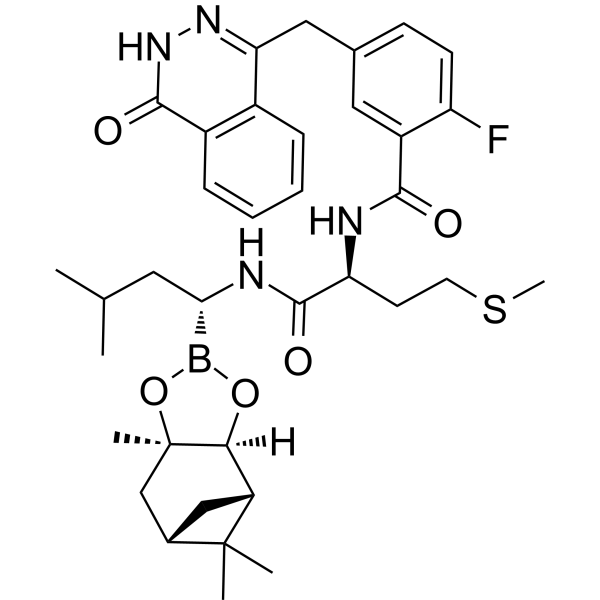 0 ImagesCat. No.: HY-157212PARP-1/Proteasome-IN-1 (compound 42i) is a dual PARP-1 and proteasome inhibitor with significant inhibitory effects on breast cancer. PARP-1/Proteasome-IN-1 can downregulate the expression of BRCA1 and RAD51 to inhibit homologous recombination repair function and induce apoptosis.
-
Truly-4
 0 ImagesCat. No.: HY-187439Truly-4 is a bifunctional Rpn13 PROTAC and CRBN ByeTAC degrader. Degradation of Rpn13 relies on CRBN-mediated E3 ubiquitin ligase activity, while degradation of CRBN itself proceeds via a ByeTAC mechanism of action. Truly-4 induces selective cytotoxicity in hematological cancer cells and solid cancer cells, but not in healthy cells, despite comparable levels of Rpn13 depletion in both cell types. Truly-4 can be used in studies related to B-cell lymphoma and triple-negative breast cancer.
-
Tomatine hydrochloride
 0 ImagesCat. No.: HY-N2166ACAS No.: 17605-83-3Synonyms: α-Tomatine hydrochloride; Lycopersicin hydrochloride; Tomatin hydrochlorideTomatine hydrochloride is a glycoalkaloid, found in the tomato plant (Lycopersicon esculentum Mill.). Tomatine hydrochloride elicits neurotoxicity in RIP1 kinase and caspase-independent manner. Tomatine hydrochloride promotes the upregulation of nuclear apoptosis inducing factor (AIF) in neuroblastoma cells. Tomatine hydrochloride also inhibits 20S proteasome activity.
-
DQ-9
 0 ImagesCat. No.: HY-183683CAS No.: 2803611-81-4DQ-9 is a selective immunoproteasome β5i inhibitor (IC50=0.0019 μM). DQ-9 generates additional inhibitory substances via iron-mediated intracellular activation, and induces oxidative stress, carbon-centered free radicals and macromolecular damage through its artemisinin domain. DQ-9 induces apoptosis in leukemia and multiple myeloma cells. DQ-9 exhibits selective cytotoxicity against leukemia and multiple myeloma cells by elevating the labile iron pool. DQ-9 can be used in the research of hematological malignancies (leukemia, multiple myeloma, mantle cell lymphoma, acute myeloid leukemia).
-
Octaarginine
 0 ImagesCat. No.: HY-P2483CAS No.: 148796-86-5Octaarginine is a cell-penetrating peptide and proteasome inhibitor. Octaarginine exhibits mixed-type inhibition against 20S proteasome chymotrypsin-like, caspase-like, and trypsin-like activities, and inhibits 26S proteasome activity with decreased efficiency. Octaarginine induces ubiquitin-conjugated protein accumulation, mediates HSPG-dependent cellular internalization via macropinocytosis, enhances liposomal cargo uptake and gene delivery. Octaarginine can be used for the research of cervix carcinoma, collagen antibody-induced arthritis, and bacterial infections.
-
LMP2-IN-1
 0 ImagesCat. No.: HY-184919CAS No.: 3056058-96-6LMP2-IN-1 is an orally bioavailable, brain-permeable macrocyclic peptide epoxyketone, acts as a selective and irreversible inhibitor of LMP2 (IC50 = 87 nM). LMP2-IN-1 rapidly distributes to the brain and forms an irreversible LMP2:AR-01 adduct. LMP2-IN-1 improves memory function and rescues reactive astrocytes in 5xFAD mouse models of Alzheimer's disease (AD).
-
Davelizomib
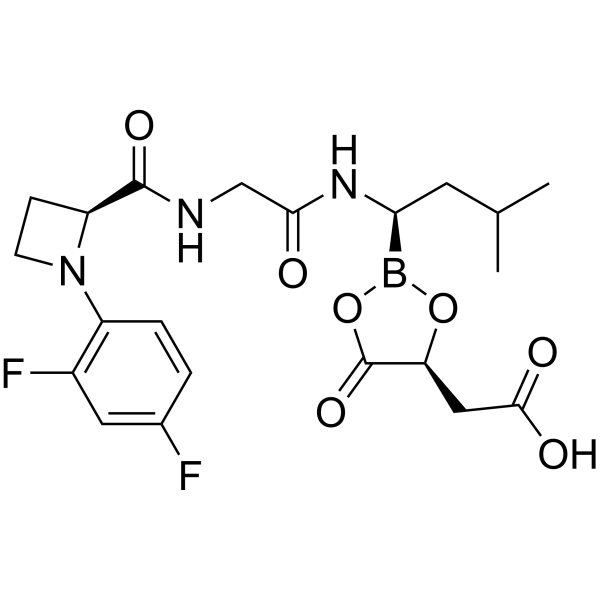 0 ImagesCat. No.: HY-156605CAS No.: 2409841-51-4Davelizomib is proteasome inhibitor with antineoplastic effect.
-
Proteasome-IN-5
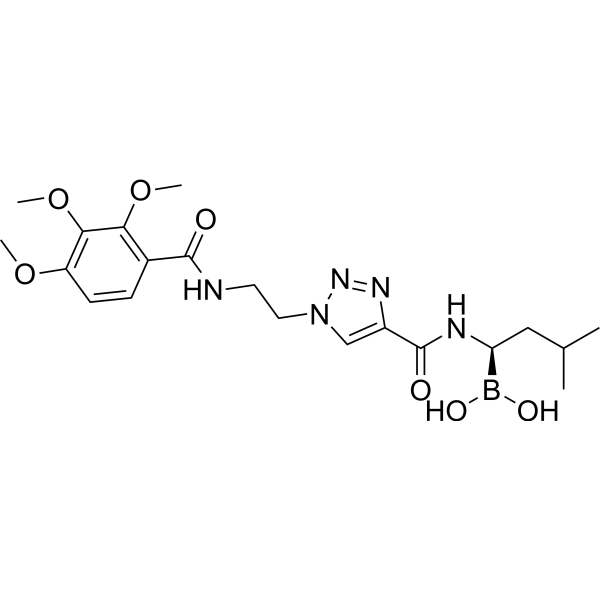 0 ImagesCat. No.: HY-157032CAS No.: 1613134-34-1Proteasome-IN-5 (compound 5) is a proteasome inhibitor.
-
LU-001i
 0 ImagesCat. No.: HY-112946CAS No.: 1620107-60-9LU-001i is a highly specific proteasome β1i (LMP2) inhibitor. LU-001i alone has no significant immunomodulatory effect, but when combined with the LMP7 inhibitor (PRN1126), it can exert anti-inflammatory and immunomodulatory effects. LU-001i can be used for the study of autoimmune diseases.
-
Bz-VGR-AMC
 0 ImagesCat. No.: HY-137897CAS No.: 87779-49-5Bz-VGR-AMC is a fluorescent substrate for the trypsin-like activity of the 20S proteasome. Bz-VGR-AMC can be used to measure the trypsin-like (β2) activity of the 20S proteasome (Ex/Em = 360/460 nm).
-
Suc-Gly-Gly-Phe-pNA
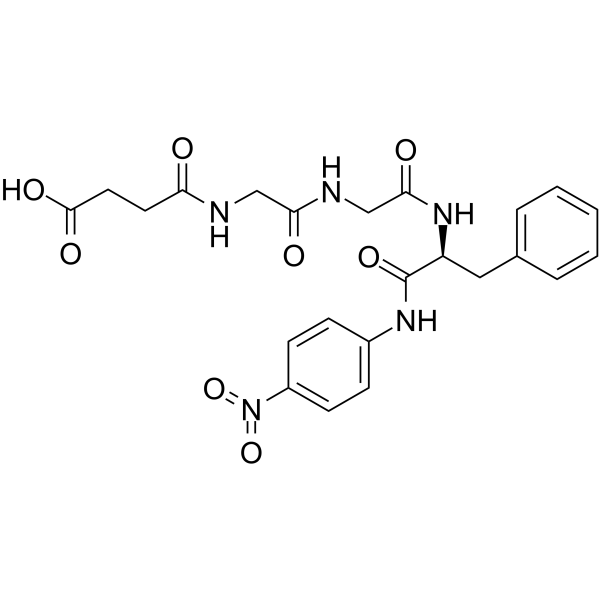 0 ImagesCat. No.: HY-137186CAS No.: 68982-90-1Suc-Gly-Gly-Phe-pNA is the chymotrypsin substrate with an Km value of 1.6 mM.
-
A-933548
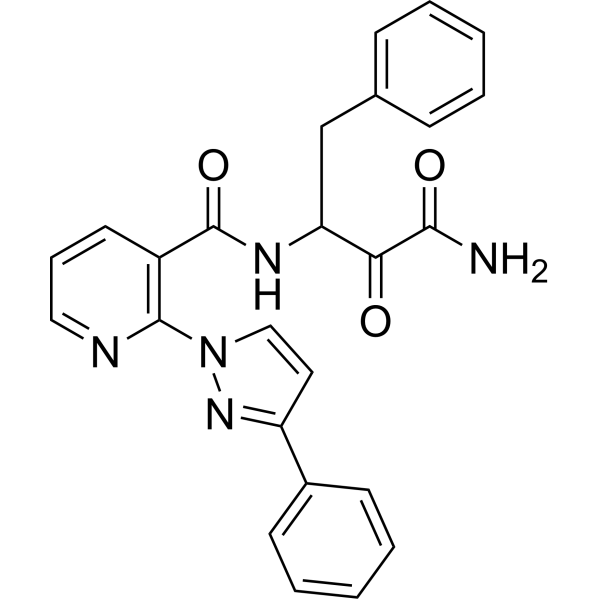 0 ImagesCat. No.: HY-113639CAS No.: 1037826-43-9A-933548 is a potent and selective inhibitor of calpain, with a Ki of 18 nM. A-933548 can be used for the research of Alzheimer's disease.
-
FK-448 Free base
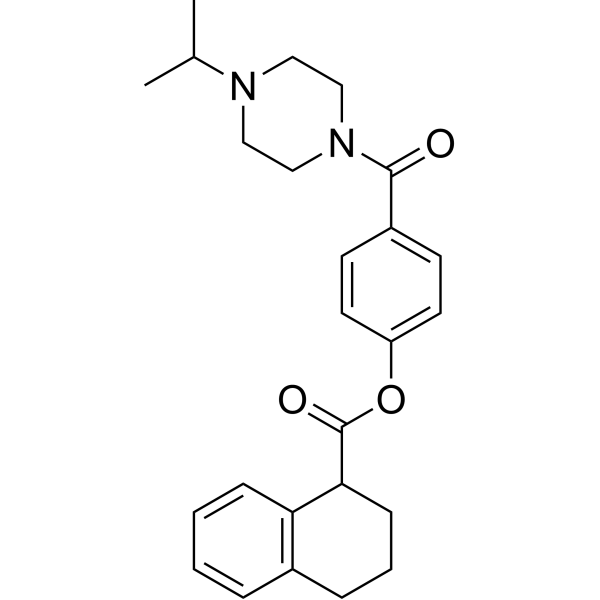 0 ImagesCat. No.: HY-100193CAS No.: 85858-76-0FK-448 Free base is an effective and specific inhibitor of chymotrypsin, with an IC50 of 720 nM.
-
MG-101 (GMP)
 0 ImagesCat. No.: HY-18964GCAS No.: 110044-82-1Synonyms: Calpain inhibitor I (GMP); Ac-LLnL-CHO (GMP); ALLN (GMP)MG-101 (GMP) (Calpain inhibitor I (GMP)) is MG-101 (HY-18964) produced by using GMP guidelines. GMP small molecules works appropriately as an auxiliary reagent for cell therapy manufacture. MG-101 (ALLN) is an inhibitor of cysteine proteases which inhibits calpain I, calpain II, cathepsin B and cathepsin L with Kis of 190, 220, 150 and 500 pM, respectively. MG-101 induces apoptosis and inhibits tumor growth, it can be used for the research of colon cancer.
-
Z-Gly-Gly-Arg-βNA
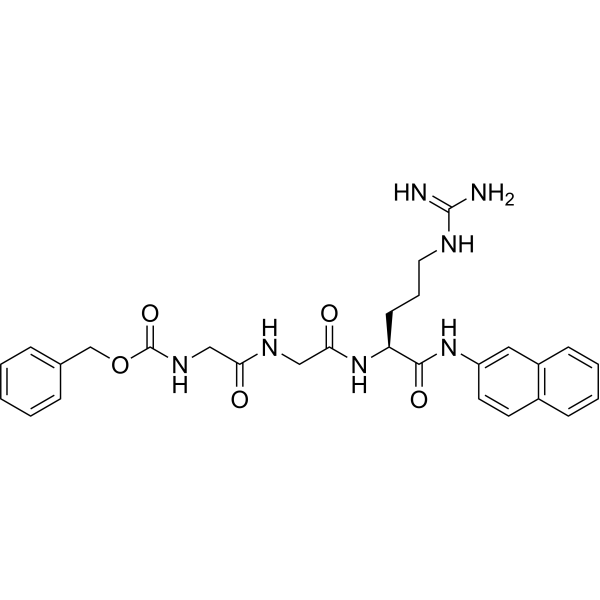 0 ImagesCat. No.: HY-P4514CAS No.: 17278-97-6Z-Gly-Gly-Arg-βNA is the synthetic peptide substrate of trypsin-like activities of the proteasome.
-
RA183-CO-C6-NHCO-NH-Boc
 0 ImagesCat. No.: HY-181524RA183-CO-C6-NHCO-NH-Boc is a proteasome ligand-linker conjugate that can be used for the synthesis of CAP-TAC (proteasome cap-targeted chimera), such as RAPRMT5 (HY-181521).
-
8304-vs
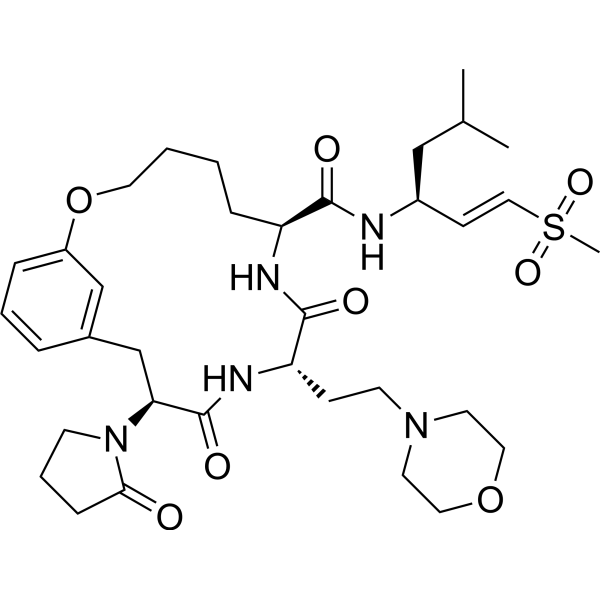 0 ImagesCat. No.: HY-1561058304-vs is a macrocyclic anti-Plasmodial agent that covalently and irreversibly targets the Plasmodium proteasome. 8304-vs effectively inhibits the growth of Plasmodium falciparum.
-
Dihydroeponemycin
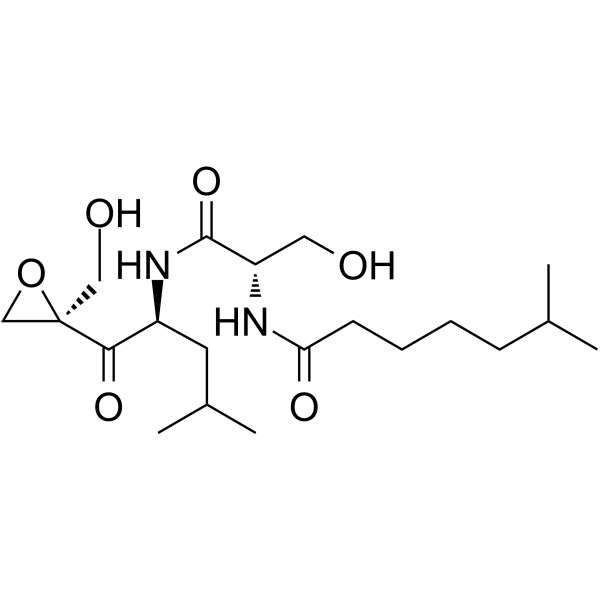 0 ImagesCat. No.: HY-108553CAS No.: 126463-64-7Dihydroeponemycin, an analogue of the antitumor and antiangiogenic natural product eponemycin, selectively targets the 20S proteasome. Dihydroeponemycin covalently modifies a subset of catalytic proteasomal subunits, binding preferentially to the IFN-gamma-inducible subunits LMP2 and LMP7. Dihydroeponemycin-mediated proteasome inhibition induces a spindle-like cellular morphological change and apoptosis.
-
iso-VQA-ACC TFA
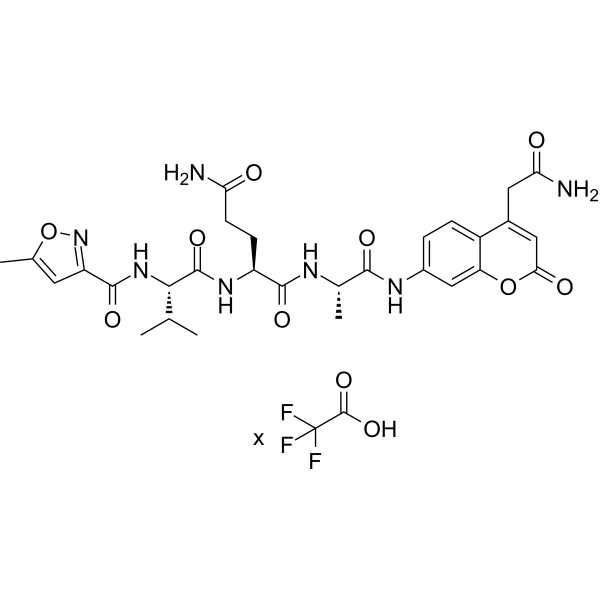 0 ImagesCat. No.: HY-P10003Aiso-VQA-ACC TFA is a constitutive proteasome substrate.




