



Ras
Ras is the name given to a family of related proteins which is ubiquitously expressed in all cell lineages and organs. All Ras protein family members belong to a class of protein called small GTPase, and are involved in transmitting signals within cells. Ras is the prototypical member of the Ras superfamily of proteins, which are all related in 3D structure and regulate diverse cell behaviours. When Ras is 'switched on' by incoming signals, it subsequently switches on other proteins, which ultimately turn on genes involved in cell growth, differentiation and survival. As a result, mutations in ras genes can lead to the production of permanently activated Ras proteins. This can cause unintended and overactive signalling inside the cell, even in the absence of incoming signals. Because these signals result in cell growth and division, overactive Ras signaling can ultimately lead to cancer. The 3 Ras genes in humans (HRAS,KRAS, and NRAS) are the most common oncogenes in human cancer; Ras inhibitors are being studied as a treatment for cancer, and other diseases with Ras overexpression.
Ras Isoform Specific Products
All Product Categories
-
Ras Related Products (719)
Related Products (719)

-
Antibodies (36)
-
Ras Isoform Comparison
-
KRAS G12D inhibitor 24
 0 ImagesCat. No.: HY-158703CAS No.: 3033701-29-7KRAS G12D inhibitor 24 (compound 103) is a potent inhibitor of KRAS G12D, with the IC50 of 0.004 μM. KRAS G12D inhibitor 24 has oral bioactivity.

-
KRAS IN-44
 0 ImagesCat. No.: HY-174379KRAS IN-44 (Compound S2C2M2) is a PDE6D degrader. KRAS IN-44 inhibits PDE6D-dependent KRAS trafficking and KRAS downstream signaling pathways. KRAS IN-44 down-regulates EGF-induced the phosphorylation of PI3K, AKT, and mTOR. KRAS IN-44 increases Apoptosis. KRAS IN-44 has antitumor activity against hepatoblastoma.
-
KRAS G12C inhibitor 58
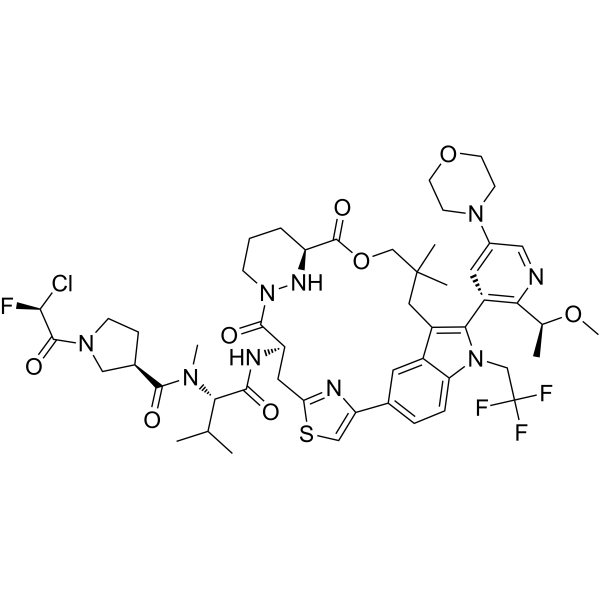 0 ImagesCat. No.: HY-153461CAS No.: 2915599-52-7KRAS G12C inhibitor 58 is a KRAS G12C inhibitor, used in cancer research.
-
PROTAC SOS1 degrader-5
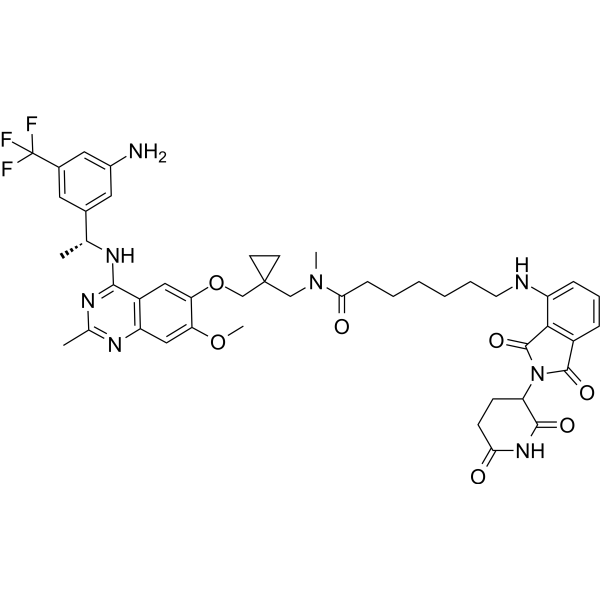 0 ImagesCat. No.: HY-161173CAS No.: 2836273-61-9PROTAC SOS1 degrader-5 is a potent SOS1 PROTAC degrader with a DC50 value of 13 nM. PROTAC SOS1 degrader-5 induces CRBN-dependent ubiquitination and degradation of SOS1 protein, inhibits the proliferation of KRASG12C-mutated cancer cells, and suppresses tumor growth in xenograft models. PROTAC SOS1 degrader-5 can be used in studies related to KRASG12C-mutated non-small cell lung cancer.
-
KRASG12D-IN-8
 0 ImagesCat. No.: HY-184010CAS No.: 3101973-42-3KRASG12D-IN-8 is an orally active KRASG12D inhibitor, with a Kd value of 0.003 nM for KRASG12D and 0.024 nM for KRASG12V. KRASG12D-IN-8 inhibits the activity of phosphorylated ERK in KRAS-mutated cells. KRASG12D-IN-8 induces tumor regression in ovarian cancer xenograft mouse models. KRASG12D-IN-8 can be used for the research of KRAS-mutated cancers.
-
pan-KRAS-IN-13
 0 ImagesCat. No.: HY-162446CAS No.: 3033637-76-9pan-KRAS-IN-13 (compound 2) is a potent inhibitor of KRAS, with IC50s of 2.75 nM and 2.89 nM for G12D and G12V, respectively
-
8-Br-2'-O-Me-cAMP
 0 ImagesCat. No.: HY-134264CAS No.: 612513-13-08-Br-2'-O-Me-cAMP is an analogue of the signal molecule cyclic AMP (cAMP). 8-Br-2'-O-Me-cAMP is an agonist of exchange factors activated by cAMP (Epac), while it doesn't activate PKA as cAMP do. 8-Br-2'-O-Me-cAMP can be used in cardiovascular disease research.
-
KRAS G12C inhibitor 40
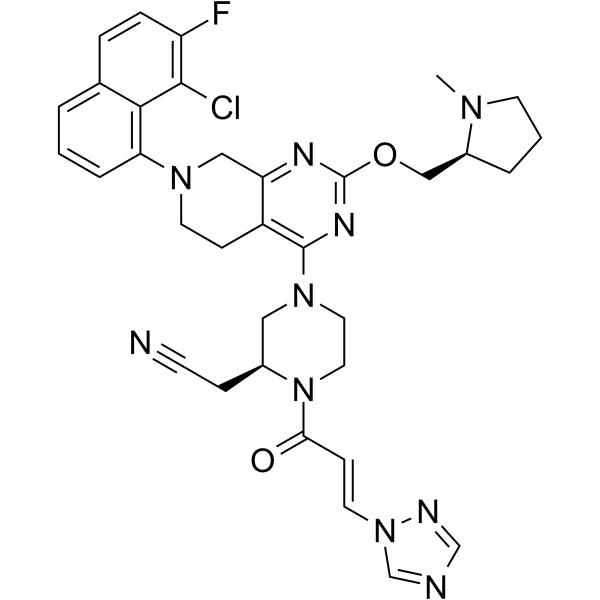 0 ImagesCat. No.: HY-143594CAS No.: 2660014-14-0KRAS G12C inhibitor 40 is a potent inhibitor of KRAS G12C. The Ras family of proteins is an important intracellular signaling molecule that plays an important role in growth and development. KRAS G12C inhibitor 40 has the potential for the research of KRAS G12C-mediated cancer (extracted from patent WO2021129824A1, compound 70).

-
KRAS G12D ligand-2
 0 ImagesCat. No.: HY-168700KRAS G12D ligand-2 is a Ligand for Target Protein for PROTAC. KRAS G12D ligand-2 can be used to synthesize Setidegrasib (HY-148273).
-
ARS-2102
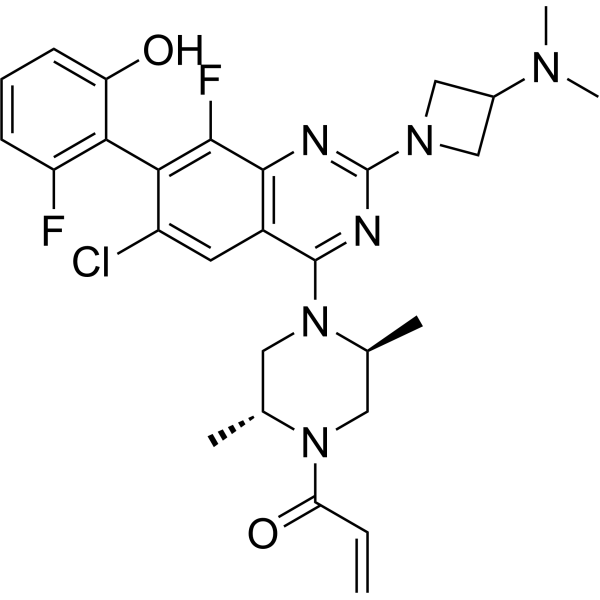 0 ImagesCat. No.: HY-152248CAS No.: 2098509-21-6ARS-2102 is a potent covalent KRAS G12C inhibitor for use in cancer research.
-
SOS1 Ligand intermediate-4
 0 ImagesCat. No.: HY-161635CAS No.: 3036155-94-6
-
NSC 1008
 0 ImagesNSC 1008 is a selective Ras converting enzyme 1 (Rce1) inhibitor that reduces Rce1 in vitro activity with a human IC50 of 8.9 μM. NSC 1008 demonstrates selectivity for Rce1 by not inhibiting human Ste24 or huamn FTase. NSC 1008 exhibits low cell toxicity, and induces mislocalization of EGFP-Ras from the plasma membrane in cancer cells. NSC 1008 can be used for the research of cancer.
-
Spiclomazine hydrochloride
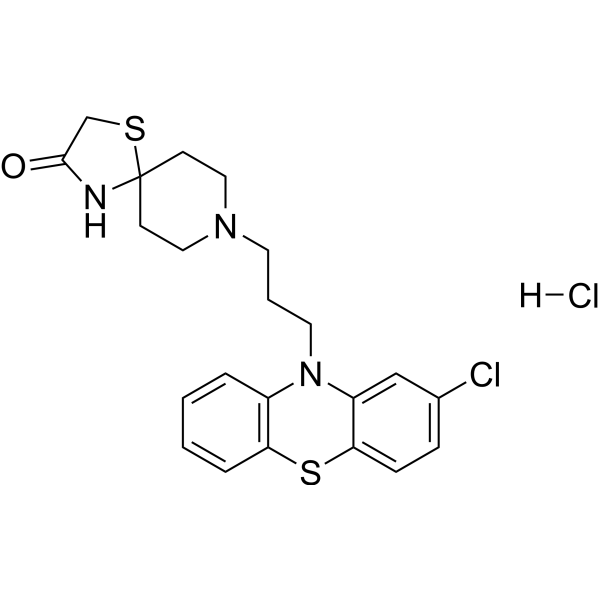 0 ImagesCat. No.: HY-122152CAS No.: 27007-85-8Synonyms: APY-606; Clospirazine hydrochloride

-
RAS activator compound 1
 0 ImagesRAS activator compound 1 (Compound 7c) is a RAS activator targeting the guanine nucleotide exchange factor (GEF) son of sevenless homologue 1 (SOS1). RAS activator compound 1 can activate the nucleotide exchange process and increase levels of active RAS-GTP in HeLa cells. RAS activator compound 1 can be used for research of RAS-driven tumor.
-
KRAS degrader-1
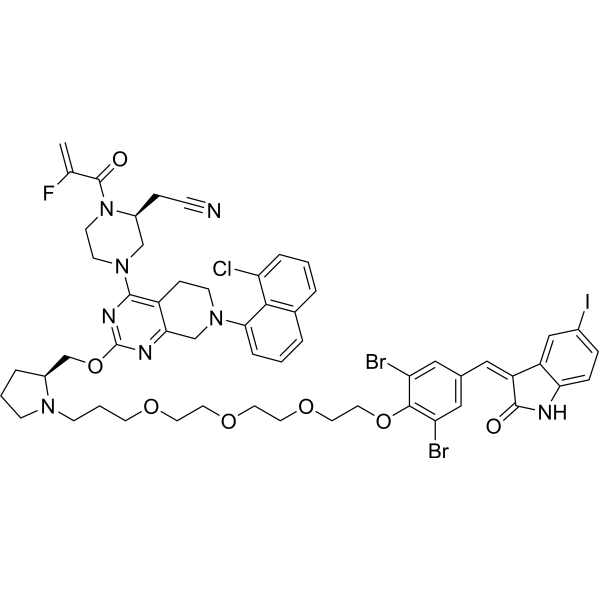 0 ImagesCat. No.: HY-153880CAS No.: 2795275-59-9KRAS degrader-1 is a potent KRAS degrader. KRAS degrader-1 targets specific proteins for degradation via the autophagy-lysosomal degradation pathway. KRAS degrader-1 is suitable for use in cancer research. (Blue: KRAS G12C-IN-72 (HY-128414); Black: Linker (HY-175587); Pink: 5-Iodoindolin-2-one (HY-76986); Blue + Black: KRAS ligand-Linker Conjugate 7 (HY-175586)).
-
KRAS G12C inhibitor 65
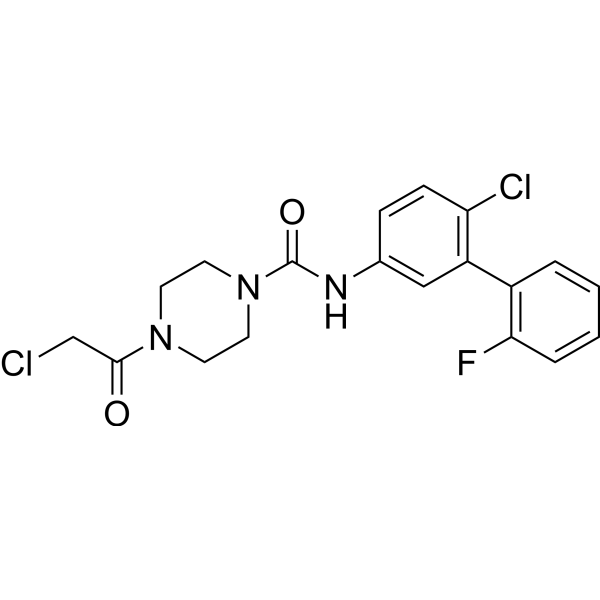 0 ImagesCat. No.: HY-151999CAS No.: 3033305-77-7KRAS G12C inhibitor 65 is a potent and covalent KRASG12C inhibitor that traps KRASG12C in the GDP-bound state. KRASG12C IN-1 exhibits potent antitumor activity against KRAS-mutant non-small cell lung cancer.
-
KRAS G12C inhibitor 39
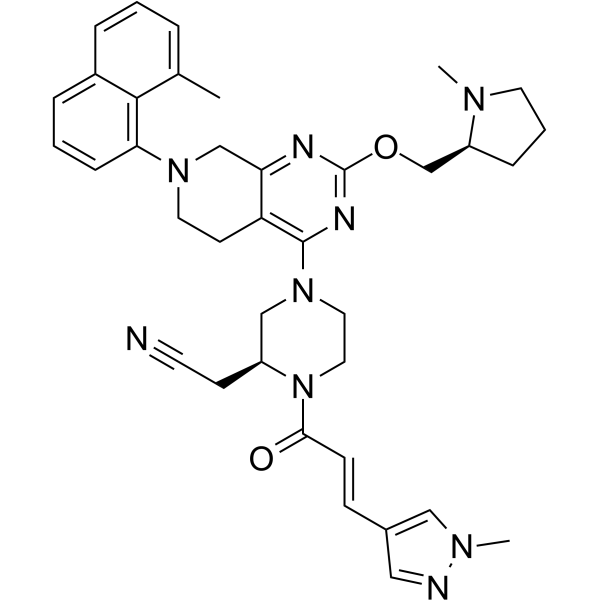 0 ImagesCat. No.: HY-143592CAS No.: 2326522-16-9




