K-Ras
K-Ras (KRAS) is a small GTPase that functions as a molecular switch within the RAS/MAPK signaling network, cycling between inactive GDP-bound and active GTP-bound states to regulate cell proliferation, differentiation, and survival[1][2]. Mechanistically, activated KRAS transduces signals from cell-surface receptors to downstream effectors, including the MAPK/ERK and PI3K/AKT pathways, thereby coordinating cellular growth and stress-response programs[1][3]. Oncogenic mutations impair GTP hydrolysis and maintain persistent KRAS signaling, resulting in sustained activation of proliferative pathways that contribute to tumor initiation, progression, and therapeutic resistance across multiple cancer types, particularly pancreatic ductal adenocarcinoma, colorectal cancer, and non-small cell lung cancer[2][3][4]. In disease models, mutant KRAS also reshapes the tumor microenvironment through inflammatory and immune-regulatory signaling, further supporting tumor development and immune evasion[3][2]. Compared with the related RAS isoforms HRAS and NRAS, KRAS is the most frequently altered RAS family member in human cancer and accounts for the majority of oncogenic RAS mutations, highlighting its distinct biological and clinical importance[2][5]. For experimental applications, the development of mutation-selective inhibitors, especially KRAS^G12C^ inhibitors, has established a tractable platform for studying KRAS-dependent signaling and therapeutic resistance mechanisms, although resistance remains a major challenge for long-term clinical efficacy[2][5].
Verweise:
- [1]. K-Ras gene information.
- [2]. Huang L, et al. KRAS mutation: from undruggable to druggable in cancer. Signal Transduct Target Ther. 2021 Nov 15;6(1):386. [Content Brief]
- [3]. Uniyal P, et al. KRAS Mutations in Cancer: Understanding Signaling Pathways to Immune Regulation and the Potential of Immunotherapy. Cancers (Basel). 2025 Feb 25;17(5):785. [Content Brief]
- [4]. Suda K, et al. Biological and clinical significance of KRAS mutations in lung cancer: an oncogenic driver that contrasts with EGFR mutation. Cancer Metastasis Rev. 2010 Mar;29(1):49-60. [Content Brief]
- [5]. Riedl JM, et al. Emerging landscape of KRAS inhibitors in cancer treatment. Cancer Cell. 2026 Mar 9;44(3):471-497. [Content Brief]
-
K-Ras Verwandte Produkte (287)
Verwandte Produkte (287)

-
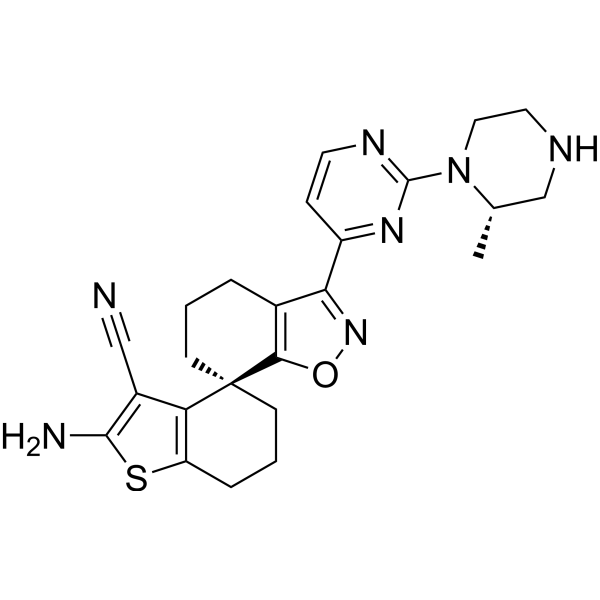
Daraxonrasib
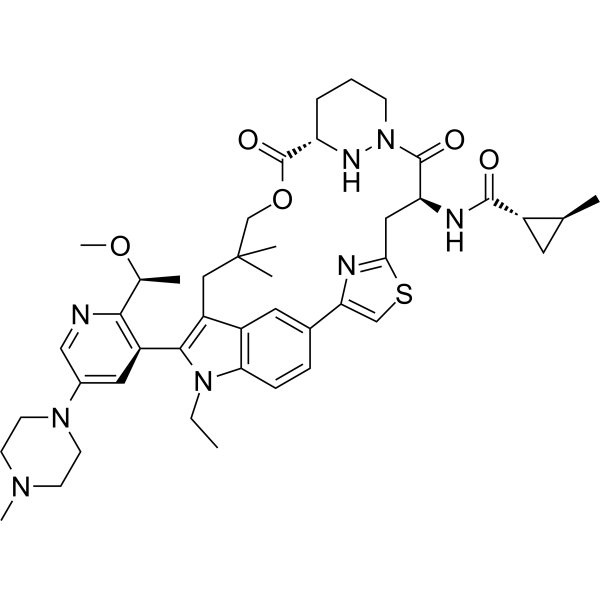 0 ImagesSynonyms: RMC-6236; RAS-IN-2Daraxonrasib (RMC-6236) is an orally active, non-covalent RAS (ON) inhibitor. Daraxonrasib disrupts the interaction of wild-type or mutant RAS proteins with the RAS binding domain of BRAF, with EC50 values ranging from 28-220 nM for wild-type KRAS, NRAS, HRAS, and multiple oncogenic RAS variants. Daraxonrasib inhibits pERK. Daraxonrasib has anti-tumor activity against KRAS mutant tumors.
-
MRTX1133
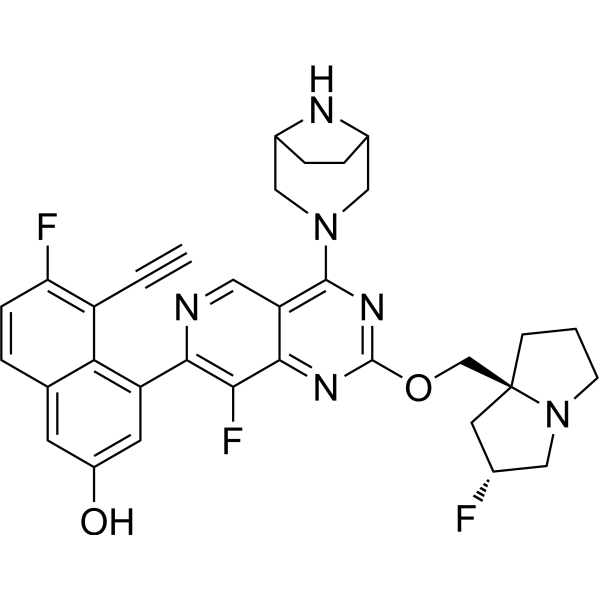 0 ImagesMRTX1133 is a noncovalent, potent, and selective alkyne-based KRAS G12D inhibitor. MRTX1133 optimally fills the switch II pocket and extends three substituents to favorably interact with the protein, resulting in an estimated KD against KRAS G12D of 0.2 pM. MRTX1133 prevents SOS1-catalyzed nucleotide exchange and/or formation of the KRAS G12D/GTP/RAF1 complex, thereby inhibiting mutant KRAS-dependent signal transduction. MRTX1133 selectively inhibits KRAS G12D mutant, but not KRAS wild-type, tumor cells. MRTX1133 has single digit nanomolar activity in cellular assays and marked in vivo efficacy in tumor models harboring KRAS G12D mutations.
-
Sotorasib
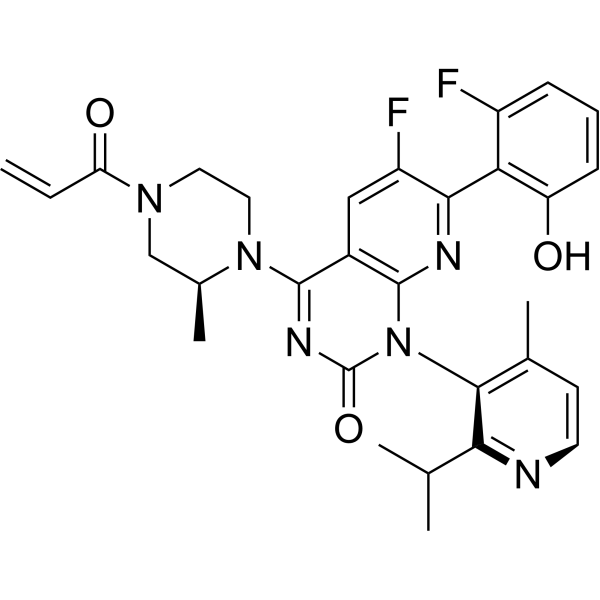 0 ImagesSynonyms: AMG-510Sotorasib (AMG-510) is a first-in-class, orally bioavailable, and selective KRAS G12C covalent inhibitor. Sotorasib irreversibly inhibits KRAS G12C by locking it in an inactive GDP-bound state. Sotorasib leads to the regression of KRAS G12C‑mutated locally advanced or metastatic non‑small cell lung cancer (NSCLC).
-
Adagrasib
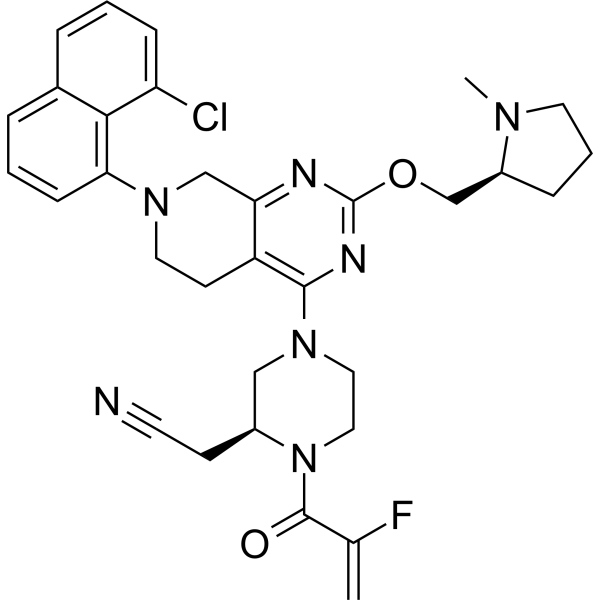 0 ImagesSynonyms: MRTX849Adagrasib (MRTX849) is a potent, orally-available, and mutation-selective covalent inhibitor of KRAS G12C with potential antineoplastic activity. Adagrasib covalently binds to KRAS G12C at the cysteine at residue 12, locks the protein in its inactive GDP-bound conformation, and inhibits KRAS-dependent signal transduction.
-
Zoldonrasib
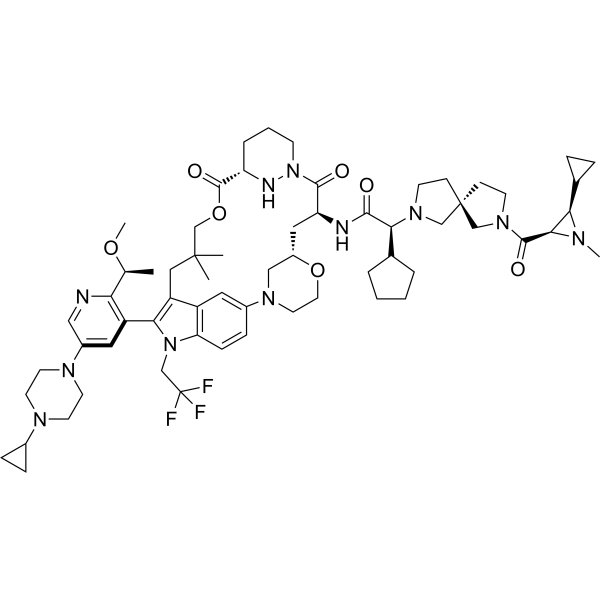 0 ImagesSynonyms: RMC-9805; KRAS G12D inhibitor 18
-
LC-2
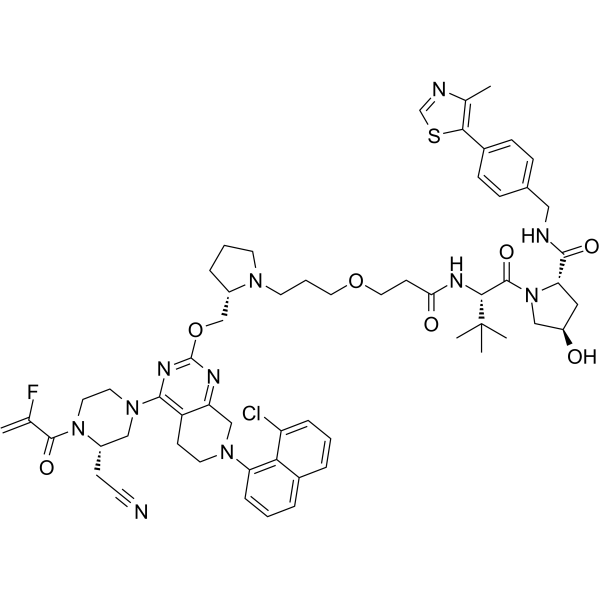 0 ImagesLC-2 is an orally active PROTAC-class degrader targeting KRASG12C and a MAPK inhibitor. LC-2 shows higher selectivity for KRASG12C than wild-type KRAS and other KRAS mutants. LC-2 covalently binds to KRASG12C via the MRTX849 (HY-130149) warhead, recruits the VHL E3 ligase to form a ternary complex, and induces ubiquitination and degradation of KRASG12C. Meanwhile, LC-2 inhibits the MAPK signaling pathway, reduces the phosphorylation levels of CRAF and AKT, thereby inducing apoptosis and suppressing cancer cell and tumor growth. LC-2 can be used for the research of KRASG12C-positive cancers, including non-small cell lung cancer and colorectal cancer.
-
MCB-36
 0 ImagesMCB-36 is a pan-KRAS PROTAC degrader that recruits VHL, with a Kd value of approximately 1 pM against KRAS, and it does not affect KRAS transcription. MCB-36 continuously degrades various KRAS mutants, inhibits oncogenic KRAS signaling pathways, reduces p-ERK levels, and induces apoptosis, thereby suppressing the growth of KRAS-dependent cancer cells. In vivo, MCB-36 inhibits tumor growth, overcomes resistance to KRAS G12C inhibitors, remodels the tumor immune microenvironment and enhances immune cell infiltration. MCB-36 can be used in research related to colorectal cancer and lung cancer.
-
RMC-7977
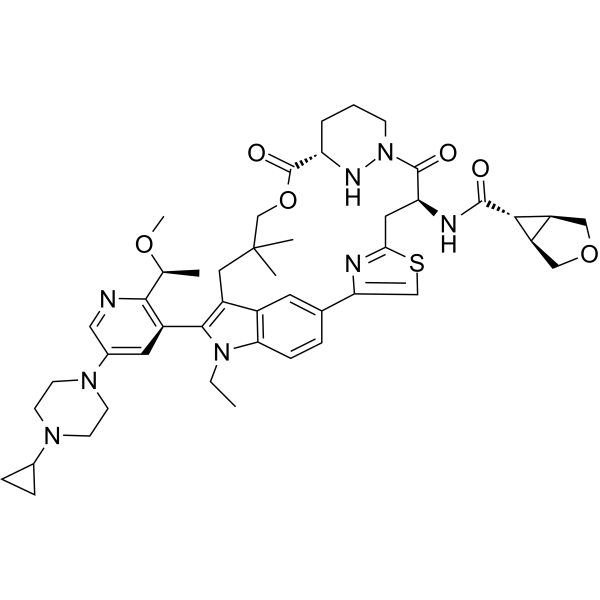 0 ImagesRMC-7977 is an orally active triple-complex RAS inhibitor that can simultaneously bind to cyclophilin A (CYPA) (Kd = 195 nM) and KRAS (G12V) (Kd = 292 μM). It exhibits broad-spectrum inhibitory activity against KRAS, NRAS, and HRAS proteins and their various wild-type and mutant variants. RMC-7977 induces apoptosis by inhibiting the phosphorylation of ERK, CRAF, and RSK, as well as increasing PARP cleavage. This leads to tumor regression, reduces resistance in KRASG12C cancer models, and demonstrates good tolerability across various RAS cancer models.
-
Elironrasib
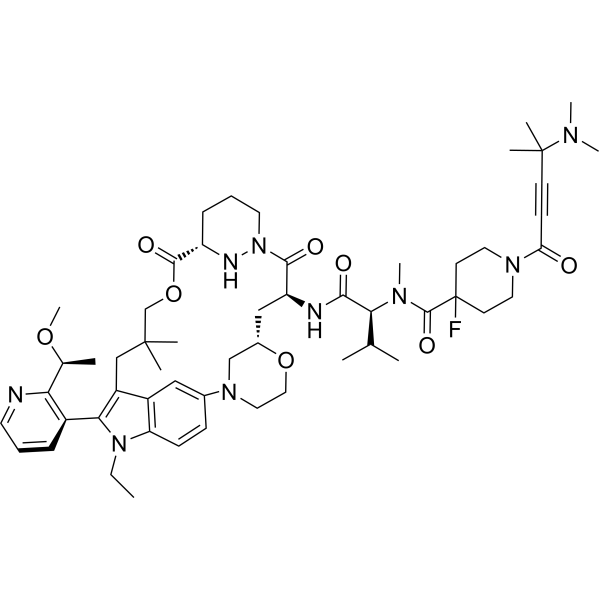 0 ImagesSynonyms: RMC-6291Elironrasib is an orally active and covalent inhibitor of KRASG12C(ON). Elironrasib forms a tri-complex within tumor cells between KRASG12C(ON) and cyclophilin A (CypA). Thus, Elironrasib prevents KRASG12C(ON) from signaling via steric blockade of RAS effector binding. Elironrasib inhibits ERK signaling and induced apoptosis in KRASG12C-mutant H358 cells. Elironrasib also inhibits the proliferation of KRASG12C mutant cells with a median IC50 of 0.11 nM.
-
Divarasib
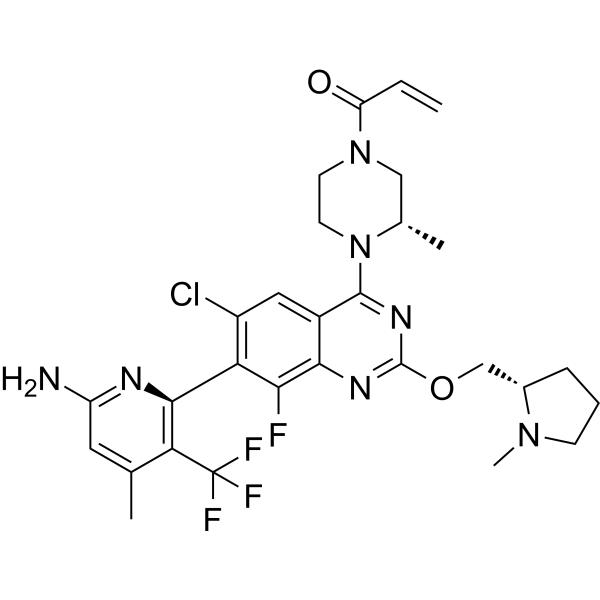 0 ImagesSynonyms: GDC-6036Divarasib (GDC-6036) is an orally active, selective KRASG12C inhibitor with an IC50 of <0.01 μM. Divarasib covalently binds Cys12 in GDP-bound KRASG12C, occupies the switch II pocket, blocks GTP binding and SOS-mediated reactivation, and inhibits oncogenic KRAS signaling. Divarasib induces tumor shrinkage and robust tumor growth inhibition in KRASG12C-positive models and cancer cells. Divarasib can be used for the research of non-small cell lung cancer, colorectal adenocarcinoma, pancreatic ductal adenocarcinoma, and other KRASG12C-mutated solid tumors.
-
BI-3406
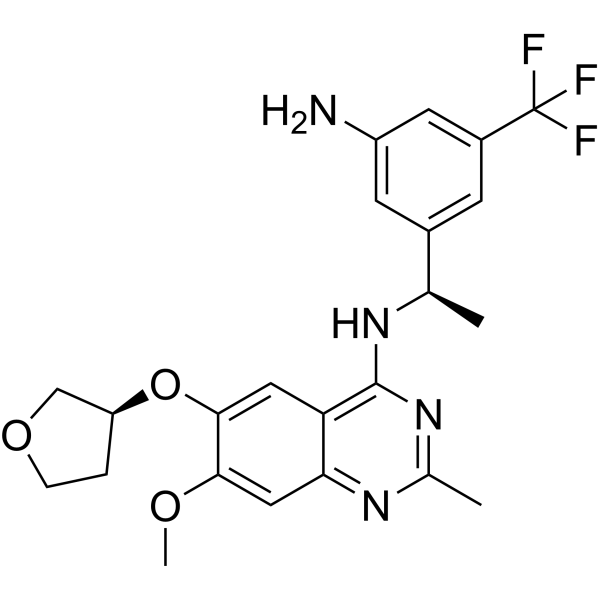 0 ImagesBI-3406 (compound I-6) is an orally active, highly potent and selective inhibitor of the interaction between KRAS and Son of Sevenless 1 (SOS1) with an IC50 of 6 nM. BI-3406 potently reduces the formation of GTP-loaded KRAS, and inhibits MAPK pathway signaling. BI-3406 has anticancer activity.
-
AMG410
 0 ImagesAMG410 is a non-covalent and selective pan-KRAS inhibitor with IC50 values of 1-4 nM for KRAS G12D, KRAS G12V, and KRAS G13D. AMG410 shows greater than 100-fold selectivity against both HRAS and NRAS. AMG410 is a dual GTP(on)- and GDP(off)-state inhibitor (Kd(GDP-state) of 1 nM; Kd(GTP-state) of 22 nM). AMG410 blocks KRAS signaling in a cycling state-independent manner and also blocks proliferation in wildtype KRAS-amplified tumor cells. AMG410 can be used for the study of colorectal, pancreatic, and lung cancers.
-
Setidegrasib
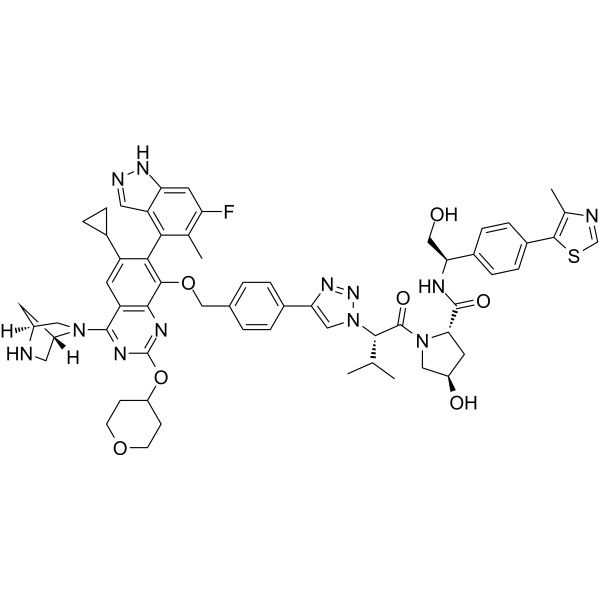 0 ImagesSynonyms: ASP-3082; KRAS G12D inhibitor 17Setidegrasib (ASP-3082) is a PROTAC KRAS degrader (DC50: 37 nM). Setidegrasib induces the degradation of G12D-mutation KRAS protein. Setidegrasib suppresses p-ERK, p-AKT, p-S6 levels in AsPC-1 cells. Setidegrasib exhibits anti-tumor activity in various cancer xenograft models in mice. Setidegrasib can be used in studies involving KRAS(G12D)-mutated solid tumors, such as non-small cell lung cancer.
-
RMC-5127
 0 ImagesRMC-5127 is a small molecule inhibitor that binds to GTP-targeted KRASG12V, with oral bioavailability and blood-brain barrier permeability. RMC-5127 inhibits the activities of the RAS and MAPK pathways, suppresses the proliferation of KRASG12V-mutant cancer cells and induces their apoptosis. RMC-5127 can be used for the research of KRASG12V-mutant non-small cell lung cancer, pancreatic ductal adenocarcinoma, colorectal cancer and intracranial KRASG12V tumors.
-
HRS-4642
 0 ImagesHRS-4642 is a high affinity, selective, long-acting, and non-covalent KRASG12D inhibitor with a Kd value of 0.083 nM. HRS-4642 inhibits the binding of KRASG12D to SOS1 or RAF1, thereby blocking the downstream MEK-ERK signaling pathway. HRS-4642 promotes Apoptosis. HRS-4642 alone or combined with Carfilzomib (HY-10455) effectively shapes the tumor microenvironment. HRS-4642 has an anti-cancer effect on pancreatic and colorectal cancers carrying the KRASG12D mutation.
-
DCC-3116
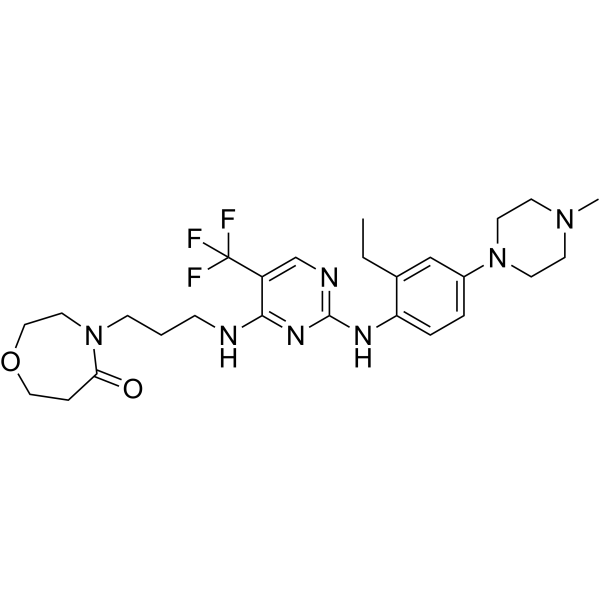 0 ImagesDCC-3116 is an orally active ULK1/2 inhibitor. DCC-3116 can inhibit autophagy in lung cancer cells by inhibiting KRASG12C signaling, thereby inhibiting the proliferation of lung cancer cells and exerting anti-cancer effects.
-
BI-2852
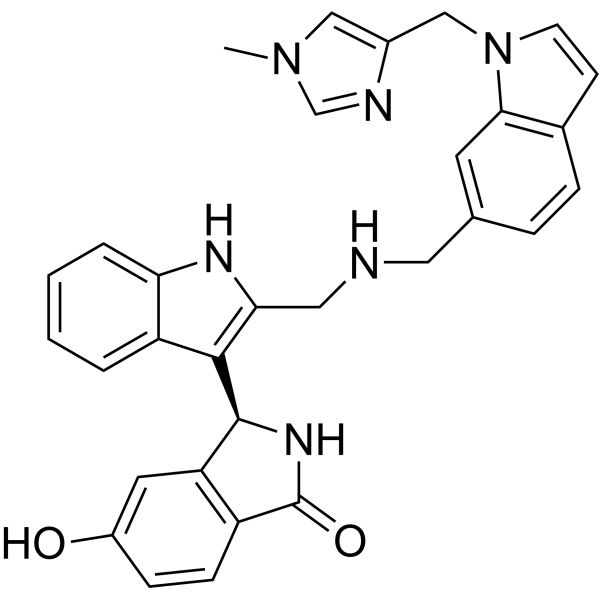 0 ImagesBI-2852 is a KRAS inhibitor for the switch I/II pocket (SI/II-pocket) by structure-based agent design with nanomolar affinity. BI-2852 is mechanistically distinct from covalent KRASG12C inhibitor (binds to switch II pocket) and binds ten-fold more strongly to active KRASG12D versus KRASwt (740 nM vs 7.5 μM). BI-2852 blocks GEF, GAP, and effector interactions with KRAS, leading to inhibition of downstream signaling and an antiproliferative effect in KRAS mutant cells.
-
BBO-8520
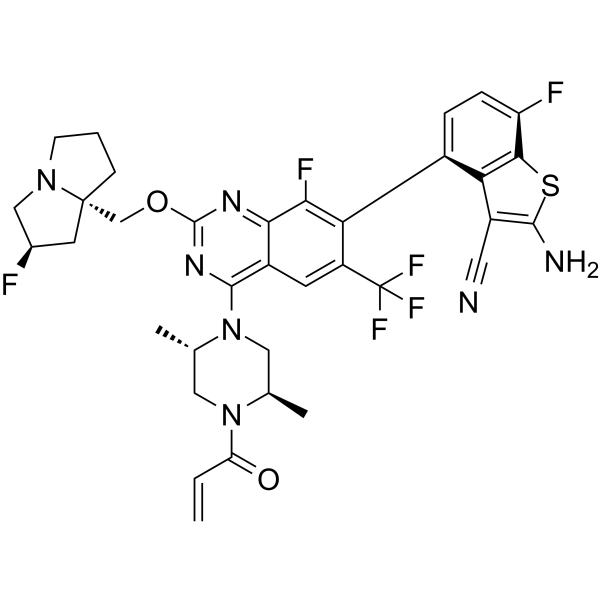 0 ImagesBBO-8520 is a direct small molecule covalent inhibitor targeting KRAS G12C with high oral availability. BBO-8520 has the characteristics of KRAS G12C (OFF) inhibitor and the function of blocking KRASG12C (ON) signal. BBO-8520 inhibits cell proliferation by inhibiting KRAS G12C (ON) by binding GTP protein. BBO-8520 can block RAS-RAF1 interaction and return KRAS G12C to the inactive (OFF) state. BBO-8520 can be used for the research of cancer.