



SARS-CoV
SARS coronavirus
SARS-CoV is the coronavirus (CoV) that causes severe acute respiratory syndrome (SARS). CoVs are enveloped viruses with a positive-sense, single-stranded RNA and can cause health-threatening outbreaks by targeting human respiratory system, including not only SARS, but also Middle East respiratory syndrome (MERS) and SARS-CoV-2 (the cause of COVID-19).
CoVs have four main structural proteins: spike(S), membrane (M), envelope (E), and nucleocapsid (N) proteins. An S protein mediates the CoV entry into host cells by attaching to a cellular receptor (ACE2 for SARS-CoV and SARS-CoV-2, DPP4 for MERS-CoV), followed by fusion between virus and host cell membranes. Genome replication and subgenomic RNA transcription after entry carry on with the participation of many nonstructural proteins such as Mpro (main protease or 3CLpro), PLpro (papain-like protease) and RdRp (RNA-dependent RNA polymerase). Then the structural proteins are translated, assembled into mature virions, and released via vesicles by exocytosis. It is worth mentioning that a protease called TMPRSS2 (transmembrane protease, serine 2) play important roles throughout the whole life of CoVs (such as attachment, assembling and release) by cleaving S protein. All the proteins and subcellular structures participated in the life cycle of CoVs are promising targets for treatment of disease caused by CoVs.
All Product Categories
-
SARS-CoV Related Products (1204)
Related Products (1204)

-
Recombinant Proteins (196)
-
Imiquimod dihydrochloride
 0 ImagesCat. No.: HY-B0180CCAS No.: 2995277-02-4Synonyms: R 837 dihydrochloride
-
Leupeptin Ac-LL
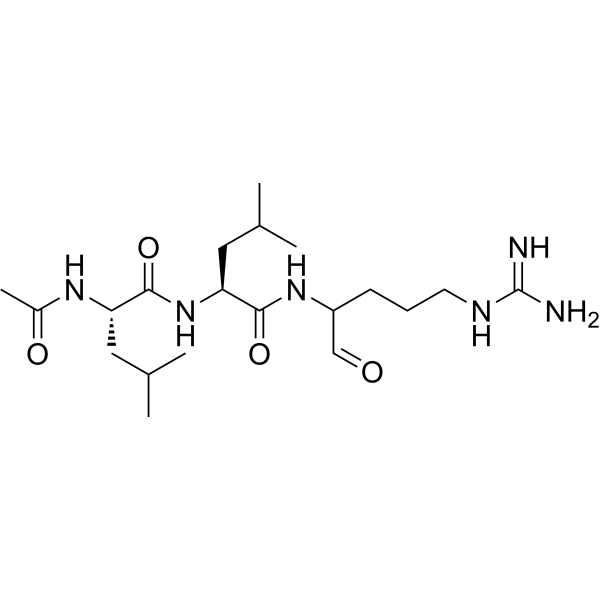 0 ImagesCat. No.: HY-18234BCAS No.: 24365-47-7Leupeptin Ac-LL is a broad-spectrum protease inhibitor. By inhibiting the activation of the PTEN/PI3K/Akt/NF-κB/ERK1/2/p38 signaling pathway, Leupeptin Ac-LL significantly reduces LPS-induced NO and ROS production, mitochondrial membrane potential hyperpolarization, phagocytic activity, pro-inflammatory cytokine release, and M1 polarization in mouse peritoneal macrophages, and reverses autophagic flux impairment. It also decreases Concanavalin A (HY-P2149)-induced proliferation index of mouse splenic lymphocytes and the Th1/IL-10 and Th2/IL-10 cytokine ratios, thereby modulating innate and adaptive immune responses. Leupeptin Ac-LL inhibits blood coagulation and tumorigenesis in mouse skin. Leupeptin Ac-LL can be used in research on chronic inflammatory diseases and skin tumorigenesis.
-
HNC-1664
 0 ImagesCat. No.: HY-170799CAS No.: 2127358-36-3HNC-1664 is the orally active inhibitor for RNA-dependent RNA polymerase (RdRP). HNC-1664 exhibits broad-spectrum antiviral activity against coronavirus (SARS-CoV-2 wildtype and its mutants XBB.1.18, HK.3.1, BF.7.14, BA.1HCoV-229E, HCoV-OC43) and arenavirus. HNC-1664 exhibits anti-infectious activity in SARS-CoV-2 Delta infected mouse models.
-
UAWJ-247
 0 ImagesCat. No.: HY-180405CAS No.: 1802664-84-1UAWJ-247 is a potent and reversible SARS-CoV-2 main protease (Mpro) inhibitor with an IC50 of 0.042 μM and a Ki of 0.035 μM. UAWJ-247 can be used for the research of covid-19.
-
Azelastine-d4 hydrochloride
 0 ImagesCat. No.: HY-B0462S1CAS No.: 2747915-85-9Azelastine-d4 (hydrochloride) is deuterium-labeled Azelastine (hydrochloride) (HY-B0462).
-
Chloroquine-d5 diphosphate
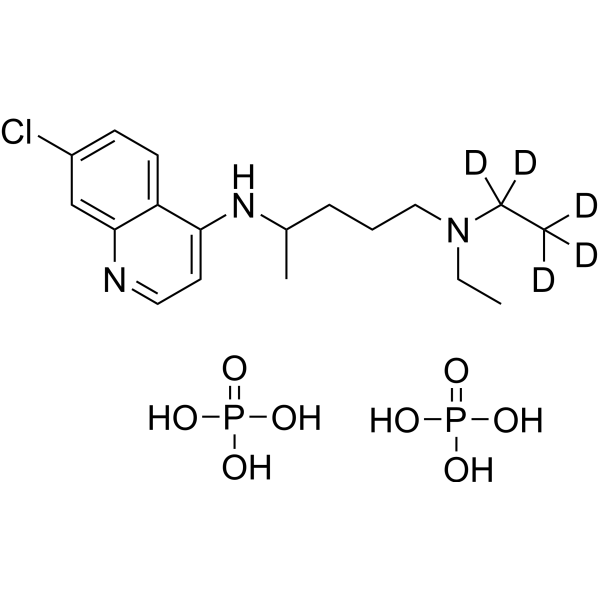 0 ImagesCat. No.: HY-17589SCAS No.: 1854126-42-3Chloroquine-d5 (diphosphate) is the deuterium labeled Chloroquine (phosphate). Chloroquine phosphate is an antimalarial and anti-inflammatory agent widely used to treat malaria and rheumatoid arthritis. Chloroquine phosphate is an autophagy and toll-like receptors (TLRs) inhibitor. Chloroquine phosphate is highly effective in the control of SARS-CoV-2 (COVID-19) infection in vitro (EC50=1.13 μM).
-
Crexavibart
 0 ImagesCat. No.: HY-145641CAS No.: 2599039-61-7Synonyms: BMS-986413; C-144-LSCrexavibart (BMS-986413; C-144-LS) is an IgG1λ2 antibody that targets the SARS-CoV2 spike (S) glycoprotein receptor-binding domain.
-
Telaprevir-d4
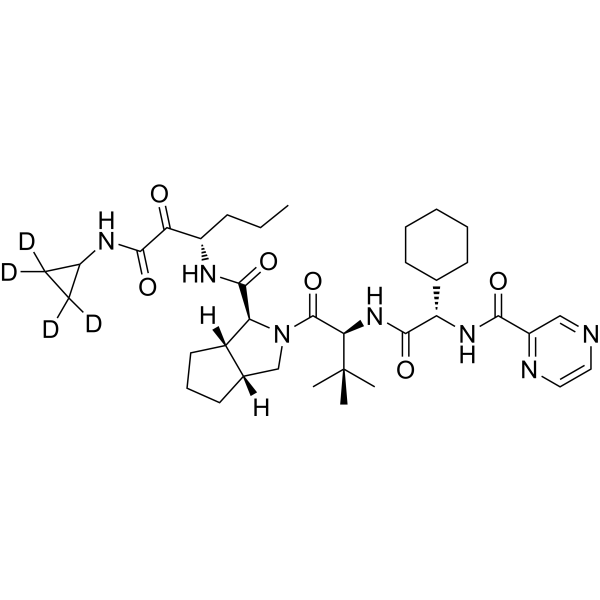 0 ImagesCat. No.: HY-10235SSynonyms: VX-950-d4Telaprevir-d4 is the deuterium labeled Telaprevir. Telaprevir (VX-950) is a highly selective, reversible, and potent peptidomimetic inhibitor of the HCV NS3-4A protease, the steady-state inhibitory constant (Ki) of Telaprevir is 7 nM against a genotype 1 (H strain) NS3 protease domain plus a NS4A cofactor peptide. Telaprevir inhibits SARS-CoV-2 3CLpro activity.
-
AVI8122
 0 ImagesCat. No.: HY-187507AVI8122 is a covalent coronavirus main protease (Mpro) inhibitor, with IC50 values of 0.0047 μM, 0.065 μM, 0.04 μM, 0.004 μM, 0.027 μM and 0.020 μM against SARS-CoV-2, MERS-CoV, HKU8, PEDV, IBV and HKU15, respectively; it exhibits Ki values of 0.14 nM, 1.8 nM, 0.9 nM, 0.2 nM and 5.2 nM against SARS-CoV-2, HKU8, PEDV, IBV and HKU15, respectively. AVI8122 forms a covalent hemithioacetal bond with the catalytic cysteine of Mpro, blocks its proteolytic activity, and acts on the four coronavirus genera α, β, γ and δ. AVI8122 is applicable to research related to SARS-CoV-2 infection.\n
-
NQK-Q8 peptide
 0 ImagesCat. No.: HY-P10688CAS No.: 2445453-91-6NQK-Q8 peptide is an immunodominant peptide of SARS-Cov-2.
-
Cephaeline dihydrobromide
 0 ImagesSynonyms: (-)-Cephaeline dihydrobromide; NSC 32944 dihydrobromideCephaeline dihydrobromide ((-)-Cephaeline dihydrobromide; NSC 32944 dihydrobromide) is a ferroptosis inducer, with broad-spectrum anticancer and antiviral activities. Cephaeline dihydrobromide induces ferroptosis (Ferroptosis) by upregulating p53, inhibiting NRF2, activating ULK3, downregulating the expressions of SLC7A11 and GPX4 in a p53-dependent manner, reducing GSH and mitochondrial membrane potential, and increasing lipid peroxidation and iron accumulation. Cephaeline dihydrobromide inhibits cancer cell proliferation, migration and tumor growth. Cephaeline dihydrobromide inhibits Ebola virus (EBOV) VLP entry and infection, with IC50 values of 3.27 μM and 22.18 μM respectively; it also inhibits Zika virus (ZIKV) NS5 RdRp activity (IC50 = 976 nM), and binds to severe acute respiratory syndrome coronavirus 2 (SARS-CoV-2) RdRp and N protein, with Kd values of 8.9 μM and 53.8 μM respectively. Cephaeline dihydrobromide can be used in studies related to breast cancer, lung cancer, COVID-19, EBOV and ZIKV infections.
-
SARS-CoV-2-IN-38
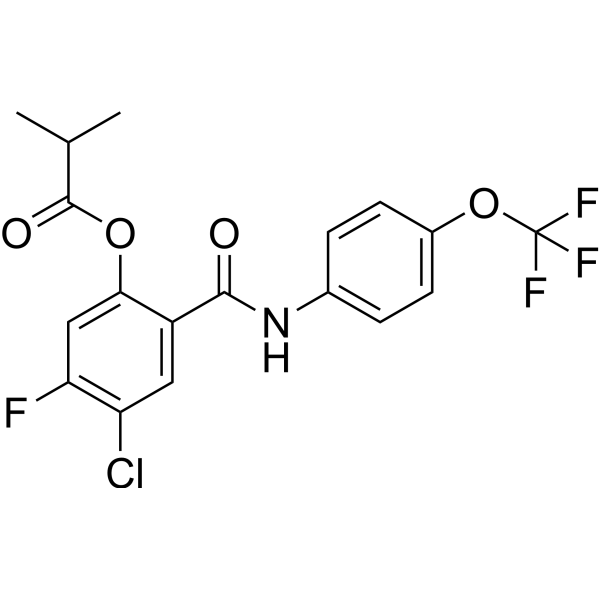 0 ImagesCat. No.: HY-149955CAS No.: 2882823-27-8SARS-CoV-2-IN-38 (compound 24) is a SARS-CoV-2 inhibitor with good oral bioavailability in mice (F%=39.75%).
-
Tirilazad (Standard)
 0 ImagesCat. No.: HY-132280RCAS No.: 110101-66-1Synonyms: U 74006F free base (Standard)Tirilazad (U 74006F free base) Standard is the analytical standard of Tirilazad (HY-132280). This product is intended for research and analytical applications. Tirilazad (U 74006F free base) is a neuroprotective agent. Tirilazad can also bind tightly to the main protease of the COVID-19 virus and exert anti-SARS-CoV-2 activity. Tirilazad scavenges hydroxyl and lipid peroxyl free radicals and maintains the levels of endogenous antioxidants. Tirilazad reduces cerebral infarct volume and improves neurobehavioral scores in animal models of focal ischemia. Tirilazad can be used in research related to ischemic stroke and subarachnoid hemorrhage.
-
Remdesivir maleate
 0 ImagesCat. No.: HY-104077ACAS No.: 2250110-53-1Synonyms: GS-5734 maleate
-
SB-140
 0 ImagesCat. No.: HY-181352SB-140 is a selective, covalent PLpro inhibitor with an IC50 of ≤2.5 nM against SARS-CoV-2 PLpro. SB-140 has antiviral activity against SARS-CoV-2, MERS-CoV and SARS-CoV-1.
-
ZK-806450
 0 ImagesCat. No.: HY-169847CAS No.: 247188-27-8ZK-806450 is a compound with antiviral activity. ZK-806450 has a high binding potential to the allosteric binding site of the SARS-CoV-2 3CL protease. ZK-806450 can also specifically and stably bind to the GAG site of the dengue virus envelope protein.

-
SARS 3CLpro-IN-2
 0 ImagesCat. No.: HY-160594CAS No.: 890648-80-3
-
SARS-CoV-IN-4
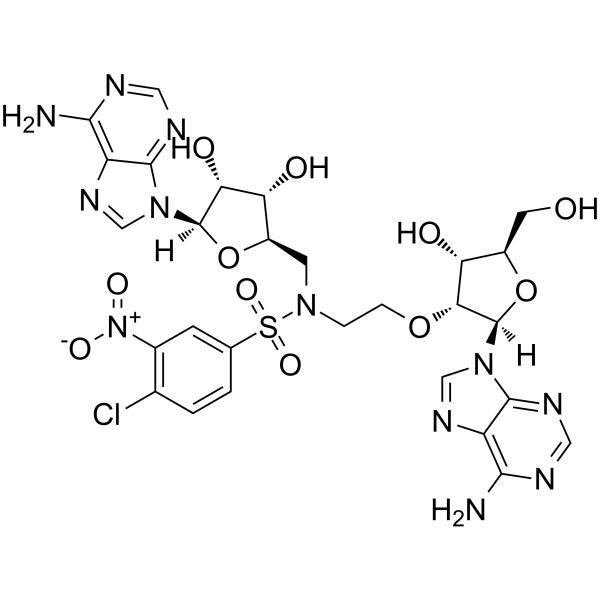 0 ImagesCat. No.: HY-143467CAS No.: 2445585-37-3
-
Ledipasvir-d6
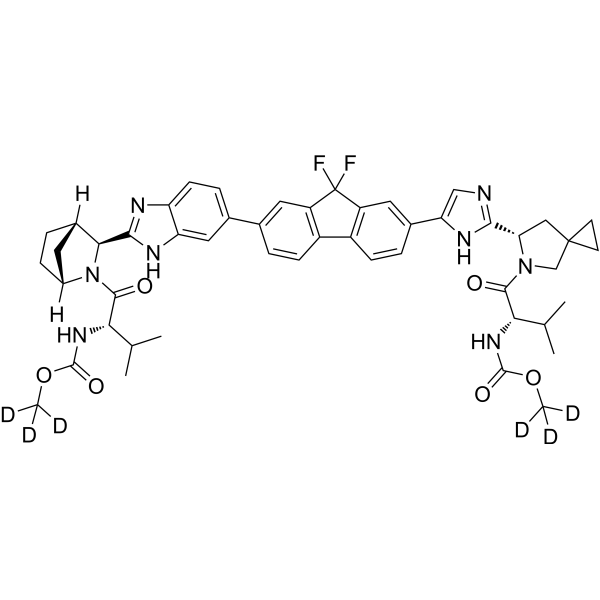 0 ImagesSynonyms: GS-5885-d6Ledipasvir-d6 is the deuterium labeled Ledipasvir. Ledipasvir (GS-5885) is an inhibitor of the hepatitis C virus NS5A, with EC50s of 34 pM and 4 pM against genotype 1a and 1b replicon, respectively. Ledipasvir is also a SARS-CoV 3CLpro inhibitor with an IC50 of 1.62 μM.




