



CD47
Cluster of Differentiation 47; MER6; OA3
CD47 is a glycoprotein that was first identified in 1990 as a protein that associates with integrins, hence its original name integrin-associated protein. CD47 interacts with SIRPα (CD172a or SHPS-1) and its family member SIRPγ, CD47 also interacts with integrins and secreted glycoprotein extracellular matrix protein thrombospondin-1 (TSP-1). Signaling through the CD47/SIRPα axis plays a role in various homeostatic processes, such as maintenance of erythrocytes, innate immune cells and T cells. Moreover, cancer cells and virus-infected and bacteria-infected cells can upregulate CD47 protein expression to prevent immune-mediated elimination.
All Product Categories
-
CD47 Related Products (59)
Related Products (59)

-
Ipsoprubart
 0 ImagesCat. No.: HY-P991693CAS No.: 3035552-25-8Synonyms: ELA-026
-
TQB-2928
 0 ImagesCat. No.: HY-P991560CAS No.: 2987103-72-8
-
Thrombospondin-1 (1016-1021) (human, bovine, mouse)
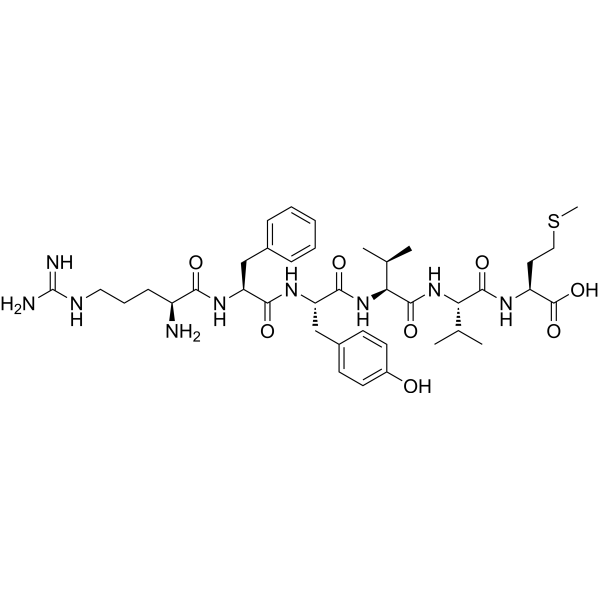 0 ImagesCat. No.: HY-P3968CAS No.: 149234-06-0Thrombospondin-1 (1016-1021) (human, bovine, mouse), a Thrombospondin-1-derived peptide, is a truncated peptide devoid of CD47-binding activity.
-
VxP037
 0 ImagesCat. No.: HY-P991926
-
ZL-1201
 0 ImagesCat. No.: HY-P991927ZL-1201 is a recombinant humanized monoclonal anti-CD47 IgG4 antibody. ZL-1201 disrupt the CD47-SIRPα interaction. ZL-1201 modulates the tumor microenvironment. ZL-1201 promotes tumor-associated macrophage phagocytic activity. ZL-1201 substantially enhances phagocytosis by M2 macrophages, but not by M1 macrophages. ZL-1201 in combination with both mAb and chemotherapy achieves the maximal antitumor effects in a variety of solid tumor models. ZL-1201 can be used in the study of lymphoma, breast cancer, ovarian cancer, head and neck squamous cell carcinoma, and gastric cancer.
-
Cys-PKHB1
 0 ImagesCat. No.: HY-P11205CAS No.: 2378833-51-1Synonyms: Cys-txCD47Cys-PKHB1 (Cys-txCD47) is a peptide conjugated to PKHB1, a CD47 agonist peptide and a thrombospondin-1 peptide mimic with antitumor effects. PKHB1 induces mitochondrial alterations, ROS generation, intracellular Ca+ accumulation, and calcium-dependent cell death in breast cancer cells. PKHB1 induces immune system activation in breast cancer cells through immunogenic cell death.
-
BAT-6004
 0 ImagesCat. No.: HY-P992320BAT-6004 is a monoclonal antibody that targets CD47 and is a CD47 inhibitor. BAT-6004 can be used in research on acute myeloid leukemia and diffuse large B-cell lymphoma.
-
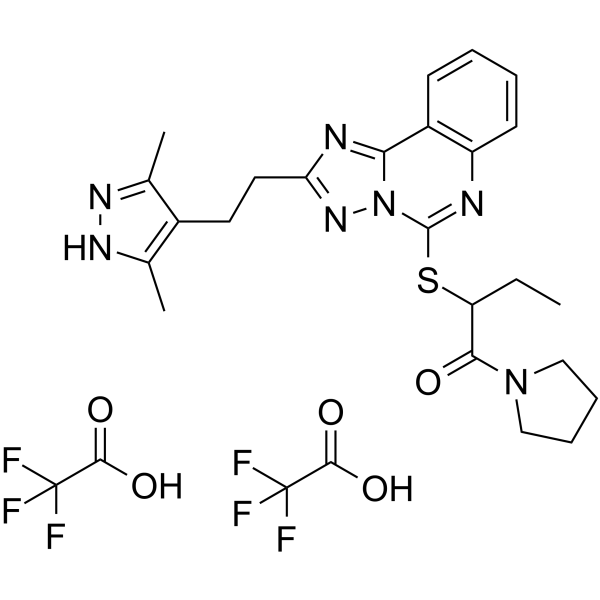
NCGC00138783 free base
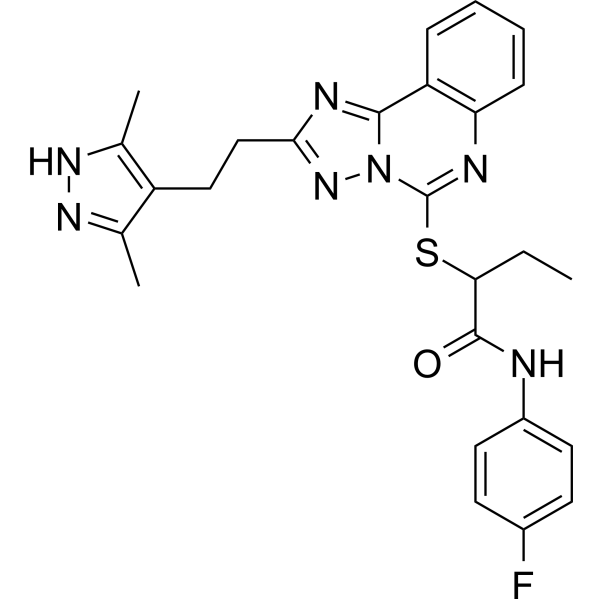 0 ImagesCat. No.: HY-143224ACAS No.: 896700-07-5NCGC00138783 free base is a selective inhibitor targeting CD47/SIRPα axis, with an IC50 of 50 µM. NCGC00138783 free base directly blocks the interaction between CD47 and SIRPα axis.

-
Anti-CD47 Antibody (1F80)
 0 ImagesCat. No.: HY-P991923
-
ES004
 0 ImagesCat. No.: HY-P991367ES004 is a human monoclonal antibody (mAb) targeting SIRPα/CD172a. ES004 enhances macrophage phagocytosis and induces potent T cell responses to promote tumor killing. ES004 can be used in Solid tumours research.
-
VBI-009
 0 ImagesCat. No.: HY-P992158VBI-009 is a CD47 and B7-H3 (CD276) bispecific antibody. VBI-009 blocks CD47-SIRPα 'don't eat me' signals and restricts activity to CD47+/B7-H3+ cells. VBI-009 induces antibody-dependent cellular phagocytosis (ADCP) and antibody-dependent cellular cytotoxicity (ADCC) in CD47+/B7-H3+ tumor cells. VBI-009 inhibits tumor growth in CD47+/B7-H3+ lung cancer xenograft models. VBI-009 can be used for the research of lung cancer.
-
CO-1
 0 ImagesCat. No.: HY-P991924CO-1 is an IgG4 anti-CD47 antibody. CO-1 not only enhances themacrophage phagocytosis activity but also induces a unique and fast form of programmed celldeath (PCD) in cancer cells directly through ligation of CD47. CO-1 has anticancer activity against hematologic malignancies such as acute lymphoblastic leukemia.
-
CL121
 0 ImagesCat. No.: HY-181797CL121 is a Glutaminyl Cyclase inhibitor with an IC50 of 0.07 μM against human sQC and an IC50 of 0.54 μM against human gQC. CL121 reduces the level of pyroglutamate (pE)-modified CD47 on the surface of cancer cells. CL121 exhibits anti-tumor activity against triple-negative breast cancer.

-
PKHB1
 0 ImagesSynonyms: txCD47PKHB1 (txCD47) is a CD47 agonist and Thrombospondin-1 peptide mimetic. PKHB1 activates CD47 and triggers Caspase-independent, calcium-dependent cell death via mitochondrial alterations, ROS production, endoplasmic reticulum morphological changes, and dissipation of mitochondrial membrane potential. PKHB1 induces the exposure of Calreticulin, HSP70, and HSP90, thereby driving immunogenic cell death. PKHB1 promotes intratumoral CD8+ T cell infiltration and inhibits breast tumorigenesis. PKHB1 reduces HSV-1 levels and alleviates the severity of herpes simplex keratitis. PKHB1 can be used in research related to breast cancer, herpes simplex keratitis, and T-cell acute lymphoblastic leukemia.
-
IBI-397
 0 ImagesCat. No.: HY-P991366Synonyms: AL008IBI-397 is a human monoclonal antibody (mAb) targeting SIRPα/CD172a . IBI-397 promotes human monocyte-derived dendritic cell-mediated T cell proliferation and increases the expression of CD86 and HLA-DR. IBI-397 has antitumor activity in the mouse MDA-MB-231 tumor model. IBI-397 can be used in Myeloma research.
-
AO-176
 0 ImagesCat. No.: HY-P991561CAS No.: 2691109-74-5AO-176 is a humanized anti-CD47 IgG2 monoclonal antibody. AO-176 induces tumor phagocytosis through blocking the CD47-SIRPα interaction. AO-176 preferentially binds to tumor versus normal cells and directly kills tumor by a cell autonomous mechanism not ADCC (antibody-dependent cell-mediated cytotoxicity). AO-176 demonstrates dose-dependent antitumor activity in tumor xenograft models. AO-176 can be used for the researches of cancer, such as lymphoma.



