



GLP Receptor
GLP Receptor
The GLP receptors contain two family members, GLP-1 receptor (GLP1R, or GLP-1R) and GLP-2 receptor (GLP2R or GLP-1R), activated by the glucagon-like peptides (GLPs). GLPs are s secreted by intestinal cells; causes insulin release; inhibits glucagon secretion, appetite, and energy intake; and delays gastric emptying because GLP receptors are located on the gut, pancreas, brainstem, hypothalamus, and vagal-afferent nerves. GLP-1 has only one known receptor, GLP1R, and regulates gut motility, appetite, islet function, and glucose homeostasis, whereas GLP-2, the agonist of GLP2R, enhances intestinal nutrient absorption. GLP-1R agonists are used to treat diabetes and obesity, and a GLP-2R agonist is approved to treat short bowel syndrome. An investigation of the actions of GLP receptor activation on gallbladder motility has demonstrated that GLP-2 receptor activation increases gallbladder volume in vivo and decreases spontaneous activity in GBSM bundles ex vivo. Like the inhibitory transmitters, which elicit their actions via an adenylate cyclase-protein kinase A-KATP channel pathway, the GLP-2 receptor signals through this same pathway.
All Product Categories
-
GLP Receptor Inhibitors
(17)
View all products
-
GLP Receptor Agonists
(149)
View all products
-
GLP Receptor Antagonists
(9)
View all products
-
GLP Receptor Activators
(14)
View all products
-
GLP Receptor Modulators
(8)
View all products
-
GLP Receptor Inducer
(1)
View all products
-
GLP Receptor Degrader
(1)
View all products
-
GLP Receptor Controls
(2)
View all products
-
GLP Receptor Ligands
(2)
View all products
-
GLP Receptor Related Products (233)
Related Products (233)

-
Antibodies (1)
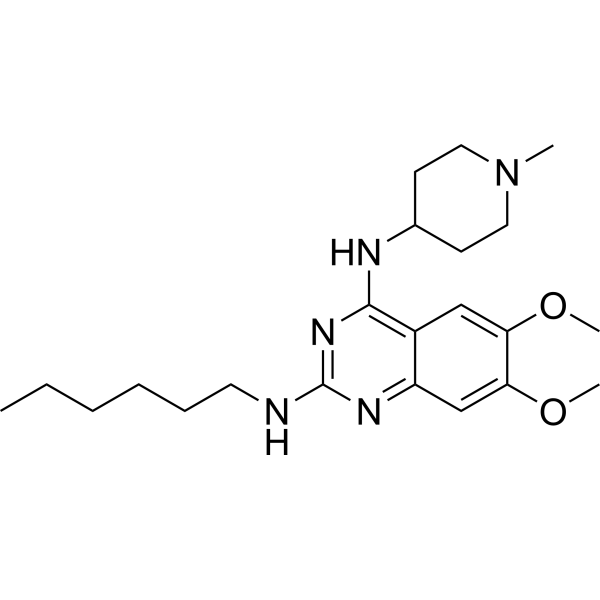
-
GLP-1R/GIPR agonist-1
 0 ImagesCat. No.: HY-P10302GLP-1R/GIPR AgonIST-1 is a double-receptor agonist for GLP-1 (glucagon-like peptide-1) and GIP (glucose-dependent insulin releasing peptide). GLP-1R/GIPR agonist-1 lowers blood sugar by mimicking the action of endogenous hormones GLP-1 and GIP, enhancing insulin secretion while inhibiting glucagon secretion. GLP-1R/GIPR agonist-1 can be used in the study of metabolic diseases such as diabetes, obesity, and non-alcoholic steatohepatitis (NASH).
-
Zovaglutide
 0 ImagesSynonyms: ZT002Zovaglutide (ZT002) is a long-acting, selective GLP-1 receptor agonist. Zovaglutide enhances albumin binding capacity via dual fatty acid chain modification. Zovaglutide exerts metabolic effects through central and peripheral GLP-1 pathways, thereby promoting satiety, reducing caloric intake and enhancing glucose-dependent insulin secretion, with no activity against GIP or glucagon receptors. Zovaglutide can be used in research on type 2 diabetes or obesity.

-
DBPR108
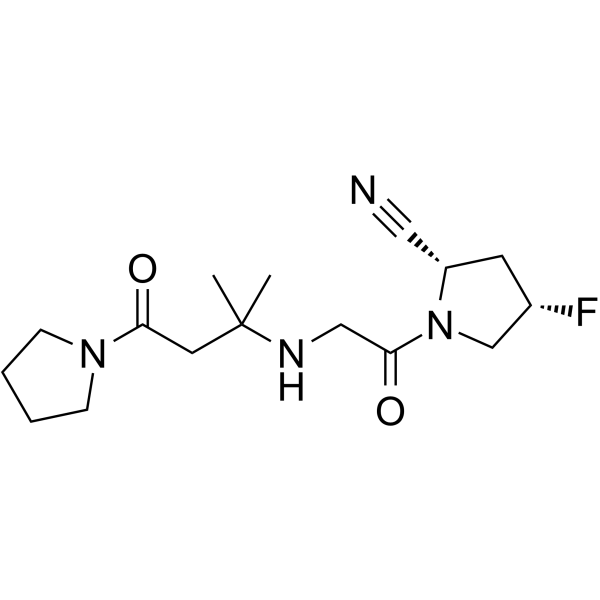 0 ImagesDBPR108 is an orally active, selective dipeptidyl peptidase-4 (DPP-4) inhibitor with an IC50 of 15 nM. DBPR108 reduces glycated hemoglobin, fasting plasma glucose and postprandial plasma glucose levels, increases serum active GLP-1 and insulin levels, and improves glucose tolerance. DBPR108 can be used in research related to type 2 diabetes.
-
Albiglutide fragment TFA
 0 ImagesCat. No.: HY-108795APurity: 99.40%Synonyms: GLP-1-Gly8 TFA; GLP-1 (7-36) analog TFAAlbiglutide fragment (GLP-1 (7-36) analog) TFA is an active fragment of Albiglutide (7-36) and a glucagon-like peptide-1 (GLP-1) analog (a long-acting GLP-1 receptor agonist). Albiglutide is produced by the fusion of DPP-4 resistant GLP-1 dimer with the human albumin gene. Moreover, Albiglutide fragment TFA significantly reduces glycosylated hemoglobin (A1C) and is used in type 2 diabetes (T2D) studies.
-
Imapextide
 0 ImagesSynonyms: MBX 1416Imapextide is a glucagon-like peptide-1 (GLP-1) receptor antagonist that can be used in hypoglycemia research.
-
Efsubaglutide alfa
 0 ImagesCat. No.: HY-P990990CAS No.: 2803875-75-2Synonyms: YN011; YN012; YN015Efsubaglutide alfa is a long-acting humanised GLP-1 receptor agonist. Efsubaglutide alfa binds specifically to the GLP-1 receptor, enhancing glucose-dependent insulin secretion, suppressing glucagon release, and promoting β-cell proliferation and increased β-cell mass. Efsubaglutide alfa improves glucose tolerance, increases pancreatic insulin content, and enhances β-cell secretory responses in isolated human islets. Efsubaglutide alfa reduces liver steatosis, lowers NAFLD Activity Scores, improves perisinusoidal collagen features, reduces serum ALT and AST levels, improves fasting glucose and triglyceride levels, and reduces body weight, liver weight and liver-to-body weight ratio. Efsubaglutide alfa can be used for the research of type 2 diabetes. Efsubaglutide alfa can be used for the research of metabolic dysfunction-associated steatohepatitis.
-
PF-06954522 citrate
 0 ImagesCat. No.: HY-145458ACAS No.: 2863659-00-9Synonyms: GLP-1 receptor agonist 9 citratePF-06954522 citrate is an orally active GLP-1R agonist. PF-06954522 citrate can be used for the study of type 2 diabetes mellitus.
-
HAEGTFTSDVSSYLE
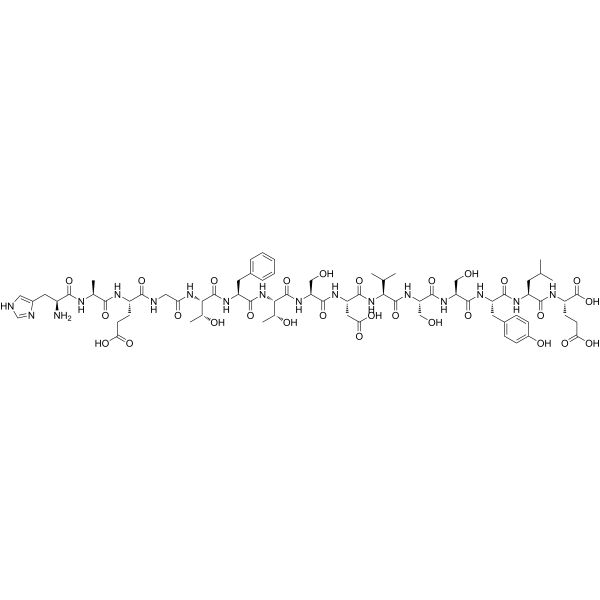 0 ImagesHAEGTFTSDVSSYLE is a polypeptide from patent CN 102920658 B. GLP-I analog contains the sequence.
-
Cochinchinenin C
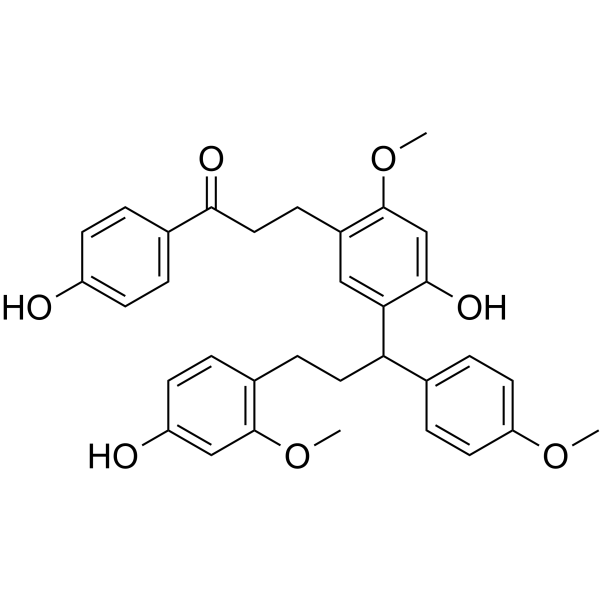 0 ImagesCat. No.: HY-N2452CAS No.: 956103-79-0Cochinchinenin C is a GLP-1R agonist that binds to the extracellular domain of the receptor via hydrophobic interactions and hydrogen bonds, and promotes glucose-dependent insulin secretion from pancreatic β-cells. Cochinchinenin C also increases intracellular cAMP and ATP levels. At low concentrations, Cochinchinenin C binds to human serum albumin, alters its microenvironment, and induces dominant static fluorescence quenching. Cochinchinenin C shows almost no cytotoxicity to pancreatic β-cells, and exerts a synergistic effect with Loureirin A (HY-N1505) when binding to human serum albumin. Cochinchinenin C has been widely used in studies of type 2 diabetes, Helicobacter pylori infection, thrombotic diseases, and other conditions.
-
Elecoglipron
 0 ImagesCat. No.: HY-159055CAS No.: 3011682-49-5Synonyms: ECC5004; AZD5004Elecoglipron (AZD5004) is an orally active small-molecule GLP-1R agonist. Its IC50 against human GLP-1R is 2.4 nM. It activates the cAMP signaling pathway in HEK293 cells overexpressing human GLP-1R with a potency of 2.1 nM, and enhances glucose-stimulated insulin secretion in EndoC-βH5 cells with an EC50 of 5.9 nM, with no detectable β-arrestin-2 recruitment or GLP-1R internalization. Elecoglipron can be used in research related to obesity, overweight and type 2 diabetes.
-
Zantrutide
 0 ImagesCat. No.: HY-P11674CAS No.: 3060140-36-2Zantrutide is a glucagon, gastric inhibitory polypeptide (GIP) and glucagon-like peptide 1 (GLP-1) receptor agonist. Zantrutide can be used for the study of metabolic diseases.
-
GLP-1 receptor agonist 22
 0 ImagesCat. No.: HY-183694CAS No.: 3124217-40-6GLP-1 receptor agonist 22 is an orally active GLP-1 receptor agonist. GLP-1 receptor agonist 22 promotes the accumulation of cAMP. GLP-1 receptor agonist 22 reduces blood glucose levels and inhibits feeding behavior in human glucagon-like peptide-1 receptor knock-in mice. GLP-1 receptor agonist 22 can be used in the research of type 2 diabetes and obesity.
-
FC382K10W15
 0 ImagesCat. No.: HY-P5161FC382K10W15 is a glucagon analogue and GLP-1R/GCGR agonist. FC382K10W15 can be used in type 2 diabetes research.
-
Relsipatide
 0 ImagesCat. No.: HY-P11270CAS No.: 2843676-09-3Synonyms: BGM0504; BG128Relsipatide (BG128) is a dual gastric inhibitory polypeptide (GIP) and glucagon-like peptide 1 (GLP-1) receptor agonist. Enicepatide can be studied in antidiabetic research.
-
SHR-2042
 0 ImagesCat. No.: HY-P10318SHR-2042 is a selective agonist of the GLP-1 receptor.SHR-2042 improves glycemic control by activating the GLP-1 receptor, enhancing insulin secretion and inhibiting glucagon secretion. SHR-2042 combined with sodium N-(8-[2-hydroxybenzoyl] amino) caprylate (SNAC) promotes monomerization through the formation of micelles and improves oral absorption efficiency.
-
(S)-V-0219
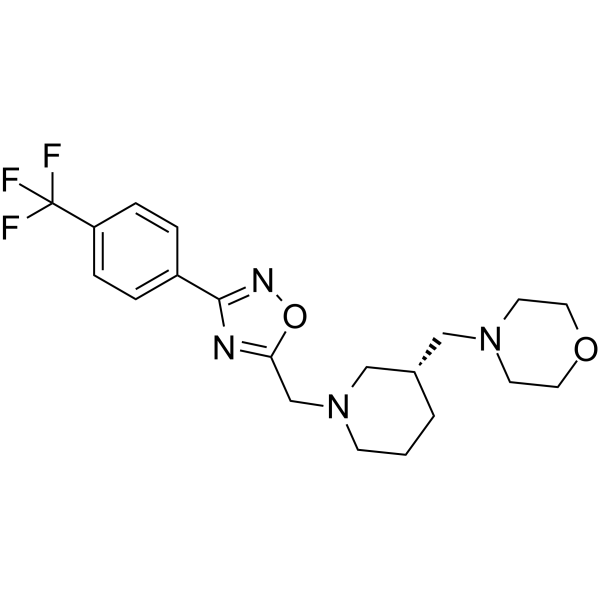 0 ImagesCat. No.: HY-143312CCAS No.: 3031984-78-5(S)-V-0219 is an enantiomer of V-0219 (HY-143312). V-0219 is an orally active and positive allosteric modulator (PAM) of the GLP Receptor-1 (GLP-1R). (S)-V-0219 activates calcium fluxes in HEK cells stably expressing hGLP-1R. (S)-V-0219 is orally active and ameliorates high glucose levels in mice and inhibits feeding behavior in fasted mice.
-
GLP-1R agonist 18
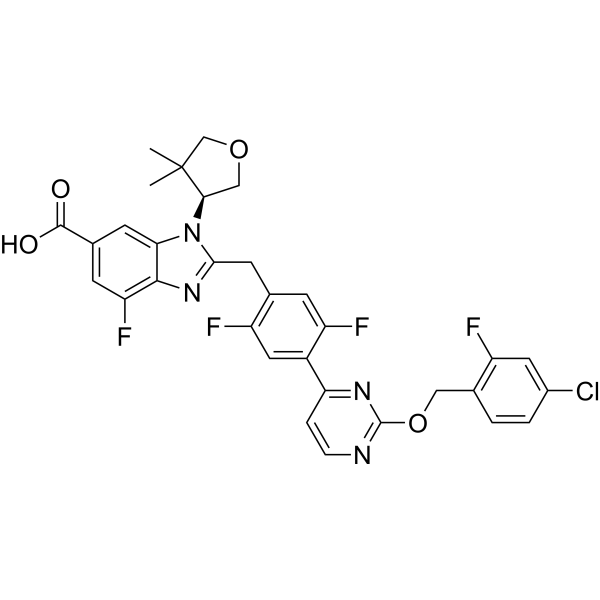 0 ImagesCat. No.: HY-162306CAS No.: 2855243-02-4GLP-1R agonist 18 (example 117) is an agonist for GLP-1R with an EC50 of 0.044 nM.
-
Birmiglipron
 0 ImagesCat. No.: HY-187891CAS No.: 2920752-37-8




