



GLP Receptor Activator
- 1
-
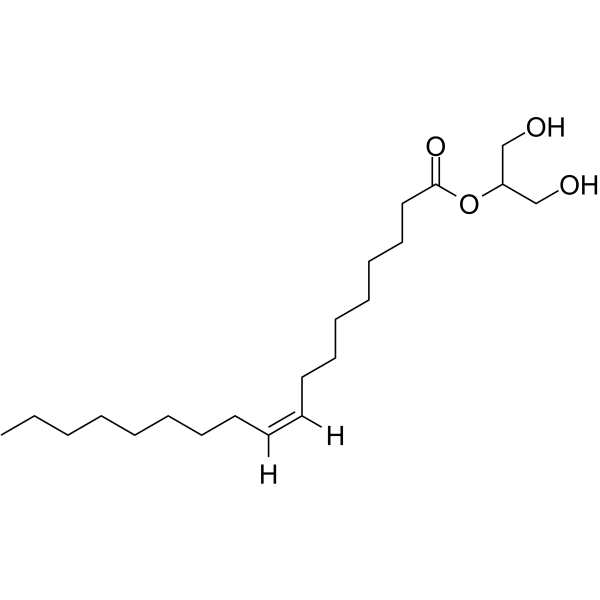
2-Oleoylglycerol
 0 ImagesSynonyms: 2-OG
2-Oleoylglycerol (2-OG) is a lipid found in the diet. It is a GPR119 agonist, with an EC50 value of 2.5 μM in activating hGPR119 in transiently transfected COS-7 cells. 2-Oleoylglycerol enhances the inflammatory response of macrophages and promotes fibrosis by activating the GPR119/TAK1/NF-κB/TGF-β1 signaling pathway. It also stimulates glucagon-like peptide 1 (GLP-1) secretion in vivo. 2-Oleoylglycerol is expected to be used in the research of non-alcoholic steatohepatitis (NASH) .
-
Colesevelam hydrochloride
 0 ImagesCat. No.: HY-106539CAS No.: 182815-44-7
Colesevelam hydrochloride is an orally active bile acid sequestrant, lipid-lowering agent, and glycemic control agent. Colesevelam hydrochloride binds bile acids in the gastrointestinal tract to form nonabsorbable complexes, interrupts enterohepatic recirculation and increases fecal bile acid elimination. Colesevelam hydrochloride modulates FXR, TGR5, and Cyp7a1 activity and triggers cAMP signaling and GLP-1 release. Colesevelam hydrochloride alters hepatic lipid and glucose metabolism, suppresses hepatic glycogenolysis, reduces hepatic triglyceride and cholesterol levels, and increases LDL-C (low-density lipoprotein cholesterol) clearance. Colesevelam hydrochloride can be used for the research of type 2 diabetes mellitus, hypercholesterolemia, and alcohol-related liver disease.
-
LP-856866
 0 ImagesCat. No.: HY-186096Purity: 99.92%
LP-856866 is an orally active ACSL5 inhibitor, with IC50 values of 8 nM and 4 nM against mouse and human ACSL5, respectively, and IC50 values of 6 nM and 17 nM against mouse and human ACSL1, respectively. LP-856866 induces delayed gastric emptying, promotes GLP-1 release, reduces food intake, decreases body weight and body fat mass, preserves lean body mass, improves glucose homeostasis, enhances insulin sensitivity, reduces hepatic lipid accumulation, and lowers serum triglyceride and total cholesterol levels. LP-856866 is applicable to research on diet-induced obesity.
-
Exendin-P5
 0 ImagesCat. No.: HY-P10716
Exendin-P5 is a selective agonist that targets the GLP-1R. Exendin-P5 promotes rapid activation of G proteins by transient interactions with the transmembrane domain of GLP-1R, enhancing its potency in G protein-mediated signaling and accelerating cAMP production. This mechanism suggests the potential application of Exendin-P5 in the study of metabolic diseases.
-
AGFAGDDAPR
 0 ImagesCat. No.: HY-P60234ACAS No.: 330204-04-1
AGFAGDDAPR is a bioactive peptide that is a competitive and orally effective inhibitor of dipeptidyl peptidase-IV (DPP-IV). AGFAGDDAPR can enhance the level of GLP-1 in the body by inhibiting DPP-IV, thereby stimulating insulin secretion, improving β-cell function, and inhibiting abnormal proliferation of α-cells, exerting anti-diabetic effects. AGFAGDDAPR can be used for research on type 2 diabetes.
-
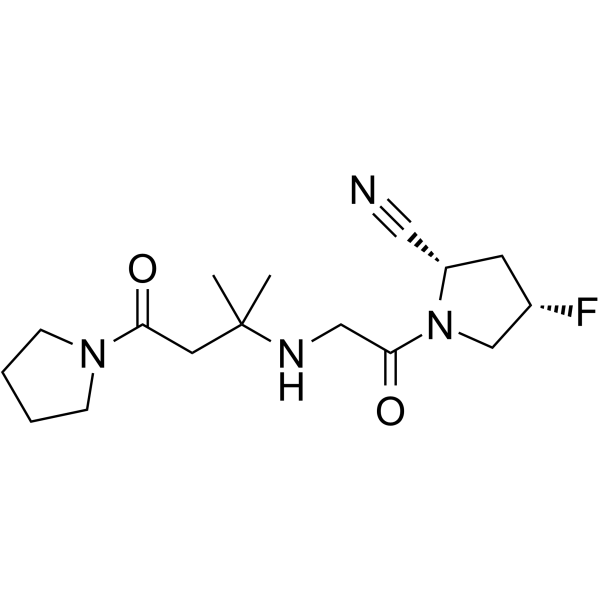
DBPR108
 0 Images
DBPR108 is an orally active, selective dipeptidyl peptidase-4 (DPP-4) inhibitor with an IC50 of 15 nM. DBPR108 reduces glycated hemoglobin, fasting plasma glucose and postprandial plasma glucose levels, increases serum active GLP-1 and insulin levels, and improves glucose tolerance. DBPR108 can be used in research related to type 2 diabetes.
-
DeDPP4
 0 ImagesCat. No.: HY-182336
DeDPP4 is a DPP-4 PROTAC degrader. DeDPP4 induces sustained elevation of glucagon-like peptide-1 (GLP-1), enhances glucose tolerance, causes persistent reduction of blood glucose, and achieves long-term blood glucose regulation in animal models of type 2 diabetes. DeDPP4 mediates dose-dependent DPP-4 depletion in cancer cells, and also targets and degrades DPP-4 in the liver and adipose tissues of animal models with type 2 diabetes. DeDPP4 can be used for the research of type 2 diabetes and non-small cell lung cancer.
-
K-757
 0 ImagesCat. No.: HY-175420CAS No.: 2696409-13-7
K-757 is an orally active, gut-targeted GPR40 agonist with EC50 values of 2.1 nM, 5.6 nM, 4.2 nM and 166 nM in humans, mice, rats and dogs, respectively. K-757 activates nutrient receptors co-expressed on pancreatic β cells and intestinal enteroendocrine cells. K-757 mediates and induces the secretion of satiety hormones GLP-1 and PYY in multiple in vitro and in vivo models. When used in combination with GPR119 agonist K-833, K-757 acts as a potentiator to elevate circulating levels of satiety hormones. K-757 can be used in the research of type 2 diabetes, weight loss and other related metabolic disorders.
-
JWU-A021
 0 ImagesCat. No.: HY-118092CAS No.: 1403610-23-0
JWU-A021 is a GLP-1 secretagogue with an EC50 of 1.9 μM. JWU-A021 activates the TRPA1 cation channel to promote calcium ion influx and increase intracellular calcium levels in enteroendocrine cells and TRPA1-transfected cells. By activating the TRPA1 channel, JWU-A021 stimulates the secretion of GLP-1 from intestinal enteroendocrine cells and intestinal L cells. JWU-A021 is applicable to research related to type 2 diabetes.
-
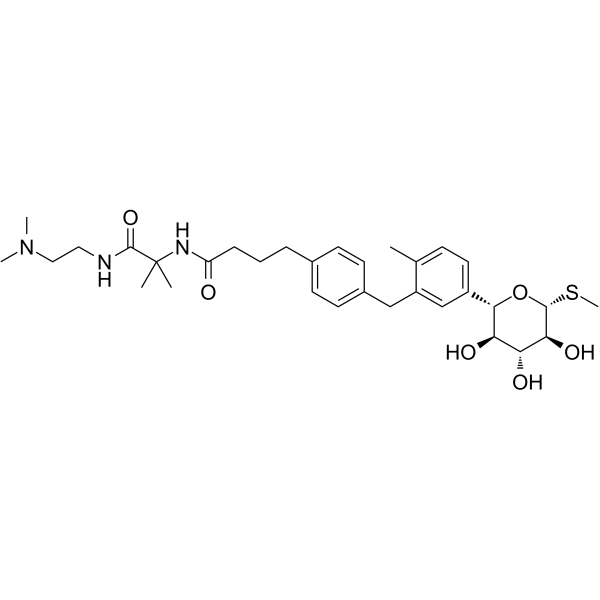
LX2761
 0 Images
LX2761 is an orally active, dual SGLT1/SGLT2 inhibitor with IC50 values of 2.2 nM and 2.7 nM against human SGLT1 and SGLT2, respectively. LX2761 locks human SGLT1 in an outward-open conformation and blocks its putative water permeation pathway. After oral administration, LX2761 is confined exclusively to the intestinal lumen, delays intestinal glucose absorption, regulates intestinal glucose metabolism, increases cecal glucose levels, reduces cecal pH, improves glycemic control and elevates plasma total GLP-1 levels. However, LX2761 induces diarrhea in a dose-dependent manner. LX2761 can be used in diabetes-related research.
-
Carmegliptin
 0 ImagesCat. No.: HY-10289CAS No.: 813452-18-5Synonyms: RO-4876904; R-1579
Carmegliptin (RO-4876904) is an orally active and potent DPP IV inhibitor with a human DPP IV IC50 of 6.8 nM. Carmegliptin binds to the S1 pocket of DPP IV, blocks the degradation of GLP 1, potentiates endogenous GLP 1, increases plasma insulin levels, alleviates hyperglycemia, improves glucose tolerance. Carmegliptin acts as a substrate for human P glycoprotein without inhibiting the transporter, shows low in vitro cell permeability. Carmegliptin can be used for the research of type 2 diabetes, non insulin dependent diabetes mellitus.
-
FE 999011
 0 ImagesCat. No.: HY-182300CAS No.: 171092-64-1
FE 999011 is an orally active dipeptidyl peptidase IV (DPP-IV) inhibitor with IC50 values of 7 nM and 3 nM against human and rat sources, respectively. FE 999011 acts as a glucose tolerance-improving agent and a GLP-1 receptor activator, which reduces blood glucose fluctuation, promotes GLP-1 release and decreases the insulin-glucose ratio. FE 999011 regulates lipid metabolism, delays the onset of diabetes, stabilizes food and water intake, reduces hypertriglyceridemia, prevents the elevation of free fatty acids, and delays the progression of impaired glucose tolerance to disease. FE 999011 can be used in relevant studies of type 2 diabetes.
-
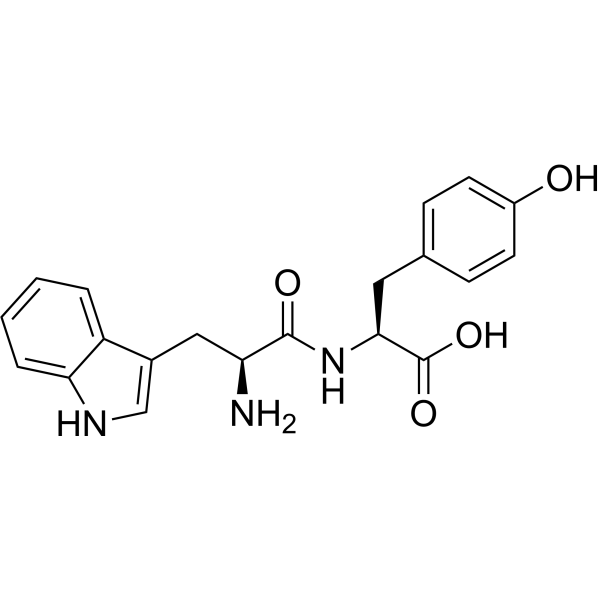
H-Trp-Tyr-OH
 0 Images
H-Trp-Tyr-OH is an orally active tryptophan-tyrosine dipeptide with blood-brain barrier permeability. H-Trp-Tyr-OH exerts physiological regulatory effects by stimulating enteroendocrine cells to secrete glucagon-like peptide GLP-1. In mouse models of tauopathies, H-Trp-Tyr-OH inhibits tau phosphorylation, reduces the level of neurofibrillary tangles, increases dopamine turnover, upregulates synapsin expression, and elevates cecal short-chain fatty acid levels, thereby improving behavioral deficits and extending lifespan. H-Trp-Tyr-OH can be used in research related to impaired glucose tolerance and tauopathies.
-
Carmegliptin hydrochloride
 0 ImagesCat. No.: HY-10289ACAS No.: 813452-14-1Synonyms: RO-4876904 hydrochloride; R-1579 hydrochloride
Carmegliptin hydrochloride (RO-4876904 hydrochloride) is an orally active and potent DPP‑IV inhibitor with a human DPP‑IV IC50 of 6.8 nM. Carmegliptin hydrochloride binds to the S1 pocket of DPP‑IV, blocks the degradation of GLP‑1, potentiates endogenous GLP‑1, increases plasma insulin levels, alleviates hyperglycemia, improves glucose tolerance. Carmegliptin hydrochloride acts as a substrate for human P‑glycoprotein without inhibiting the transporter, shows low in vitro cell permeability. Carmegliptin hydrochloride can be used for the research of type 2 diabetes, non‑insulin‑dependent diabetes mellitus.
- 1



