



2-Oleoylglycerol
Based on 1 publication(s) in Google Scholar
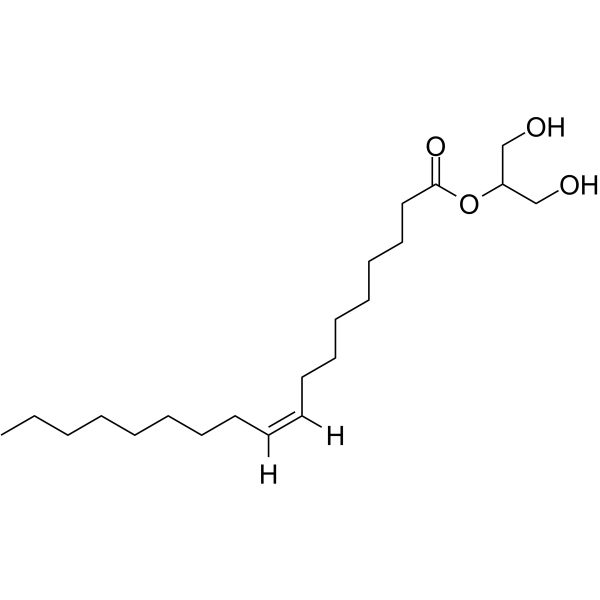
2-Oleoylglycerol (2-OG) is a lipid found in the diet. It is a GPR119 agonist, with an EC50 value of 2.5 μM in activating hGPR119 in transiently transfected COS-7 cells. 2-Oleoylglycerol enhances the inflammatory response of macrophages and promotes fibrosis by activating the GPR119/TAK1/NF-κB/TGF-β1 signaling pathway. It also stimulates glucagon-like peptide 1 (GLP-1) secretion in vivo. 2-Oleoylglycerol is expected to be used in the research of non-alcoholic steatohepatitis (NASH) .
For research use only. We do not sell to patients.
- Purity : 99.9%
- CAS No.: 3443-84-3
- Formula: C21H40O4
- Molecular Weight:356.55
-
Storage:
Solution, -20°C, 2 years

To place orders, for customer services and technical support, please contact: MedChemExpress USA
Tel: 609-228-6898 E-mail: [email protected] [email protected]


-
 Biological Activity
-
Chemical Information
- Purity & Documentation
- References
-
 Help & FAQs


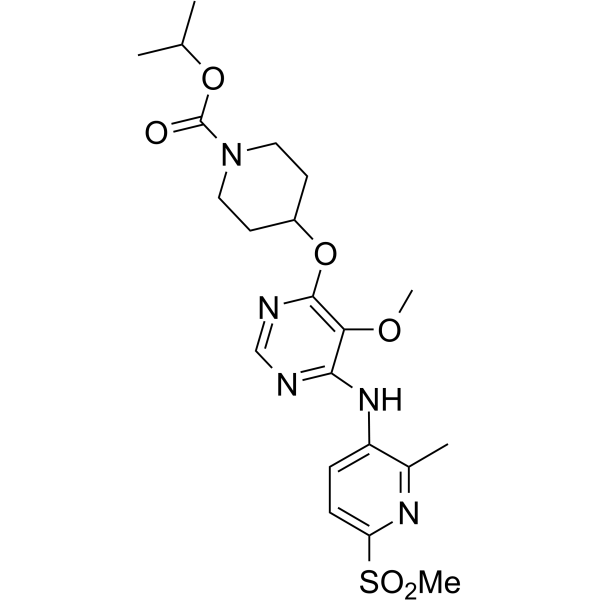
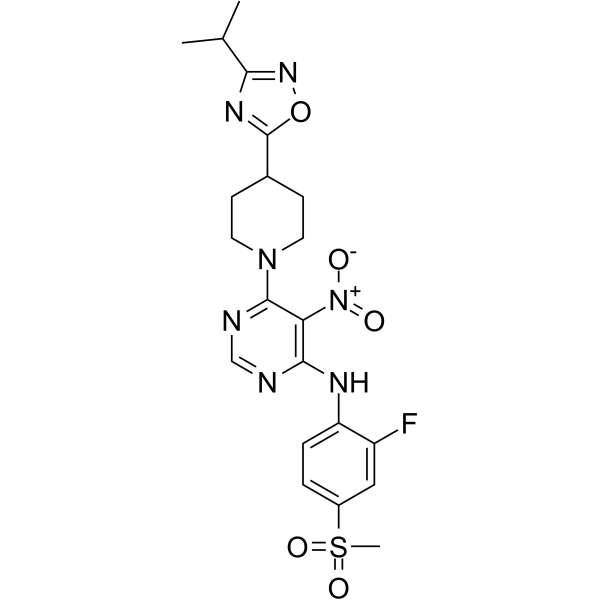
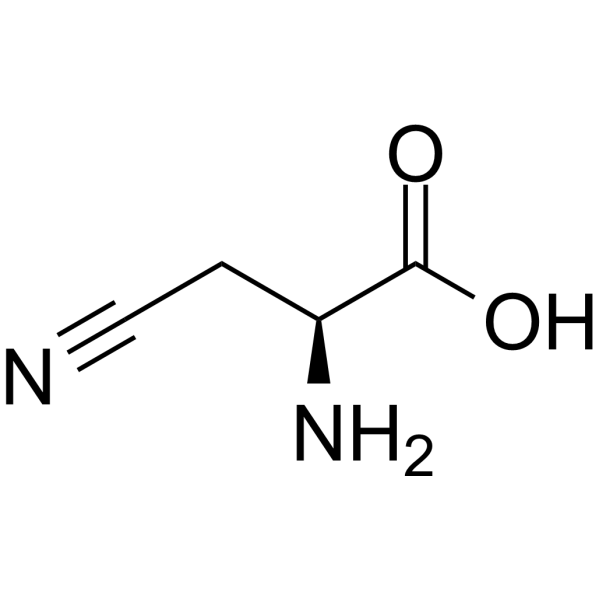
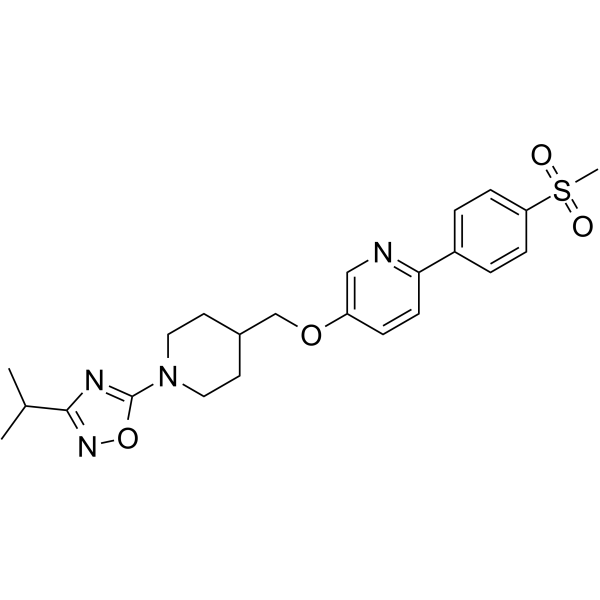


Publications Citing Use of MedChemExpress (MCE) 2-Oleoylglycerol
More

Biological Activity
Description
IC50 & Target
IC50: 2.5 μM (hGPR119) (in COS-7 cells)[1]
In Vitro
2-Oleoylglycerol (50 μg/mL, 24 hours) activates RAW264.7 cells via the GPR119/TAK1/NF-κB/TGF-β1 signaling pathway[3].
MedChemExpress (MCE) has not independently confirmed the accuracy of these methods. They are for reference only.
-
Cell Line:Mouse RAW264.7 macrophage cells
-
Concentration:50 μg/mL
-
Incubation Time:24 hours
-
Result:Increased expression of GPR119, TGF-β1, IL-1β, and TNF-α, enhancing the gene expression of HSC activation.
In Vivo
MedChemExpress (MCE) has not independently confirmed the accuracy of these methods. They are for reference only.
-
Animal Model:C57BL/6 J mice, CL-HFS-induced non-alcoholic steatohepatitis (NASH) model[3]
-
Dosage:20 μg/mouse in 0.2 mL PBS
-
Administration:Intravenous administration (I.V.), three times a week for 6 weeks
-
Result:Showed increased hepatic infiltration of inflammatory cells, increased collagen and α-SMA production; 2-OG enhanced liver resident MΦ and HSC activation.


Chemical Information
-
CAS No. 3443-84-3
-
Appearance Liquid
-
Molecular Weight 356.55
-
Formula C21H40O4
-
Color Colorless to light yellow
-
SMILES
OCC(CO)OC(CCCCCCC/C=C\CCCCCCCC)=O
-
Synonyms
2-OG
-
Structure Classification
-
Initial Source
-
Shipping
Room temperature in continental US; may vary elsewhere.
-
Storage
Solution, -20°C, 2 years


Publications (1)
-
Journal Impact Factor
-
Most Recent
-
J Adv Res
Human milk fat substitutes improve obesity-related NAFLD by enriching LPC 18:2 to activate hepatic GPR119-AMPK signaling. [Abstract]2026 Feb 2:S2090-1232(26)00108-6. PMID: 41638632


Purity & Documentation
-
Data Sheet (270 KB)
-
SDS (393 KB)
- English - EN (393 KB)
- Français - FR (393 KB)
- Deutsch - DE (393 KB)
- Norwegian - NO (393 KB)
- Español - ES (393 KB)
- Swedish - SV (393 KB)
- Italian - IT (393 KB)
- Korean - KR (393 KB)
- Portuguese - PT (393 KB)
-
Handling Instructions (2659 KB)
References
[1]. Hansen KB, et, al. 2-Oleoyl glycerol is a GPR119 agonist and signals GLP-1 release in humans. J Clin Endocrinol Metab. 2011 Sep;96(9):E1409-17. [Content Brief]
[2]. Ghafouri N, et, al. Inhibition of monoacylglycerol lipase and fatty acid amide hydrolase by analogues of 2-arachidonoylglycerol. Br J Pharmacol. 2004 Nov;143(6):774-84. [Content Brief]
[3]. Yang M, et al. Western diet contributes to the pathogenesis of non-alcoholic steatohepatitis in male mice via remodeling gut microbiota and increasing production of 2-oleoylglycerol. Nat Commun. 2023 Jan 16;14(1):228. [Content Brief]

Calculators
Concentration (start) × Volume (start) = Concentration (final) × Volume (final)


2-Oleoylglycerol Related Classifications
HY-W011121 Related Classifications
 Powered by Bioz