



Monoradylglycerols
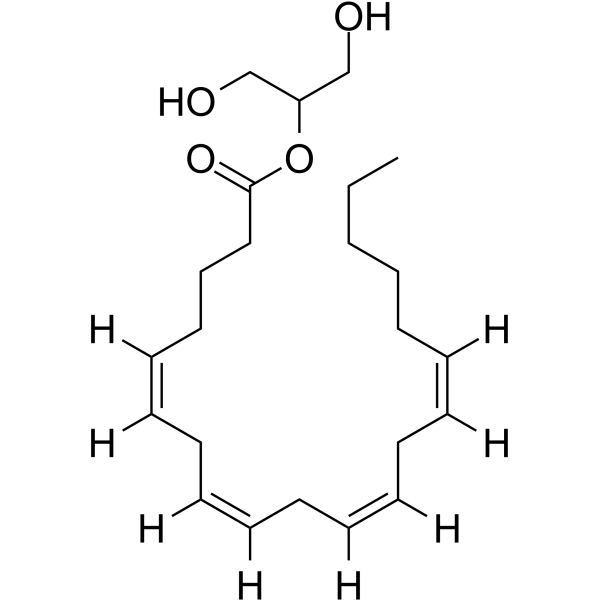
- Formula: C23H38O4
- Molecular Weight: 378.55
2-Arachidonoylglycerol is a second endogenous cannabinoid ligand in the central nervous system.
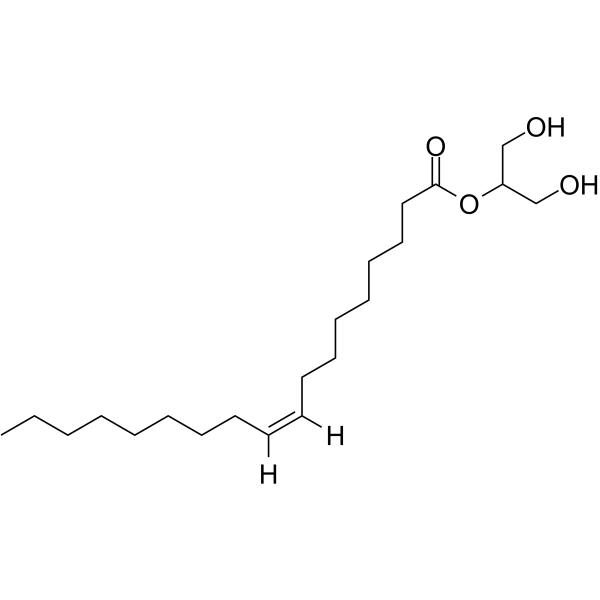
- Formula: C21H40O4
- Molecular Weight: 356.55
2-Oleoylglycerol (2-OG) is a lipid found in the diet. It is a GPR119 agonist, with an EC50 value of 2.5 μM in activating hGPR119 in transiently transfected COS-7 cells. 2-Oleoylglycerol enhances the inflammatory response of macrophages and promotes fibrosis by activating the GPR119/TAK1/NF-κB/TGF-β1 signaling pathway. It also stimulates glucagon-like peptide 1 (GLP-1) secretion in vivo. 2-Oleoylglycerol is expected to be used in the research of non-alcoholic steatohepatitis (NASH) .
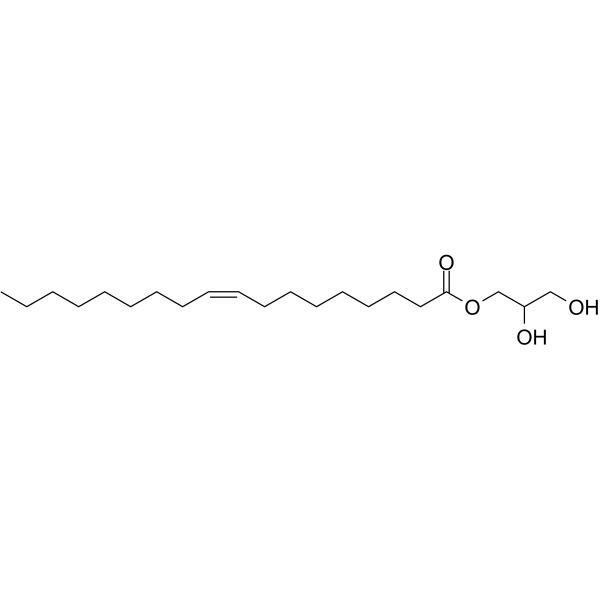
- Formula: C21H40O4
- Molecular Weight: 356.54
Monoolein is a biocompatible lipid molecule that can be used as a carrier for bone repair. Monoolein exhibits anti-inflammatory activity by inhibiting the immune response induced by LPS (HY-D1056). It exerts its anti-inflammatory effects by reducing the production of immune response factors such as IL-12 p40, IL-6, and TNF-α, and inhibiting the generation of NO. Monoolein can be used in drug delivery and research in the field of inflammatory diseases .
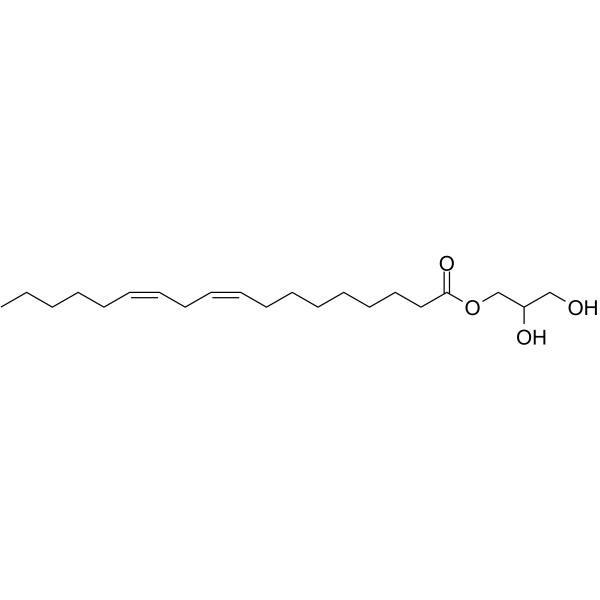
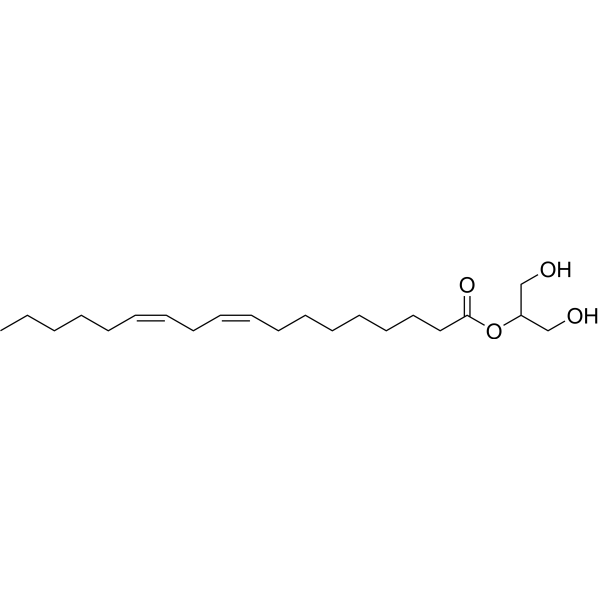
- Formula: C21H38O4
- Molecular Weight: 354.52
1-Linoleoyl glycerol is a LpPLA2 inhibitor. 1-Linoleoyl glycerol acts as a precursor for synthesizing various functional lipids, such as phospholipids. 1-Linoleoyl glycerol mitigates inflammation induced by Apolipoprotein CIII (reduction of IL-6).
- Formula: C21H38O4
- Molecular Weight: 354.52

- Formula: C19H38O4
- Molecular Weight: 330.50
1-Palmitoyl-sn-glycerol is a biochemical assay reagent.

- Formula: C33H58O14
- Molecular Weight: 678.81
Gingerglycolipid B is a glycolipid monoacyldigalactosylglycerol compound found in Zingiberis Rhizoma Originating in Taiwan.
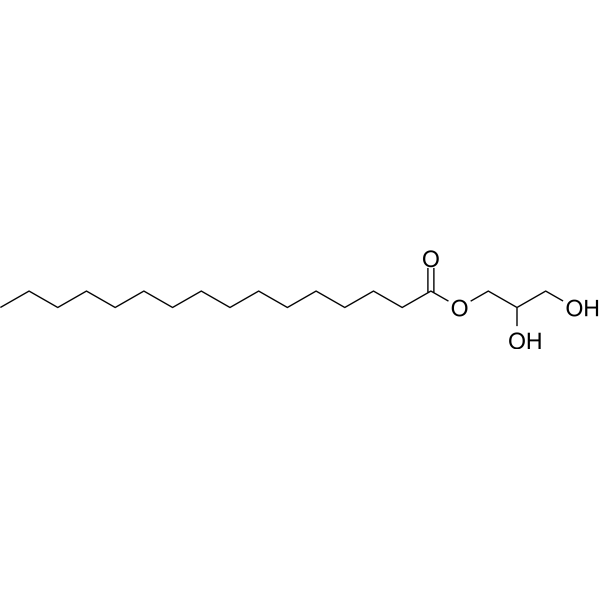
- Formula: C19H38O4
- Molecular Weight: 330.51
1-Monopalmitin (Glyceryl palmitate) is an activator of the PI3K/Akt pathway and an inhibitor of P-glycoprotein (P-gp). 1-Monopalmitin can induce G2/M arrest and caspase-dependent apoptosis in cancer cells, while inhibiting IAPs protein expression. 1-Monopalmitin can increase drug accumulation by inhibiting P-gp activity in intestinal Caco-2 cells. 1-Monopalmitin has the ability to induce protective autophagy and apoptosis of lung cancer cells (IC50=50-58 μg/mL), with low toxicity to normal cells.

- Formula: C19H40O3
- Molecular Weight: 316.53
1-O-Hexadecyl-sn-glycerol [(S)-HXDG] is an alkyl glycerol monoether derived from T. aurantia.

- Formula: C21H44O3
- Molecular Weight: 344.57
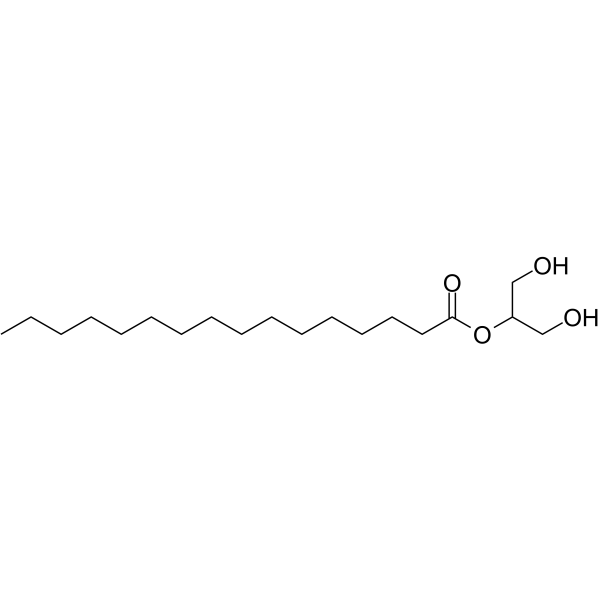
- Formula: C19H38O4
- Molecular Weight: 330.50
2-Palmitoylglycerol (2-Palm-Gl), an congener of 2-arachidonoylglycerol (2-AG), is a modest cannabinoid receptor CB1 agonist. 2-Palmitoylglycerol also may be an endogenous ligand for GPR119.

- Formula: C7H14O4
- Molecular Weight: 162.19
1-Monotetranoin is an acylglycerol.
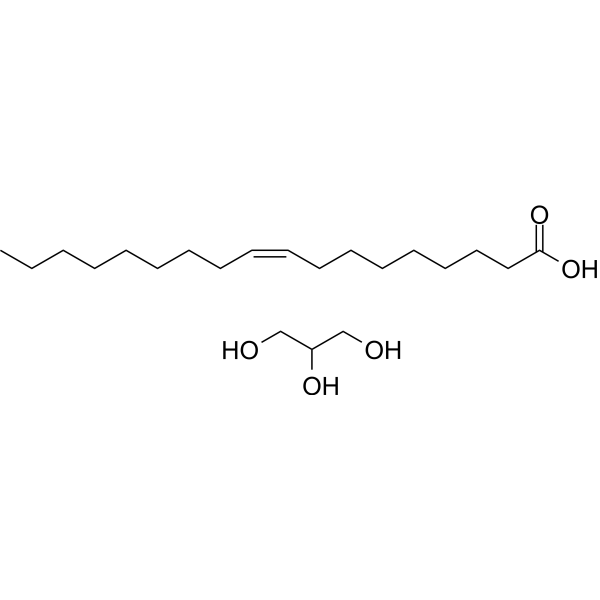
- Formula: C21H42O5
- Molecular Weight: 374.56
Glycerol Monoleate is a non-toxic, biodegradable, biocompatible, lipophilic glycerol fatty acid ester. Glycerol Monoleate exhibits hemolytic properties. Glycerol Monoleate is combined with bile salts for use as an emulsifier and absorption enhancer. Glycerol Monoleate can be applied in drug delivery systems and in vitro siRNA delivery.
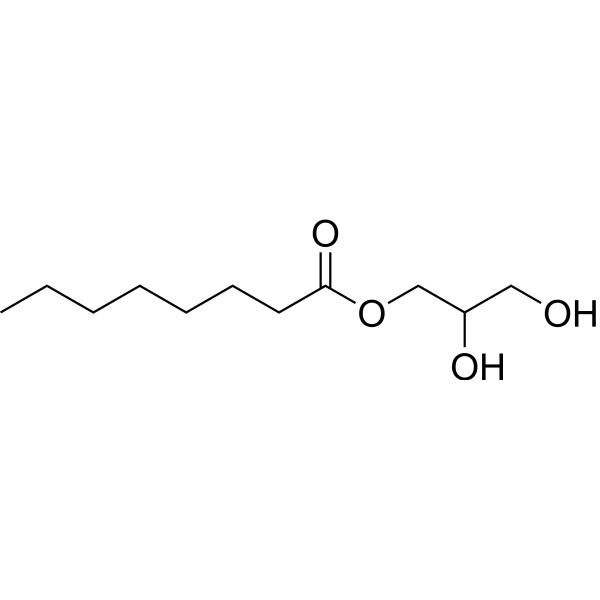
- Formula: C11H22O4
- Molecular Weight: 218.29
Glyceryl 1-monooctanoate is a glycerol monolaurate derivative. Glyceryl 1-monooctanoate is a broad-spectrum antimicrobial, suppresses the growth of pathogenic yeast (Candida albicans and Candida parapsilosis), as well as Gram-positive (Staphylococcus aureus) and Gram-negative (Escherichia coli, Klebsiella pneumoniae) bacteria.
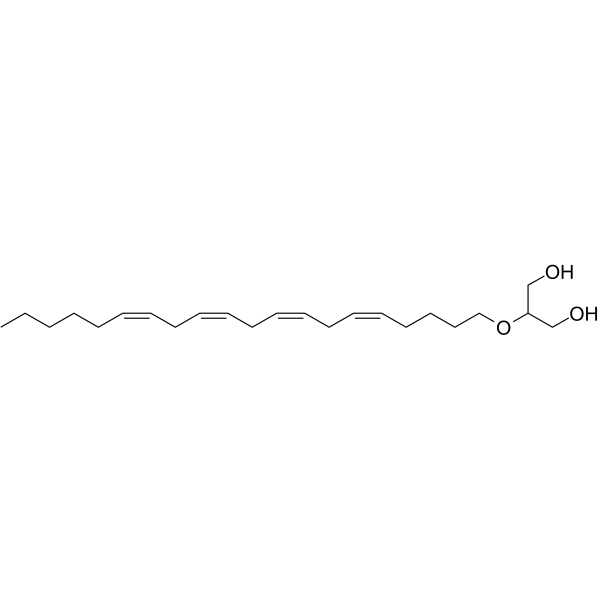
- Formula: C23H40O3
- Molecular Weight: 364.56
Noladin ether is a potent and selective agonist of cannabinoid CB1 receptor, with a Ki of 21.2 nM. Noladin ether can cause hypothermia, intestinal immobility, and mild antinociception.

- Formula: C27H46O9
- Molecular Weight: 514.65
Panaxcerol B is a monogalactosyl monoacylglyceride, with an IC50 of 59.4 μM for NO production in LPS-stimulated RAW264.7 cells.
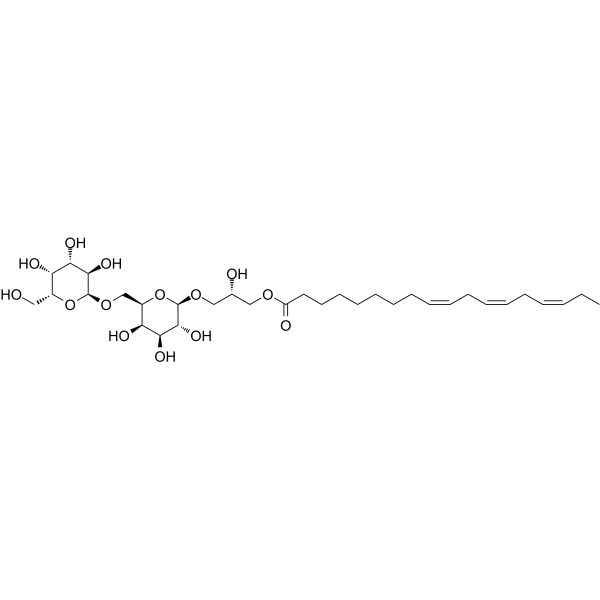
- Formula: C33H56O14
- Molecular Weight: 676.79
Gingerglycolipid A is a monoacyldigalactosyl glycerol.

- Formula: C15H30O4
- Molecular Weight: 274.40
(2S)-Monolaurin ((2S)-1-Monolaurin) is the S-enantiomer of Monolaurin (HY-121620) and is mirror-symmetrical to (2R)-Monolaurin (HY-187069).

- Formula: C21H42O3
- Molecular Weight: 342.56
2-Oleoylglycerol ether is an acylglycerol.




