



Glycerol Monoleate
Based on 75 publication(s) in Google Scholar
Glycerol Monoleate is a non-toxic, biodegradable, biocompatible, lipophilic glycerol fatty acid ester. Glycerol Monoleate exhibits hemolytic properties. Glycerol Monoleate is combined with bile salts for use as an emulsifier and absorption enhancer. Glycerol Monoleate can be applied in drug delivery systems and in vitro siRNA delivery.
For research use only. We do not sell to patients.
- Purity : 95.21%
- CAS No.: 25496-72-4
- Formula: C21H42O5
- Molecular Weight:374.56
-
Storage:
4°C, sealed storage, away from moisture
* In solvent : -80°C, 6 months; -20°C, 1 month (sealed storage, away from moisture)

To place orders, for customer services and technical support, please contact: MedChemExpress USA
Tel: 609-228-6898 E-mail: [email protected] [email protected]


-
 Biological Activity
-
Chemical Information
-
Solvent & Solubility
- Protocols
- Purity & Documentation
- References
-
 Help & FAQs



Publications Citing Use of MedChemExpress (MCE) Glycerol Monoleate
More- Nature. 2025 Jul;643(8070):192-200. [Abstract]
- Cancer Cell. 2024 Aug 12;42(8):1386-1400.e8. [Abstract]
- Imeta. 2026 Feb 19.
- Immunity. 2024 Sep 10;57(9):2122-2139.e9. [Abstract]
- Cancer Res. 2026 Jan 22. [Abstract]
- J Extracell Vesicles. 2026 Jun;15(6):e70328. [Abstract]
- J Extracell Vesicles. 2024 Jan;13(1):e12401. [Abstract]
- Autophagy. 2026 May 27:1-27. [Abstract]
- Nat Commun. 2025 Feb 24;16(1):1917. [Abstract]
- J Adv Res. 2025 Aug:74:589-607. [Abstract]
- Metabolism. 2026 Jun 7:182:156670. [Abstract]
- Redox Biol. 2025 Mar:80:103528. [Abstract]
- Redox Biol. 2021 Nov:47:102168. [Abstract]
- Redox Biol. 2021 Jan:38:101807. [Abstract]
- J Exp Clin Cancer Res. 2019 Jul 10;38(1):300. [Abstract]
- Adv Sci (Weinh). 2026 Jul 7:e20994.
- Adv Sci (Weinh). 2023 Oct;10(28):e2302130. [Abstract]
- Cell Rep Med. 2025 Aug 19;6(8):102260. [Abstract]
- Research (Wash D C). 2024 Oct 24:7:0511. [Abstract]
- Cell Death Dis. 2025 Nov 24;16(1):857. [Abstract]
- Cell Death Dis. 2023 Aug 26;14(8):566. [Abstract]
- Cell Death Dis. 2019 May 28;10(6):416. [Abstract]
- Cancer Lett. 2026 Feb 28:639:218232. [Abstract]
- Phytomedicine. 2025 Jun:141:156660. [Abstract]
- Chin Herb Med. 2026 Jun 28.
- J Transl Med. 2024 Jan 26;22(1):104. [Abstract]
- Chin Med J (Engl). 2026 Mar 16. [Abstract]
- Oncogene. 2025 Sep;44(34):3096-3112. [Abstract]
- Oncogene. 2024 Sep;43(39):2901-2913. [Abstract]
- Int J Biol Macromol. 2026 Feb:347:150740. [Abstract]
- Regen Biomater. 2025 Jun 16:12:rbaf056. [Abstract]
- Free Radic Biol Med. 2023 Jun:202:110-120. [Abstract]
- Clin Transl Med. 2026 Jan;16(1):e70563. [Abstract]
- Cell Rep. 2025 Oct 15;44(10):116429. [Abstract]
- Cell Rep. 2022 Sep 20;40(12):111381. [Abstract]
- Emerg Microbes Infect. 2025 Dec;14(1):2470371. [Abstract]
- J Ethnopharmacol. 2025 Jan 13:339:119162. [Abstract]
- Biochem Pharmacol. 2026 Jul:249:117926. [Abstract]
- Eur J Pharmacol. 2026 May 10:1023:178862. [Abstract]
- eFood. 2025 Jun 30.
- mBio. 2024 Dec 11;15(12):e0213724. [Abstract]
- Probiotics Antimicrob Proteins. 2025 Nov 26. [Abstract]
- J Nutr Biochem. 2026 Jun 24:110454. [Abstract]
- Chem Biol Interact. 2026 May 27:112177. [Abstract]
- Bioorg Chem. 2026 Sep 5:179:110008. [Abstract]
- Food Sci Nutr. 2026 Apr 3;14(4):e71695. [Abstract]
- Cell Signal. 2026 Apr:140:112360. [Abstract]
- Poult Sci. 2026 Jun 19.
- iScience. 2026 Jun 2;29(6):116202. [Abstract]
- iScience. 2026 Mar 25;29(4):115470. [Abstract]
- Mol Oncol. 2025 Jun;19(6):1668-1686. [Abstract]
- iScience. 2025 Apr 3;28(5):112344. [Abstract]
- Mol Nutr Food Res. 2023 Jan;67(2):e2200429. [Abstract]
- FASEB J. 2024 Jul 15;38(13):e23806. [Abstract]
- FEBS J. 2026 Jan 12. [Abstract]
- Mater Technol (N Y N Y). 2025 Jun 17.
- Vet Res. 2026 May 9;57(1):72. [Abstract]
- Biochim Biophys Acta Mol Cell Biol Lipids. 2020 Feb;1865(2):158540. [Abstract]
- Reproduction. 2026 Feb 5;171(2):xaaf020. [Abstract]
- Exp Eye Res. 2026 May:266:110932. [Abstract]
- J Steroid Biochem Mol Biol. 2025 Mar:247:106673. [Abstract]
- Am J Cancer Res. 2020 Apr 1;10(4):1182-1193. [Abstract]
- Chem Biodivers. 2025 Jun;22(6):e202402772. [Abstract]
- Vet Microbiol. 2021 Oct:261:109177. [Abstract]
- Eur J Lipid Sci Technol. 2023 Feb 25.
- Biol Pharm Bull. 2022 Apr 1;45(4):438-445. [Abstract]
- bioRxiv. 2026 Jul 10:2026.07.06.736331.
- Res Sq. 2026 Jun 27.
- Res Sq. 2026 Jan 15.
- Life Conflux. 2025.
- bioRxiv. 2024 October 29.
- bioRxiv. 2024 May 25.
- SSRN. 2024 May 30.
- Research Square Preprint. 2023 Jul 20.
- Oxid Med Cell Longev. 2021 Apr 1:2021:6629804. [Abstract]
 Customer Validation & Images

-
Cell Proliferation/Viability Assay
-
Cell Proliferation/Viability Assay
-
Cell Proliferation/Viability Assay
-
Cell Proliferation/Viability Assay
All Endogenous Metabolite Isoforms
More

Biological Activity
Description
IC50 & Target
|
Human Endogenous Metabolite |
In Vitro
Glycerol Monoleate (7.5-50 wt % DDAB or DOTAP; N/P ratios 1,4; 40 min electrophoresis at 100 V)-based nanocarrier complexes with DOTAP exhibit stronger siRNA binding than equivalent DDAB-containing complexes, with complete siRNA binding observed for 15-50 wt % DOTAP at N/P=4[2].
Glycerol Monoleate (7.5-50 wt % DDAB or DOTAP; N/P ratios 1,4; 72 h cell treatment; 4 h Alamar Blue incubation)-based siRNA nanocarrier complexes with DDAB or DOTAP show no significant cytotoxicity at N/P=1 in CHO-GFP and HEK293 cells; at N/P=4, DDAB-containing complexes show cytotoxicity at 7.5%, 15%, and 50% loading, while only 7.5% DOTAP-containing complexes show cytotoxicity[2].
Glycerol Monoleate (7.5-50 wt % DDAB or DOTAP; N/P ratios 1,4; 4 h incubation with complexes in OPTI-MEM; 72 h incubation in standard growth media)-based siRNA nanocarrier complexes with 7.5% DOTAP at N/P=1 induce 70% GFP gene silencing in CHO-GFP cells, showing higher silencing efficiency with decreasing cationic lipid loading (increasing GMO content) and lower charge ratios[2].
MedChemExpress (MCE) has not independently confirmed the accuracy of these methods. They are for reference only. Further protocols information, click here.
In Vivo
MedChemExpress (MCE) has not independently confirmed the accuracy of these methods. They are for reference only.


Chemical Information
-
CAS No. 25496-72-4
-
Appearance Liquid (Density: 0.96 g/cm3)
-
Molecular Weight 374.56
-
Formula C21H42O5
-
Color Colorless to light yellow
-
SMILES
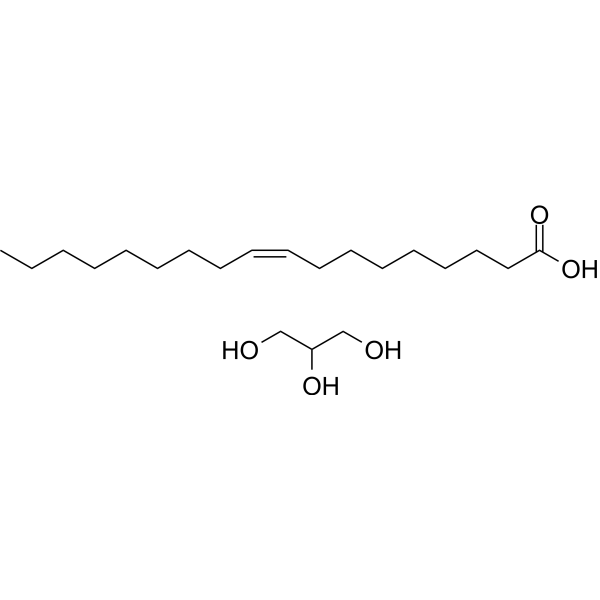
OC(CCCCCCC/C=C\CCCCCCCC)=O.OCC(O)CO
-
Structure Classification
-
Initial Source
-
Shipping
Room temperature in continental US; may vary elsewhere.
-
Storage
4°C, sealed storage, away from moisture
* In solvent : -80°C, 6 months; -20°C, 1 month (sealed storage, away from moisture)


Publications (75)
-
Journal Impact Factor
-
Most Recent
-
Nature
2025 Jul;643(8070):192-200. PMID: 39695227 -
Cancer Cell
Integrative plasma and fecal metabolomics identify functional metabolites in adenoma-colorectal cancer progression and as early diagnostic biomarkers. [Abstract]2024 Aug 12;42(8):1386-1400.e8. PMID: 39137727
Glycerol Monoleate purchased from MedChemExpress. Usage Cited in: Cancer Cell. 2024 Aug 12;42(8):1386-1400.e8. [Abstract]
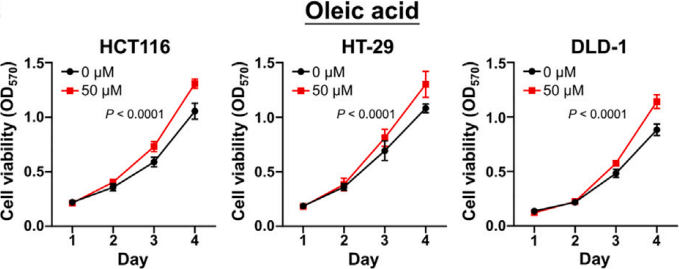
Oleic acid (50 μM; 1-4 d) significantly promotes viability in CRC cells (HCT116, HT-29, DLD-1).
Glycerol Monoleate purchased from MedChemExpress. Usage Cited in: Cancer Cell. 2024 Aug 12;42(8):1386-1400.e8. [Abstract]
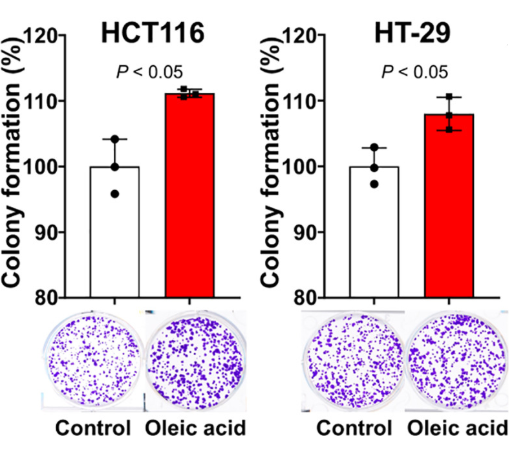
Oleic acid (50 μM) significantly promotes the proliferation of colorectal cancer (CRC) cells (HCT116, HT-29).
-
-
Immunity
PD-1 signaling limits expression of phospholipid phosphatase 1 and promotes intratumoral CD8+ T cell ferroptosis. [Abstract]2024 Sep 10;57(9):2122-2139.e9. PMID: 39208806 -
Cancer Res
ACSL5 Mediates Adaptation to the Palmitic Acid-Enriched Pulmonary Microenvironment to Enhance Metastatic Breast Cancer Cell Survival and Lung Metastasis. [Abstract]2026 Jan 22. PMID: 41570334 -
J Extracell Vesicles
Exosomal Oleic Acid Promotes Lymphangiogenesis and Nodal Metastasis in Cervical Cancer via the AKT/mTOR Pathway. [Abstract]2026 Jun;15(6):e70328. PMID: 42338019 -
J Extracell Vesicles
Extracellular vesicles from organoid-derived human retinal progenitor cells prevent lipid overload-induced retinal pigment epithelium injury by regulating fatty acid metabolism. [Abstract]2024 Jan;13(1):e12401. PMID: 38151470
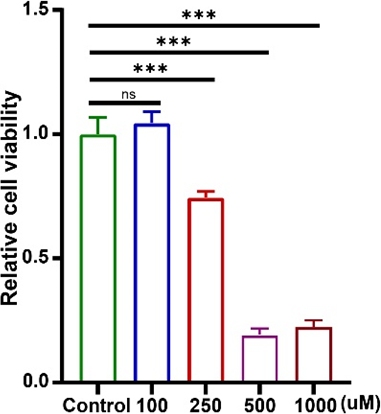
Glycerol Monoleate purchased from MedChemExpress. Usage Cited in: J Extracell Vesicles. 2024 Jan;13(1):e12401. [Abstract]
Oleic acid (500-1000 μM; 24 h) significantly inhibits the activity of ARPE-19 cells.
-
Autophagy
PRRSV NSP2 hijacks host lipophagy via a LIPE-PNPLA2-AMPK-MTOR axis to promote viral replication. [Abstract]2026 May 27:1-27. PMID: 42200529 -
Nat Commun
Endosomal trafficking participates in lipid droplet catabolism to maintain lipid homeostasis. [Abstract]2025 Feb 24;16(1):1917. PMID: 39994216 -
J Adv Res
Salidroside sensitizes Triple-negative breast cancer to ferroptosis by SCD1-mediated lipogenesis and NCOA4-mediated ferritinophagy. [Abstract]2025 Aug:74:589-607. PMID: 39353532 -
Metabolism
Acacetin ameliorates MASLD by inhibiting the Notch1 pathway in hepatocytes and reprogramming macrophage polarization via Keap1-Nrf2-mediated restraint of ferroptosis. [Abstract]2026 Jun 7:182:156670. PMID: 42259496 -
Redox Biol
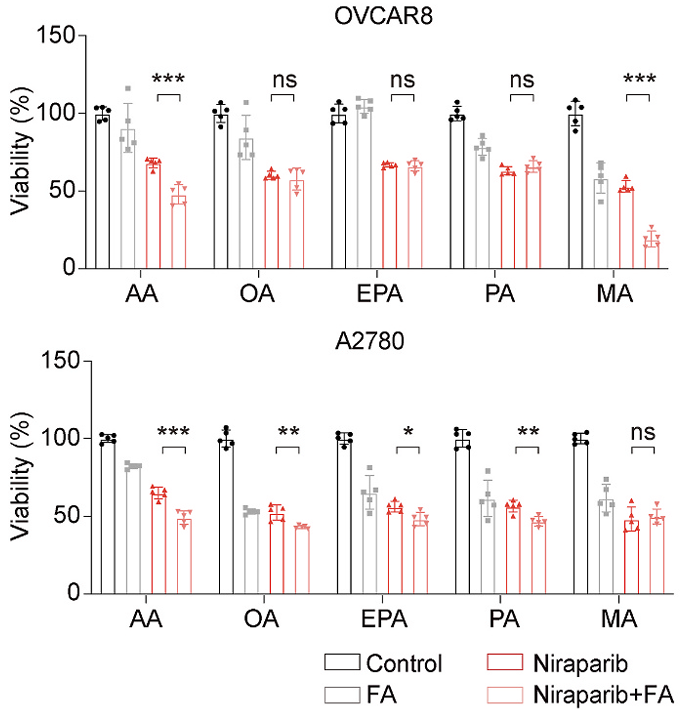
Niraparib restricts intraperitoneal metastases of ovarian cancer by eliciting CD36-dependent ferroptosis. [Abstract]2025 Mar:80:103528. PMID: 39922130
Glycerol Monoleate purchased from MedChemExpress. Usage Cited in: Redox Biol. 2025 Mar:80:103528. [Abstract]
OVCAR8 and A2780 cells were cultured in fatty acid-free media supplemented with 50 μM AA (arachidonic acid), 50 μM OA (oleic acid), 50 μM EPA (eicosapentaenoic acid), 50 μM PA (Palmitic acid), and 50 μM MA (myristic acid) with the treatment of 10 μM niraparib for 72 h, and the cell viability was determined.
-
Redox Biol
Kir6.2 is essential to maintain neurite features by modulating PM20D1-reduced mitochondrial ATP generation. [Abstract]2021 Nov:47:102168. PMID: 34673451 -
Redox Biol
FBW7-NRA41-SCD1 axis synchronously regulates apoptosis and ferroptosis in pancreatic cancer cells. [Abstract]2021 Jan:38:101807. PMID: 33271455 -
J Exp Clin Cancer Res
DHRS2 mediates cell growth inhibition induced by Trichothecin in nasopharyngeal carcinoma. [Abstract]2019 Jul 10;38(1):300. PMID: 31291971 -
-
Adv Sci (Weinh)
Palmitoyltransferase ZDHHC3 Aggravates Nonalcoholic Steatohepatitis by Targeting S-Palmitoylated IRHOM2. [Abstract]2023 Oct;10(28):e2302130. PMID: 37544908 -
Cell Rep Med
High-fat diet increases circulating palmitic acid produced by gut Bacteroides thetaiotaomicron to promote thrombosis. [Abstract]2025 Aug 19;6(8):102260. PMID: 40749683 -
Research (Wash D C)
Diacylglycerol O-acyltransferase 2, a Novel Target of Flavivirus NS2B3 Protease, Promotes Zika Virus Replication by Regulating Lipid Droplet Formation. [Abstract]2024 Oct 24:7:0511. PMID: 39449854 -
Cell Death Dis
Elovl7 sensitizes podocytes to ferroptosis in podocytopathy by elongating polyunsaturated fatty acids. [Abstract]2025 Nov 24;16(1):857. PMID: 41285716 -
Cell Death Dis
USP14 governs CYP2E1 to promote nonalcoholic fatty liver disease through deubiquitination and stabilization of HSP90AA1. [Abstract]2023 Aug 26;14(8):566. PMID: 37633951 -
Cell Death Dis
Targeting the transcription factor receptor LXR to treat clear cell renal cell carcinoma: agonist or inverse agonist?. [Abstract]2019 May 28;10(6):416. PMID: 31138790 -
Cancer Lett
YTHDF2-mediated stabilization of SREBF1 promotes lipid metabolic reprogramming and ferroptosis-associated radioresistance in anaplastic thyroid carcinoma. [Abstract]2026 Feb 28:639:218232. PMID: 41435981 -
Phytomedicine
Oleic acid regulates CD4+ T cells differentiation by targeting ODC1-mediated STAT5A phosphorylation in Vogt-Koyanagi-Harada disease. [Abstract]2025 Jun:141:156660. PMID: 40203473 -
-
J Transl Med
2024 Jan 26;22(1):104. PMID: 38279172 -
Chin Med J (Engl)
Effect of circulating exosomal miRNA-122-3p on metabolic dysfunction-associated steatotic liver disease through impairing FGFR4 expression. [Abstract]2026 Mar 16. PMID: 41839758 -
Oncogene
ACSL5 regulated acetyl-CoA to promote bladder cancer cellular senescence via 53BP1 acetylation. [Abstract]2025 Sep;44(34):3096-3112. PMID: 40595416 -
Oncogene
2024 Sep;43(39):2901-2913. PMID: 39164523 -
Int J Biol Macromol
Visceral obesity-induced METTL27 regulation of the FABP5/PPARD/CPT1A axis in promoting colorectal cancer progression. [Abstract]2026 Feb:347:150740. PMID: 41651272 -
Regen Biomater
Matrix stiffness boosts PDAC chemoresistance via SCD1-dependent lipid metabolic reprogramming. [Abstract]2025 Jun 16:12:rbaf056. PMID: 40741620 -
Free Radic Biol Med
Ferroptosis signaling promotes the release of misfolded proteins via exosomes to rescue ER stress in hepatocellular carcinoma. [Abstract]2023 Jun:202:110-120. PMID: 36997100 -
Clin Transl Med
FABP4-mediated lipid droplet accumulation drives epithelial-mesenchymal transition and aggravates alveolar epithelial barrier disruption. [Abstract]2026 Jan;16(1):e70563. PMID: 41454478 -
Cell Rep
STBD1 mediates the crosstalk between glycogen and lipid droplets in clear cell renal cell carcinoma. [Abstract]2025 Oct 15;44(10):116429. PMID: 41105508 -
Cell Rep
Early-life vitamin B12 orchestrates lipid peroxidation to ensure reproductive success via SBP-1/SREBP1 in Caenorhabditis elegans. [Abstract]2022 Sep 20;40(12):111381. PMID: 36130518 -
Emerg Microbes Infect
SREBP2-dependent lipid droplet formation enhances viral replication and deteriorates lung injury in mice following IAV infection. [Abstract]2025 Dec;14(1):2470371. PMID: 39968754 -
J Ethnopharmacol
Kaempferol modulates ɑ2M secretion in bone marrow-derived macrophages by downregulating GR/PER1-mediated lipid metabolism to attenuate the emotional stress-aggravated metastasis of prostate cancer. [Abstract]2025 Jan 13:339:119162. PMID: 39603396 -
Biochem Pharmacol
Propyl gallate mitigates diabetic liver injury via suppressing SLC7A11/GPX4-mediated hepatic ferroptosis and modulating gut-liver axis. [Abstract]2026 Jul:249:117926. PMID: 41876017 -
Eur J Pharmacol
Multi-omics reveals rutin directly targets RUNX1 to disrupt the RUNX1/TET2 complex and alleviate NAFLD via TLR4/NF-κB inhibition. [Abstract]2026 May 10:1023:178862. PMID: 41997405 -
-
mBio
2024 Dec 11;15(12):e0213724. PMID: 39475231 -
Probiotics Antimicrob Proteins
Potential Benefits of Metformin Via Roseburia Intestinalis in High-fat Diet-fed Mice With Colorectal Adenomas. [Abstract]2025 Nov 26. PMID: 41296177 -
J Nutr Biochem
2026 Jun 24:110454. PMID: 42342138 -
Chem Biol Interact
Sulfur mustard exposure induces inflammatory injury by Dnmt3b-mediated DNA methylation via oleic acid accumulation in Treg cells. [Abstract]2026 May 27:112177. PMID: 42208724 -
Bioorg Chem
Euphorbia factor L3 ameliorates hepatic steatosis by activating LKB1-AMPK signaling pathway-regulated lipid metabolism. [Abstract]2026 Sep 5:179:110008. PMID: 42176359 -
Food Sci Nutr
Integrative Network Pharmacology, Molecular Docking, and In Vitro Insights Into the Mechanism of Finger Citron for Non-Alcoholic Fatty Liver Disease. [Abstract]2026 Apr 3;14(4):e71695. PMID: 41948376 -
Cell Signal
Ophiopogonis japonicus polysaccharide inhibits oxidative stress in hepatocytes by promoting Runx3 in nonalcoholic fatty liver disease. [Abstract]2026 Apr:140:112360. PMID: 41520744 -
-
iScience
2026 Jun 2;29(6):116202. PMID: 42291184 -
iScience
Iturin derived from Bacillus modulates lipid and glucose metabolism while mitigating the progression of MASLD. [Abstract]2026 Mar 25;29(4):115470. PMID: 41993687 -
Mol Oncol
Combined spatially resolved metabolomics and spatial transcriptomics reveal the mechanism of RACK1-mediated fatty acid synthesis. [Abstract]2025 Jun;19(6):1668-1686. PMID: 39425259 -
iScience
2025 Apr 3;28(5):112344. PMID: 40276762 -
Mol Nutr Food Res
Consumption of Saturated Fatty Acids-Rich Lard Benefits Recovery of Experimental Arthritis by Activating PPAR-γ. [Abstract]2023 Jan;67(2):e2200429. PMID: 36433679 -
FASEB J
SREBP-1-mediated lipogenesis confers resistance to ferroptosis and improves endothelial injury. [Abstract]2024 Jul 15;38(13):e23806. PMID: 38970404 -
FEBS J
Mitochondrial uncoupler BAM15 ameliorates liver lipid metabolism disorders by activating the AMPK pathway. [Abstract]2026 Jan 12. PMID: 41527408 -
-
Vet Res
2026 May 9;57(1):72. PMID: 42106845 -
Biochim Biophys Acta Mol Cell Biol Lipids
Trichothecin inhibits invasion and metastasis of colon carcinoma associating with SCD-1-mediated metabolite alteration. [Abstract]2020 Feb;1865(2):158540. PMID: 31678511 -
Reproduction
Ncbp1 deficiency affects morula-to-blastocyst transition through lipid metabolic dysregulation. [Abstract]2026 Feb 5;171(2):xaaf020. PMID: 41575276 -
Exp Eye Res
SREBP1-driven SCD1 protects retinal pigment epithelium from oxidative damage by activating the NRF2/GPX4 axis. [Abstract]2026 May:266:110932. PMID: 41720386 -
J Steroid Biochem Mol Biol
Loss of DDB2 in type II diabetes mellitus induces dysregulated ubiquitination of KMT2A in lipid metabolism disorders. [Abstract]2025 Mar:247:106673. PMID: 39798620 -
Am J Cancer Res
Abrogation of ARF6 promotes RSL3-induced ferroptosis and mitigates gemcitabine resistance in pancreatic cancer cells. [Abstract]2020 Apr 1;10(4):1182-1193. PMID: 32368394 -
Chem Biodivers
Bioactive Polysaccharides From Cremastra Appendiculata Attenuate Lipid Accumulation In Vitro Model of Non-Alcoholic Fatty Liver Disease. [Abstract]2025 Jun;22(6):e202402772. PMID: 39843986 -
Vet Microbiol
Lipid metabolism is a novel and practical source of potential targets for antiviral discovery against porcine parvovirus. [Abstract]2021 Oct:261:109177. PMID: 34391196 -
-
Biol Pharm Bull
Inhibition of Stearoyl-CoA Desaturase 1 Potentiates Anti-tumor Activity of Amodiaquine in Non-small Cell Lung Cancer. [Abstract]2022 Apr 1;45(4):438-445. PMID: 35110426 -
-
-
-
-
-
-
-
-
Oxid Med Cell Longev
Stearoyl-CoA Desaturase 1 Potentiates Hypoxic plus Nutrient-Deprived Pancreatic Cancer Cell Ferroptosis Resistance. [Abstract]2021 Apr 1:2021:6629804. PMID: 33868572


Solvent & Solubility
In Vitro:
DMSO : 200 mg/mL (533.96 mM; Need ultrasonic; Hygroscopic DMSO has a significant impact on the solubility of product, please use newly opened DMSO)
Please refer to the solubility information to select the appropriate solvent. Once prepared, please aliquot and store the solution to prevent product inactivation from repeated freeze-thaw cycles.
Storage method and period of stock solution: -80°C, 6 months; -20°C, 1 month (sealed storage, away from moisture). When stored at -80°C, please use it within 6 months. When stored at -20°C, please use it within 1 month.
Please refer to the solubility information to select the appropriate solvent. Once prepared, please aliquot and store the solution to prevent product inactivation from repeated freeze-thaw cycles.
Storage method and period of stock solution: -80°C, 6 months; -20°C, 1 month (sealed storage, away from moisture). When stored at -80°C, please use it within 6 months. When stored at -20°C, please use it within 1 month.
Concentration (start) × Volume (start) = Concentration (final) × Volume (final)

Protocols
-
RNA interference technology
RNA interference (RNAi) is a cellular mechanism that inhibits gene expression by suppressing gene transcription or activating RNA degradation. This mechanism was discovered in plants in 1998 by Andrew Fire and Craig Mello. Today, this phenomenon can be observed in almost all eukaryotes, including protozoa, flies, nematodes, insects, parasites, and mammals.


Purity & Documentation
-
Data Sheet (268 KB)
-
SDS (393 KB)
- English - EN (393 KB)
- Français - FR (393 KB)
- Deutsch - DE (393 KB)
- Norwegian - NO (393 KB)
- Español - ES (393 KB)
- Swedish - SV (393 KB)
- Italian - IT (393 KB)
- Korean - KR (393 KB)
- Portuguese - PT (393 KB)
-
Handling Instructions (2659 KB)
References


Complete Stock Solution Preparation Table
Please refer to the solubility information to select the appropriate solvent. Once prepared, please aliquot and store the solution to prevent product inactivation from repeated freeze-thaw cycles.
Storage method and period of stock solution: -80°C, 6 months; -20°C, 1 month (sealed storage, away from moisture). When stored at -80°C, please use it within 6 months. When stored at -20°C, please use it within 1 month.
| Optional Solvent | Concentration Solvent Mass | 1 mg | 5 mg | 10 mg | 25 mg |
|---|---|---|---|---|---|
| DMSO | 1 mM | 2.6698 mL | 13.3490 mL | 26.6980 mL | 66.7450 mL |
| 5 mM | 0.5340 mL | 2.6698 mL | 5.3396 mL | 13.3490 mL | |
| 10 mM | 0.2670 mL | 1.3349 mL | 2.6698 mL | 6.6745 mL | |
| 15 mM | 0.1780 mL | 0.8899 mL | 1.7799 mL | 4.4497 mL | |
| 20 mM | 0.1335 mL | 0.6674 mL | 1.3349 mL | 3.3372 mL | |
| 25 mM | 0.1068 mL | 0.5340 mL | 1.0679 mL | 2.6698 mL | |
| 30 mM | 0.0890 mL | 0.4450 mL | 0.8899 mL | 2.2248 mL | |
| 40 mM | 0.0667 mL | 0.3337 mL | 0.6674 mL | 1.6686 mL | |
| 50 mM | 0.0534 mL | 0.2670 mL | 0.5340 mL | 1.3349 mL | |
| 60 mM | 0.0445 mL | 0.2225 mL | 0.4450 mL | 1.1124 mL | |
| 80 mM | 0.0334 mL | 0.1669 mL | 0.3337 mL | 0.8343 mL | |
| 100 mM | 0.0267 mL | 0.1335 mL | 0.2670 mL | 0.6674 mL |


Glycerol Monoleate Related Classifications
HY-N1446A Related Classifications
 Powered by Bioz