



APD668
Based on 2 publication(s) in Google Scholar
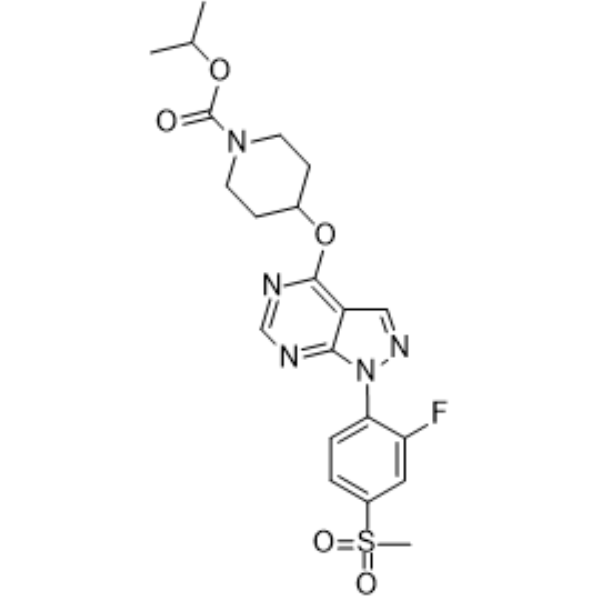
APD668 is a potent, selective and orally active agonist of G-protein coupled receptor GPR119, with EC50s of 2.7 nM and 33 nM for hGPR119 and rGPR119, respectively. APD668 shows no significant inhibition of any of the five major CYP isoforms with the exception of CYP2C9 (Ki=0.1 μM). APD668 can be used for the research of steatohepatitis and diabetes.
Nur für Forschungszwecke. Wir verkaufen nicht an Patienten.
- Reinheit : 99.73%
- CAS. Nr.: 832714-46-2
- Formel: C21H24FN5O5S
- Molecular Weight:477.51
-
Speicherung:Powder -20°C, 3 years , 4°C, 2 years ; In solvent -80°C, 2 years , -20°C, 1 year

To place orders, for customer services and technical support, please contact: MedChemExpress USA
Tel: 609-228-6898 E-mail: [email protected] [email protected]


-
 Biologische Aktivität
-
Chemical Information
-
Lösungsmittel & Löslichkeit
- Protokoll
- Reinheit & Dokumentation
- Verweise
-
 Help & FAQs


-
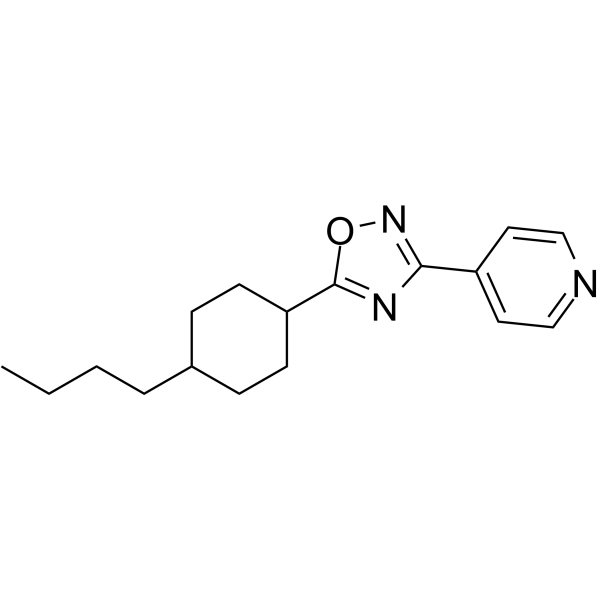
HY-108258
PSN 375963GPR119 Agonist -
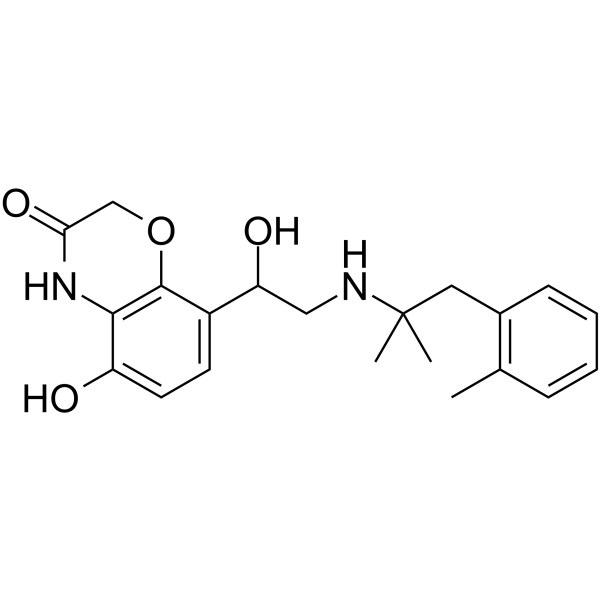
HY-121251
BI-167107β2AR Agonist -
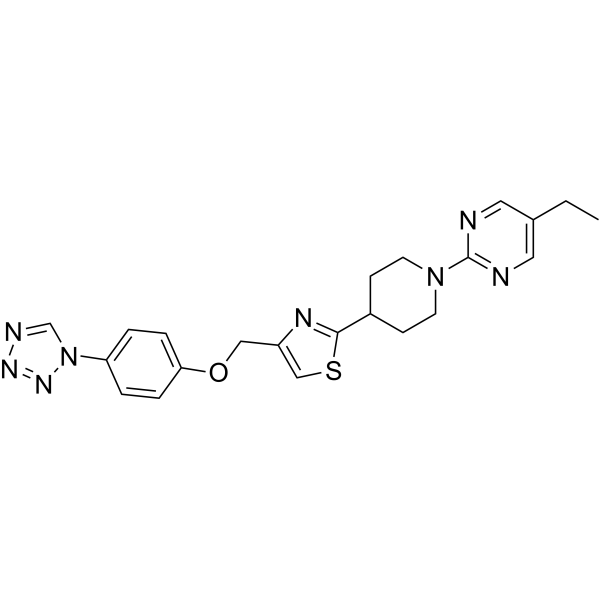
HY-15291
MBX-2982GPR119 Agonist -
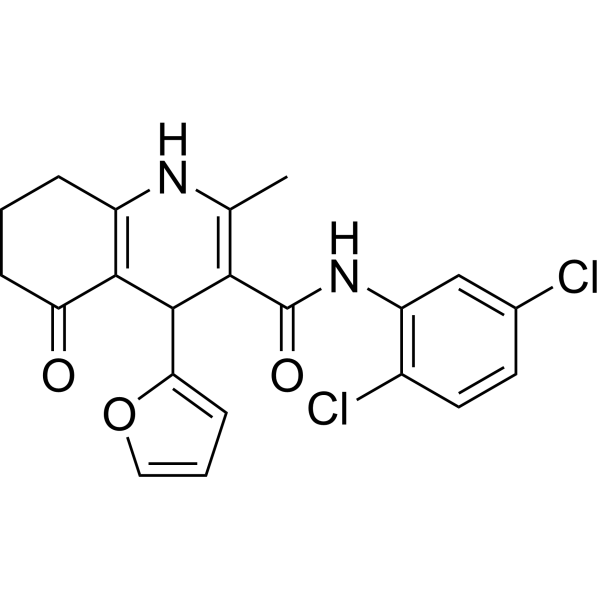
HY-116522
AR420626FFAR3 Agonist -
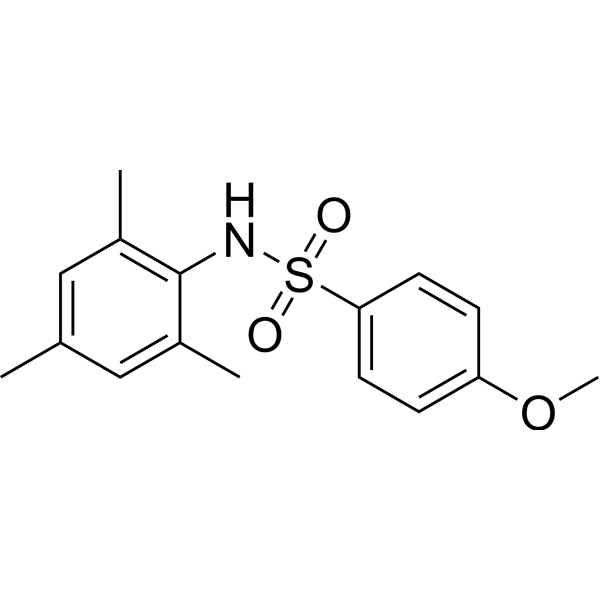
HY-19995
GSK137647AFFA4 Agonist -
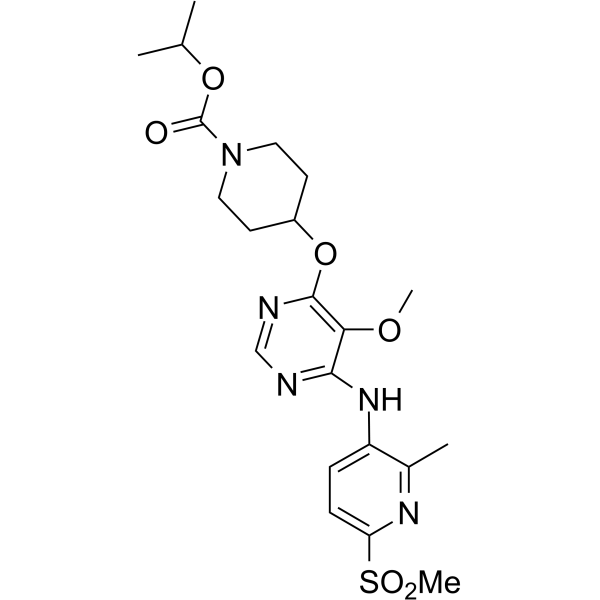
HY-15566
APD597GPR119 Agonist -

HY-15565R
APD668 (Standard)GPR119 Agonist -
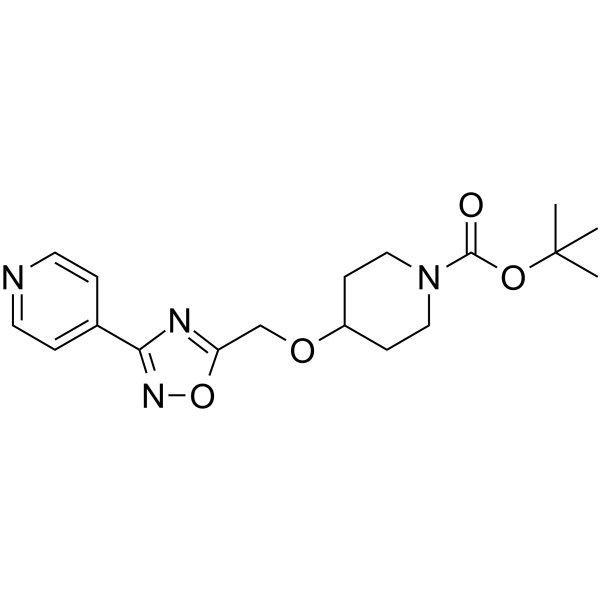
HY-16673
PSN632408GPR119 Agonist -
HY-15564
AR 231453GPR119 Agonist -
HY-12066
GSK1292263 -
HY-107535
AS1269574GPR119 Agonist -
HY-103252
Monomethyl fumarateGPR109A Agonist
Publications Citing Use of MedChemExpress (MCE) APD668
More

Biologische Aktivität
Beschreibung
IC50 & Target
[1]|
hGPR119 2.7 nM (IC50) |
rGPR119 33 nM (IC50) |
CYP2C9 0.1 μM (Ki) |
hERG channel 3 μM (IC50) |
Cellular Effect
|
Cell Line

|
Type | Value | Description | References |
|---|---|---|---|---|
| HEK293 | EC50 |
23 nM
Compound: 3k, APD668, JNJ-28630368
|
Agonist activity at human GPR119 expressed in human HEK293 cells assessed as increase in adenylate cyclase activation
Agonist activity at human GPR119 expressed in human HEK293 cells assessed as increase in adenylate cyclase activation
|
[PMID: 21444206] |
In Vitro
APD668 increases adenylate cyclase activation in HEK293 cells transfected with human GPR119 in a concentration-dependent manner with an EC50 of 23 nM[1].
APD668 is highly bound to plasma proteins of male and female cynomolgus monkeys and humans (?99%), but is less extensively bound to male (93.0%) and female (96.6%) rats[1].
MedChemExpress (MCE) has not independently confirmed the accuracy of these methods. They are for reference only.
In Vivo
APD668 (1-10 mg/kg; a single p.o.) markedly reduces blood glucose levels during oral glucose tolerance test in a dose-dependent manner in mice[1].
APD668 (0.08 mg/kg/min; i.v.) shows no effect during euglycemic condition, but significantly stimulates insulin release when blood glucose levels are raised to approximately 300 mg/dl in a hyperglycemic clamp model in the Sprague-Dawley rat[1].
APD668 (p.o.) exhibits rapid to moderate absorption (tmax≤2 h) in mice, rats, and monkeys, but slower in dogs (tmax=6 h), and moderate to good absolute oral bioavailability (44-79%) in mice, rats, and monkeys, but lower in dogs (22%)[1].
MedChemExpress (MCE) has not independently confirmed the accuracy of these methods. They are for reference only.
-
Animal Model:Male Zucker Diabetic Fatty (ZDF) rats (6 weeks old, 200-250 g)[1]
-
Dosage:10, 30 mg/kg
-
Administration:P.o. once daily for 8 weeks
-
Result:Decreased the blood glucose and HbA1c levels at 30 mg/kg/day.
Did not develop diabetes, whereas the vehicle treated rats did.


Chemical Information
-
CAS. Nr. 832714-46-2
-
Appearance Solid
-
Molecular Weight 477.51
-
Formel C21H24FN5O5S
-
Color White to off-white
-
SMILES
O=C(OC(C)C)N(CC1)CCC1OC2=C3C(N(C4=CC=C(S(=O)(C)=O)C=C4F)N=C3)=NC=N2
-
Versand
Room temperature in continental US; may vary elsewhere.
-
Speicherung
Powder -20°C 3 years 4°C 2 years In solvent -80°C 2 years -20°C 1 year


Publications (2)
-
Journal Impact Factor
-
Most Recent
-
Cell Metab
Microbiota-derived lysophosphatidylcholine alleviates Alzheimer's disease pathology via suppressing ferroptosis. [Abstract]2025 Jan 7;37(1):169-186.e9. PMID: 39510074 -
Invest Ophthalmol Vis Sci
A GPR119 Signaling System in the Murine Eye Regulates Intraocular Pressure in a Sex-Dependent Manner. [Abstract]2017 Jun 1;58(7):2930-2938. PMID: 28593245


Lösungsmittel & Löslichkeit
In Vitro:
DMSO : 33.33 mg/mL (69.80 mM; Need ultrasonic; Hygroscopic DMSO has a significant impact on the solubility of product, please use newly opened DMSO)
Please refer to the solubility information to select the appropriate solvent. Once prepared, please aliquot and store the solution to prevent product inactivation from repeated freeze-thaw cycles.
Storage method and period of stock solution: -80°C, 2 years; -20°C, 1 year. When stored at -80°C, please use it within 2 years. When stored at -20°C, please use it within 1 year.
Please refer to the solubility information to select the appropriate solvent. Once prepared, please aliquot and store the solution to prevent product inactivation from repeated freeze-thaw cycles.
Storage method and period of stock solution: -80°C, 2 years; -20°C, 1 year. When stored at -80°C, please use it within 2 years. When stored at -20°C, please use it within 1 year.
Konzentration (Stammlösung) × Volumen (Stammlösung) = Konzentration (Ziellösung) × Volumen (Ziellösung)
In Vivo:
Select the appropriate dissolution method based on your experimental animal and administration route.
- For the following dissolution methods, please ensure to first prepare a clear stock solution using an In Vitro approach and then sequentially add co-solvents:
- To ensure reliable experimental results, the clarified stock solution can be appropriately stored based on storage conditions. As for the working solution for In Vivo experiments, it is recommended to prepare freshly and use it on the same day.
- The percentages shown for the solvents indicate their volumetric ratio in the final prepared solution. If precipitation or phase separation occurs during preparation, heat and/or sonication can be used to aid dissolution.
Add each solvent one by one: 10% DMSO 90% (20% SBE-β-CD in Saline)
Solubility: ≥ 2.08 mg/mL (4.36 mM); Clear solution
This protocol yields a clear solution of ≥ 2.08 mg/mL (saturation unknown).
Taking 1 mL working solution as an example, add 100 μL DMSO stock solution (20.8 mg/mL) to 900 μL 20% SBE-β-CD in Saline, and mix evenly.
Preparation of 20% SBE-β-CD in Saline (4°C, storage for one week): 2 g SBE-β-CD powder is dissolved in 10 mL Saline, completely dissolve until clear.
In Vivo Dissolution Calculator
Please enter the basic information of animal experiments:
-
-
-
-
Recommended: Prepare an additional quantity of animals to account for potential losses during experiments.
Please enter your animal formula composition:
-
%DMSO +
Recommended: Keep the proportion of DMSO in working solution below 2% if your animal is weak.
-
%+
-
+%Tween-80 + +
-
%Saline +
The co-solvents required include: DMSO, . All of co-solvents are available by MedChemExpress (MCE). , Tween 80. All of co-solvents are available by MedChemExpress (MCE).
Working solution concentration: 0.22 mg/mL
Method for preparing stock solution: mg drug dissolved in μL DMSO. Stock solution concentration: mg/mL.
1. Take μL DMSO stock solution;
2. Add μL .
μL , mix evenly;
3. Then add μL Tween 80, mix evenly;
4. Then add μL
Please ensure that the stock solution in the first step is dissolved to a clear state, and add co-solvents in sequence. You can use ultrasonic heating (ultrasonic cleaner, recommended frequency 20-40 kHz), vortexing, etc. to assist dissolution.


Reinheit & Dokumentation
-
Data Sheet (276 KB)
-
SDS (392 KB)
- English - EN (392 KB)
- Français - FR (392 KB)
- Deutsch - DE (392 KB)
- Norwegian - NO (392 KB)
- Español - ES (392 KB)
- Swedish - SV (392 KB)
- Italian - IT (392 KB)
- Korean - KR (392 KB)
- Portuguese - PT (392 KB)
-
Handling Instructions (2659 KB)
Verweise
[1]. Semple G, et al. Discovery of fused bicyclic agonists of the orphan G-protein coupled receptor GPR119 with in vivo activity in rodent models of glucose control. Bioorg Med Chem Lett. 2011 May 15;21(10):3134-41. [Content Brief]
[2]. Bahirat UA, et, al. APD668, a G protein-coupled receptor 119 agonist improves fat tolerance and attenuates fatty liver in high-trans fat diet induced steatohepatitis model in C57BL/6 mice. Eur J Pharmacol. 2017 Apr 15;801:35-45. [Content Brief]


Complete Stock Solution Preparation Table
Please refer to the solubility information to select the appropriate solvent. Once prepared, please aliquot and store the solution to prevent product inactivation from repeated freeze-thaw cycles.
Storage method and period of stock solution: -80°C, 2 years; -20°C, 1 year. When stored at -80°C, please use it within 2 years. When stored at -20°C, please use it within 1 year.
| Optional Solvent | Concentration Solvent Mass | 1 mg | 5 mg | 10 mg | 25 mg |
|---|---|---|---|---|---|
| DMSO | 1 mM | 2.0942 mL | 10.4710 mL | 20.9420 mL | 52.3549 mL |
| 5 mM | 0.4188 mL | 2.0942 mL | 4.1884 mL | 10.4710 mL | |
| 10 mM | 0.2094 mL | 1.0471 mL | 2.0942 mL | 5.2355 mL | |
| 15 mM | 0.1396 mL | 0.6981 mL | 1.3961 mL | 3.4903 mL | |
| 20 mM | 0.1047 mL | 0.5235 mL | 1.0471 mL | 2.6177 mL | |
| 25 mM | 0.0838 mL | 0.4188 mL | 0.8377 mL | 2.0942 mL | |
| 30 mM | 0.0698 mL | 0.3490 mL | 0.6981 mL | 1.7452 mL | |
| 40 mM | 0.0524 mL | 0.2618 mL | 0.5235 mL | 1.3089 mL | |
| 50 mM | 0.0419 mL | 0.2094 mL | 0.4188 mL | 1.0471 mL | |
| 60 mM | 0.0349 mL | 0.1745 mL | 0.3490 mL | 0.8726 mL |


APD668 Related Classifications
HY-15565 Related Classifications
 Powered by Bioz